

Inspiration
We were inspired by a simple but unsettling truth: loneliness and depression are at an all time high, yet we are more digitally connected than ever. We kept asking why and the answer kept pointing to the same thing. People haven't lost the ability to connect, they've lost the ability to feel their connections. We were drawn to the science of relational interoception, the idea that your body already registers the warmth or distance of a bond before your conscious mind does, and we asked what it would look like to build a tool around that invisible sense. The mycelium fungal network became our metaphor: the most vital connections in nature are the ones you cannot see.
What it does
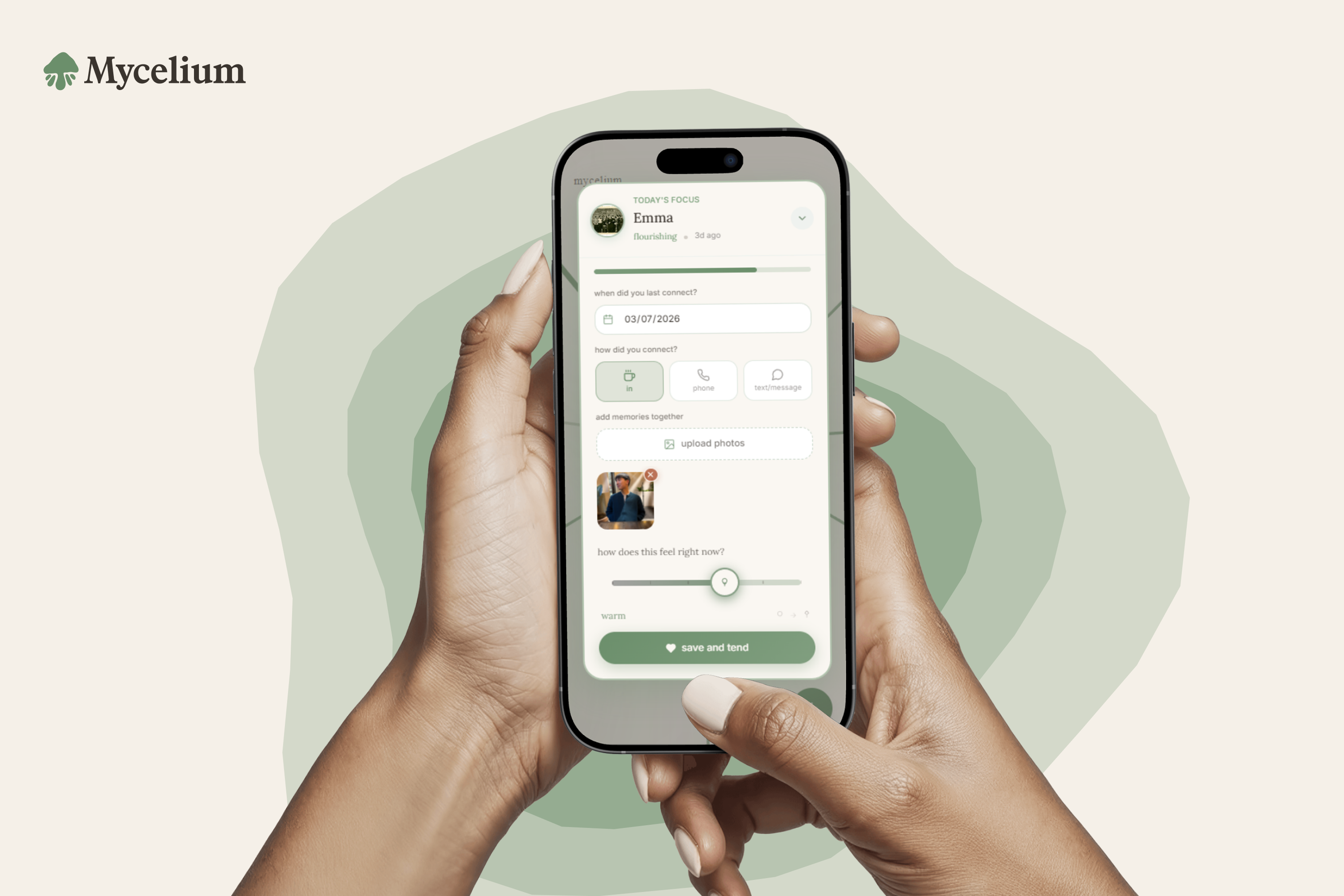
Mycelium is a wellness app that tracks the invisible felt sense of warmth or distance in your closest relationships. At its core is a living, organic map of your most important bonds, not a social network, not a feed, but a breathing visual web that shifts based on how your relationships are being tended. Each day the app surfaces one person and asks a single felt question, quietly building a private picture of your relational health over time. It never exposes anyone's data, never gamifies connection, and never tries to replace real human contact. It simply reminds you where it's missing and gently nudges you back toward it.
How we built it
We designed Mycelium around a core philosophy first and let the interface follow. The visual language was built to feel hand-drawn, organic, and warm, inspired by botanical illustration, the Claude logo mark, and the clean minimalism of apps like Opal. We used a warm parchment palette, serif headers, and soft organic node animations to make the app feel alive rather than clinical. Every design decision was filtered through one question: does this feel human, or does it feel like data?
Challenges we ran into
The hardest design challenge was finding a way to represent the health of a relationship without reducing it to numbers, percentages, or scores. Quantifying something as felt and human as closeness risks making it feel like a performance metric, which is exactly the dynamic we were trying to move away from. We spent significant time developing a felt-sense language, using somatic spectrums like expanding versus contracting and warm versus distant rather than numerical scales, so that the app reflects emotion without instrumentalizing it.
Accomplishments that we're proud of
We are proud of building something that feels genuinely new in a space crowded with engagement-driven products. But more than the concept, we are proud of producing a high quality demo video under real pressure, two sleepless nights and a full day of recording and editing, and having it come together in a way that actually communicates the soul of what Mycelium is. That felt like a real accomplishment.
What we learned
We learned that the most meaningful design constraints are ethical ones. Deciding early that Mycelium would never expose emotional data, never send negative signals between users, and never try to replace real life connection didn't limit the product, it defined it. We also learned that naming something invisible is half the battle. Once we had the language of relational interoception, everything else clicked into place.
What's next for Mycelium
We see three directions worth exploring. First, a grief and loss feature that honors the reality that some roots remain part of your map even after a relationship ends or someone is gone. Second, clinical partnerships with therapists and researchers to validate relational interoception as a measurable wellness metric, giving Mycelium a scientific foundation beyond speculative design. Third, offline rituals, extending the app beyond the screen through physical touch points like conversation cards and seasonal relationship reviews, because Mycelium's ultimate goal has always lived beyond the phone.
Built With
- adobe-illustrator
- davinci-resolve
- figma
- figmamake
- photoshop


Log in or sign up for Devpost to join the conversation.