-
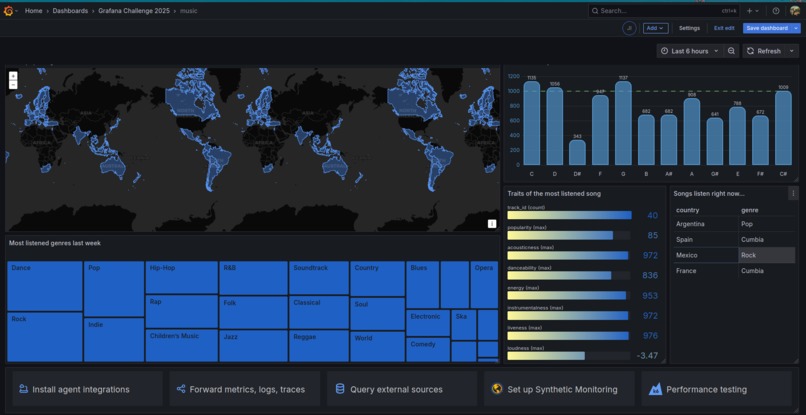
Dashboard
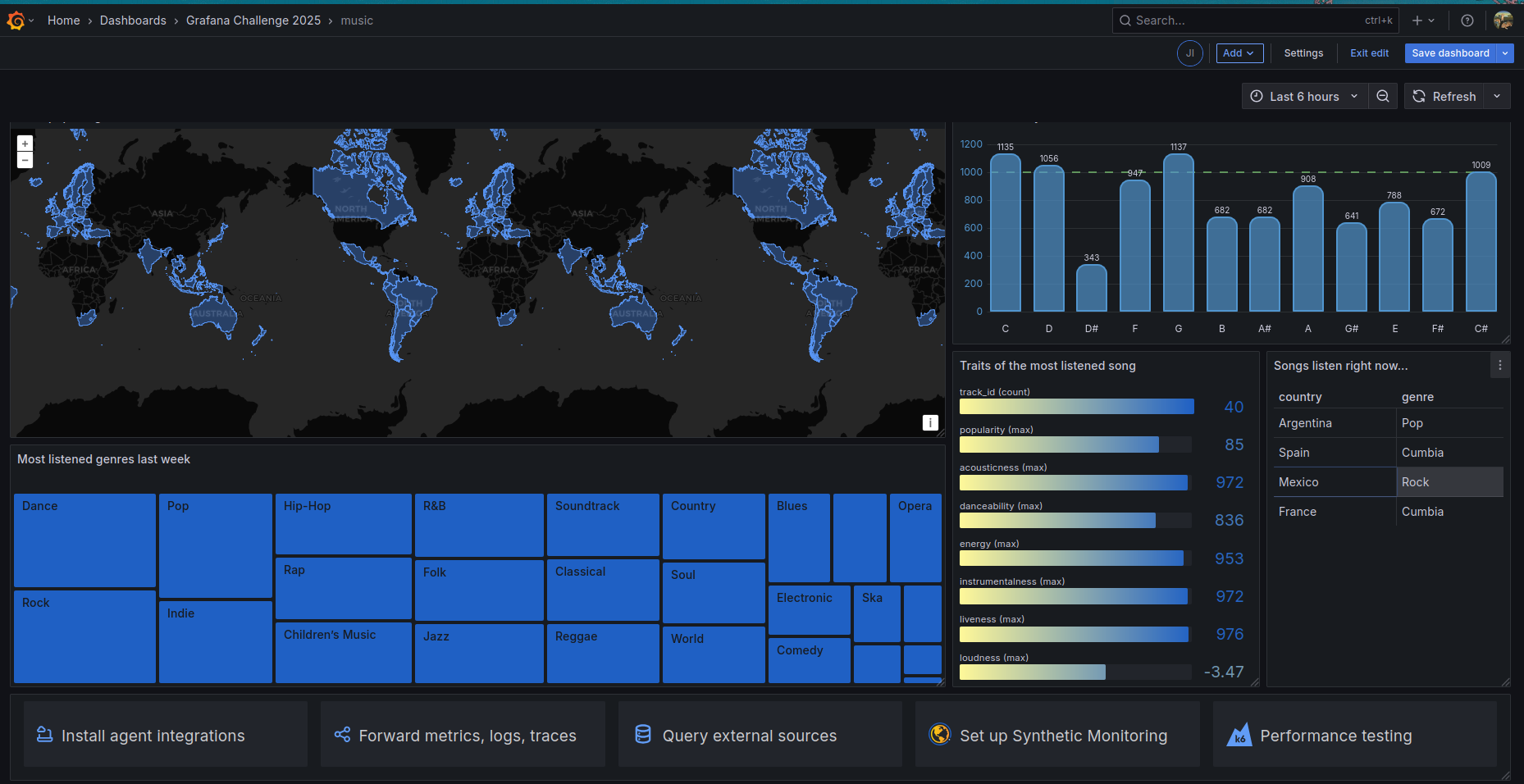
Inspiration
There are many music-related applications out there — like Shazam, Spotify, or YouTube Music — but the fast-paced nature of the music industry makes it hard to recognize emerging trends. This dashboard aims to visualize these trends in a clear and engaging way, helping aspiring musicians understand the market and kick-start their musical careers.
What it does
Musigrafs is a data-driven web app that captures the pulse of global music trends — live. Built to turn raw listening data into rich, interactive visualizations. Musigrafs lets users explore the top genres listened by country and region, the most common musical keys and their distribution, detailed audio features (energy, tempo, valence, etc.) of the current top hit and the recently played tracks updated in real time.
How we built it
We used Python to clean song datasets and build an API that simulates real-time data. This data is connected to Grafana Cloud, where we designed our dashboards. To enrich the visualizations, we integrated tools like Infinity, Google Sheets, and Geomaps. Using GeoJSON, we were able to represent global information in an engaging way.
Challenges we ran into
We initially struggled to display the map in the format we envisioned, and had to explore other repositories for inspiration. Additionally, connecting the API to Grafana presented challenges — but with support from mentors and the Grafana Chatbot, we were able to overcome them.
Accomplishments that we're proud of
We're proud of the visual quality and clarity of our plots. Most importantly, we successfully integrated real-time data, which was a core goal of the project.
What we learned
We learned how to handle and clean raw data efficiently, and explored multiple ways to load data into Grafana. We also gained experience working with geospatial data and integrating real-time information into visual dashboards.
What's next for Musigrafs
We originally planned to integrate machine learning models to generate predictive insights and smarter visualizations. Due to time constraints, we’ve left that for future development — but it's a direction we're excited to explore.


Log in or sign up for Devpost to join the conversation.