Inspiration
The inspiration for MobilitySim came from a passion for motorsport analytics and a fascination with how smart cities manage dynamic transportation systems. Observing Formula 1 and autonomous vehicle challenges, the team realized there was a gap for tools that could simulate not just competition, but collaborative, innovative mobility solutions for real-world impact.
What We Learned
The team delved into traffic modeling, event simulation, and optimization algorithms. Key learnings included:
-Fundamentals of discrete event simulation using graph theory to model routes.
-Machine learning techniques for predicting route performance and optimizing strategies.
- A* algorithm for pathfinding, which helped simulate efficient mobility under constraints.
How We Built MobilitySim
The project was developed using a modular approach:
Frontend: Figma for designing interfaces; React for implementing the digital dashboard.
Simulation Engine: Python powered the event-driven simulator, using mathematical graph structures to simulate nodes (checkpoints) and edges (routes).
Visualization: Data from simulated races was visualized with real-time leaderboards built using D3.js and Chart.js libraries.
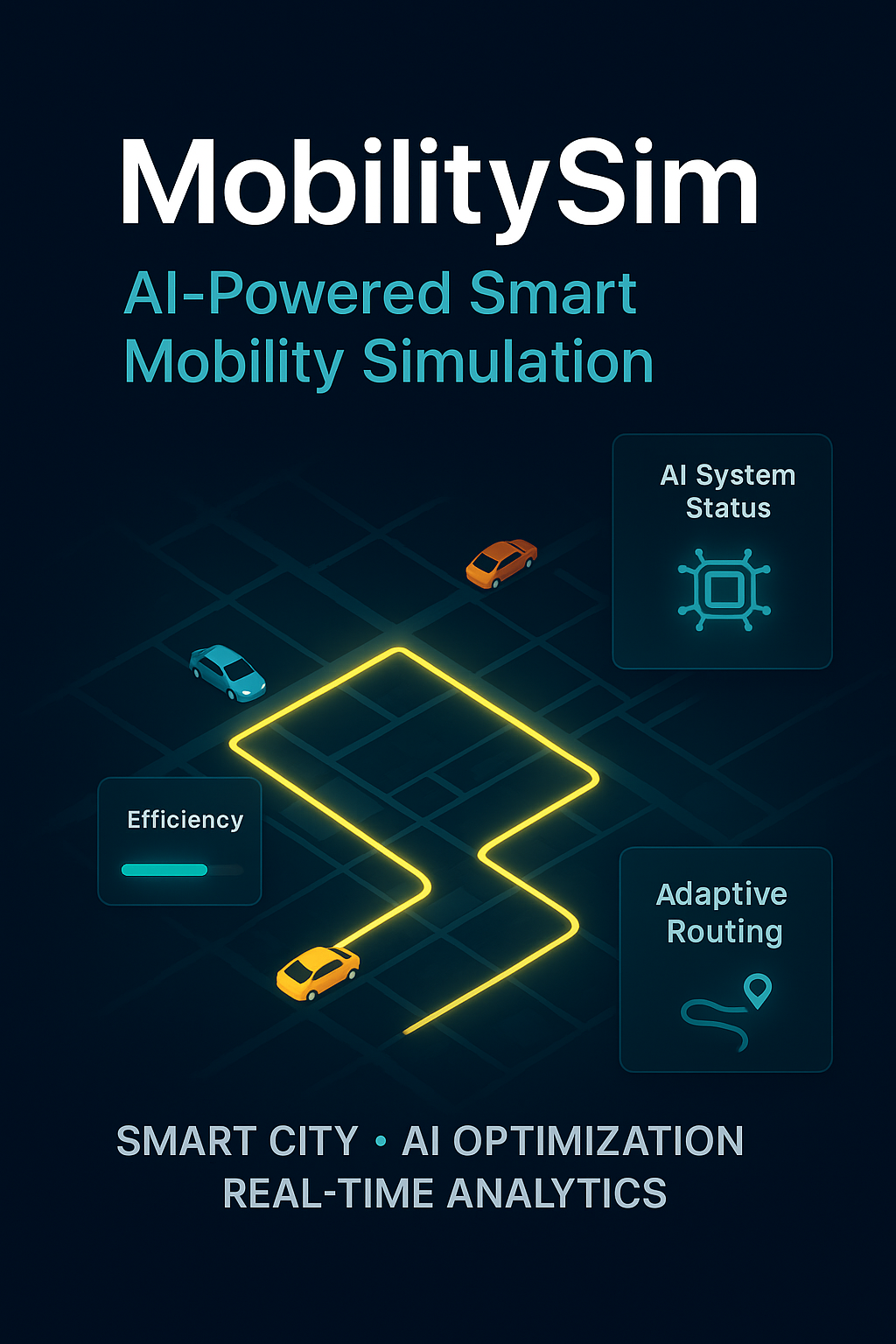
AI Features: Implemented basic reinforcement learning to recommend energy-efficient routes based on historical data.
Challenges We Faced
Integrating live data feeds with efficient simulation algorithms presented significant performance challenges. Handling concurrency and real-time updates required re-thinking our approach and moving some logic to asynchronous tasks.
Designing a flexible model for different race types (circuits, city grids, rally) meant abstracting rules while maintaining accuracy.
Ensuring accessibility for users with limited technical background tested our UI/UX skills.
Debugging complex simulation bugs—especially those causing race results to diverge from expected mathematical outcomes—was a persistent hurdle.
Accomplishments that we're proud of
We are proud that MobilitySim enables real-time mobility simulations with live AI insights for smarter and greener racing strategies—something few platforms combine so smoothly.
What's next for MobilitySim
we aim to connect real-world data, expand for smart city use, and support collaborative simulations for even greater impact.
Conclusion
MobilitySim emerged from diverse inspirations and technical curiosity. Throughout the journey the team learned new technologies, solved mathematical challenges, and created a product that merges competitive racing, mobility, and innovation into one simulation platform.

Log in or sign up for Devpost to join the conversation.