-
-
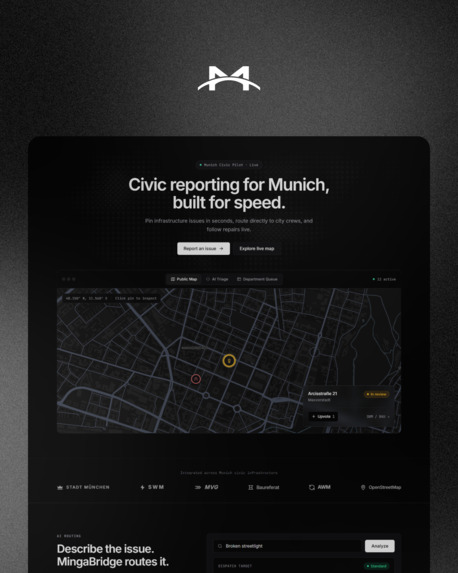
Image 4
-
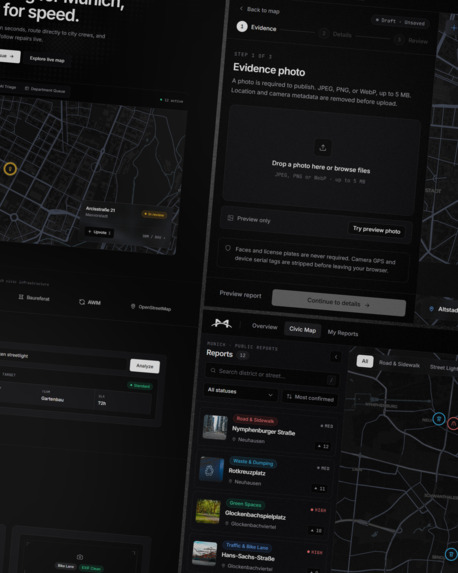
Image 2
-
Image 1
-
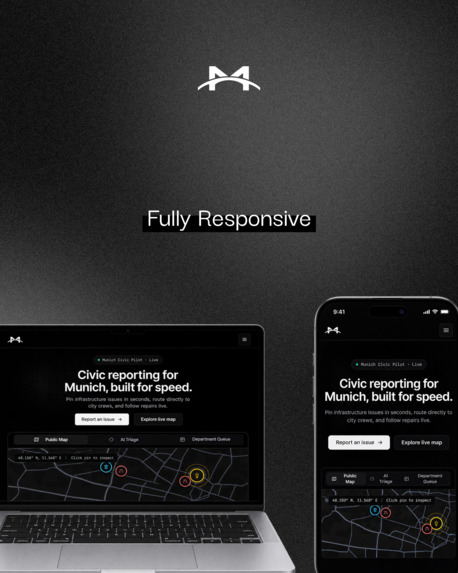
Image 3
Inspiration
Noticing a broken streetlight or a dangerous pothole is easy. Knowing which municipal department to contact—and how to explain the problem in formal German—is harder.
I built MingaBridge for English-speaking residents and international students in Munich who want to improve their neighborhood but may be unfamiliar with local reporting procedures.
The goal is simple: help residents turn an observation into a clear, location-specific report.
What it does
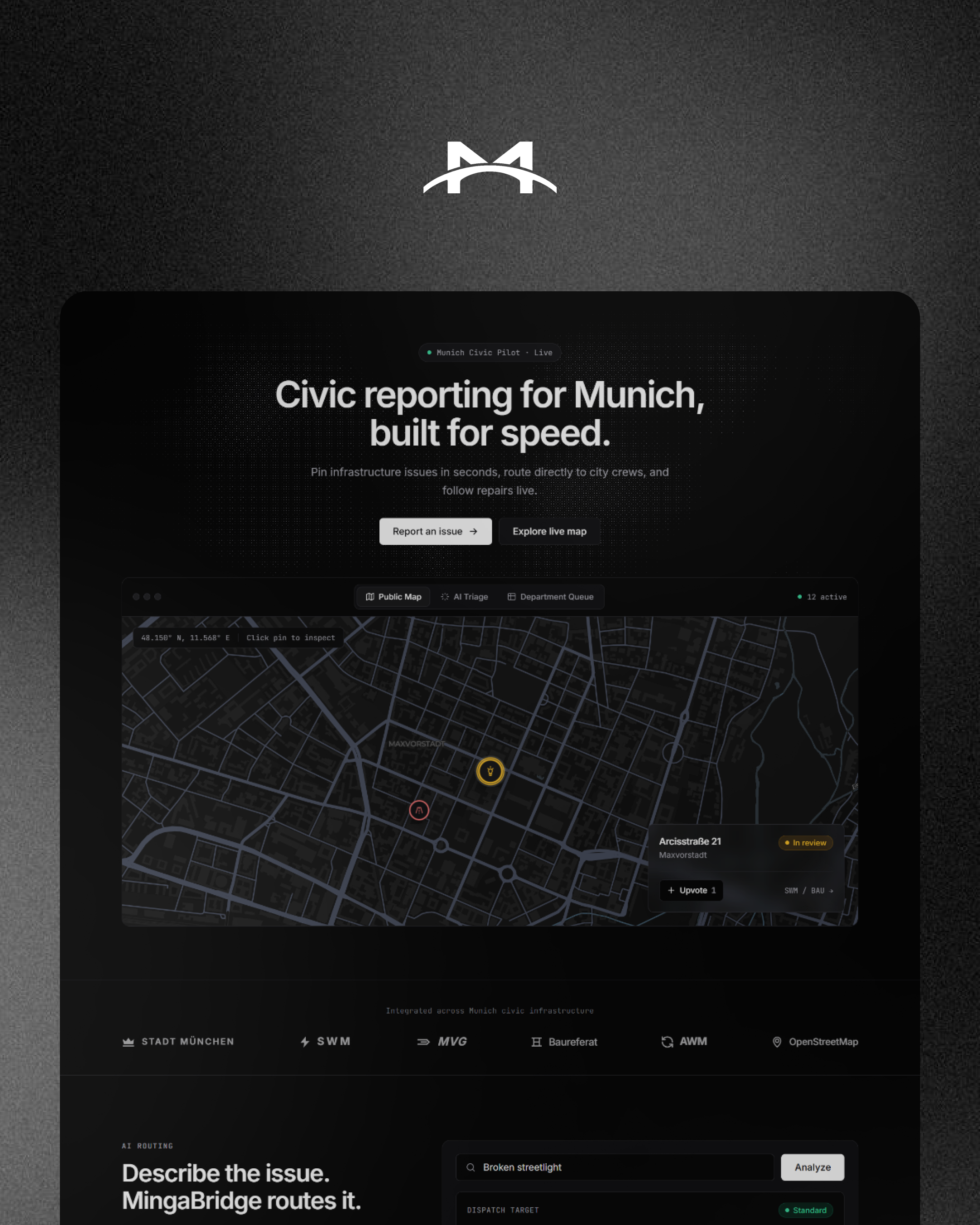
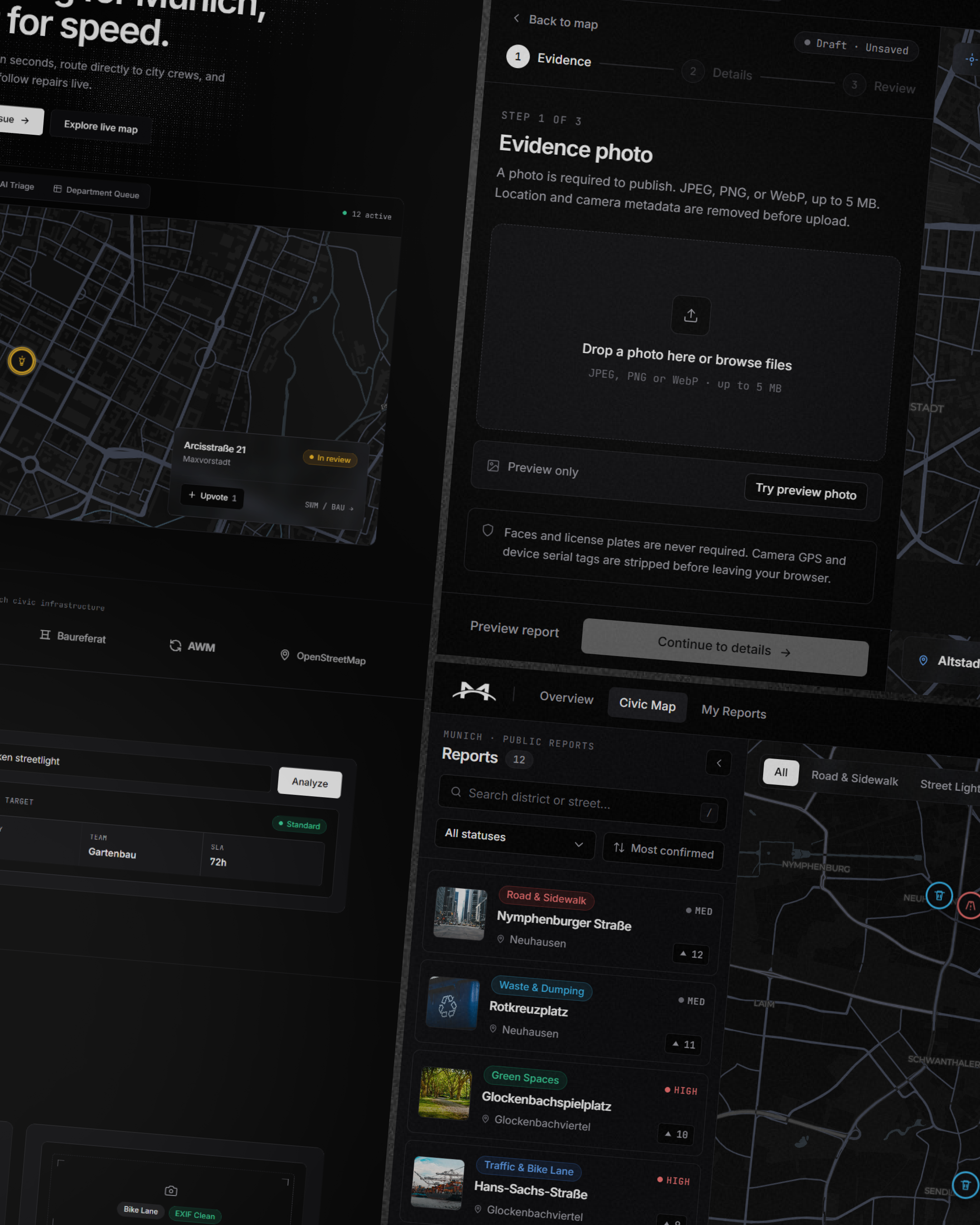
MingaBridge is a map-based civic reporting prototype for Munich. Users can:
- Upload an evidence photo.
- Locate the issue using a map pin or device location.
- Describe the problem in plain English.
- Review a suggested category and responsible municipal department.
- Edit a formal German report draft.
- Publish the report to a community map.
- Copy the report, download a PDF, or open an email draft.
Residents can also explore existing reports, filter by category or status, and confirm an issue they recognize. My Reports helps users revisit submissions made from the same browser.
Publishing a report to the map does not automatically send an email or create an official municipal ticket.
How I built it
I built MingaBridge with Next.js, React, TypeScript, and Tailwind CSS, and deployed the prototype on Vercel.
The interactive map uses MapLibre GL, OpenStreetMap data, and CARTO tiles. Nominatim provides reverse geocoding, while Supabase supplies PostgreSQL database and photo storage capabilities.
Zod validates inputs and structured outputs. jsPDF generates downloadable reports in the browser.
The current reporting assistant uses deterministic category scoring and German templates. It prepares a structured German draft that includes the original English description; it does not yet use a production language model or analyze photo contents.
Photos are processed in the browser to remove location and camera metadata before upload. Server-side checks validate file types, sizes, descriptions, and geographic boundaries.
Challenges I ran into
Keeping reports and map pins synchronized
Static rendering, cached responses, and client-side navigation could leave the map displaying outdated data. I revised the loading flow to request fresh reports and fetch selected reports individually when they fall outside the main list.
Making the workflow clear on mobile
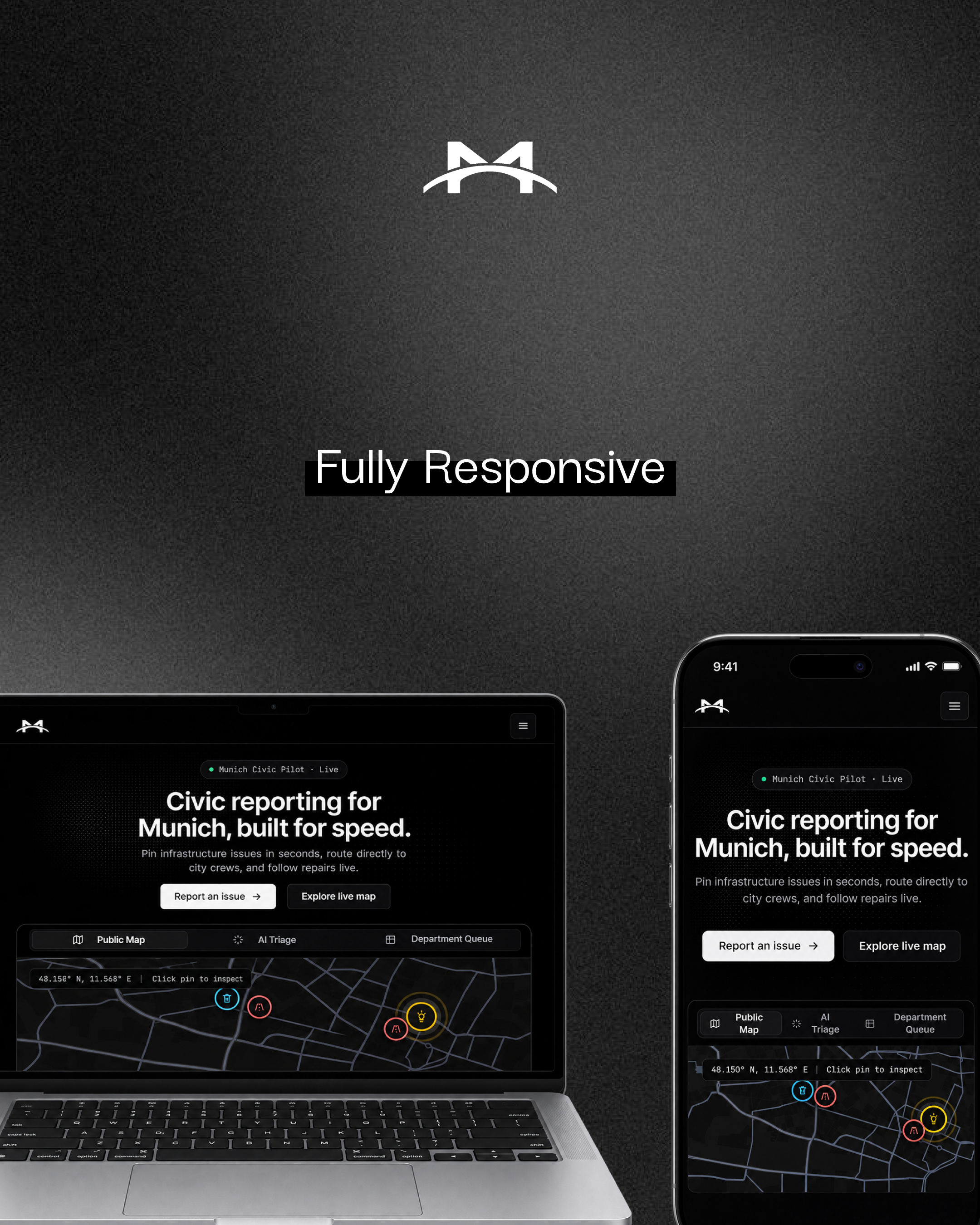
The interface needed to support photo uploads, location selection, and document review on a small screen. I refined the reporting steps, validation messages, keyboard focus, and mobile navigation.
Choosing a realistic scope
Working independently meant prioritizing the core reporting experience. I focused on preparing and sharing reports rather than attempting direct integration with municipal ticketing systems.
Accomplishments that I'm proud of
- Bringing evidence collection, location selection, German report preparation, PDF export, and community confirmation into one application.
- Implementing browser-side photo metadata removal.
- Creating a responsive interface with bottom navigation on mobile.
- Recording a complete local demonstration of the reporting workflow.
- Testing actual local API publication through to the appearance of a selected map pin.
- Adding regression checks for refreshes, separate browser profiles, missing reports, and loading-error recovery.
What I learned
I learned that trustworthy feedback is essential in civic software. Uploading a photo, saving a report, and displaying a public pin are separate steps, and each needs verification.
I also learned that a useful prototype needs clear boundaries. Community publication is different from official submission, and a prepared German draft still needs human review.
What's next for MingaBridge
- Strengthen production persistence, public-read verification, and deployment diagnostics.
- Introduce moderation and stronger spam protection.
- Suggest existing reports before users create potential duplicates.
- Support additional input languages.
- Evaluate a language-model integration for more flexible German drafting.
- Explore municipal integrations in collaboration with the relevant departments.
MingaBridge: a bridge between noticing an issue and reporting it.
Built With
- jspdf
- leaflet.js
- next.js
- openstreetmap
- postgresql
- react
- supabase
- tailwind-css
- typescript
- zod
