




Inspiration
My sister and I have long been huge sci-fi fans, and at some point, we both really wanted to go to space ourselves (as astronauts). Though our wish to become astronauts has changed over time (as we found we like programming a bit more than exploring space) our fascination with space itself never ceased. So when we heard about this hackathon with a space theme, we decided that we would try and make a space-themed app.
As children, one of our favorite things to do was to observe meteor showers, so we thought, why not make an app about meteorites. An app that tells unknowing meteorite owners, who may not have the time nor resources to get their rock checked to see if it is a meteorite, about whether they have a real meteorite on their hands.
What it does
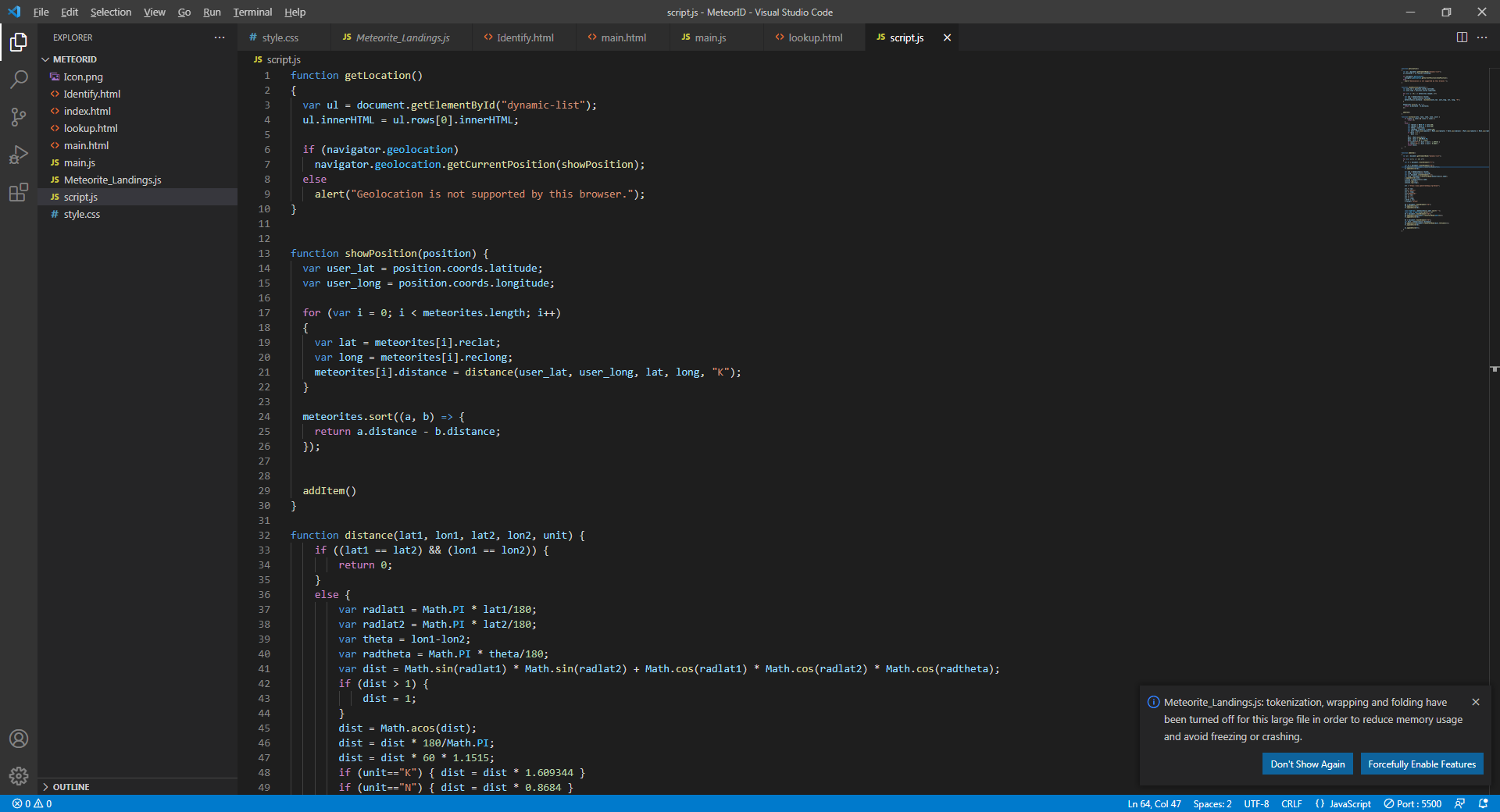
Our app asks the user to upload an image of a rock that they suspect to be a meteorite and verify to the user whether the rock is a and ordinary rock, or a meteorite. If the rock is a meteorite, the user is also told about the type of meteorite they own. Next users can interact with our chatbot whose purpose is to describe to owners of meteorite(s), prospective meteorite owners, and meteorite enthusiasts a bit about the meteorites they own/like to learn about. Finally, users can navigate towards our second page in which they can launch our application that determines the user's geolocation (with their permission), and tells them about the meteorite landings that occurred near them.
How we built it
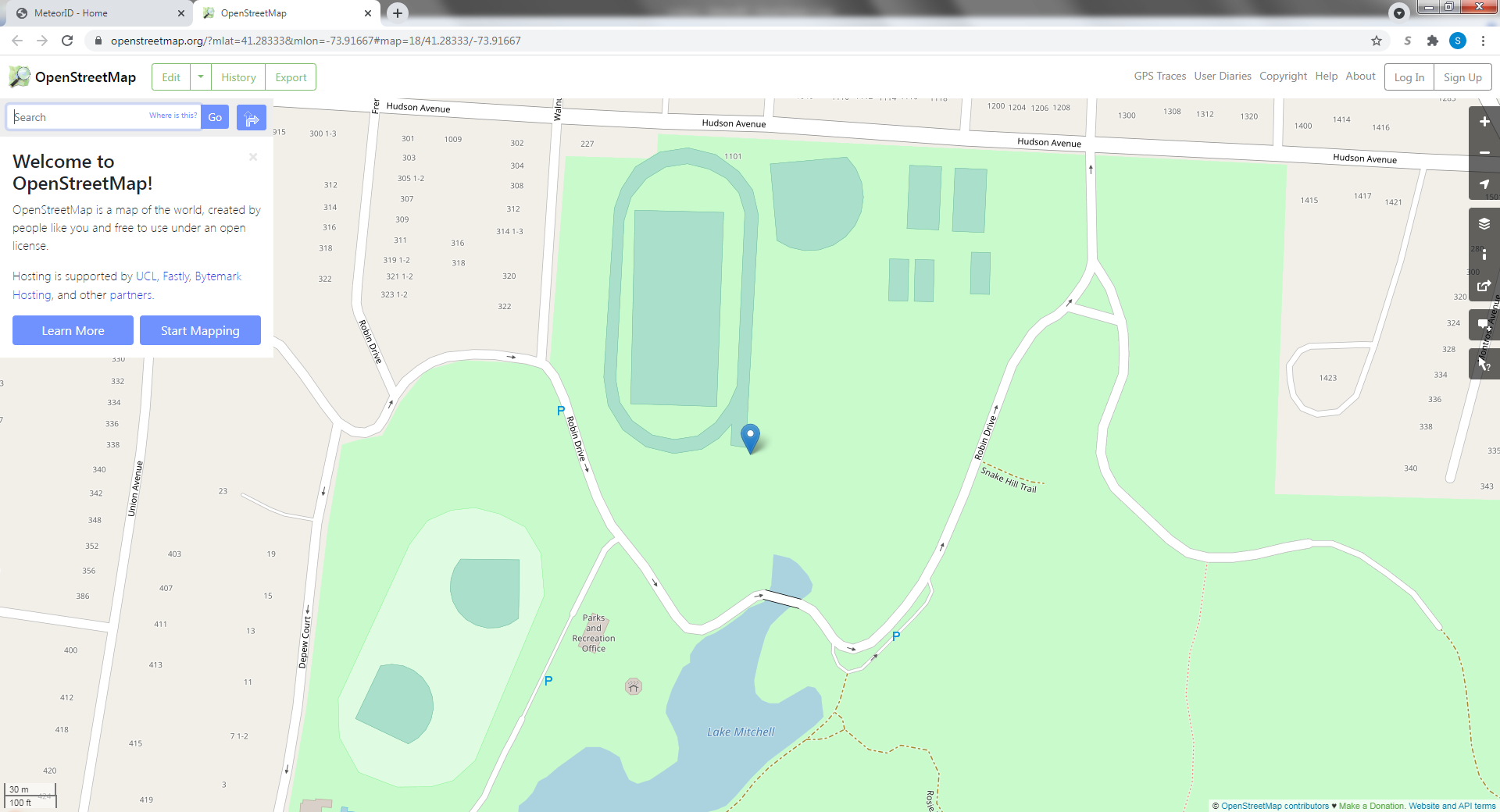
We built our web app using HTML, CSS, and JavaScript and hosted it on Qoom. We used Microsoft Azure to create our resource group and resources, along with custom vision ai to build our image classifier. We used IBM's Watson Assistant to build our chatbot. We used open street maps for mapping out our meteorite landing locations.
Challenges we ran into
One of the challenges we ran into while building our app was creating/finding image datasets for meteorites for our classifier to be trained on. We sorted through many images and image datasets to create a suitable dataset which we could use. Another challenge we ran into was how to integrate our image classifier into our code. It took some time and a lot of reading through documentation to figure out exactly how to do so without getting any errors.
Accomplishments that we're proud of
We are proud that we now know how to create image classifiers, how to use Microsoft Azure, how to integrate our projects into our code, and how to build an app in a day!
What we learned
We learned how to use Microsoft Azure along with how to make an image classifier using custom vision ai. We also learned how to embed our projects in custom vision ai into our website.
What's next for Meteor ID
Our next steps for Meteor ID include improving our data set for our image classifier to eliminate any misclassifications, which can occur when classifying types of meteorites.
Citations
https://data.nasa.gov/Space-Science/Meteorite-Landings/gh4g-9sfh
https://us-east.assistant.watson.cloud.ibm.com/
https://geogallery.si.edu/meteorites
https://monnigmuseum.tcu.edu/meteorites/pena-blanca-springs/




Log in or sign up for Devpost to join the conversation.