-
-
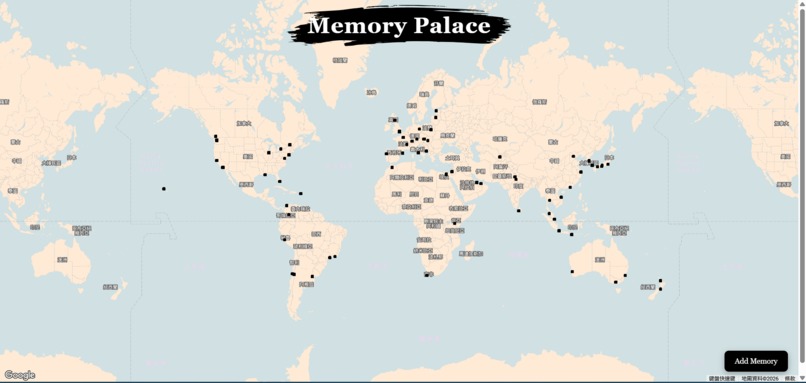
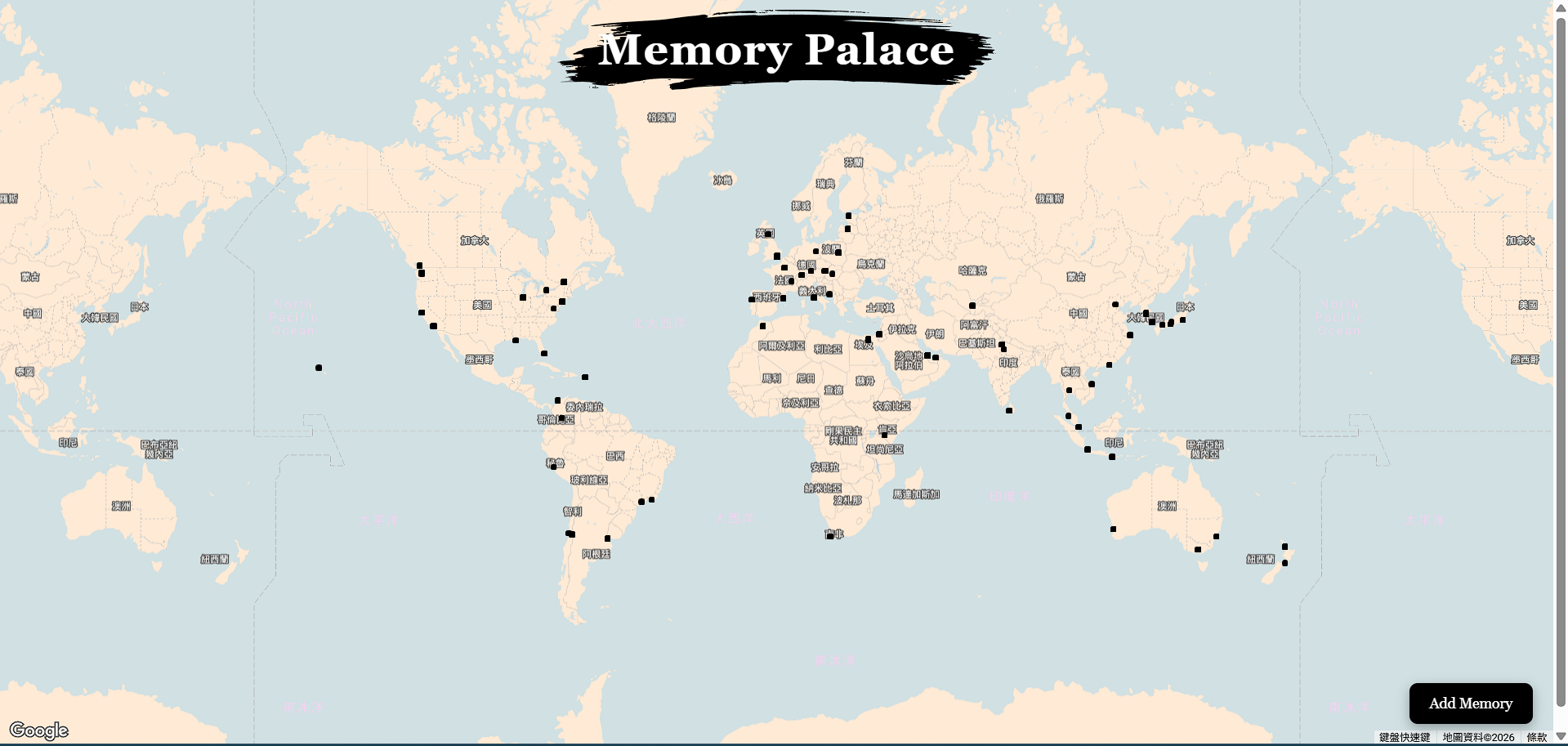
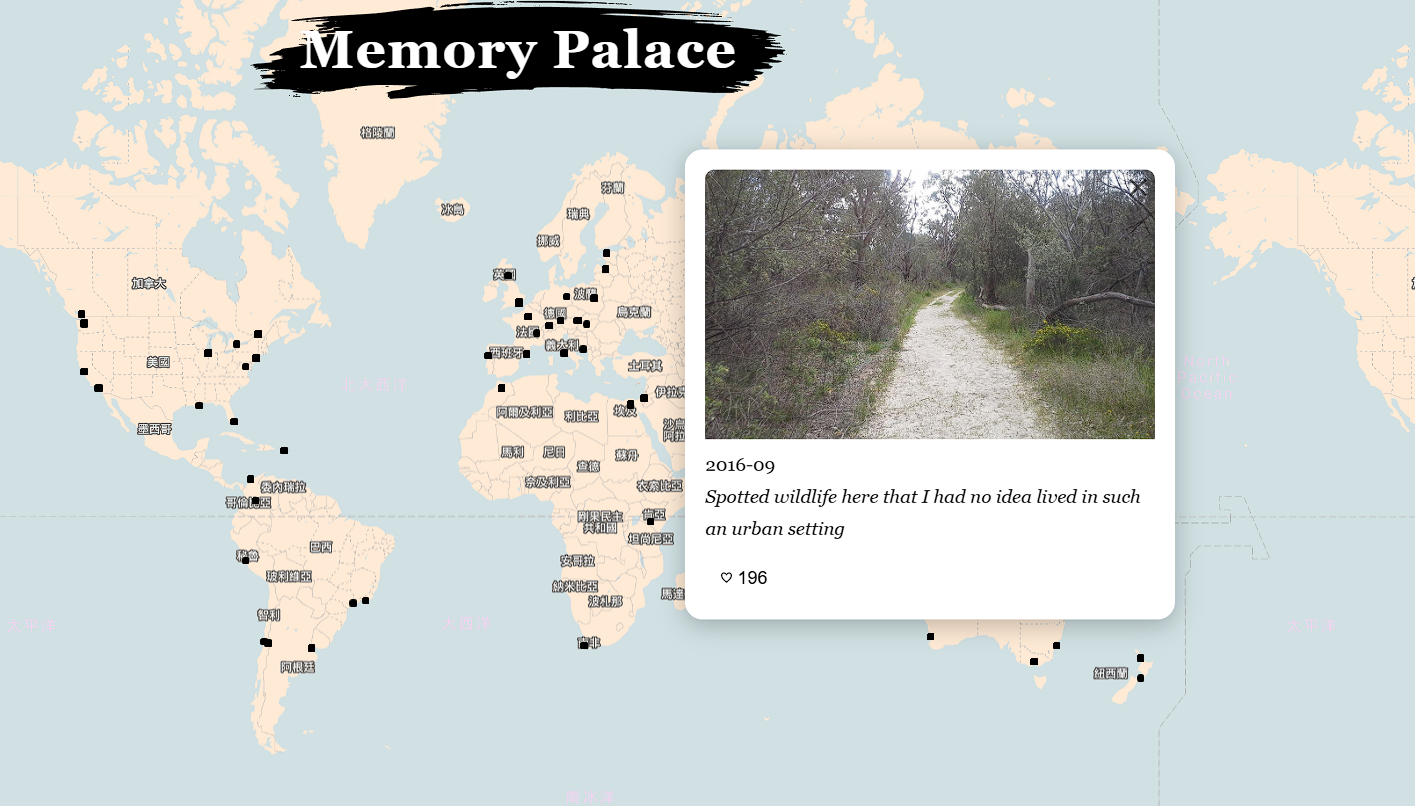
the overview of our project
-
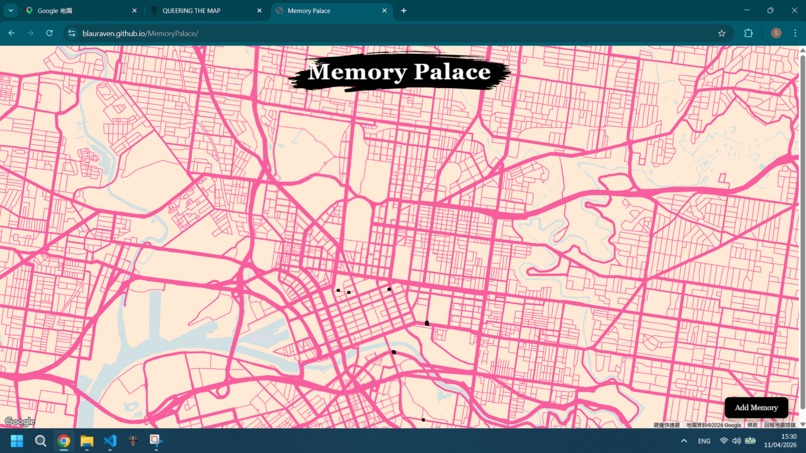
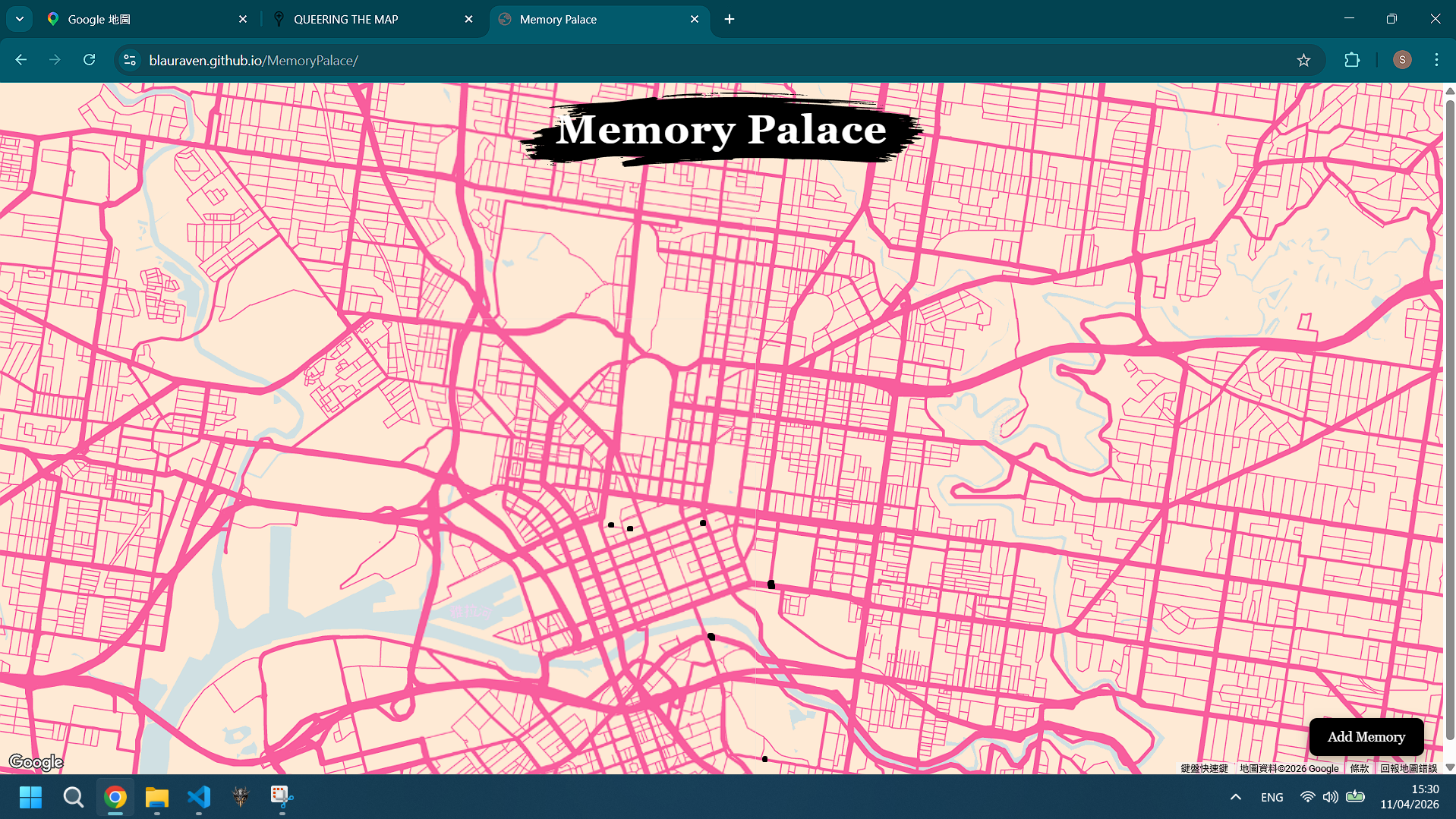
A zoom in view of our project
-
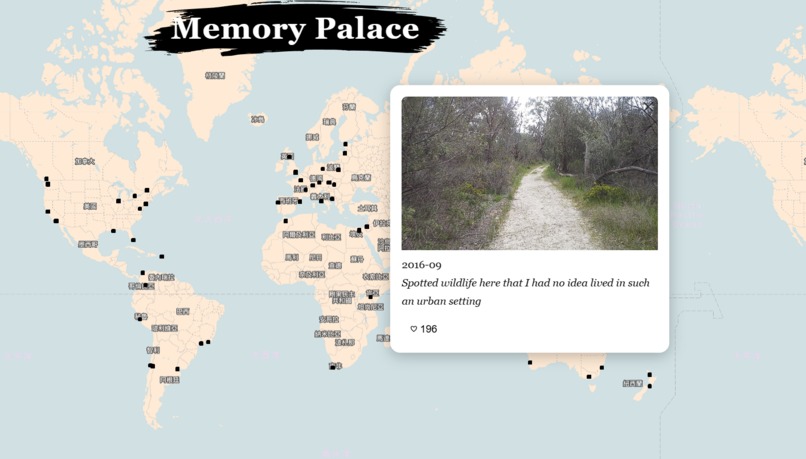
A memory shared by a user
-
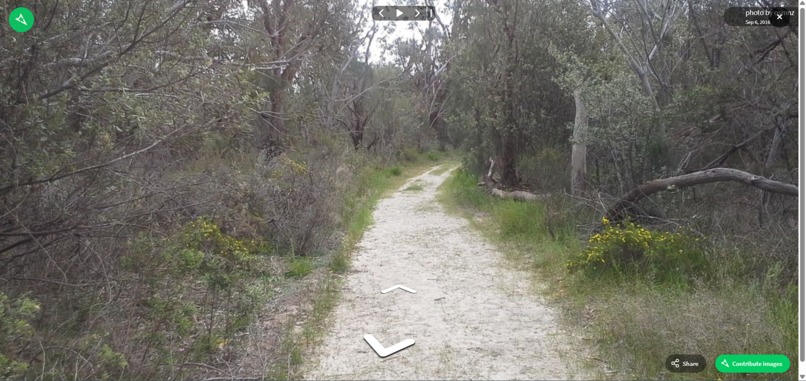
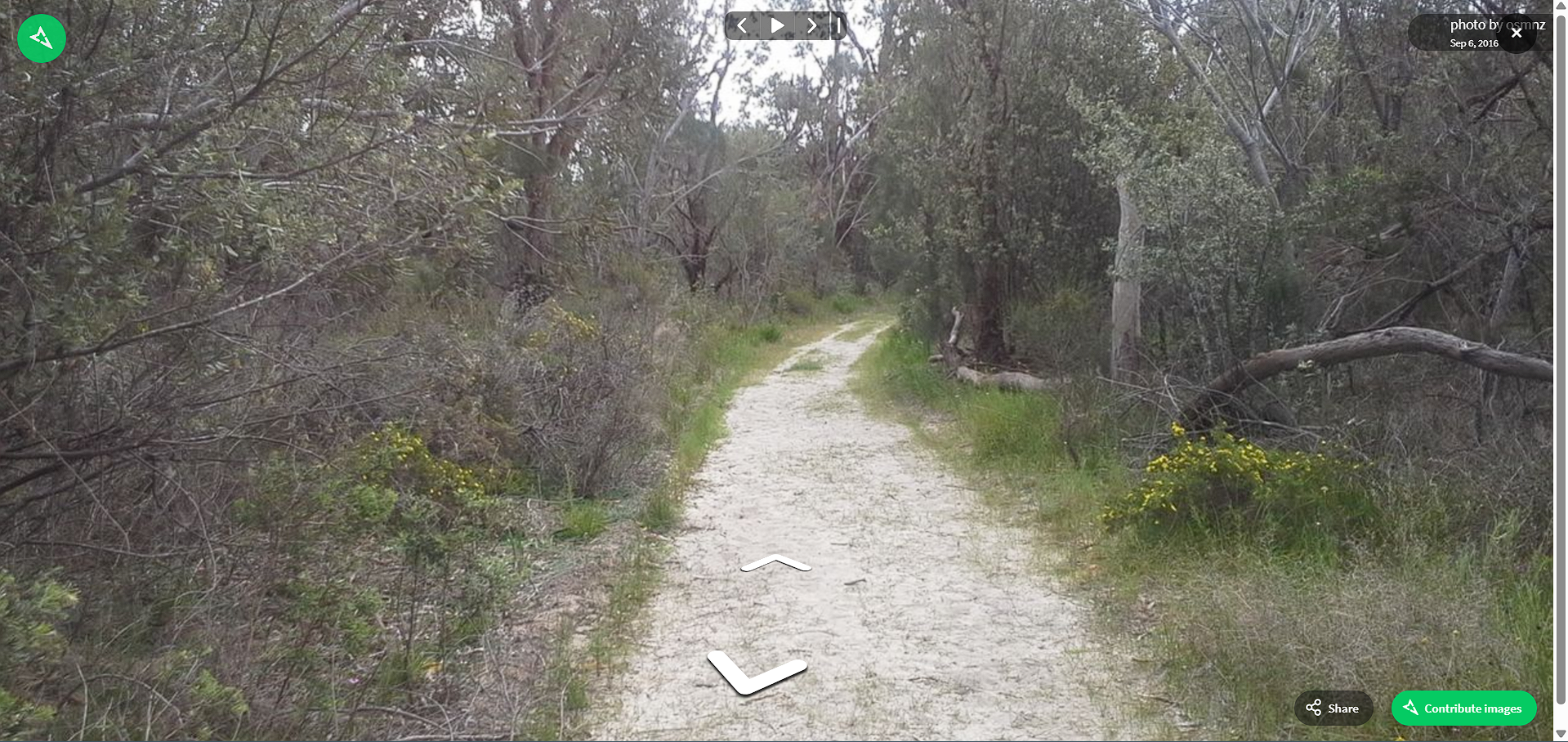
street view from the memory
-
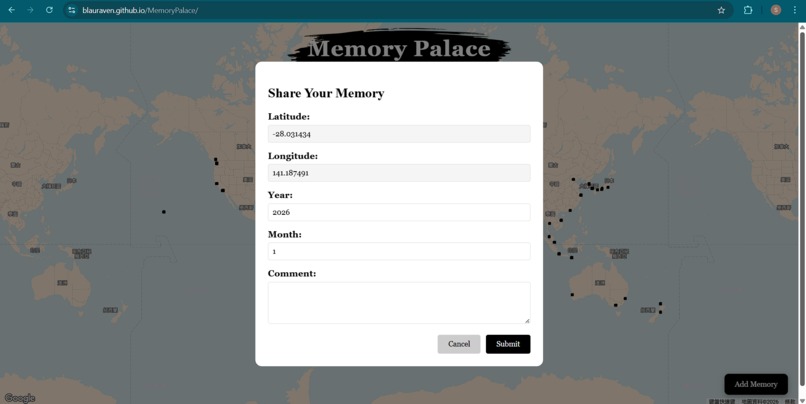
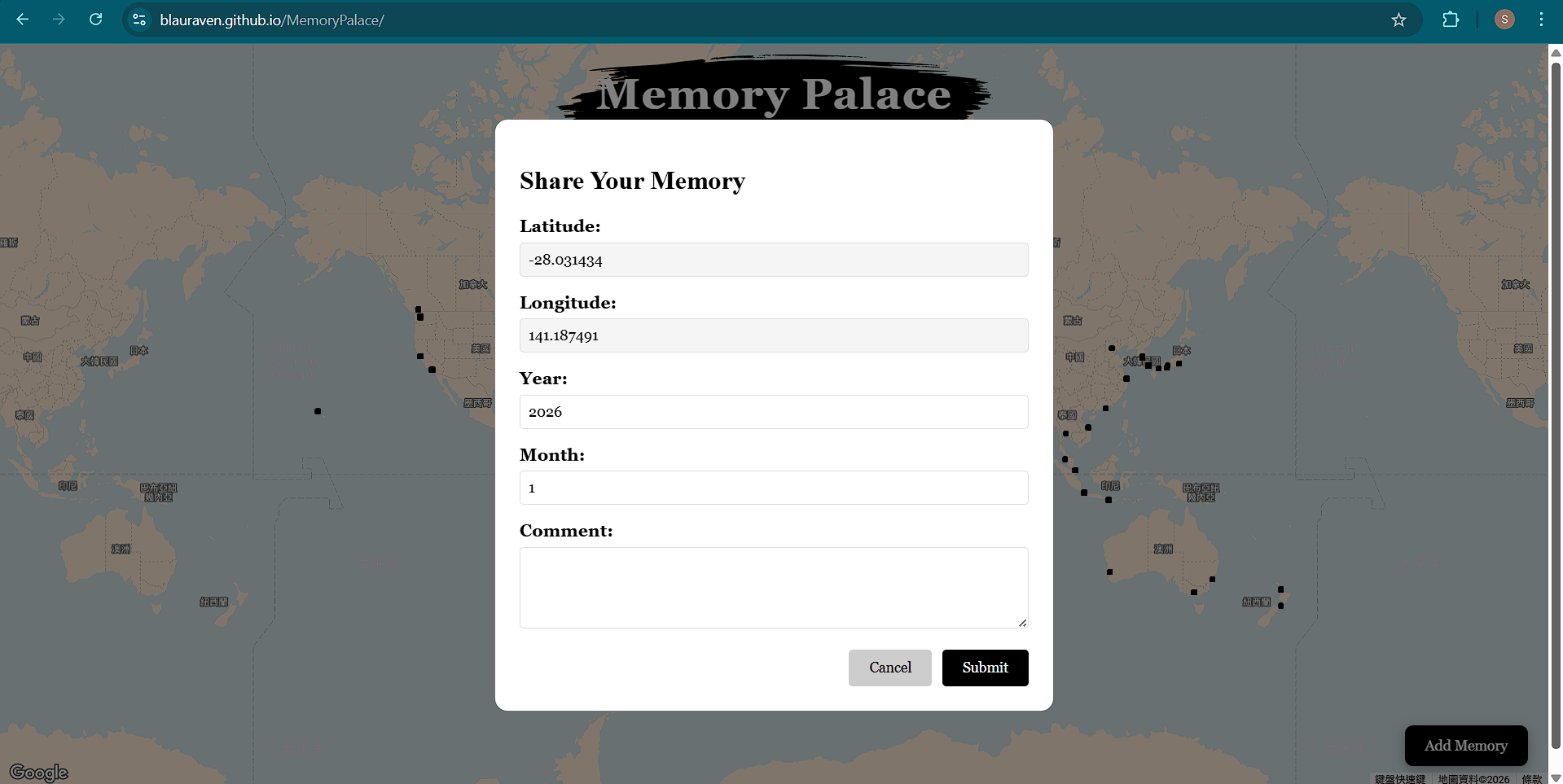
creating memory
-
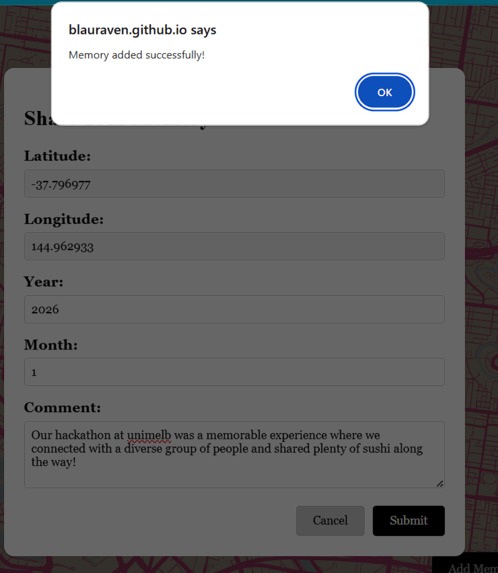
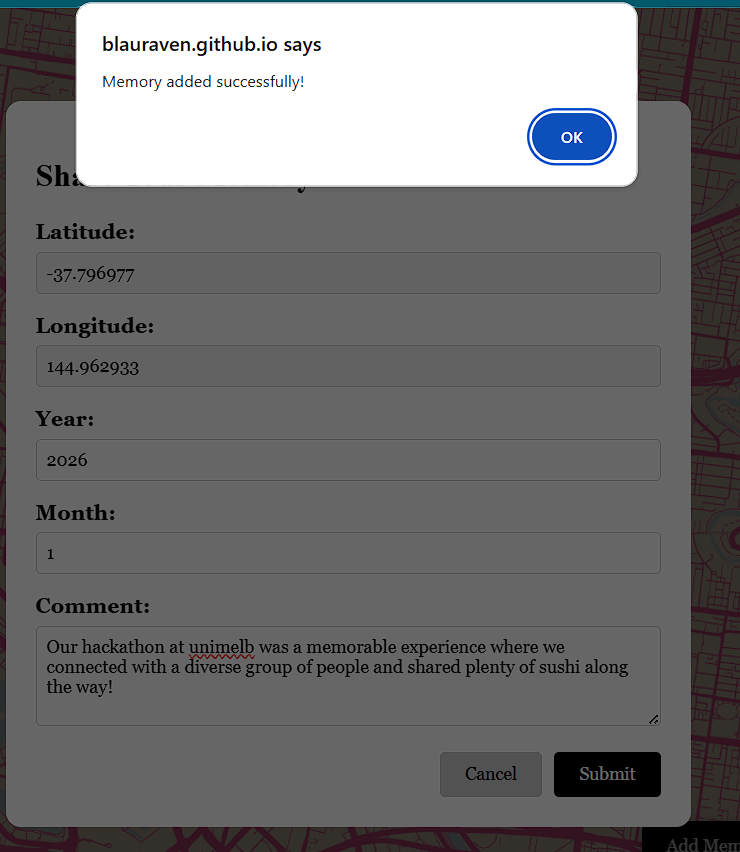
added a memory
Inspiration
Memory Palace began with one idea: maps can preserve memory as well as location.
We were inspired by Google Maps and Queering the Map. Google Maps is intuitive and scalable, but it mainly focuses on navigation, reviews, and present day information. Queering the Map shows the emotional and personal side of places through storytelling, but large numbers of pins can make it cluttered. We wanted to combine the strengths of both platforms while solving these limitations.
What it does
Memory Palace is a location based platform where users attach personal reflections, emotions, and cultural memories to specific places using coordinates.
Instead of traditional reviews, users share stories about what a place meant to them, what happened there, or what used to be there. This turns the map into a living archive of collective history. Users can also explore how places and community narratives change over time.
To keep the platform clear and scalable, we use a clustering system that groups multiple stories in one area into visual dots. As users zoom in, they can explore those stories in more detail. The map also matches the user’s system language, making it more accessible and inclusive.
How we built it
We used:
- Google Maps API for the global map interface and navigation
- Mapillary for street level views across different time periods
- Firebase for storing comments, likes, and interaction data
During the hackathon, we built the base map, zoom functions, comment location pinning, likes, and a timeline feature for viewing comments across years. We also explored ideas like comment of the day and random comment discovery.
Challenges we ran into
A major challenge was linking comments to street view from the correct time period. Mapillary did not always have enough historical image data, so some comments could not be matched with a corresponding street view.
We also wanted to build more community features, such as stronger user interaction and daily highlighted comments, but due to time pressure we focused on the core experience. Another challenge was preventing map overcrowding, which we addressed through clustering.
Accomplishments that we're proud of
We are proud that we turned an abstract idea about cultural preservation into a working prototype.
Our biggest achievement was reimagining the map as a space for memory, identity, and lived experience rather than just navigation. We are also proud of the clustering system, which keeps the platform scalable and readable. By combining Google Maps, Mapillary, and Firebase, we created a platform where stories can be pinned to real places and preserved over time.
What we learned
We learned that digital maps can do more than guide people through space. They can also preserve personal and cultural history.
We also learned the importance of studying existing platforms critically, then adapting their strengths while improving their weaknesses. On the technical side, we gained experience working with map APIs, cloud databases, historical imagery, and user generated content.
What's next for Memory Palace
Next, we want to improve the connection between memories and historical street view, especially where image coverage is limited.
We also want to add more community features, such as comment of the day, richer user interaction, and better story discovery. In the long term, we want Memory Palace to grow into a stronger platform for preserving intangible cultural heritage through lived experience.

Log in or sign up for Devpost to join the conversation.