-
-
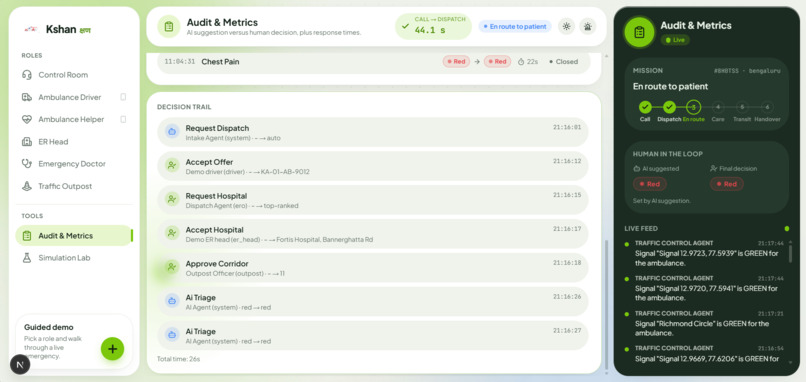
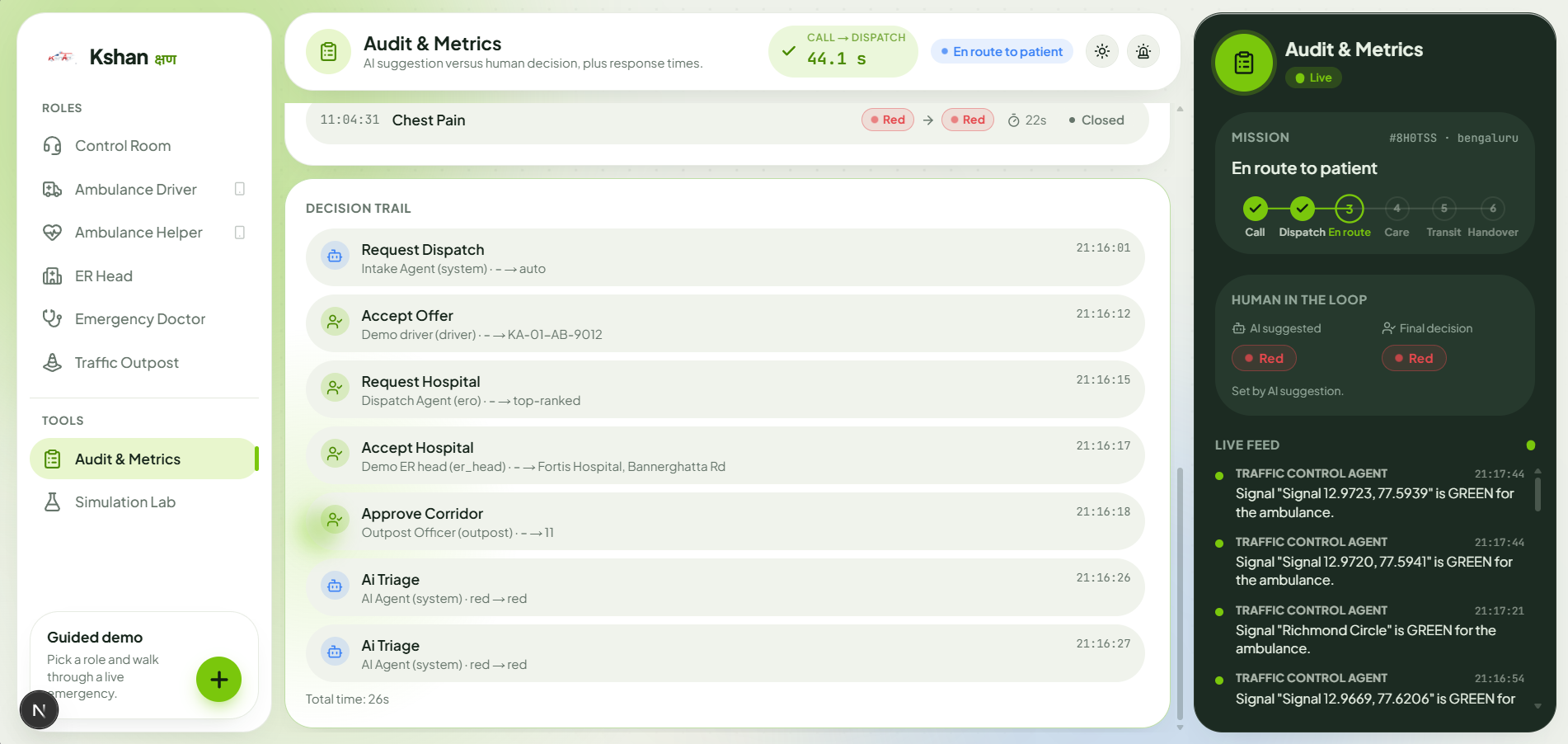
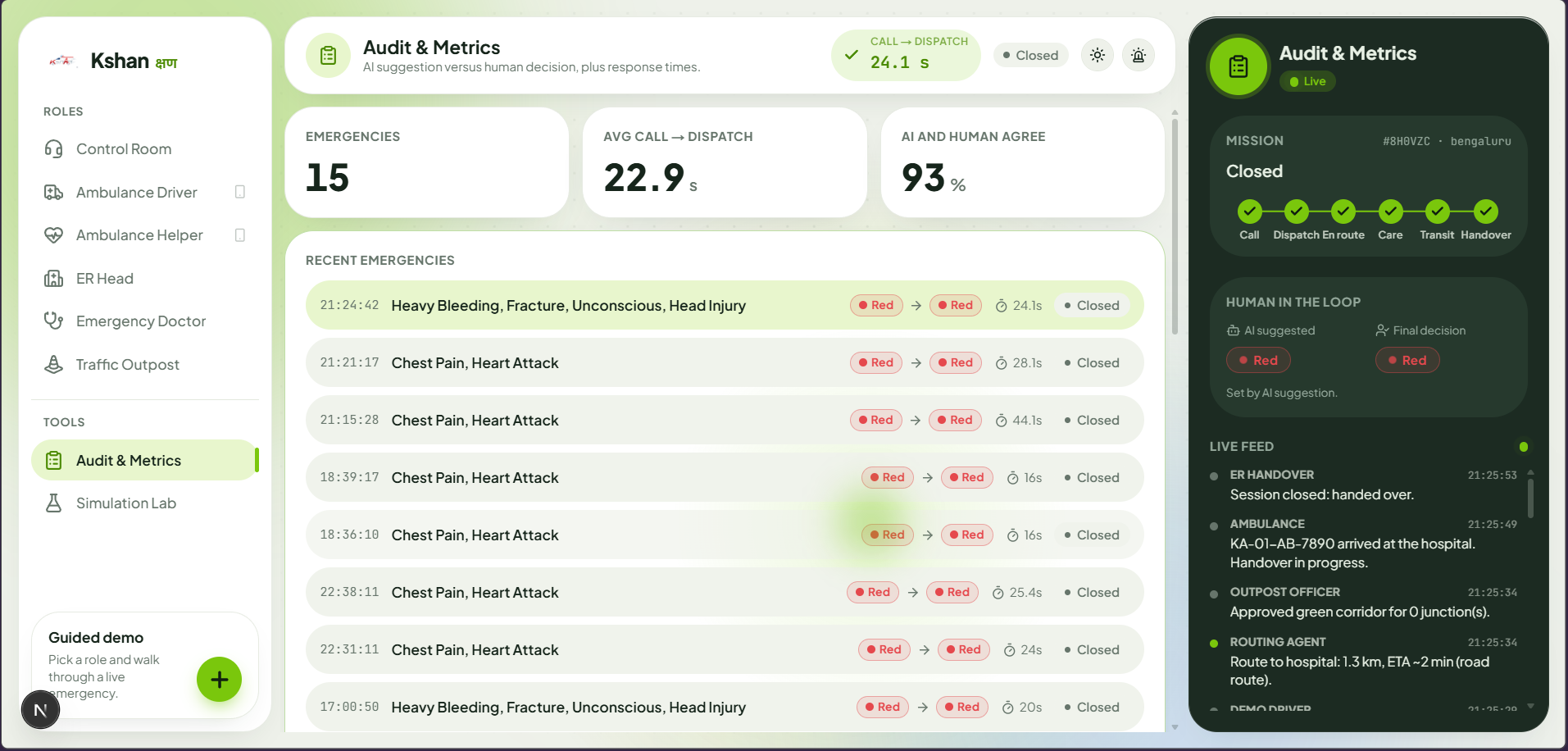
Kshan audit metrics decision trail.
-
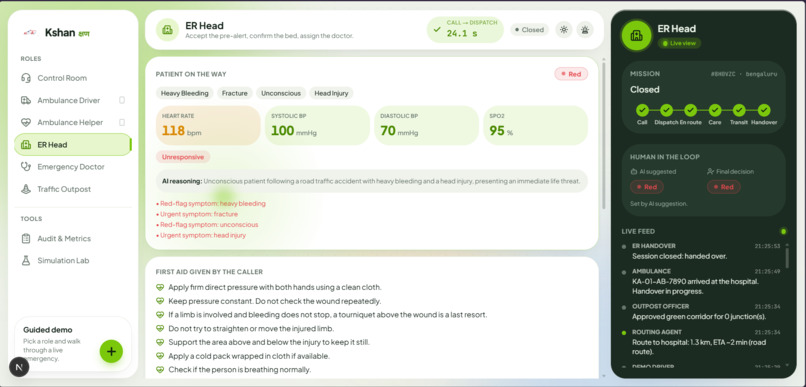
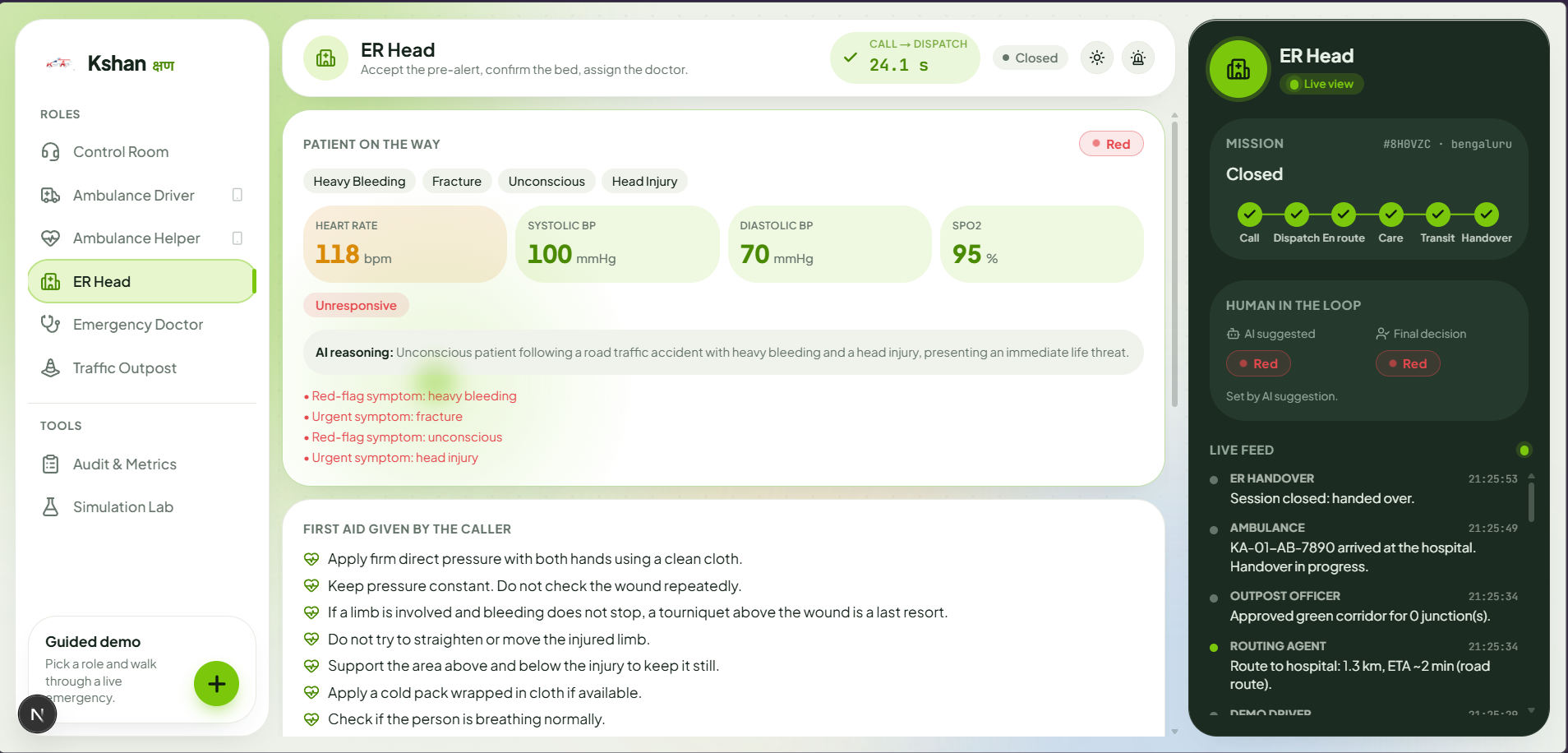
Kshan ER head patient dashboard.
-
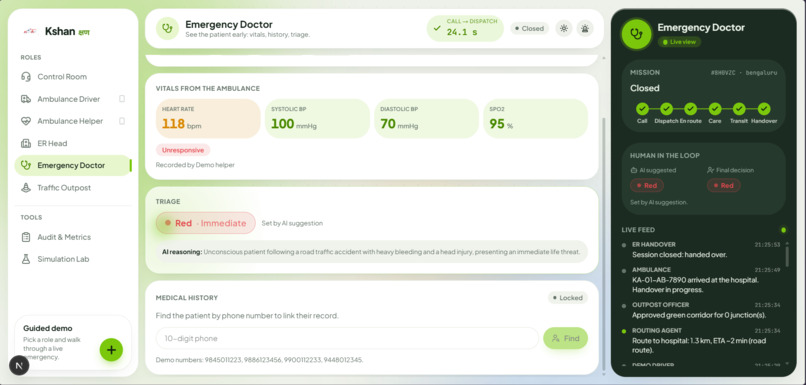
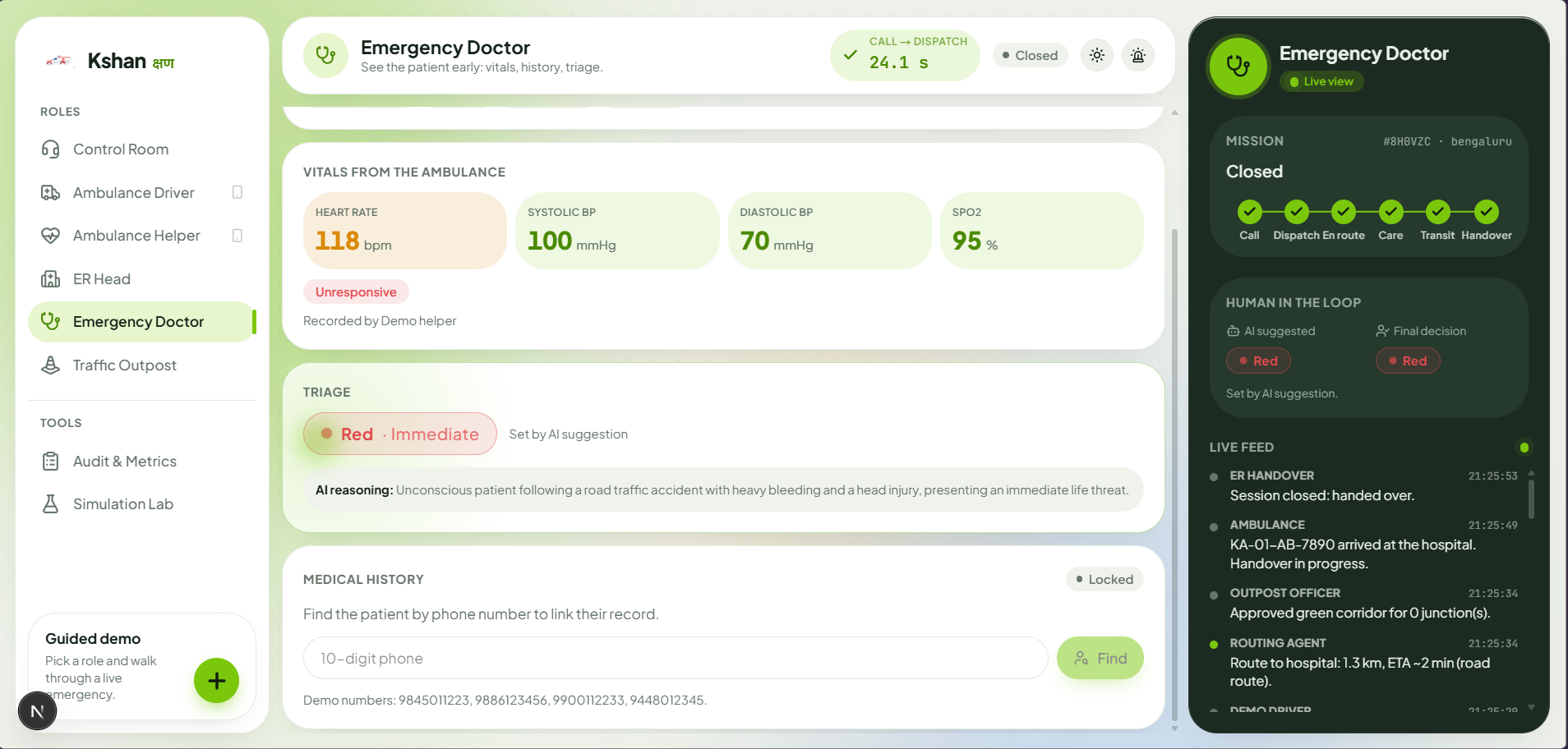
Kshan emergency doctor vitals view.
-
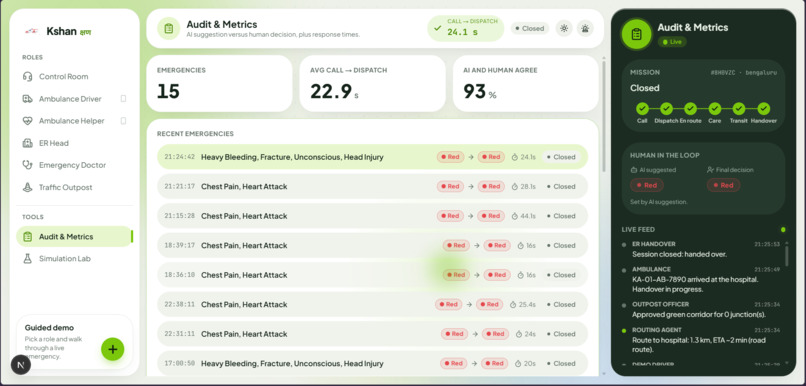
Kshan overall audit metrics dashboard.
-
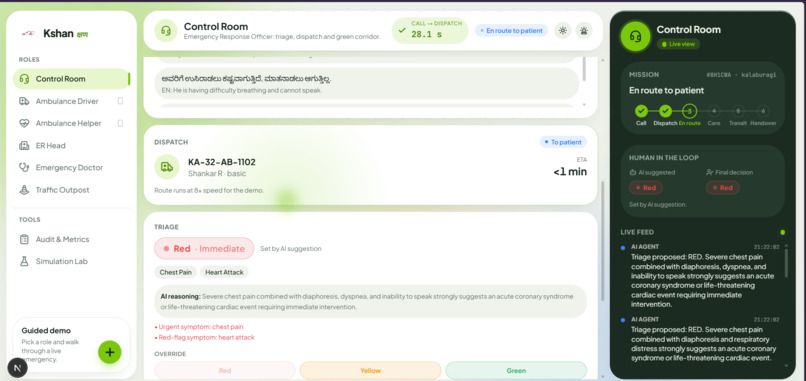
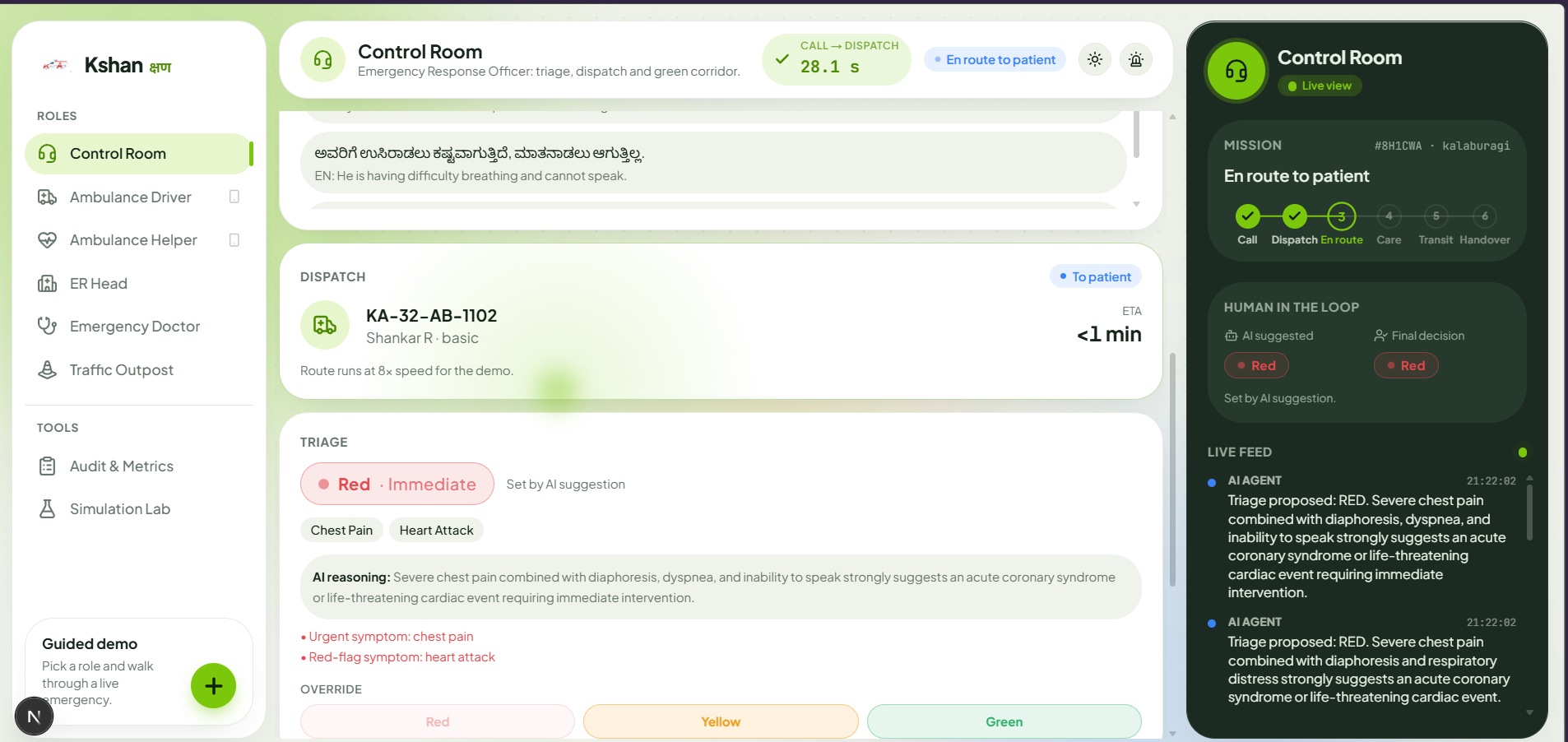
Kshan emergency control room triage.
-
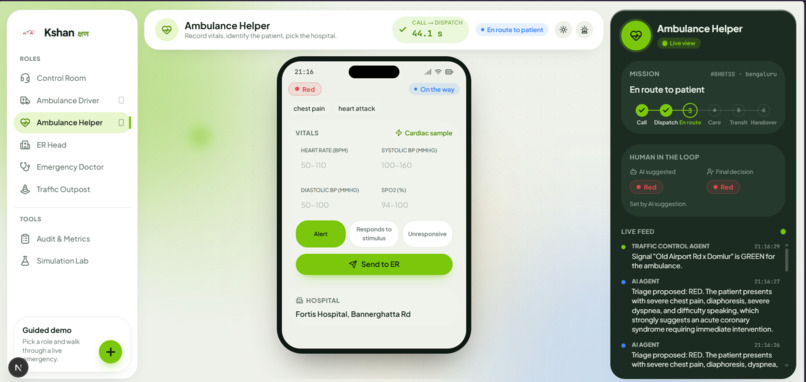
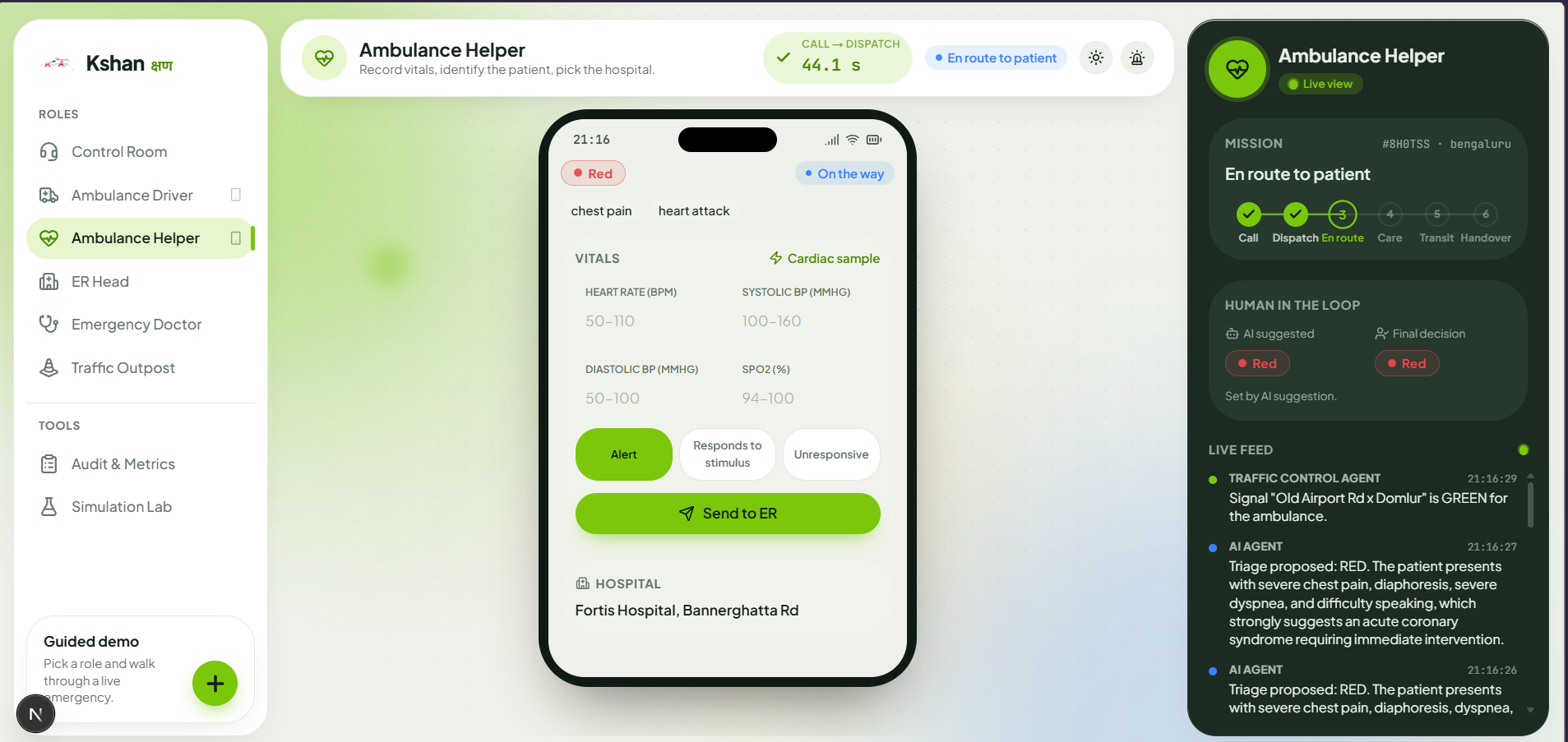
Kshan ambulance helper live dashboard.
-
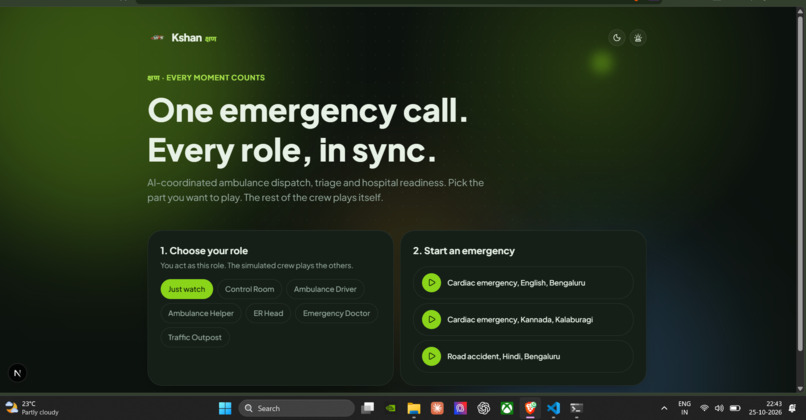
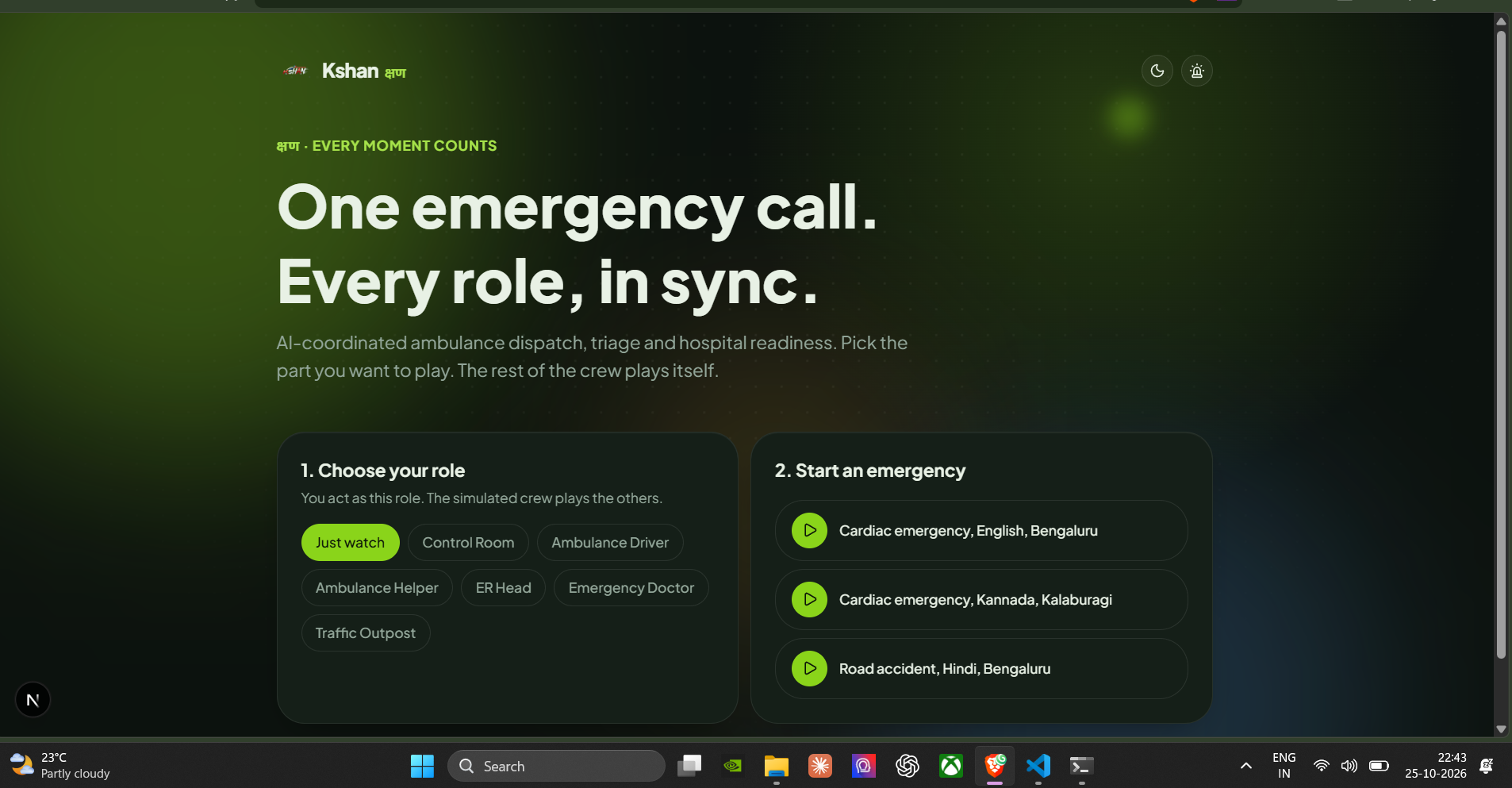
Kshan application role selection screen.
-
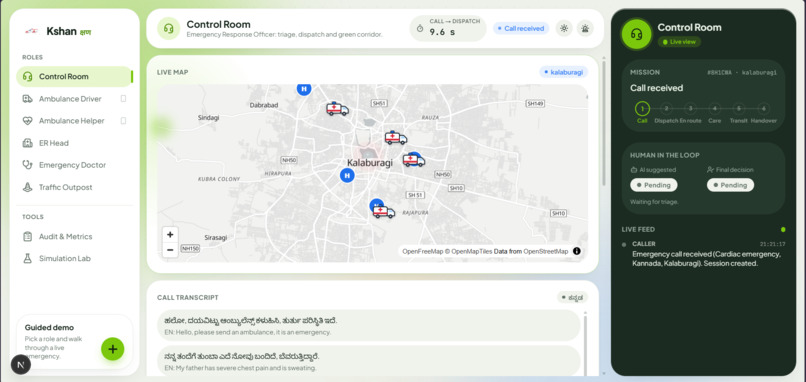
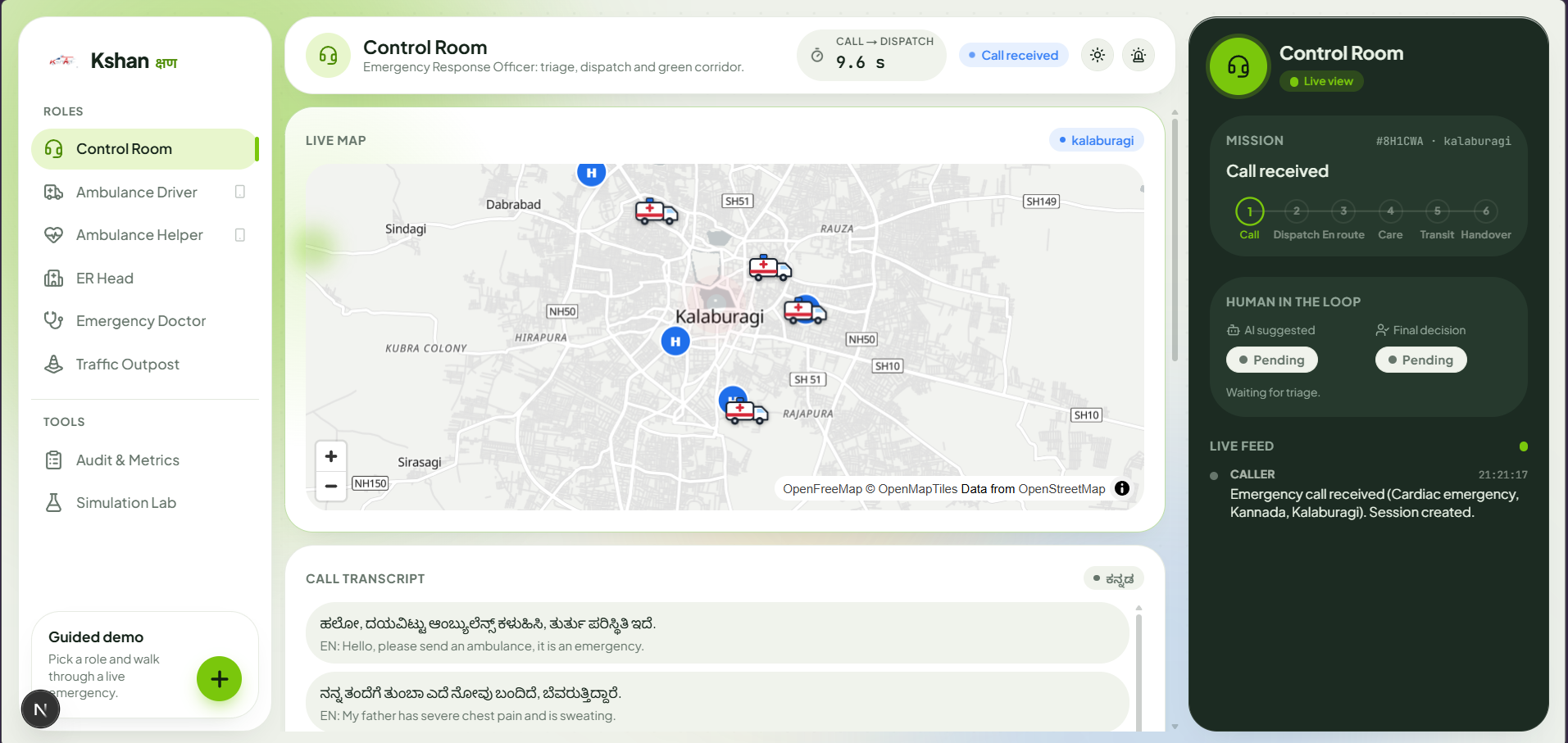
Kshan Kalaburagi control room map.
-
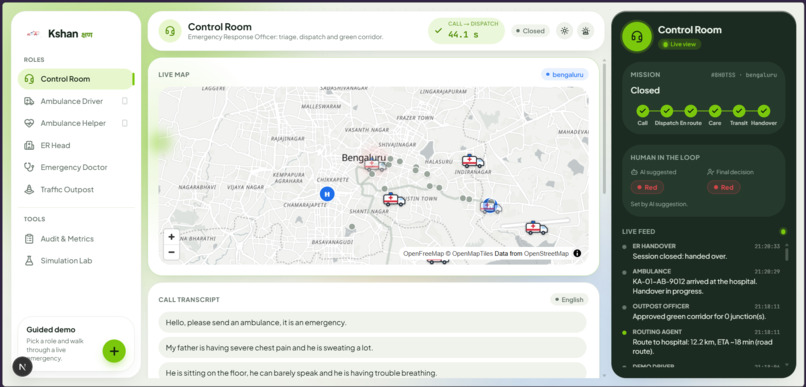
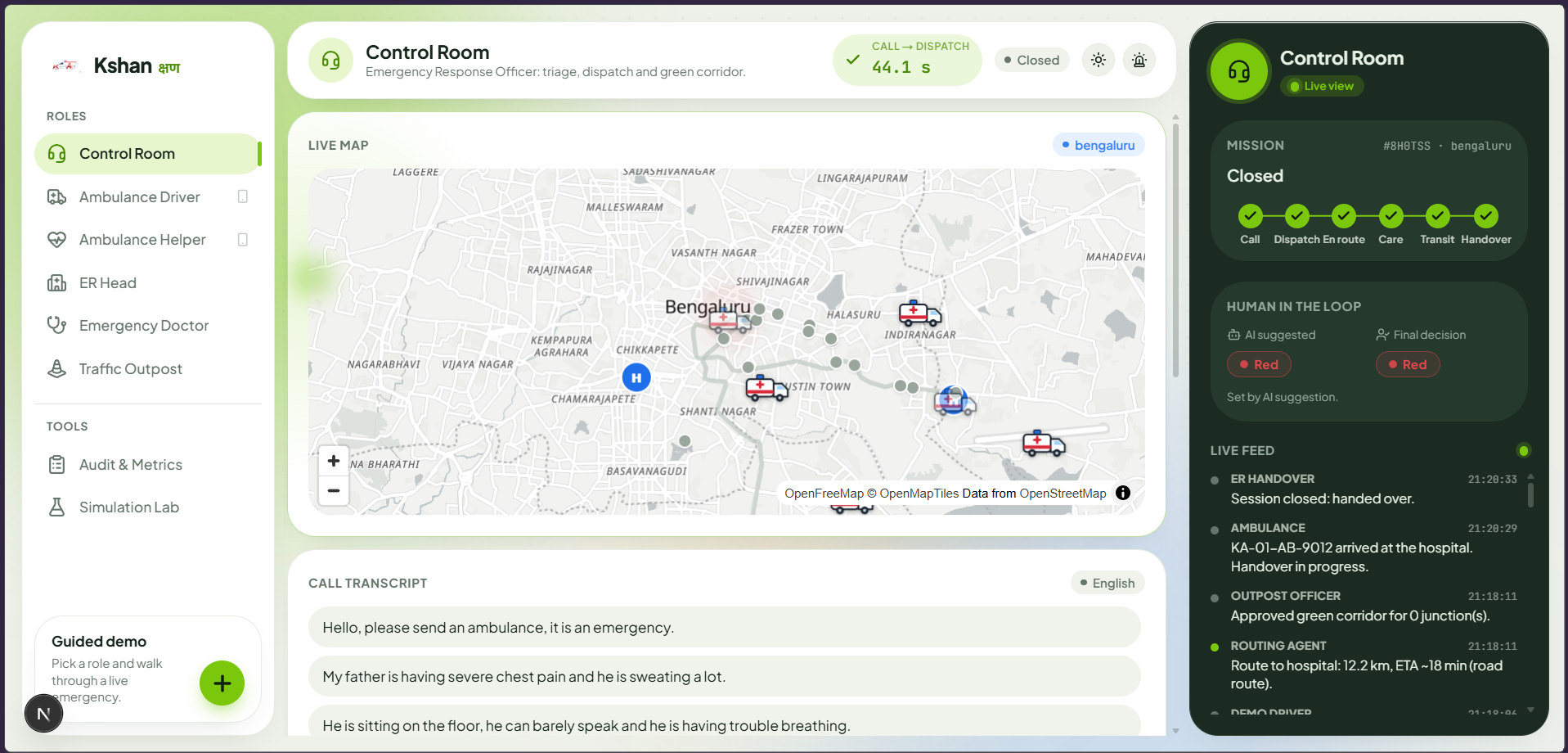
Kshan control room live map.
-
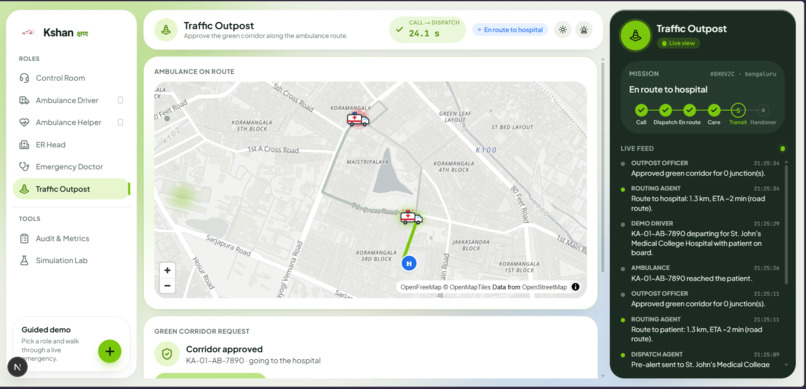
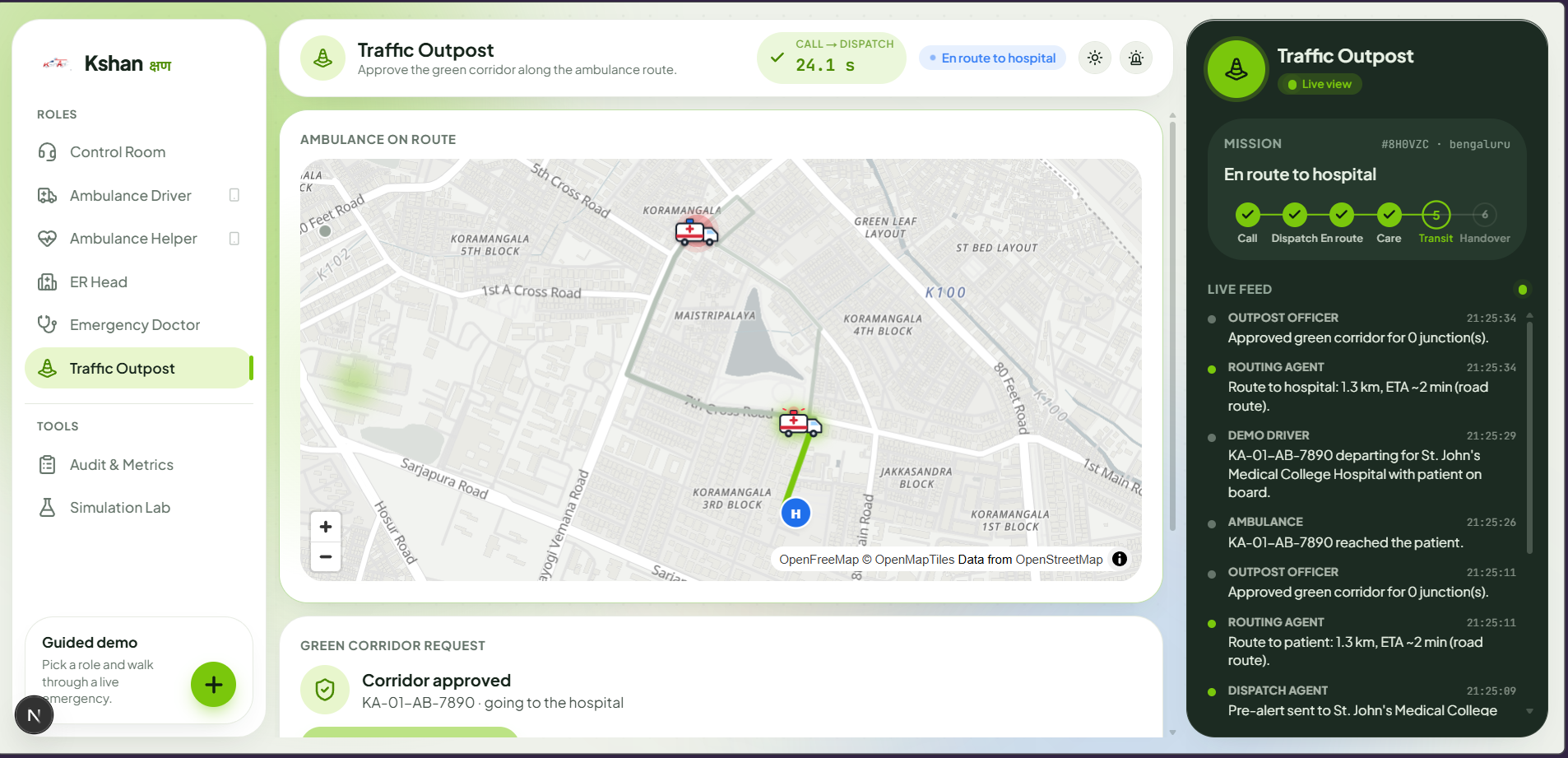
Kshan traffic outpost map view.
-
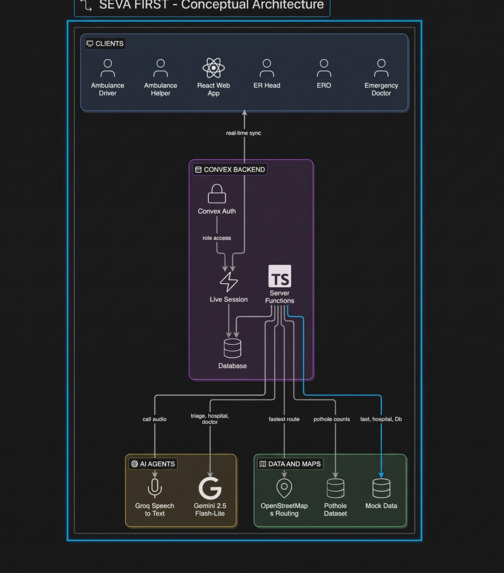
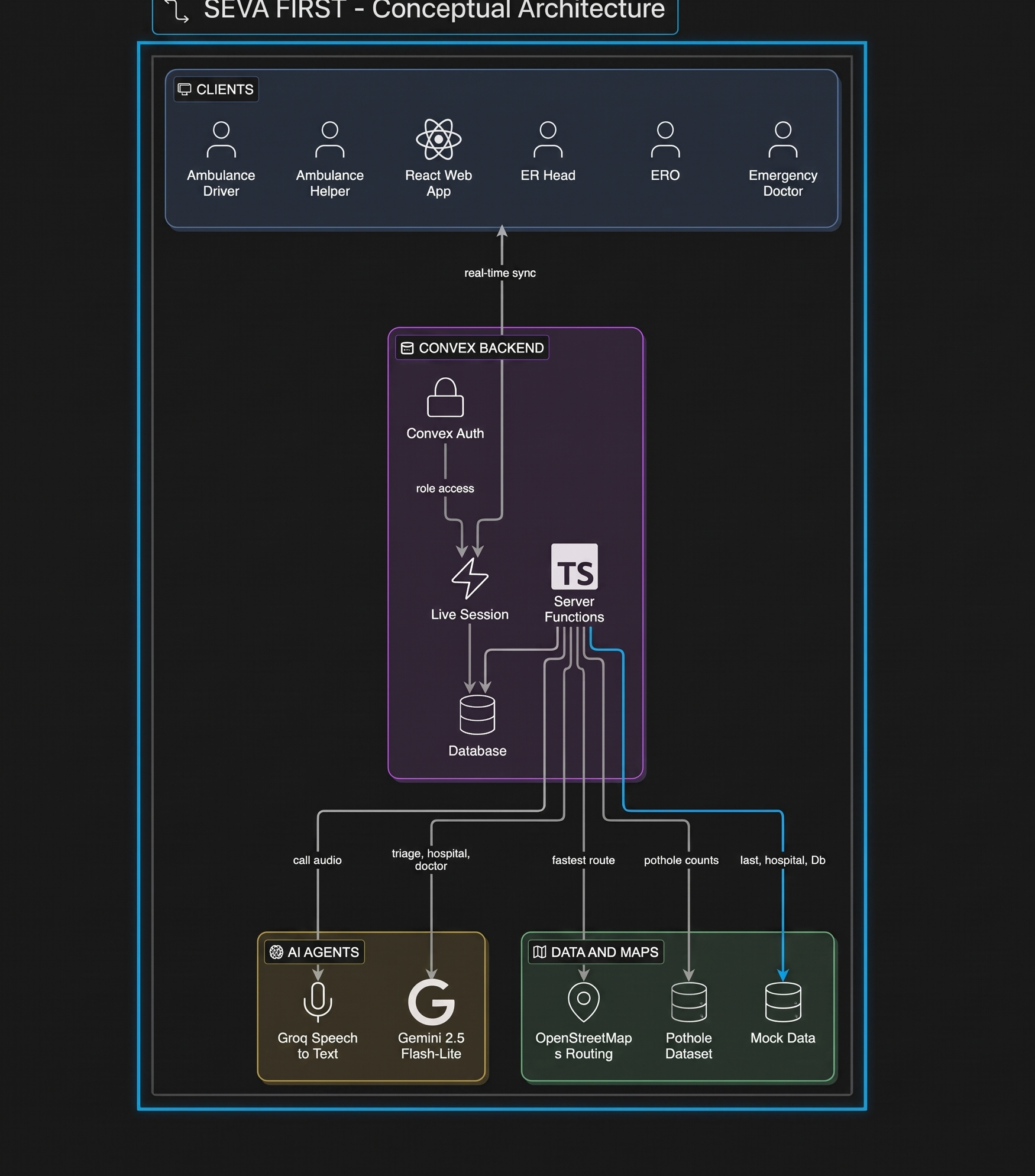
Conceptual architecture diagram of Kshan.
Inspiration
The alarming rate of road traffic fatalities in India, with 177,175 deaths reported in 2024, drove the creation of this project. Delays in emergency transport and communication silos in the standard 112 dispatch system frequently cause victims to miss the crucial "golden hour" for survival.
What it does
The Intelligent Dispatch & Zero-Latency Trauma Corridor System replaces sequential radio updates with a unified digital session for all emergency stakeholders. It features an AI agent that transcribes emergency calls in real-time, suggests triage severity, calculates the fastest pothole-aware route, pre-assigns hospital beds, and triggers green traffic signals to ensure rapid, safe transit.
How we built it
We developed the frontend using a React Web App hosted on Vercel. The backend relies on Convex for database storage, server functions, and real-time session synchronization. For AI capabilities, we integrated Groq for live audio-to-text conversion and Gemini 2.5 Flash-Lite to handle triage and hospital matching. We utilized OpenStreetMap and a public pothole dataset for hazard-aware routing.
Challenges we ran into
Transitioning the standard linear emergency response protocol into a parallel, data-rich ecosystem required seamless synchronization. Ensuring the AI agents, backend database, and live mapping infrastructure updated instantly across multiple user roles (driver, helper, ERO, and doctor) without introducing latency was a primary technical hurdle.
Accomplishments that we're proud of
We successfully built a TRL 4 working prototype that integrates mock data for fleets, hospitals, and medical records. We are especially proud of automating the clinical handover process by pre-assigning doctors and beds based on AI triage before the patient even arrives.
What we learned
We learned that parallel information access—where all stakeholders view the same live data—eliminates communication delays. Furthermore, mapping physical transit hazards like potholes is just as critical for stabilizing trauma patients as the initial ambulance dispatch speed.
What's next for Kshan
Our next immediate goal is reaching TRL 5 by testing the integrated modules in simulated emergency scenarios. We plan to incorporate live telemetry hardware for automatic vital sign monitoring during transit and scale up to higher-tier AI models as the system expands.
Built With
- convex
- gis
- google-maps
- llm
- openstreetmap
- react
- speechtotext
- typescript
- vercel

Log in or sign up for Devpost to join the conversation.