-
-
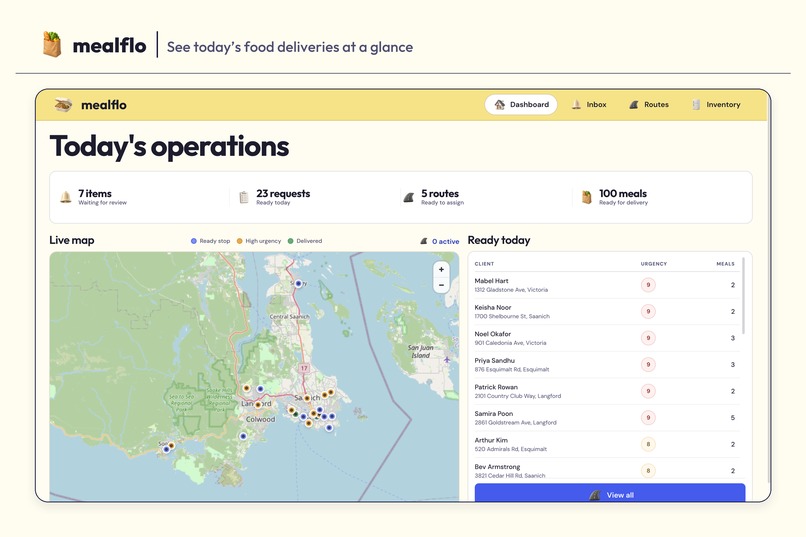
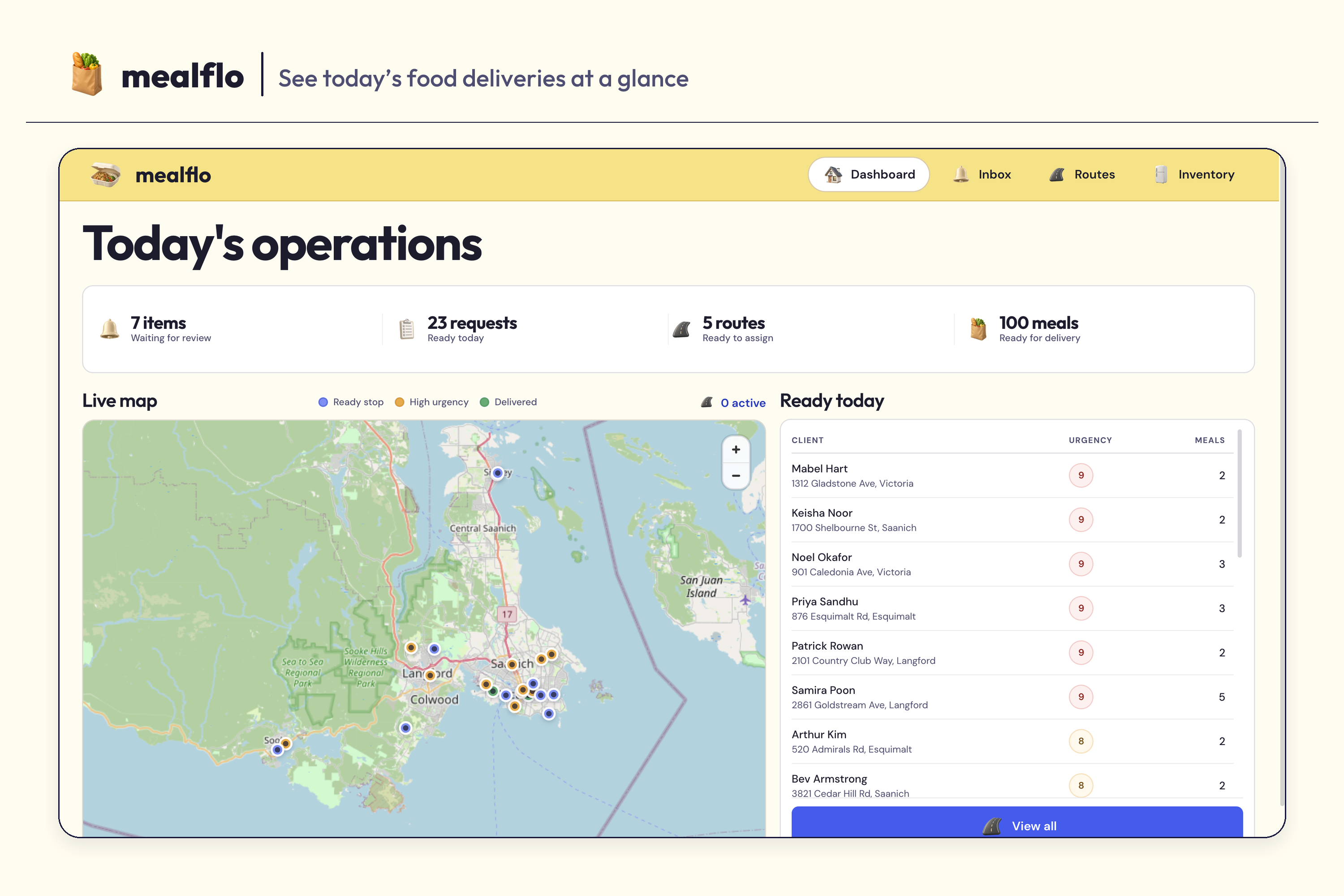
Today’s operations: requests, meals, routes, and delivery progress visible from one coordinator dashboard.
-
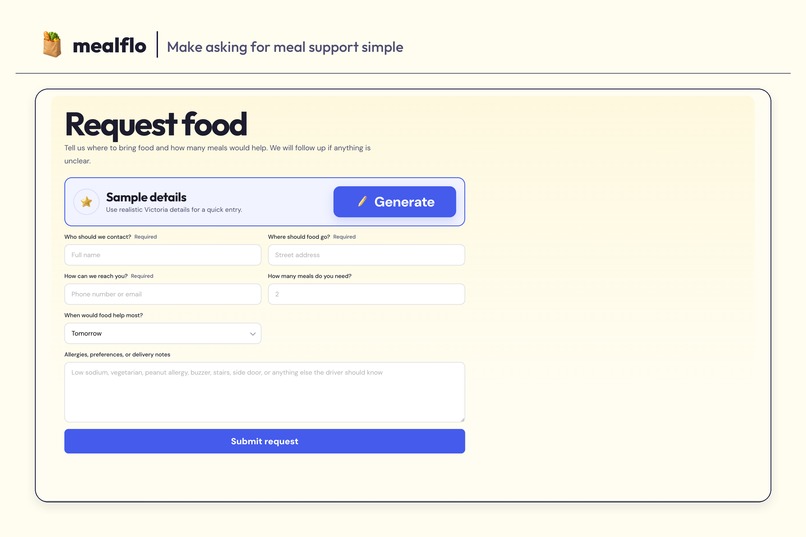
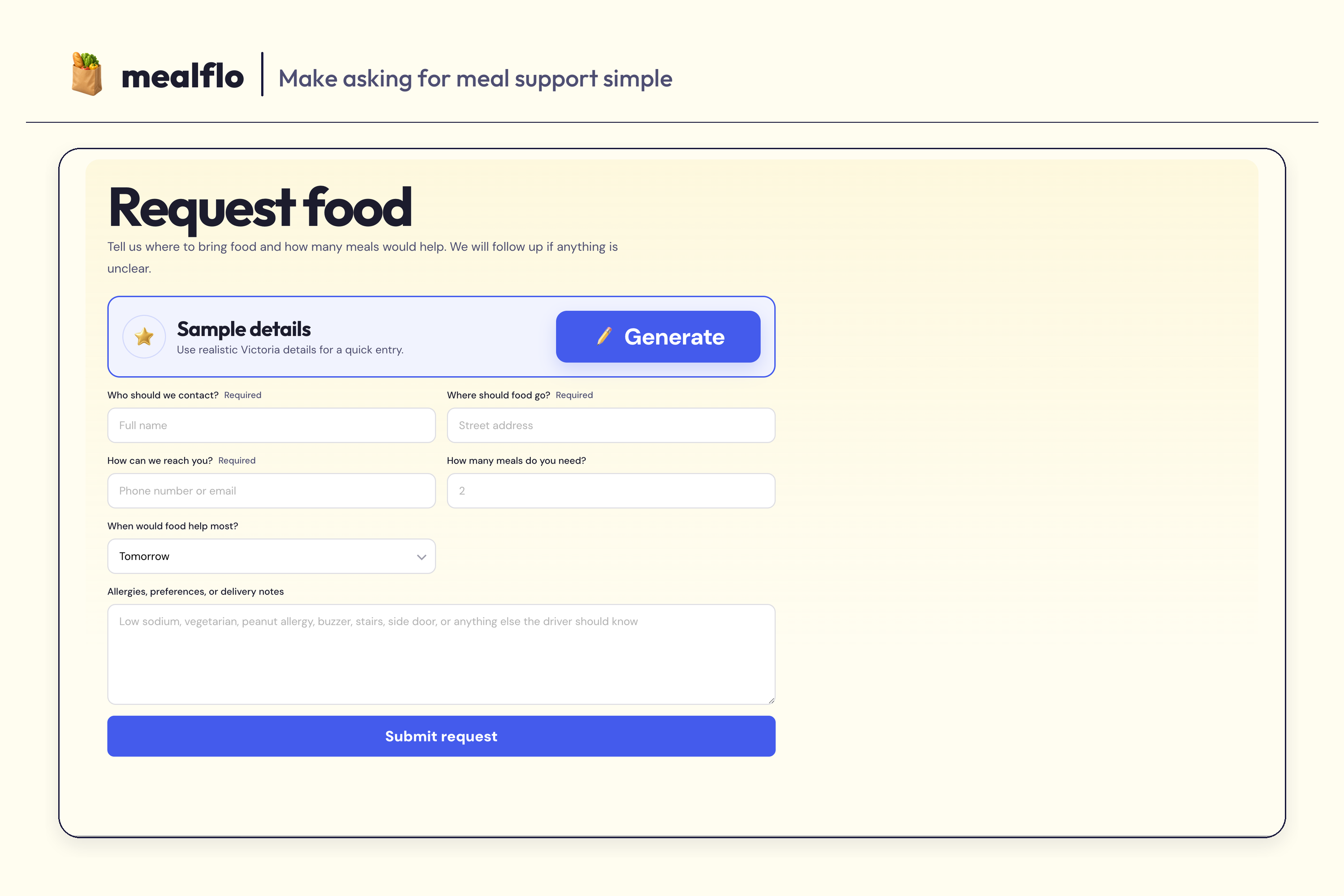
Request form: a simple way for recipients to ask for food support and share delivery needs.
-
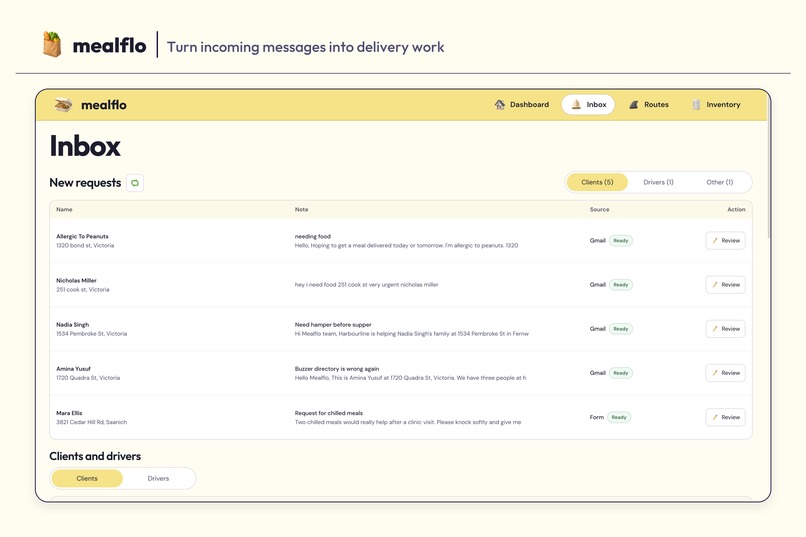
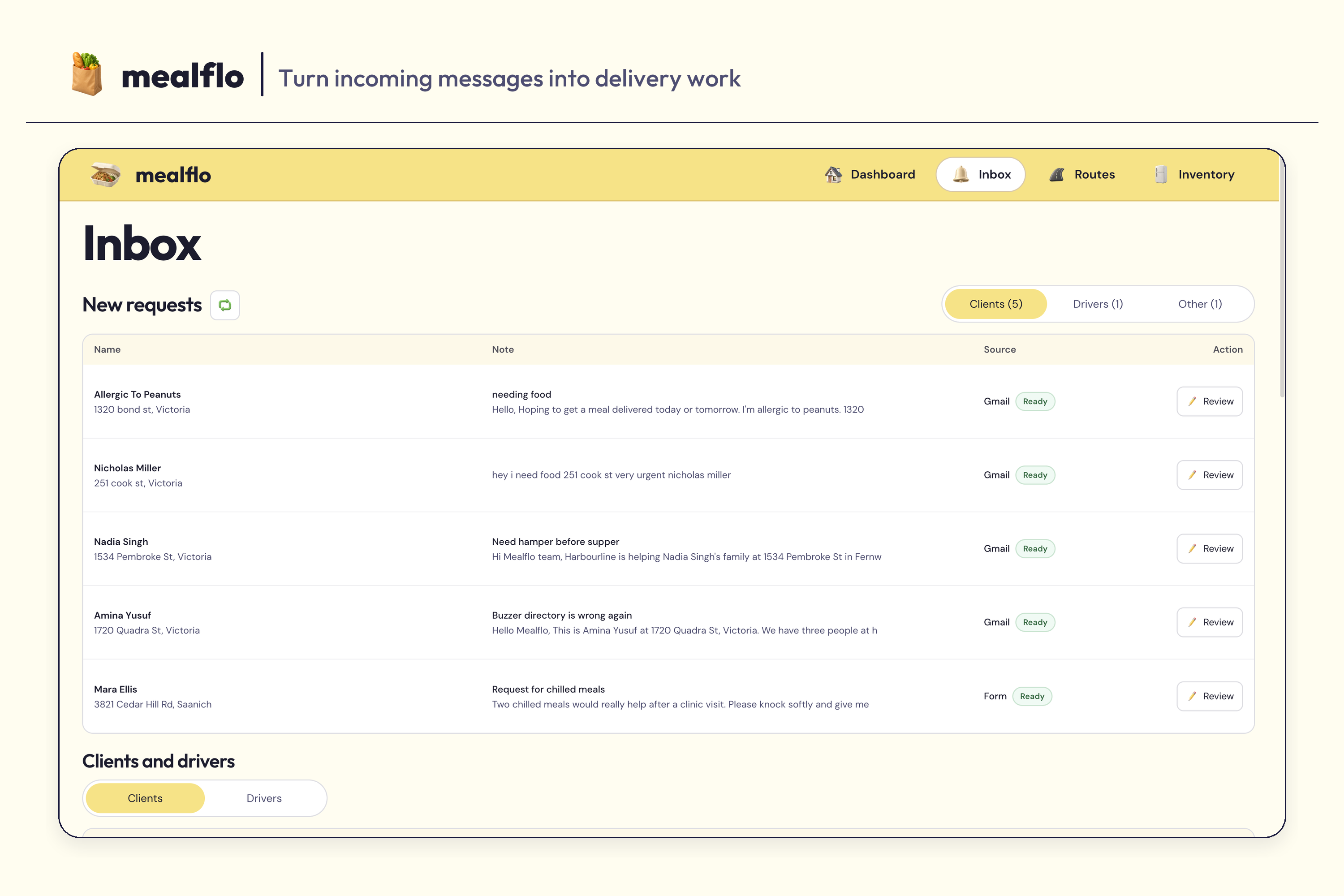
Intake inbox: turn incoming messages and form submissions into structured delivery work.
-
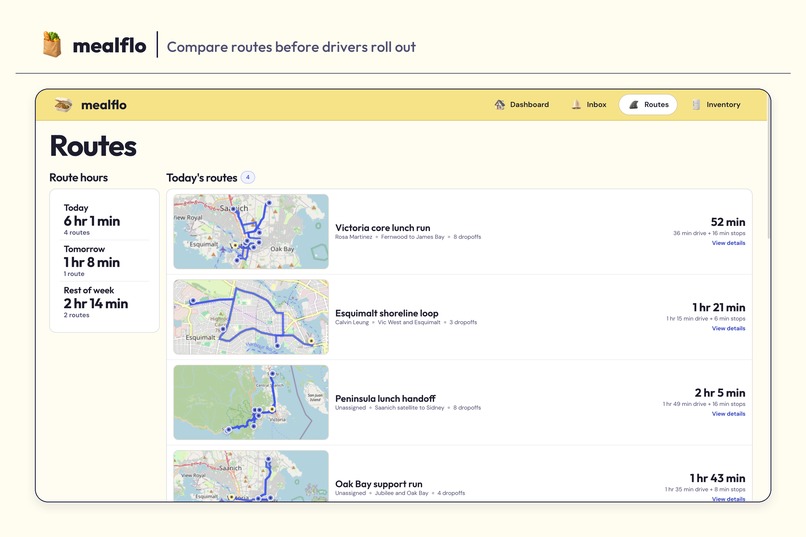
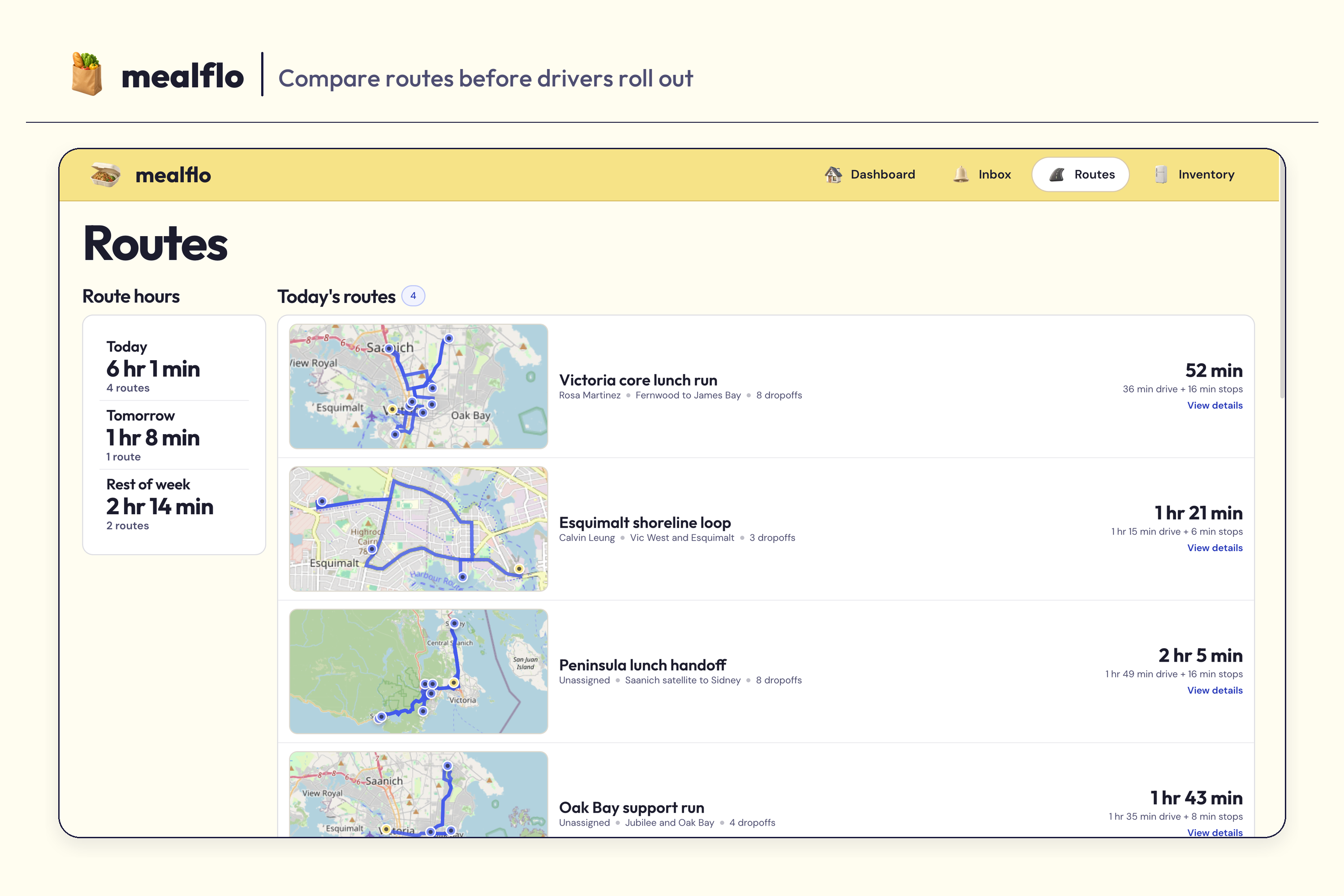
Route planning: compare delivery routes, timing, drivers, and stops before volunteers head out.
-
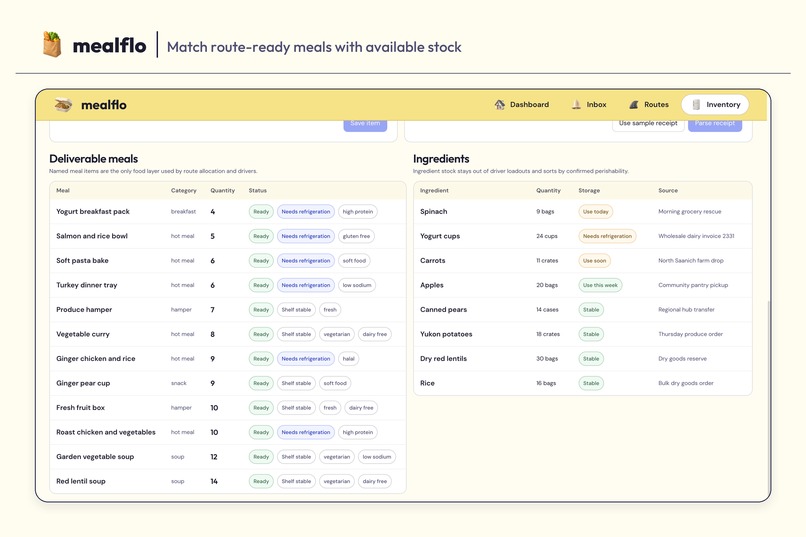
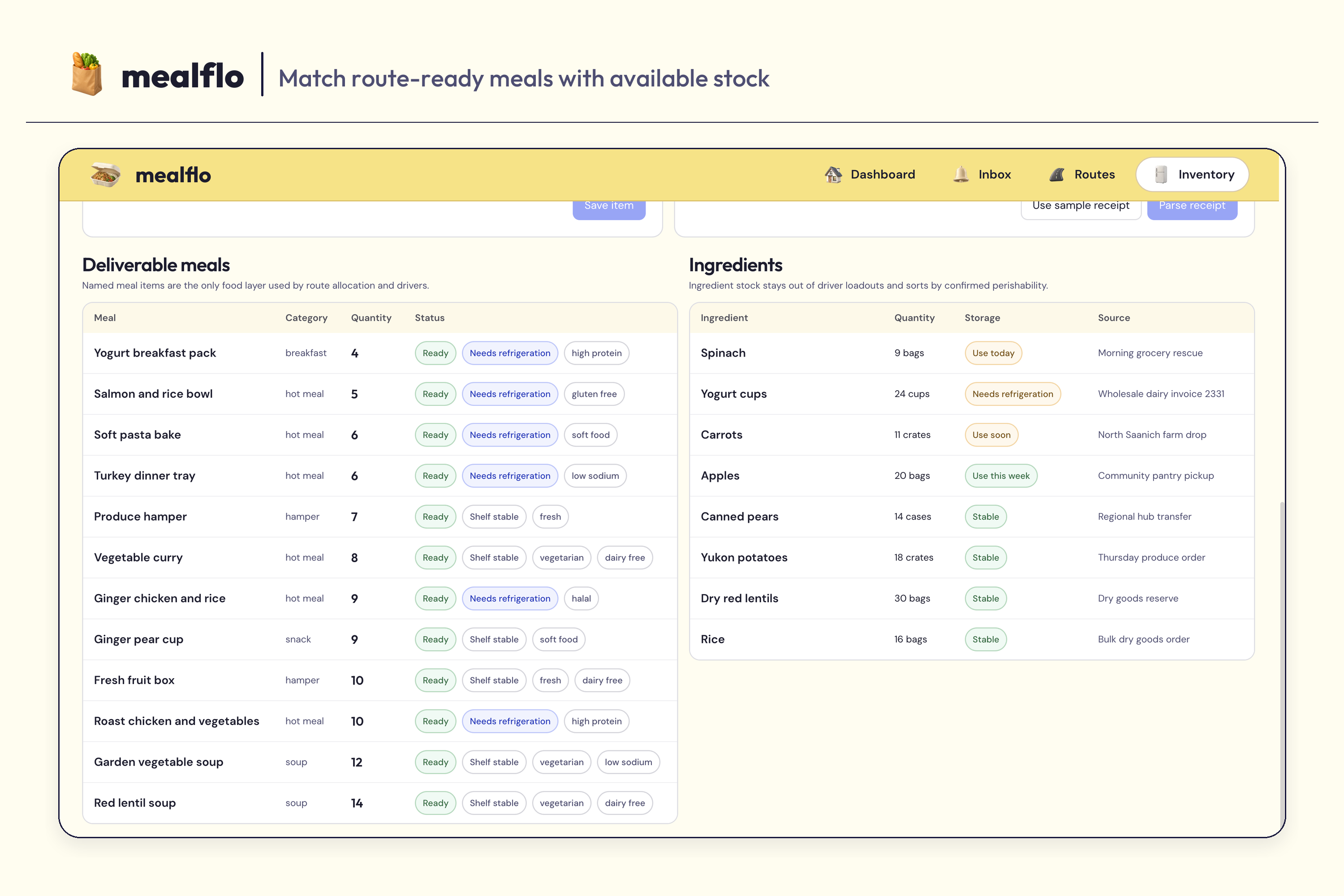
Inventory: track route-ready meals and ingredients so coordinators know what can be delivered.
📚 The following information is best viewed in this PDF — visit it for the best reading experience. 📚
Mealflo
Track 2: Food Security Delivery Operations
Mealflo is a hackathon demo for food support delivery teams. It helps coordinators turn incoming requests, available meals, volunteer capacity, and delivery constraints into clear, assigned routes that drivers can follow from their phones.
Track chosen and problem tackled
We chose Track 2: Food Security Delivery Operations.
We tackled the coordination problem faced by volunteer-led food delivery programs. These teams often manage food requests, meal inventory, volunteer availability, client needs, allergies, accessibility constraints, cold-chain requirements, routes, and delivery status across a mix of forms, spreadsheets, messages, phone calls, and memory.
That creates a lot of pressure on frontline coordinators. On a busy delivery day, they need to know:
- who needs food today
- what dietary needs, allergies, mobility needs, or delivery notes matter
- which meals are available
- which volunteers can drive, when, and with what capacity
- which deliveries are out, completed, delayed, or need follow-up
Small missed details can create real risk: the wrong meal, an inaccessible delivery, a cold-chain issue, a late route, or a recipient who gets overlooked.
Mealflo is designed to reduce that coordination burden by making requests, constraints, routes, driver assignments, and delivery progress visible in one place.
What we built
We built Mealflo, a working web app for coordinating food support delivery operations. It connects three core surfaces: public intake, coordinator operations, and a volunteer driver experience.
Public intake
Recipients can request food support, and volunteers can offer to deliver. Mealflo captures practical details like address, meal count, timing, dietary needs, allergies, mobility constraints, driver availability, vehicle access, and cooler capacity.
Coordinator dashboard
Coordinators can review incoming requests, approve structured intake drafts, check inventory, generate routes, assign drivers, and monitor delivery progress from one operational view.
Volunteer driver view
Drivers get a phone-first route experience. They can choose availability, accept a suggested route, see each stop with delivery notes and meal details, follow the route on a map, and mark stops complete.
Technology
Mealflo is built as a full-stack Next.js app with React, TypeScript, Tailwind, Neon Postgres, Drizzle, MapLibre, openrouteservice, and OpenAI-assisted parsing for intake and inventory workflows.
Routing logic uses deterministic backend rules and heuristics, especially for safety-sensitive details like allergens, refrigeration needs, wheelchair access, two-person delivery flags, and inventory availability.
How a frontline operator would use it on a real Monday morning
A frontline coordinator opening Mealflo on a busy Monday morning would use it to move from scattered information to an actionable delivery plan.
1. Review new requests
Instead of searching through emails, forms, spreadsheets, and messages, the coordinator sees incoming food requests in one place. Each request includes the address, requested meal count, urgency, dietary needs, allergies, mobility needs, and delivery notes.
2. Approve structured intake
Mealflo helps turn intake messages into structured drafts. The coordinator can review the original request, check the parsed details, and approve the request before it becomes delivery work.
3. Check available inventory
The coordinator can see which meals or staples are ready for delivery. Inventory can be entered manually or supported through receipt parsing, with items tagged for allergens, dietary restrictions, and delivery readiness.
4. Review volunteer availability
Mealflo captures practical driver constraints such as available time, starting location, vehicle access, cooler capacity, comfort with stairs, and other limitations.
5. Generate and assign routes
Deliveries are grouped into route suggestions that consider urgency, driver capacity, meal availability, location, and food requirements. The coordinator can assign a driver and confirm what needs to be loaded.
6. Guide drivers through delivery
The driver mobile view shows the next stop, address, meals to deliver, delivery notes, and a simple completion action. Drivers get the information they need without having to interpret a spreadsheet or call the coordinator for every detail.
7. Track completion
As stops are completed, the dashboard updates so the coordinator can see what is out for delivery, what is complete, and what needs follow-up.
The goal is not to replace human judgment. It is to give coordinators a calmer, clearer operating rhythm so they can make safer decisions faster.
What makes Mealflo useful
Mealflo focuses on the work that actually happens in food delivery programs:
- intake becomes structured work
- constraints become visible before routing
- meal availability is connected to delivery planning
- routes are assignable and explainable
- drivers get a simple mobile workflow
- coordinators can see delivery status without calling every driver
What we would ship next with one more week
With one more week, we would focus on making Mealflo easier to use in real community operations.
1. Additional intake channels
Food support requests often come through Instagram, Facebook, text messages, voicemail, email, or direct messages rather than a formal web form. We would add more intake channels so teams can capture requests from the places people already use.
2. Real SMS communication
Drivers need simple, reliable communication during deliveries. We would add real text messaging from the driver flow, including pre-written messages like: “Hi, this is your meal delivery driver. I’m outside now.”
3. Field testing with a real organization
We would work with a real food support organization to test Mealflo against actual intake patterns, route constraints, volunteer workflows, and communication needs. That would help shape the next version around frontline reality instead of demo assumptions.
Mealflo in one line
Mealflo turns food support requests, meal inventory, volunteer capacity, and delivery constraints into safer routes and a clearer delivery workflow.
Requests → Routes → Delivery
Built With
- drizzle-orm
- gmail-api
- google-oauth
- maplibre-gl
- neon
- next.js
- openai
- openrouteservice
- openstreetmap
- postgresql
- react
- tailwind-css
- typescript
- vercel
- zod

Log in or sign up for Devpost to join the conversation.