The problem we found
Food insecurity isn't only about not having enough money. It's about not having the time, information and confidence to stretch the money you do have.
When we looked at how people on a tight budget actually eat, we kept seeing the same three gaps:
- Recipes lie about cost. A recipe that "costs $3 a serving" can still mean $16 at the checkout, because you can't buy 80 g of rice — you buy the whole bag. The people who can least afford a surprise get one at the till.
- The information is scattered. Sale prices live in flyers, recipes on another site, food banks on a third. Every week, people pay for cheap food with hours of searching.
- Help comes with a label. Free food support is usually hidden behind "Do you need help?" Many people who need it never click.
Our solution: start from the budget, not the recipe
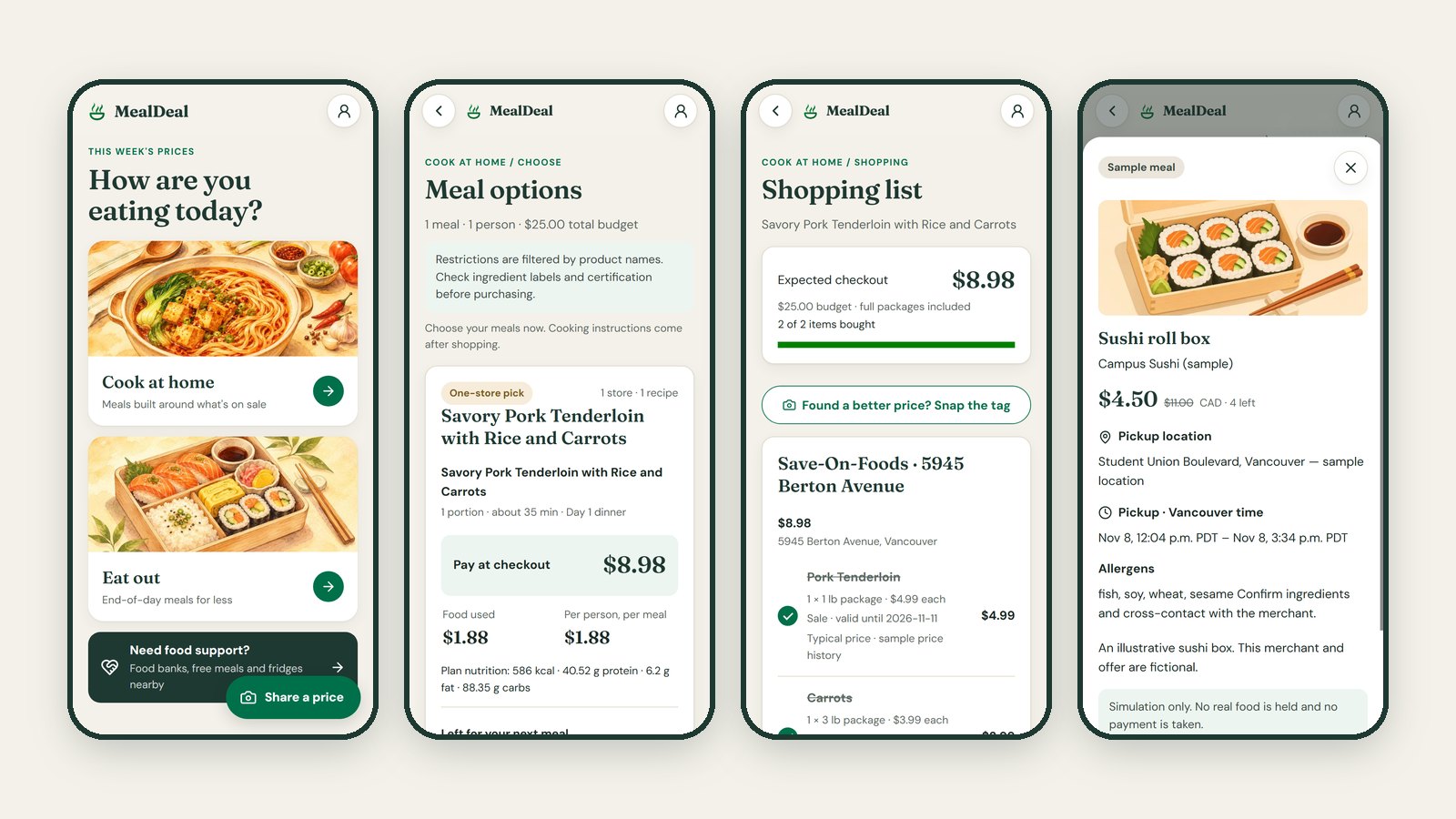
MealDeal flips meal planning around. Instead of picking a dish and hoping it's affordable, it starts from what is cheap near you this week and builds meals from that.
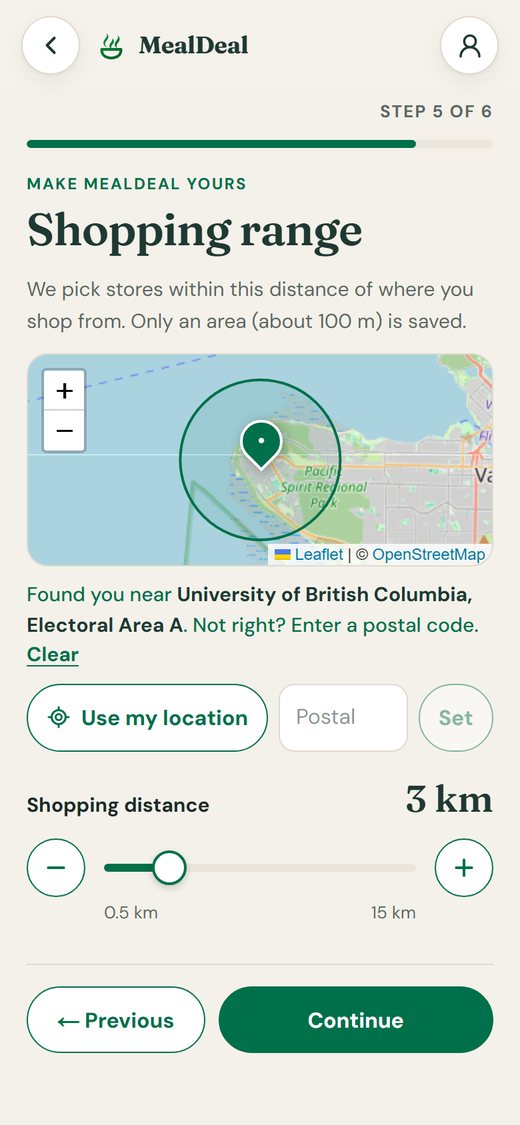
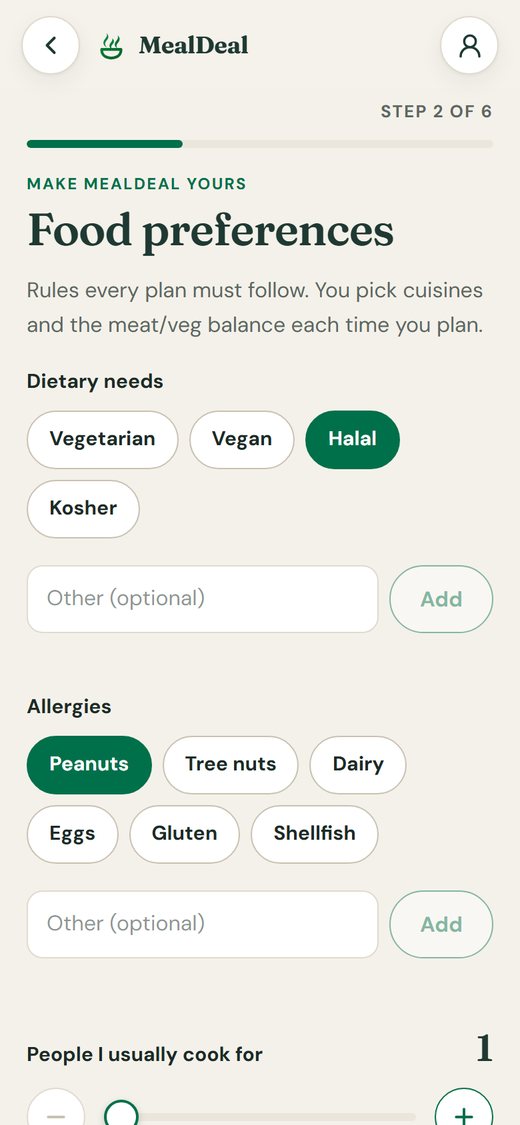
1. Set up your kitchen once. Six short steps: your preferred units (g/kg, lb/oz and more), food rules (diet, allergies, how many people), the equipment you actually have, what's already in your pantry, how far you can go to shop, and an optional nutrition goal. Set your shopping range with "Use my location" or a postal code and see it as a circle on a map. You can type your own diets, allergies, tools or pantry items — each one is checked so the planner can trust it.
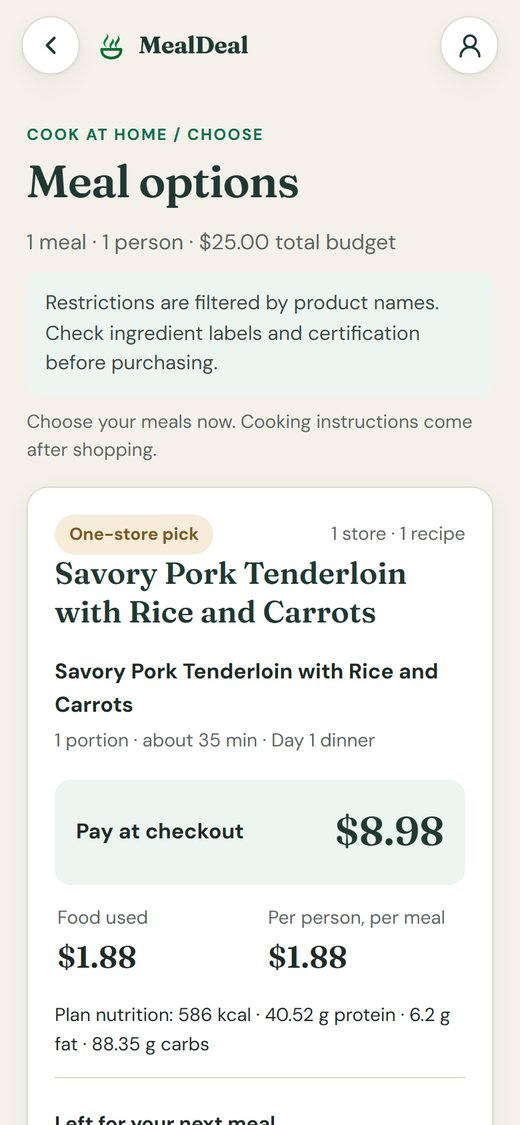
2. Plan with honest prices. Pick a budget, number of people, one meal or 1–7 days, cuisines and cooking time. MealDeal builds complete plans only from products on sale this week at stores within your range — and if none are close enough, it falls back to the nearest stores and tells you. Every plan shows:
- the real checkout cost, because you buy whole packages, not 80 g of rice;
- the cost per meal and nutrition;
- what's left over for next time;
- food already in your pantry counted as free.
If nothing fits your budget, MealDeal tells you what the cheapest complete plan costs instead of pretending.
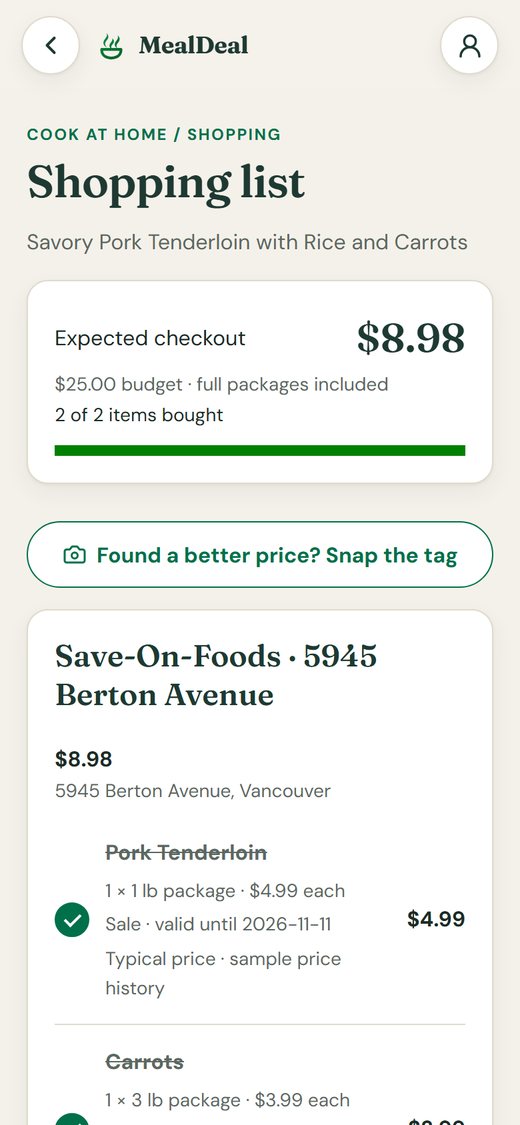
3. Shop one list. One shopping list grouped by store. Tick items off as you go. Sale items show whether they're a real deal — at least 10% below their 28-day median price at that store — or just a sale sticker.
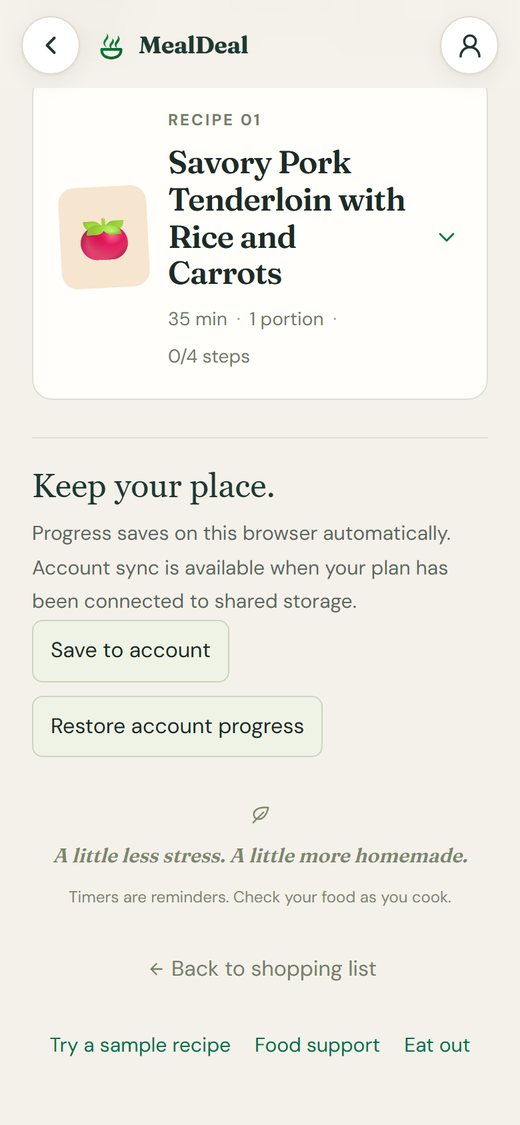
4. Cook step by step. Cooking mode shows one step at a time with built-in timers. Your progress is saved, so you can pick up where you left off — even on another device when you're logged in.
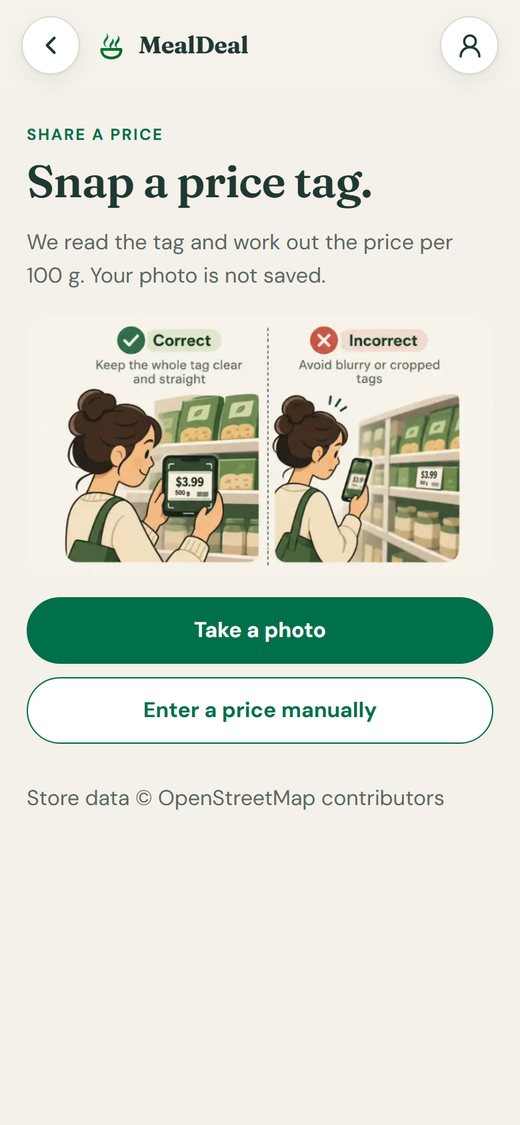
5. Share a price. Snap a price tag; Gemini reads it, code checks the math, and the price joins the shared price history so the next person benefits. Photos are never stored.
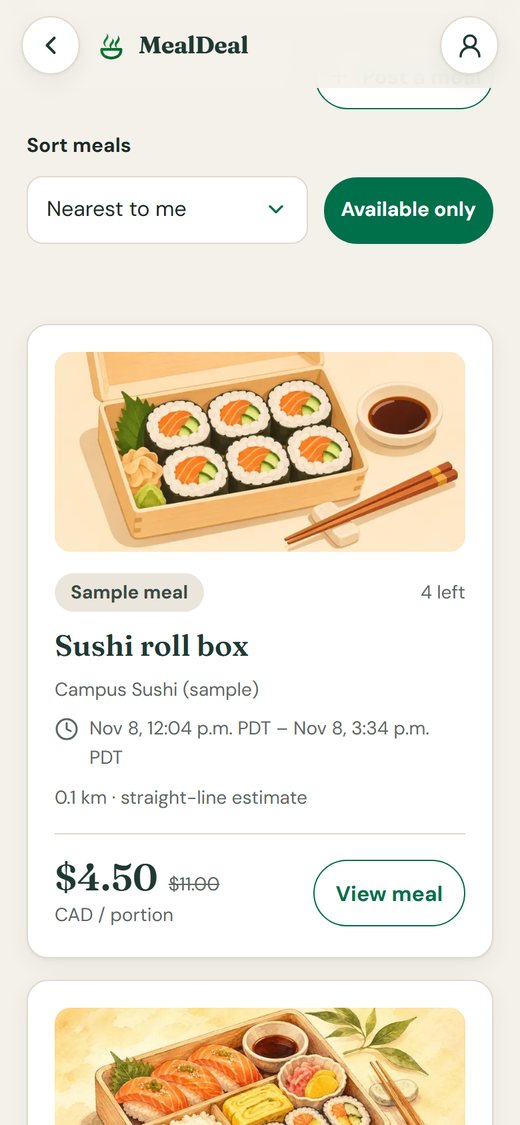
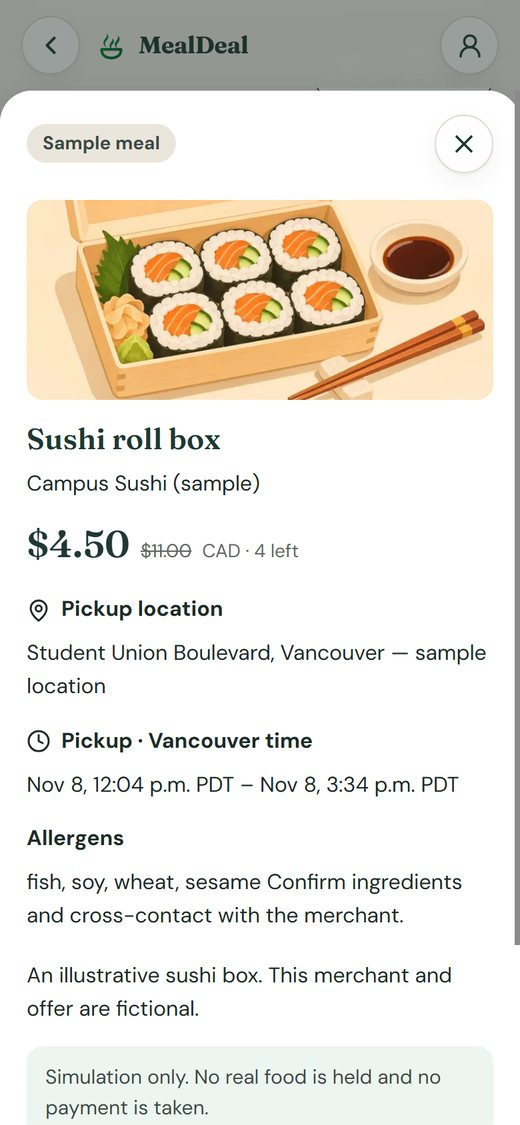
6. Eat out for less. When cooking isn't an option, Eat Out shows discounted end-of-day meals within your pickup distance, with the pickup window and allergen notes. Reserve a portion in one tap — the last portion can never be reserved twice.
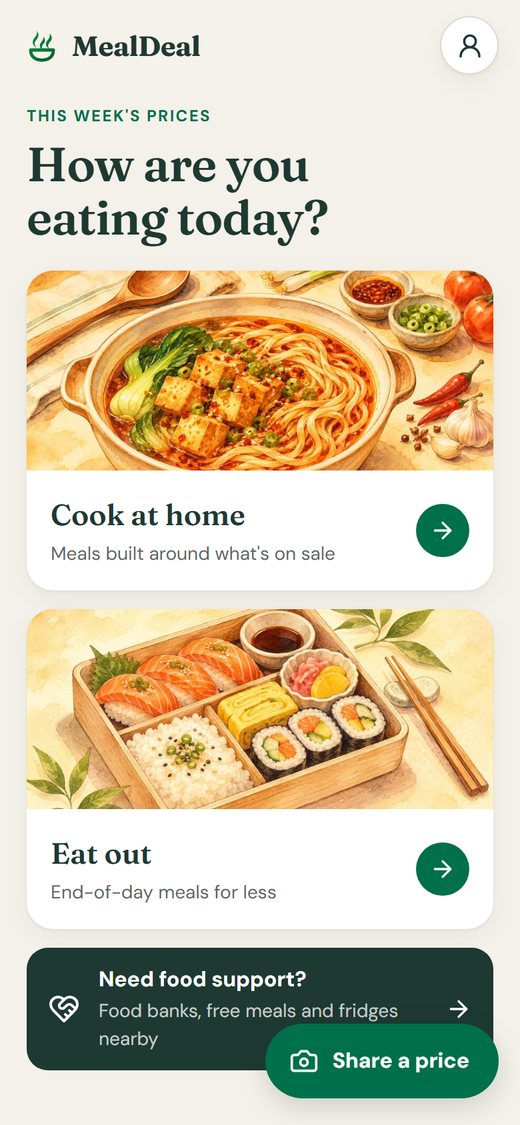
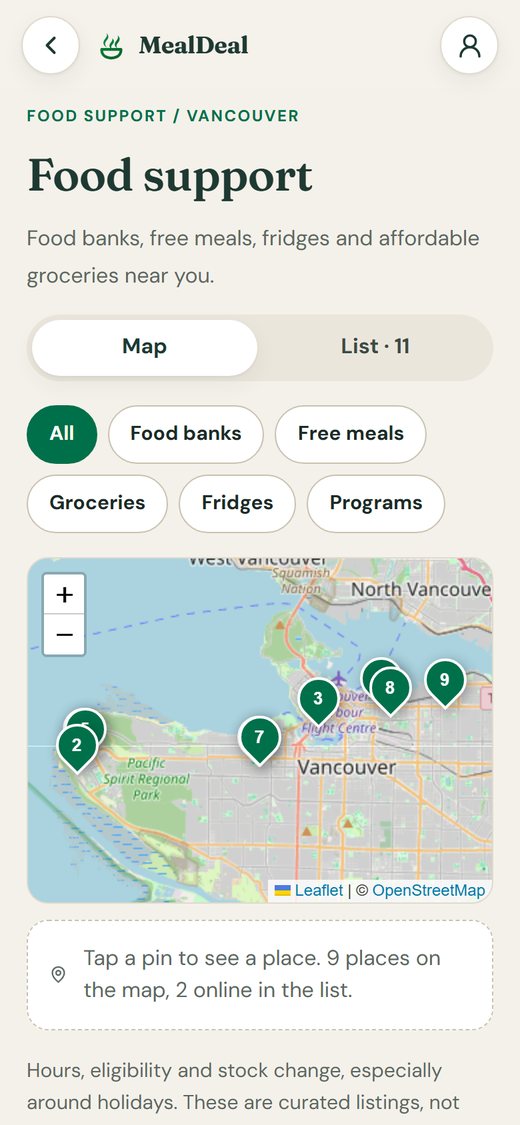
7. Support without stigma. Food banks, free meals and community fridges are on a map, one tap from the home screen next to "Cook at home" — with nothing to declare first.
Works the way people live. Built for a phone, because for many people that's their only computer. You can use it without an account — data stays on your device — or log in with Auth0 to save your kitchen, pantry, plans and cooking progress. Only an area rounded to about 100 m is saved, never your exact location.
How we built it — AI reads, code counts
We set one rule early: AI never decides a number that affects someone's wallet.
- Google Gemini does narrow, validated jobs: reading price tags, composing recipes using only product IDs we provide, matching products to nutrition records and screening custom inputs. Every response is checked with Zod; drafts that break a rule are retried.
- Deterministic code calculates every dollar, gram and calorie: full-package pricing, pantry deductions, budget checks and nutrition from USDA data.
- Tiger Data (Postgres + TimescaleDB) stores every price as a row in a
price_observationshypertable, which powers the 28-day "real deal" check. - Auth0 saves each person's kitchen, pantry, plans and cooking progress.
- Next.js 16 + TypeScript + Tailwind on Vercel, with OpenStreetMap/Leaflet maps and GitHub Actions CI.
Challenges we ran into
Our first AI drafts invented ingredients and amounts — fine for a recipe blog, unacceptable for someone with $20 for the week. Constraining Gemini to real products and moving all math into code was the turning point. We also learned the cheapest-looking recipe often isn't the cheapest to buy, which is why we price full packages.
Accomplishments that we're proud of
- A complete loop on a phone — budget → plan → shopping list → cooking — priced from real flyer data for stores near UBC.
- A "real deal" check backed by a time-series price history, not a sale sticker.
- A strict line between AI and money: Gemini reads and composes, code counts every dollar, gram and calorie.
- Privacy by design: no photo storage, location rounded to about 100 m, secrets kept server-side.
- Four people, one shared type contract, and CI with four test suites — built in 24 hours.
What we learned
Affordability is about trust. People need numbers they can rely on, information in one place, and help that doesn't ask them to explain themselves.
What's next for MealDeal
1. Make Eat Out cover the cheap meals people already eat. Today Eat Out shows end-of-day surplus meals, similar to what Too Good To Go offers. But a lot of people on a tight budget don't eat surplus bags — they eat fast food, and they hunt for the deal. That information is scattered too: some deals live only inside each chain's app, some are posted on official websites, and many coupons are shared by people on deal forums and communities. We want MealDeal to bring them together:
- Official websites first (easiest): collect current promotions and limited-time offers published by chains like McDonald's, KFC and Church's Texas Chicken, normalised by code into price, portion and conditions so they can be compared with cooking at home.
- Community-shared coupons: let users submit deals and coupon codes they find on deal forums, using the same flow as our price-tag sharing — Gemini reads the screenshot or text, code checks the fields, and the community confirms whether a deal still works.
- In-app-only deals (harder): many of the best offers exist only inside each chain's own app. We'd like to reach these through partnerships or official feeds rather than fragile workarounds.
- Happy hours and daily specials (later): these change by location, day and time and rarely have a single source, so we'll add them once the data pipeline is solid.
The goal is one honest comparison: "cook this for $2.40 a meal, or get this combo nearby for $5.99 today."
2. Live data from the people who already help. Partner with food banks, community kitchens and local grocers so availability, hours and prices come straight from them instead of being collected by hand, and keep everything labelled with where it came from and when it was last checked.
3. Reach more people where they are. Expand beyond the stores near UBC to all of Metro Vancouver and other cities, add more languages, and offer voice-guided cooking for people who can't keep reading a screen while they cook.
4. Close the loop on waste. Use the leftovers each plan already tracks to suggest the next meal automatically, so the half bag of rice from this week becomes next week's dinner instead of waste.
Note: flyer prices are real for this week's seeded stores near UBC; some price history and all Eat Out merchants are sample data and are labelled in the app.
Design
Our Figma file captures the core structure we started from: the three-option home screen, the step-by-step onboarding, the plan → shopping list → cooking flow, and the information hierarchy on each screen. During the build we tested it on real phones and evolved the visual style — refining colours, shapes, illustrations and components — to make it warmer, clearer and easier to use one-handed. The flows and layout come from the Figma; the final look is in the live app and the screenshots, and that's what we'd love you to judge.
Built With
- auth0
- google-gemini
- leaflet.js
- next.js
- openstreetmap
- postgresql
- react
- tailwindcss
- tiger-data
- timescaledb
- typescript
- vercel
- zod
