-
-
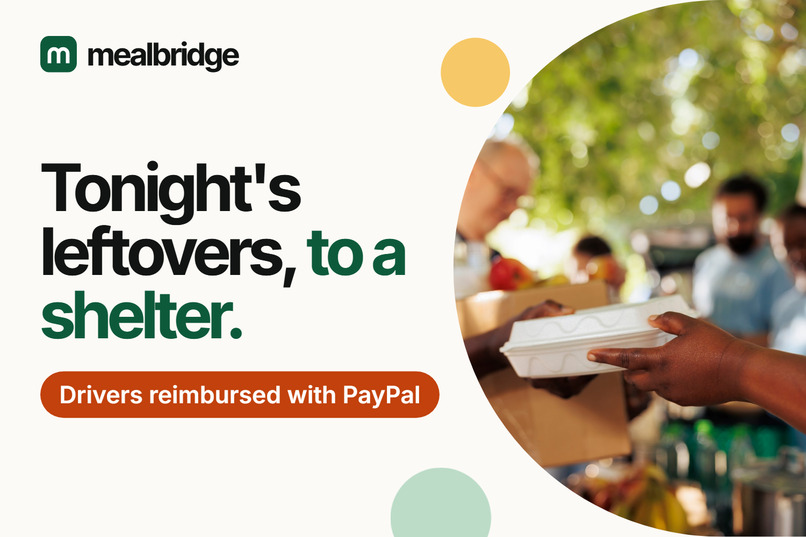
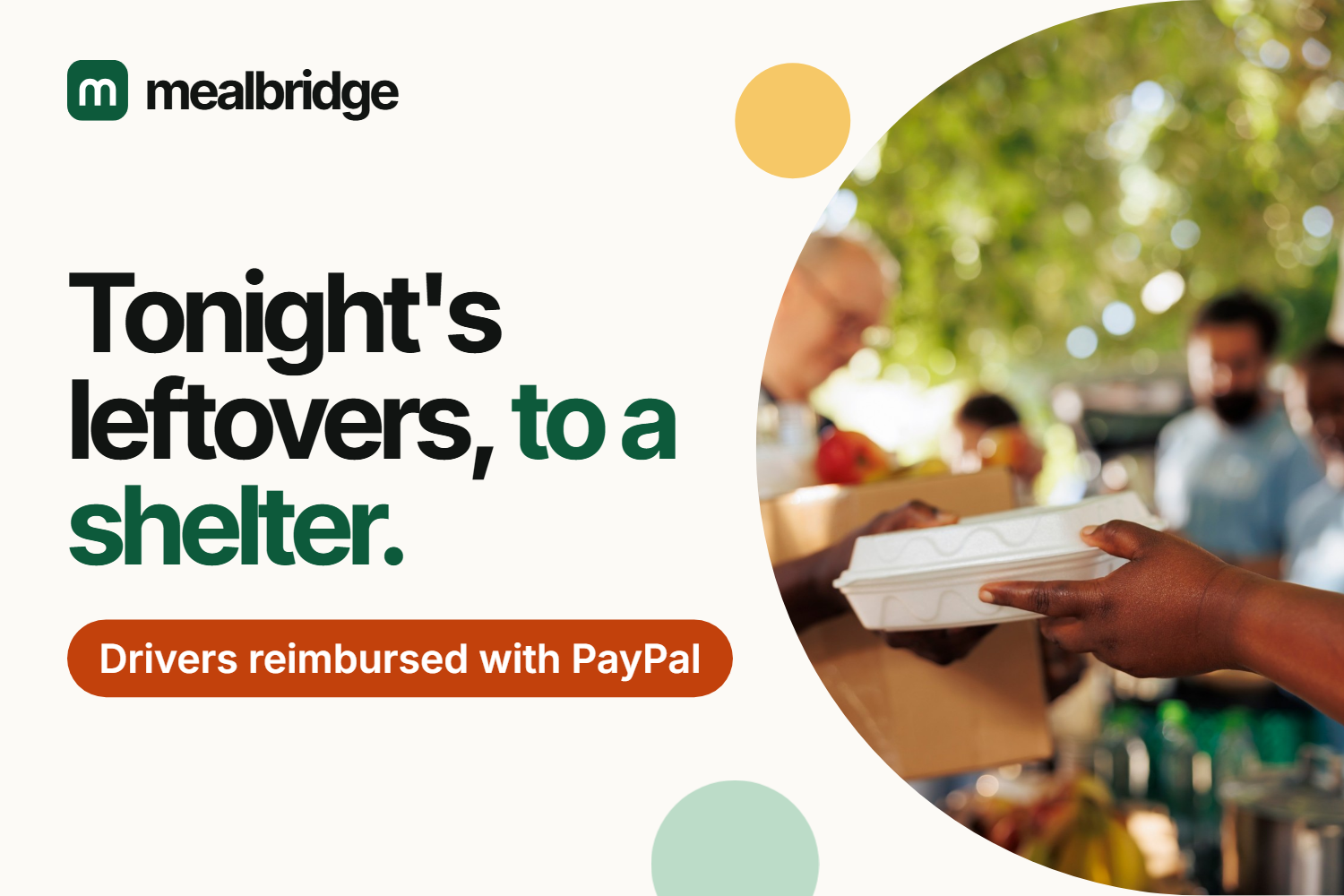
MealBridge: tonight's restaurant leftovers, to a shelter, with volunteer drivers reimbursed through PayPal.
-
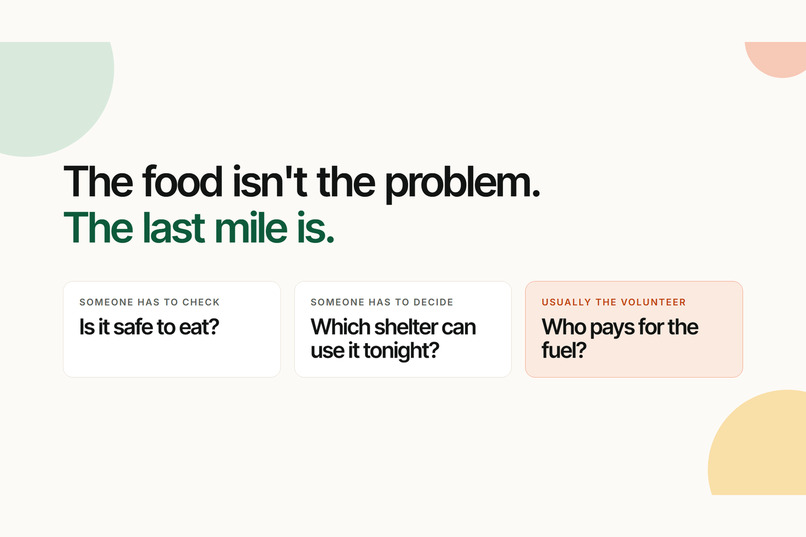
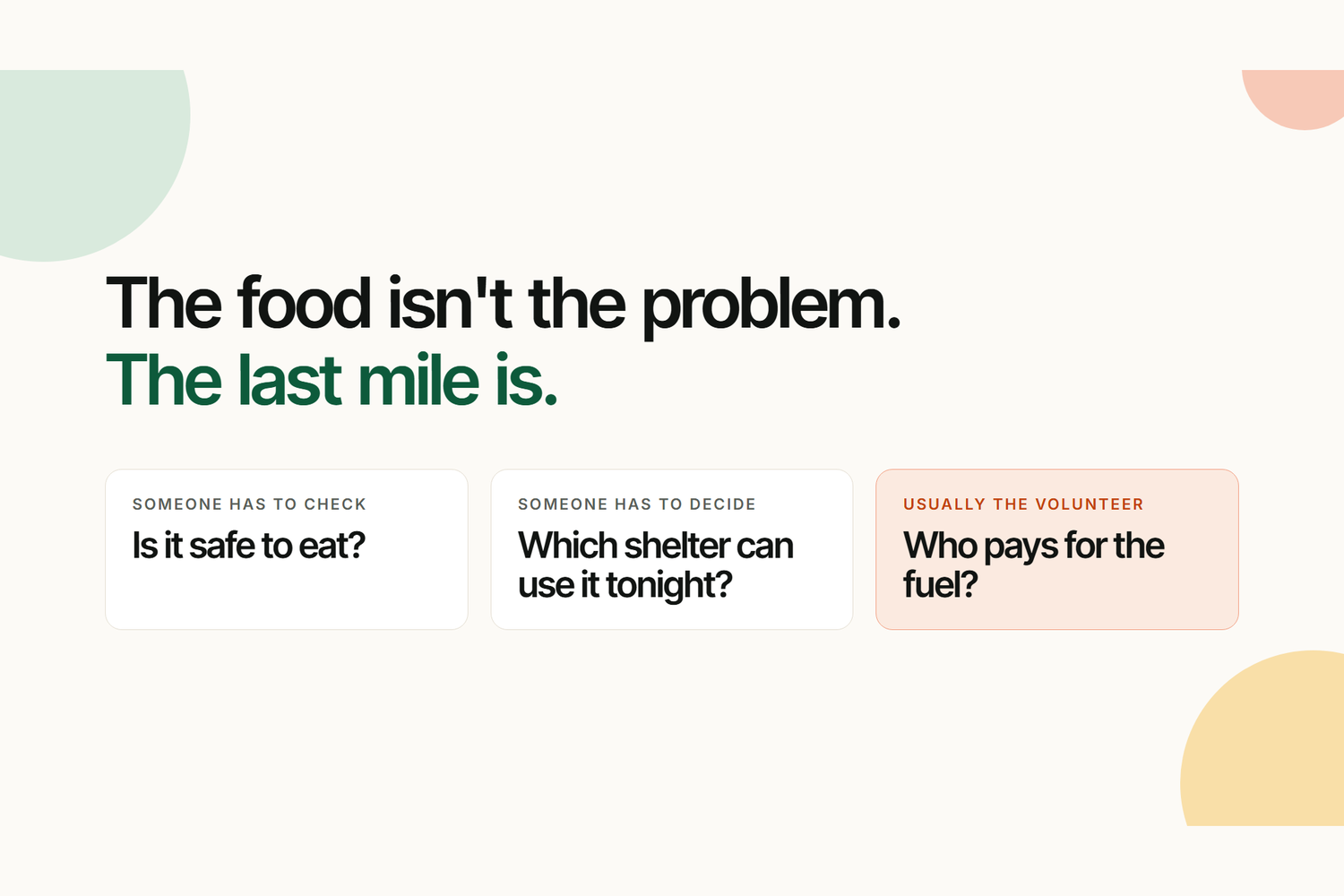
The problem: good food is binned nightly, and the last mile (safety, a shelter that can use it, a driver's fuel) is what's missing.
-
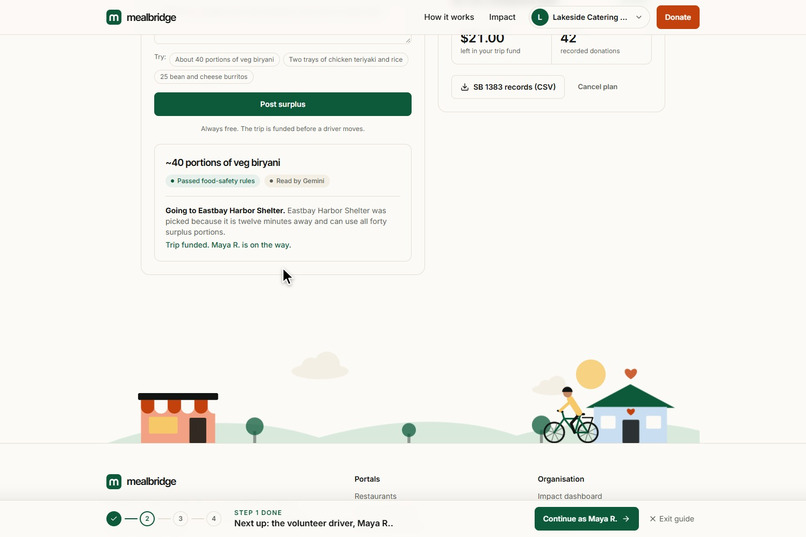
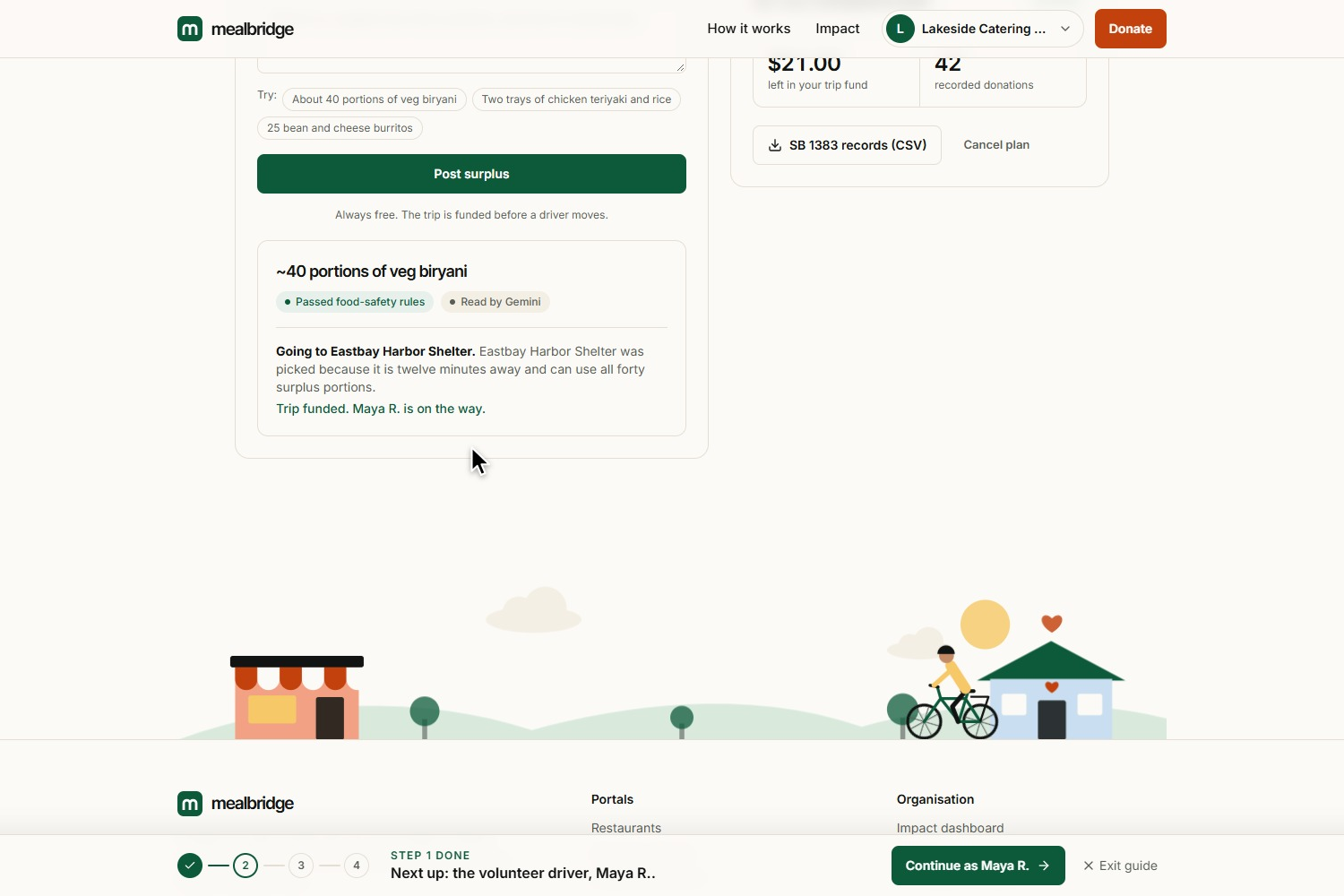
Step 1: a restaurant posts surplus. Gemini reads it, food-safety rules pass it, a shelter is matched and the trip is funded.
-
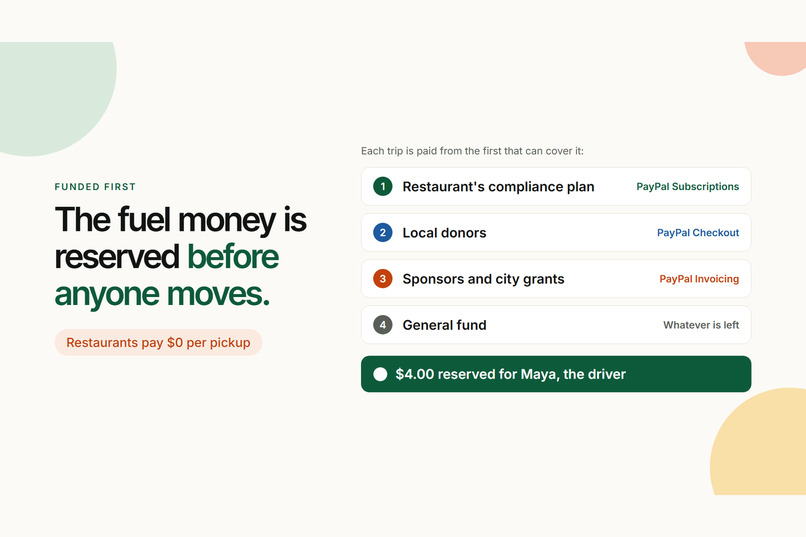
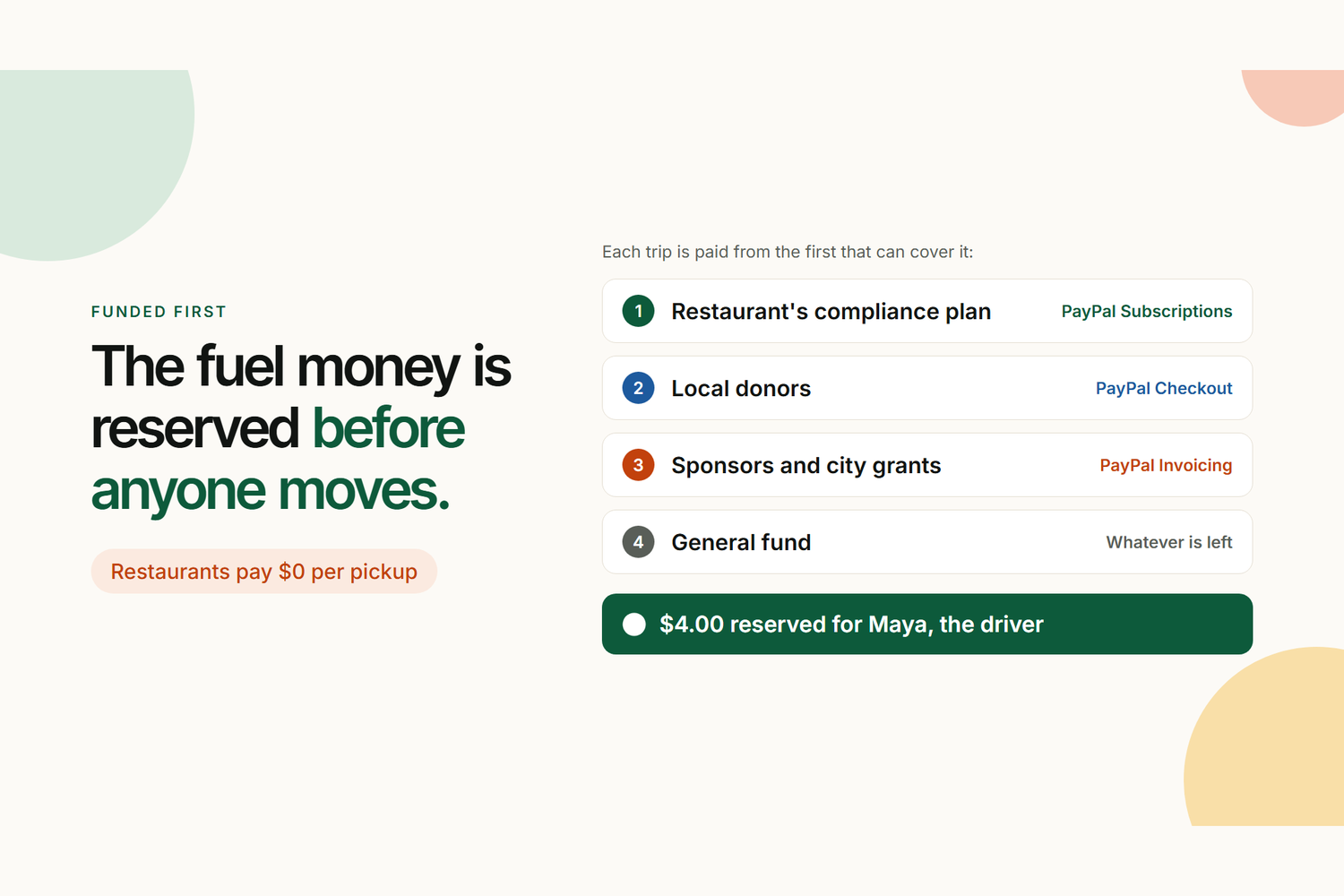
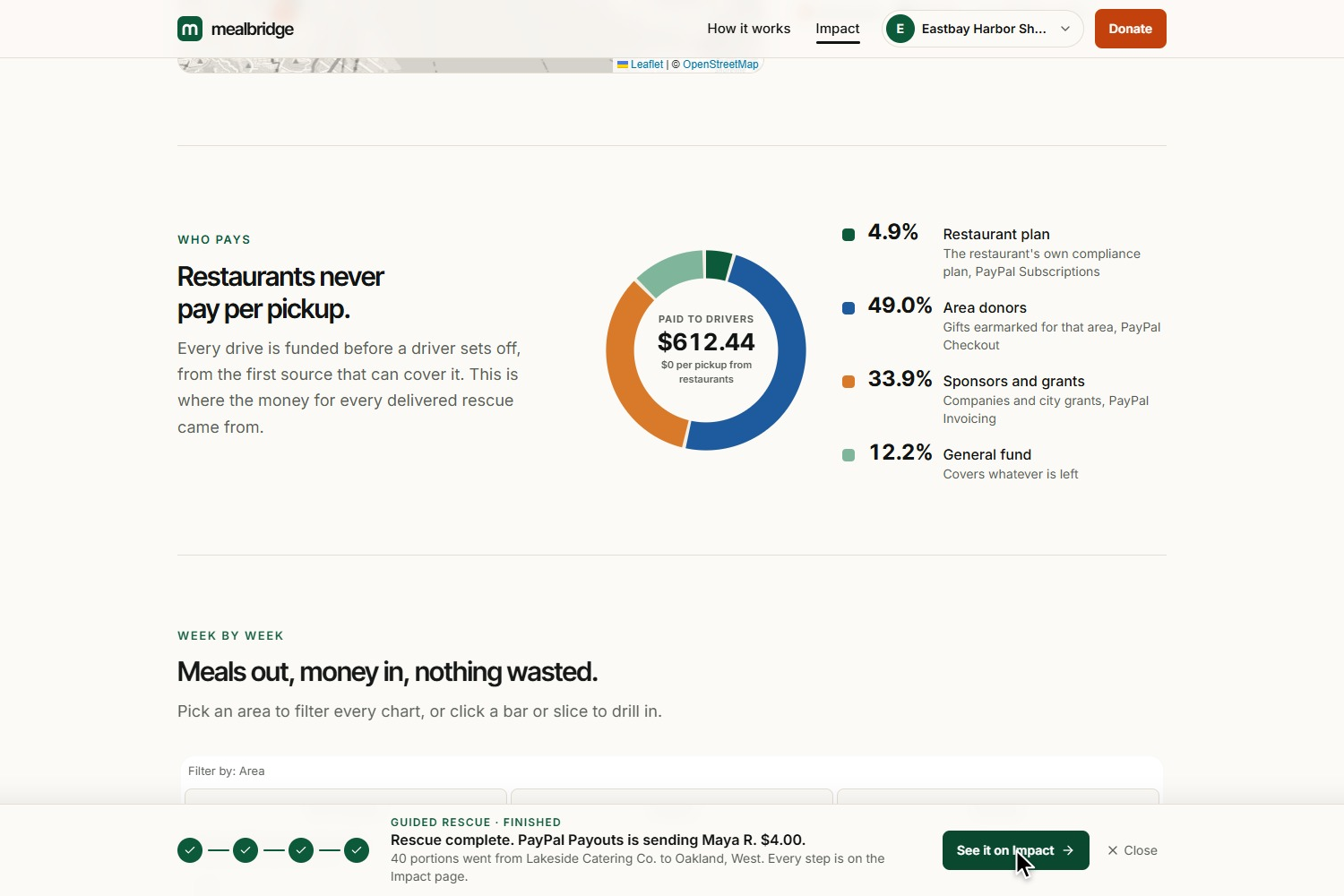
Each trip's fuel money is reserved before anyone drives: compliance plan, then donors, then sponsors and grants. Restaurants pay $0.
-
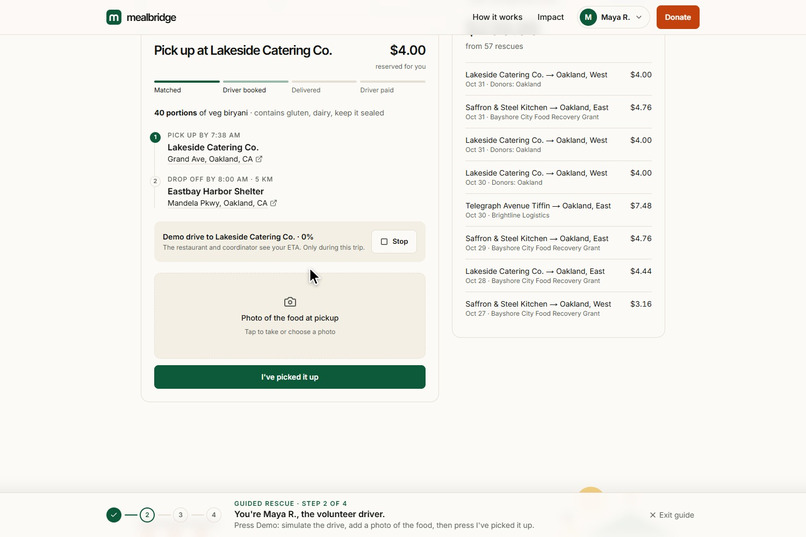
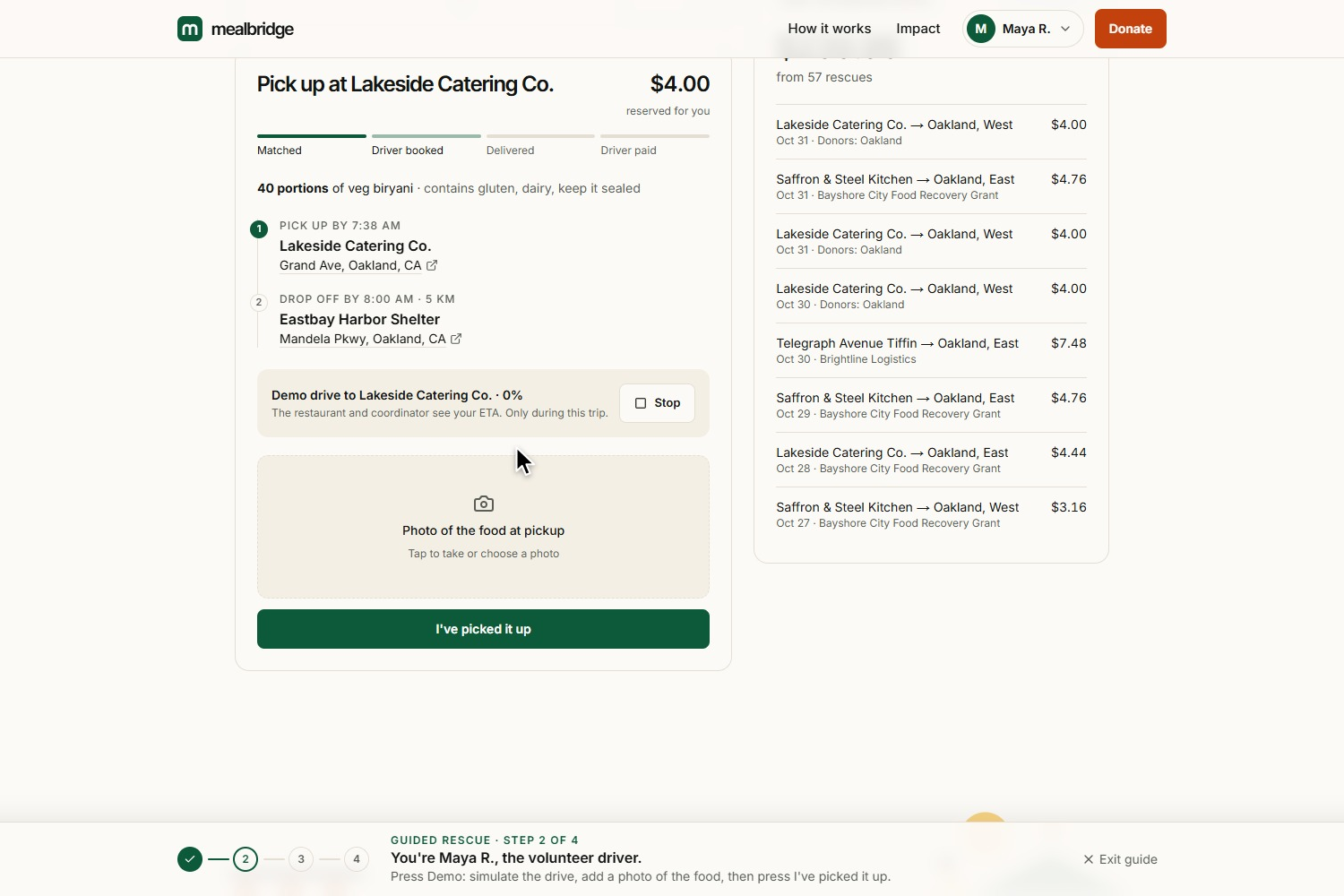
Step 2: the volunteer driver sees the job with $4.00 already reserved, then simulates the drive and photographs the food at pickup.
-
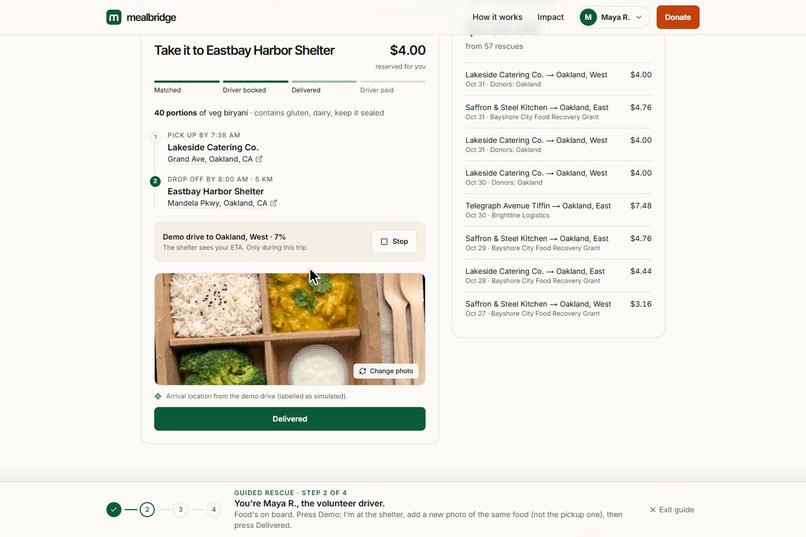
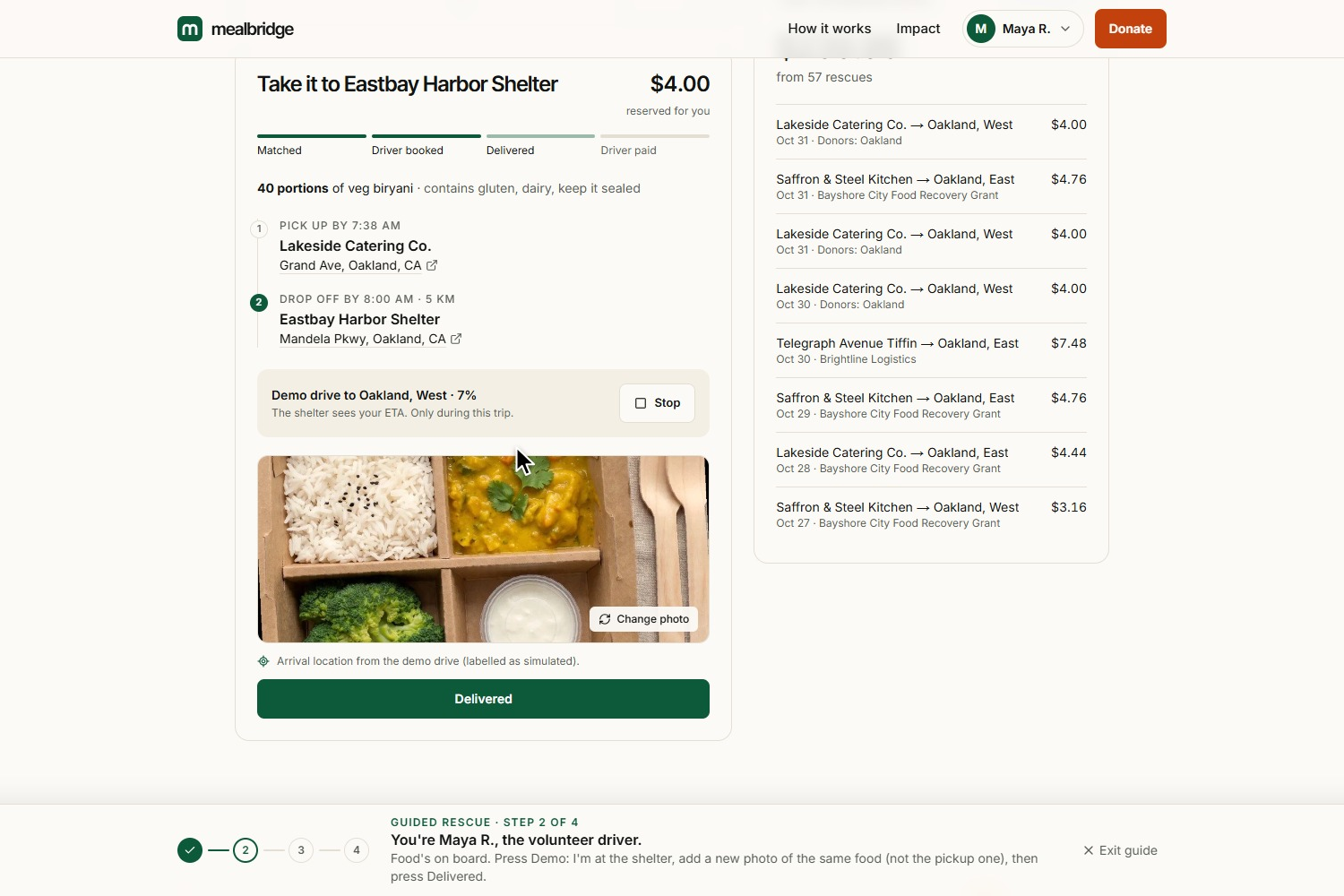
At the shelter: a new photo of the same food. Gemini checks it, and a reused pickup photo is held for a person to review.
-
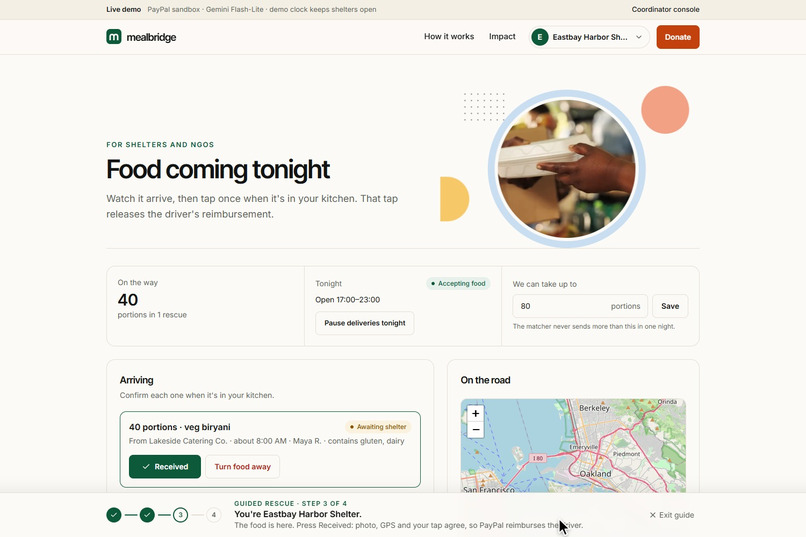
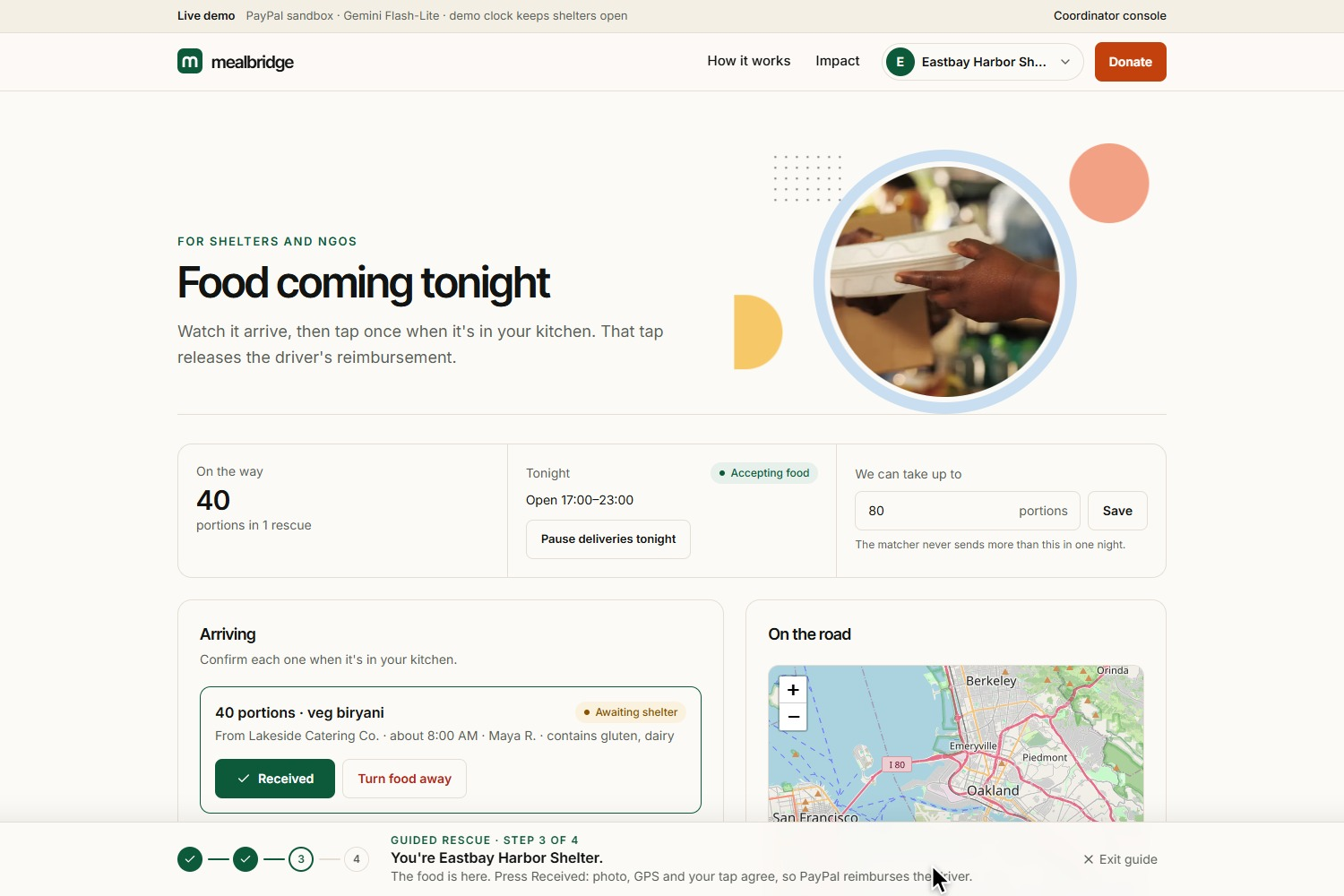
Step 3: the shelter sees the food arriving and taps Received once it's in the kitchen.
-
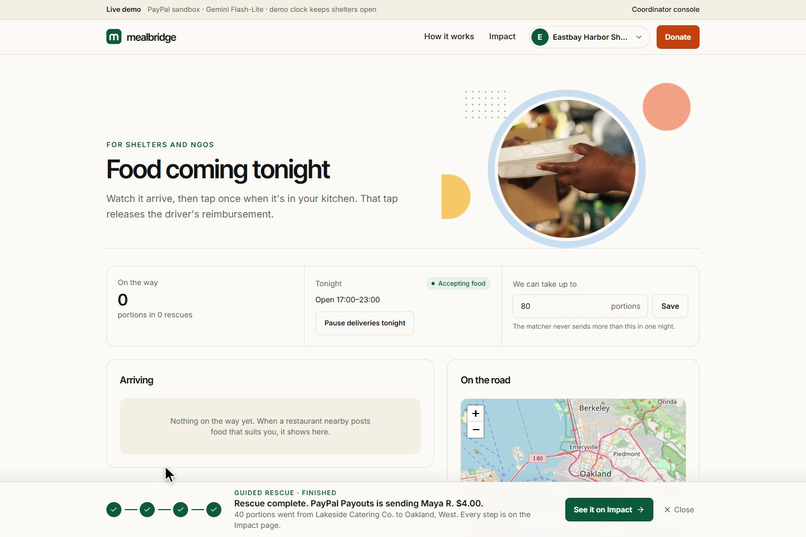
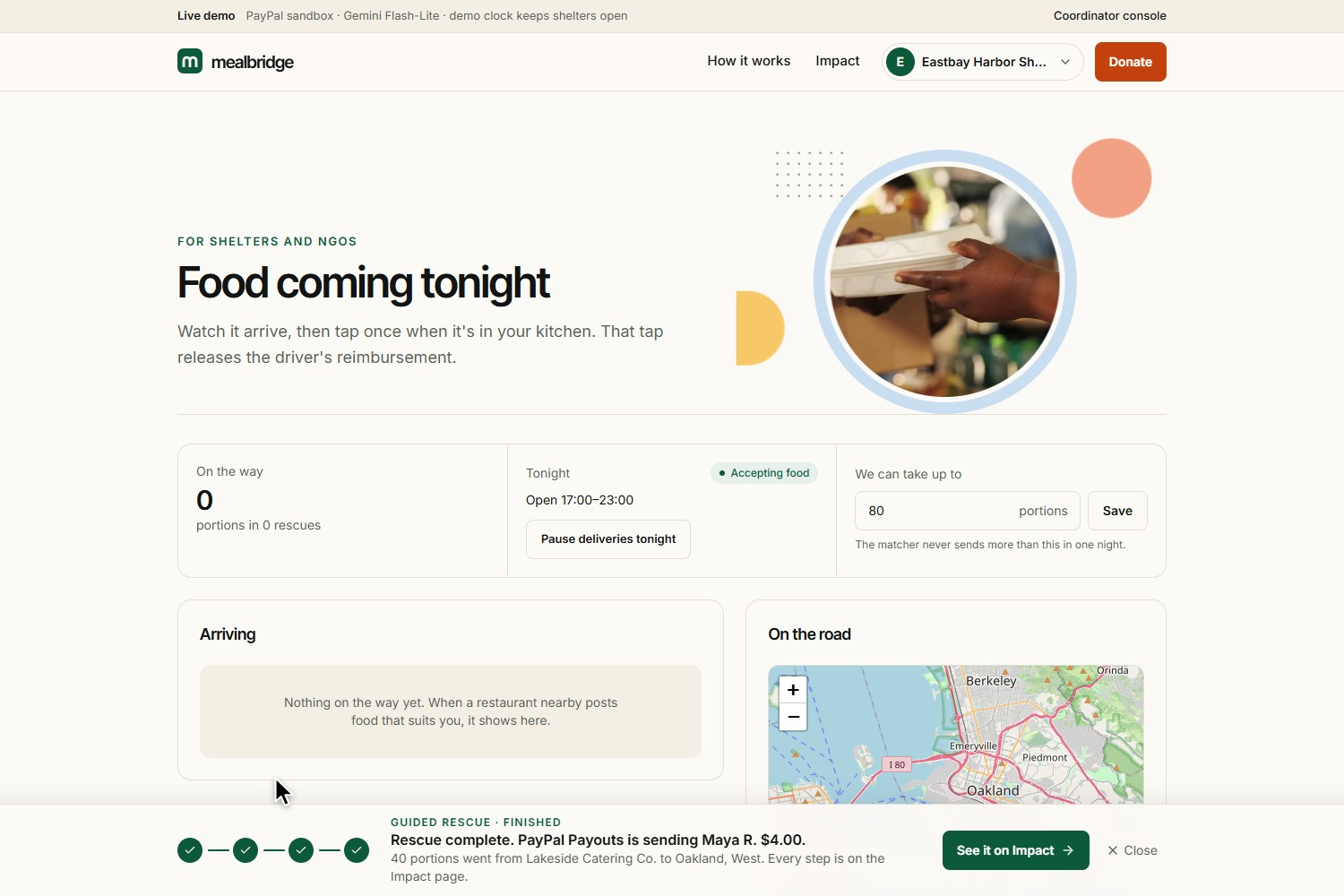
Step 4: photo, GPS and the shelter's tap agree, so PayPal Payouts reimburses the driver. The guide bar shows the rescue is complete.
-
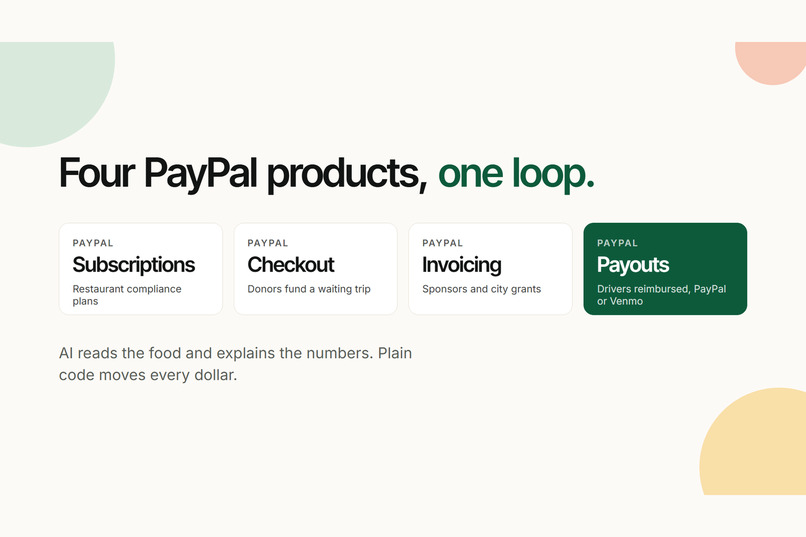
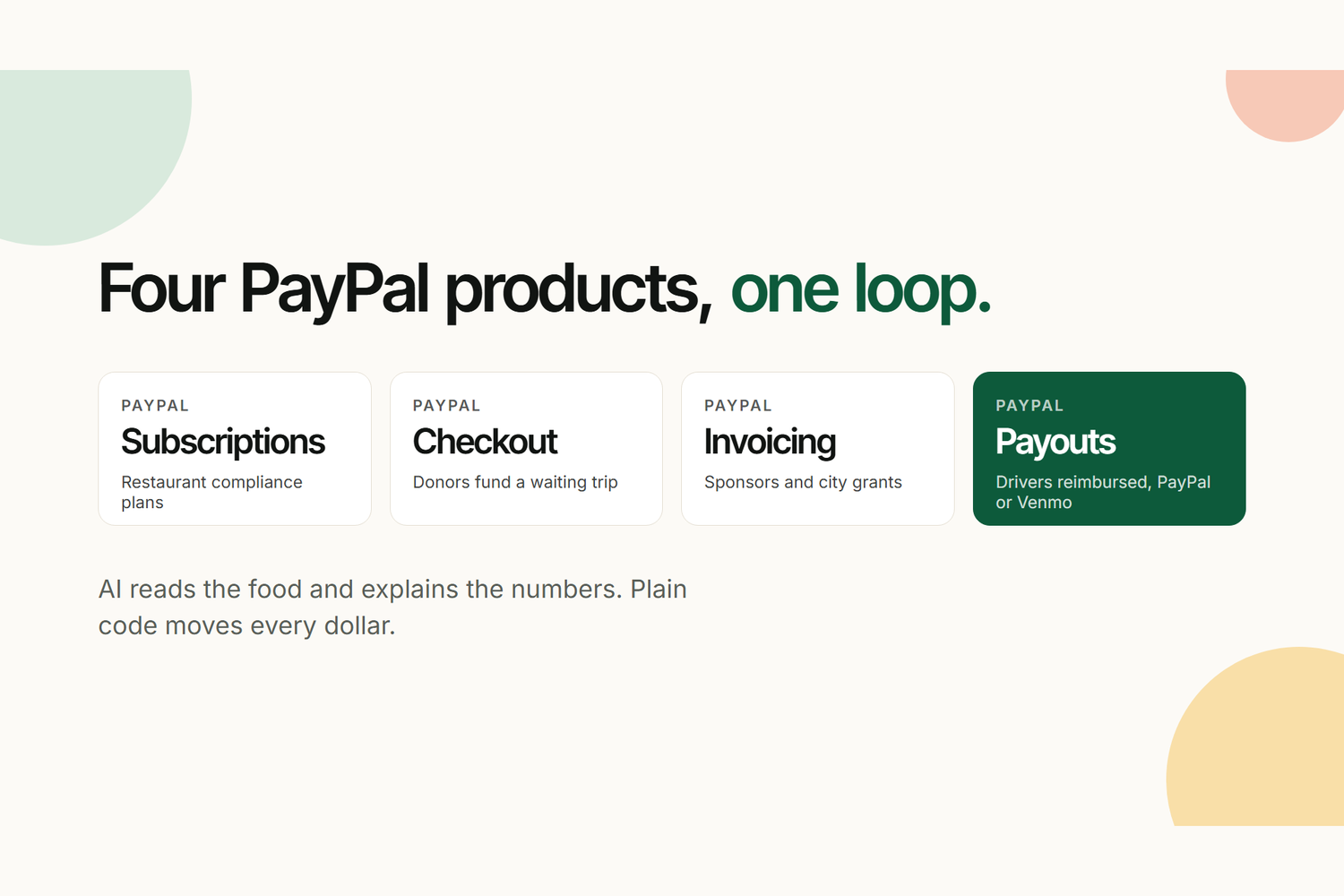
Four PayPal products in one loop: Subscriptions, Checkout, Invoicing and Payouts. AI explains; plain code moves every dollar.
-
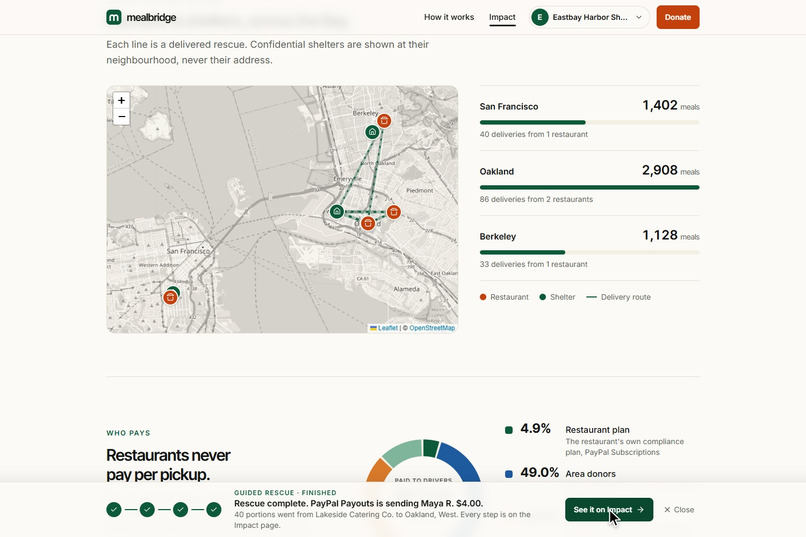
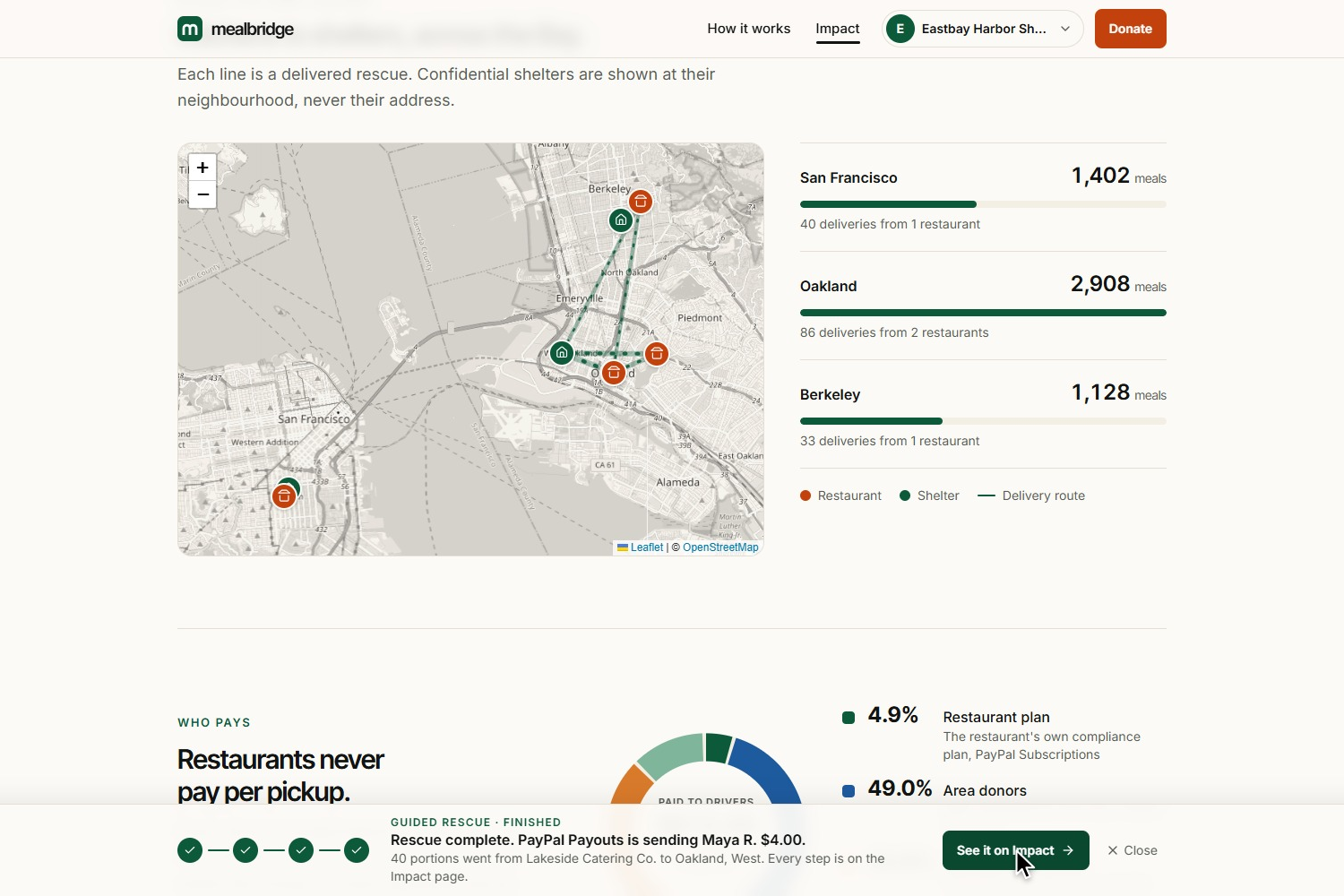
Every delivered rescue on a public map. Confidential shelters are shown only at neighbourhood level.
-
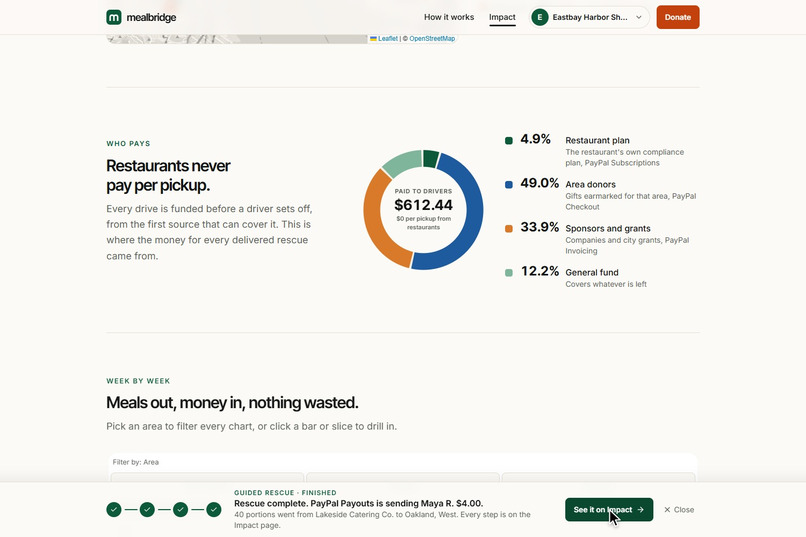
Who pays: every drive is funded before it starts, from the first source that can cover it. $0 per pickup from restaurants.
-
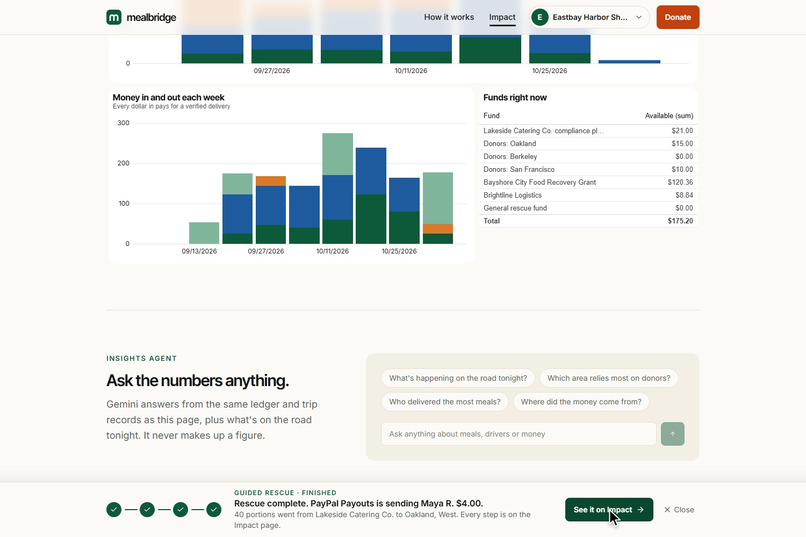
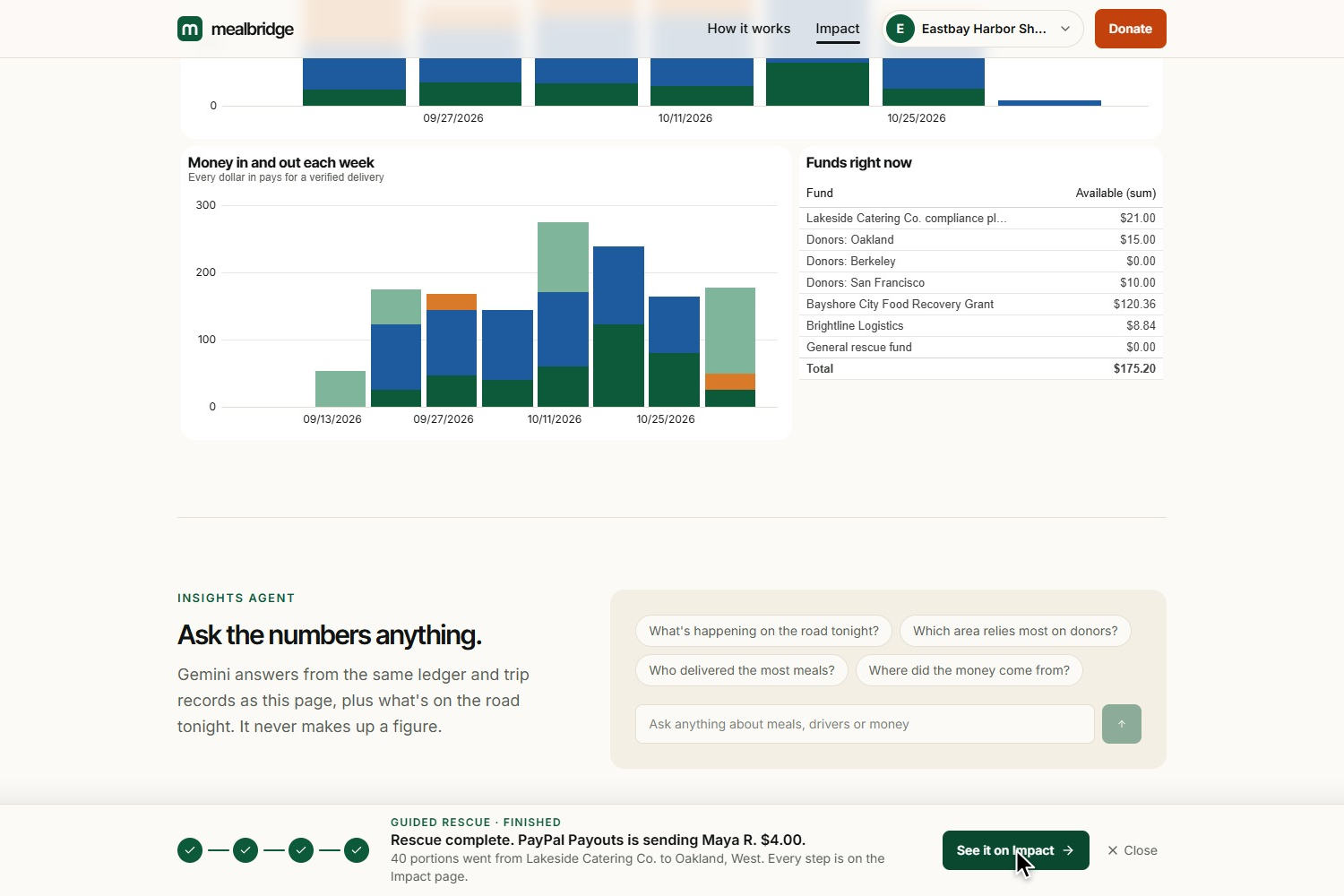
Impact page: AG Studio charts that cross-filter by area, and an Insights agent that answers from the live ledger.
-
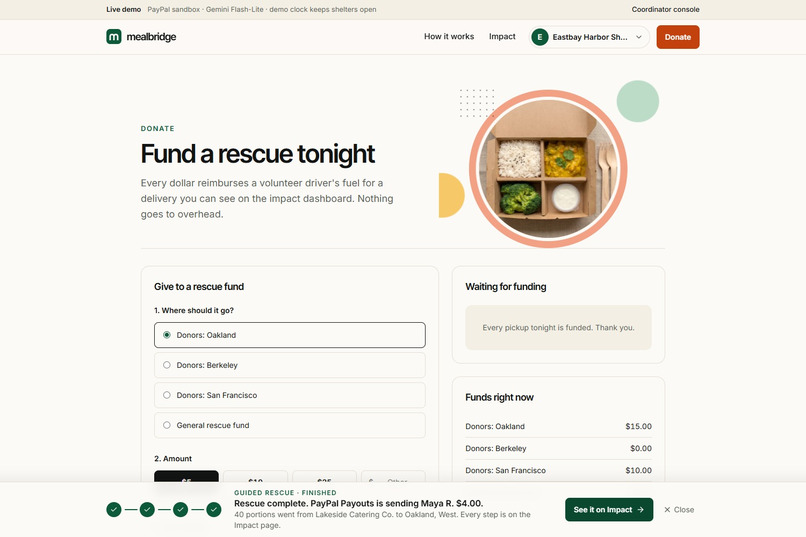
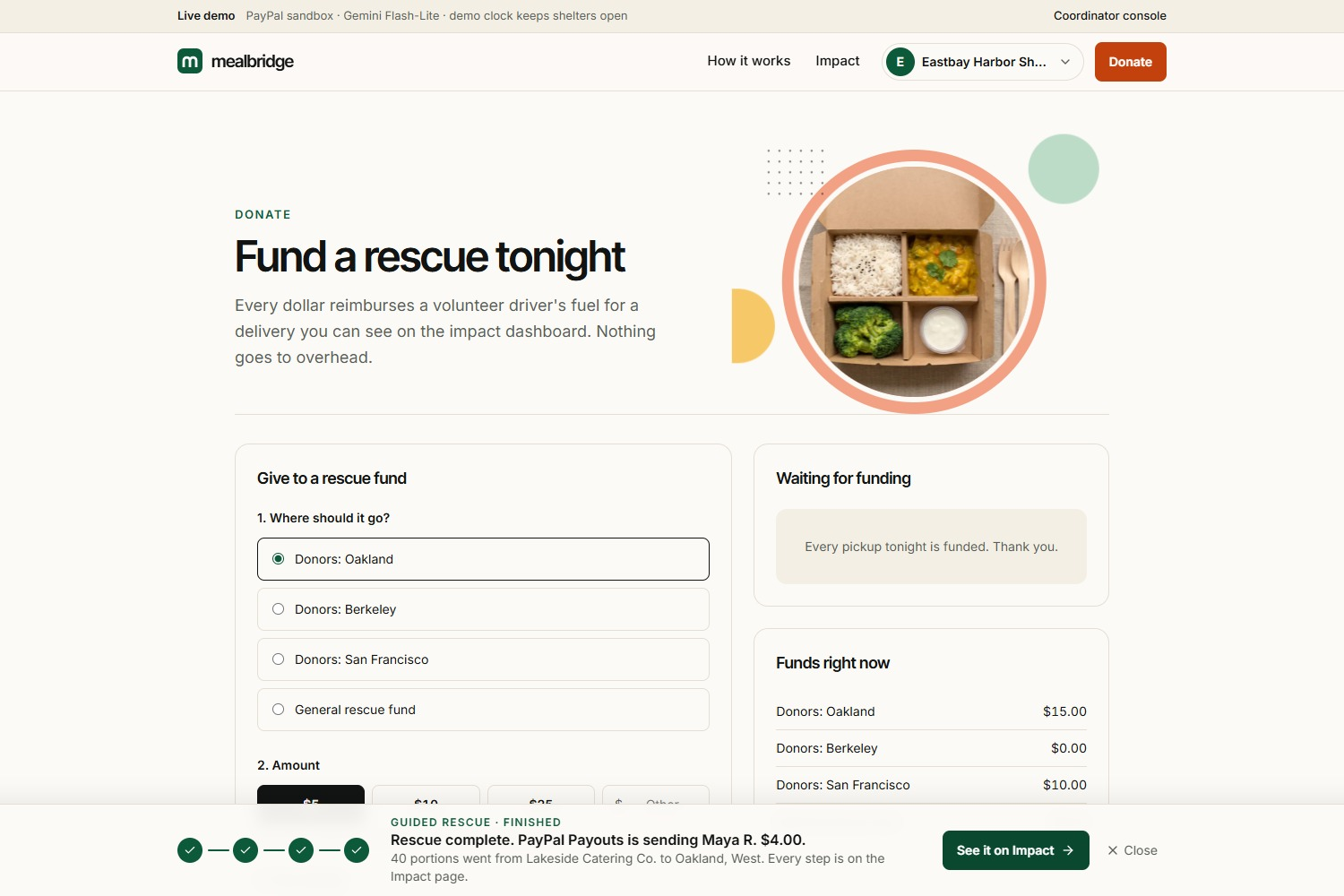
Donate: anyone can fund a waiting rescue in their area with PayPal Checkout. Nothing goes to overhead.
-
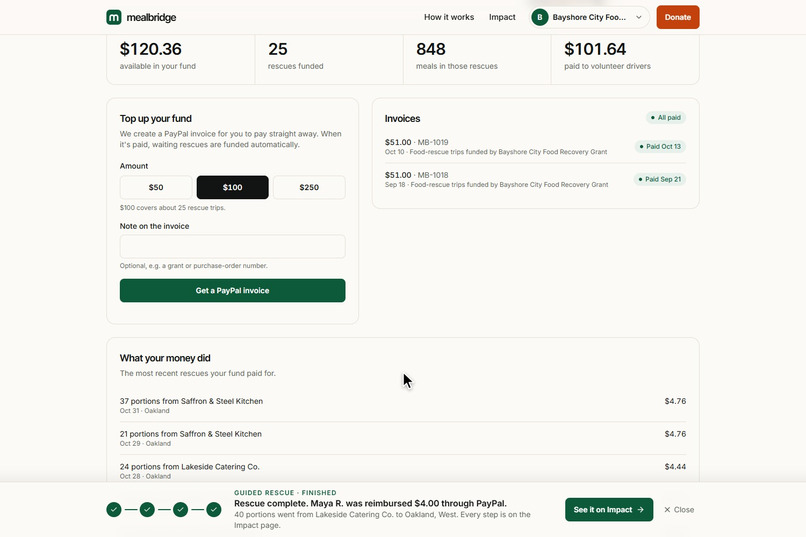
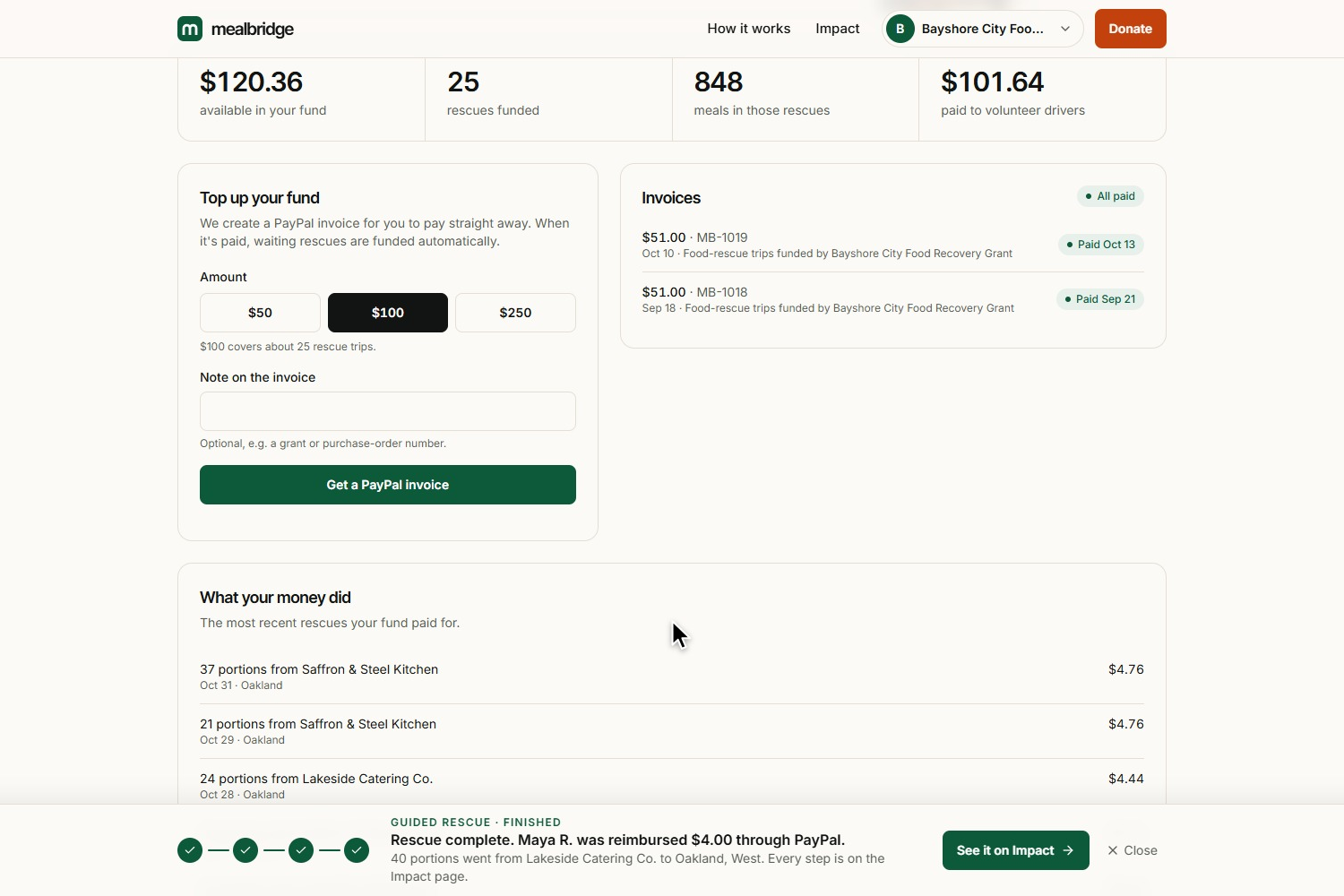
Sponsor portal: a city grant sees its fund and the rescues it paid for, and tops up with a PayPal invoice.
Try it: https://mealbridge-6py5.onrender.com — press Try the demo, then Start the guided rescue. A guide at the bottom of the screen walks you through one rescue in about two minutes, with real Gemini and the real PayPal sandbox.
Inspiration
In the Bay Area, restaurants throw away cooked food every night a few miles from shelters that need it. The food isn't the hard part. The hard part is the last mile: someone has to decide where it goes, check it's safe, find a driver, and make sure that driver isn't out of pocket. California's SB 1383 now requires large food businesses to donate edible surplus and keep records, but the logistics still run on phone calls and spreadsheets.
What it does
A restaurant snaps a photo or types a note. Agents take it from there:
- The Intake agent (Gemini) reads dishes, portions, allergens and how the food is held. Plain-code food-safety rules decide if it can go.
- The Matcher picks the shelter that can use it tonight: diet rules, capacity, distance and opening hours, then explains the choice in one sentence.
- The Treasurer reserves the driver's fuel reimbursement before anyone moves, from the restaurant's compliance plan (PayPal Subscriptions), then area donors (PayPal Checkout), then sponsors and city grants (PayPal Invoicing), then a general fund. No volunteer ever drives unpaid.
- Dispatch books the nearest free driver. The shelter watches the food arrive on a live map.
- Verification needs three signals to agree: the drop-off photo (checked by Gemini, and a reused pickup photo is caught), GPS at the shelter, and the shelter's tap. Then PayPal Payouts sends the reimbursement to PayPal or Venmo. Anything that doesn't match goes to a person, never an automatic yes.
- A Nudge agent drafts friendly reminders for unpaid sponsor invoices from real impact numbers.
- A sponsor portal shows each sponsor's fund and the rescues it paid for, and lets them top up through a PayPal invoice.
- Shelters can pause deliveries for the night or change how much they can take, and drivers go on and off duty; the matcher and dispatch respect both.
- A public Impact page shows every meal, mile and dollar: a map of delivered routes, who paid for the drives, AG Studio charts that cross-filter, and an Insights agent that answers questions from the live ledger.
Restaurants never pay per pickup: a fee at the moment they decide whether to bin the food works against donating.
How we built it
- Next.js 16 (App Router, server actions, Cache Components) and React 19, styled with Tailwind 4.
- PayPal: Orders v2 with the JS SDK v6 for donations; Payouts (PayPal and Venmo) for drivers; Subscriptions for the restaurant plan; Invoicing for sponsors; webhooks with signature verification; an idempotent ledger keyed on PayPal references so replays never double-count.
- AI: Google Gemini 3.5 Flash-Lite through the Vercel AI SDK. Models only read messy input and explain decisions; money and food safety stay in deterministic, tested code.
- AG Studio: the impact charts (weekly meals by area, money in and out, funds right now), themed to the site and cross-filtering.
- Render: web service plus Postgres from a Blueprint.
- Leaflet and OpenStreetMap for live tracking, with confidential shelters shown only at neighbourhood level on public maps.
Challenges we ran into
- Getting the money right: reserving funds before dispatch, all-or-nothing allocation across four sources, and settling payouts from webhooks or by asking PayPal, whichever comes first.
- Gemini's free tier allows only a few requests a minute, so everything runs on Flash-Lite and calls queue per model instead of failing.
- Our first sandbox business account was outside the US, which PayPal doesn't allow for payouts.
- Shelters keep evening hours, but judges try demos at any hour, so the demo has a labelled "demo evening" clock for opening hours only.
Accomplishments that we're proud of
- A full rescue runs end to end on the real PayPal sandbox: listing, match, funding, dispatch, live tracking, verification and a real payout.
- Every agent can only escalate to a human, never approve money or unsafe food.
- An Insights agent that answers from live ledger data and never invents a figure.
What we learned
Agents are most useful at the messy edges (reading a photo, explaining a choice, drafting a kind reminder), while the parts people must trust, like money and food safety, belong in plain code.
What's next for MealBridge
Real accounts and sign-in, SMS for drivers, a pilot with one Oakland food-recovery organisation, and SB 1383 reports in each county's own format.
Built With
- ag-grid
- ag-studio
- drizzle
- google-gemini
- leaflet.js
- nextjs
- openstreetmap
- paypal
- paypal-payouts
- paypal-subscriptions
- postgresql
- react
- render
- tailwindcss
- typescript
- vercel-ai-sdk


Log in or sign up for Devpost to join the conversation.