-
-
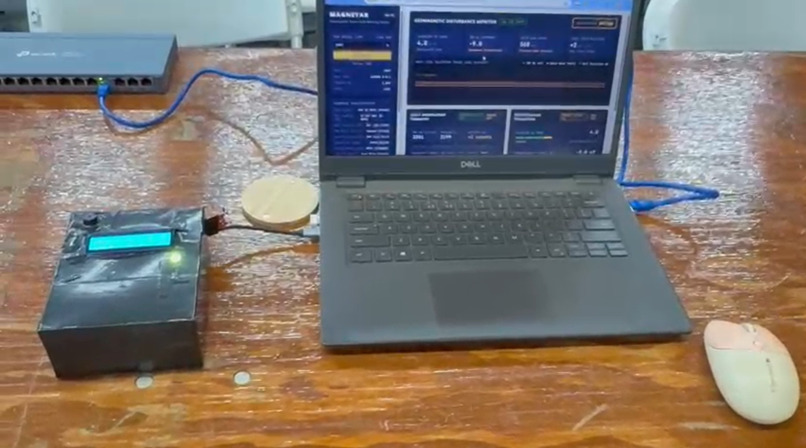
Full Overview of the System
-
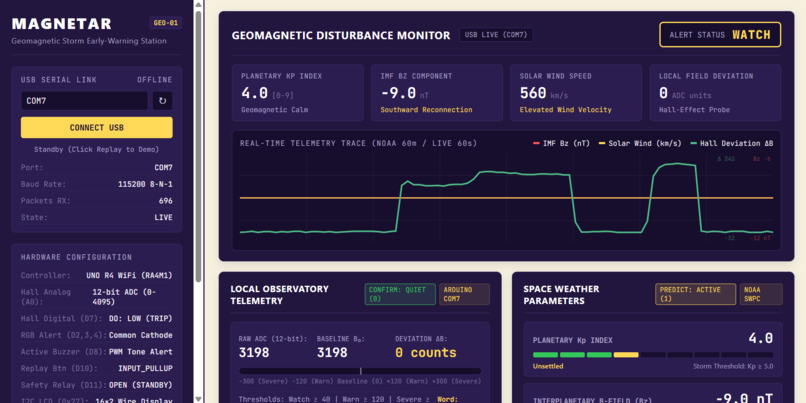
Dashboard
-
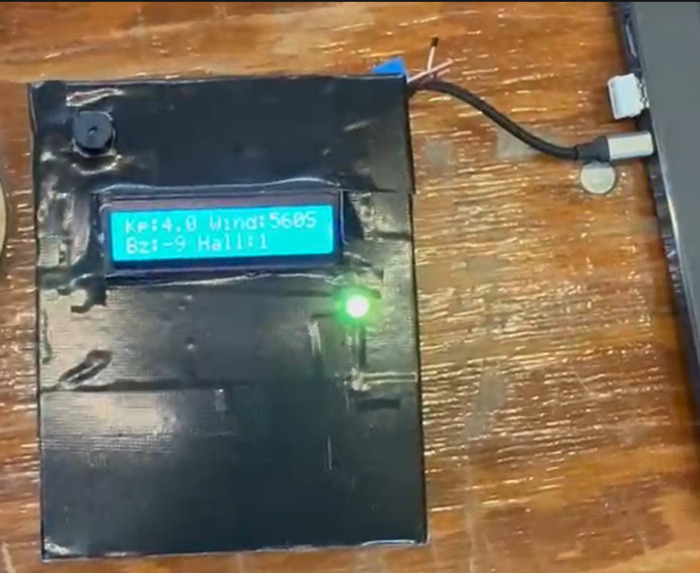
Hardware
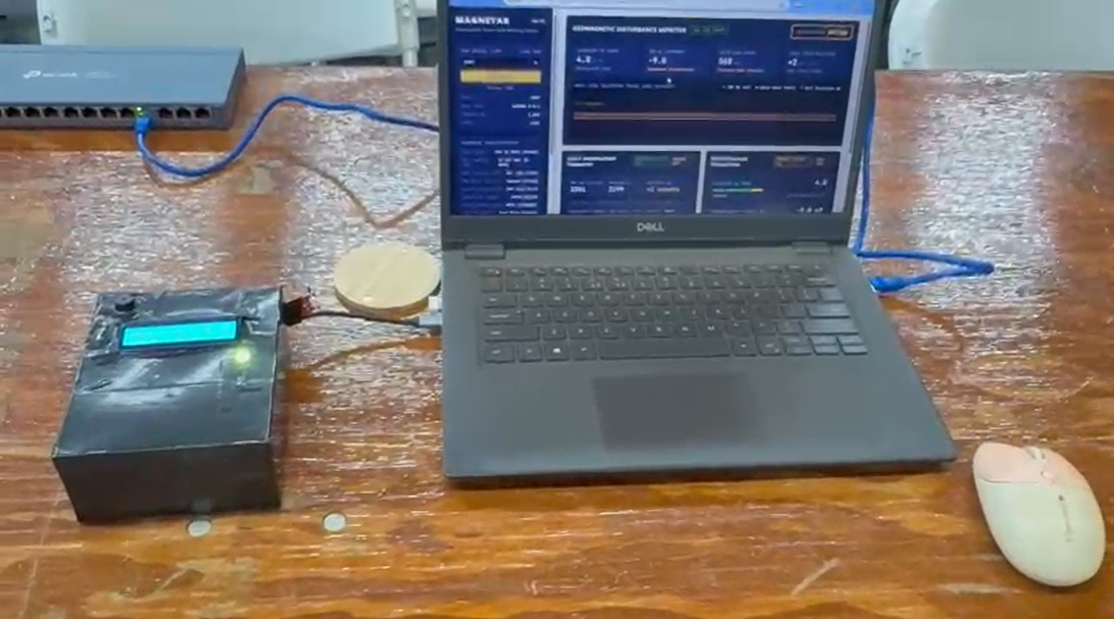
Inspiration
It started with news articles about geomagnetic storms and their potential impact on Earth's technology. I've always been interested in space, but space weather felt like a niche topic that wasn't talked about enough, especially in terms of its local impact. I wanted to explore whether I could build a system that makes these events easier to monitor and understand, with a particular focus on India and the need for more accessible, localized space-weather awareness.
What it does
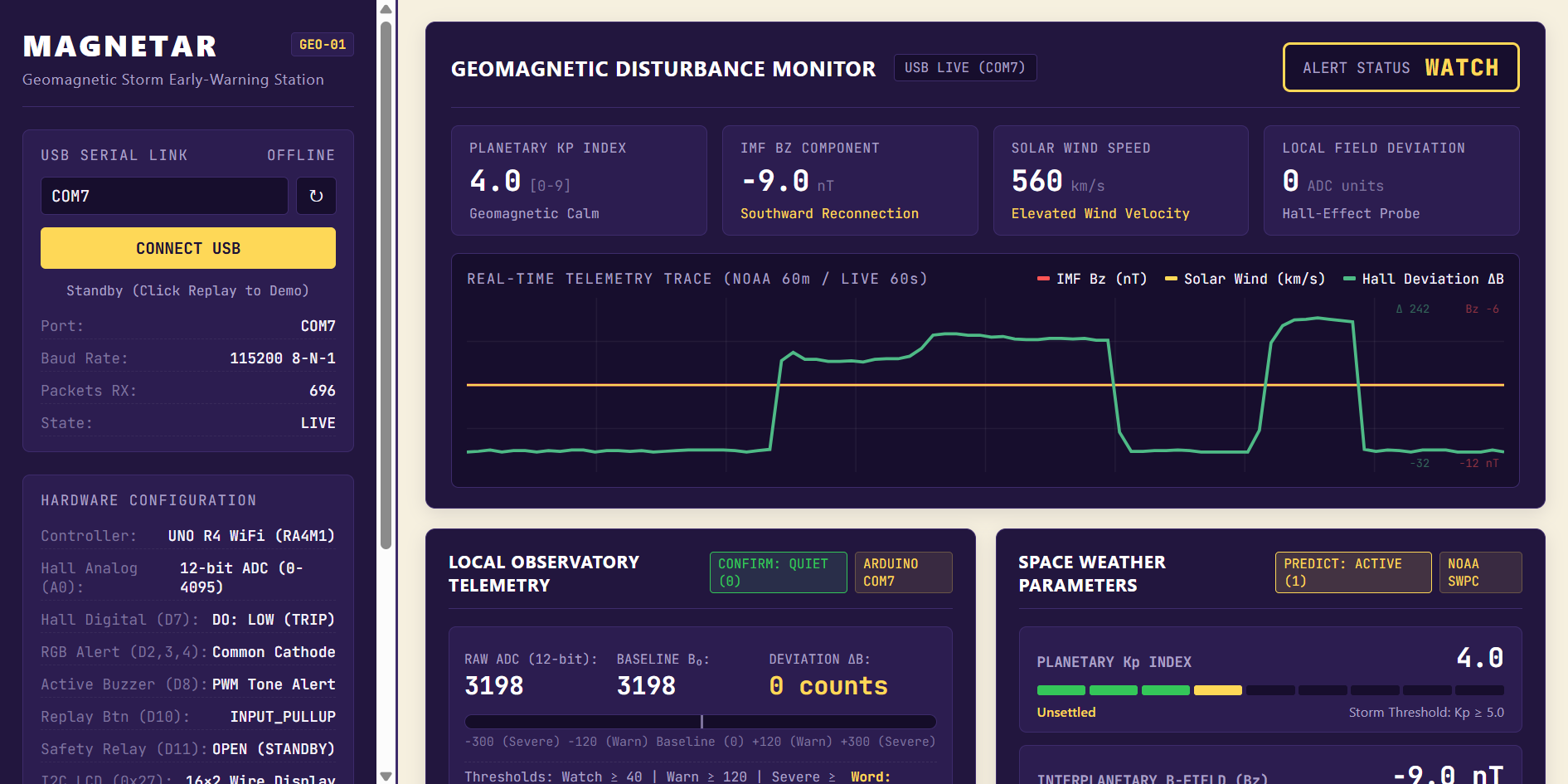
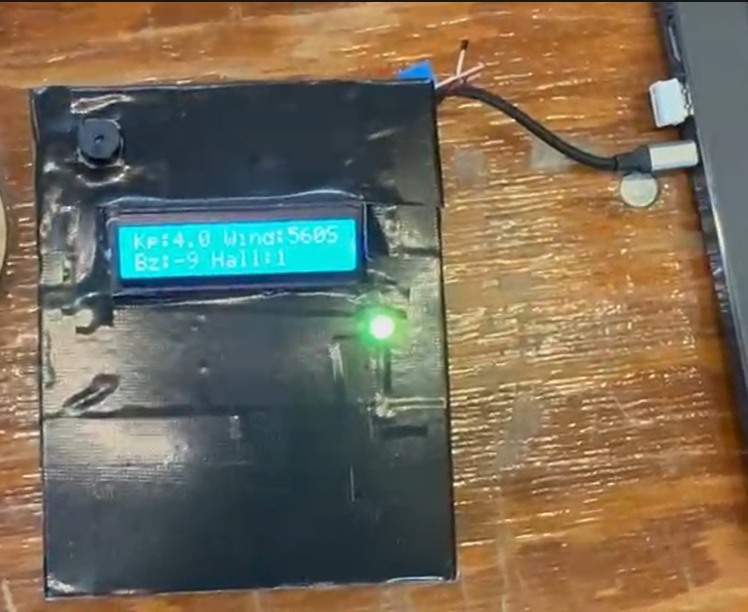
MAGNETAR monitors space-weather conditions using live solar-wind data from NOAA and local magnetic-field readings from a Hall-effect sensor. It processes these inputs to assess geomagnetic-storm conditions and communicates the resulting status through a web dashboard and a physical alert system built with an Arduino, RGB LEDs, a buzzer, and an LCD.
The goal is to make space weather more tangible by connecting data from space with measurements taken on the ground, helping users understand potential local impacts rather than just seeing a storm reported in the news. This system also remains low-cost, hence being feasible for people from all backgrounds, including rural.
How I built it
I built Magnetar as an integrated hardware-and-software project. The hardware uses an Arduino UNO R4 WiFi, a Linear Hall-effect sensor, an RGB LED module, a buzzer, and an LCD. The software side includes a web dashboard, API routes, and a shared risk-assessment engine that processes incoming measurements and determines the appropriate alert state.
NOAA solar-wind data provides the space-weather component, while the Hall-effect sensor supplies local magnetic-field readings. The risk engine connects these inputs to the dashboard and the physical alert system. I also developed a replay mode to test the system with simulated data and designed an offline/stale-data state to distinguish unavailable or outdated information from normal conditions.
To plan the workflow, I used Notability. As a one-girl army without a team, Notability helped me keep me in check and helped me go through ideas. I did 2 hours of research before committing to my project, so Notability ensured I could keep track of the articles and papers I went through. I also planned my entire architecture there. I even planned the gist of my dashboard there.
I also used Figma to design the dashboard. I used Figma Make to come up with concept art and then used the developer tools to play with and tinker with ideas.
I used Grok to plan the initial setup and architecture and went back and forth with the ideas. I also used Cursor for the basic skeleton of the dashboard.
I used Claude to help me test the hardware code, letting me spend my time more on optimizing and experimenting with hardware and the datasets rather than the testing part.
At the end of the day, as I did it alone, I did use a bit of AI and other tools. But I did make sure that they had a touch of humanity too and made sure I wasn't blindly using AI for everything.
Challenges I ran into
Building Magnetar alone meant handling everything from hardware integration and backend development to data processing and interface design. I also had to pivot between ideas before settling on a problem that was both technically interesting and feasible to tackle within a hackathon which caused way too much anxiety.
Working with NOAA's space-weather data was another challenge. Understanding the available data, figuring out how to process it meaningfully, and connecting it to a physical device required me to think beyond simply displaying information on a dashboard. It was definitely a bit on the challenging side for someone working entirely alone.
Accomplishments that I'm proud of
I'm proud that I took on a project spanning space weather, embedded systems, and web development and built both the hardware and software independently. Integrating an external scientific dataset like NOAA's into a project with a physical interface pushed me beyond building a standalone application.
Magnetar brought together my interests in electronics and space in a way that could eventually become a practical tool for making space-weather information more accessible. Overall, I think I am happy with how everything went all things considered :)
What I learned
I learned more about how geomagnetic storms impact our lives as humans and ended up being really passionate about the topic I chose.
I mainly learned how to work with NOAA's space-weather data and gained a better understanding of the challenges involved in turning scientific measurements into meaningful, real-time information. I also learned that collecting data is only the beginning: interpreting it correctly, accounting for missing or outdated readings, and communicating uncertainty are just as important.
Building the project solo also taught me how to make technical decisions across the entire stack, from hardware limitations to software architecture.
What's next for Magnetar
The next step is to upgrade the sensing hardware to a proper magnetometer so I can obtain more accurate magnetic-field measurements. I also want to calibrate the sensor, validate the system against established geomagnetic indices, and improve the correlation between NOAA's space-weather data and local measurements.
Ultimately, I want Magnetar to evolve into a more reliable, localized space-weather monitoring system that makes geomagnetic activity easier to understand and its potential impacts easier to anticipate.

Log in or sign up for Devpost to join the conversation.