-
-
1
-
2
-
3
-
4
-
5
-
6
-
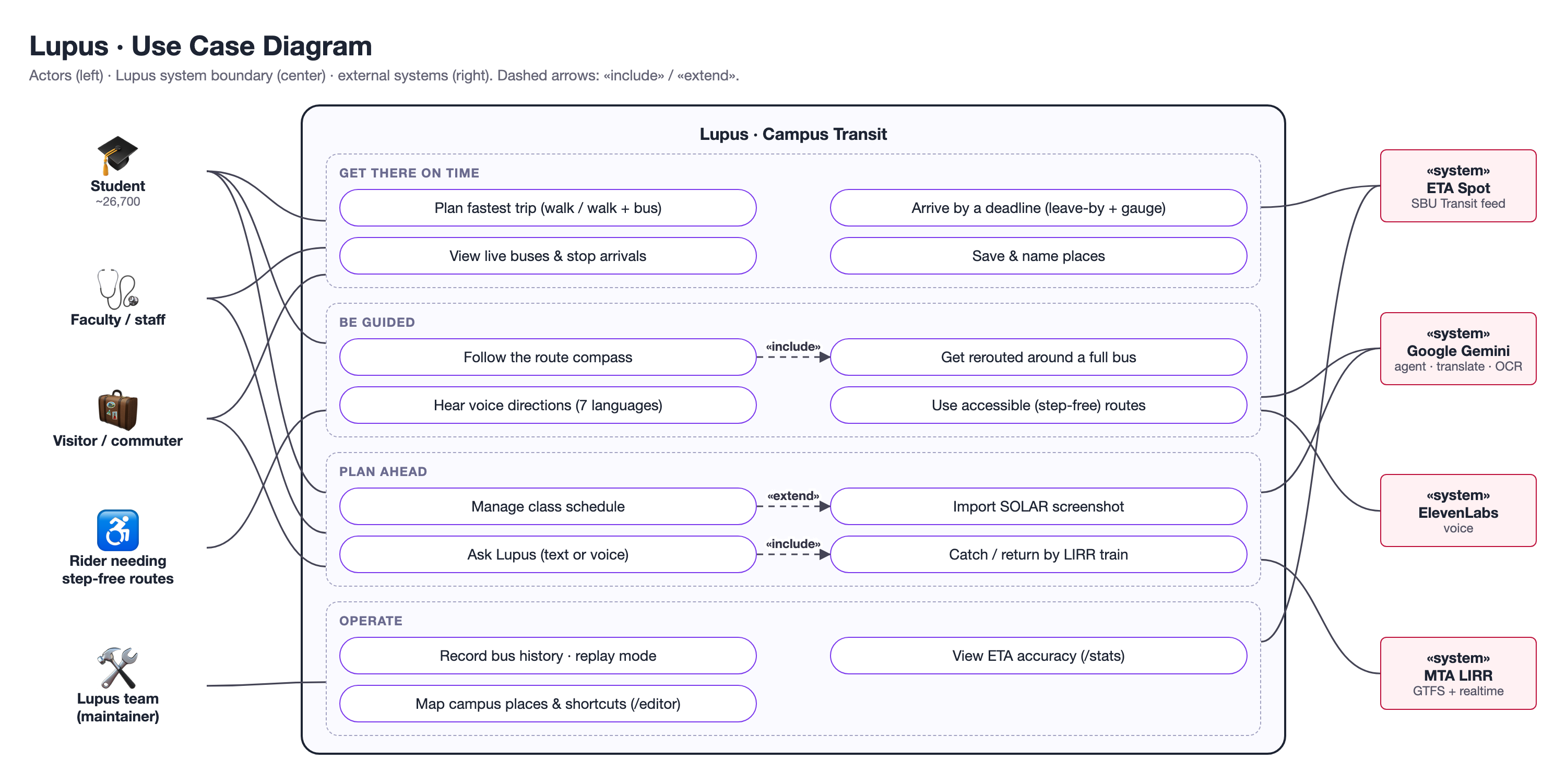
Use Case Diagram
-
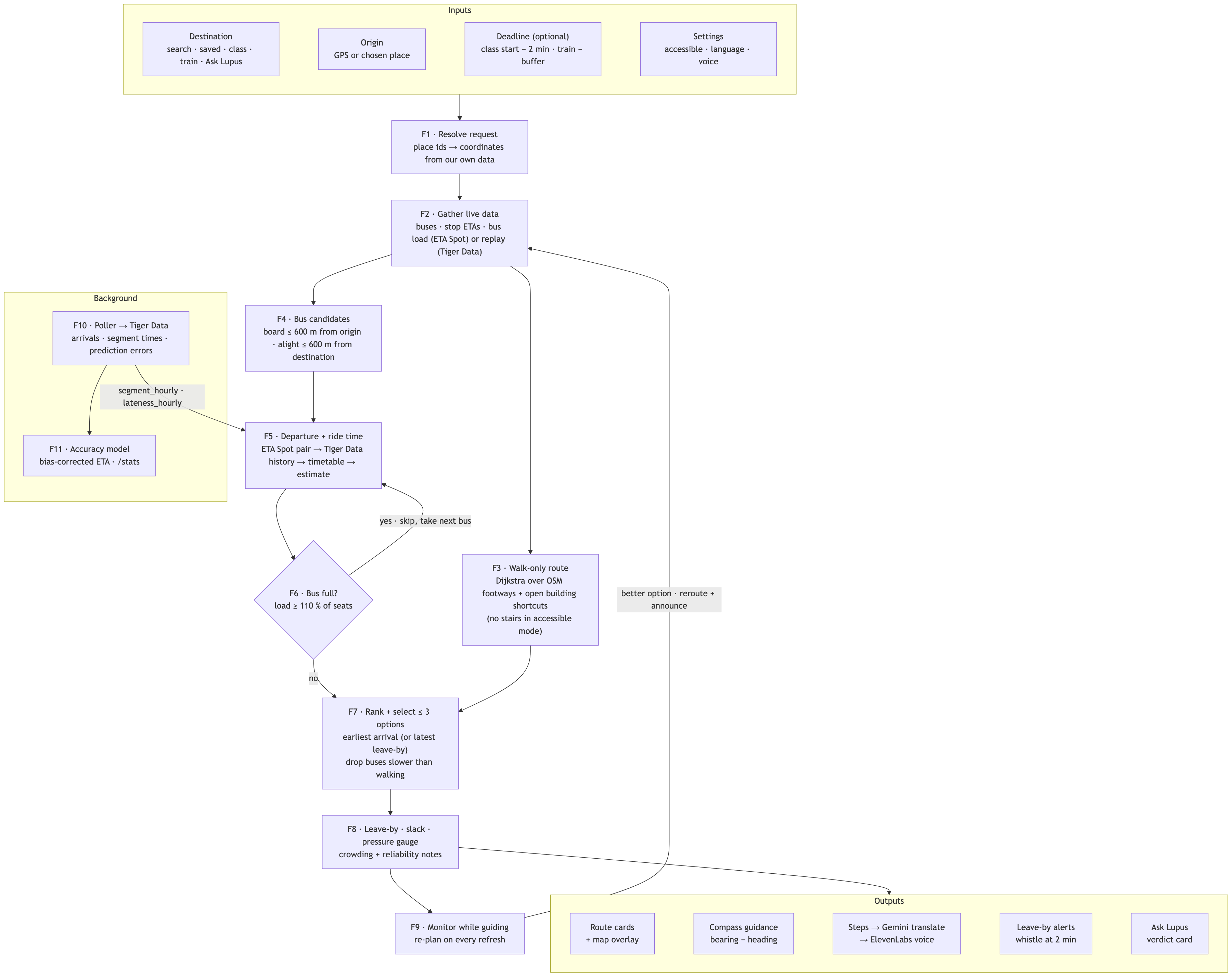
Functional Diagram
Inspiration
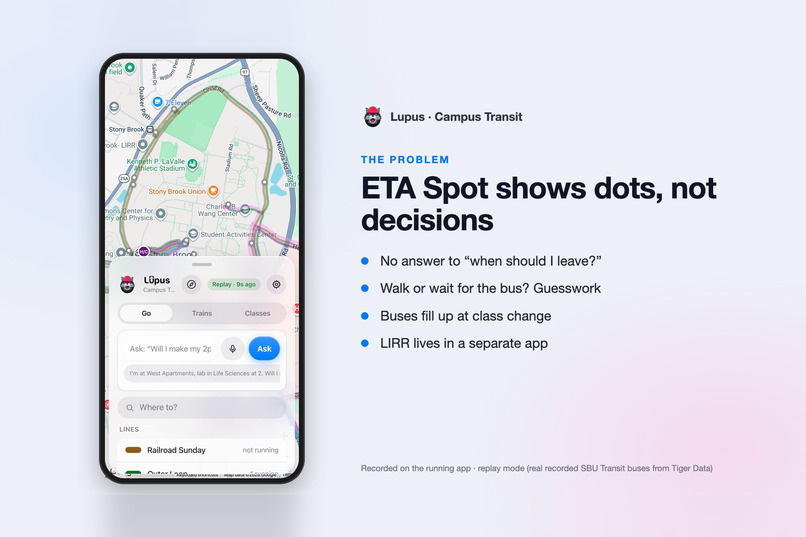
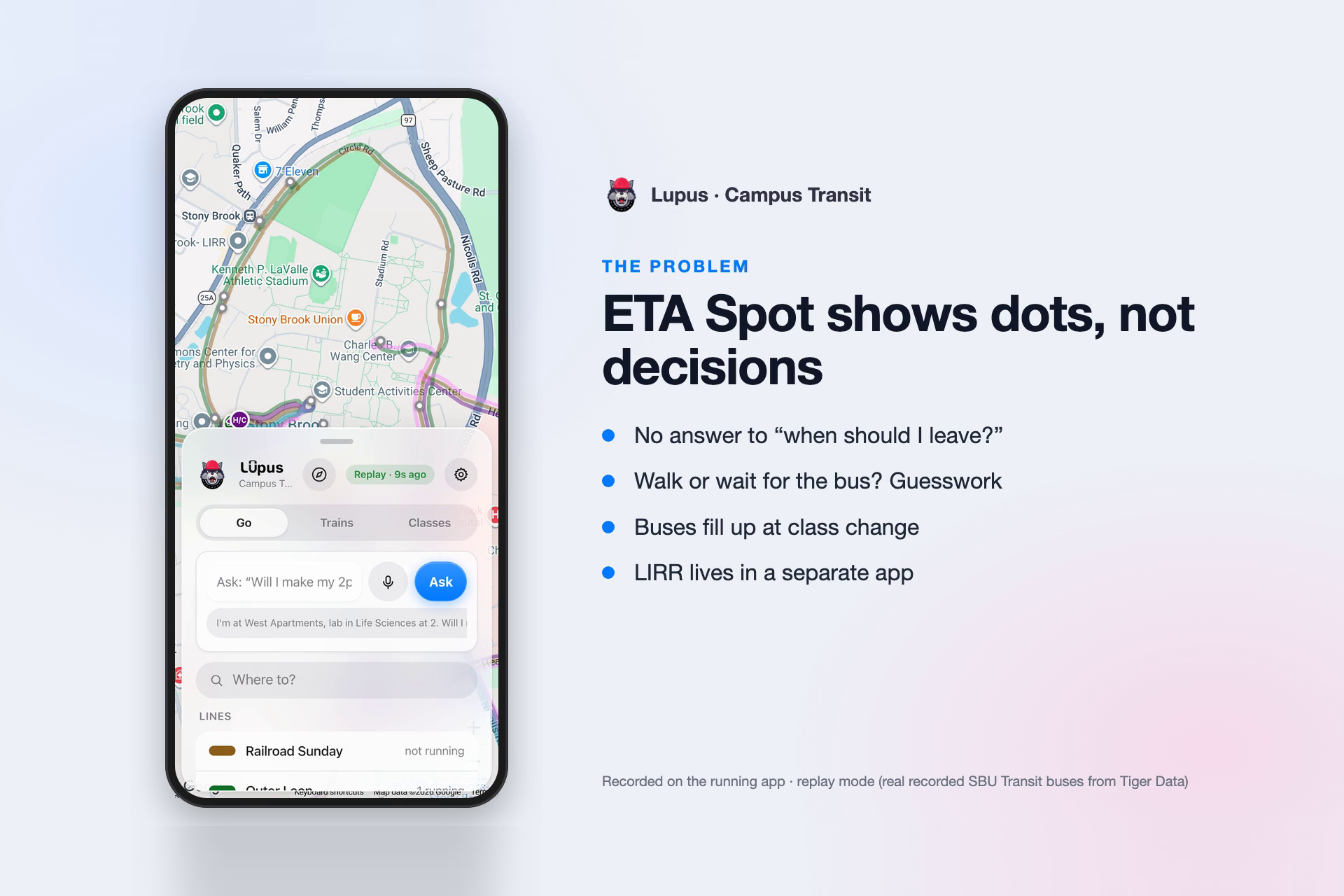
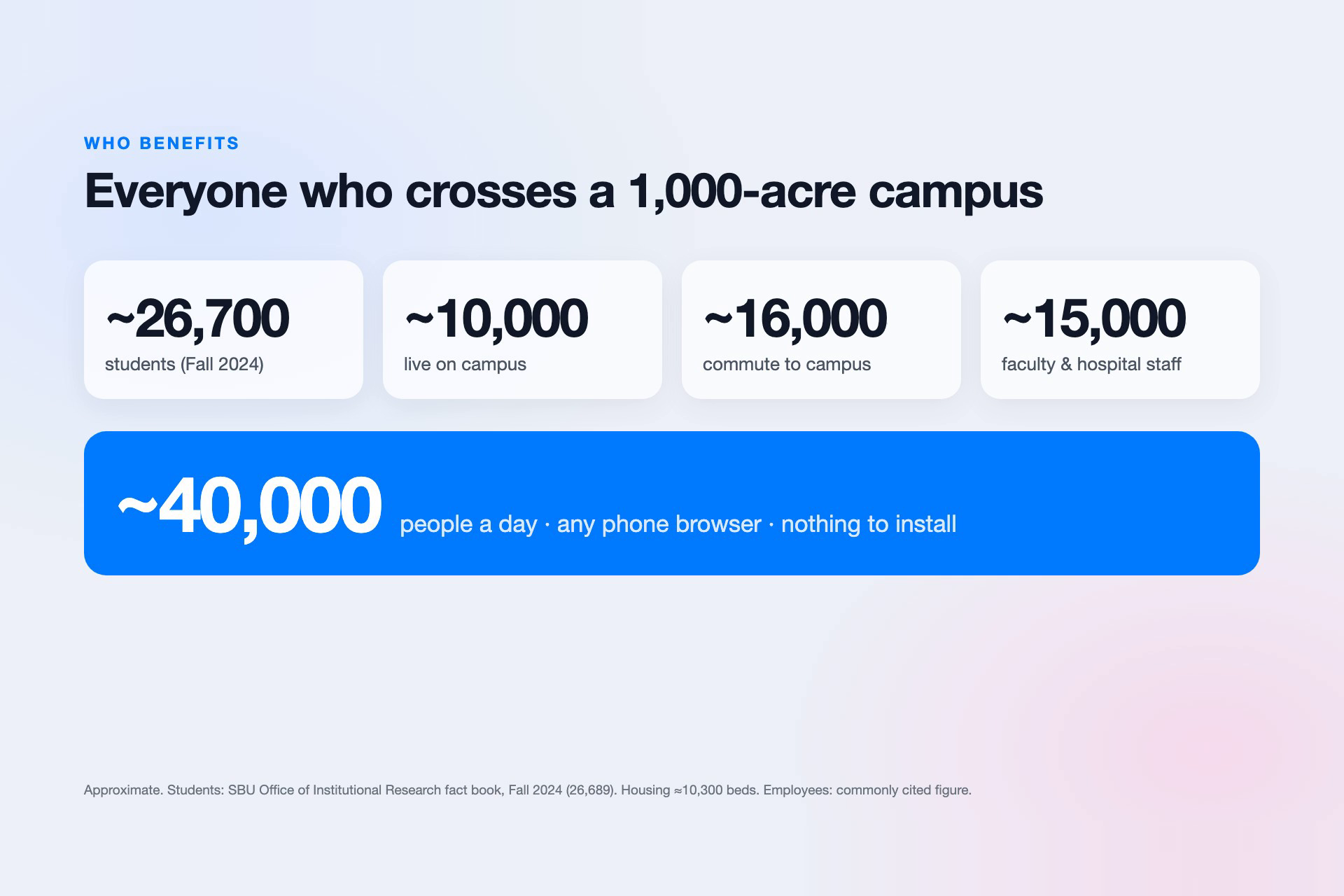
Every Stony Brook student knows the moment: class starts soon, you open the campus bus tracker, and all you get is dots on a map. The app we all rely on leaves you to do the hard part yourself:
- It never tells you when to leave. It shows where buses are, not whether you'll make your 2:00 lab.
- You have to tap stop after stop to find arrival times, then guess which bus actually goes where you're headed.
- Its arrival times drift. Predictions can be minutes off, and there's no way to know which ones to trust.
- It never says "just walk." Walking is often faster than waiting, but it doesn't know campus footpaths or shortcuts.
- It doesn't warn you about full buses. At class change, a packed bus can leave you standing at the stop.
- Trains are a separate app. Catching the LIRR means juggling the MTA app, the bus tracker and a walking map.
- It leaves people out. There's no help for riders who need step-free routes or whose first language isn't English.
We wanted an app that answers the only question that matters: when do I need to leave?
What it does
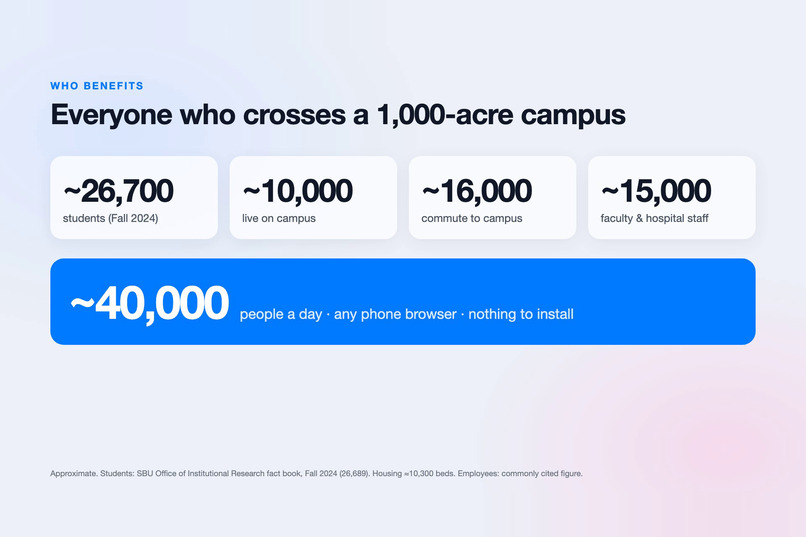
Lupus is a campus travel guide for Stony Brook University. Open loopus.us on any phone, with nothing to install.
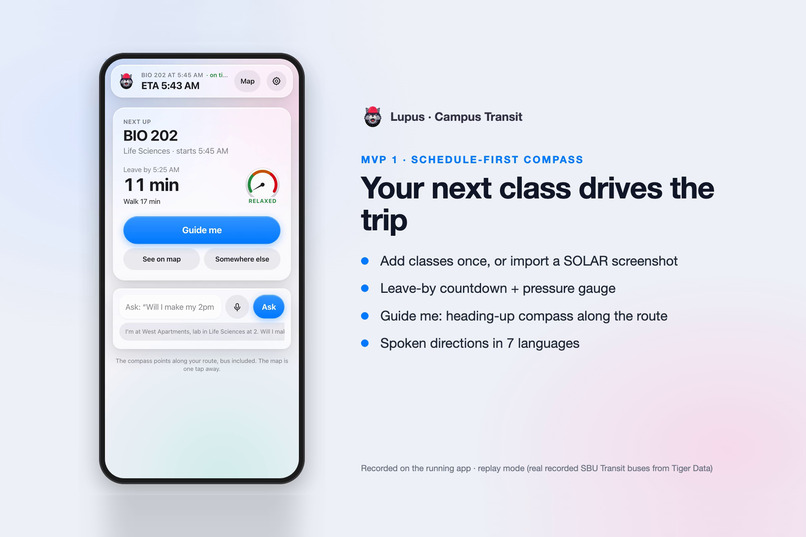
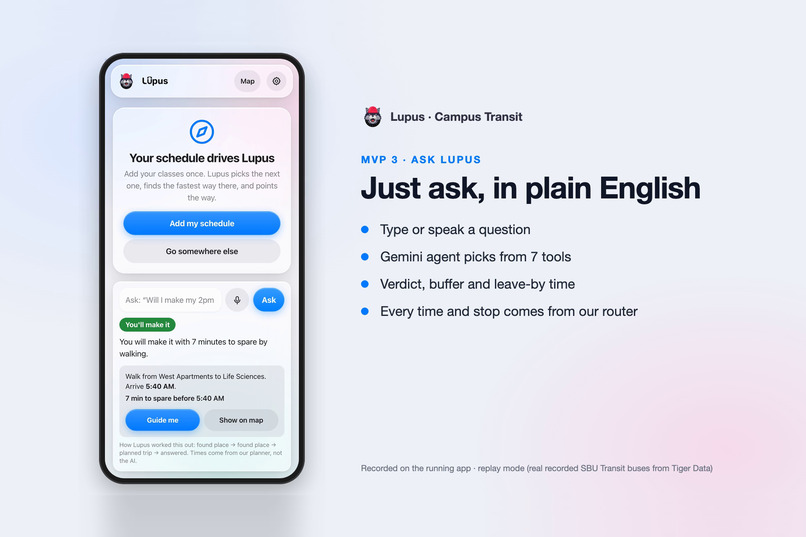
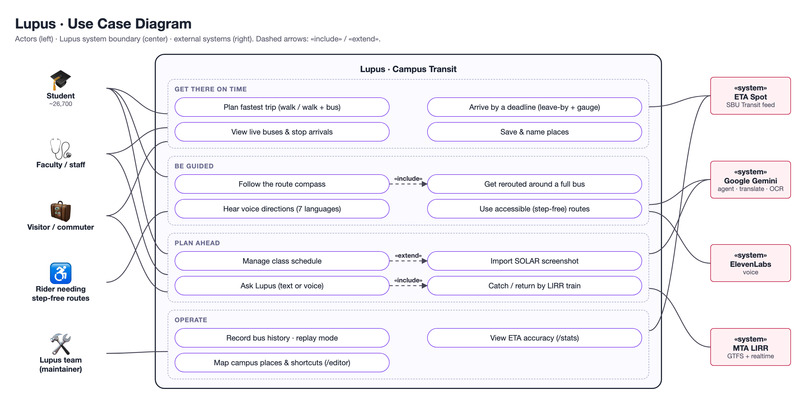
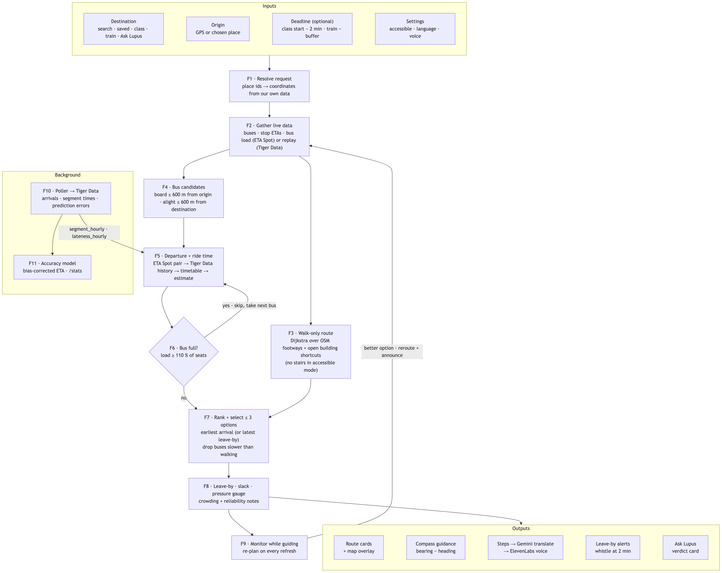
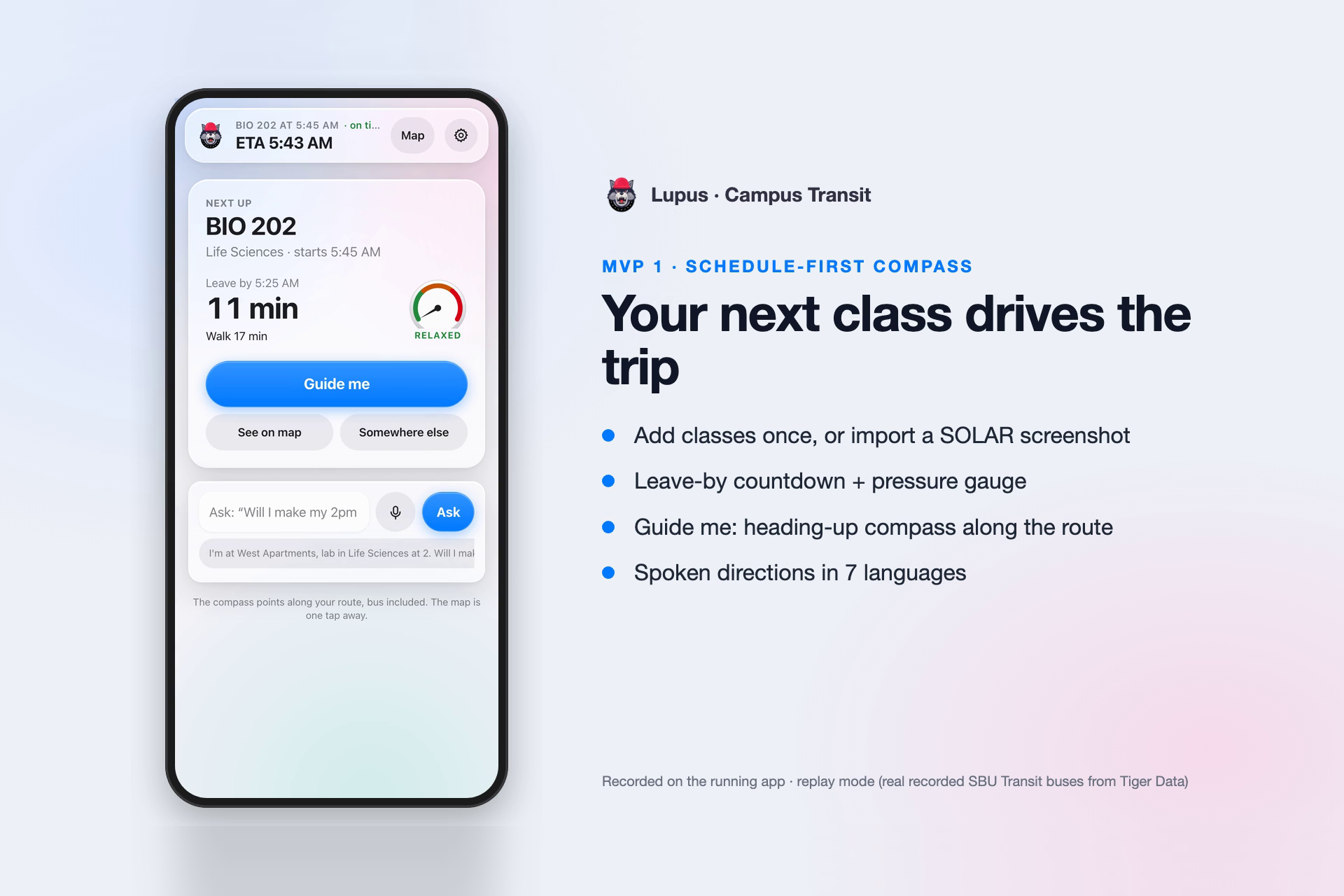
- Tells you when to leave. Add your class schedule once, or just snap a screenshot of it. Lupus picks your next class, finds the fastest way there, and counts down to the minute you should go.
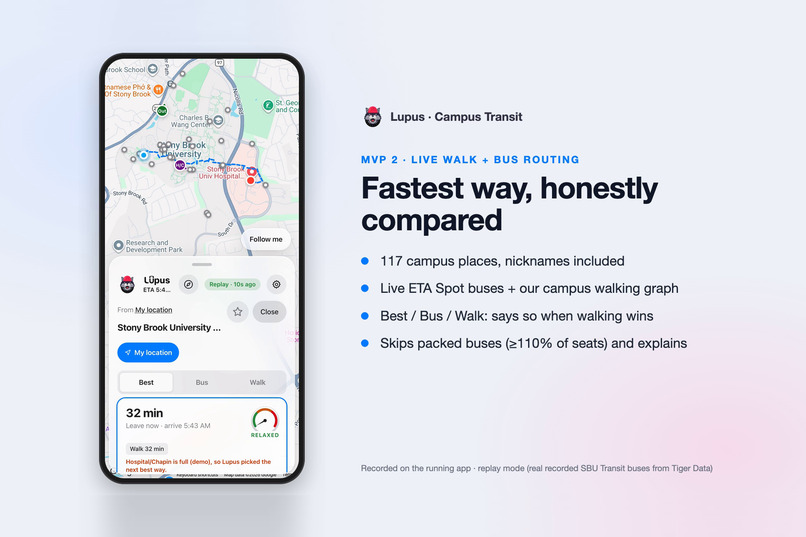
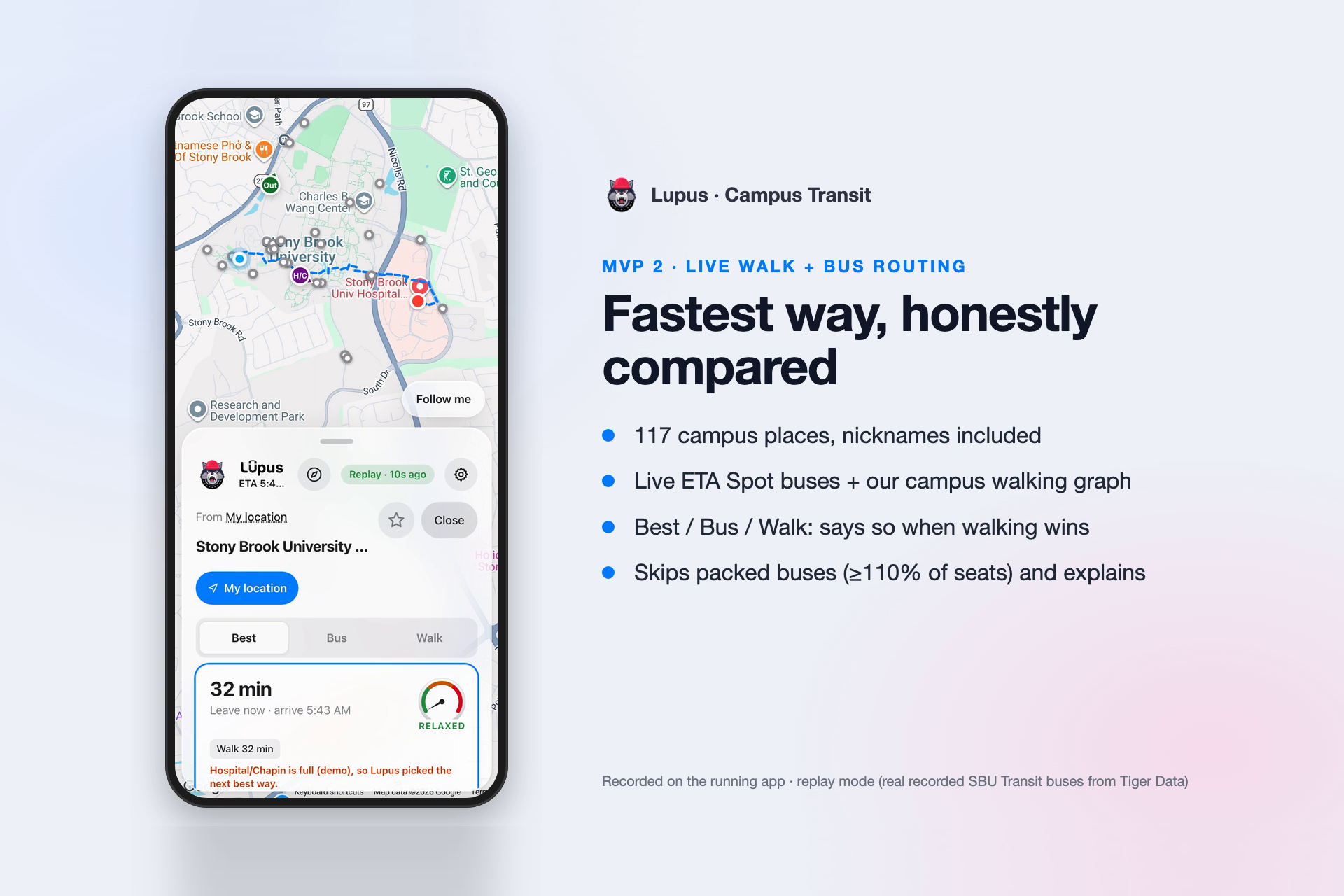
- Walk or bus, whichever is faster. It uses live bus locations and knows campus shortcuts. If walking beats the bus, it says so.
- Stroll, walk or run. A simple gauge shows how much time you have to spare.
- Guides you there. A compass points the way, and a friendly voice reads the directions aloud in 7 languages.
- Skips full buses. If your bus is packed, Lupus quietly picks the next best option.
- Catches your train. It plans the trip to the Stony Brook LIRR station around live train times.
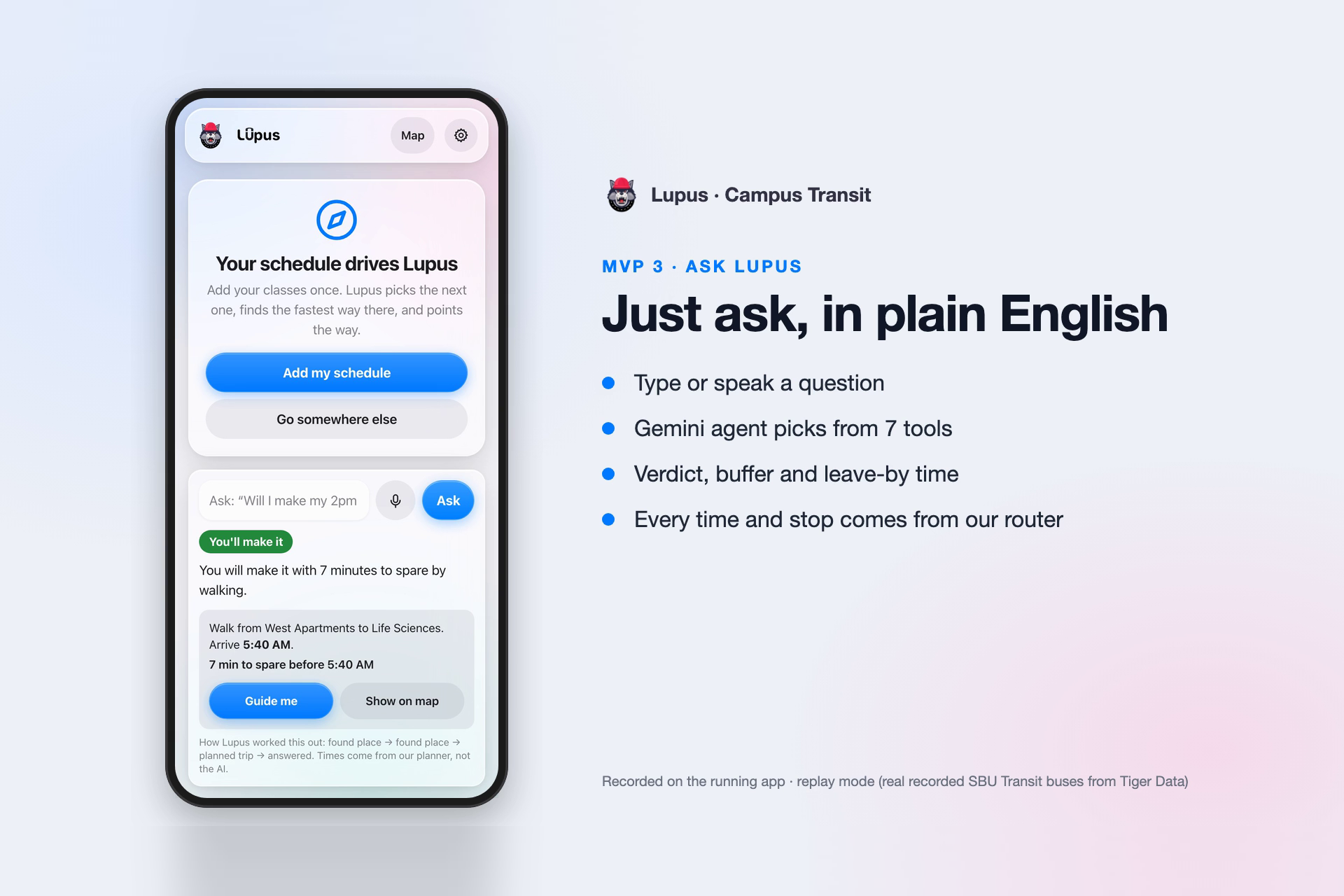
- Answers questions. Ask "I'm at West Apartments, lab in Life Sciences at 2. Will I make it?" and get a straight answer.
- Works for everyone. An accessible mode avoids stairs and allows a slower pace.
How we built it
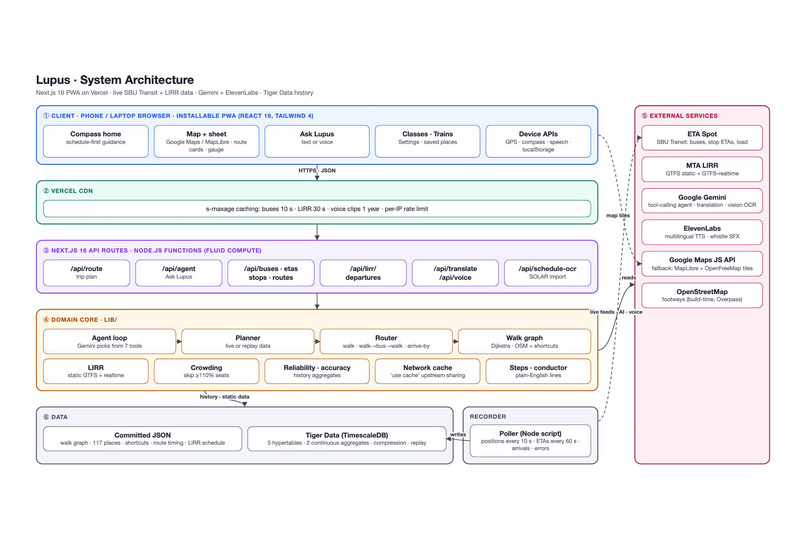
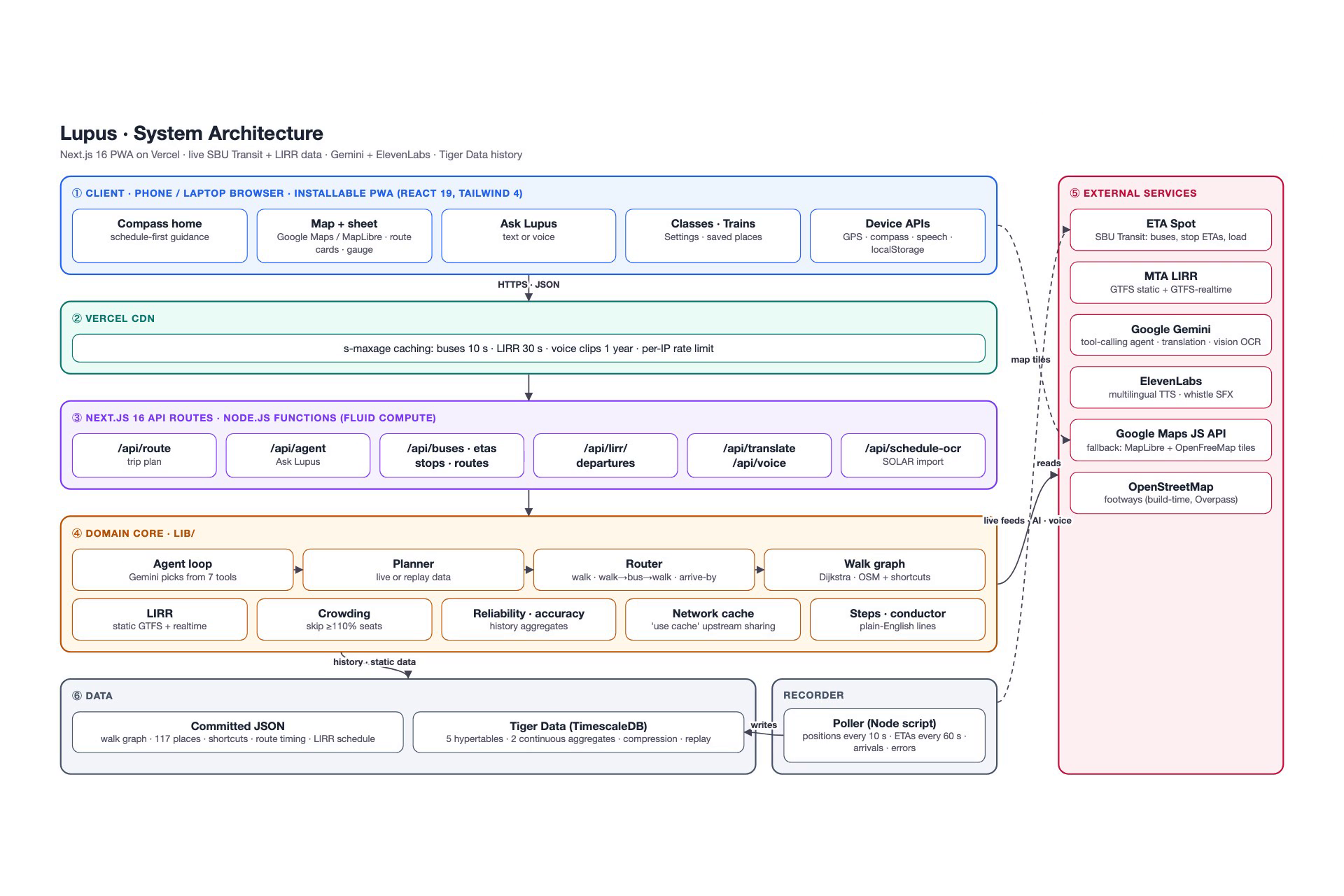
Lupus is a web app that combines Stony Brook's live bus feed, LIRR train times and a map of campus walkways, including shortcuts we mapped by hand.
- Google Gemini powers the question answering, the translations and the schedule reading.
- ElevenLabs gives Lupus its voice.
- Tiger Data records every bus around the clock, so Lupus learns how late buses usually run and gives more accurate arrival times.
- The domain, loopus.us, comes from GoDaddy: Lupus is Latin for wolf (go Seawolves), and our buses run in loops.
Challenges we ran into
- Bus predictions drift. The official arrival times can be minutes off, so we recorded real buses to measure and correct the error.
- Maps apps don't know campus. Footpaths and building cut-throughs were missing, so we mapped them ourselves.
- Buses don't always run when you need to demo. We built a replay mode that plays back real recorded buses.
Accomplishments that we're proud of
- It's live today at loopus.us and works in any phone browser.
- It turns a confusing map into one clear answer: leave at 9:52.
- It speaks seven languages and has a step-free mode, so more people can use it.
- Every feature has a backup, so the app keeps working even when a service goes down.
What we learned
The hard part wasn't showing bus data; it was turning that data into a decision. Small touches, like a spoken "time to leave" alert or a "walking is faster" note, mattered more than any map.
What's next for Lupus
- Leave-by alerts even when the app is closed
- Trips that switch between two buses, plus county bus connections
- Working with SBU Transportation to connect directly to class schedules and the official bus system
Built With
- elevenlabs
- gemini
- godaddy
- google-maps
- next.js
- openstreetmap
- react.js
- tailwindcss
- tigerdata
- typescript
- vercel
- vitest

Log in or sign up for Devpost to join the conversation.