-
-
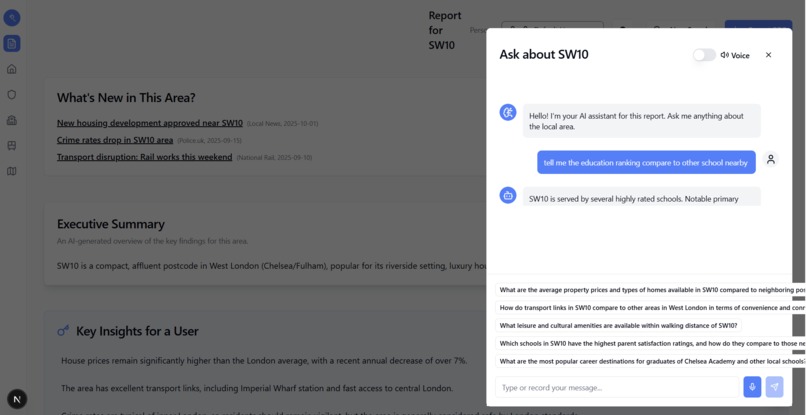
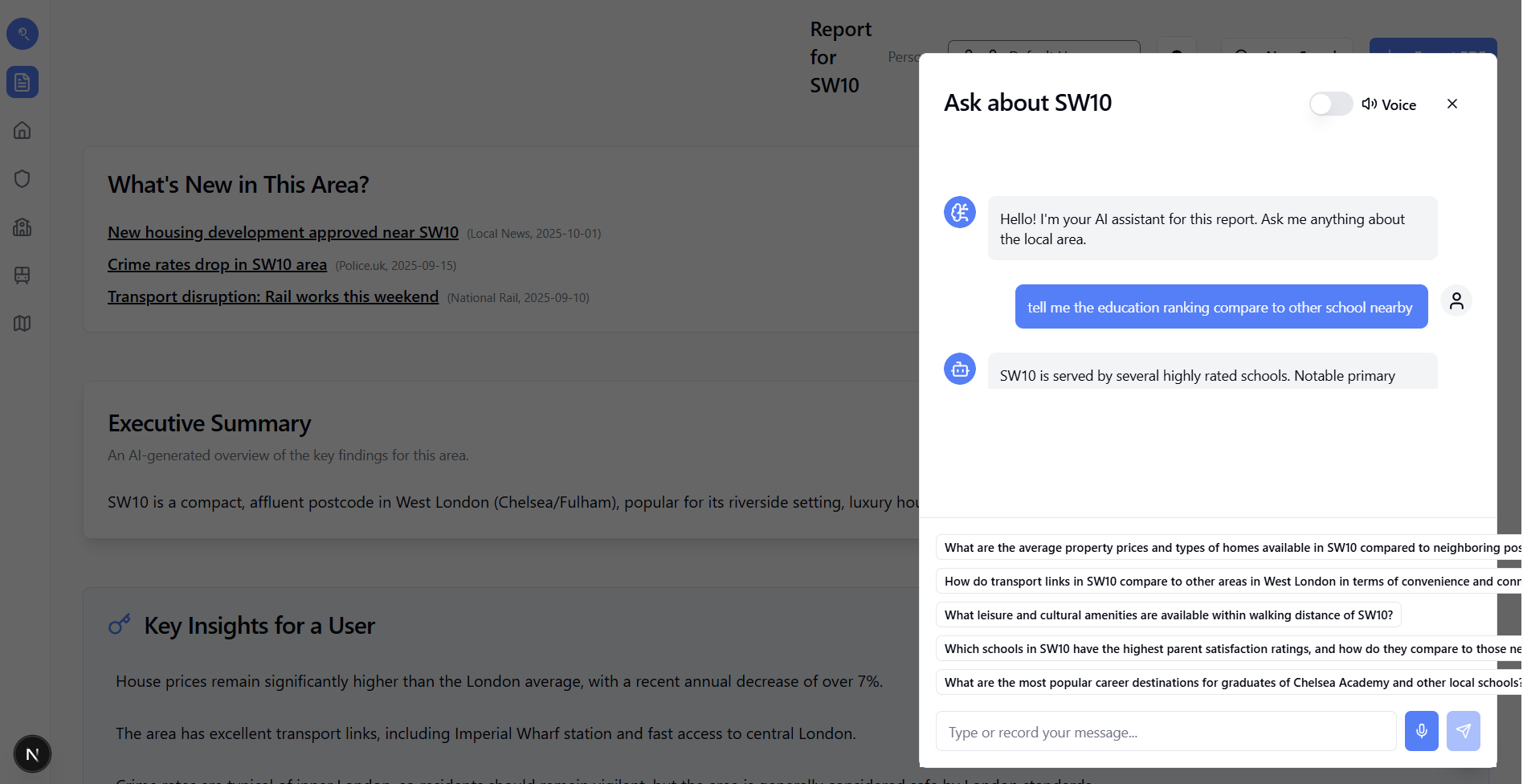
Chatbox with predictive question
-
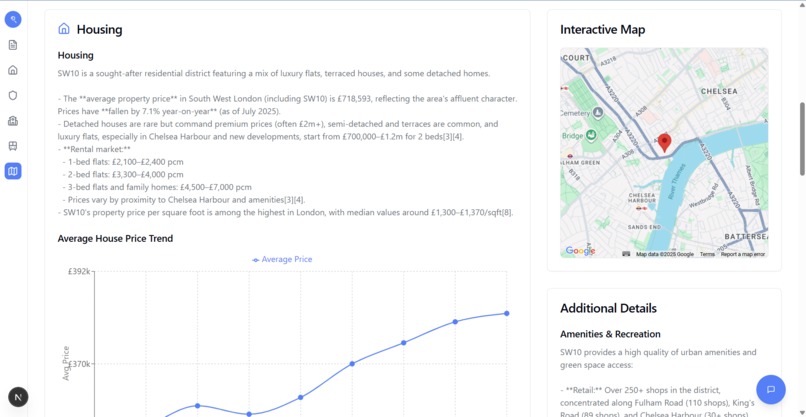
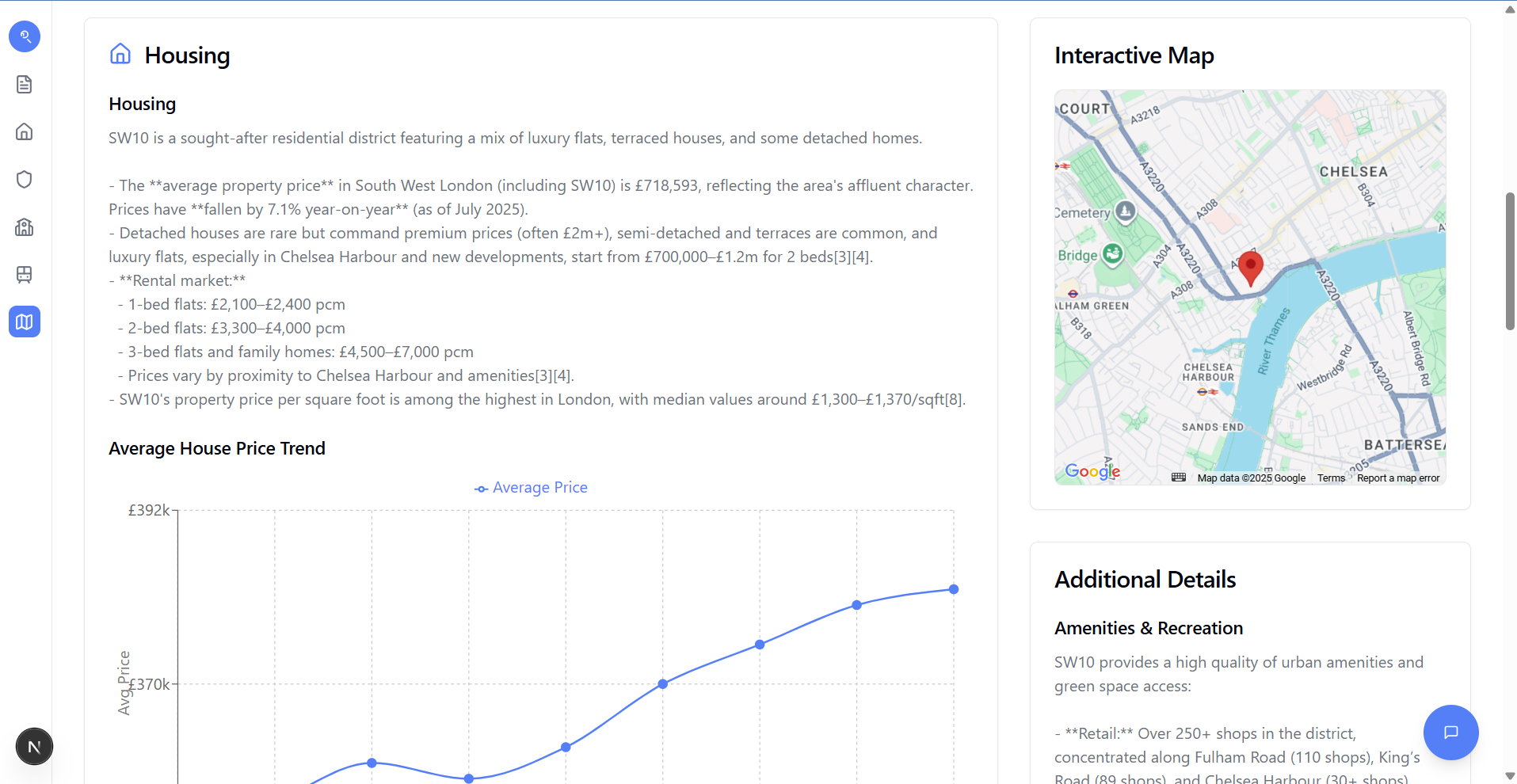
Intergrated Google Map
-
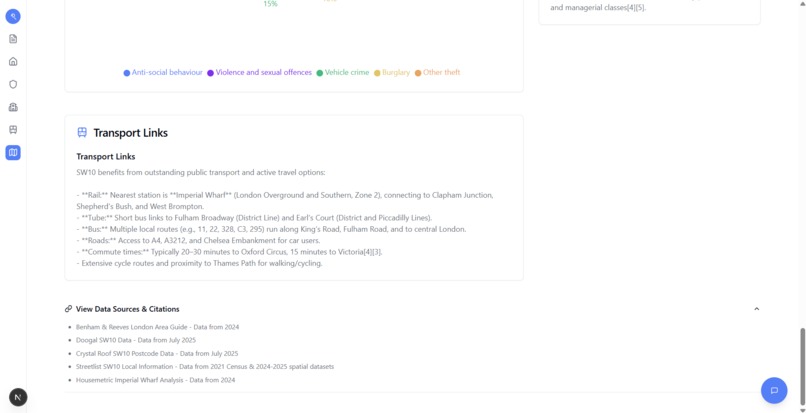
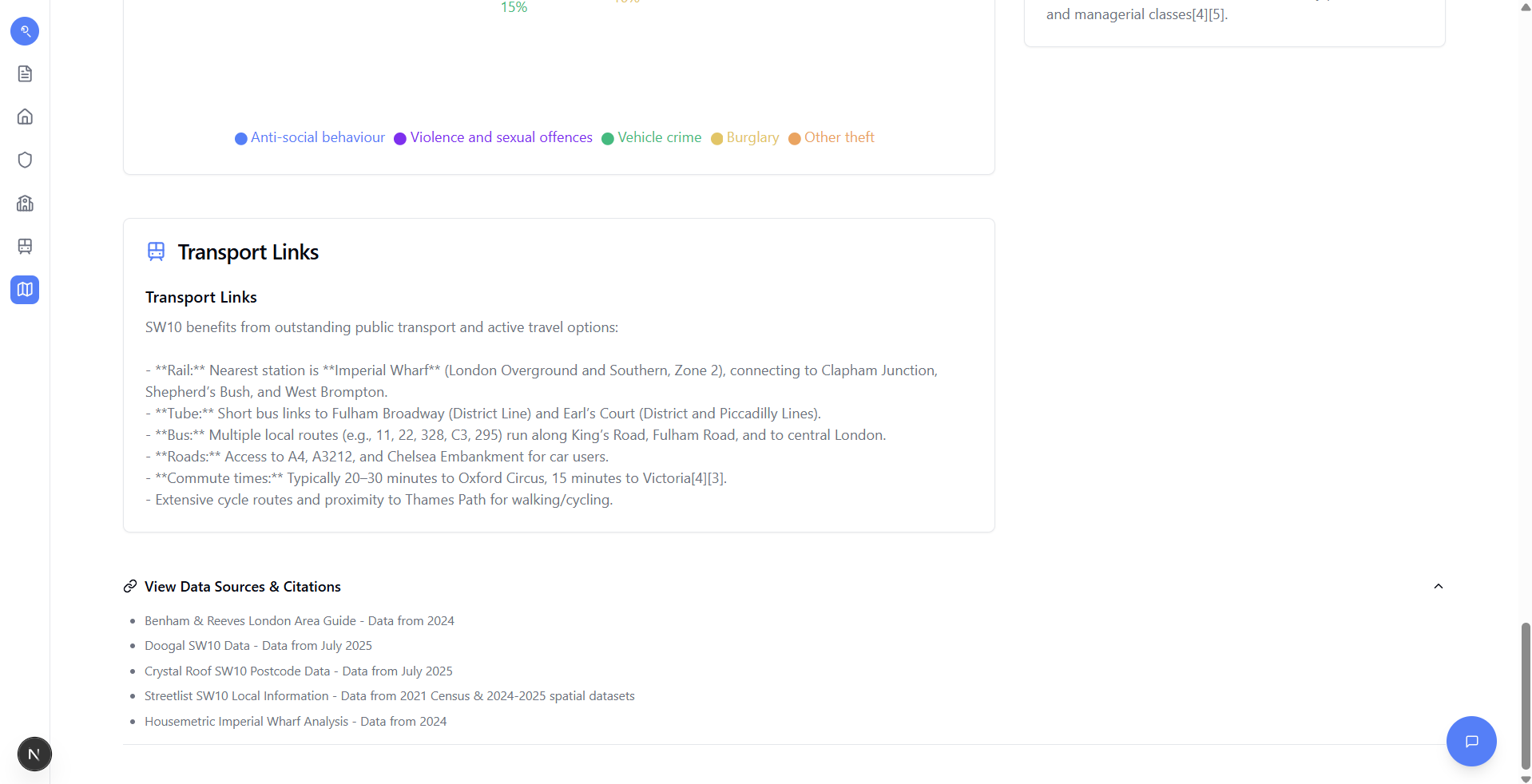
View Data Sources & Citations
-
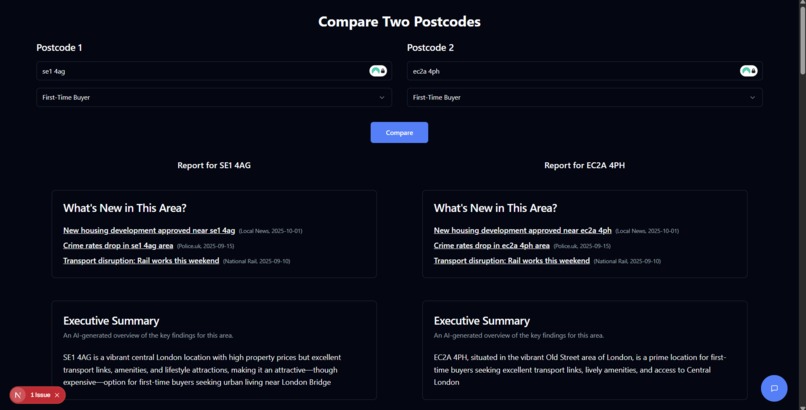
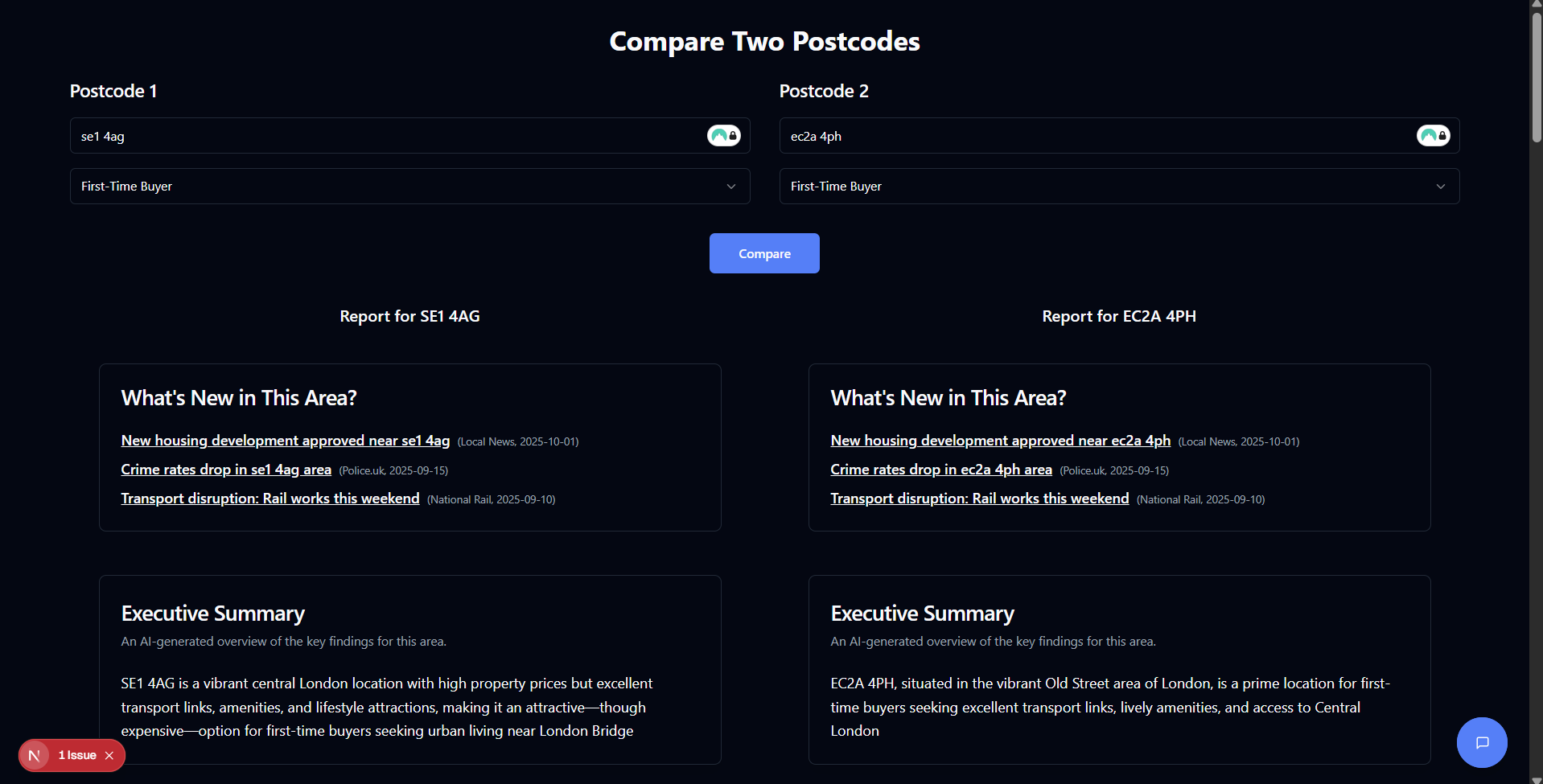
Compare two postcode
Inspiration
The idea for LocalScope AI emerged from recognizing how difficult it is to truly understand a neighborhood before moving, investing, or starting a business. Traditional property searches provide basic statistics, but they lack context, personalization, and the ability to answer nuanced questions like "Is this area suitable for families?" or "What's the local business climate?" We wanted to democratize access to hyper-local intelligence by combining real-time data, AI reasoning, and interactive exploration—making location insights accessible to everyone, from homebuyers to entrepreneurs.
What it does
LocalScope AI transforms any UK postcode into a comprehensive, personalized insights report. Users select a persona (e.g., homebuyer, investor, student, business owner), and the platform instantly generates an interactive dashboard featuring demographic data, crime statistics, school ratings, transport links, and local amenities. Each report includes dynamic maps, visualizations, AI-driven analysis powered by Perplexity's reasoning capabilities, and a voice-enabled chatbot that allows users to ask follow-up questions and explore specific aspects of the area in natural conversation.
How we built it
We built LocalScope AI using a modern full-stack architecture. The frontend leverages React for interactive UI components, integrated with mapping libraries for geospatial visualization and chart libraries for data representation. The backend combines Node.js/Python for API orchestration, connecting to multiple UK data sources including ONS (Office for National Statistics), Police.uk API, and Transport for London APIs. The Perplexity API serves as our AI reasoning engine, processing user queries with real-time web search, generating citation-backed insights, and powering the conversational chatbot. We used OpenAI-compatible request formatting, structured JSON outputs via Pydantic models, and streaming for responsive interactions. Voice capabilities were integrated using Web Speech API for accessibility and enhanced user experience.
Challenges we ran into
One major challenge was integrating multiple disparate UK data sources with inconsistent formats and rate limits, requiring robust error handling and caching strategies. Aligning Perplexity's model selection and ensuring proper parameter configuration (like return_citations and streaming) took iteration to optimize response quality and speed. We also faced difficulties geocoding postcodes accurately and rendering complex map overlays without performance degradation. Balancing the AI's creativity with factual accuracy required careful prompt engineering—ensuring Perplexity grounded responses in retrieved data rather than hallucinating statistics. Finally, implementing real-time voice interaction while maintaining low latency proved technically demanding across different browsers and devices.
Accomplishments that we're proud of
We're proud of creating a truly end-to-end solution that makes complex local data accessible and actionable within seconds. Successfully integrating Perplexity's real-time search with citation transparency means every insight is verifiable and trustworthy—a critical feature for high-stakes decisions like property purchases. The voice-enabled chatbot represents a breakthrough in accessibility, allowing hands-free exploration and making the platform usable for diverse audiences. Our persona-based customization ensures relevance, while the interactive visualizations transform raw data into compelling stories. Most importantly, we built a scalable, production-ready platform that could genuinely help thousands of people make better-informed decisions about where to live, work, and invest.
What we learned
This project taught us the immense value of retrieval-augmented generation (RAG) in building reliable AI applications. Perplexity's ability to fetch and cite real-time information proved far superior to static LLMs for location-based queries that require current data. We learned the importance of structured outputs and prompt engineering—using Pydantic models to extract consistent, parsable information from AI responses. Integrating multiple APIs highlighted the need for robust middleware, rate limiting, and fallback mechanisms. We also discovered that users crave transparency; showing sources and citations dramatically increased trust in AI-generated insights. On the technical side, we gained expertise in geospatial data processing, real-time streaming architectures, and voice interface design. Perhaps most valuable was understanding user personas deeply—different users need fundamentally different insights from the same location data.
What's next for LocalScope AI
We plan to expand coverage beyond the UK to include Europe and North America, integrating region-specific data sources and regulations. Enhanced AI capabilities will include predictive analytics (forecasting area development trends), comparative analysis (side-by-side postcode comparisons), and personalized alerts (notifying users when areas matching their criteria become available). We're developing a premium tier with deeper data access, historical trend analysis, and API access for real estate professionals and businesses. Integration with property listing platforms would allow seamless embedding of LocalScope insights directly into property searches. We'll also explore community-generated content, allowing residents to contribute local knowledge that enriches AI analysis. Finally, we're investigating partnerships with local councils and urban planners to use aggregated insights for community development—turning LocalScope AI from a consumer tool into a platform for civic engagement and smarter urban planning.
Built With
- api
- apiofsted
- chart.js
- cssleaflet.js
- mapbox
- node.js
- openai
- openstreetmap
- perplexity
- police.uk
- postcode
- pydantic
- python
- react.js
- recharts
- speech
- tailwind
- tfl)
- typescript
- uk
- web
- web-search

Log in or sign up for Devpost to join the conversation.