Inspiration
Local people often struggle to find basic city information and essential services in one place. Important details like hospitals, fire stations, water resources, population data, or how to raise a local issue are scattered across multiple websites—or not available online at all. We were inspired to build Local Governance Organizer as a single digital hub that makes city information, civic services, and community participation simple, free, and accessible for everyone.
What it does
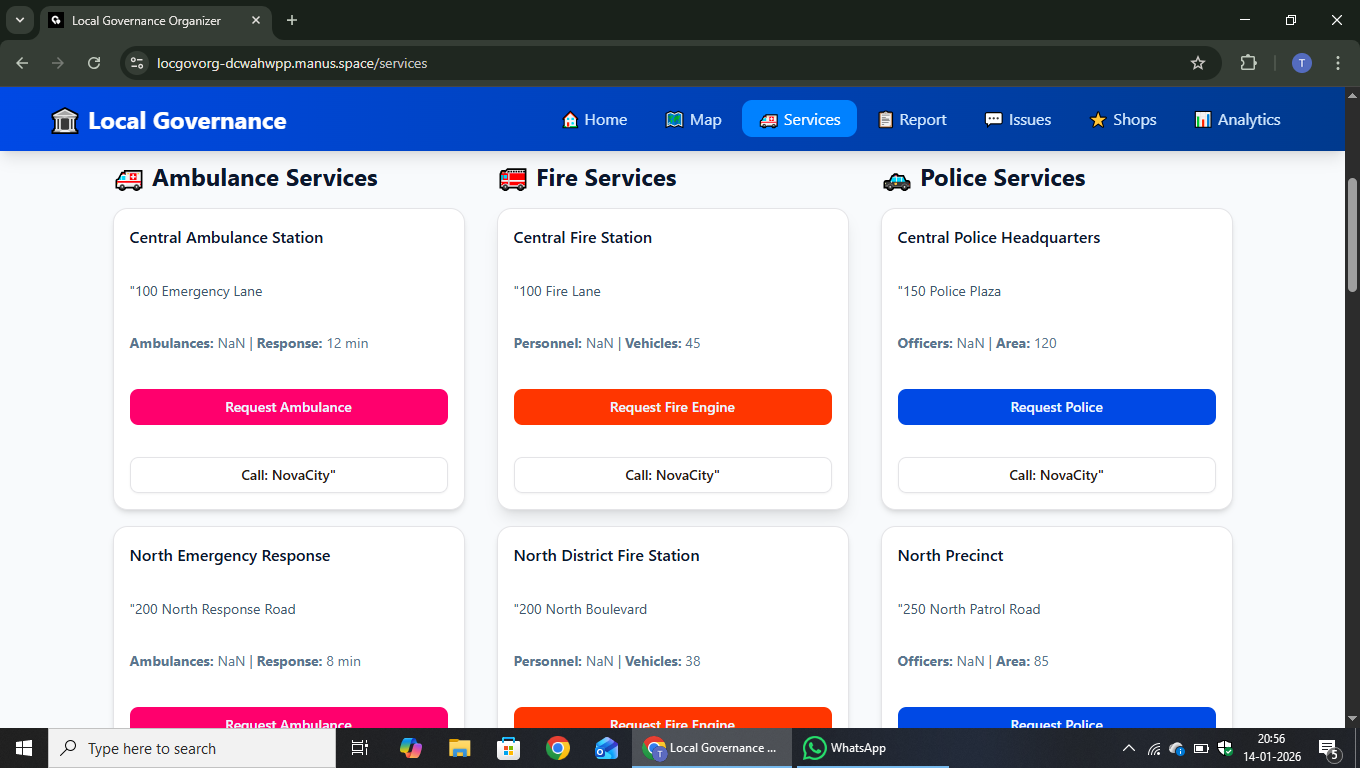
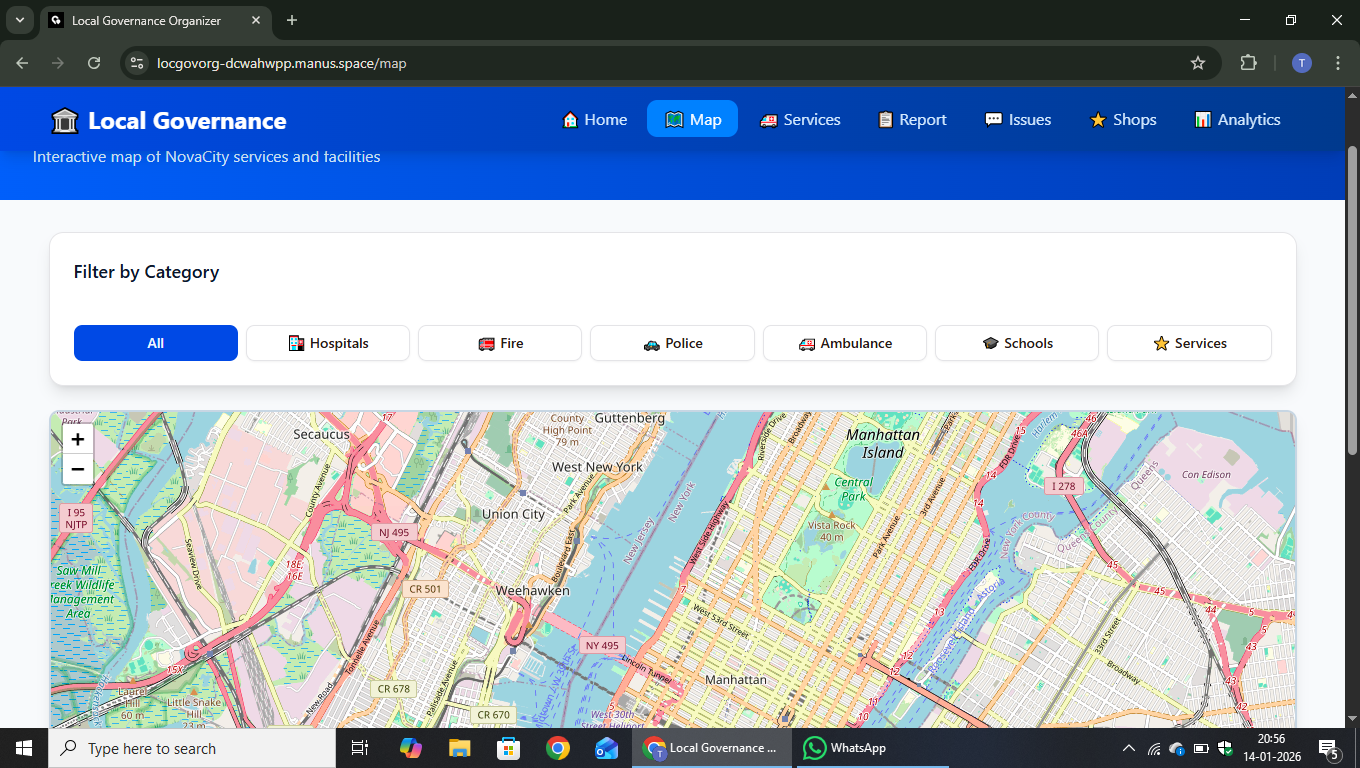
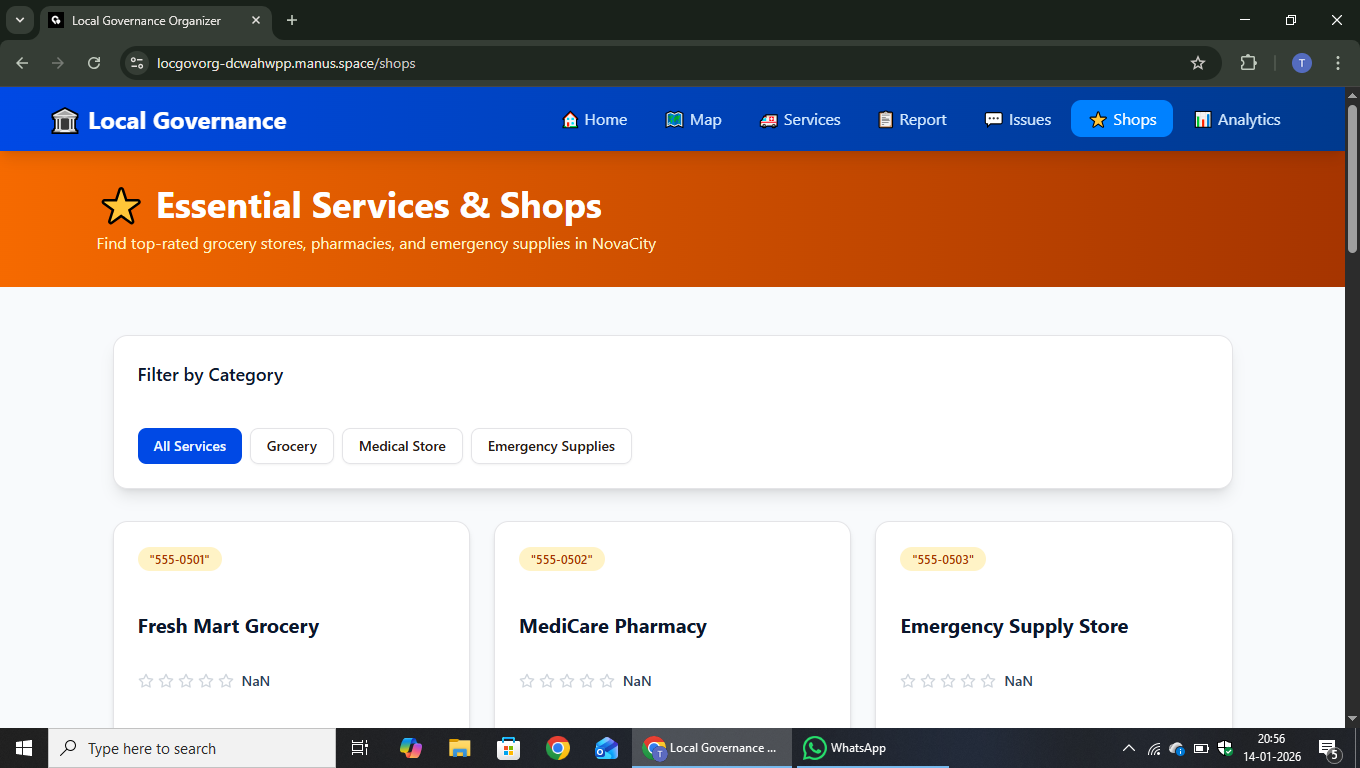
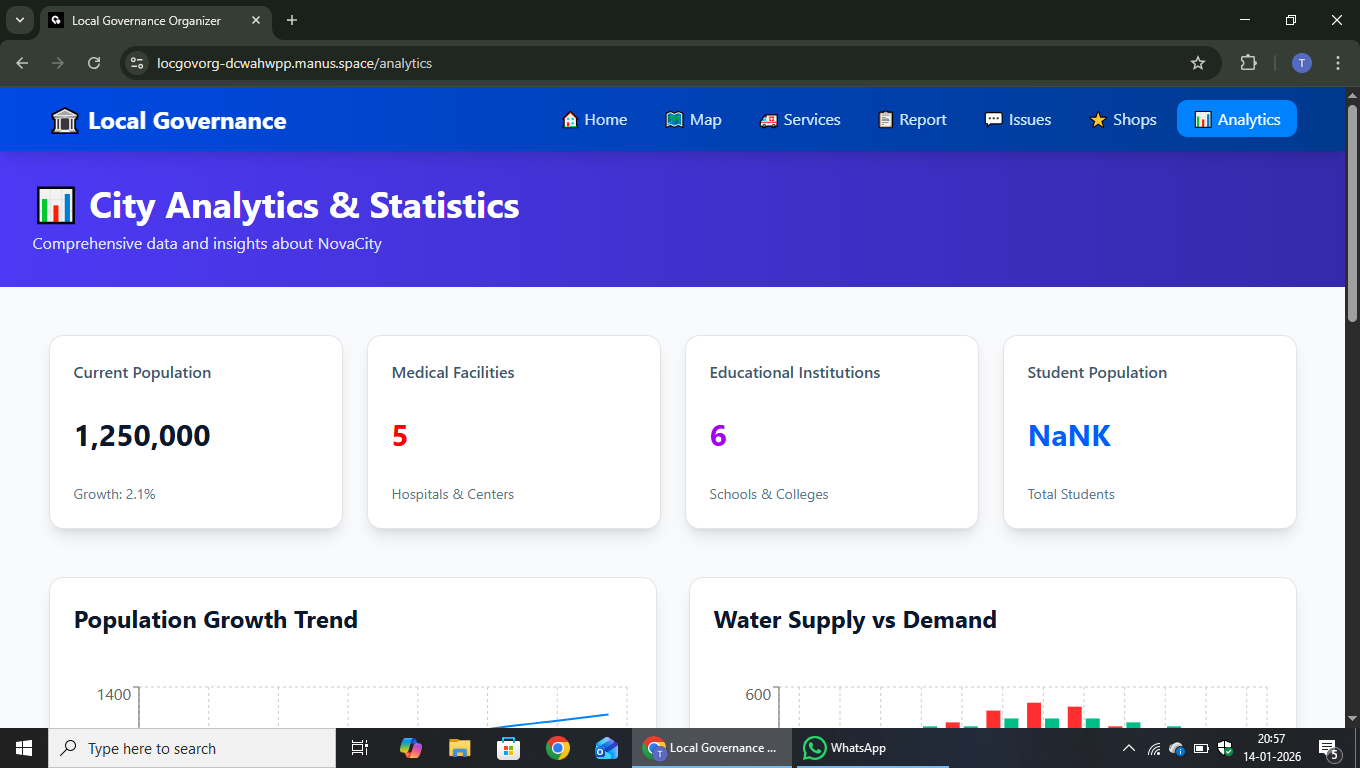
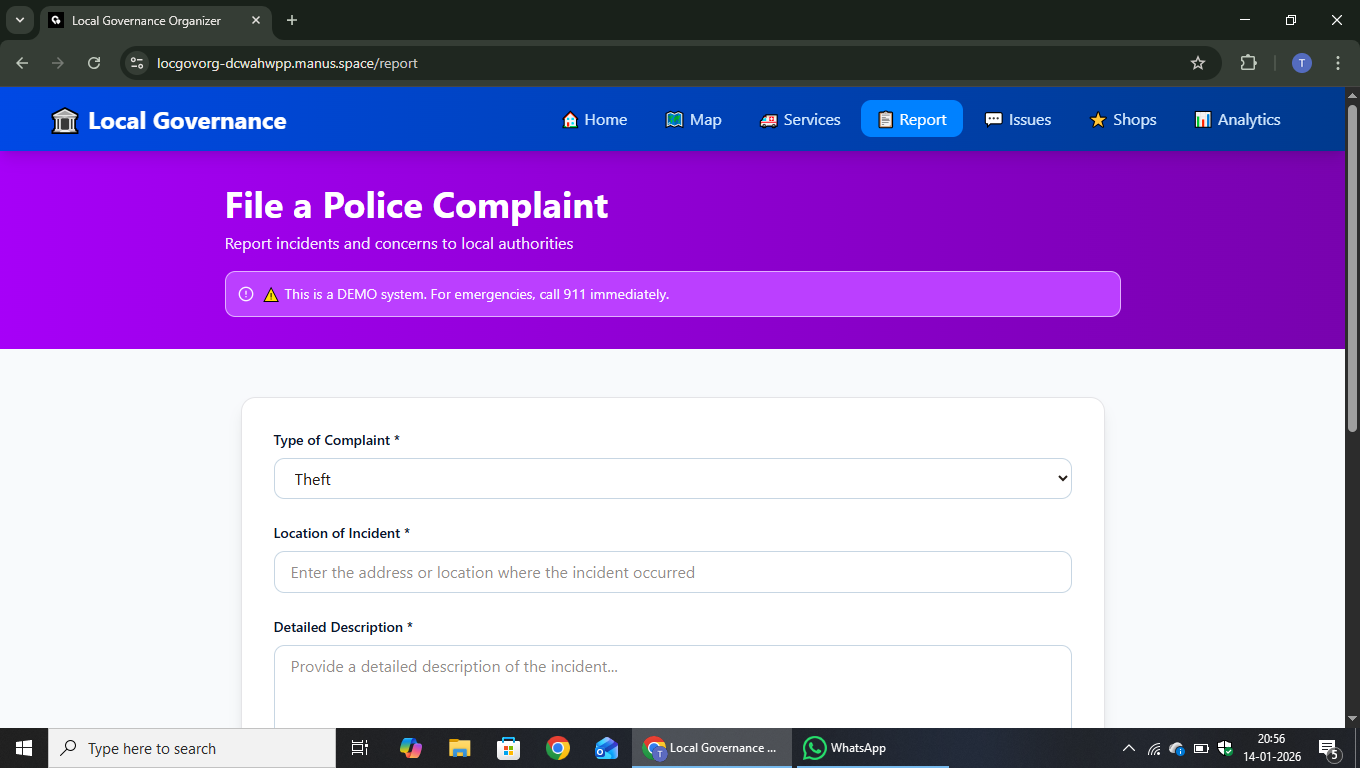
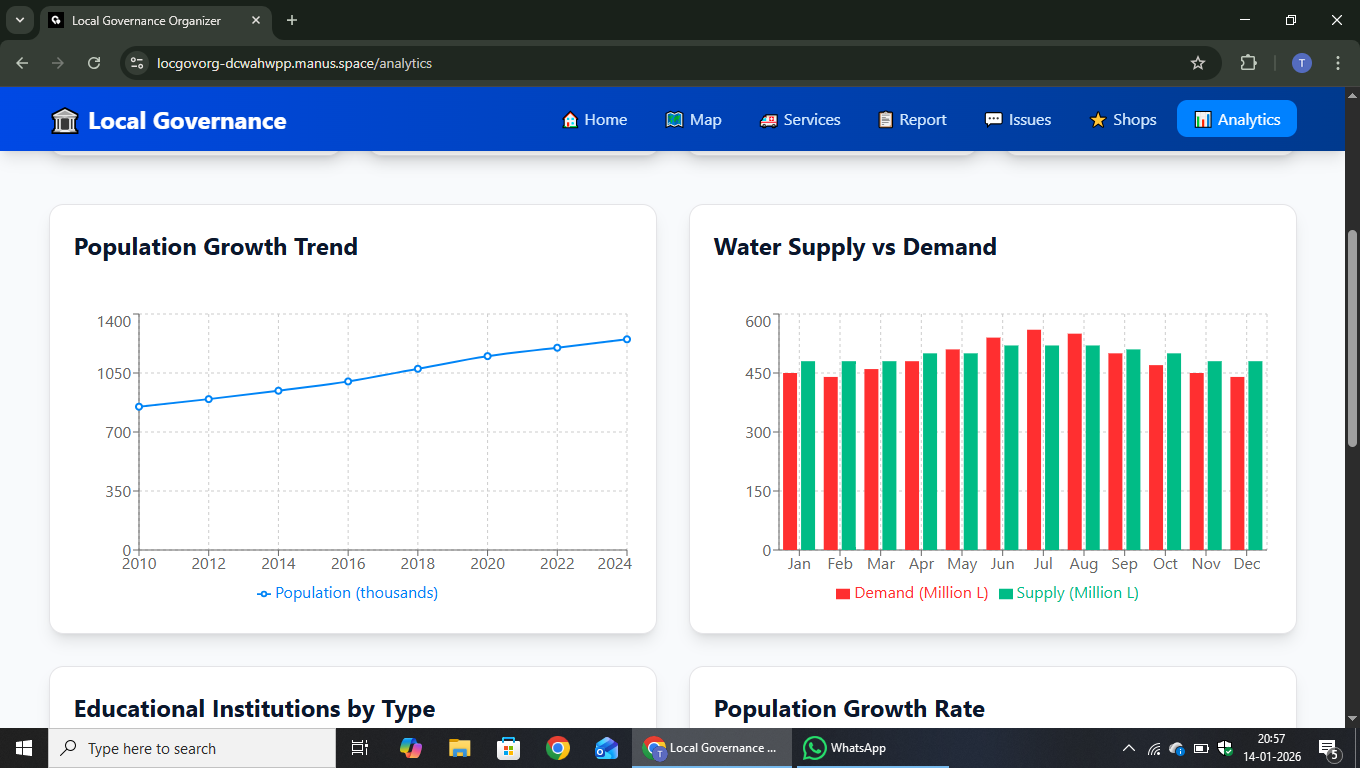
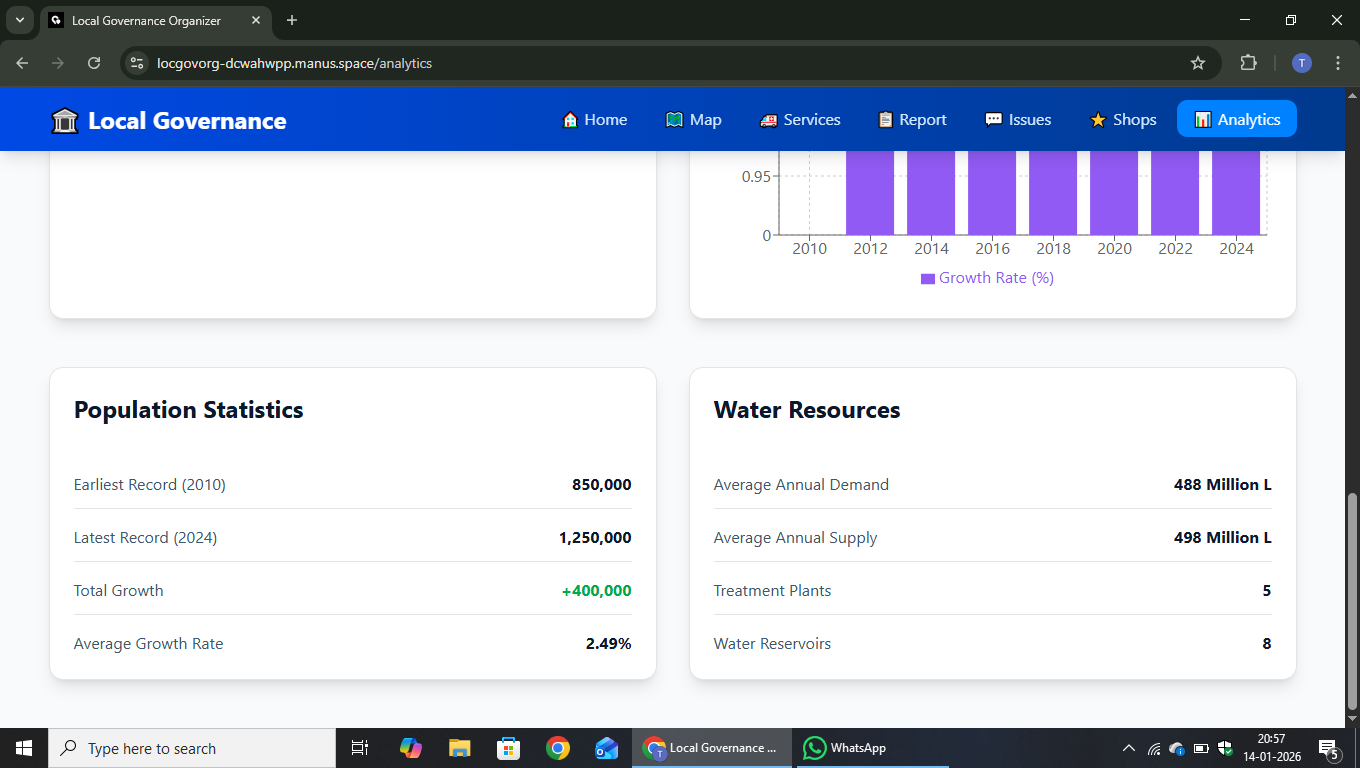
Local Governance Organizer is a web application that provides a centralized view of city information and local civic services. It displays city details like population statistics, infrastructure data, and interactive maps of hospitals, fire stations, police stations, schools, and essential services. The app also allows users to report local problems publicly, submit guided online police complaints, request municipal services, and interact with emergency services in a safe, simulated environment. In addition, it visualizes city data through charts to help users better understand how their city functions.
How we built it
I built the application as a full-stack web app using Python and Flask for the backend, and HTML, CSS, and JavaScript for the frontend. SQLite was used as a lightweight database to store user-submitted data such as complaints, service requests, and public issues. Interactive maps were implemented using OpenStreetMap with Leaflet.js, and charts were created using Chart.js. I used simulated datasets for a sample city to power the maps and analytics, and developed the entire project on Replit with AI-assisted coding to speed up development and debugging.
Challenges we ran into
One of the main challenges was balancing features and simplicity, since the app covers many civic services but still needs to be easy to use. Managing different types of data—maps, charts, forms, and public posts—within a single application required careful organization. Another challenge was clearly presenting simulated services as demos without making the platform feel unrealistic or misleading.
Accomplishments that we're proud of
I am proud of building a complete, working web application that brings together city data, civic services, and public participation in one place. The successful integration of interactive maps, datasets, analytics, and user submissions shows that the idea is practical and scalable. We’re also proud that the platform focuses on real community needs rather than purely technical features.
What we learned
Through this project, I learned how to design and build data-driven web applications that focus on usability and public impact. I gained experience working with city-level datasets, mapping libraries, and data visualization tools. I also learned how AI-assisted development can be effective when guided by clear goals and thoughtful system design.
What's next for Local Governance Organizer
In the future, we plan to enhance the platform by integrating real open government datasets and improving data accuracy. Additional features like user authentication, multilingual support, real-time alerts, and official government integrations could help transform the app from a demo platform into a real-world local governance solution.

Log in or sign up for Devpost to join the conversation.