-
-
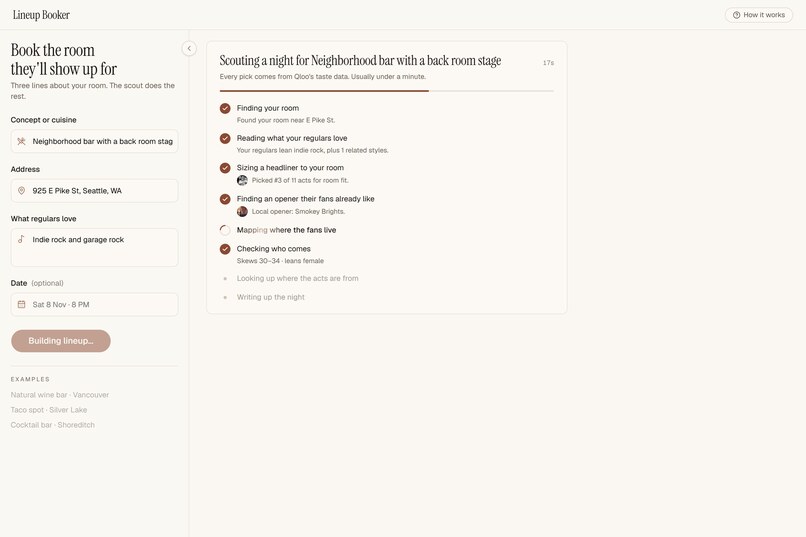
the scout
-
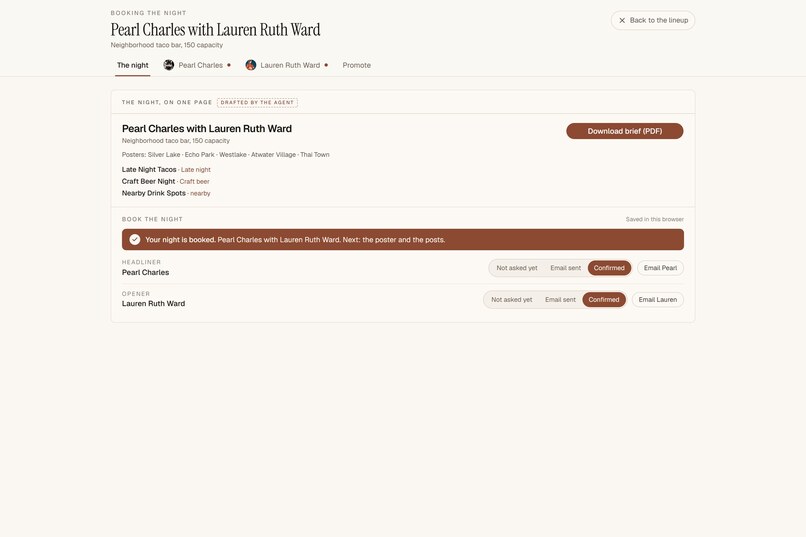
the booking room
-
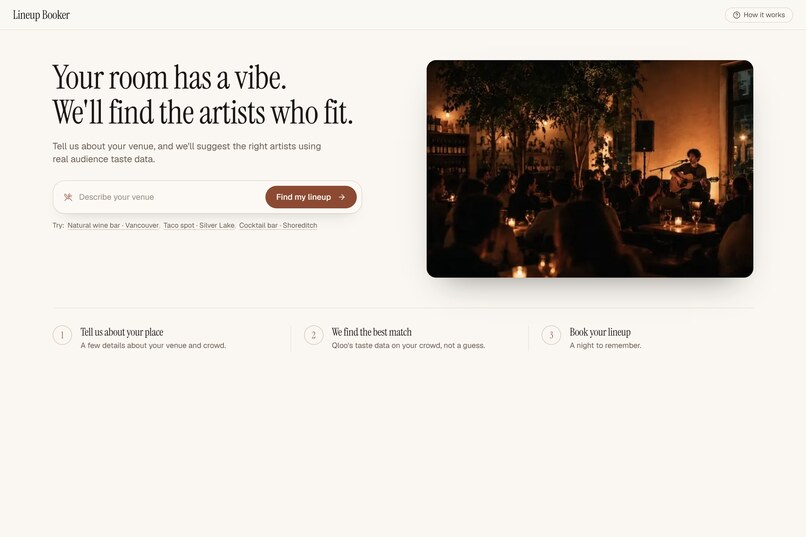
landing
-
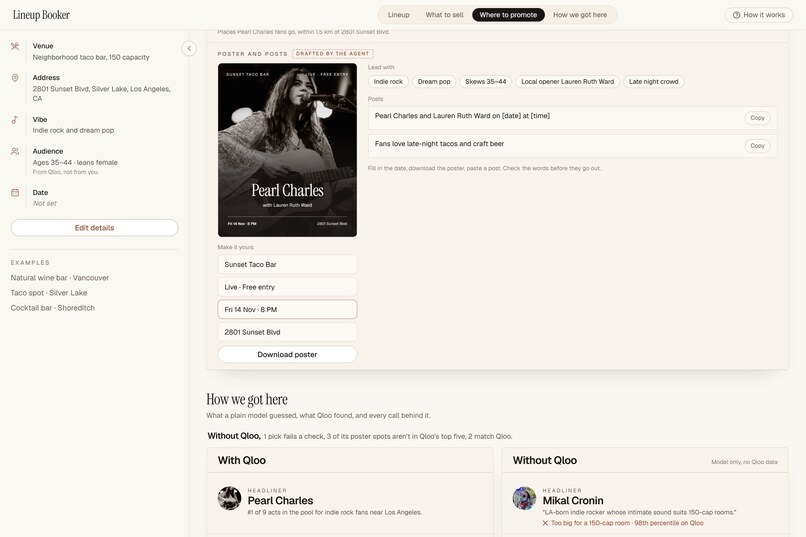
the poster
-
where to promote
-
what to put on special
-
the lineup
Inspiration
Walk into a small bar on a Friday and there's someone with a guitar in the corner. Somebody picked them. Usually that somebody is the owner, and usually the pick came from a group chat, a friend of a friend, or whoever emailed last.
Big venues have booking agents and promoters with real data on who draws where. A 120-seat wine bar has a gut feeling. And a wrong night isn't small for them. Empty room, staff still paid, a week of margin gone.
When Qloo asked for the thing that only works because it knows what people love, this felt like the cleanest version of it. The owner already knows their room. What they don't know is which acts their regulars would actually leave the house for, who should open, and which streets to poster. Qloo knows that. And so the question became: can an agent turn three lines from a bar owner into a night they'd book?
What it does
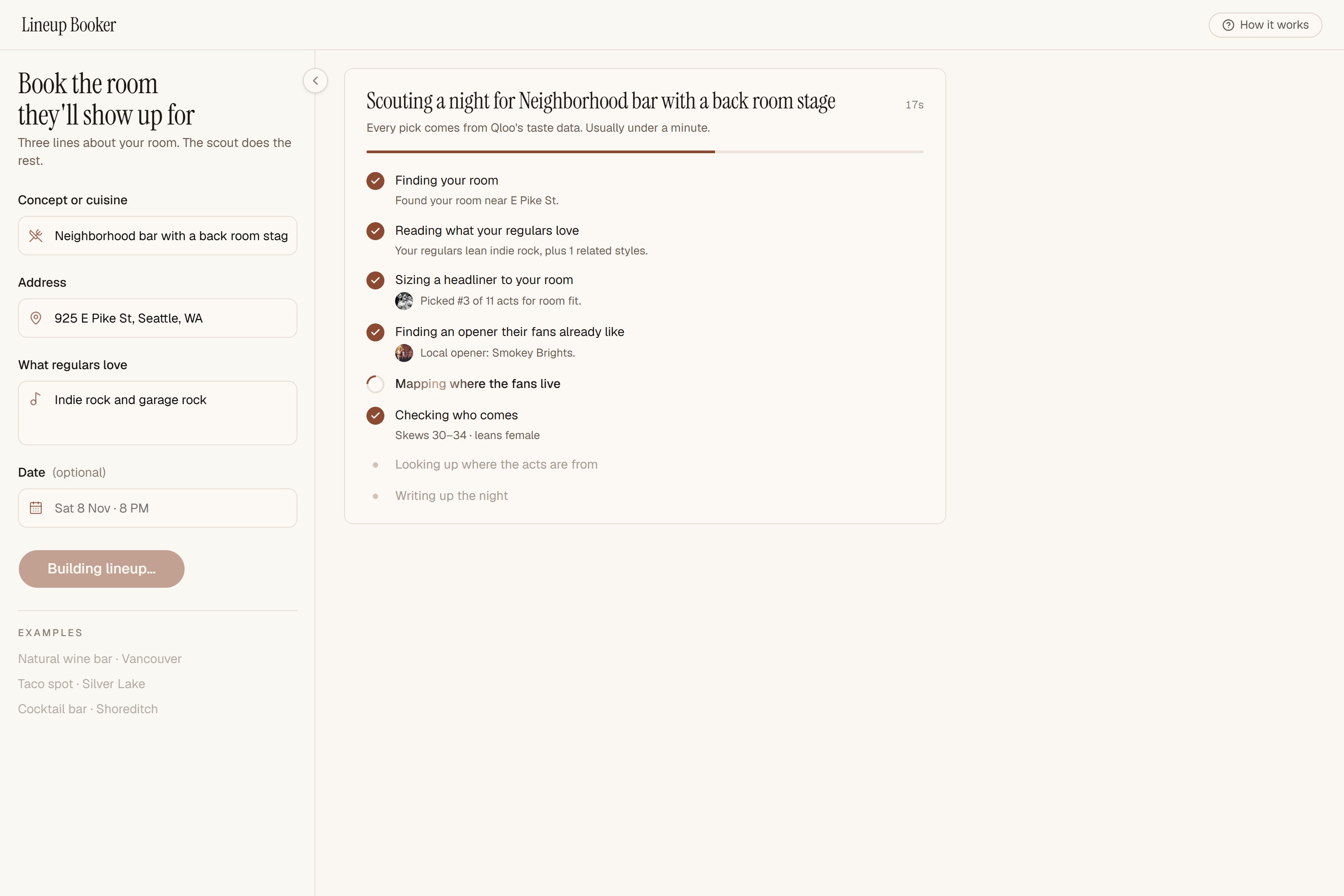
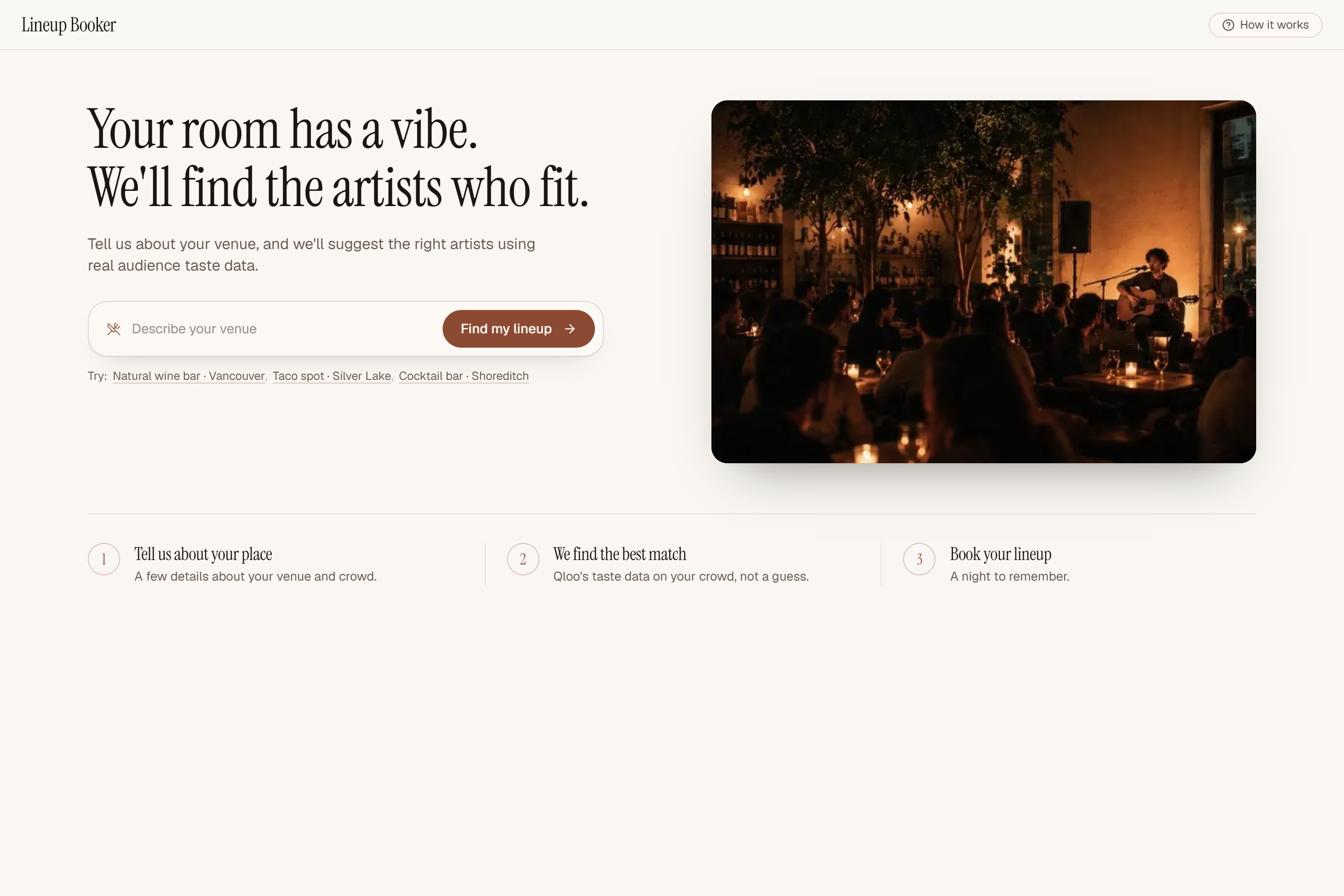
You type what your place is, where it is, and what your regulars love. That's it.
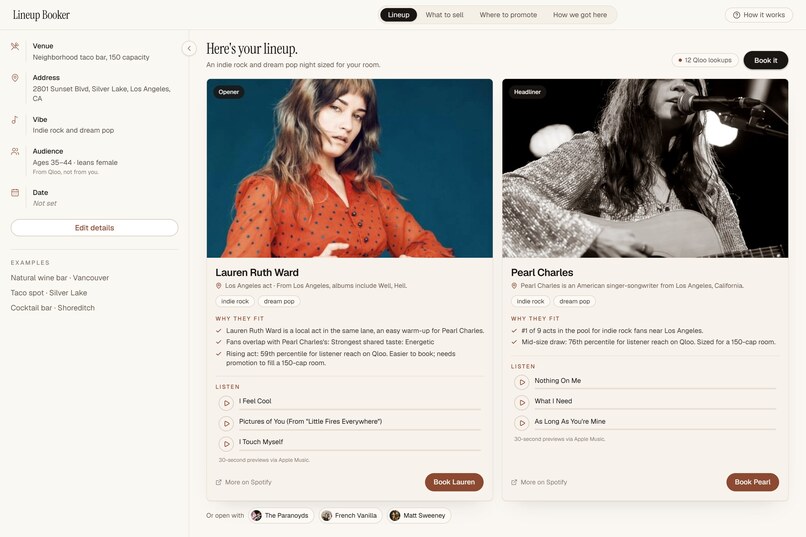
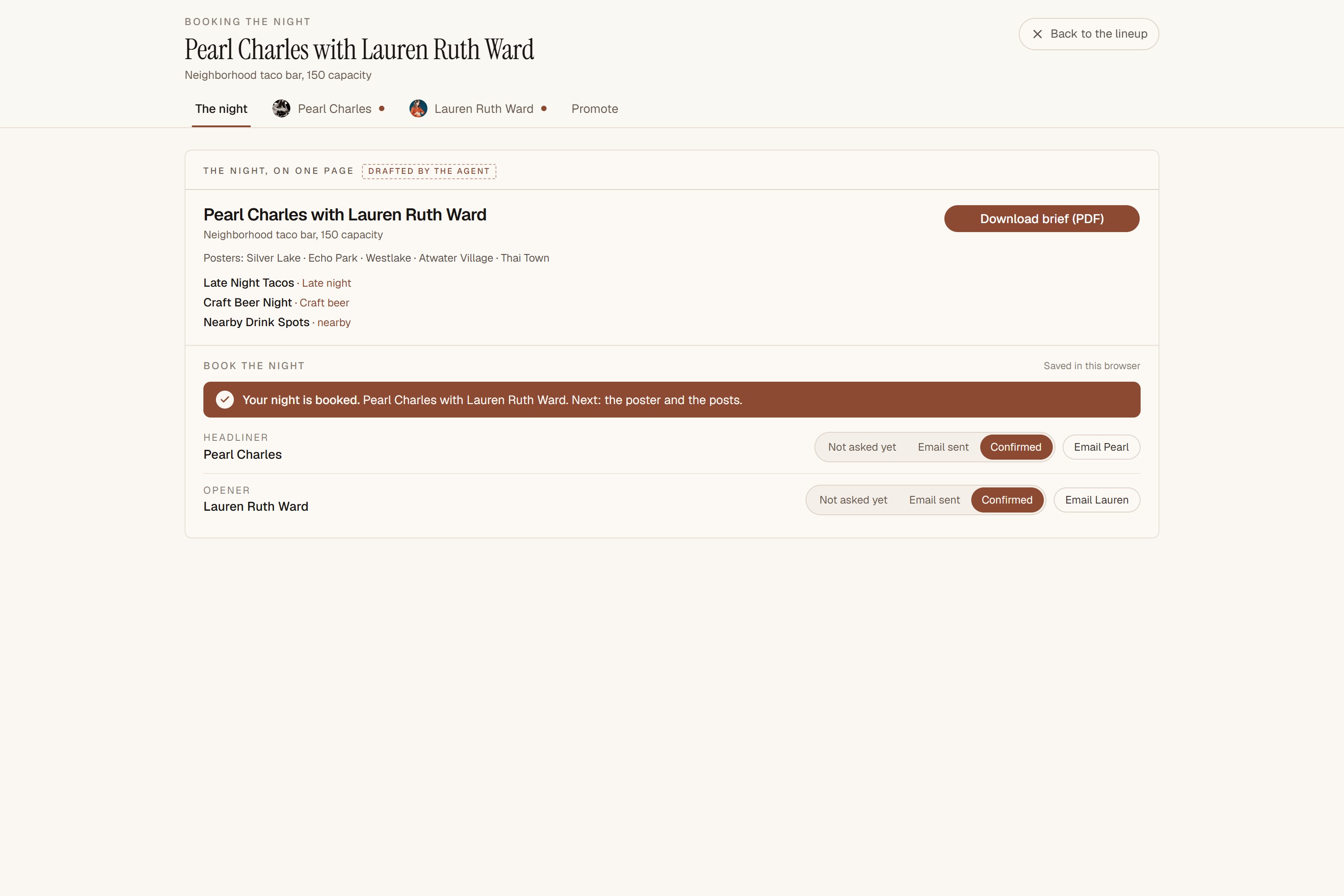
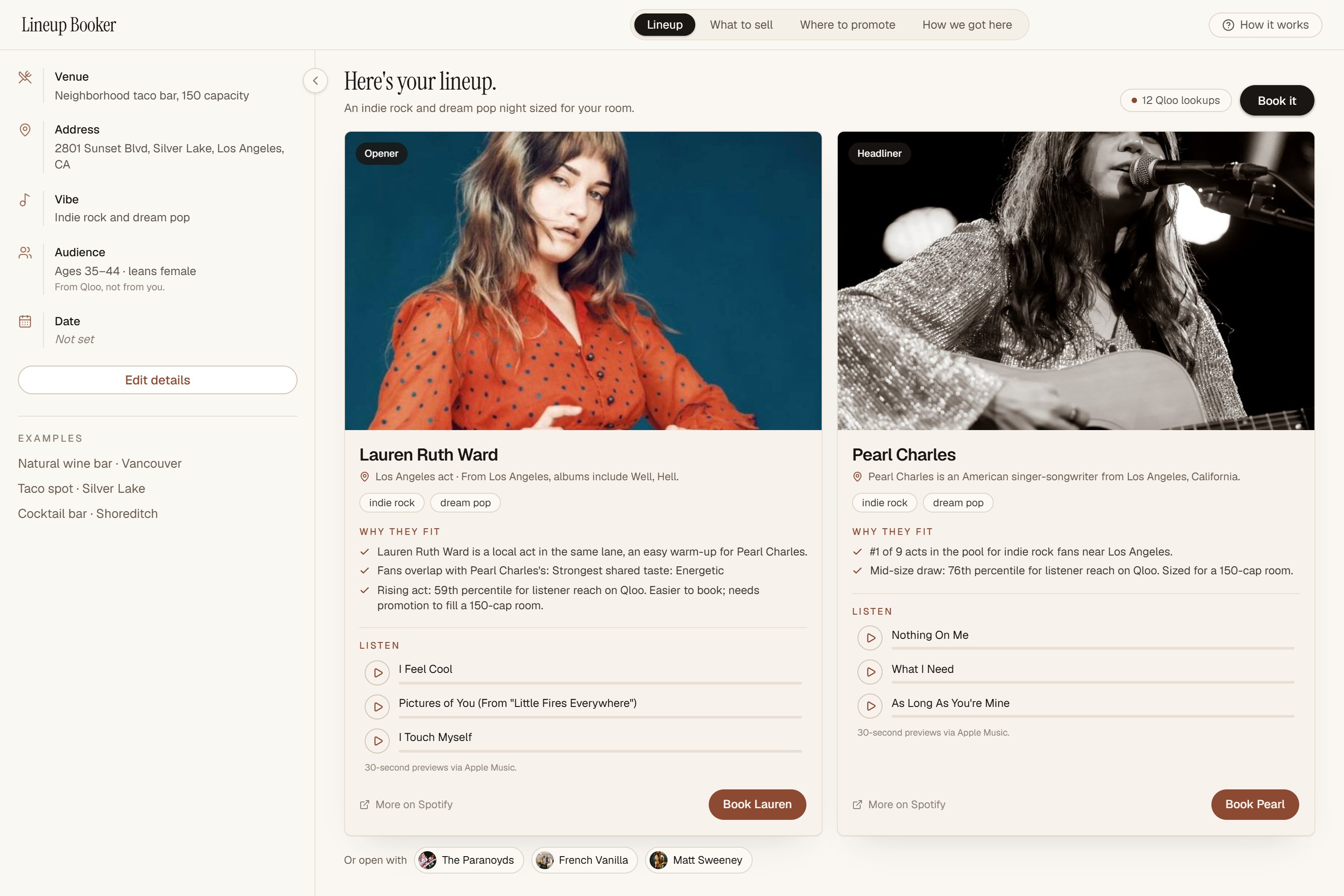
The scout comes back with a headliner sized to your room, as in big enough to fill it but not so big you can't book them, and a local opener whose fans overlap with the headliner's. You can play previews of both right there, next to the reasons they fit. Each act gets its own Book button that drafts the email to them, because booking is one conversation per act.
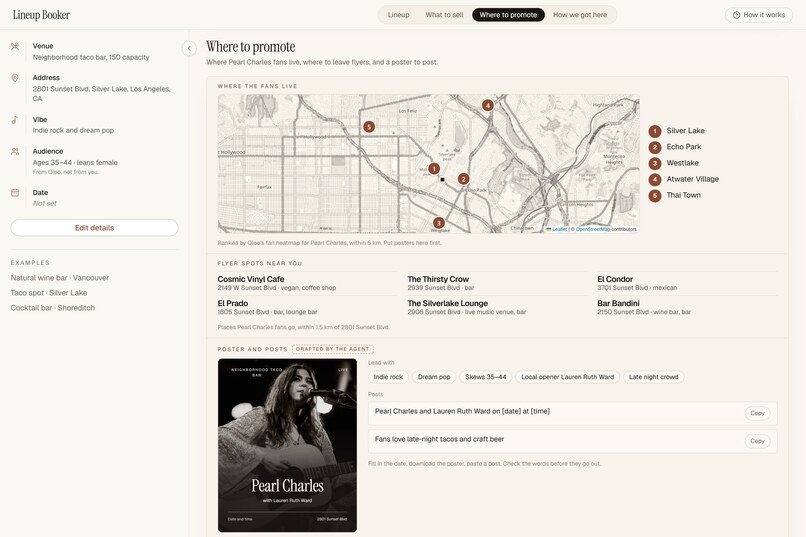
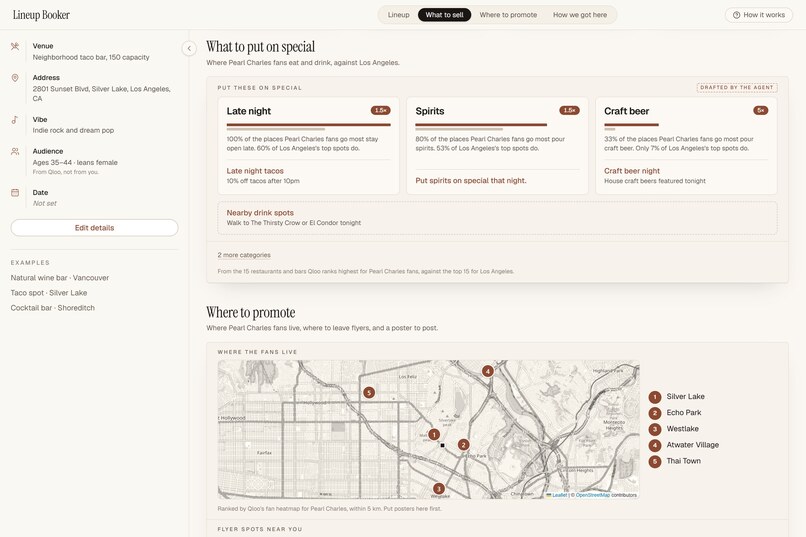
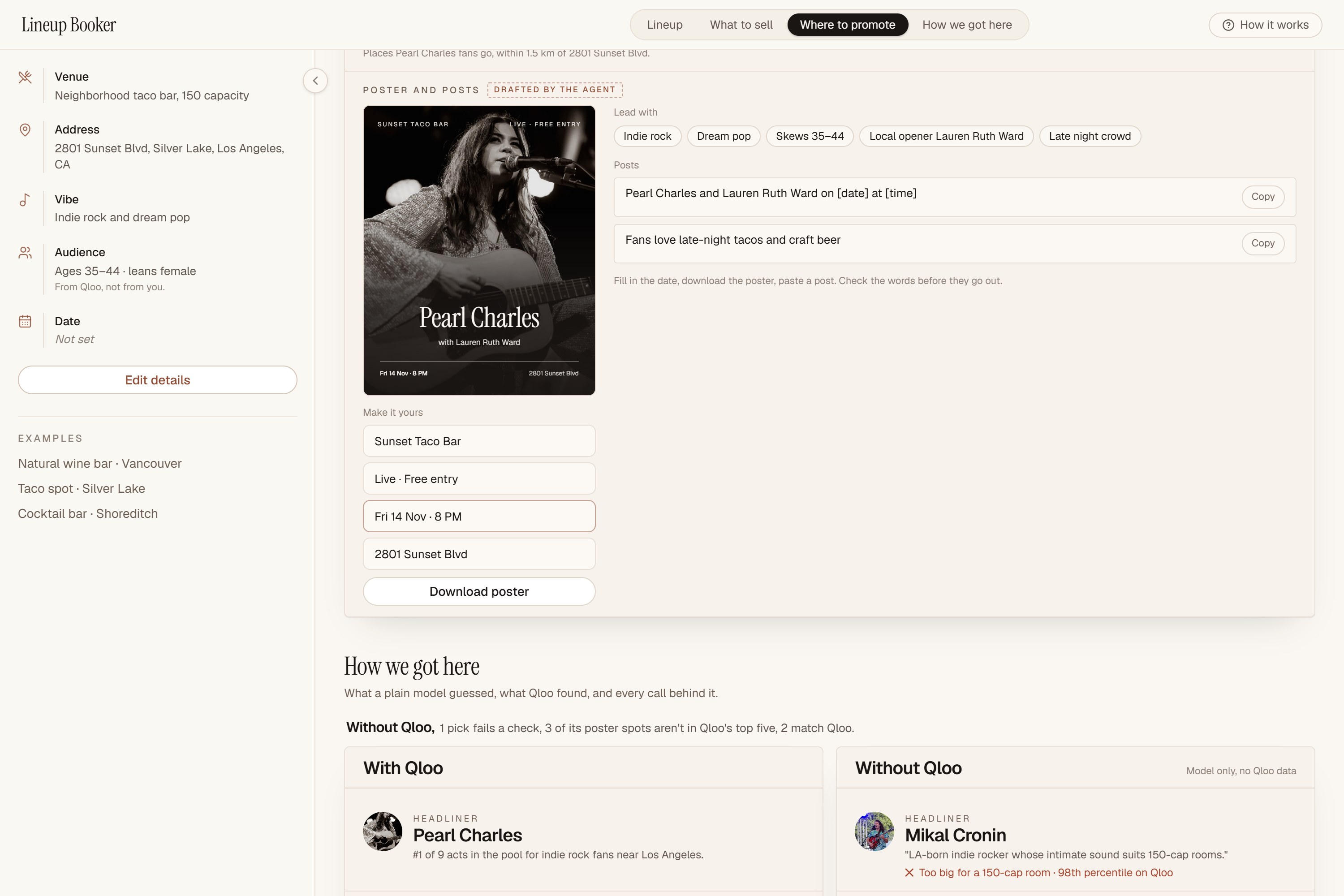
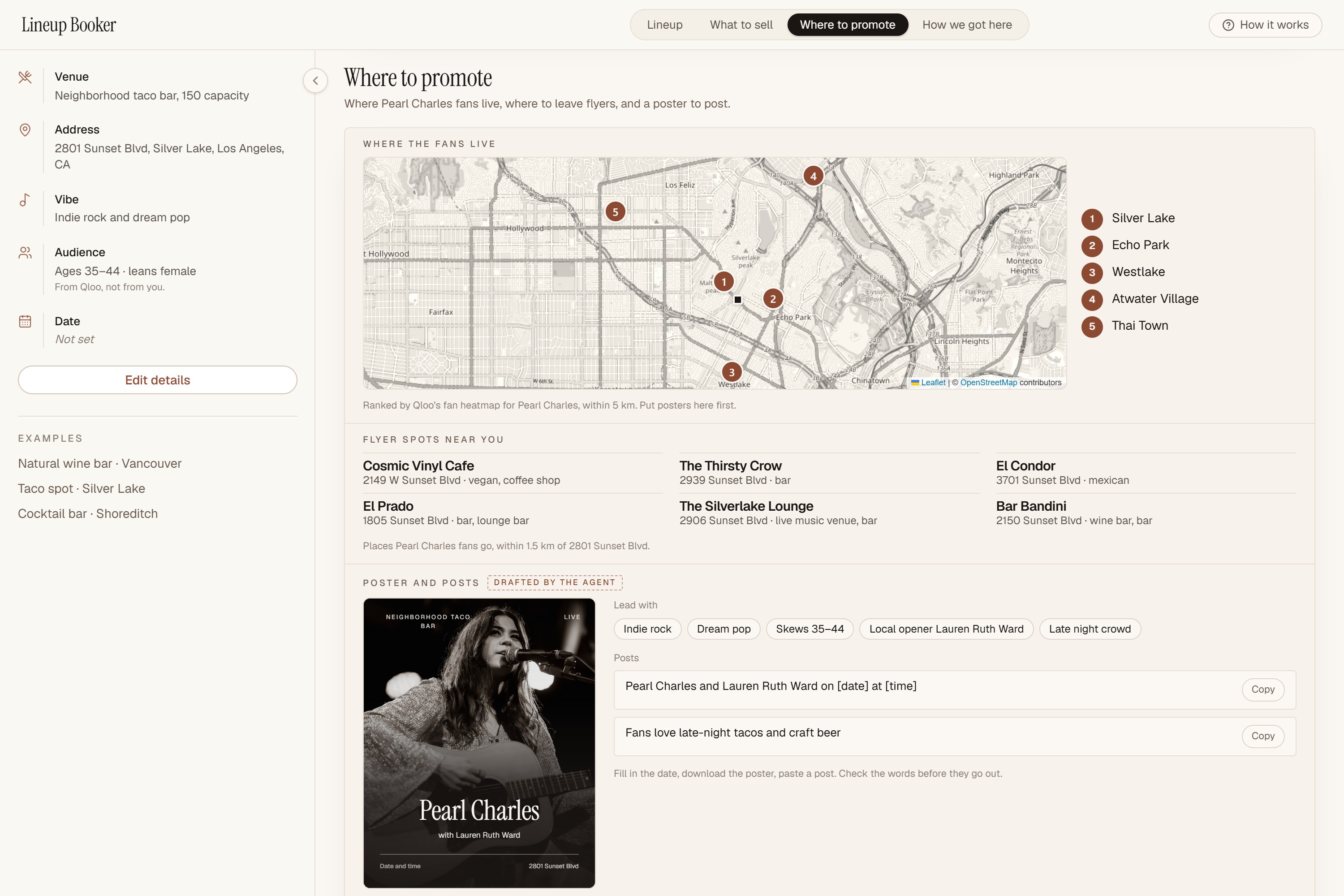
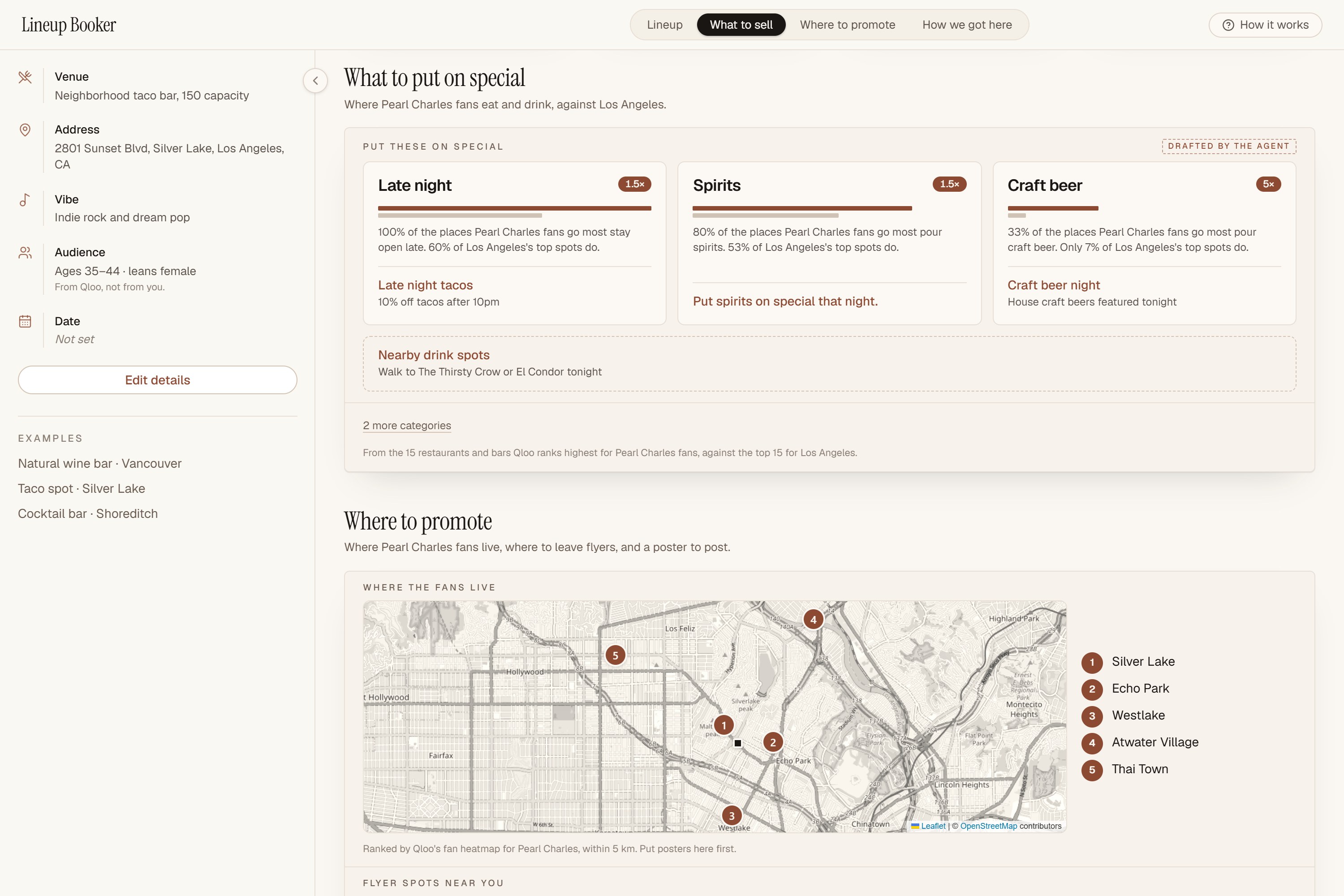
Then it keeps going. It looks at where the headliner's fans eat and drink against the rest of the city and turns the gap into specials. 87% of the places Will Heard fans go most stay open late, only 33% of London's top spots do, so keep the kitchen open after the set. It maps where those fans live, neighbourhood by neighbourhood, finds the spots near you where they already hang out so you know where to leave flyers, and builds a poster with your date on it.
At the bottom there's a section called How we got here. It runs the same room through a plain model with no Qloo, side by side, and checks every line. The plain model's answer reads fine until you check it: a headliner too small to draw a crowd, poster spots that aren't where the fans are. Under that sits the trail, room to lineup, stop by stop, with the exact Qloo request behind each stop one hover away.
How we built it
Next.js on Vercel, with the agent running on the Vercel AI SDK and AI Gateway.
The decision that mattered most was what the model is allowed to do. It can't name an artist, a neighbourhood or a number on its own. It only acts through tools, every tool is backed by a Qloo call, and the final pitch gets checked in code against what Qloo actually returned. If it isn't in the results, it doesn't ship. The model writes the sentences. Qloo makes the picks.
One night is about fourteen Qloo requests. Taste tags from the owner's words. Artists by tag near the venue, inside a popularity band worked out from the room's capacity. Artists the headliner's fans also love, kept smaller than the headliner, for the opener. The fan heatmap, on a grid and by neighbourhood. Audience demographics. Reach in the city and in the country. A taste comparison between the two acts. And place data, the fans' restaurants and bars against the city's, for the specials and the flyers.
Around that sit Nominatim for addresses, Wikipedia and MusicBrainz for where artists are from, Apple's public search for the previews, and Leaflet for the maps.
Challenges we ran into
Geography was harder than I expected. A heatmap gives you points, and turning points into neighbourhoods a person would actually put a poster in took a lot of rules. One of them, written for New York, quietly broke Berlin. It treated Kreuzberg as a different town from Neukölln and threw it out, so Berlin came back with a single neighbourhood. I only found it by running five cities the app had never seen.
Accomplishments that we're proud of
That the comparison is honest. It's easy to make a plain model look bad on purpose. Here it gets the same three lines and a fair shot, and it still guesses wrong on size and on where the fans are, because guessing is all it can do. That's the case for Qloo, shown instead of told.
And that it's one page a bar owner could use this Friday. Who plays, what you pour, who hears about it
Accomplishments that we're proud of
What we learned
Qloo's place data was the surprise. I came for the artist graph and found that knowing where a crowd eats and drinks is just as useful to a venue as knowing what it listens to. Maybe more, since that's the side of the night that pays for the band.
I also learned that the hard part of an agent isn't the agent. It's deciding what it's not allowed to make up.
What's next for Lineup Booker
Real fees and availability, from agents who want small rooms to find their acts. A calendar, so an owner can plan a month and not just a night. And a loop back from the night itself, who actually showed up, so the next pick is better than this one
Built With
- framer-motion
- html-to-image
- itunes-search-api
- leaflet.js
- lucide
- musicbrainz
- next.js
- node.js
- nominatim
- openai
- openstreetmap
- playwright
- qloo
- react
- shadcn-ui
- tailwindcss
- typescript
- vercel
- vercel-ai-gateway
- vercel-ai-sdk
- wikidata
- wikipedia
- zod

Log in or sign up for Devpost to join the conversation.