-
-
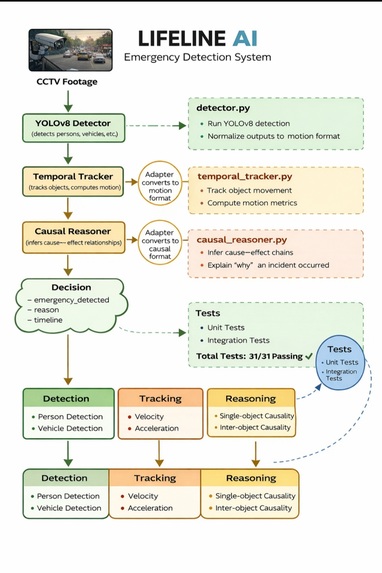
Reading
-
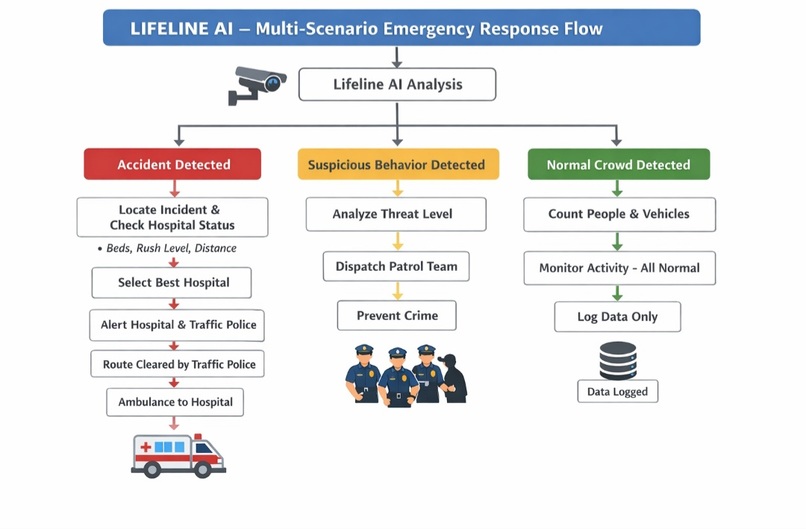
Workflow
-
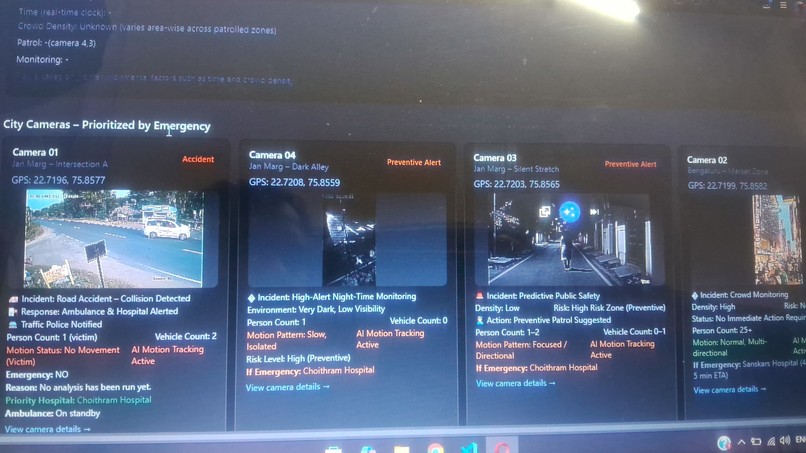
Dashboard
-
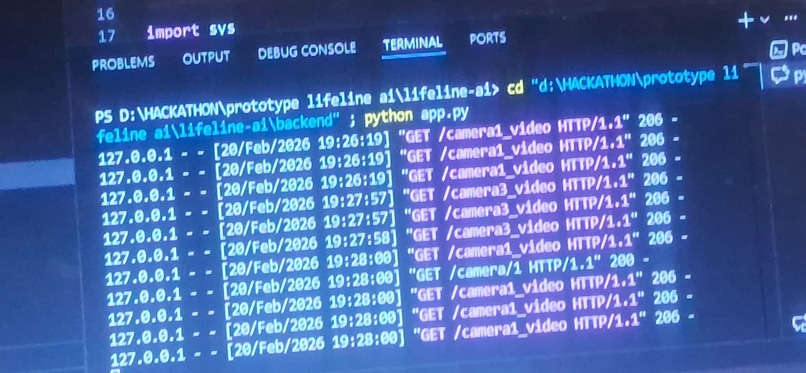
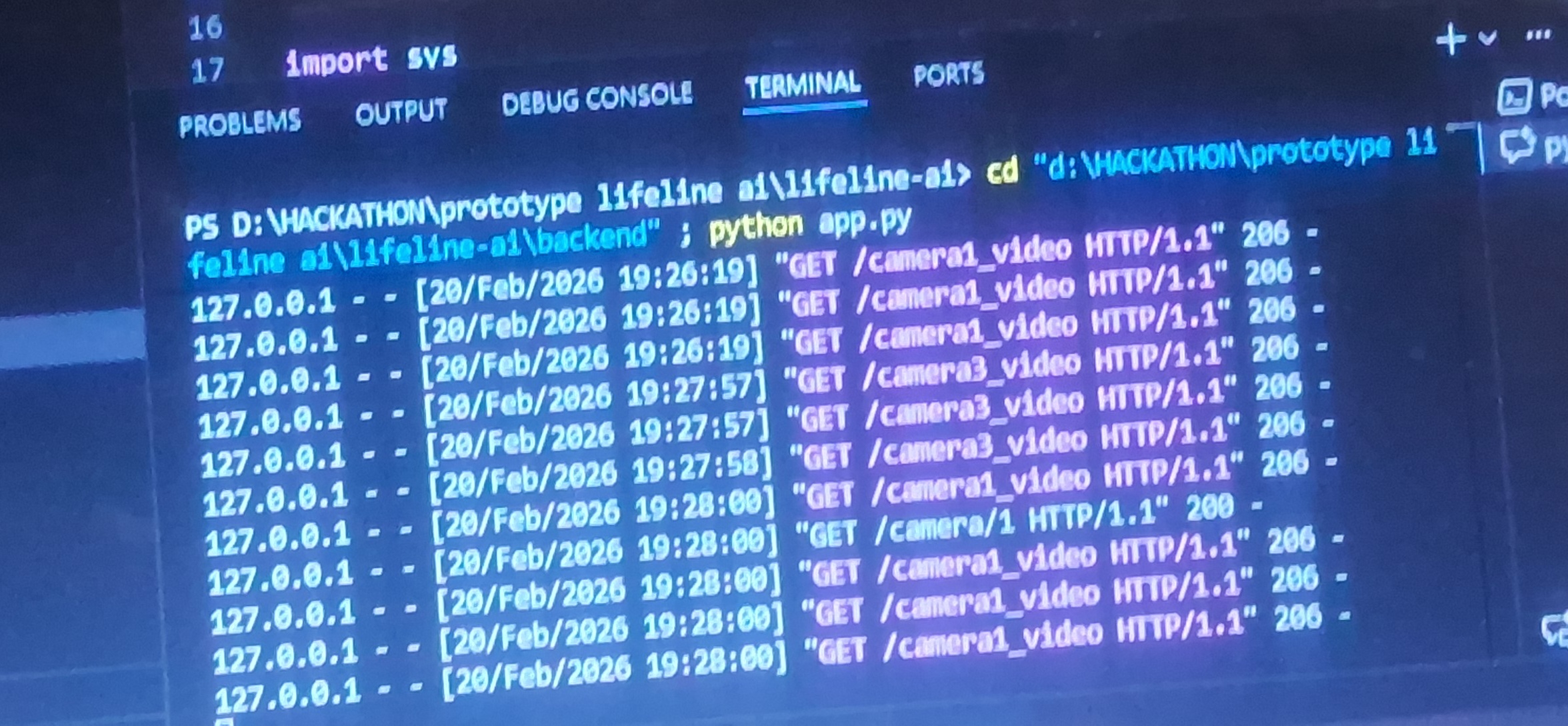
Backend (video reading logs)
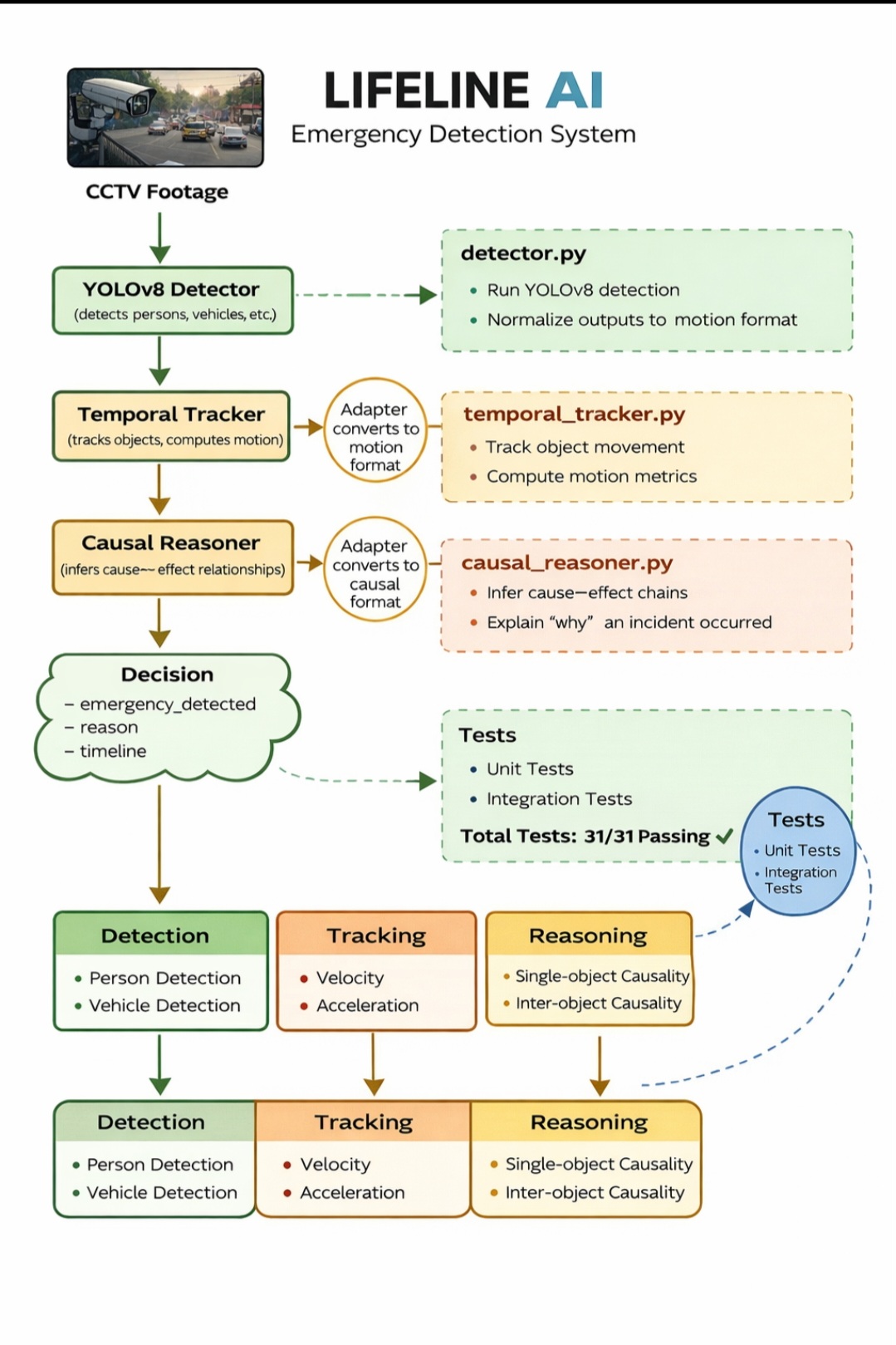
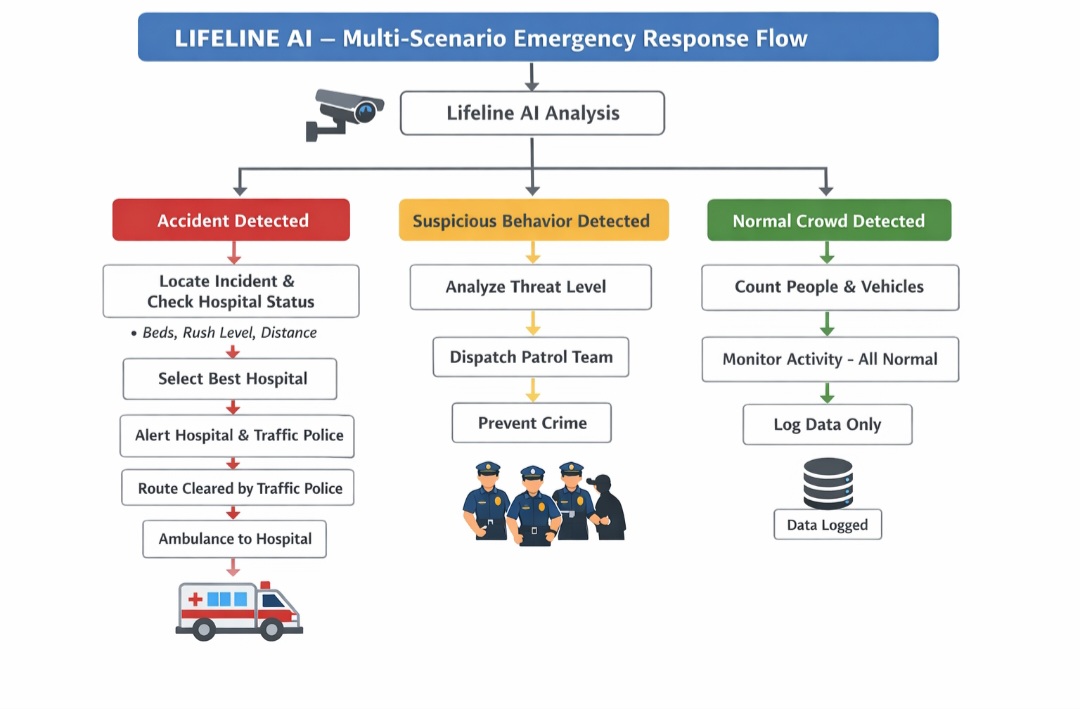
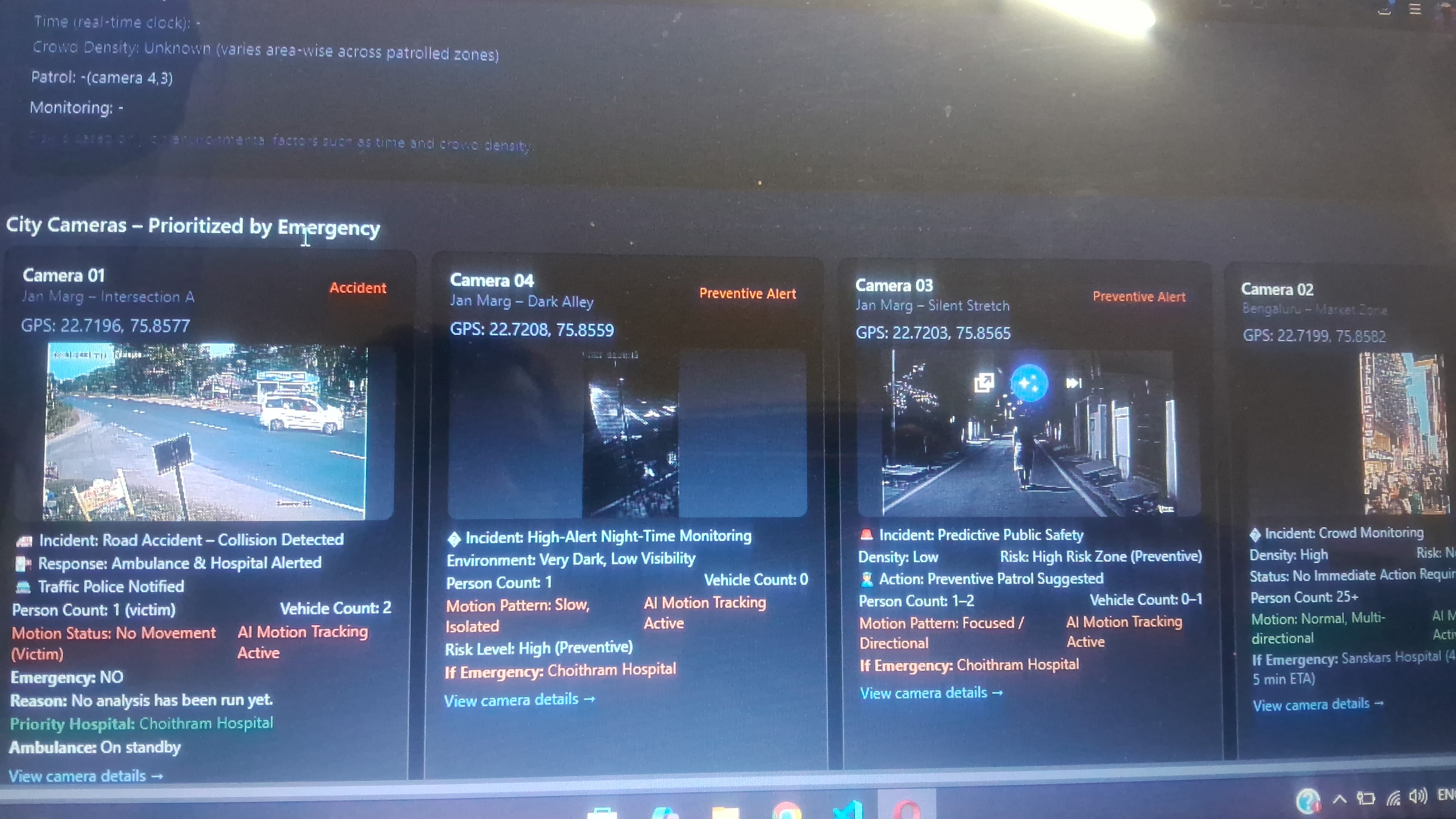
Inspiration We were inspired by the idea that CCTV cameras should do more than just record incidents — they should actively help save lives. In emergencies, every second matters, and delays in response can cost lives. What it does Lifeline AI detects accidents and critical incidents in real time using computer vision and automatically routes the case to the nearest suitable hospital based on severity and availability. How we built it We used AI-based computer vision models, real-time video processing, structured reasoning, and smart routing integration to create a scalable emergency response system. Challenges we ran into Reducing false positives, maintaining real-time speed, and simulating accurate hospital routing were major technical challenges. Accomplishments that we're proud of We built a working prototype that turns passive surveillance into actionable emergency intelligence with real-world impact potential. What we learned We learned how to balance accuracy with speed in AI systems and how technology can directly improve public safety. What's next for Lifeline AI We aim to improve model accuracy, integrate live hospital data, and scale the system for smart city deployment.


Log in or sign up for Devpost to join the conversation.