-
-
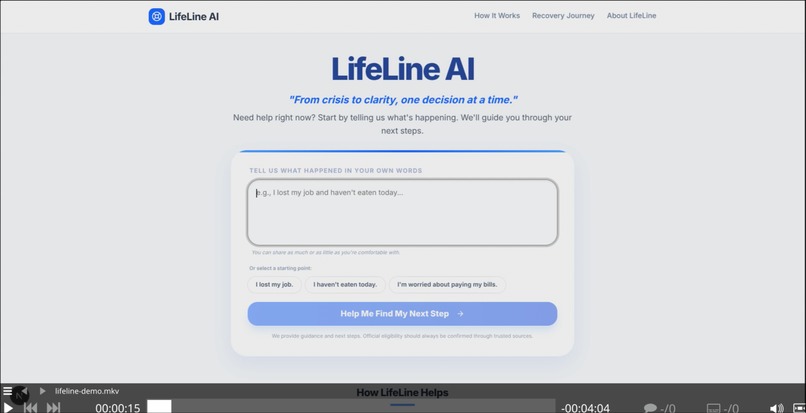
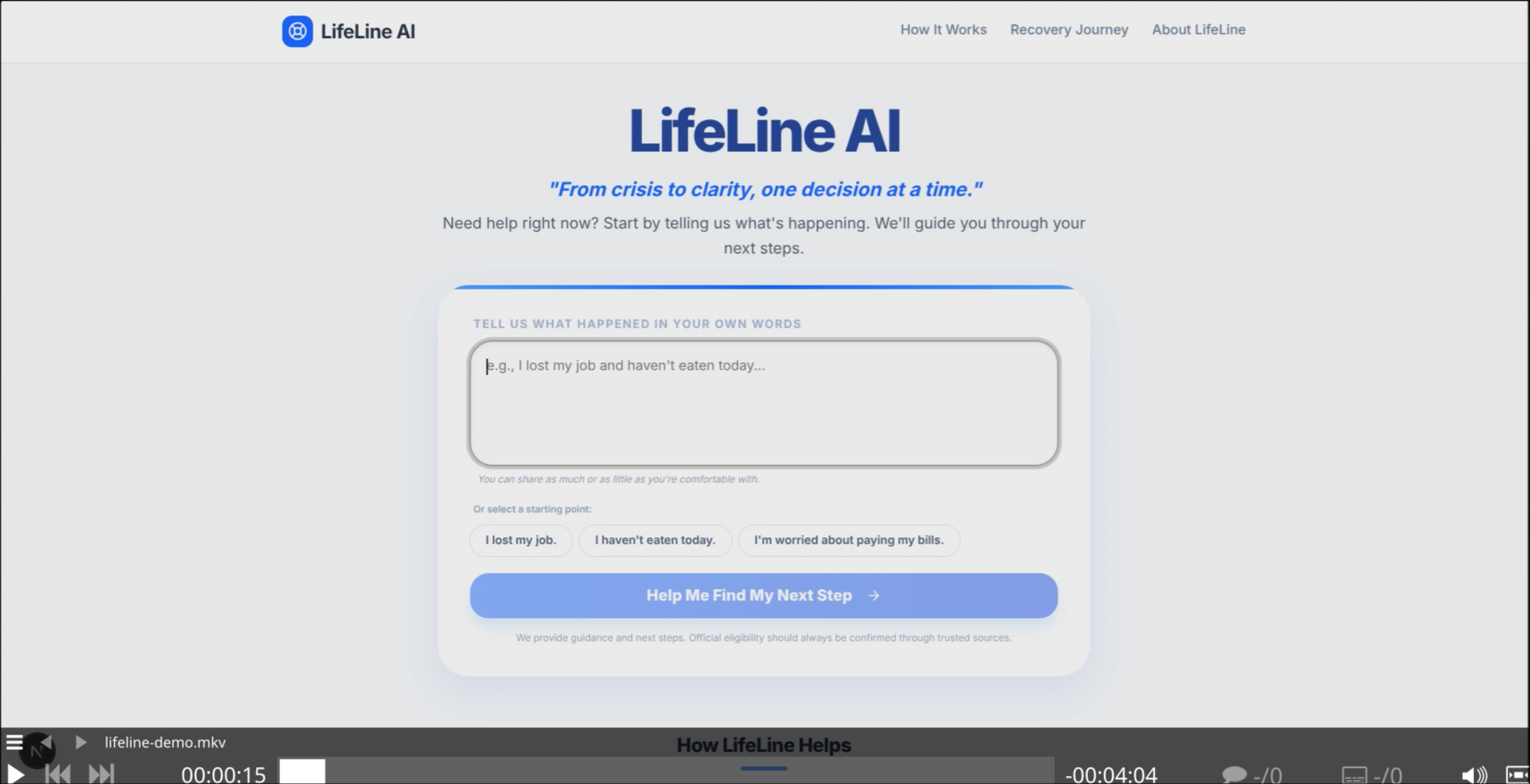
Hero page and the chat interface
-
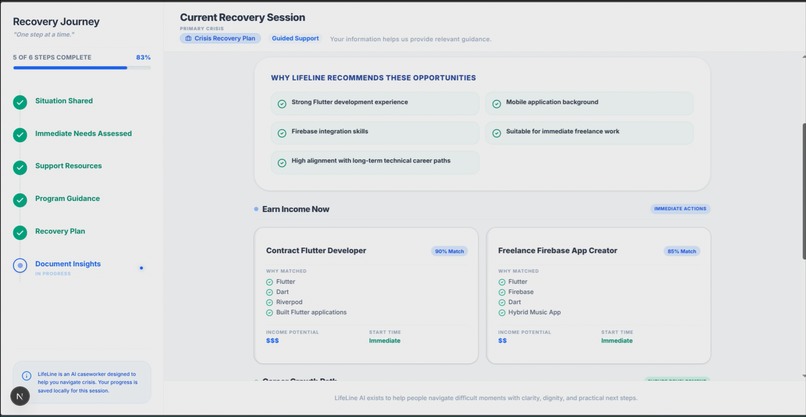
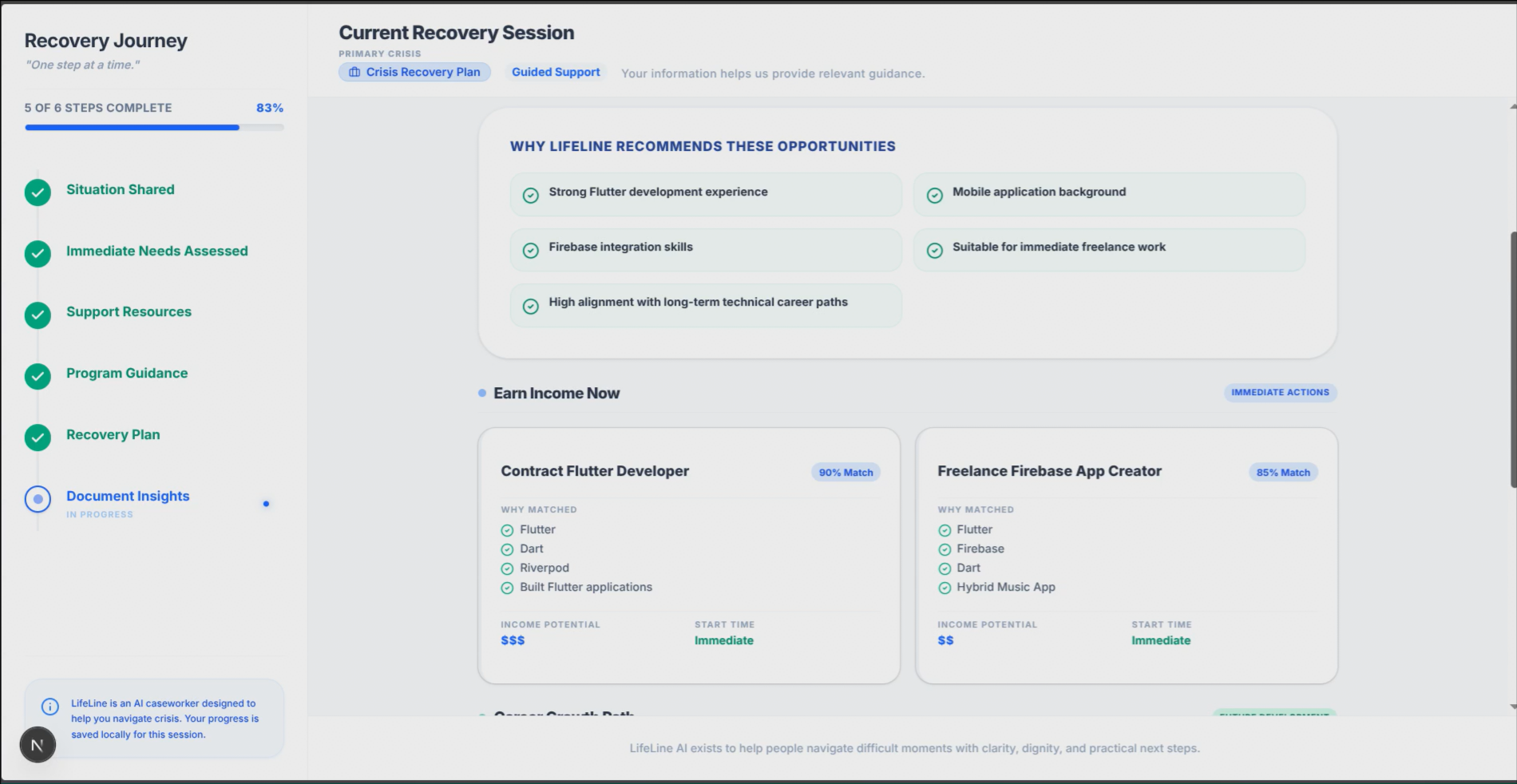
Resume Analysis & Career Guidance
-
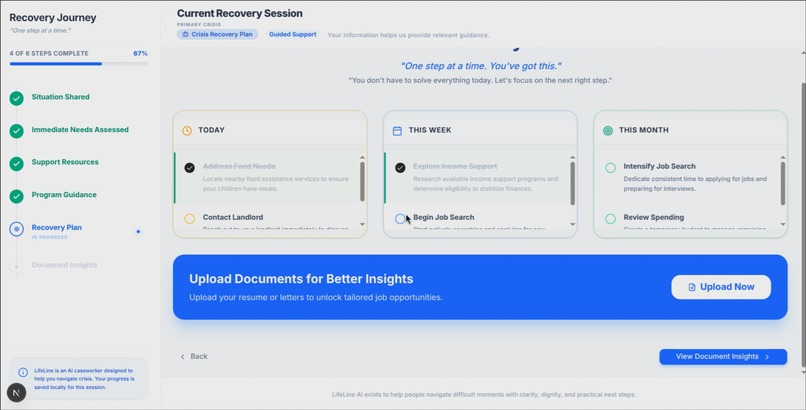
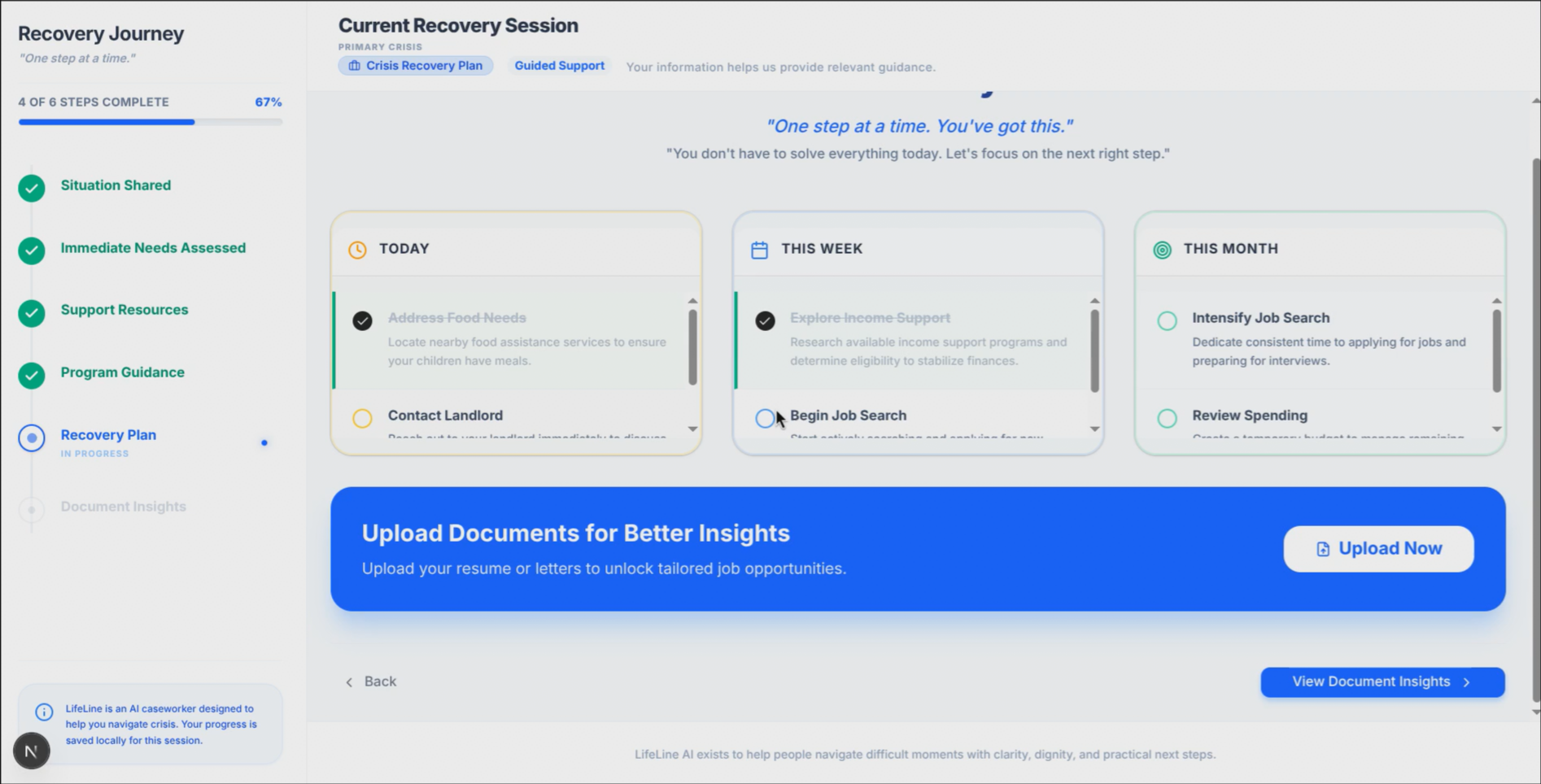
Recovery Roadmap
-
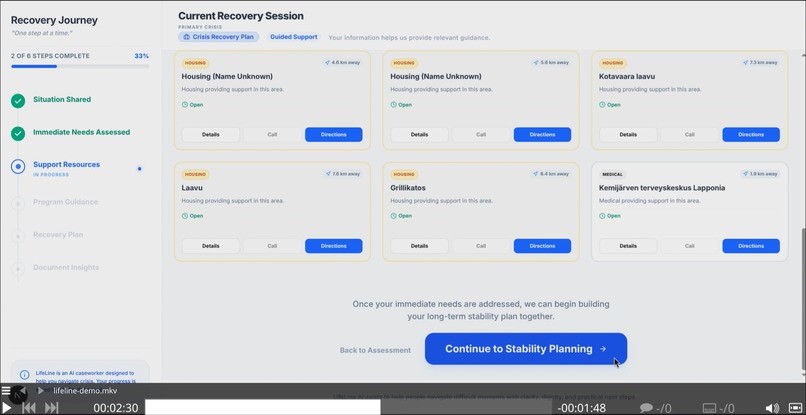
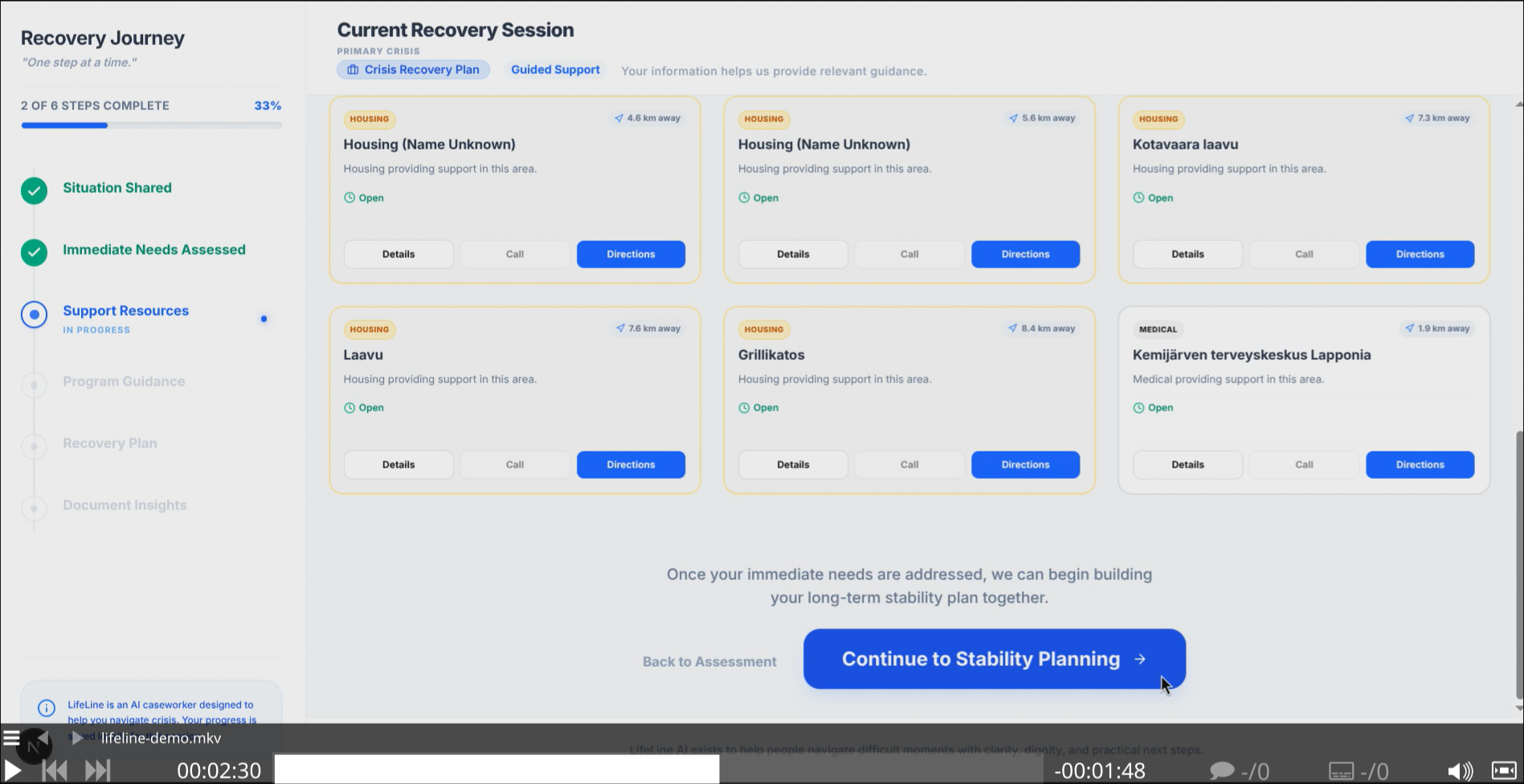
Local Resource Finder / Map
-
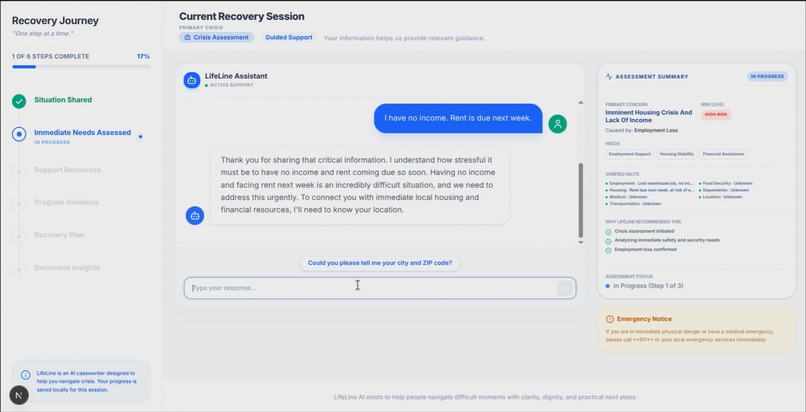
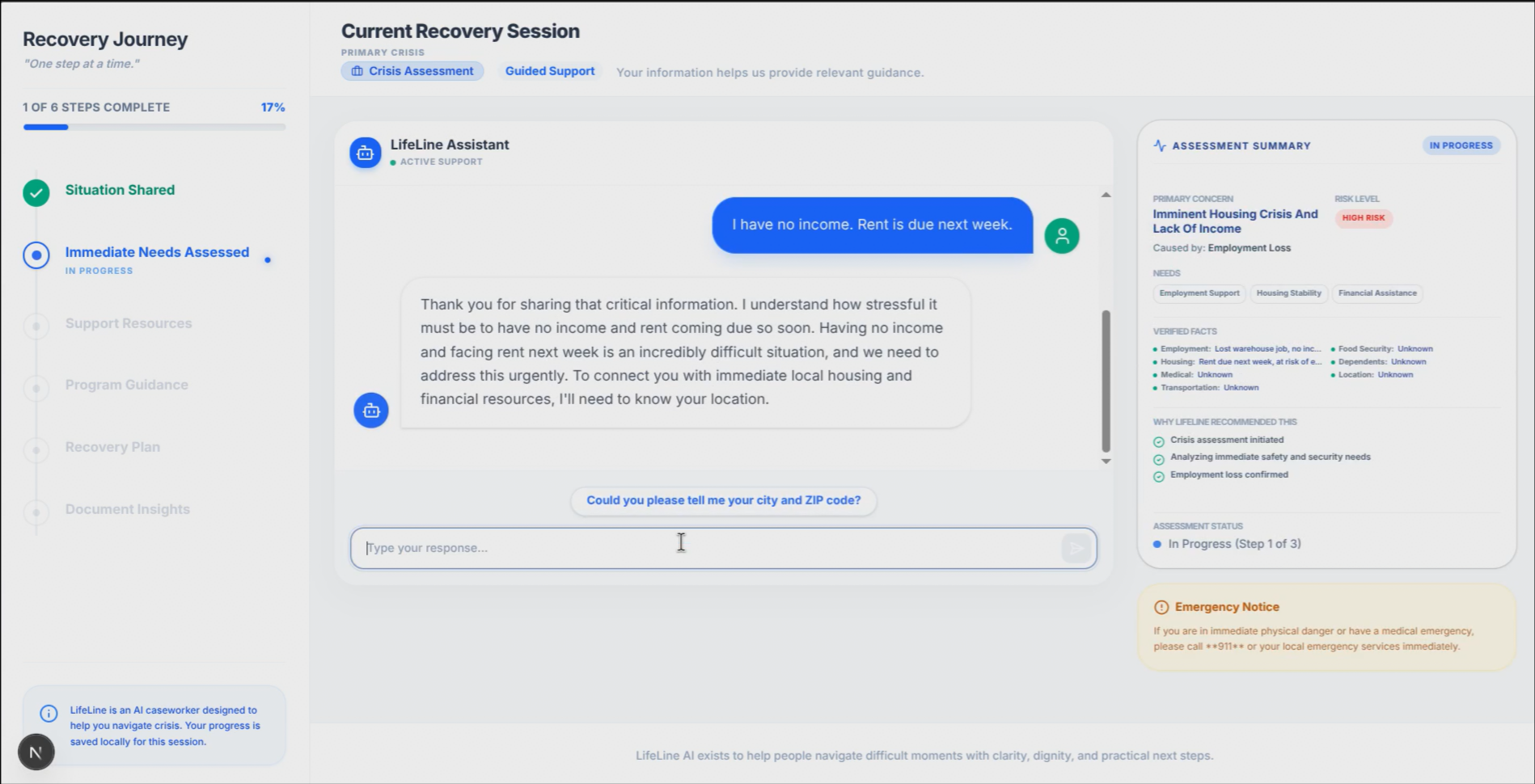
AI Chat Conversation
-
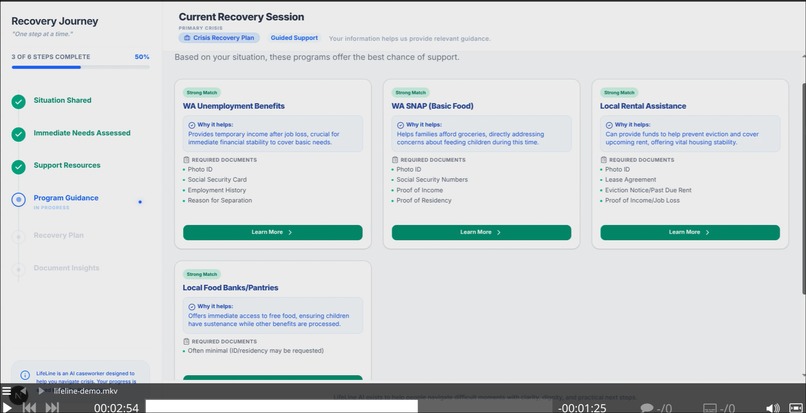
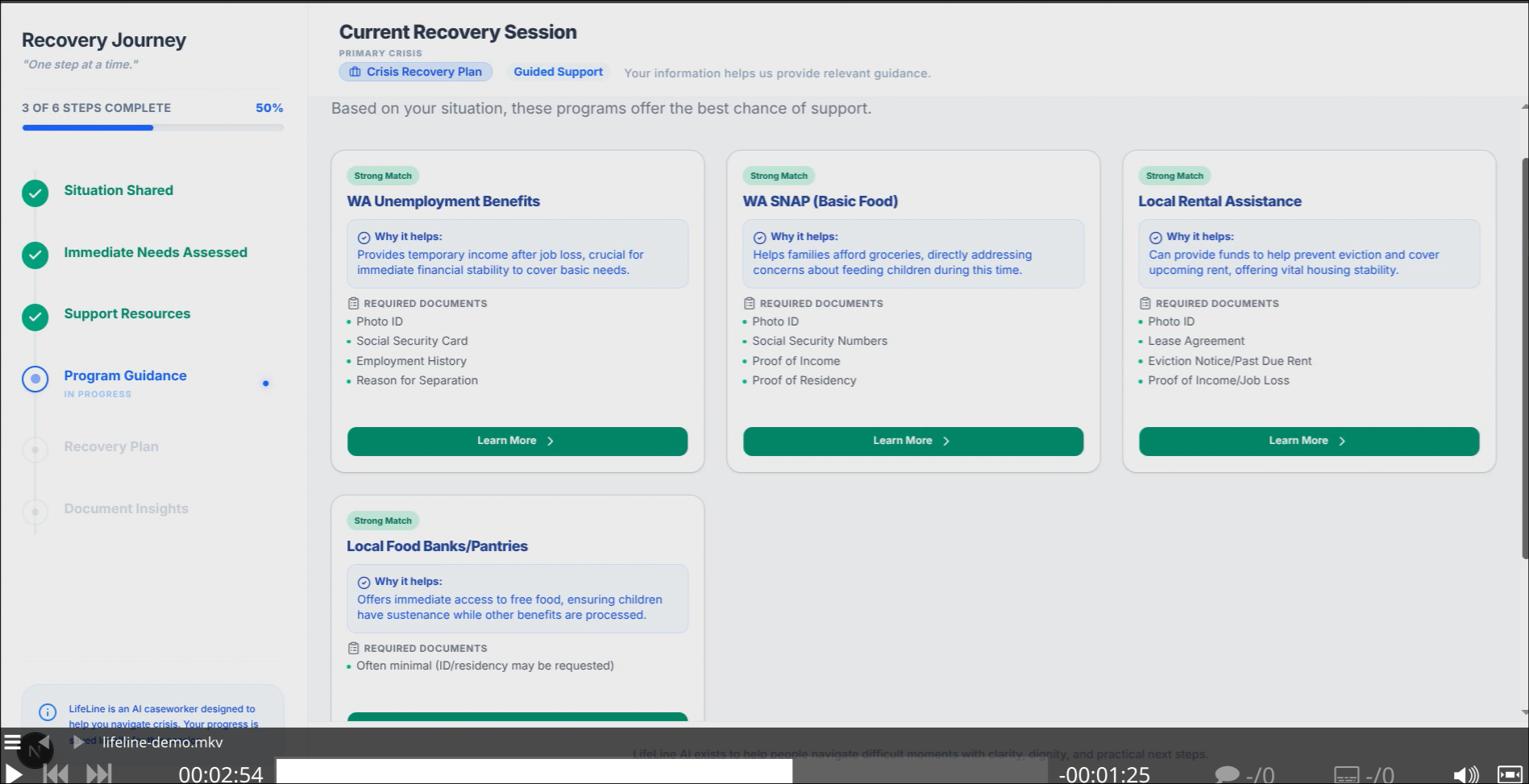
Benefits & Program Recommendations
-
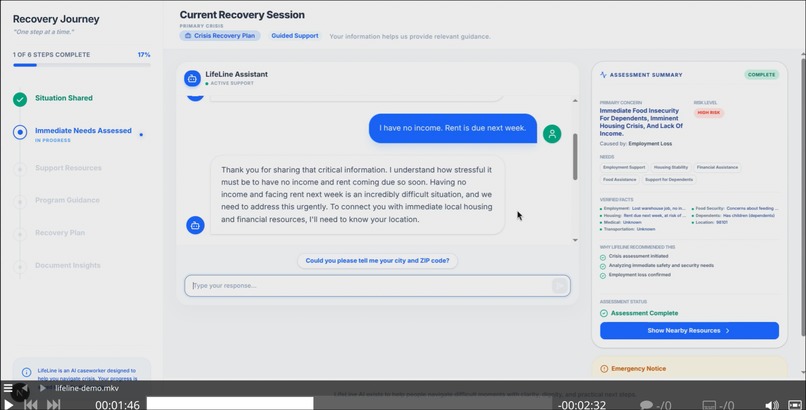
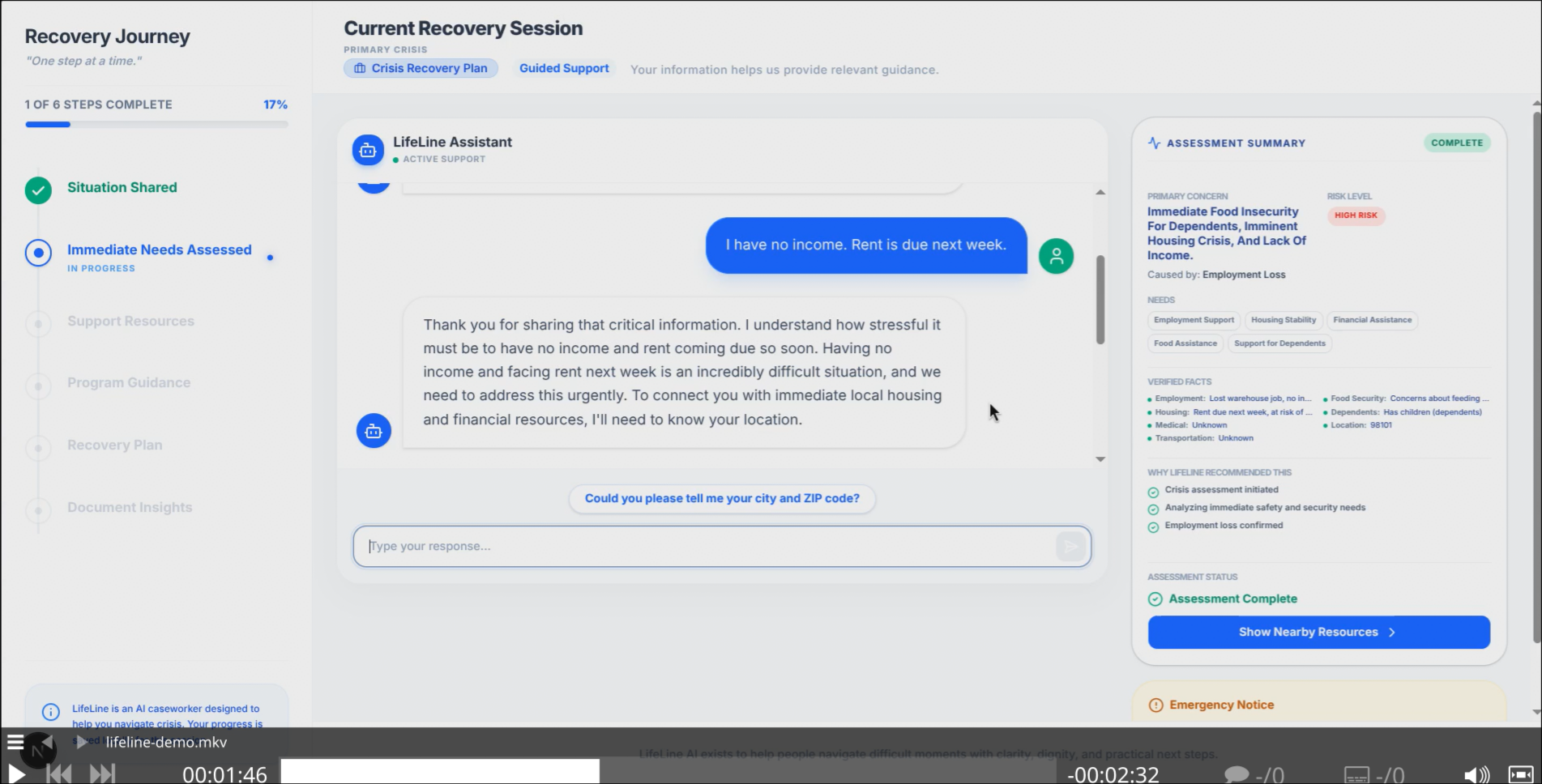
Crisis Assessment Results
Inspiration
A crisis can change someone's life overnight. Losing a job, struggling to afford food, or facing housing instability can leave people overwhelmed and unsure of where to turn next.
During difficult moments, people often have to navigate complicated websites, search through scattered information, and make important decisions while under immense stress. We wanted to build something different: an AI that acts less like a chatbot and more like a compassionate caseworker.
That's why we built LifeLine AI—to help people find clarity, support, and a path forward when life takes an unexpected turn.
What it does
LifeLine AI is an AI-powered digital caseworker that helps people navigate crises through compassionate, guided conversations.
The platform can:
- Provide an interactive chat experience where users can describe their situation naturally, just as they would speak to a human caseworker.
- Conduct structured case intake and extract important information from unstructured user stories.
- Assess employment, food security, housing, medical needs, dependents, and transportation challenges.
- Connect users with nearby shelters, food banks, clinics, and support organizations using real-time location data.
- Recommend relevant assistance programs and provide application document checklists.
- Generate personalized recovery roadmaps with immediate, short-term, and long-term action plans.
- Analyze resumes to identify transferable skills, immediate earning opportunities, and long-term career pathways.
- Allow users to export recovery plans for offline access.
- Detect crisis situations and display emergency safety guidance and resources.
- Continue operating through heuristic fallbacks even when external AI services are unavailable.
How we built it
We built LifeLine AI using:
- Frontend: Next.js and React for a simple, guided user experience.
- Backend: Express.js and TypeScript for secure APIs and business logic.
- AI Engine: Google Gemini for assessments, information extraction, and personalized recovery planning.
- Resource Discovery: OpenStreetMap and Photon APIs to locate nearby shelters, food banks, clinics, and community organizations.
- Reliability Layer: Server rotation and heuristic fallback parsers to keep the platform available even when external services fail.
The platform guides users through a structured journey:
Conversation → Crisis Assessment → Immediate Needs → Local Resources → Benefits & Programs → Recovery Plan → Long-Term Stability
Challenges we ran into
- Preventing AI hallucinations and ensuring recommendations are trustworthy.
- Correctly prioritizing urgent needs during crisis situations.
- Handling incomplete or unclear user information.
- Designing a system that supports users without creating over-reliance on AI.
- Building reliable fallback mechanisms when third-party services experience outages or rate limits.
- Creating an experience that reduces cognitive load for people already under significant stress.
What we learned
- Accessibility and simplicity are essential when designing for vulnerable users.
- Real-world data is far more useful than generic recommendations.
- Reliability and trust are just as important as intelligence.
- Technology can do more than answer questions—it can help people make difficult decisions with confidence.
- The best AI systems don't replace human support—they help people find their next step forward.
What's next for LifeLine AI
- Integrate with official government assistance and benefits platforms.
- Add multilingual support to make the platform accessible to more communities.
- Support voice-based conversations and speech-to-text input.
- Introduce offline capabilities for users with limited internet connectivity.
- Improve recommendation accuracy through continuous feedback and real-world testing.
- Expand partnerships with local organizations and community support networks.
LifeLine AI exists for one purpose: to help people move from crisis to stability, one recovery step at a time.
Built With
- css3
- express.js
- gemini-2.5-flash
- github
- google-gemini-api
- html5
- javascript
- lucide-react
- next.js
- node.js
- openstreetmap
- overpass-api
- photon-geocoding-api
- python
- radix-ui
- react
- rest-api
- shadcn/ui
- tailwind-css
- typescript


Log in or sign up for Devpost to join the conversation.