-
-
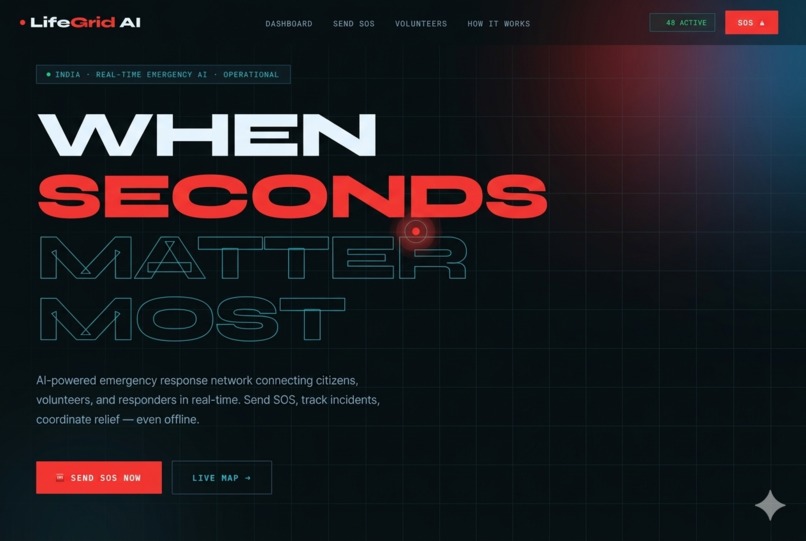
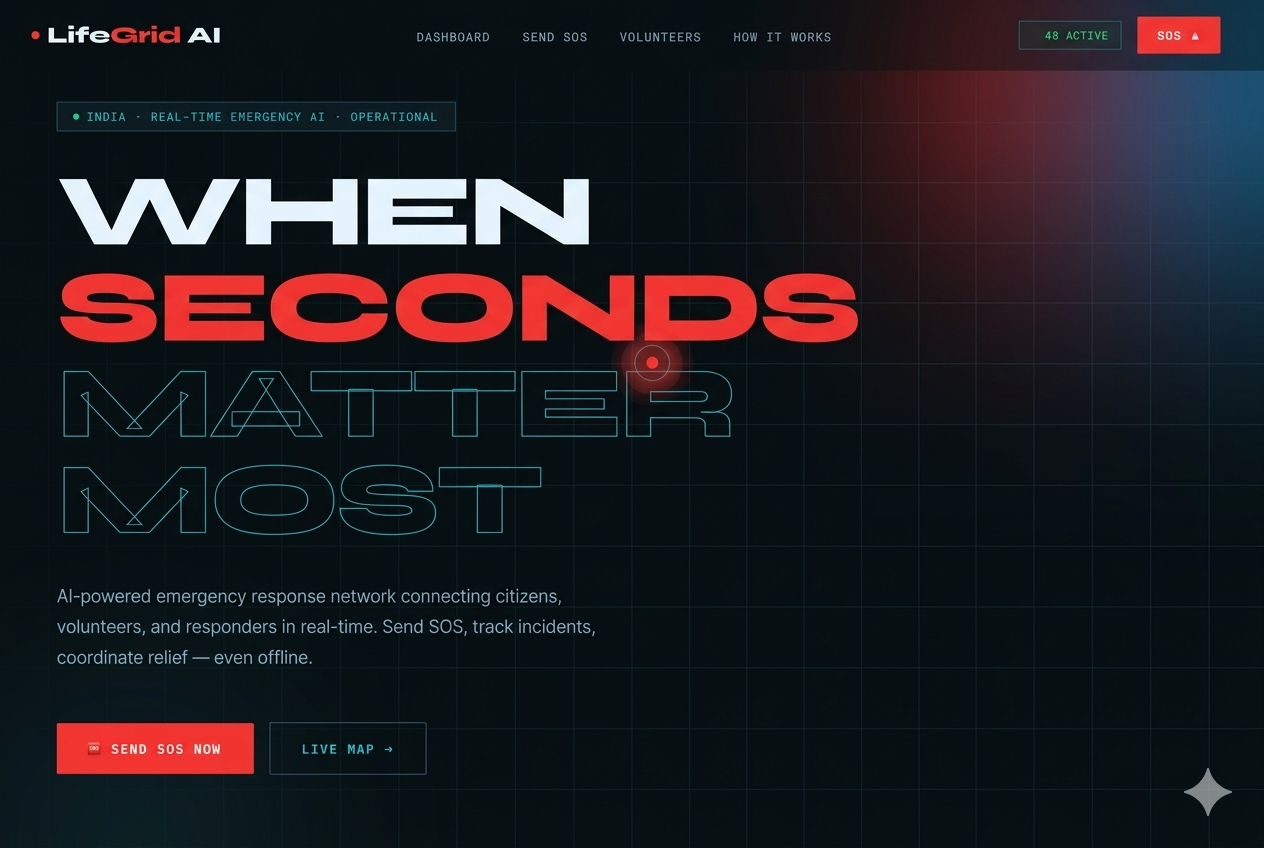
front page of wesite in 3:2 ratio
Inspiration
to avoid loss of lives
What it does
“LifeGrid AI turns chaos into coordination by intelligently connecting people, responders, and resources in real-time during emergencies.”
How we built it
The platform was developed using a robust, multi-layered technology stack:Frontend: Built with React and Flutter to ensure a seamless cross-platform experience across web and mobile devices.Backend: Powered by Node.js and Firebase for scalable, real-time data handling.AI Engine: Utilizes Natural Language Processing (NLP) for SOS classification and Computer Vision for image-based disaster verification.Mapping: Integrated with Mapbox and Google Maps to provide precise location tracking and rescue routing.Real-time & Offline Tech: Employs WebSockets and Firebase for live updates, alongside SMS APIs and Bluetooth mesh for offline functionality.
Challenges we ran into
Ensuring the Bluetooth mesh network remains stable across different hardware devices in areas with zero cellular reception.
Developing high-accuracy NLP models capable of understanding urgent SOS requests in multiple regional languages.
Accomplishments that we're proud of
Proven Offline Capability: Successfully engineering a system that maintains life-saving coordination even when traditional internet infrastructure fails.
What we learned
Scalability: Designing for a global context requires a flexible backend that can handle sudden, massive spikes in regional activity.
What's next for LifeGrid Ai
Drone Integration: Deploying autonomous drones for aerial surveillance and delivery of critical supplies to unreachable zones.
Government API Integration: Deep-linking with official emergency services for direct dispatch coordination.
Multilingual Voice Support: Expanding AI understanding to include diverse regional dialects to ensure no one is left behind due to a language barrier.


Log in or sign up for Devpost to join the conversation.