-
-
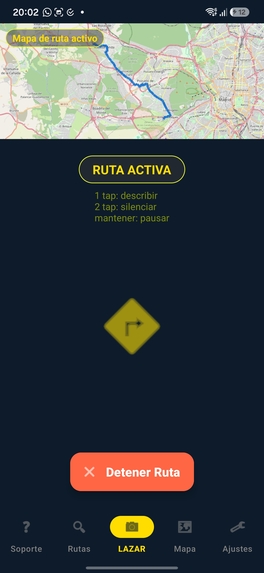
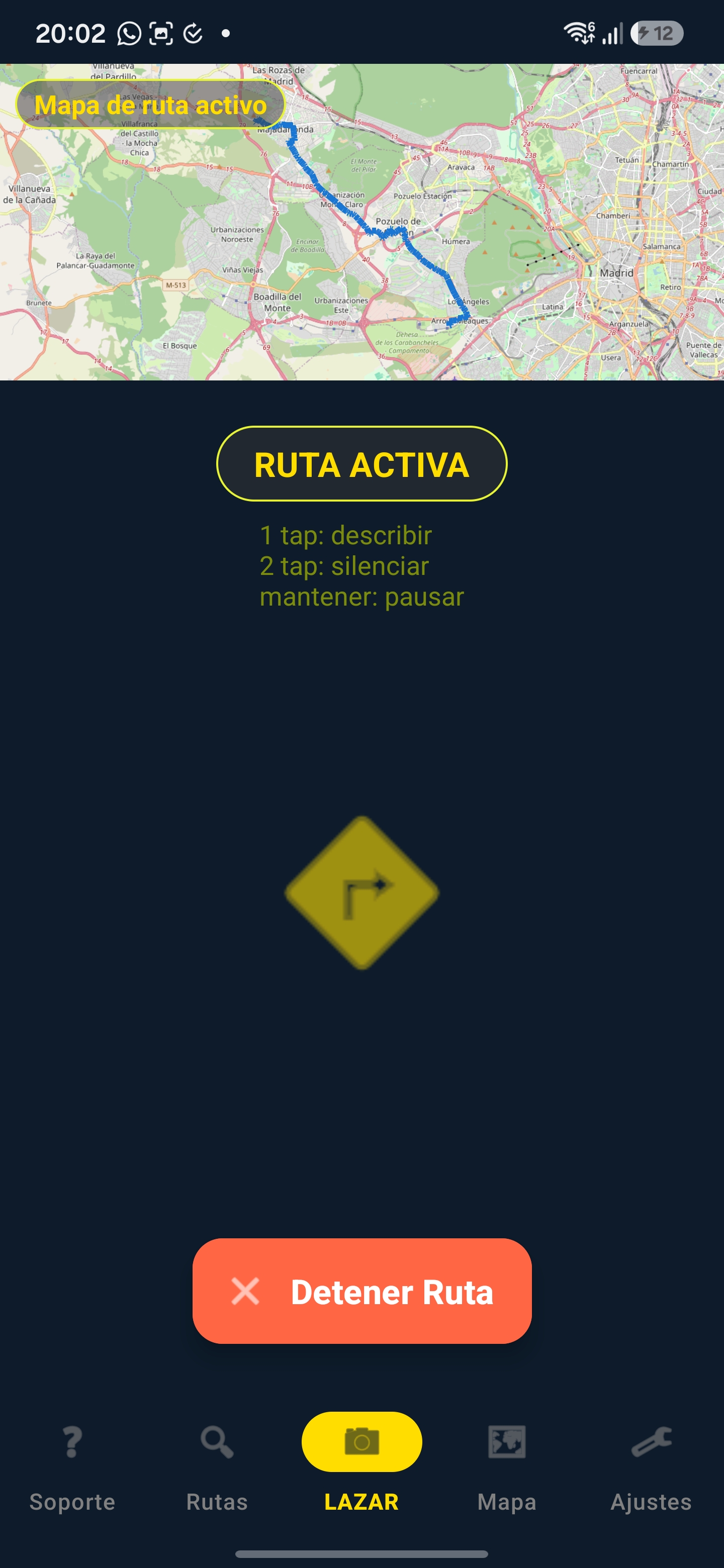
LAZAR guides through routes
-
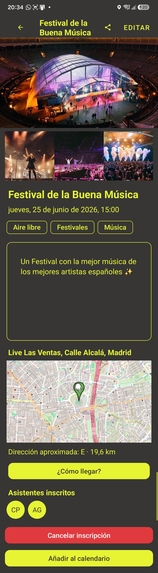
Event example
-
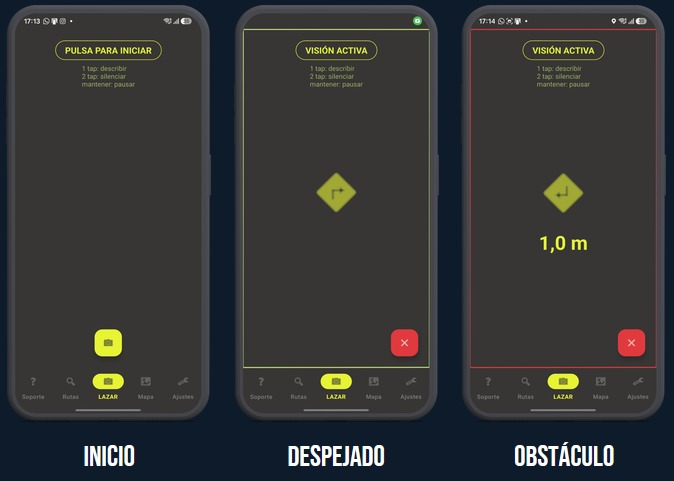
Obstacle detection
-
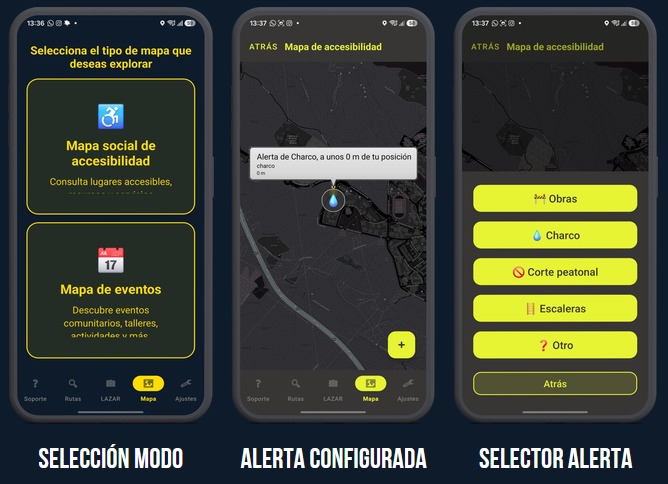
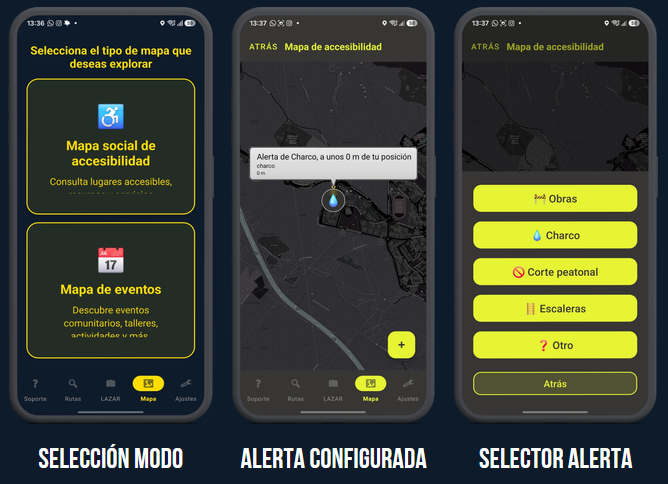
Accesibility Warnings
-
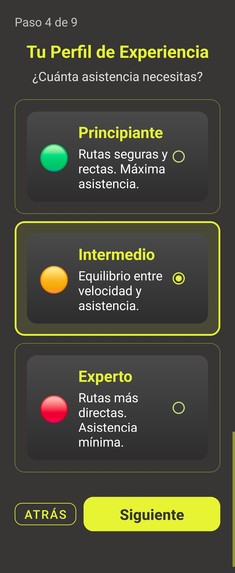
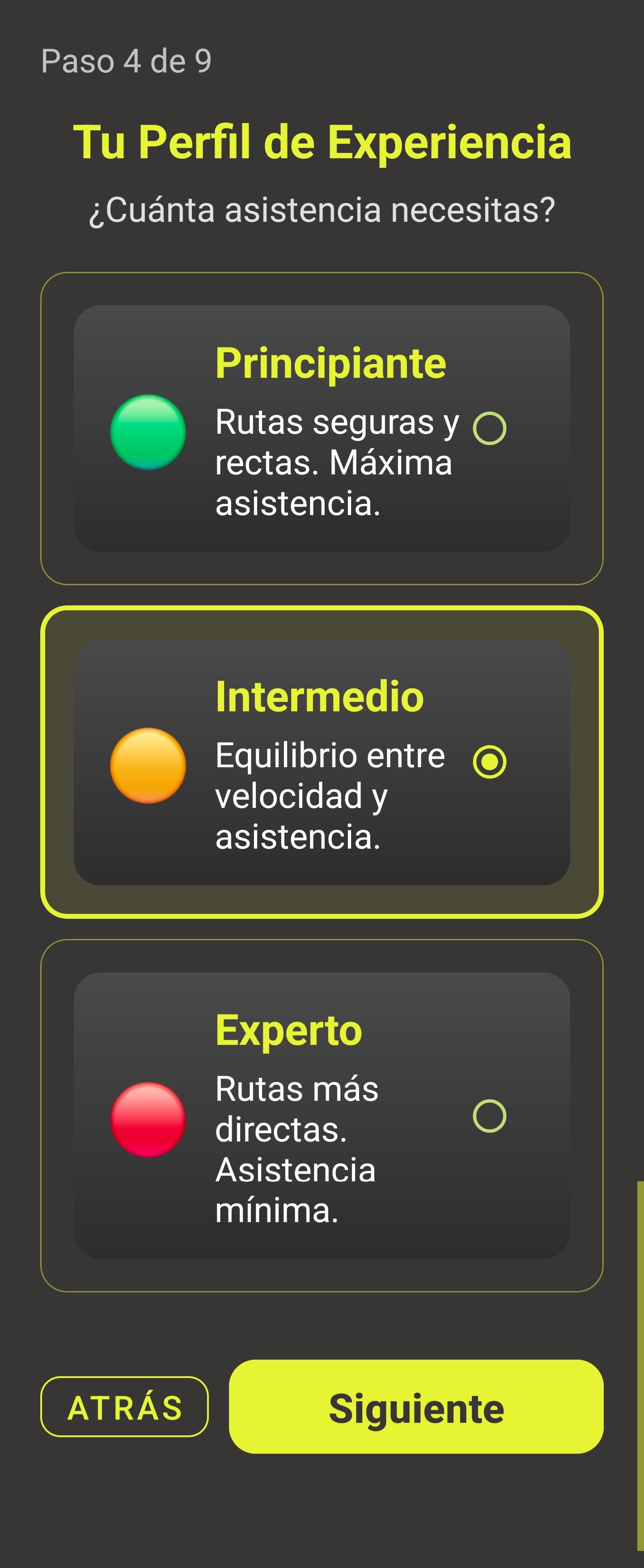
LAZAR adjusts to every user using a cognitive experience selector
Inspiration
My grandfather, Jesús María, lived with just 1% visual acuity due to severe macular degeneration. He refused to give up his daily walks and faced the city with admirable determination, but falls became frequent: unmarked scaffolding, scooters on the pavement, silent electric cars. Watching those falls, I asked myself a simple question: could I build something that protected him without taking away his independence?
That question became LAZAR. He passed away in February 2026 without being able to try it. This project is dedicated to him, and to everyone who deserves to walk without fear.
What it does
LAZAR (Live Audio Zone-aware Assisted Routing) is an assisted-navigation platform for blind and visually impaired people. It runs entirely on a standard Android phone, with no special hardware and no internet connection required for its critical functions. It combines three capabilities that today exist only in isolation:
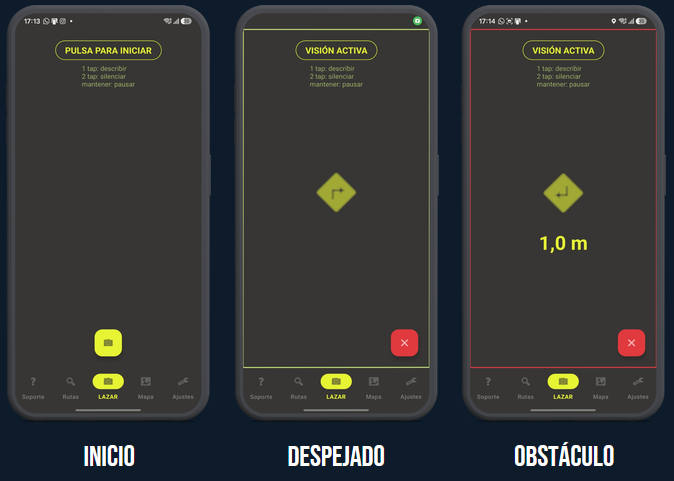
- On-device perception. The phone's camera detects obstacles and estimates distances in real time, alerting the user through audio and escalating vibration.
- Adaptive guidance. It suggests optimal walking and public-transport routes and adapts to each user's cognitive profile. The system learns from the user, not the other way around.
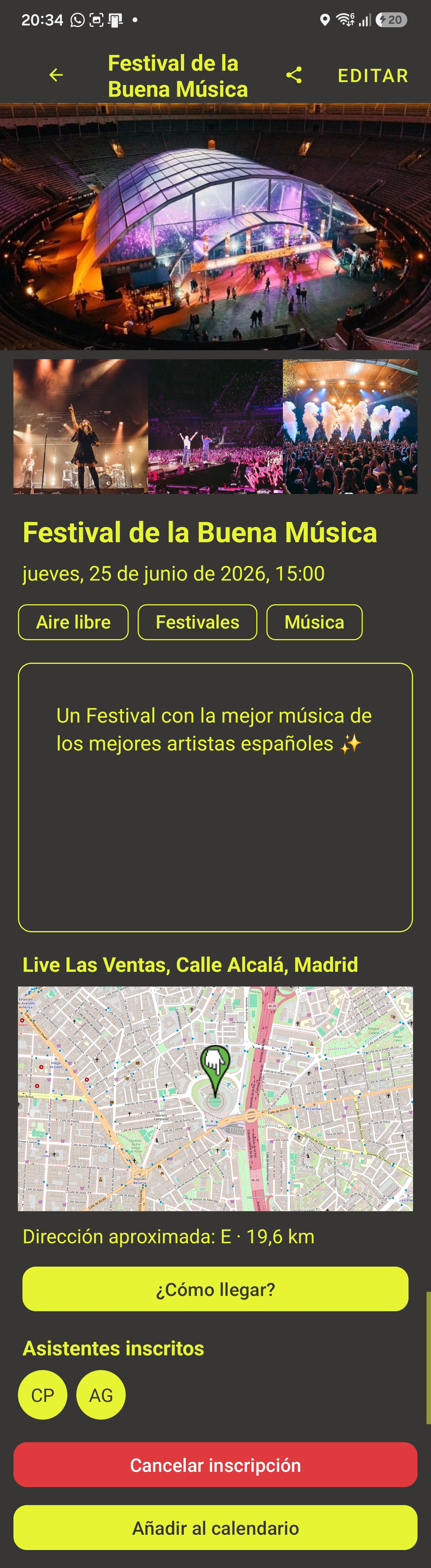
- A collaborative social layer. Users report accessibility barriers on a shared map that benefits the whole community, alongside accessible events, trusted guardians, and live human support.
How we built it
The core runs two AI models directly on the device: EfficientDet-Lite2 for object detection and MiDaS v2.1 for monocular depth estimation, both executed locally through TensorFlow Lite. Processing everything on-device solves the latency-versus-privacy dilemma: no video frames ever leave the phone.
Internally, LAZAR is a multi-agent system built on the JADE framework: ten specialised agents cooperate to perceive, decide, and guide. Navigation coordination logic was validated in a reinforcement-learning simulator (Q-learning), while the production system personalises route recommendations through Bayesian learning on a FastAPI server. Mapping relies on OpenStreetMap, and live support uses Jitsi Meet. Everything was tested on a mid-range 2020 device, chosen deliberately so as not to exclude the users who need it most.
Challenges we ran into
The hardest challenge was cognitive load. The first prototype detected obstacles well but overwhelmed the user with constant audio. Solving this meant redesigning the whole feedback system around relevance and user profiles, rather than reporting everything the camera saw.
The second challenge was designing for people I could not design like. To involve blind users from the very first day, I built low-fidelity tactile prototypes using raised paint, so people with total blindness could evaluate the interaction design before any code existed.
Accomplishments that we're proud of
- A System Usability Scale score of 91.36/100, in the highest category, from a study with eleven real blind and visually impaired participants aged 22 to 85.
- A 77% reduction in near-collisions versus the baseline in technical evaluation.
- Two international peer-reviewed publications (JCR-indexed, one in Q1).
- An 85-year-old participant with no prior tech experience scored it 100/100 and called it "an indispensable tool for someone who cannot see."
What we learned
The biggest lesson: accessibility must be a generative principle, not a checklist added at the end. Designing every screen, gesture, and sound from the question "how does this work for someone who cannot see?" is what allowed a single system to serve extremely heterogeneous users. I also learned that bringing advanced AI (computer vision, multi-agent systems, reinforcement learning) to a low-cost device is not only possible, but essential for genuine inclusion.
What's next for LAZAR
- A confirmatory study at larger scale (50+ participants) with a real-user field protocol.
- A controlled comparison against existing market tools.
- An iOS version, since the current build is Android-only.
- Partnerships with public administrations, third-sector organisations, and socially committed companies to turn the prototype into a deployable service at an affordable cost.
Built With
- accessibility
- android
- bayesian-inference
- camerax
- computer-vision
- edge-ai
- efficientdet
- fastapi
- jade
- java
- jitsi-meet
- machine-learning
- midas
- multi-agent-systems
- openstreetmap
- osmdroid
- python
- q-learning
- reinforcement-learning
- sqlite
- tensorflow-lite
- text-to-speech

Log in or sign up for Devpost to join the conversation.