-
-
-
Meridian Model
-
Problem Statement
-
Product Guide
-
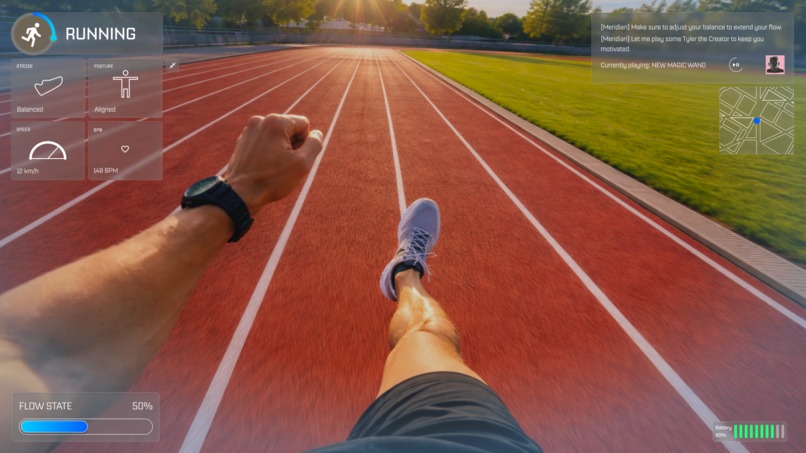
DEMO: Running
-
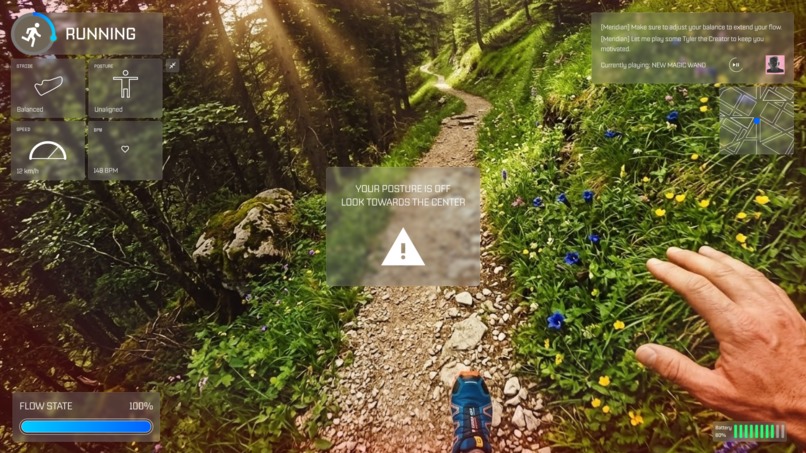
Running: Breathing Error
-
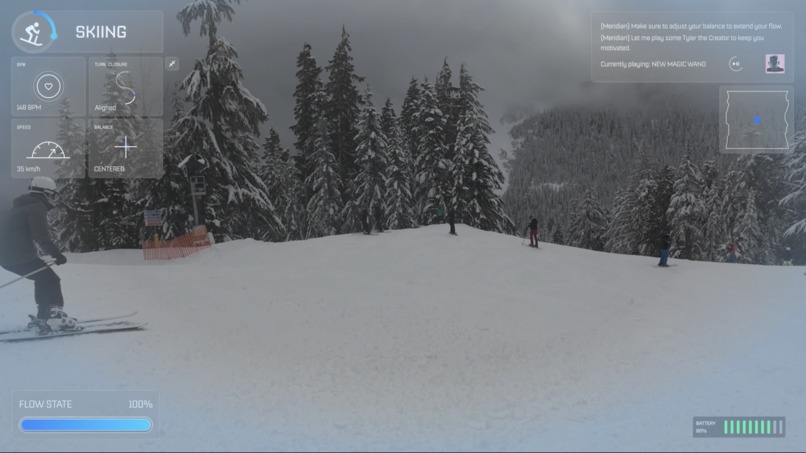
DEMO: Skiing
-
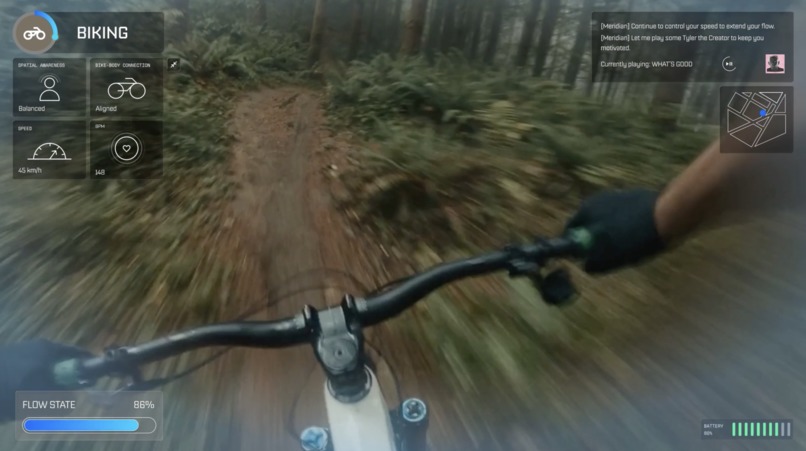
DEMO: Mountain Biking
Inspiration
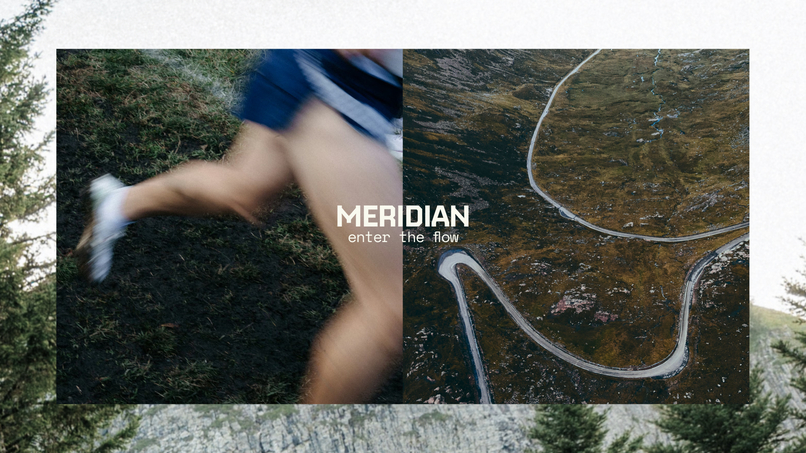
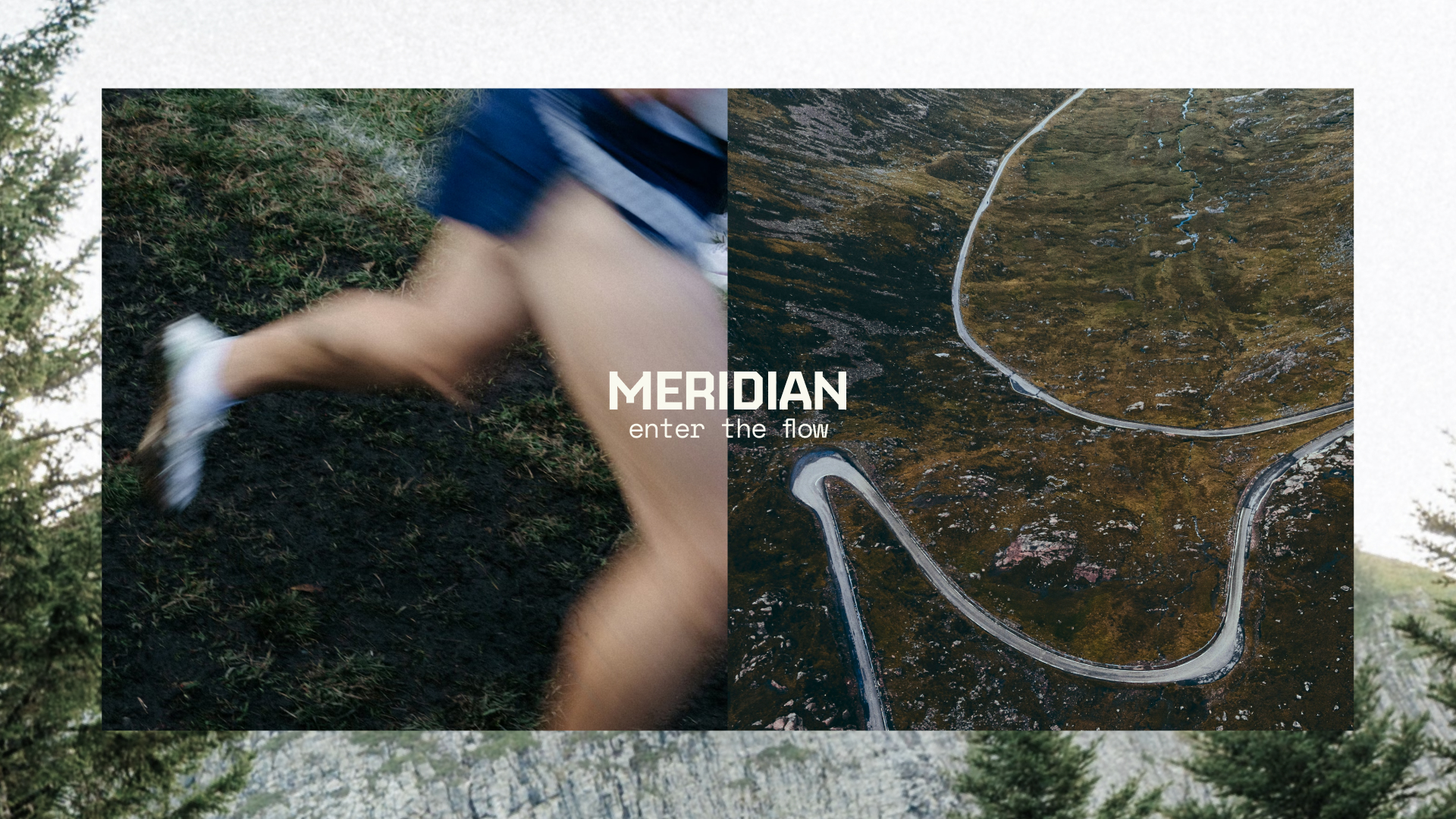
This one came naturally, as between the four of us, amongst other sports, we climb, ski/snowboard, and hike. We're also students, so we've all felt that moment where everything clicks and you feel completely unstoppable when doing any task. We wanted to build something that matched the energy of the brands we look up to constantly for inspiration, for example: Arc'teryx, Salomon, Peak Performance. MERIDIAN started as a simple question: what if something could know you as well as you knew your sport?
What it MERIDIAN does
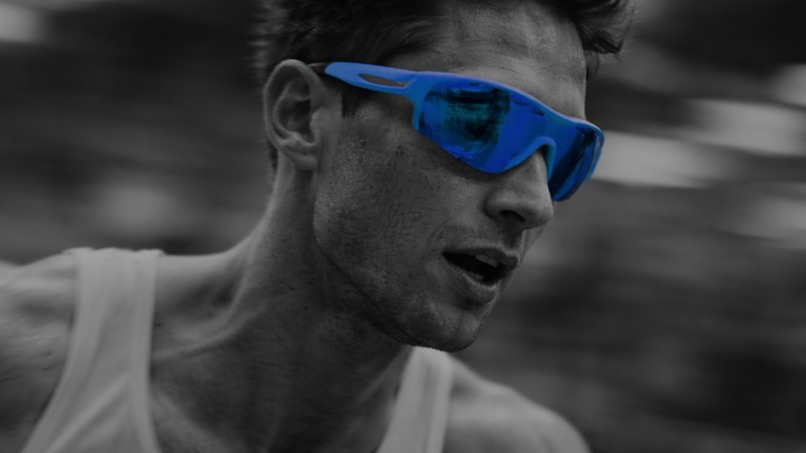
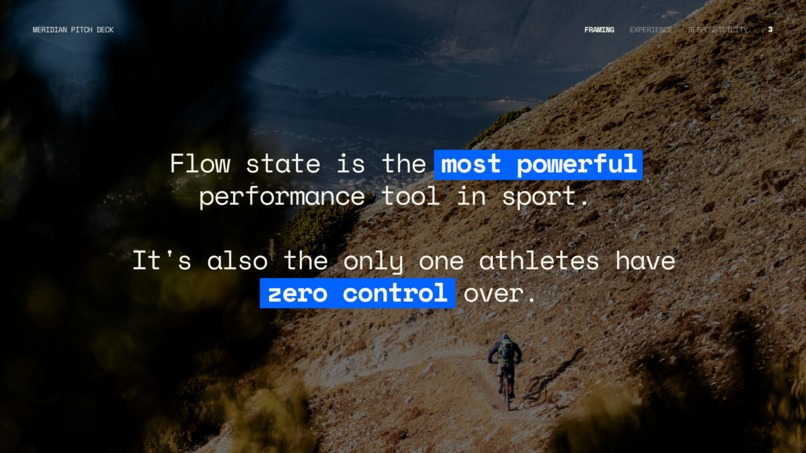
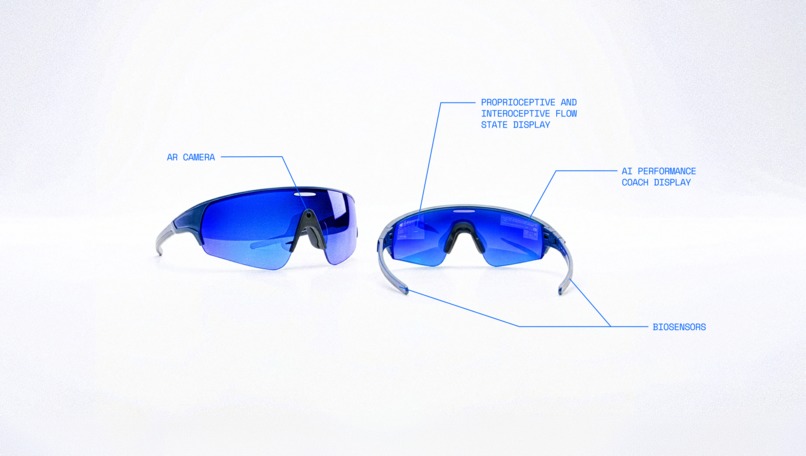
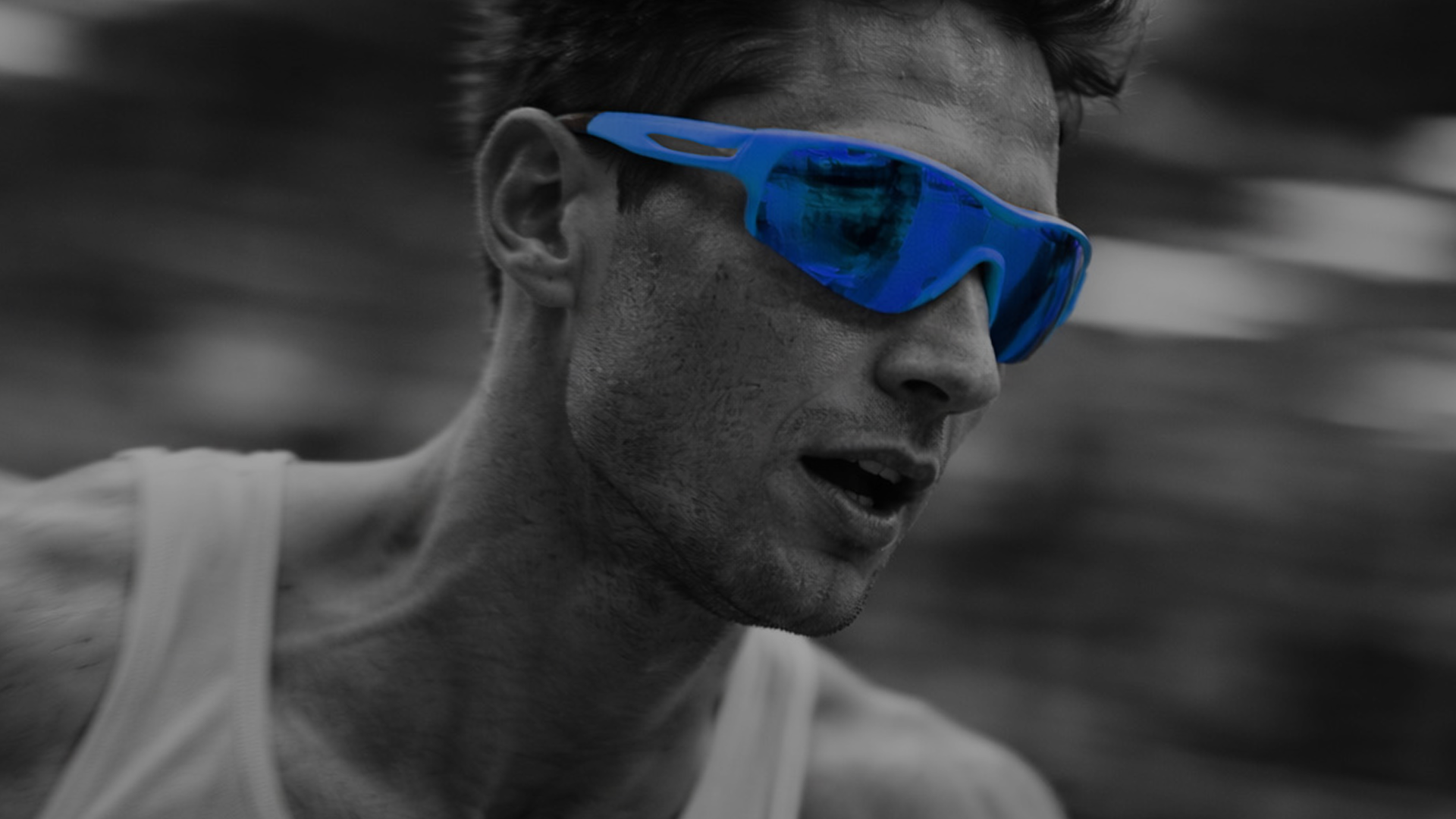
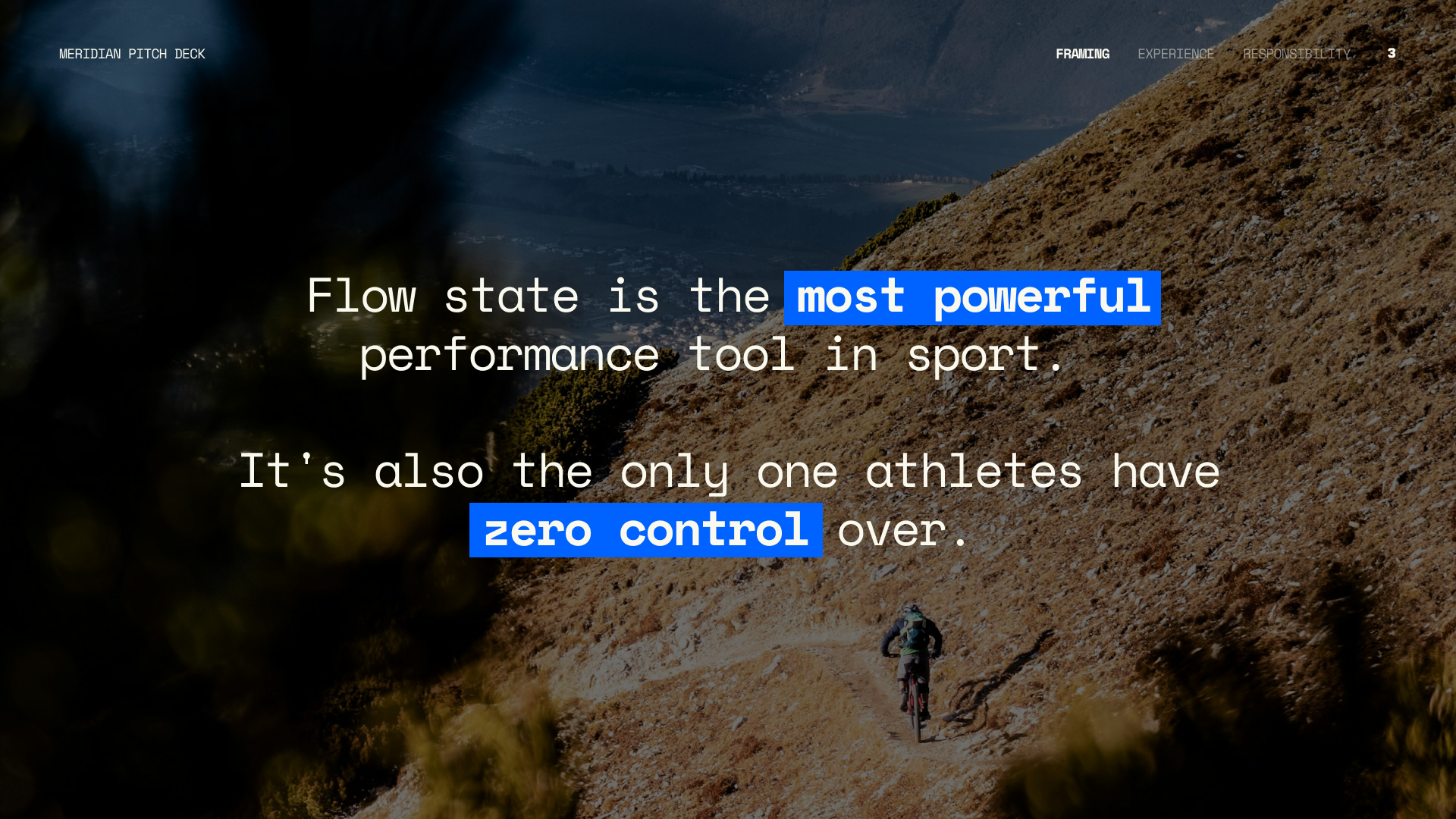
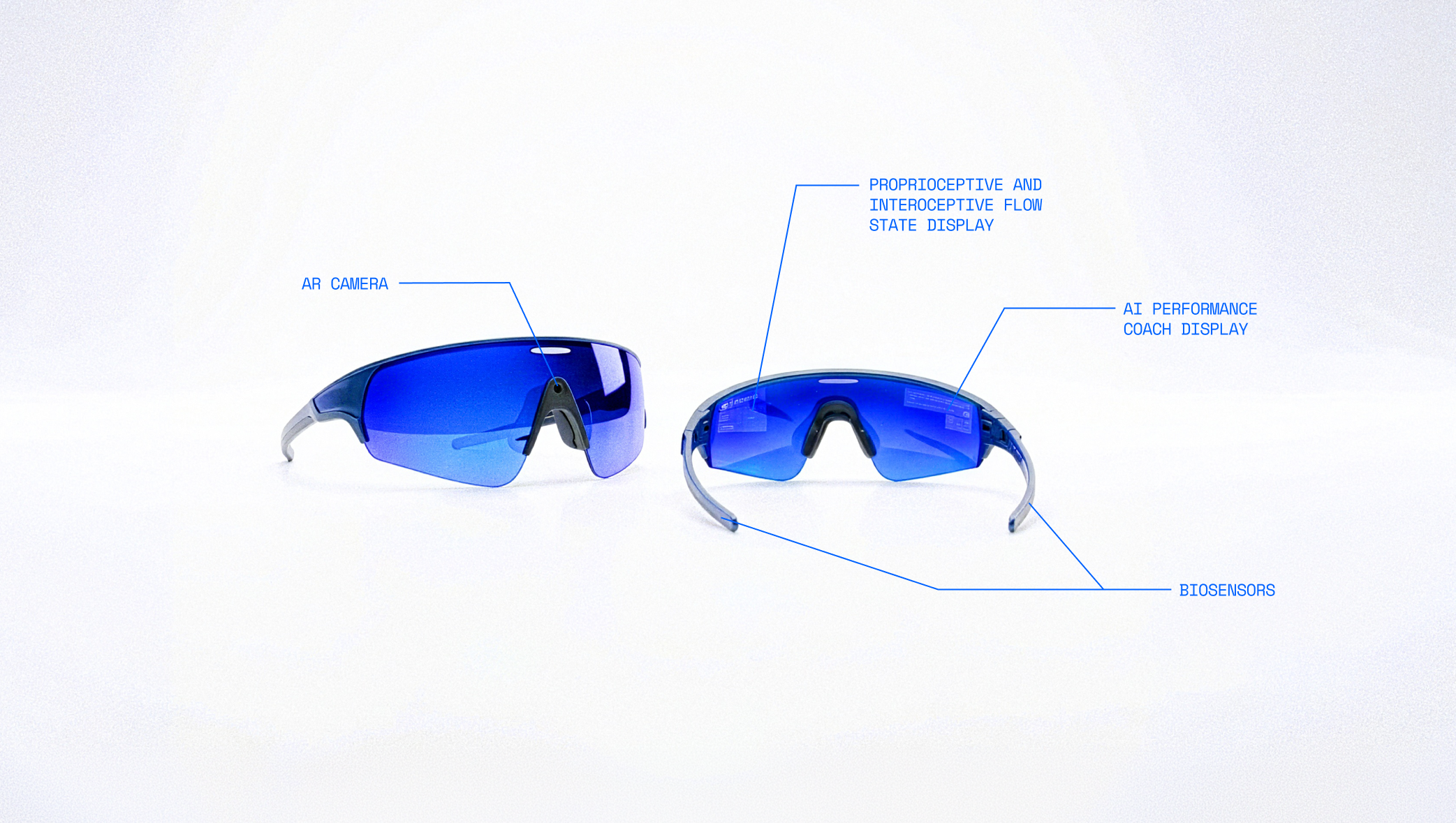
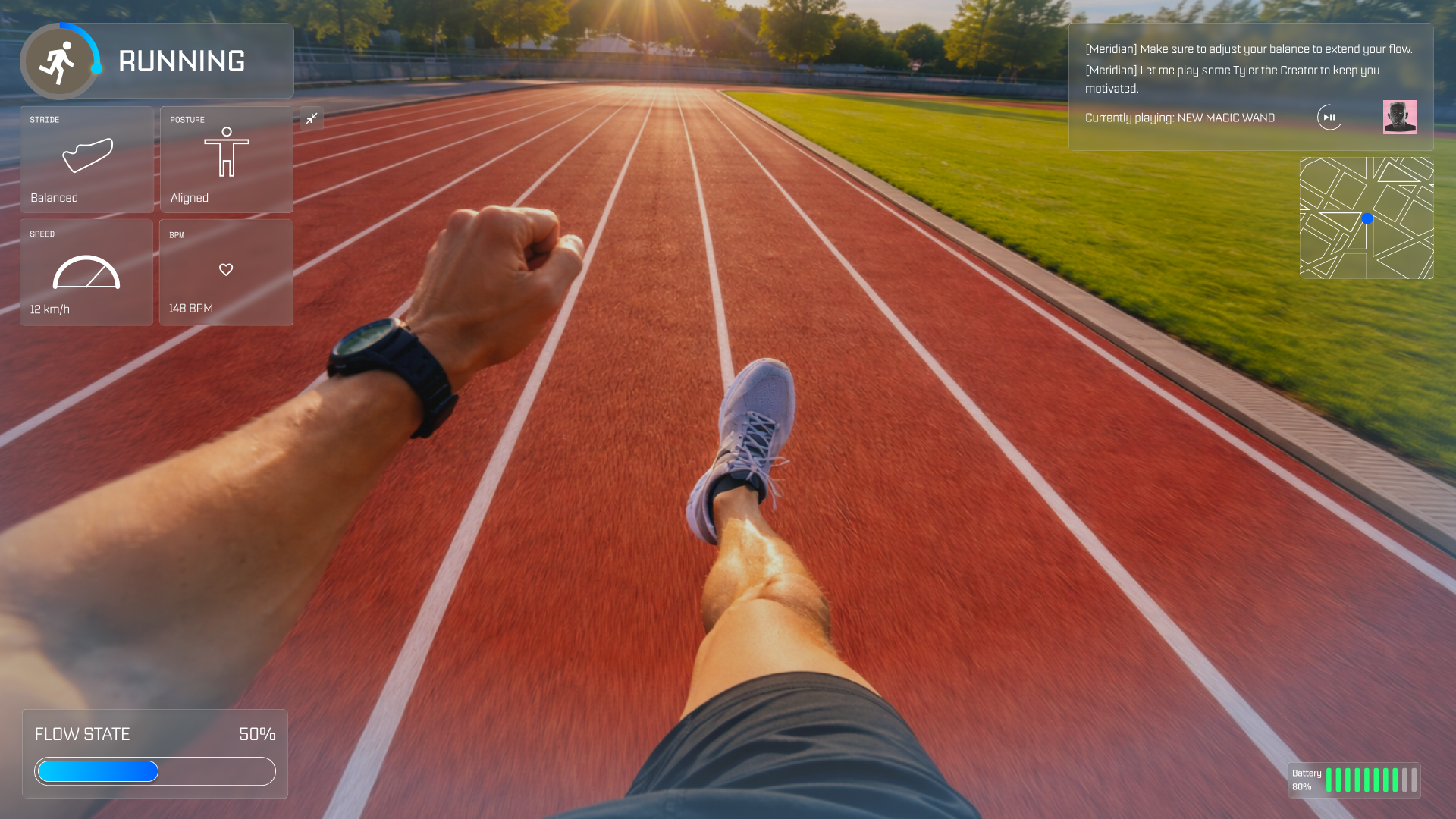
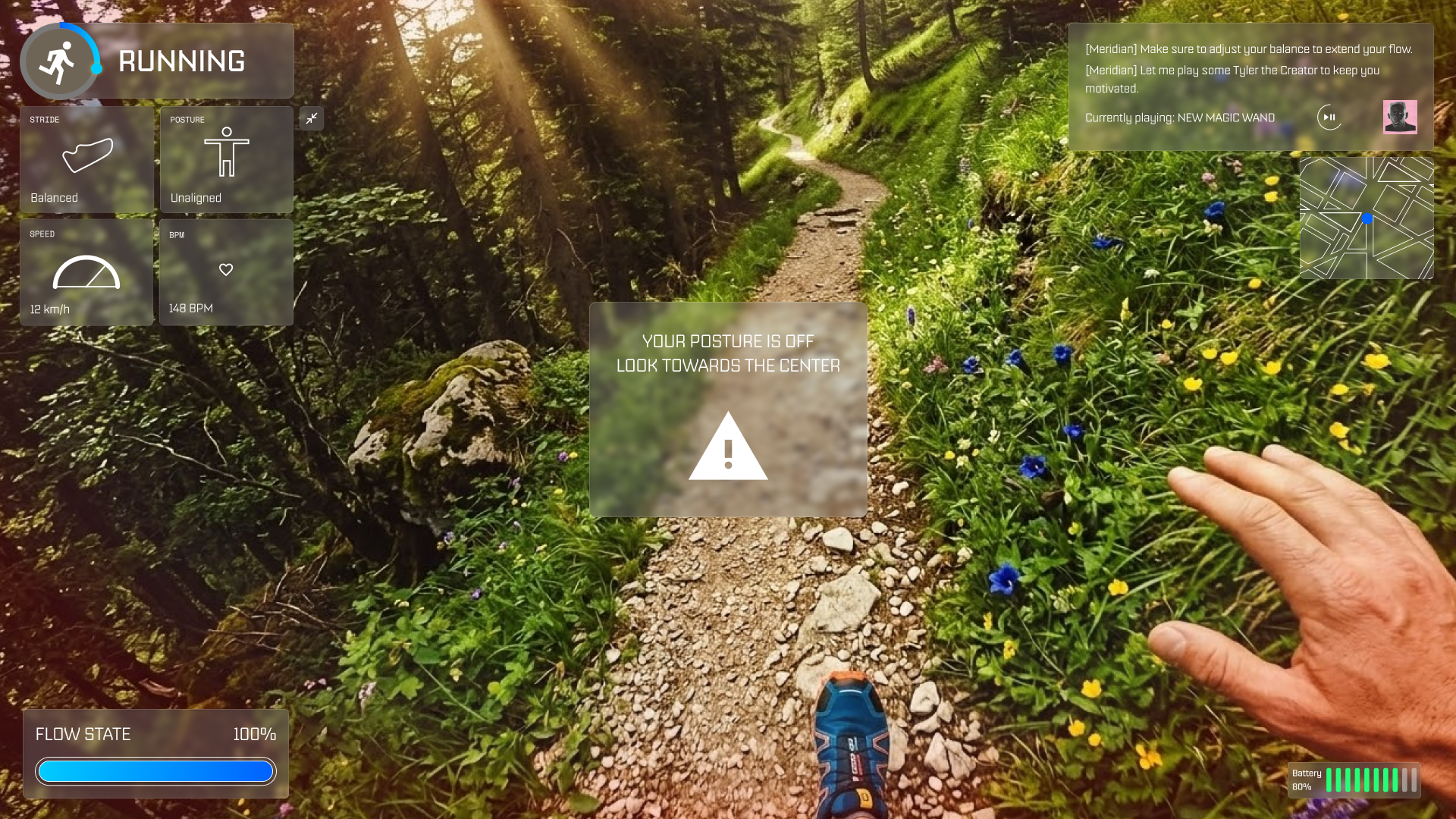
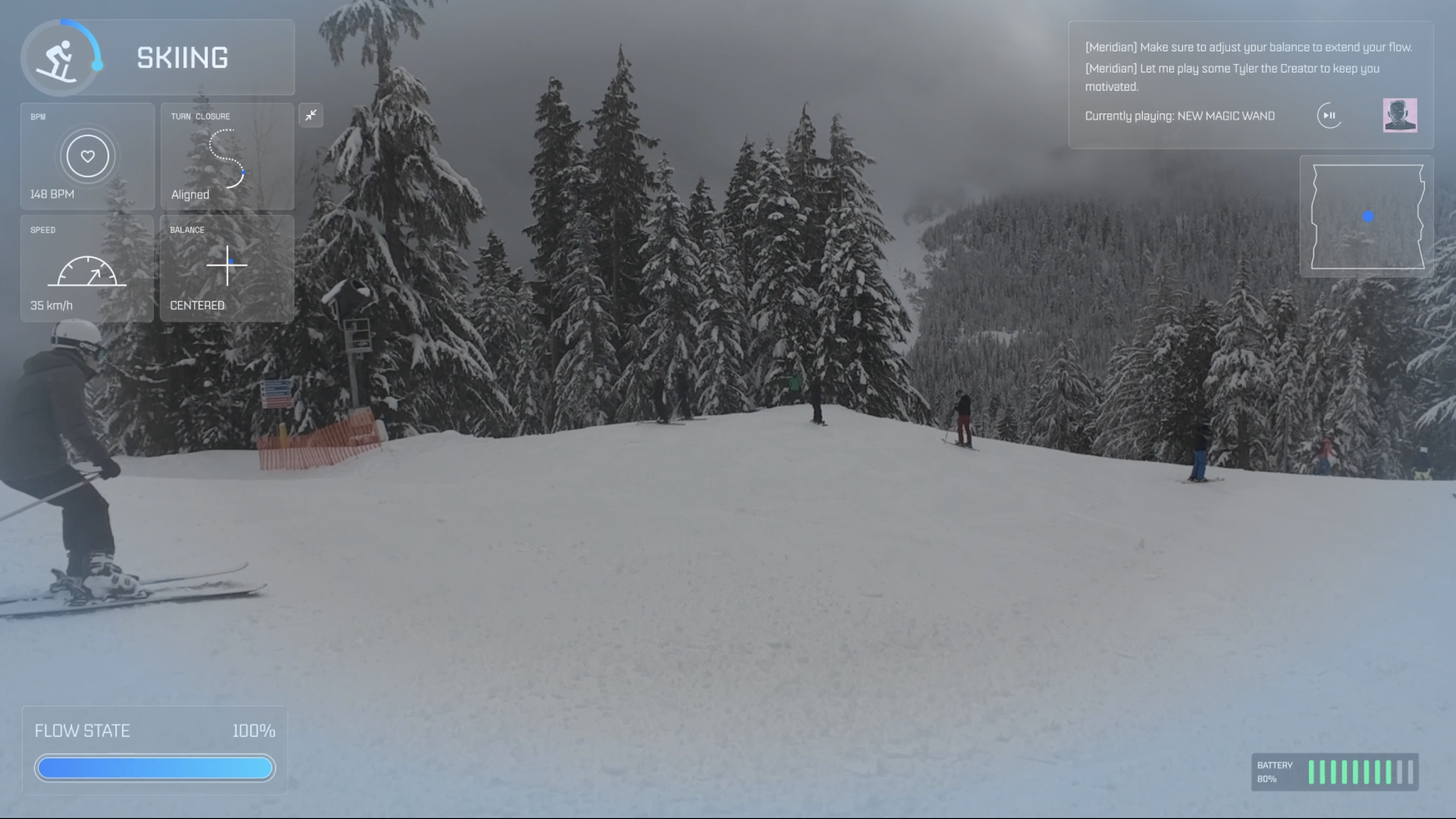
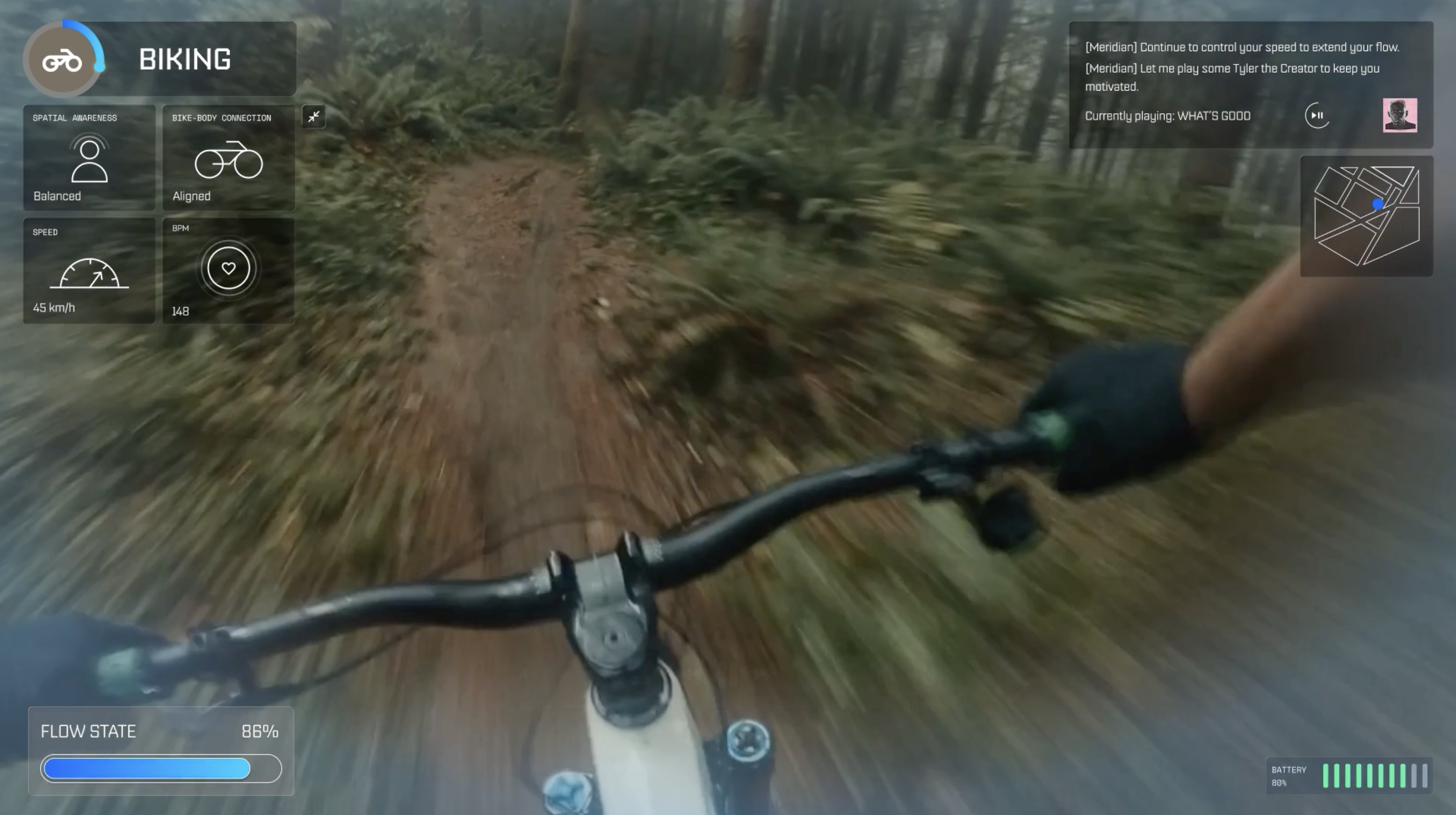
Flow state is that feeling when your body is moving perfectly and your mind just goes quiet. We wanted to build something that could hold onto that feeling a little longer. MERIDIAN is imagined as a speculative AR wearable, performance sunglasses embedded with biosensors that passively read brainwave activity, stress chemistry, and physiological signals in real time. No plugging in, no setup, no interruption.
The core idea behind MERIDIAN followed one question: what if you could actually quantify flow state? We approached it by tracking two things, interoception (how your body feels on the inside, stress, heart rate, tension) and proprioception (how your body is moving on the outside, form, posture, spatial awareness). Together they intersect of where you are in relation to flow and how close you are to losing it.
When flow starts to slip, MERIDIAN nudges you back. A subtle AR overlay appears in your lens, a form cue, a breathing prompt, a small signal tailored to whatever sport you're in. Nothing loud, nothing intrusive. Just enough to bring you back. Because flow never lasts forever, but with MERIDIAN, it lasts longer.
How we built MERIDIAN
We built MERIDIAN entirely in Figma and Figmake, going through multiple rounds of iteration as the concept evolved. Adobe Illustrator and Photoshop handled the visual assets and image editing, while Adobe Firefly helped us explore and generate imagery that matched the world we were building. The deck, prototype, and final visuals were all pulled together in the last stretch with Adobe Premiere Pro for the video.
Challenges we ran into
Time
We also underestimated how much thought goes into iterating in Figma under pressure.
Learning how to prompt/communicate to a model
Figuring out how to communicate a vision clearly to AI tools took a considerable amount of time as we had to learn its logical language as well as how to specify to a model with our wants.
What we're proud of
Successful Pivot
We pivoted from our original idea (we wanted to build from the sense of falling in love) and landed somewhere better. We pushed past typical product design into speculative design territory, which was genuinely new for all of us.
Feedback Implementation
We got feedback from three mentors and actually implemented it within most of our scopes, from our video to our product.
What we learned
- Time management A big one to learn, as well as learning the tools in this design jam
- How to prototype fast without losing quality
- How to be bold with a creative direction
What's next for MERIDIAN
We'd love to take this further! Deeper, scientific research into biosensor tech, real athlete user testing, and figuring out what an actual AR overlay UX could look like in practice. The core idea, that flow state shouldn't be a lucky accident, feels worth chasing.
Built With
- adobe-firefly
- adobe-illustrator
- adobe-premiere-pro
- figma
- figmake
- photoshop


Log in or sign up for Devpost to join the conversation.