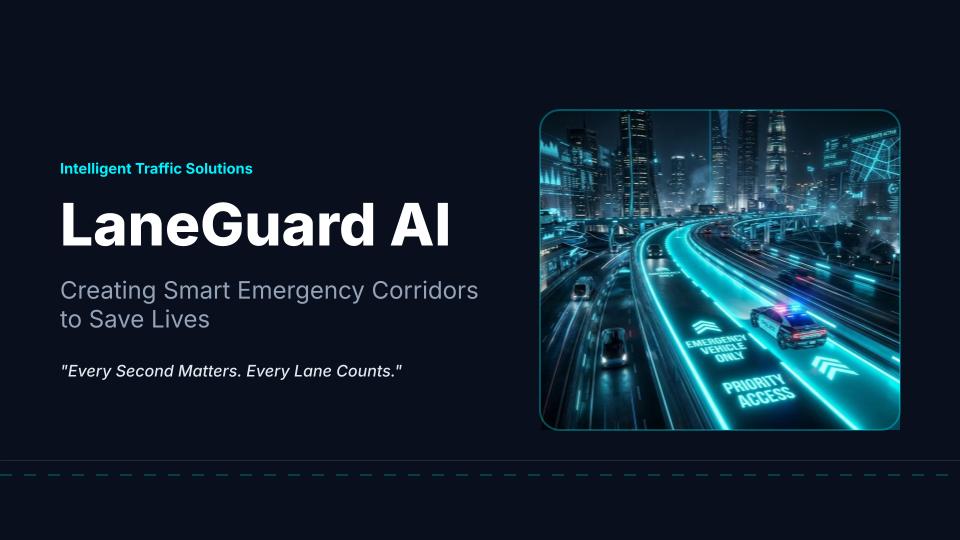
LaneGuard AI
Inspiration
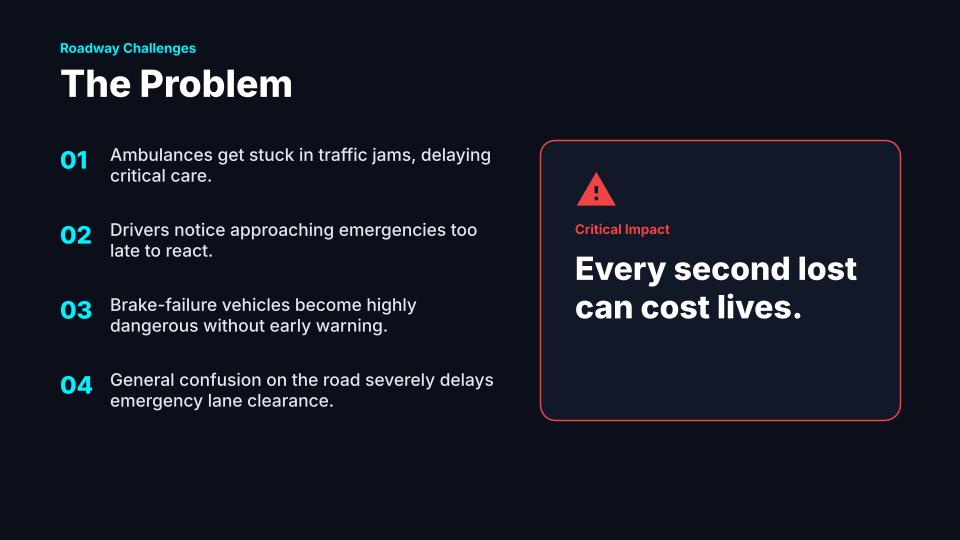
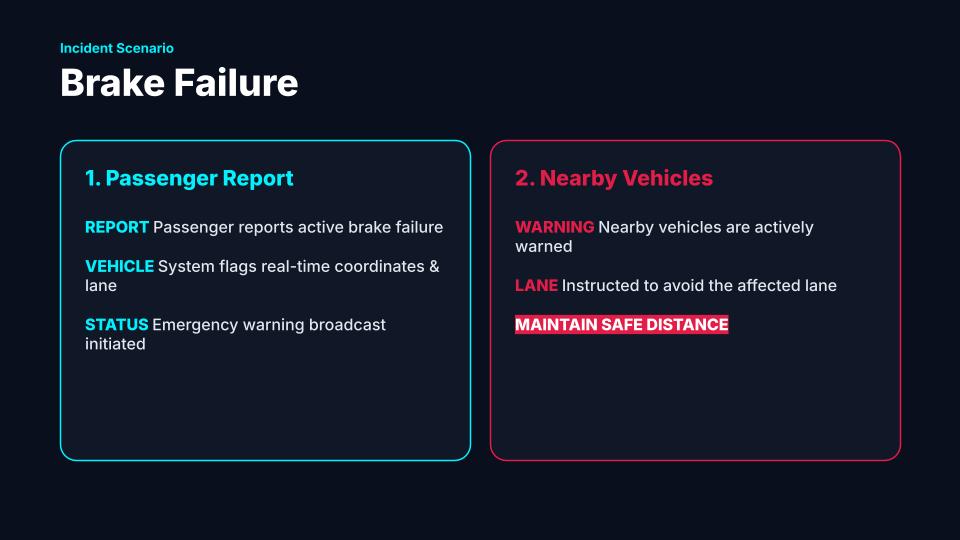
We were inspired by a simple problem: drivers often know about an emergency vehicle only when it is already close to them. Ambulances can get stuck in traffic, and a vehicle with brake failure or another critical problem can become dangerous for everyone around it.
We wanted to create a system where the vehicle itself could communicate its situation to nearby drivers before the emergency reaches them, giving them time to react safely.
What it does
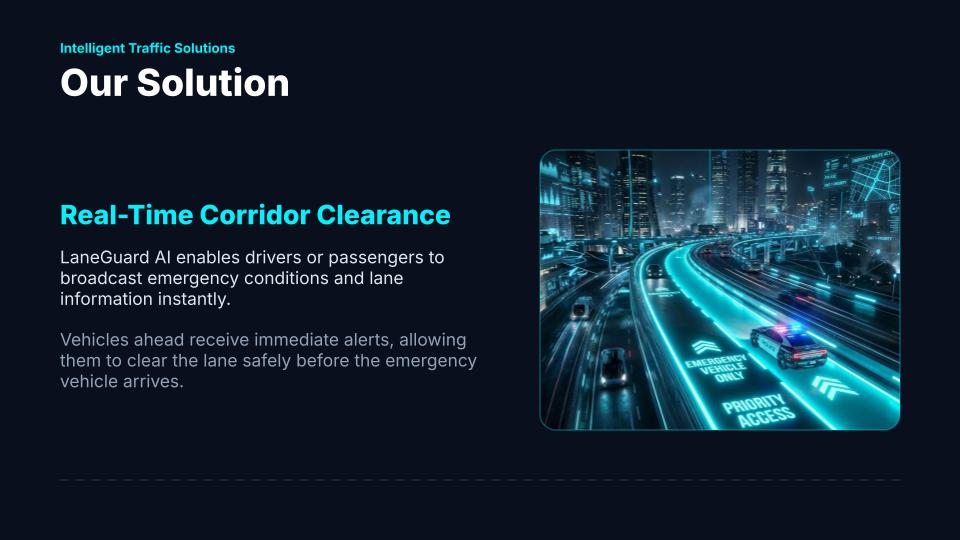
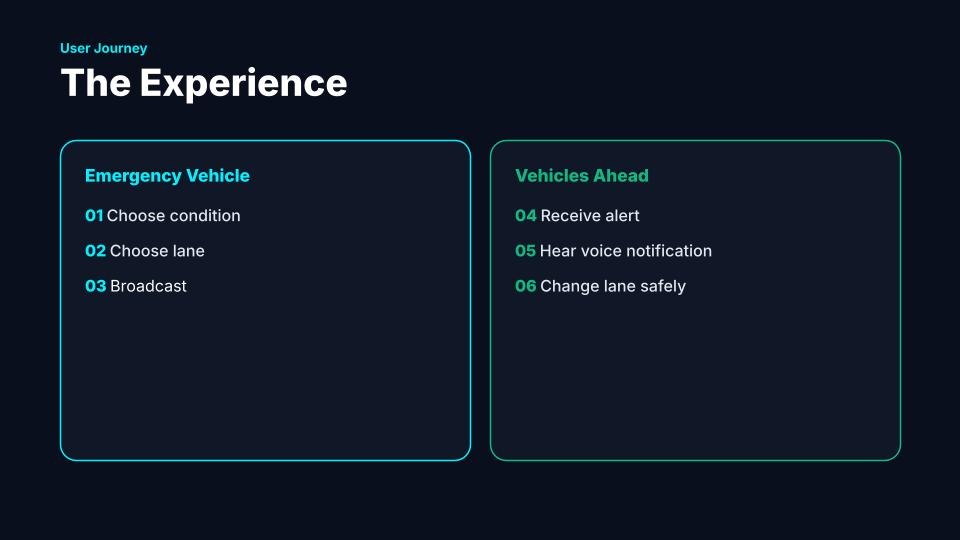
LaneGuard AI allows a driver or passenger to broadcast a vehicle's emergency condition and current lane.
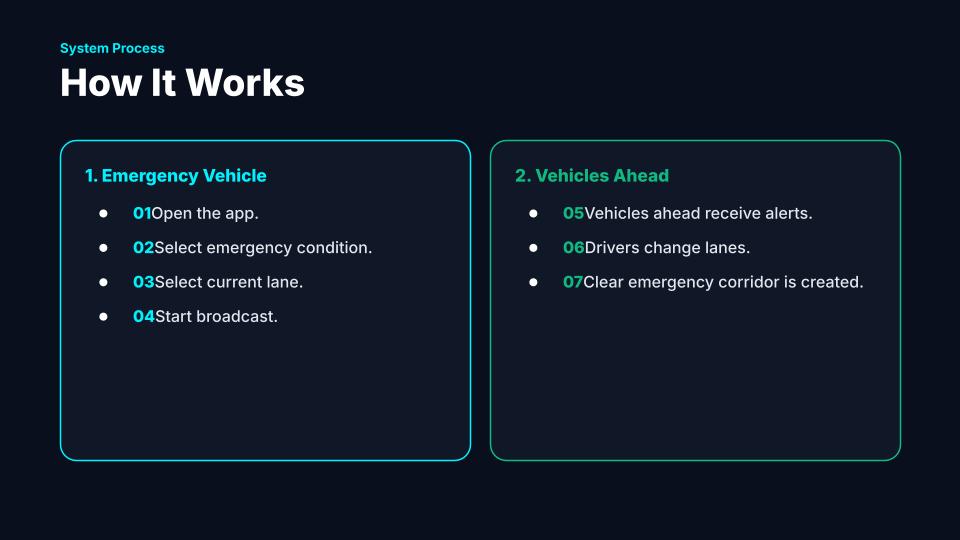
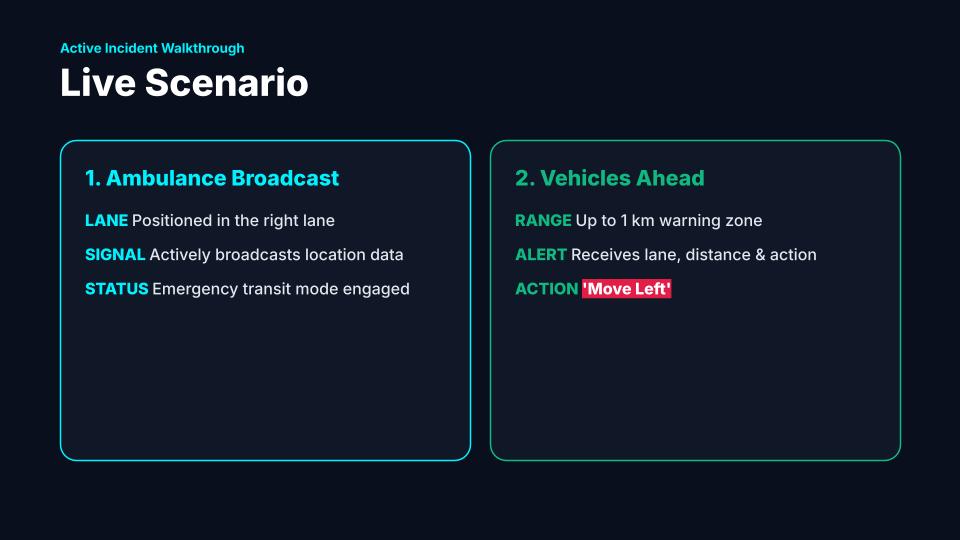
For example, a passenger in an ambulance can select Ambulance → Right Lane → Broadcast. Vehicles ahead receive a real-time alert showing the emergency type, affected lane, distance, and recommended action.
It can handle situations such as:
- 🚑 Ambulance approaching
- ⚠️ Brake failure
- 🏥 Medical emergency
- 🚒 Fire emergency
- 🚓 Police emergency
- 🚧 Vehicle breakdown
- 💥 Accident or road hazard
The system also provides voice alerts and can simulate vehicles changing lanes to create a clear emergency corridor.
How we built it
We built LaneGuard AI as an interactive web-based prototype focused on real-time emergency communication and lane awareness.
The application contains separate experiences for the emergency vehicle and receiving vehicles. A user can select an emergency condition, specify the current lane, and start a broadcast.
The system identifies relevant vehicles based on factors such as:
- Distance
- Direction
- Current lane
- Speed
- Estimated arrival time
For the hackathon demonstration, we created a realistic traffic simulation where an emergency vehicle approaches, nearby vehicles receive alerts, and vehicles in the affected lane move aside to create a clear path.
Challenges we ran into
One of the biggest challenges was deciding which vehicles should receive an alert. Sending alerts to everyone nearby could create unnecessary notifications, so we focused on vehicles that are actually affected by the emergency vehicle's path.
Another challenge was representing lane-based movement realistically. Vehicles needed to react smoothly instead of simply teleporting between lanes.
We also had to balance speed and safety. LaneGuard should help drivers clear the path without encouraging sudden or unsafe lane changes. Therefore, the system recommends that drivers move only when safe.
Accomplishments that we're proud of
We are proud that we turned a simple road-safety problem into an interactive emergency communication system that can be demonstrated end-to-end.
Key accomplishments include:
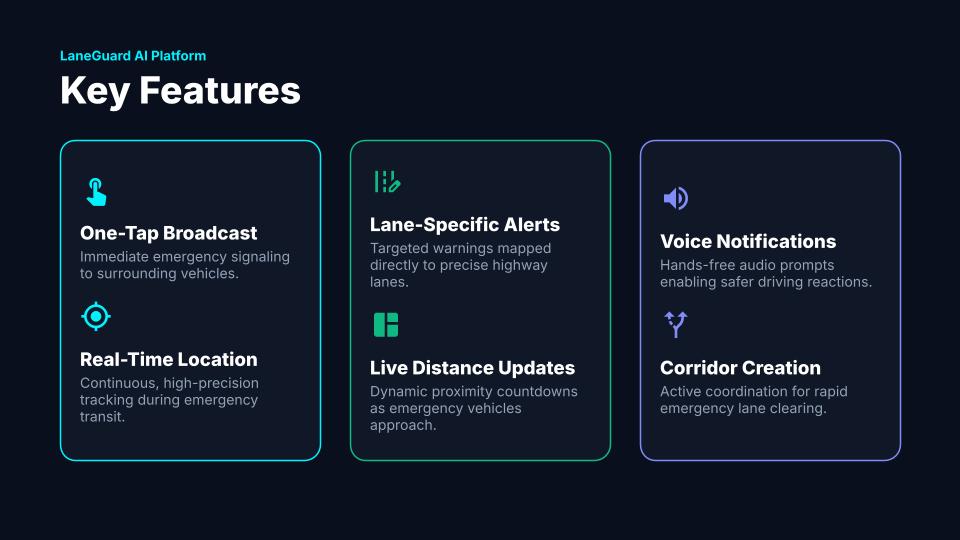
- Real-time emergency broadcasting
- Lane-specific alerts
- Multiple emergency conditions
- Distance and approaching-vehicle information
- Voice notifications
- Emergency corridor visualization
- Realistic traffic simulation
- Separate emergency and receiving-vehicle experiences
- Complete hackathon demonstration flow
Most importantly, a judge can understand the complete concept within seconds by watching the simulation.
What we learned
We learned that solving a real-world problem is not only about adding technology. The system must deliver the right information at the right time in the simplest possible way.
We also learned the importance of:
- Designing for real-world user behavior
- Minimizing driver distraction
- Using location and lane context instead of generic alerts
- Simulating real-world scenarios for rapid prototyping
- Designing safety features around human decision-making
What's next for LaneGuard AI
Our current project is a prototype, but the concept can evolve into a larger connected-road safety system.
Future improvements include:
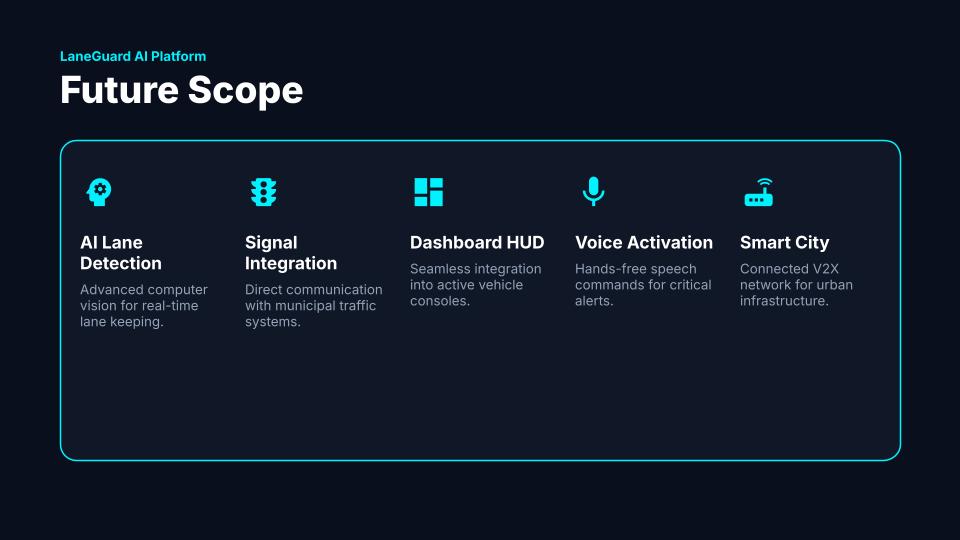
- AI-based automatic lane detection
- Automatic emergency-condition detection
- Vehicle dashboard integration
- Android Auto and CarPlay integration
- Smart traffic signal coordination
- Verified emergency vehicles
- Direct vehicle-to-vehicle communication
- Smart-city infrastructure integration
- AI-based collision and path prediction
- Automatic emergency corridor optimization
Our long-term vision is to create roads where vehicles can communicate with each other during emergencies and drivers receive actionable warnings before a dangerous situation reaches them.
Problem Statement
Emergency vehicles and vehicles experiencing critical failures often cannot communicate their situation effectively to drivers ahead.
Traditional methods such as sirens and hazard lights may not provide enough advance warning, especially in heavy traffic.
LaneGuard AI addresses this gap through lane-specific, real-time emergency alerts.
Innovation
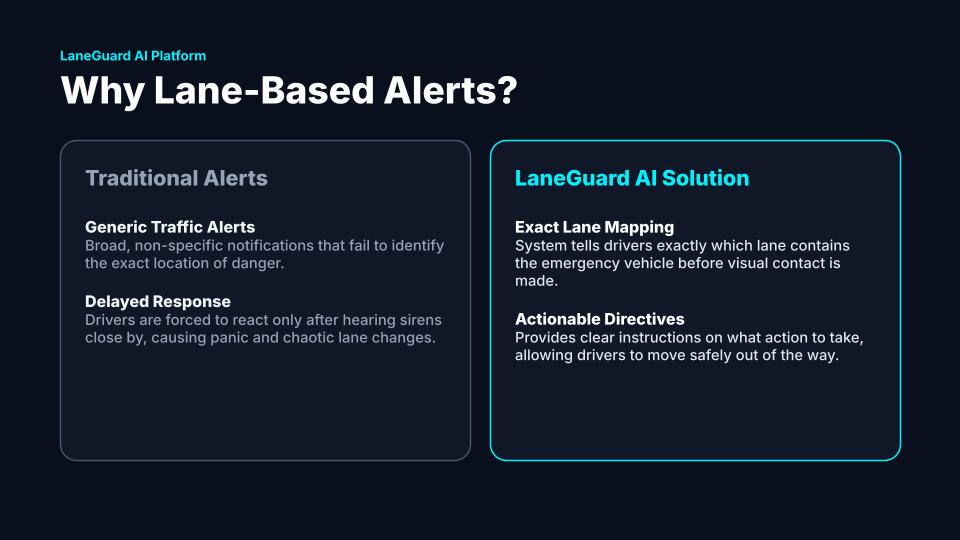
The key innovation is combining emergency broadcasting with lane awareness.
Instead of simply telling drivers:
"Emergency vehicle nearby."
LaneGuard AI tells them:
"Emergency vehicle approaching in your lane — 700m away — move left when safe."
This makes the warning actionable rather than merely informational.
Target Users
- Ambulance operators
- Emergency services
- Private vehicle drivers
- Passengers
- Commercial drivers
- Fleet operators
- Smart-city transportation systems
Impact
LaneGuard AI aims to:
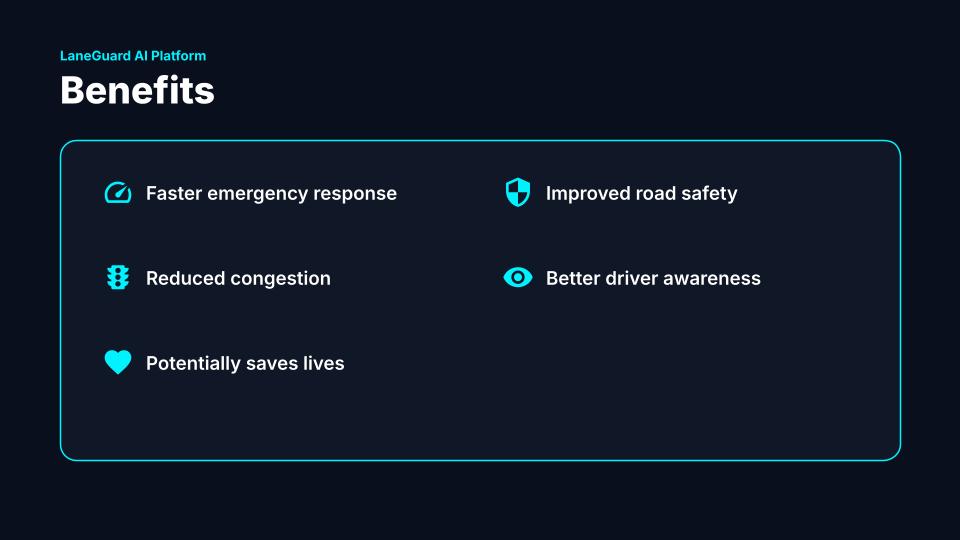
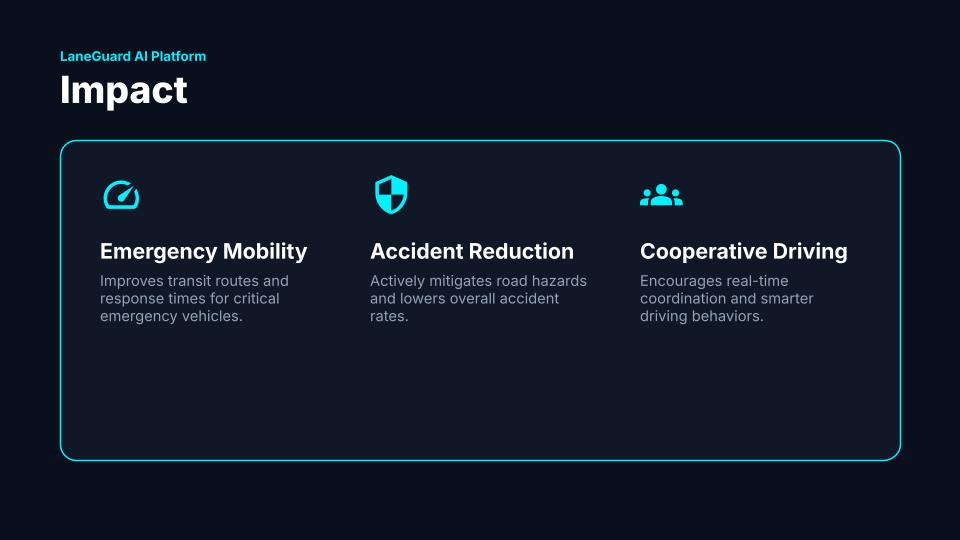
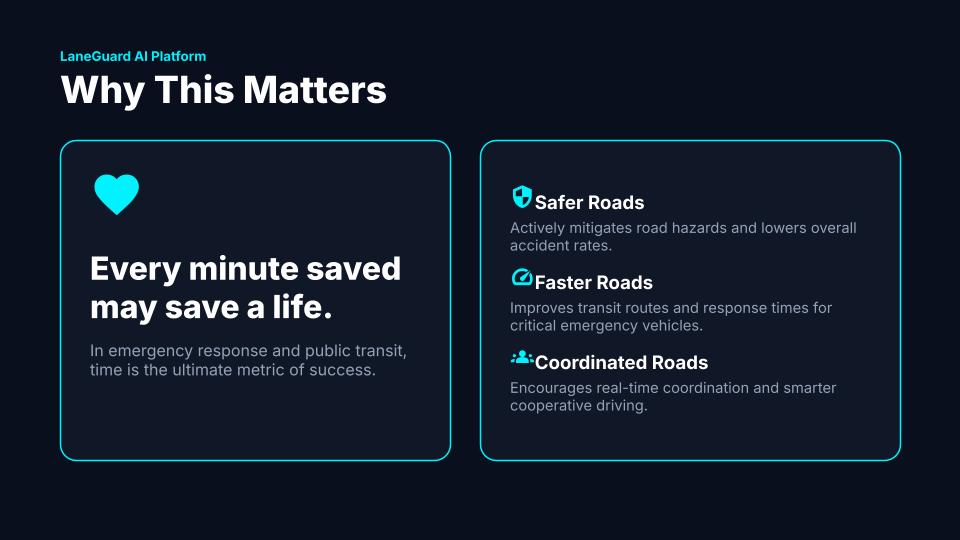
Reduce emergency response delays → Improve driver awareness → Reduce collision risk → Create clearer emergency corridors → Help save lives.
Why LaneGuard AI?
Emergency response depends not only on the emergency vehicle but also on the vehicles around it.
LaneGuard AI connects both sides.
The emergency vehicle communicates its situation, while vehicles ahead receive enough information to safely make way.
Project Status
Current Stage: Hackathon MVP / Working Prototype
The current version demonstrates the complete emergency-alert workflow through a simulated connected traffic environment.
A production deployment would require integration with verified vehicles, reliable positioning, communication infrastructure, and appropriate road-safety regulations.
One-Line Pitch
LaneGuard AI gives drivers an early, lane-specific warning about approaching emergencies so they can safely clear the path before it's too late.
Built With
- ai
- emergency-alerts
- firebase
- geolocation-api
- github
- google-maps
- gps
- javascript
- lane-detection
- node.js
- react
- real-time-simulation
- road-safety
- smart-mobility
- tailwind-css
- vehicle-tracking
- vercel
- vite
- web-speech-api

Log in or sign up for Devpost to join the conversation.