🌍 Inspiration
New York City is home to over 3.1 million immigrants — nearly 37% of the city's population. Every day, people arrive here from every corner of the world: families fleeing violence, students chasing opportunity, workers building a new life. And on day one, they all face the same overwhelming question:
"Where do I even start?"
Critical information is scattered across dozens of city websites, written only in English, and completely disconnected from each person's actual situation. A refugee family in the Bronx needs emergency shelter and legal help — not tourist tips. A student from Mumbai needs a bank account and a subway card — not a guide to food stamps. Yet every existing resource treats every newcomer the same.
We built Landed because we believe that the first days in a new city should feel like a warm welcome — not a bureaucratic maze.
🛠️ What We Built
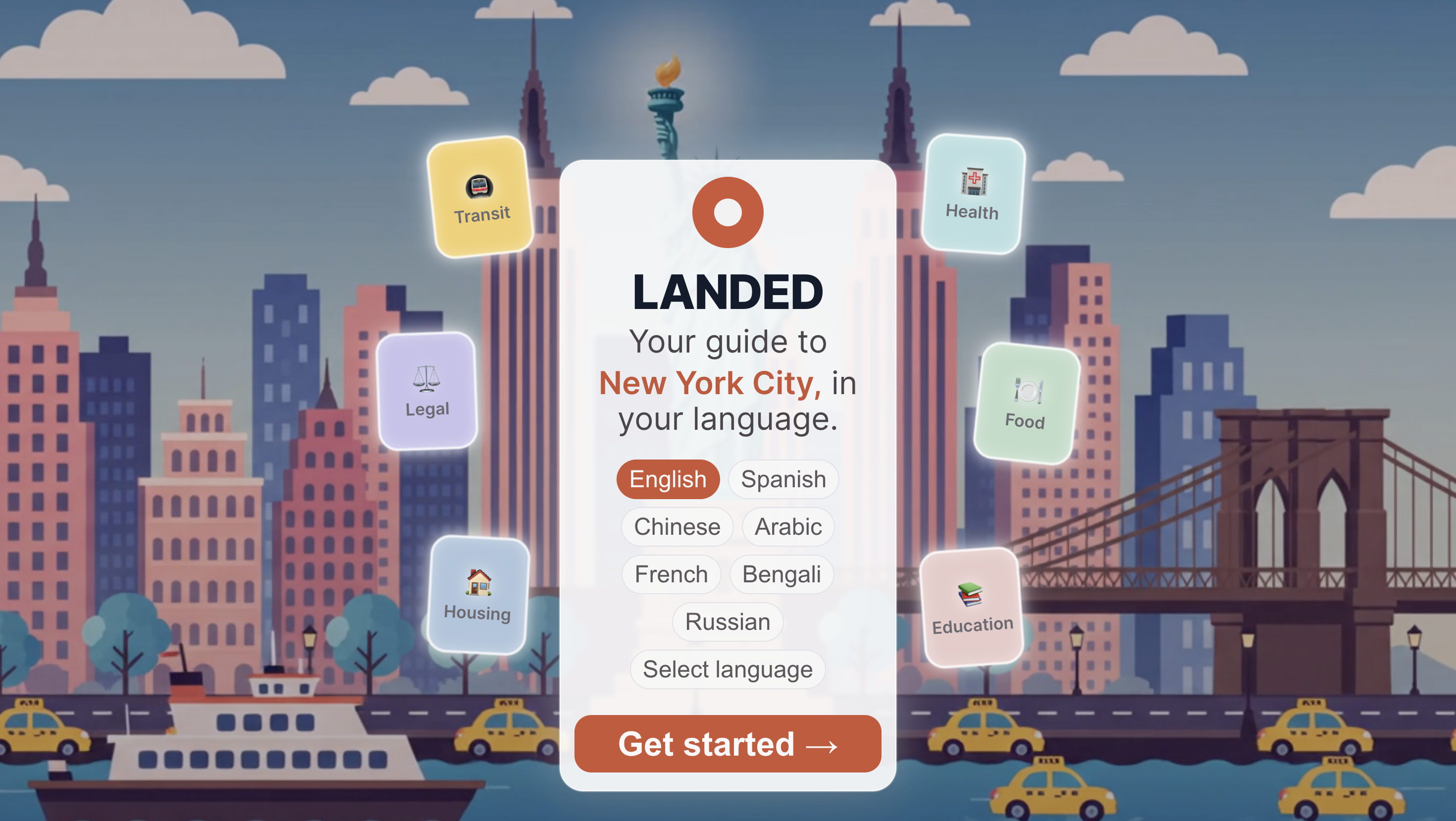
Landed is a free, multilingual, mobile-first web app that gives NYC newcomers a personalized guide to getting settled — in their language, for their situation.
Core Features
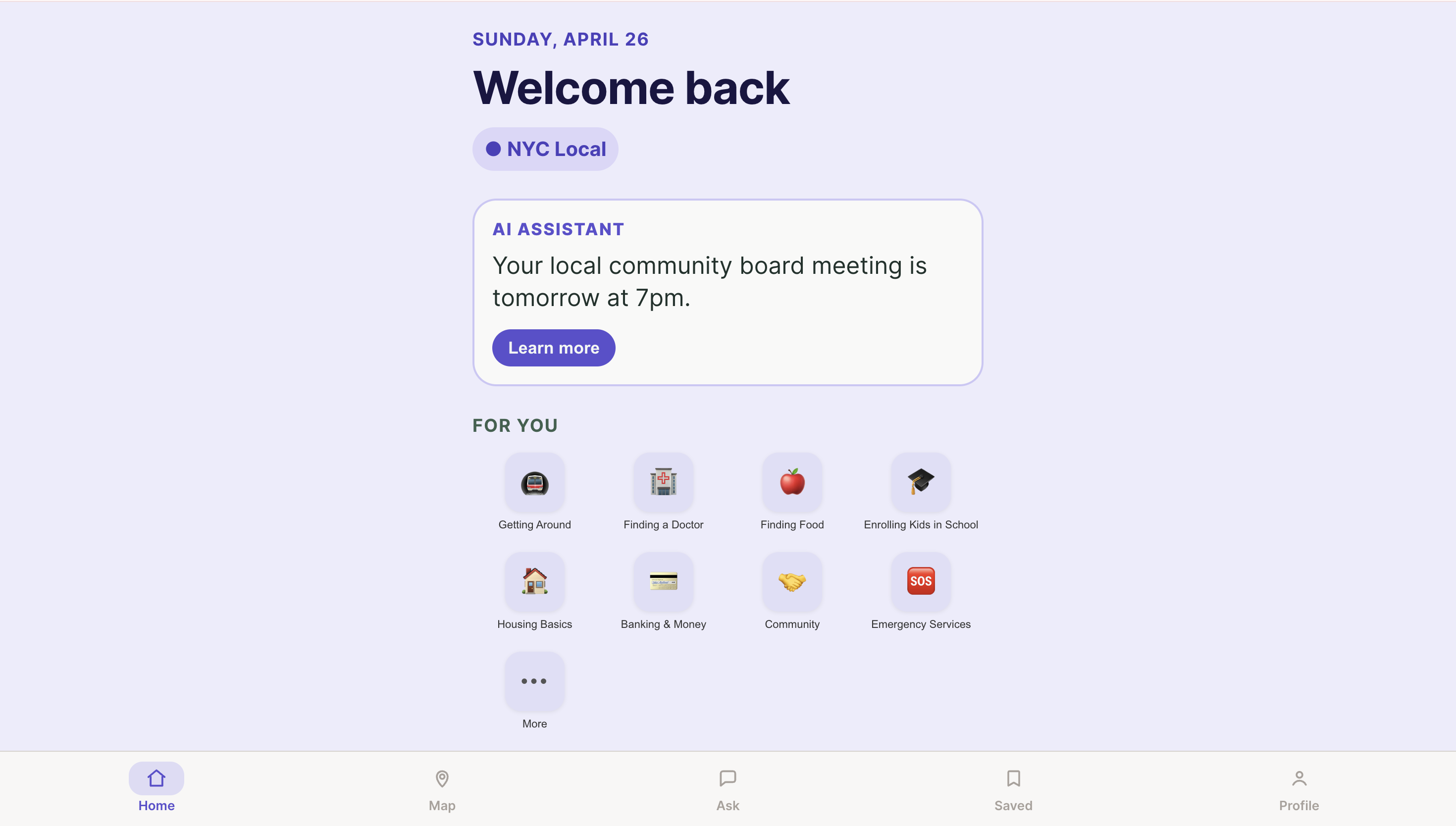
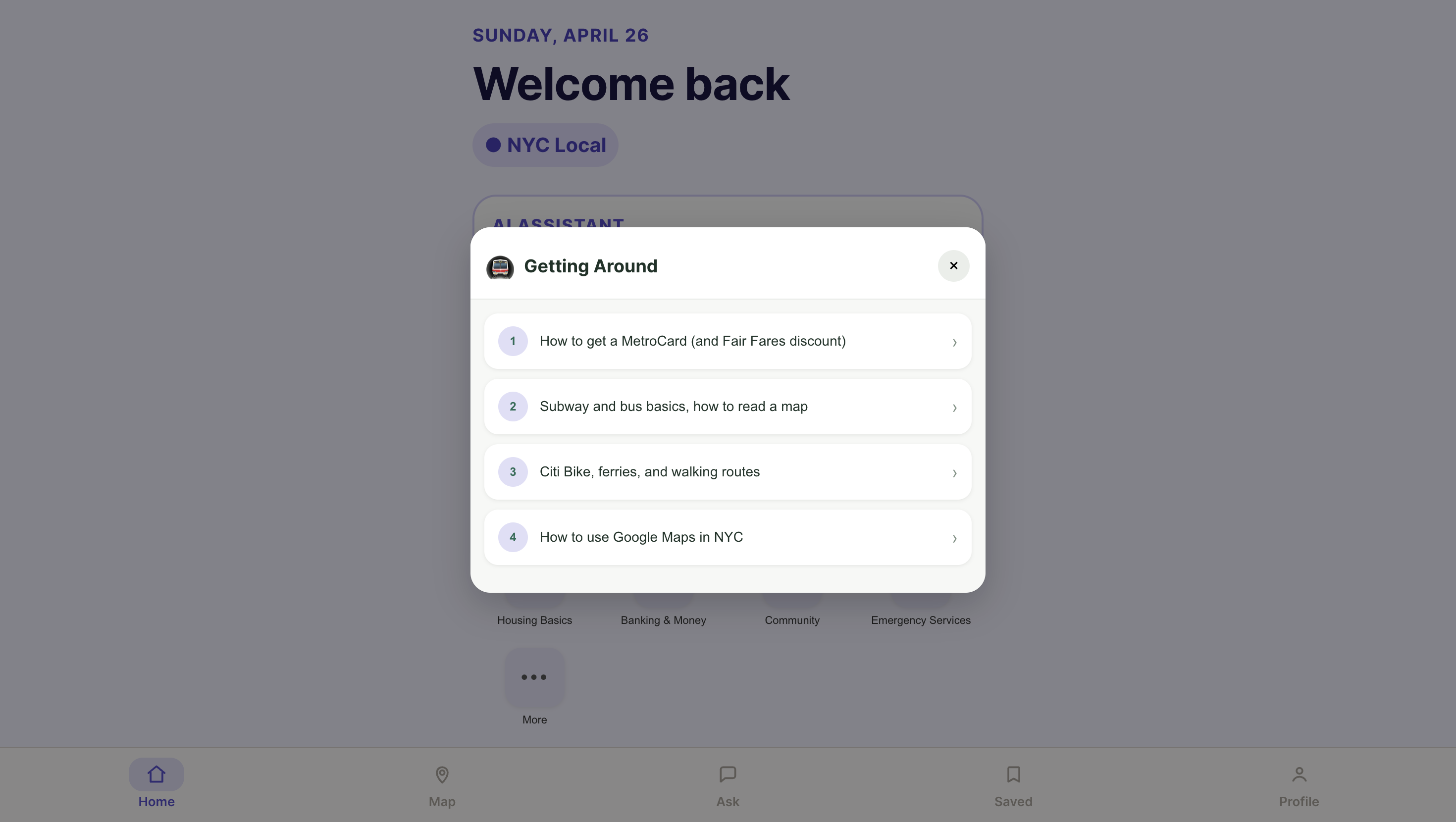
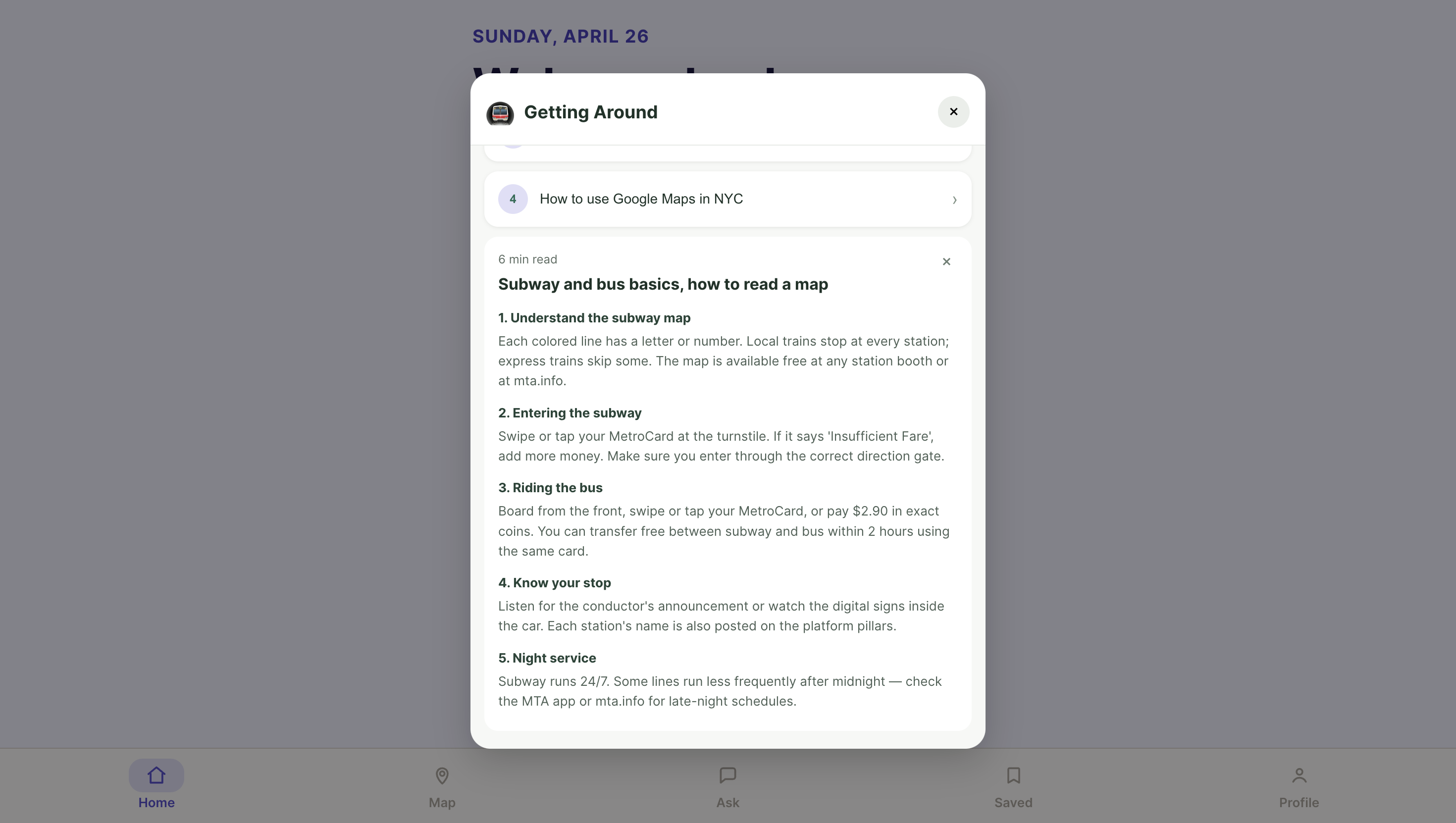
- 📚 10 Essential Guides — Transit, Health, Food, School, Legal Rights, Housing, Banking, Emrgencies, Community and Work — written in plain language, translated into 50+ languages
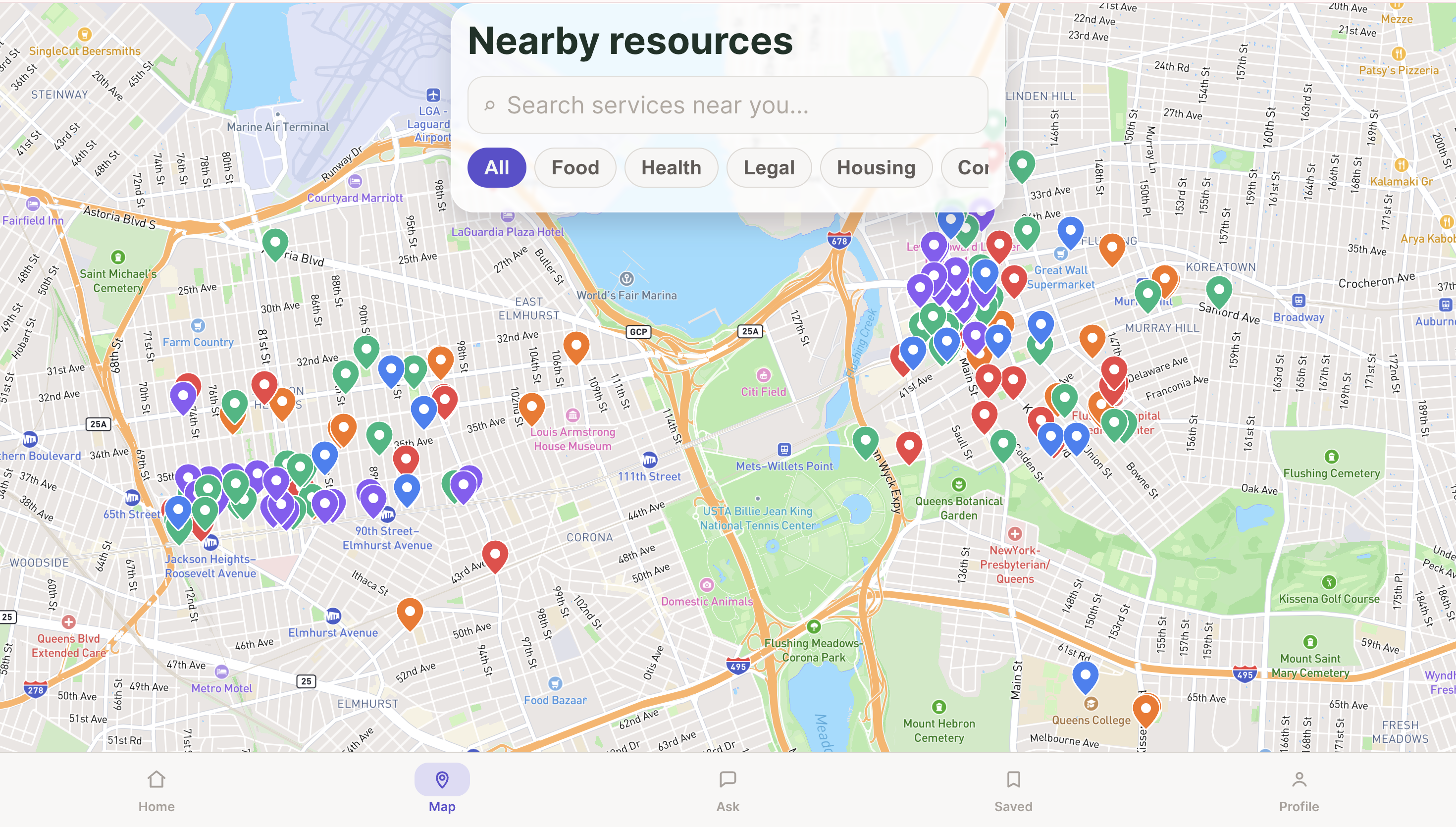
- 🗺️ Neighborhood Resource Map — Real NYC clinics, food pantries, legal aid offices, and community centers pinned near the user's location
- ✅ First 30 Days Checklist — Step-by-step tasks from getting a MetroCard to enrolling kids in school
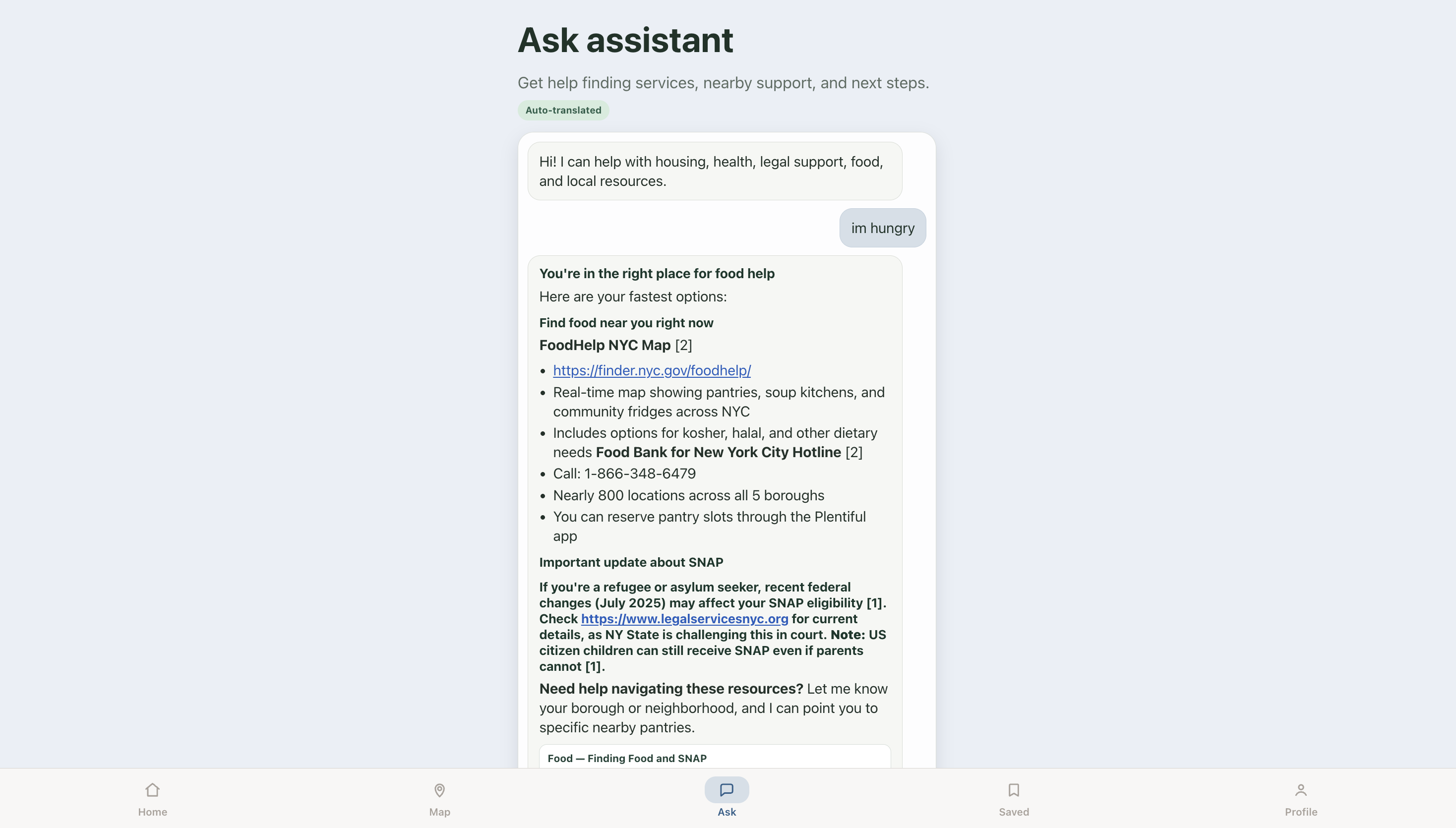
- 🤖 AI Assistant (powered by Claude) — Ask anything about NYC in your language, get a real and helpful answer back instantly
⚙️ How We Built It
We split into parallel tracks from hour one and worked across a shared GitHub repo with continuous deployment on Vercel.
| Layer | Technology |
|---|---|
| Frontend | React + Tailwind CSS (mobile-first PWA) |
| AI Q&A | Claude API (claude-sonnet-4-6) |
| Translation | Google Translate API |
| Map | Mapbox GL JS |
| Database | Supabase (Postgres) |
| Hosting | Vercel |
🚧 Challenges We Faced
1. The content problem Verified, up-to-date NYC resource data doesn't exist in one place. We spent the first 4 hours manually researching and cross-referencing city websites, hotlines, and community org directories — building our own reference database from scratch with 50+ verified URLs.
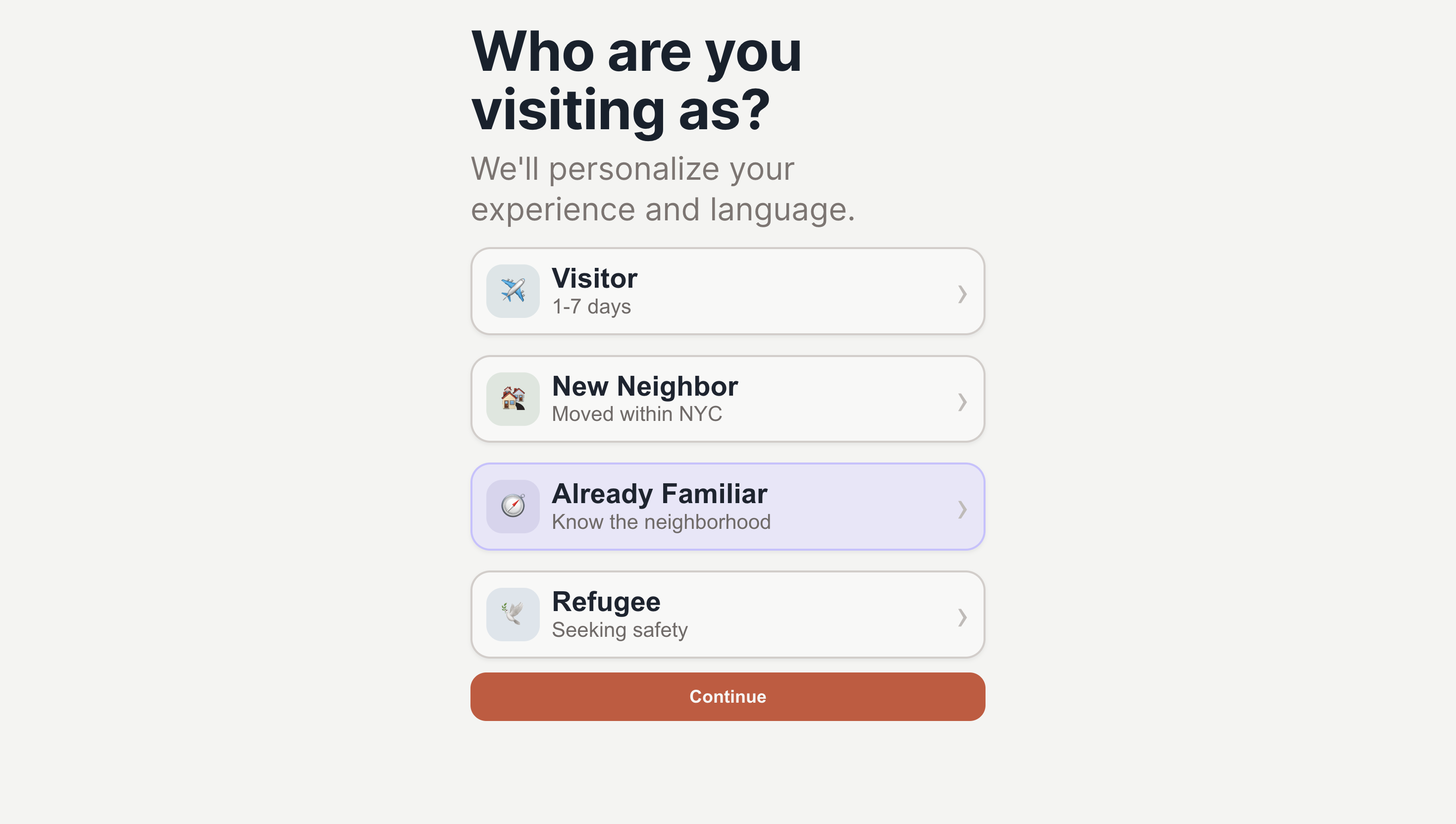
2. Personalization without profiling We wanted to surface the right content without making users feel surveilled. Asking "what is your immigration status?" felt invasive. We redesigned the onboarding to ask about needs instead of identity — letting the persona emerge from what someone is looking for, not who they are on paper.
3. Multilingual UX Designing a UI that works in English, Spanish, Chinese, and Bengali simultaneously is harder than it sounds. Text lengths vary wildly — a button that says "Apply Now" in English becomes a 12-character string in Bengali that breaks layouts. We learned to design with the longest translation as the default container.
4. Trust Our users are often in vulnerable situations. Every word choice, every color, every interaction had to communicate safety and reliability. We removed anything that felt clinical, governmental, or cold — and replaced it with warm, plain language that respects the user's dignity.
5. Keeping scope real With 4 people and 24 hours, we cut hard. No mentor matching. No push notifications. No user accounts. We asked ourselves constantly: "Does this make the demo better?" If not, it got cut. Discipline over features.
📚 What We Learned
Content is infrastructure. The AI is only as good as the data behind it. Spending 4 hours building a clean, verified, structured resource database made every subsequent feature faster and better.
Personas unlock UX clarity. Once we defined our four user types clearly, every design decision became easier. We stopped debating what to show and started asking, "what does this person need right now?"
🔭 What's Next for Landed
- Expand all 5 boroughs with community-verified resource data
- Add 10+ languages including Arabic, Haitian Creole, and Urdu
- Partner with MOIA (Mayor's Office of Immigrant Affairs) and the NYC DOE to keep data current
- Build a mentor matching layer connecting established immigrants with newly arrived neighbors
- Open source the resource database so other cities can fork and localize Landed for their communities
Built with care at NYC Hackathon 2026 — for the 3.1 million New Yorkers who deserve a better welcome.


Log in or sign up for Devpost to join the conversation.