-
-
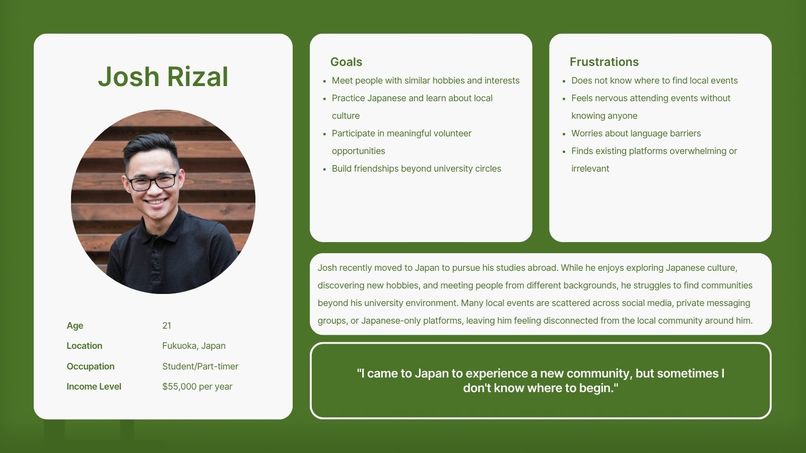
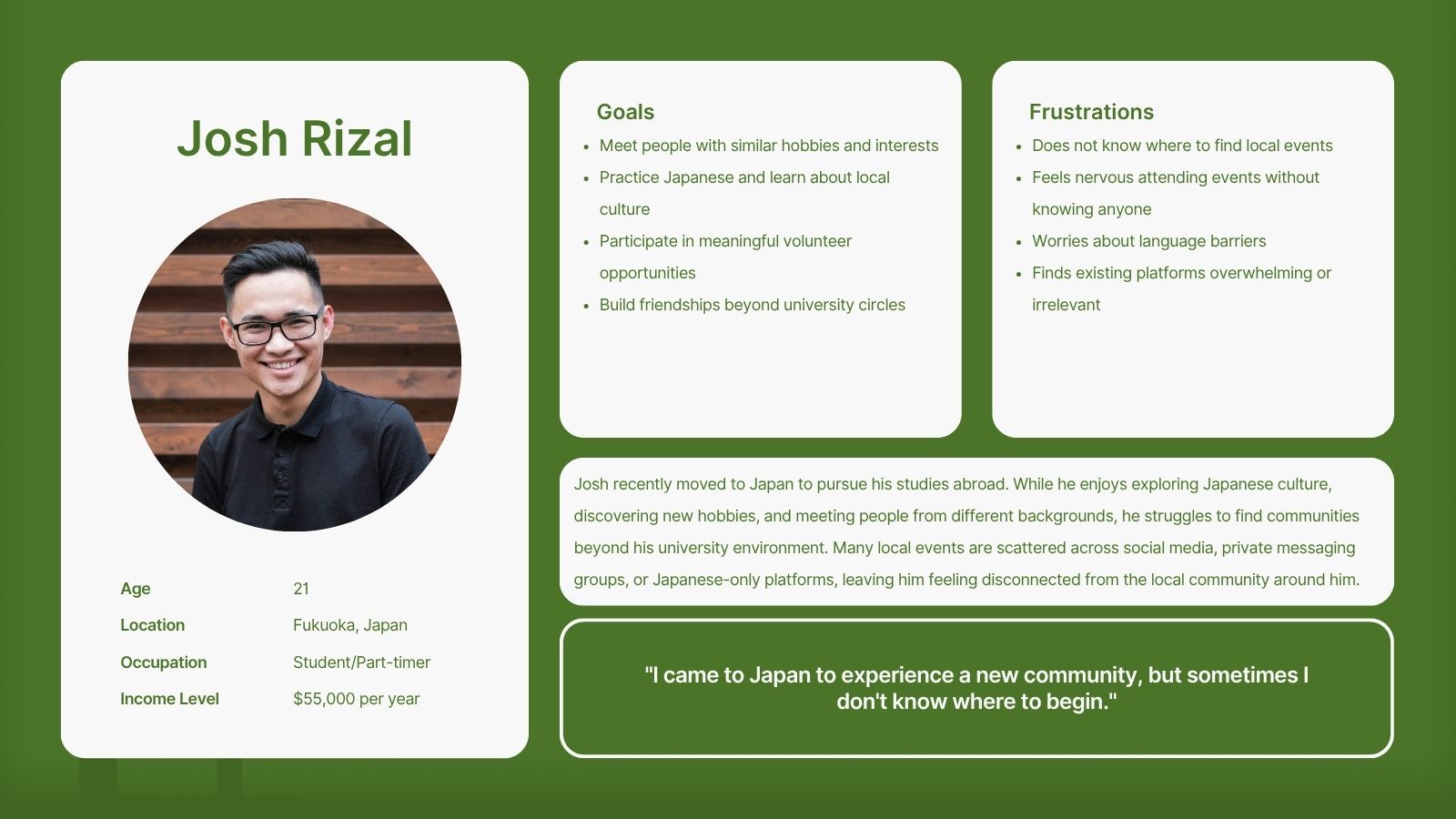
User Persona Research
-
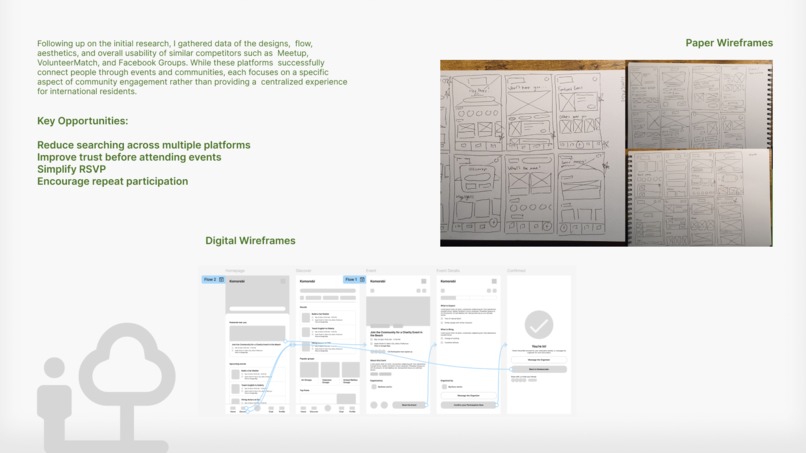
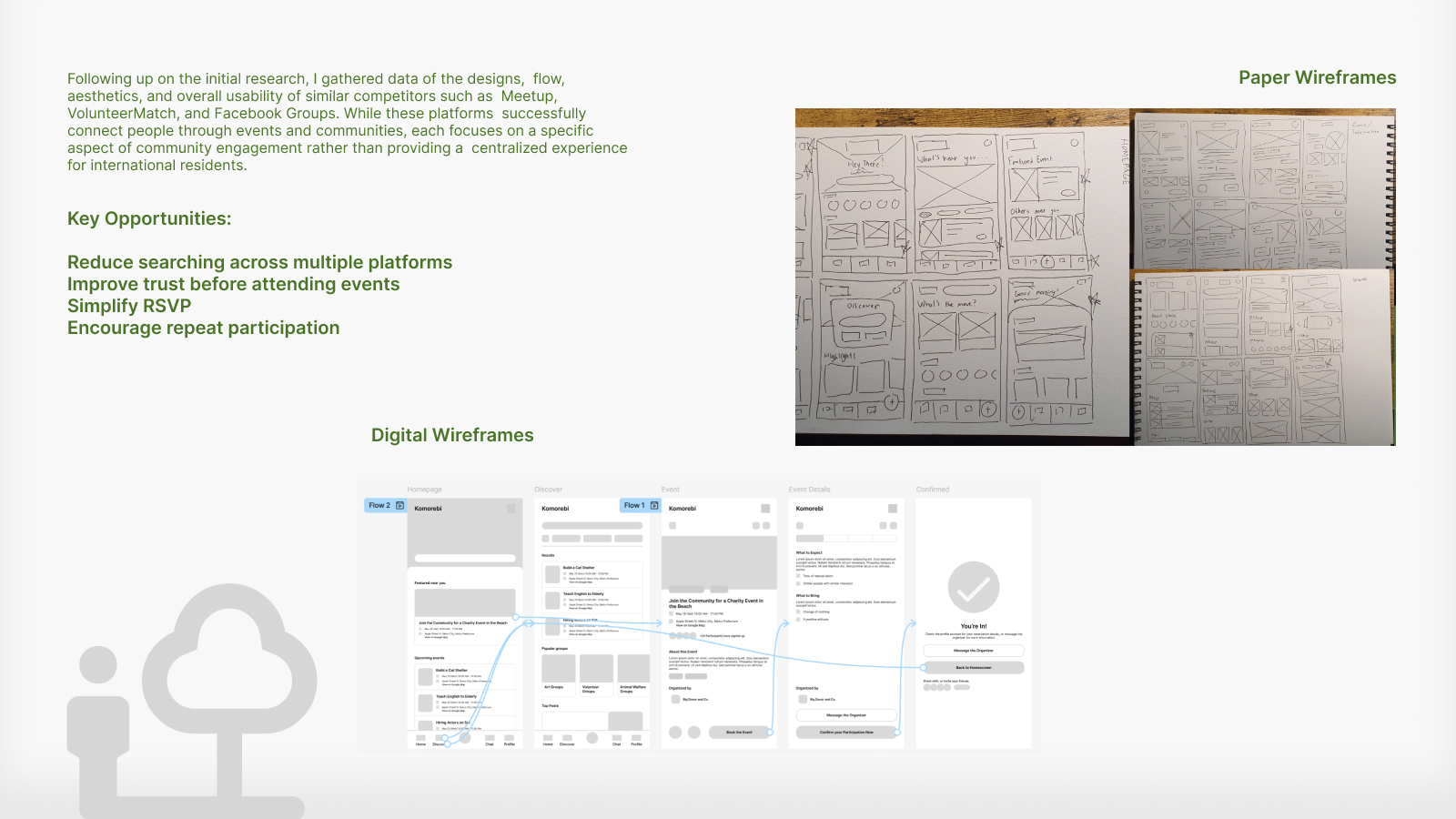
Paper and Digital Wireframes
-
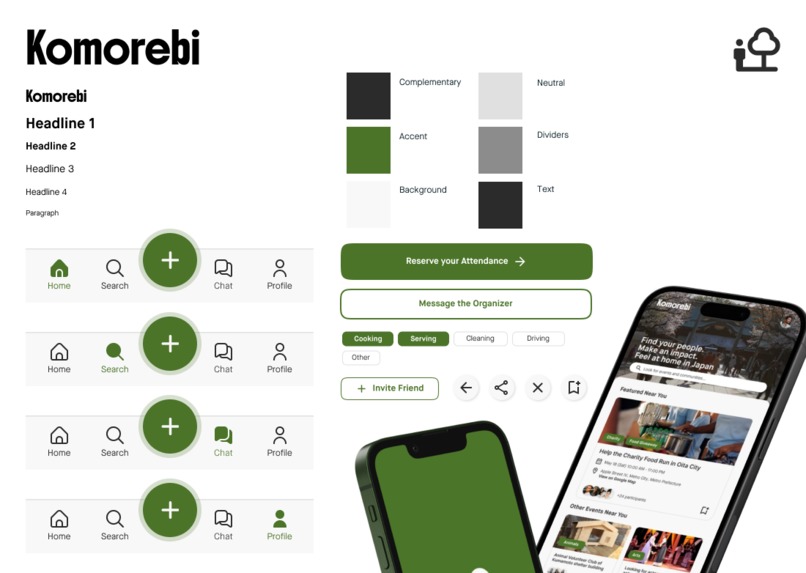
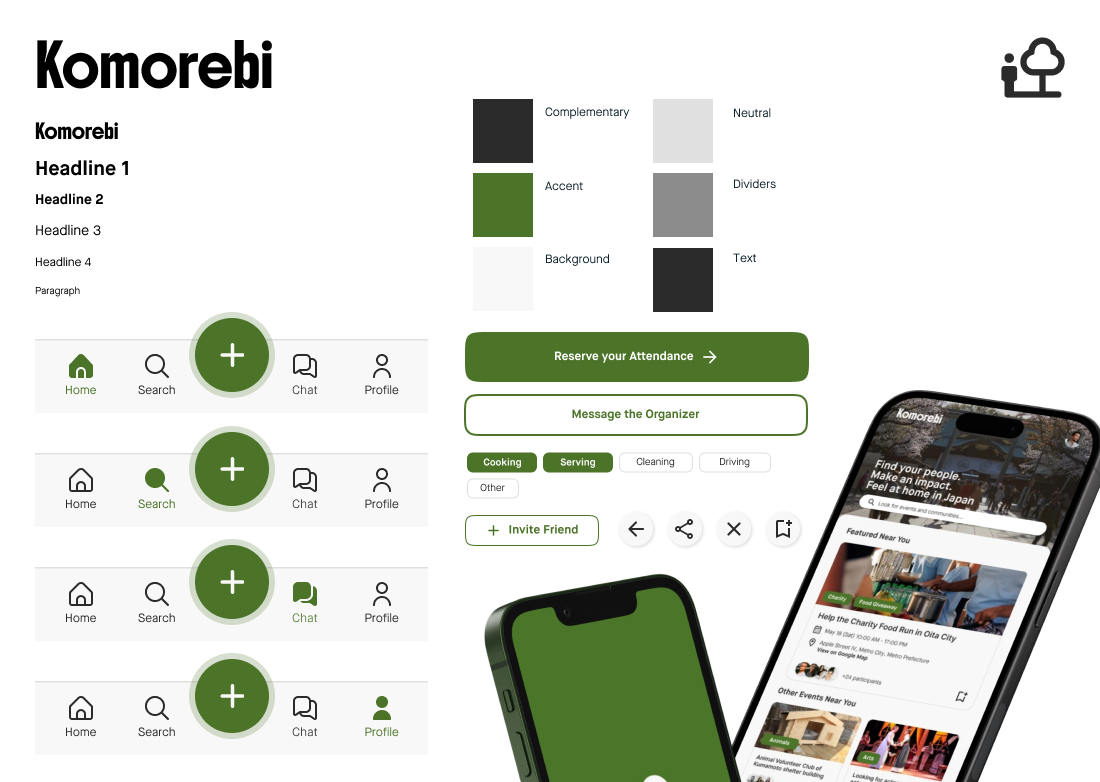
Stickersheet
-
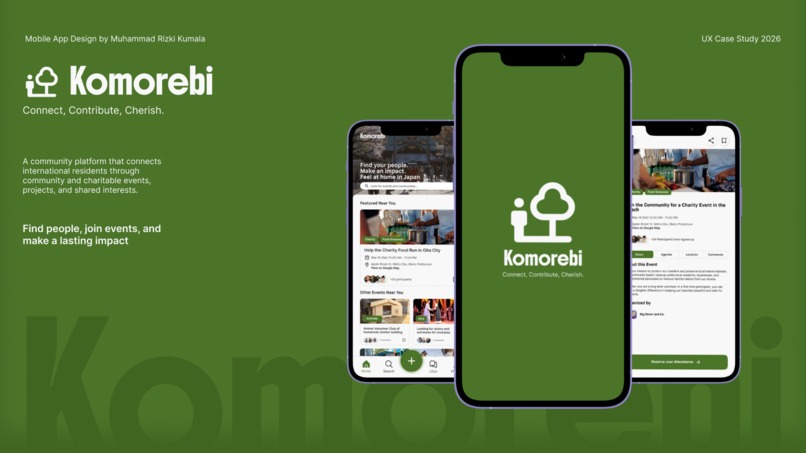
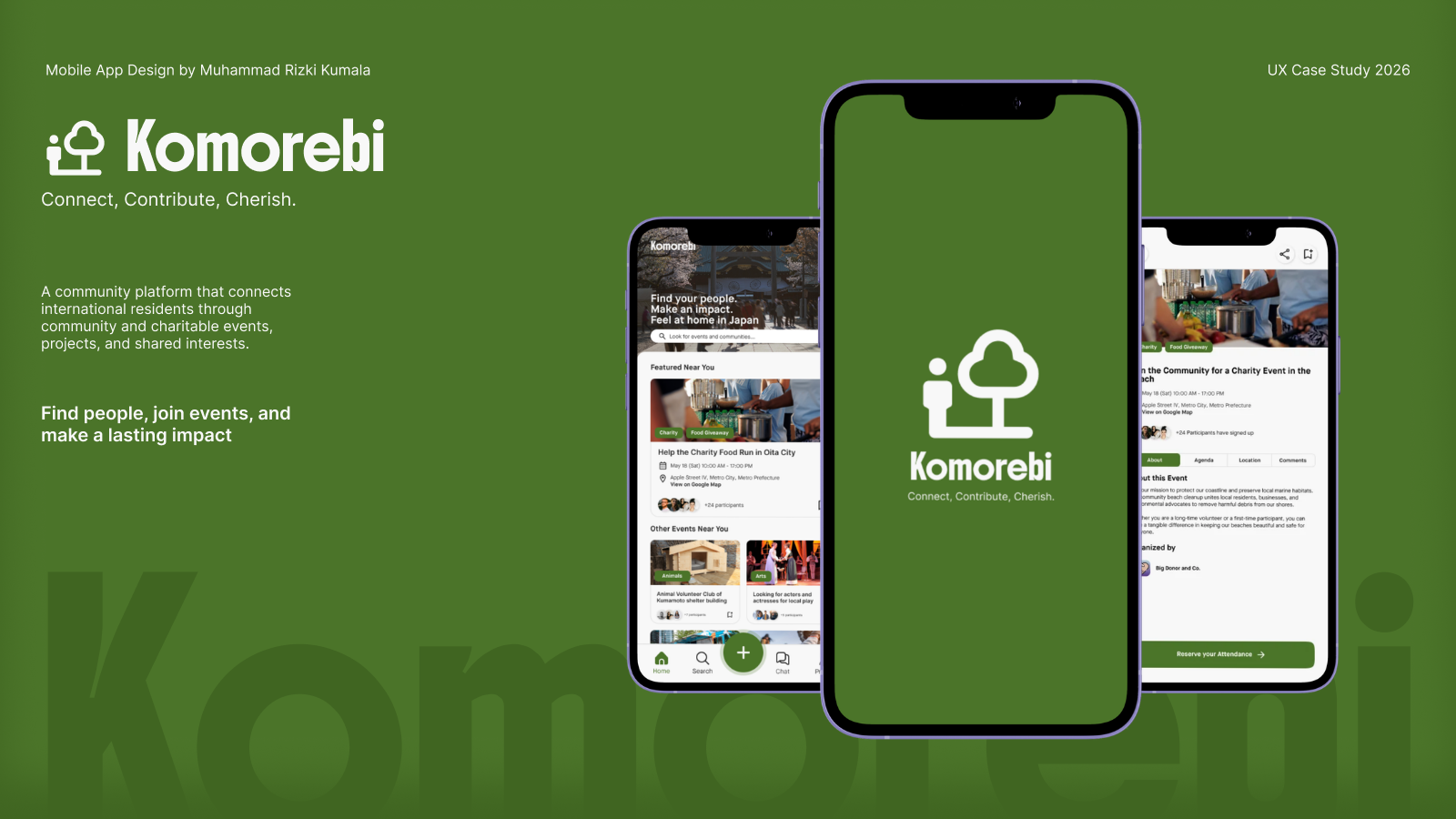
Final Look
Inspiration
Started as a project based off of my experience as an international in Japan heavily shaped my understanding of how difficult it can be to discover local communities, volunteer opportunities, and meaningful connections despite the abundance of them around us.
Studies have shown that loneliness is a significant concern among migrant communities in Japan, with meta-analysis found that levels of loneliness in Japan have increased over the past four decades, from 1983 to 2023 (Homma & Takase, 2026; Yamashita et al., 2025). Through Komorebi, the platform hopes to serve as a platform that encourage meaningful connections between people through shared interests, hobbies, and cultural experiences, while creating an inclusive and accessible space where users can organize, discover, and participate in local events
What it does
Komorebi is a mobile app platform that acts as an intuitive bridge to community life by providing services including:
1. Hyper-Local Discovery: Helping users find neighborhood events, informal meetups, and volunteer opportunities with little to no language-barrier issues 2. Inclusive Community Hubs: Allowing users to join or create interest-based groups, reducing the social friction of making new friends in a foreign country. 3. Cultural & Linguistic Accessibility: Integrating clear event tags, location maps, and essential cultural etiquette tips so international residents can attend local events with confidence.
How we built it
As a comprehensive UX end-to-end project, Komorebi involved full equitable and deep human-centered research in its design. Mainly using Figma, the project began with user research, competitive analysis, and initial baseline interviews with foreign residents to map out the core emotional and practical pain points of social isolation. From there, information architecture and low-fidelity wire-frames to ensure a low-friction flow.
The iterations of the design and the final system was the result of 2 different usability studies at different steps of the process, and, adhering to the namesake of Komorebi, the warm, dappled sunlight of the word created a high-fidelity interactive prototype with realistic micro-interactions and accessible UI patterns.
Challenges we ran into
The primary UX challenge was overcoming the extreme fragmentation of community information in Japan. Event notices are currently scattered across Facebook groups, LINE chats, university bulletin boards, and obscure local websites, making it difficult to consolidate these sources into a clean mobile layout. During low-fidelity usability testing, data revealed that users frequently overlooked details when scanning pages, requiring a complete redesign of the visual hierarchy to better highlight key information like location and attendee lists. Additionally, balancing information density with a clean interface presented a hurdle, as international residents need hyper-specific details such as language expectations before feeling confident enough to attend a local meetup solo (with organizer details also being included in the information). Executing every phase independently as a solo project required strict scope control and disciplined time management to deliver a complete, high-fidelity result.
Accomplishments that we're proud of
As the very first full project in UX/UI and a reflection of my full experience, Komorebi is a personal accomplishment of a product created based on real academic research and the translation of those findings to visible empathetic UX features.
Visuals from number of screens, effort and aesthetics have been a vast improvement over designs that I have created when stepping foot into this field, with a deeper understanding of user empathy and equity providing a better understanding to the flow of Komorebi.
What we learned
Designing Komorebi reinforced that deep empathy and user research must drive every interface decision. Testing revealed that users do not just want a feed of events; they need user confidence, clear expectations, and transparent event details to reduce social anxiety. I learned how to synthesize competitive gaps across social and volunteer platforms to build a multi-purpose tool that serves real human needs. This project taught me many things in the field, and I hope that it would serve as a good base for my first hackathon submission.
What's next for Komorebi
The next step for Komorebi is continuing to iterate on the high-fidelity prototype based on additional user feedback from international students and local Japanese community hosts. Moving beyond an unlaunched prototype, the future and possible goal is to collaborate with other beginners who specialize in mobile development to build a working codebase. Long-term plans include implementing real-time event translation, introducing organizer tools for grassroots volunteer groups, and partnering with local organizations across Japan to help bridge the gap between international residents and their local communities.

Log in or sign up for Devpost to join the conversation.