-
-
Welcome to Kiki!
-
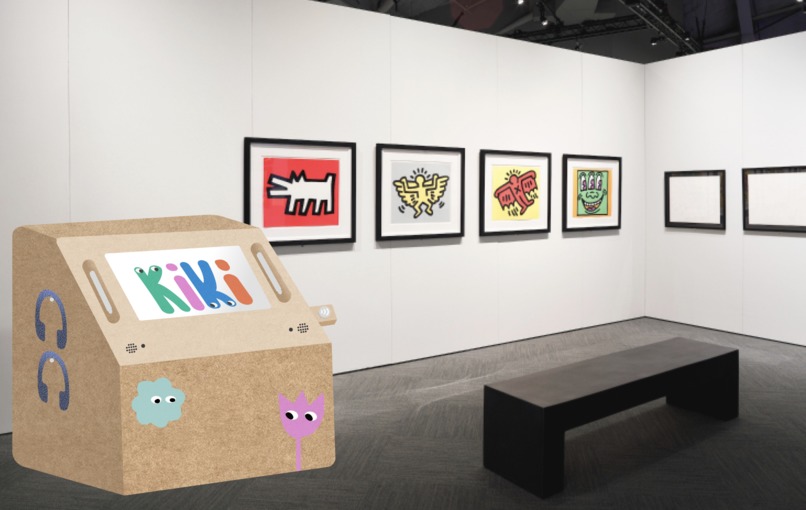
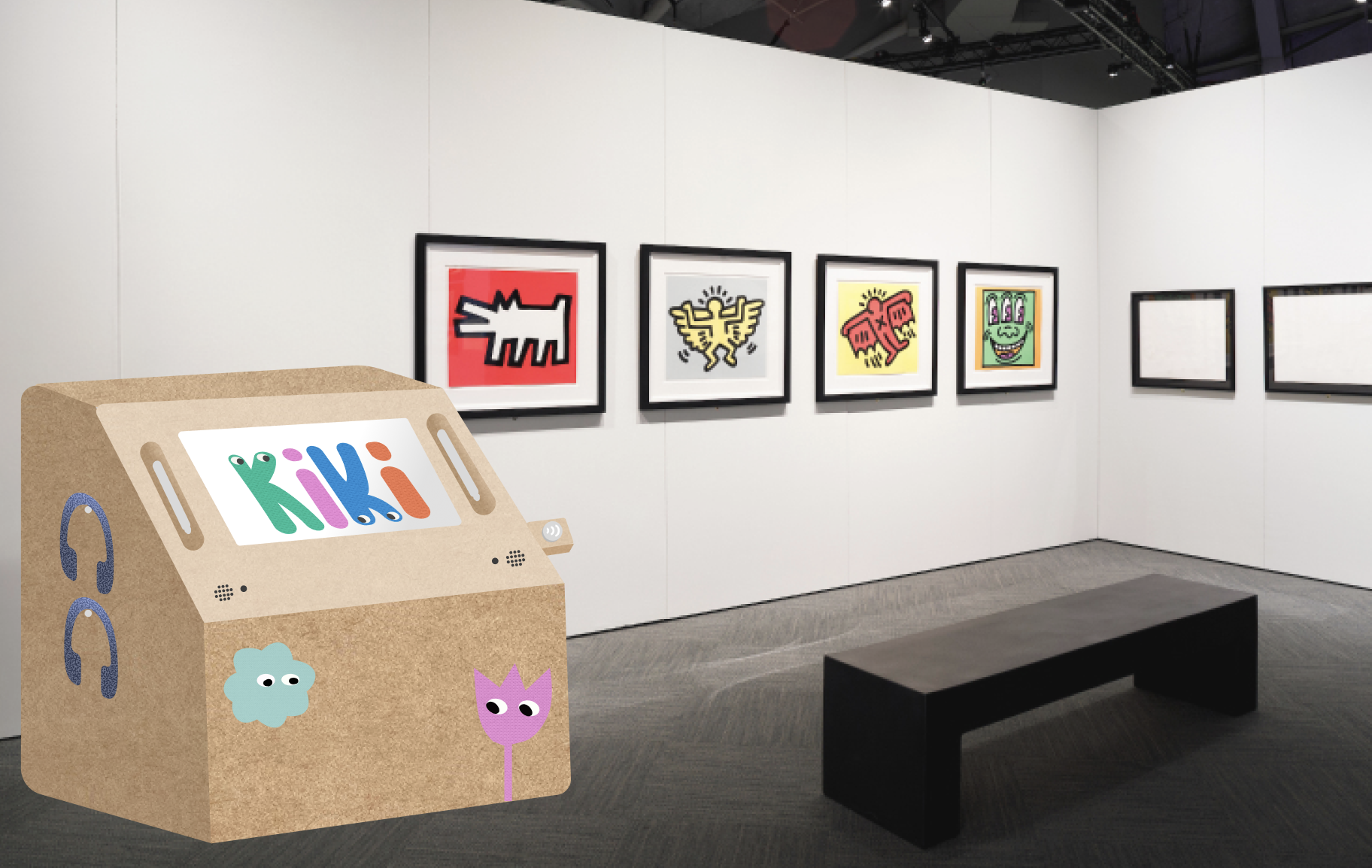
Kiki – Kiosk Design
-
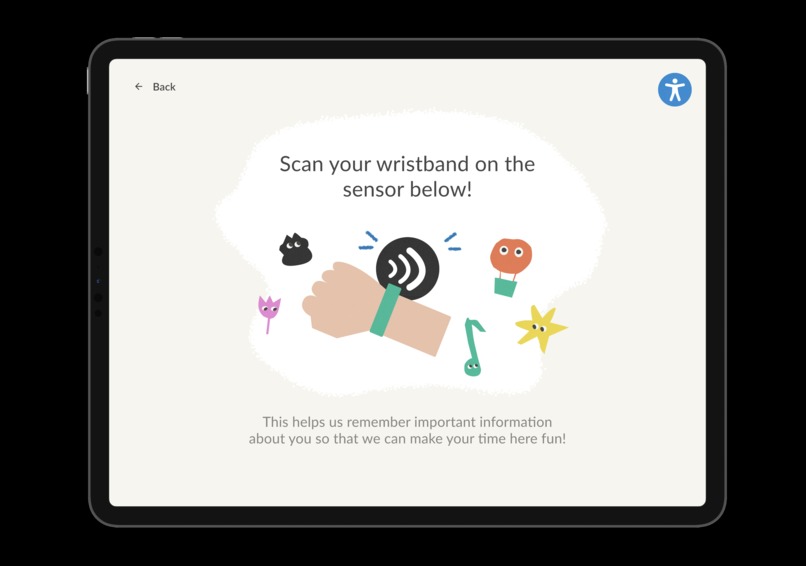
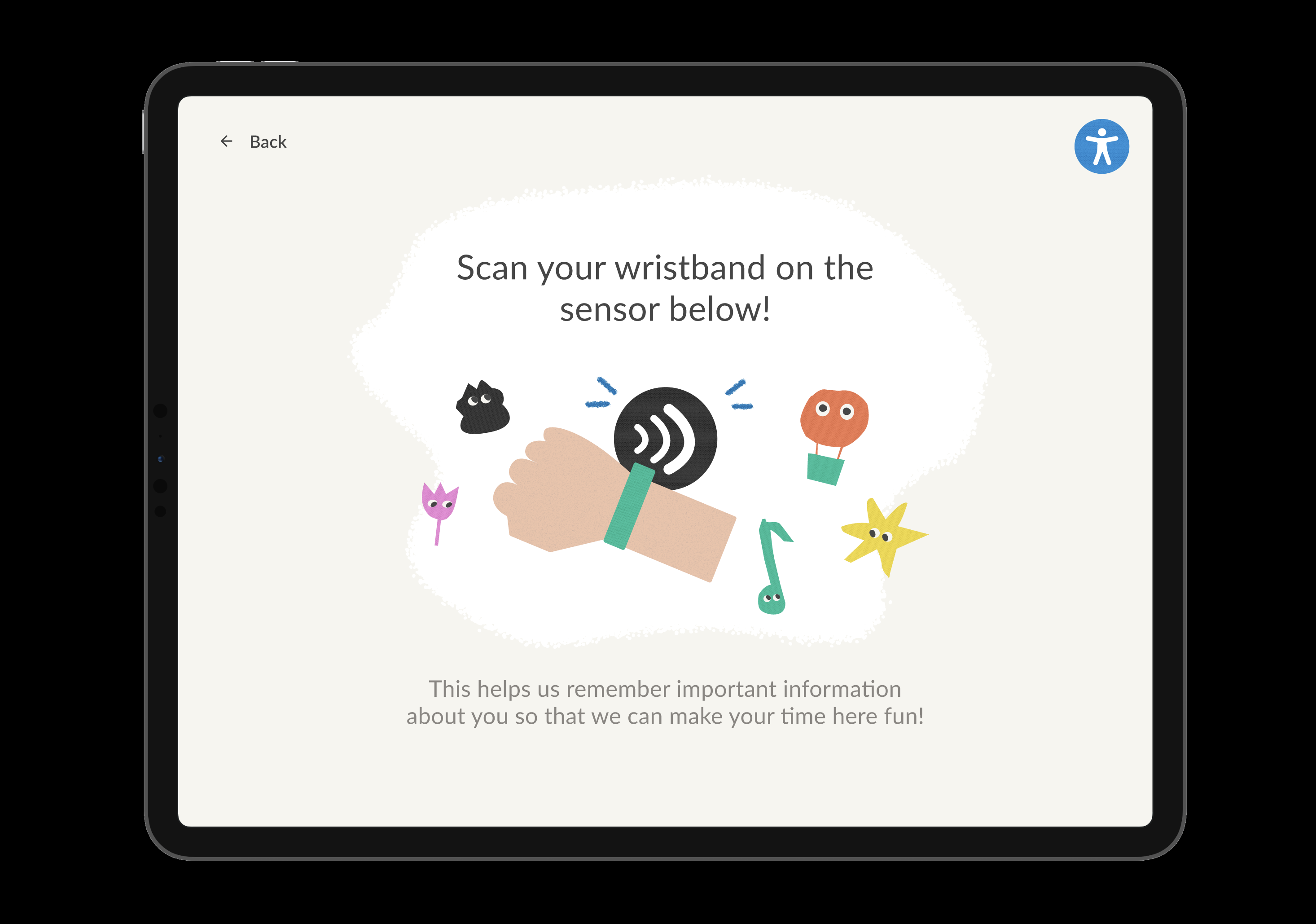
Kiki – Wristband Interface (Onboarding)
-
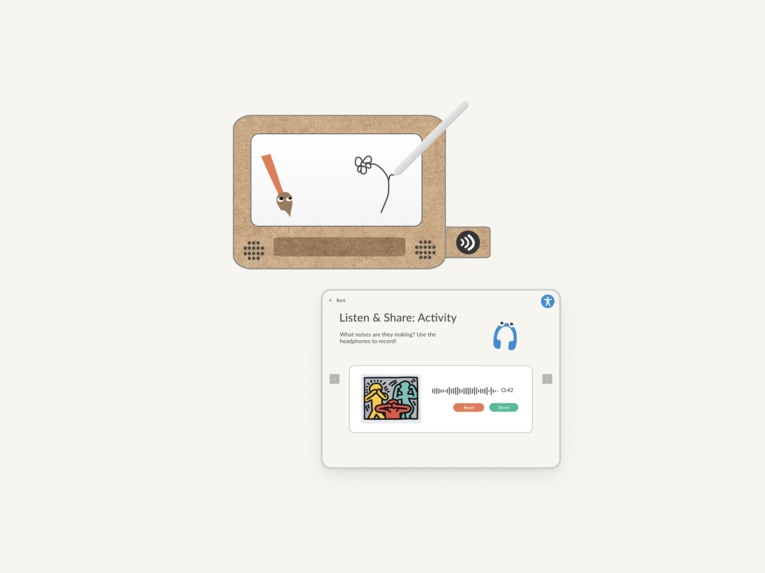
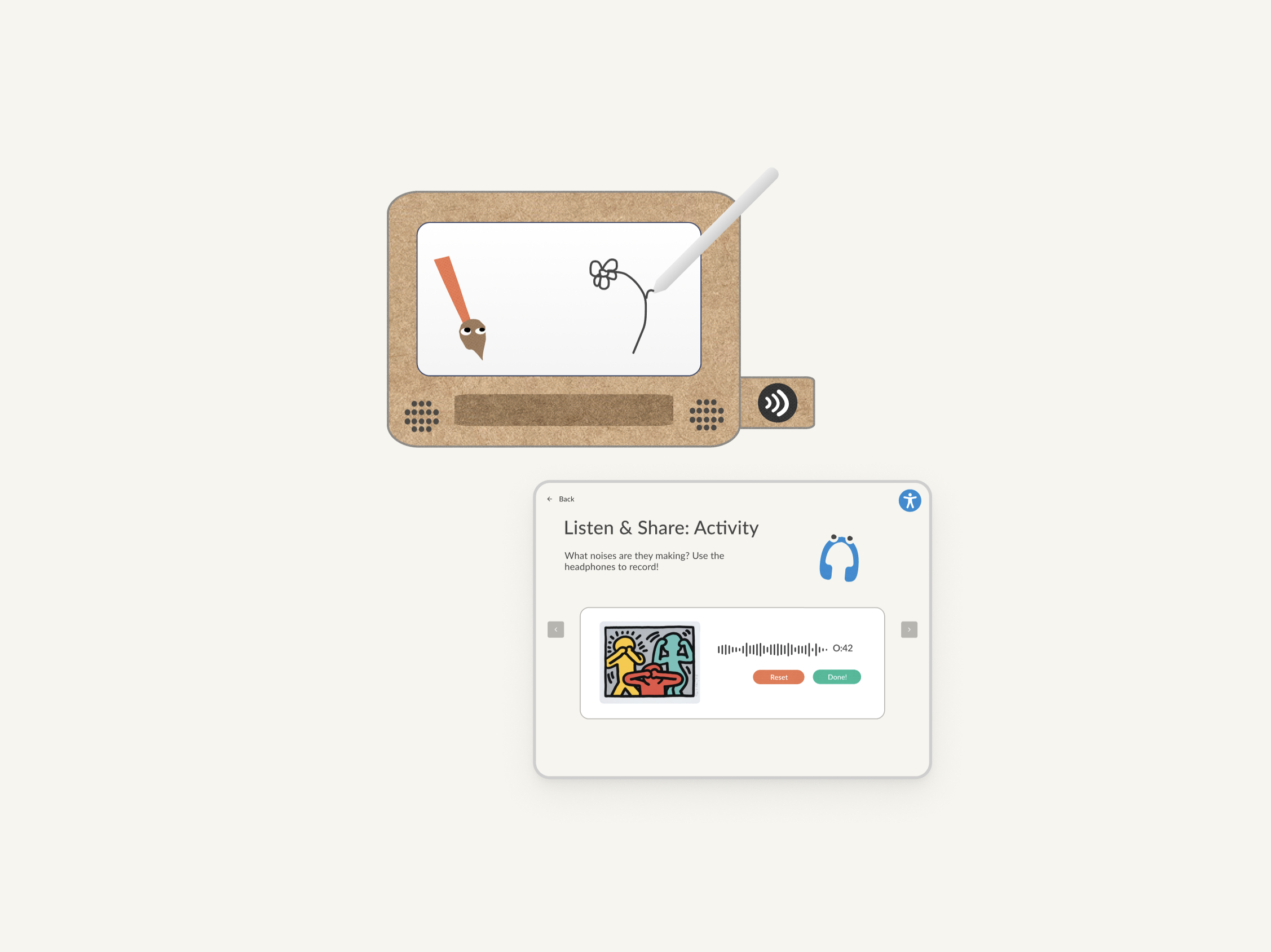
Kiki – Interpretive Activities
Inspiration
Museums hold some of humanity's most powerful cultural artifacts, yet for many children, especially those with sensory differences, language barriers, or non-traditional learning styles, these spaces can feel overwhelming and inaccessible. We wanted to change that. The idea for Kiki grew from a simple question: what if the museum itself could meet every child where they are?
What we learned
Research shaped everything. The Bay Area Discovery Museum's CREATE Framework taught us that multisensory learning deepens memory, while Harvard Project Zero's "I see, I think, I wonder" model showed us how a predictable, repeatable structure reduces cognitive load. Parent interviews reinforced what the literature confirmed – children thrive with structured tasks, hands-on interaction, and caregiver involvement.
How we built it
Kiki is a multimodal kiosk system featuring RFID wristbands that store each child's sensory and learning preferences. Across three phases: onboarding, in-gallery exploration, and post-visit reflection, children engage through drawing, listening, speaking, and moving. We hand-drew all illustrations, built low-fi and high-fi prototypes in Figma, storyboarded the physical kiosk design, and used Gemini to support copywriting and literature synthesis.
Challenges
Our biggest tension was avoiding screen dependency in a physical space. Every design decision had to draw children toward the artwork, not away from it. Balancing engagement with restraint (and accessibility with simplicit) pushed us to iterate constantly, and to be mindful of every pixel!
Thank you so much for reading! We hope you love Kiki as much as we loved making it!
Built With
- adobe-illustrator
- figma
- gemini
- notability


Log in or sign up for Devpost to join the conversation.