Inspiration

Africa generates vast amounts of data — on demographics, the economy, agriculture and health — but this data remains fragmented and inaccessible to most people. African policymakers, researchers and entrepreneurs spend hours searching for figures scattered across PDFs from international agencies. Kekeli was born out of this frustration: to make insights from African data accessible to everyone, through simple conversation and, above all, to avoid misinterpretations.

What it does

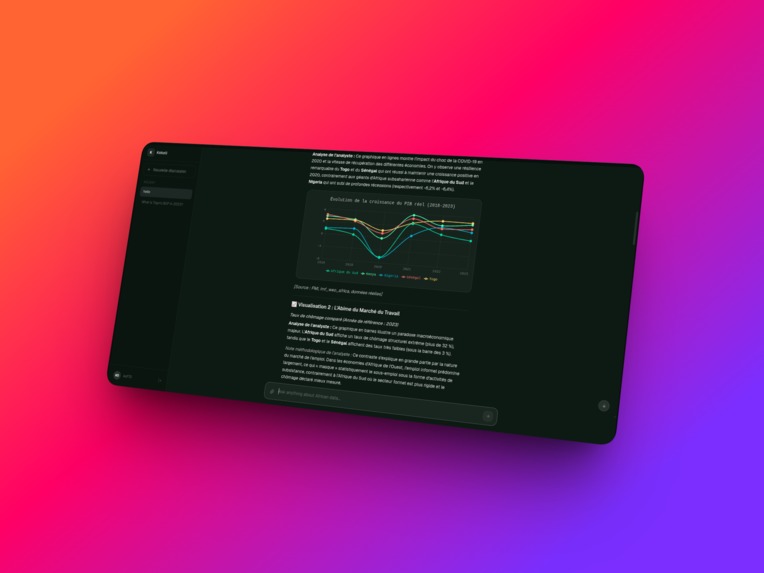
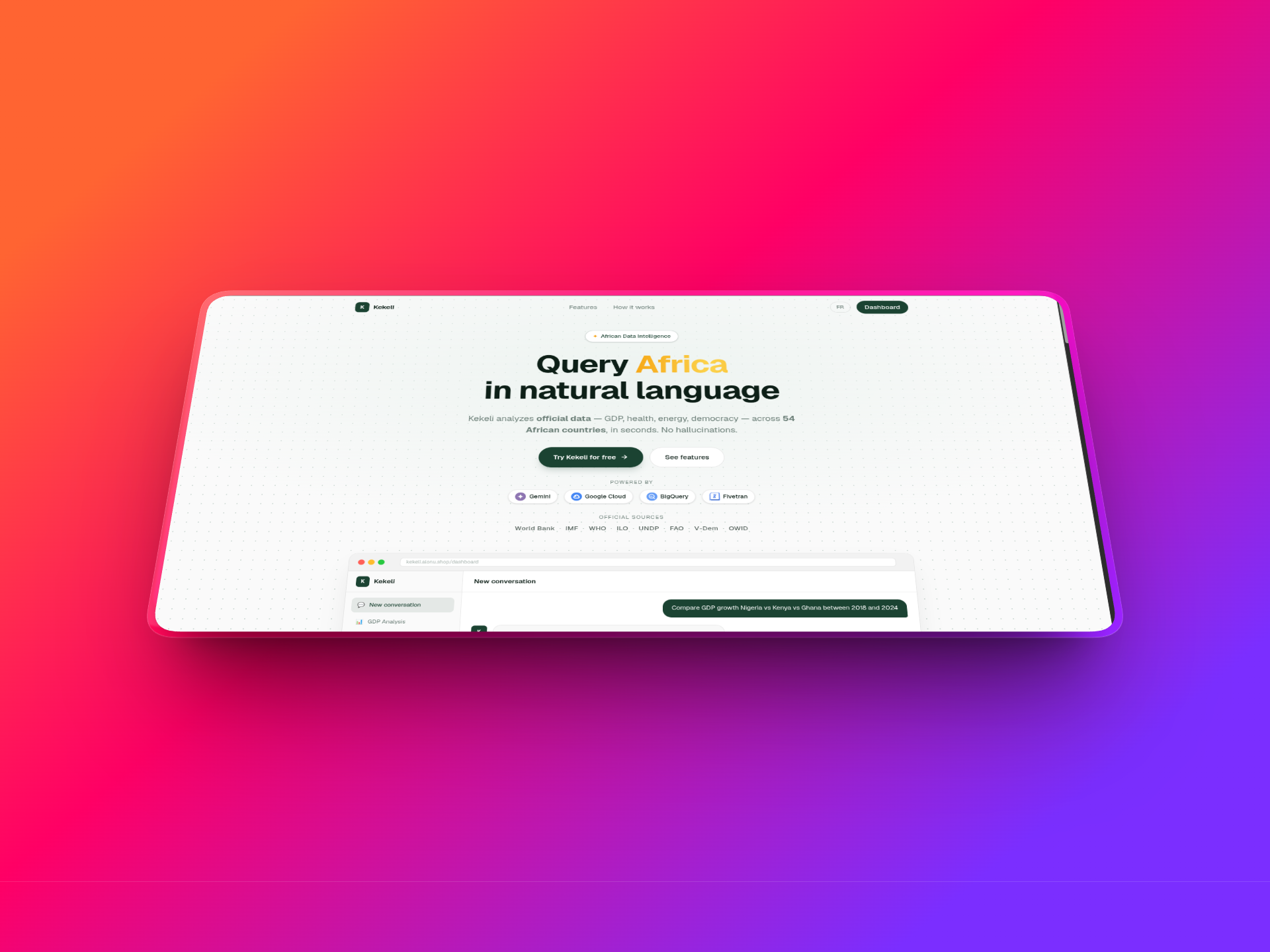
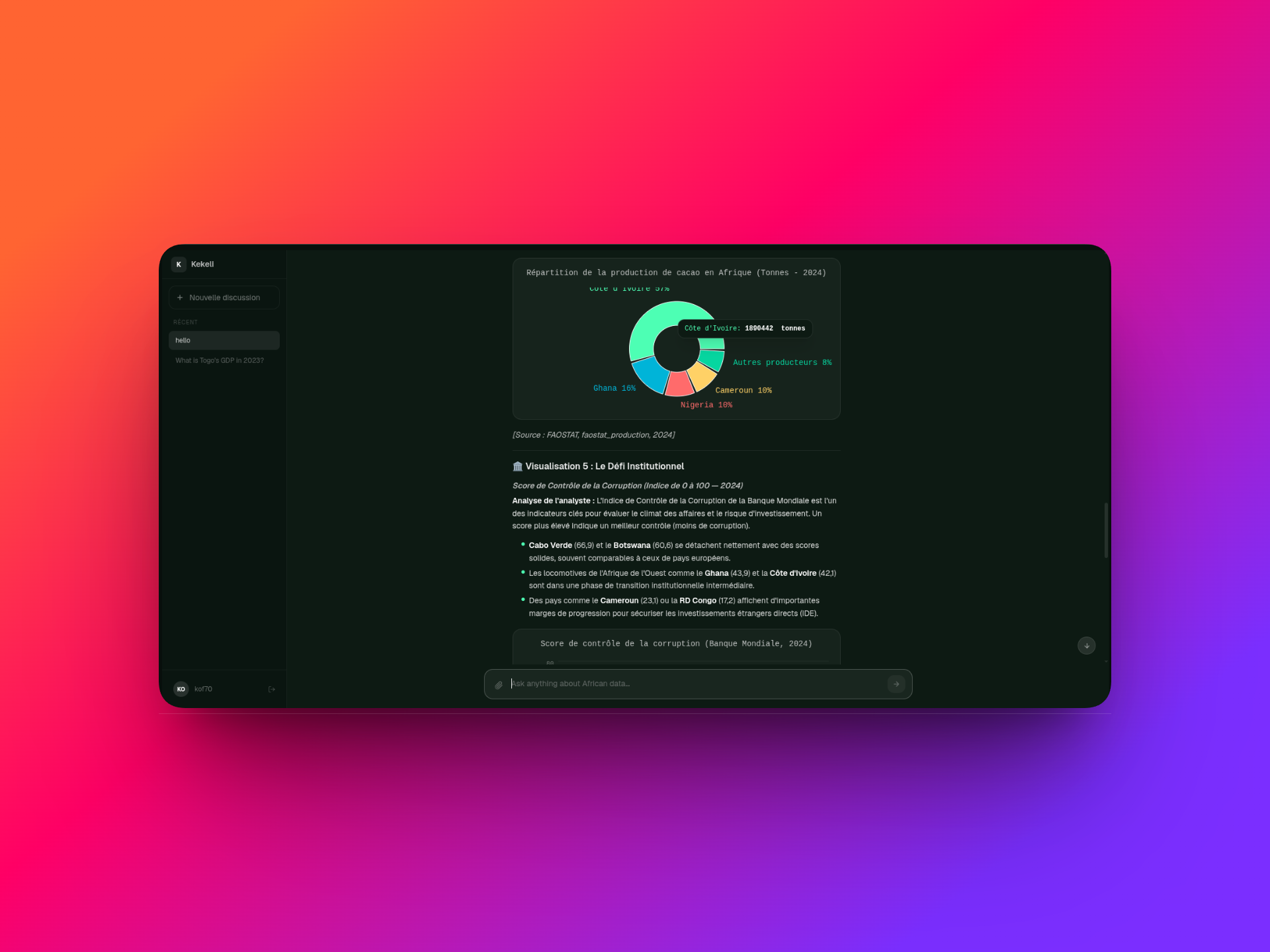
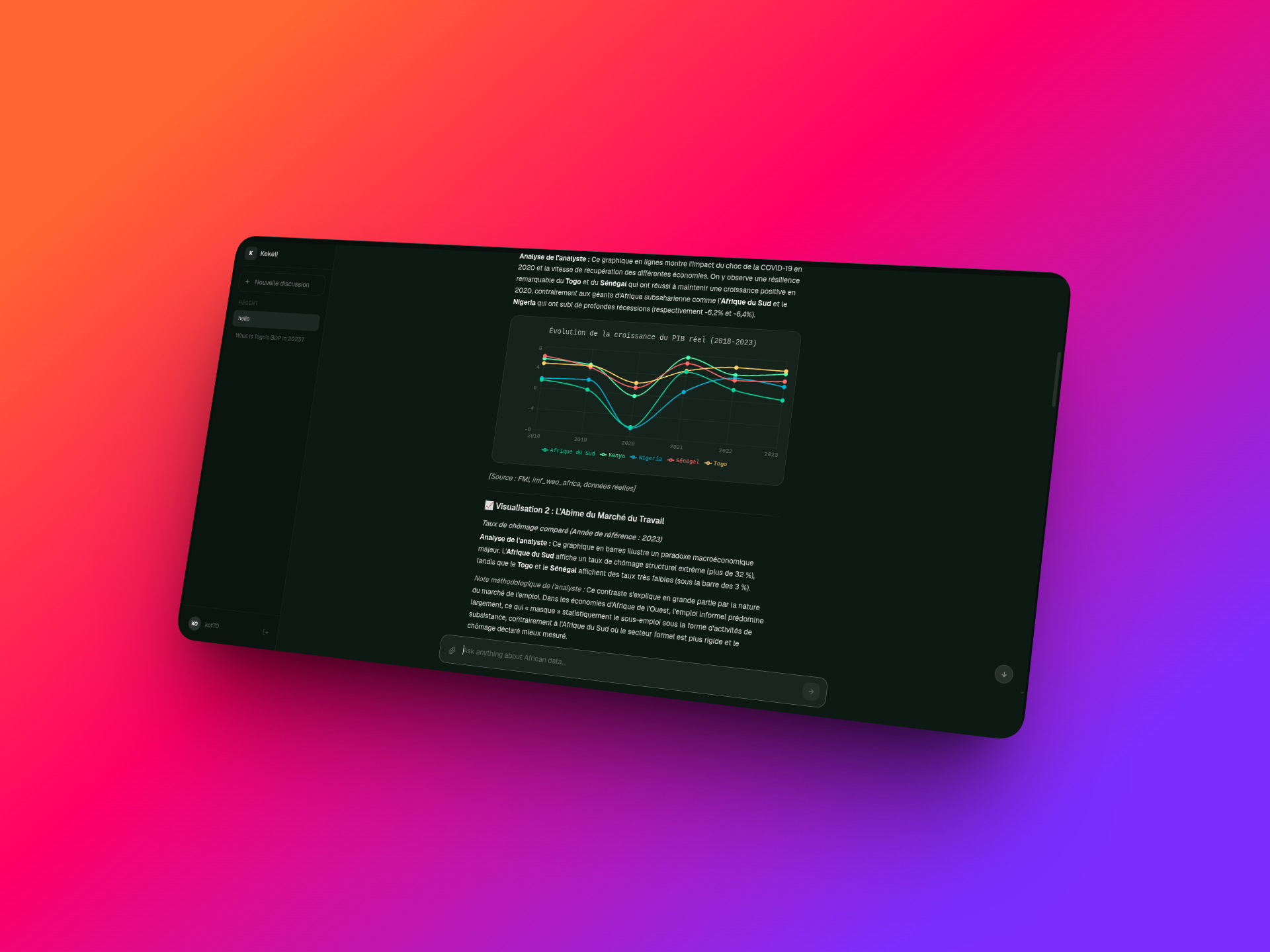
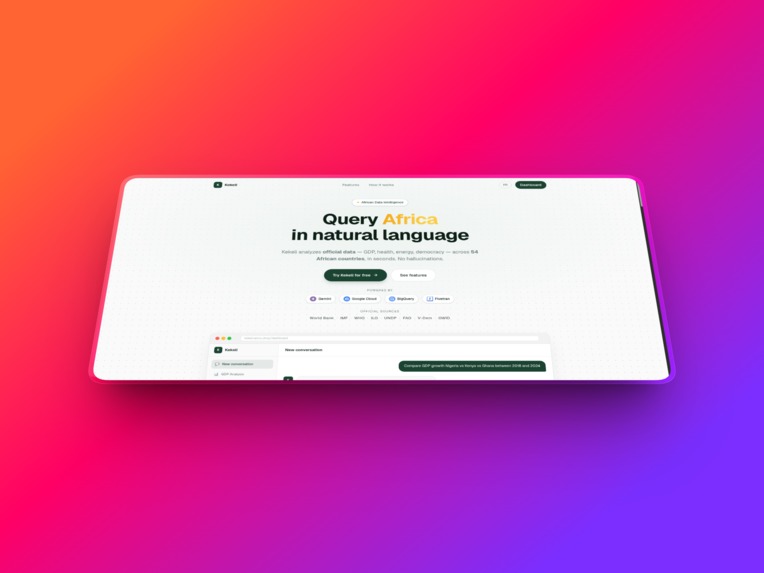
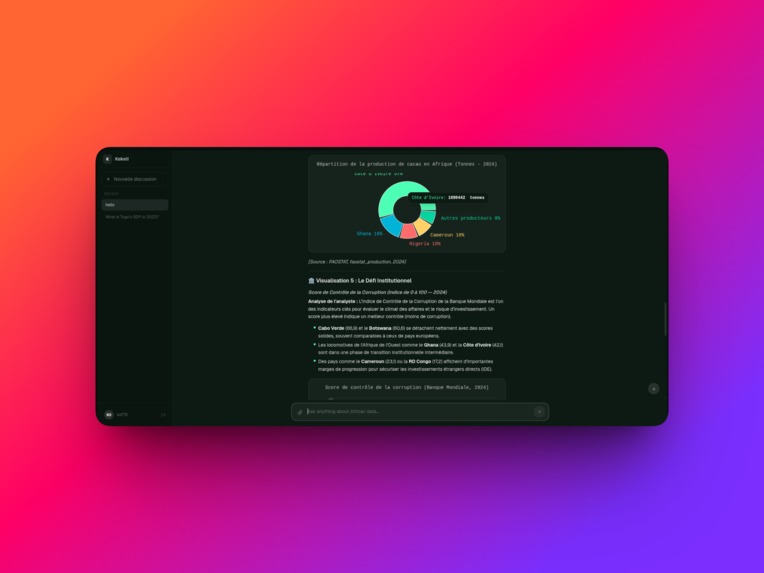
Kekeli is an AI agent specialising in African data. You ask a question in natural language — “What is the youth unemployment rate in Benin in 2023?”, "Compare the GDP of Senegal and Côte d'Ivoire over 10 years" — and Kekeli queries a BigQuery database of 13 tables covering 54 countries in real time: economic, demographic, agricultural, health and climate indicators. The answers are sourced, quantified and contextualised.

How we built it

  • Agent: Google Agent Development Kit (ADK) + Gemini 3.5 Flash, 12 bespoke BigQuery tools
  • Backend: Cloud Run (ADK agent + Next.js API), Firebase Auth, Firestore for conversation history
  • Frontend: Next.js 15 with assistant-ui, word-by-word SSE streaming, bilingual interface (next-intl)
  • Data: BigQuery on titan-ia-497117, 13 tables normalised from ISO sources (World Bank, FAO, WHO, AU and others)
  • Resilience: min-instances=1 to keep ADK sessions in memory + Firestore history injection as a fallback if session expires

Challenges we ran into

  • Cloud Run ingress internal was blocking all traffic between services — even within the same project. Solution: switch to ingress=all with IAM as the sole safeguard.
    • In-memory ADK sessions lost on every restart → silent 404 errors on the user side. Two-tier solution: minimum active instances + context reconstruction from Firestore.
    • Cross-project IAM: the service account for titan-ia-497117 needed to have the roles/datastore.user permission in the Firebase project kekeli-fb324 — not clearly documented.
    • Non-ISO indicators: some African countries use codes and conventions that deviate from international standards, requiring manual data standardisation.
    • Hallucinations regarding African data: generalist LLMs invent plausible but false figures — GDP, mortality rates, populations — for countries under-represented in their training data. Solving this problem was central to Kekeli’s architecture.

Achievements we’re proud of

  • Anti-hallucination by design: Kekeli never responds “from memory” on numerical data. Every numerical response goes through a BigQuery tool — if the data isn’t in the database, the agent states this explicitly rather than making it up. The model is used solely to understand the question and formulate the response, not to generate the figures.
  • Source traceability: executed SQL queries are logged, and the returned data comes directly from referenced sources (World Bank, FAO, WHO) — the user can trace it back to the raw source.
  • Honest fallback mode: when the ADK backend is unavailable, the Claude Opus fallback explicitly indicates explicitly states "fallback mode — real-time data unavailable" rather than silently substituting made-up figures.
  • An agent that understands the African context: economic unions (ECOWAS, AU, SADC), local currencies, alternative country names
  • Zero perceptible cold start thanks to min-instances + transparent Firestore fallback
  • Smooth streaming with real-time tool indicators (“🔍 get_gdp_data…”)

What we learned

  • Generalist LLMs actively hallucinate about Africa — not for lack of effort but due to a lack of quality training data. A confidently invented figure is worse than no response at all.
  • The strict separation between reasoning (LLM) and data (BigQuery) is the only architecture that guarantees reliability across domains under-represented in the training corpora.
  • Session persistence in a serverless environment is a problem in its own right, not a minor detail.
  • Firestore rules and multi-project IAM are two orthogonal systems that can silently block each other.

Built With

Share this project:

Updates

posted an update

English version

Fivetran data pipeline

Kekeli’s anti-hallucination guarantee relies on Fivetran as its backbone. Fivetran synchronises over 80 official African sources every 6 hours to BigQuery — 73,940 verified rows, 13 tables, 54 countries. Without this pipeline, the agent would have to rely on memory and make up plausible but false figures.

The agent’s 12 tools

get_african_indicator — queries BigQuery for any indicator (GDP, mortality, agricultural production, etc.) for a given country and period.

list_available_tables — lists the 13 available tables and their contents.

search_african_datasets — searches through 3,215 open data catalogues (CKAN, openAfrica).

search_indicators — finds available indicators by keyword.

query_official_data — falls back to the World Bank / IMF / WHO / FAO API if BigQuery does not have the data.

check_pipeline_status — checks the freshness of the Fivetran pipeline (last sync, status).

trigger_data_refresh — triggers an on-demand Fivetran synchronisation.

get_pipeline_schema — inspects the schema and status of each table in the pipeline.

upload_and_profile — profiles a dataset uploaded by the user (CSV, Excel).

compare_datasets — compares user data with official BigQuery data.

calculate_reliability_score — assesses the reliability of an uploaded dataset.

generate_report / multi_indicator_report — generates downloadable multi-country, multi-indicator Excel/CSV/PDF reports.

Log in or sign up for Devpost to join the conversation.

posted an update

Pipeline de données Fivetran

La garantie anti-hallucination de Kekeli repose sur Fivetran comme colonne vertébrale. Fivetran synchronise 80+ sources africaines officielles toutes les 6 heures vers BigQuery — 73 940 lignes vérifiées, 13 tables, 54 pays. Sans ce pipeline, l'agent répondrait de mémoire et inventerait des chiffres plausibles mais faux.

Les 12 outils de l'agent

get_african_indicator — interroge BigQuery sur n'importe quel indicateur (PIB, mortalité, production agricole…) pour un pays et une période donnée.

list_available_tables — catalogue les 13 tables disponibles avec leur contenu.

search_african_datasets — cherche parmi 3 215 catalogues de données ouvertes (CKAN, openAfrica).

search_indicators — trouve les indicateurs disponibles par mot-clé.

query_official_data — fallback API World Bank / IMF / WHO / FAO si BigQuery n'a pas la donnée.

check_pipeline_status — vérifie la fraîcheur du pipeline Fivetran (dernière sync, état).

trigger_data_refresh — déclenche une synchronisation Fivetran à la demande.

get_pipeline_schema — inspecte le schéma et statut de chaque table dans le pipeline.

upload_and_profile — profile un dataset uploadé par l'utilisateur (CSV, Excel).

compare_datasets — compare les données utilisateur avec les données officielles BigQuery.

calculate_reliability_score — évalue la fiabilité d'un dataset uploadé.

generate_report / multi_indicator_report — génère des rapports Excel/CSV/PDF multi-pays multi-indicateurs téléchargeables.

Log in or sign up for Devpost to join the conversation.

posted an update

Pipeline de données Fivetran

La garantie anti-hallucination de Kekeli repose sur Fivetran comme colonne vertébrale. Fivetran synchronise 80+ sources africaines officielles toutes les 6 heures vers BigQuery — 73 940 lignes vérifiées, 13 tables, 54 pays. Sans ce pipeline, l'agent répondrait de mémoire et inventerait des chiffres plausibles mais faux.


Les 12 outils de l'agent

┌─────────────────────────────────┬────────────────────────────────────────────────────────┐ │ Outil │ Fonction │ ├─────────────────────────────────┼────────────────────────────────────────────────────────┤ │ │ Interroge BigQuery sur n'importe quel indicateur (PIB, │ │ get_african_indicator │ mortalité, production agricole…) pour un pays et une │ │ │ période │ ├─────────────────────────────────┼────────────────────────────────────────────────────────┤ │ list_available_tables │ Catalogue les 13 tables disponibles avec leur contenu │ ├─────────────────────────────────┼────────────────────────────────────────────────────────┤ │ search_african_datasets │ Cherche parmi 3 215 catalogues de données ouvertes │ │ │ (CKAN, openAfrica) │ ├─────────────────────────────────┼────────────────────────────────────────────────────────┤ │ search_indicators │ Trouve les indicateurs disponibles par mot-clé │ ├─────────────────────────────────┼────────────────────────────────────────────────────────┤ │ query_official_data │ Fallback API World Bank / IMF / WHO / FAO si BigQuery │ │ │ n'a pas la donnée │ ├─────────────────────────────────┼────────────────────────────────────────────────────────┤ │ check_pipeline_status │ Vérifie la fraîcheur du pipeline Fivetran (dernière │ │ │ sync, état) │ ├─────────────────────────────────┼────────────────────────────────────────────────────────┤ │ trigger_data_refresh │ Déclenche une synchronisation Fivetran à la demande │ ├─────────────────────────────────┼────────────────────────────────────────────────────────┤ │ get_pipeline_schema │ Inspecte le schéma et statut de chaque table dans le │ │ │ pipeline │ ├─────────────────────────────────┼────────────────────────────────────────────────────────┤ │ upload_and_profile │ Profile un dataset uploadé par l'utilisateur (CSV, │ │ │ Excel) │ ├─────────────────────────────────┼────────────────────────────────────────────────────────┤ │ compare_datasets │ Compare les données utilisateur avec les données │ │ │ officielles BigQuery │ ├─────────────────────────────────┼────────────────────────────────────────────────────────┤ │ calculate_reliability_score │ Évalue la fiabilité d'un dataset uploadé │ ├─────────────────────────────────┼────────────────────────────────────────────────────────┤ │ generate_report / │ Génère des rapports Excel/CSV/PDF multi-pays │ │ multi_indicator_report │ multi-indicateurs │ └─────────────────────────────────┴────────────────────────────────────────────────────────┘


Log in or sign up for Devpost to join the conversation.