-
-
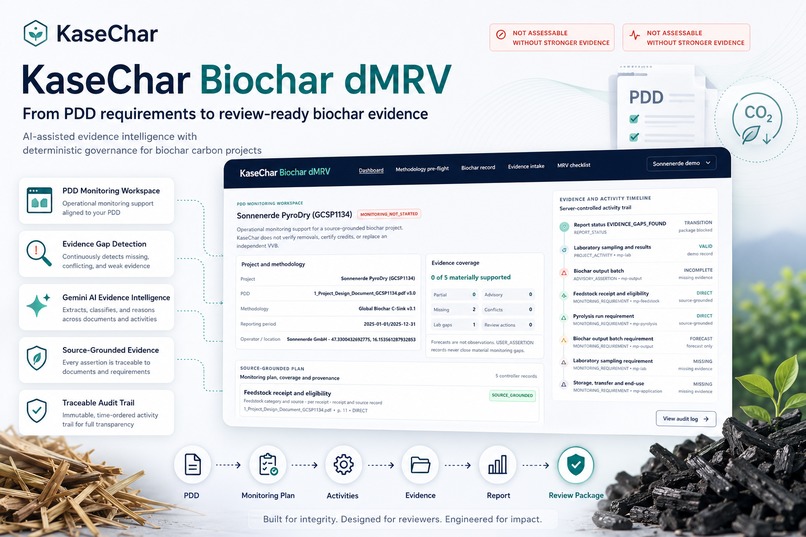
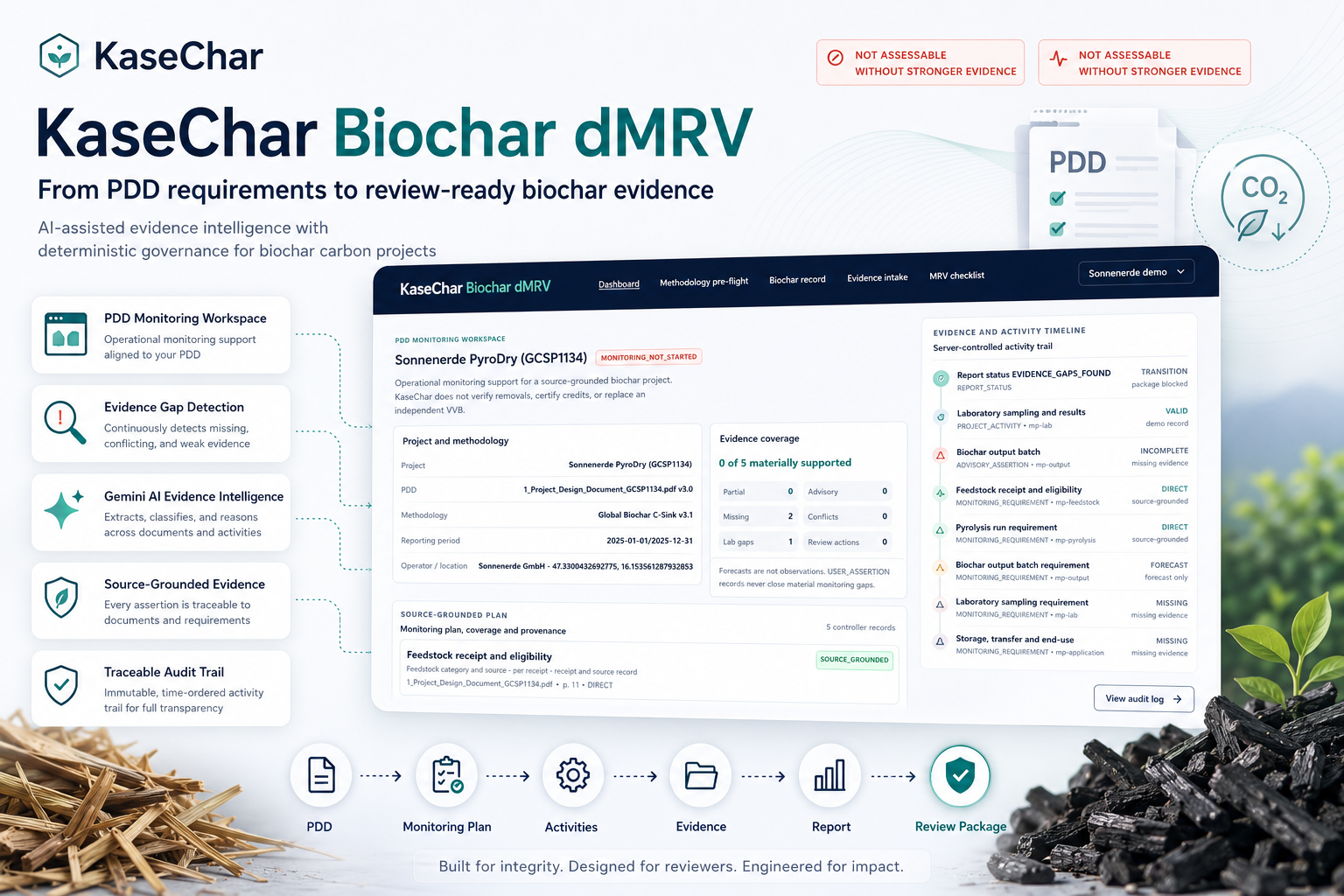
0. AI-powered biochar dMRV that turns PDD requirements into traceable, review-ready evidence.
-
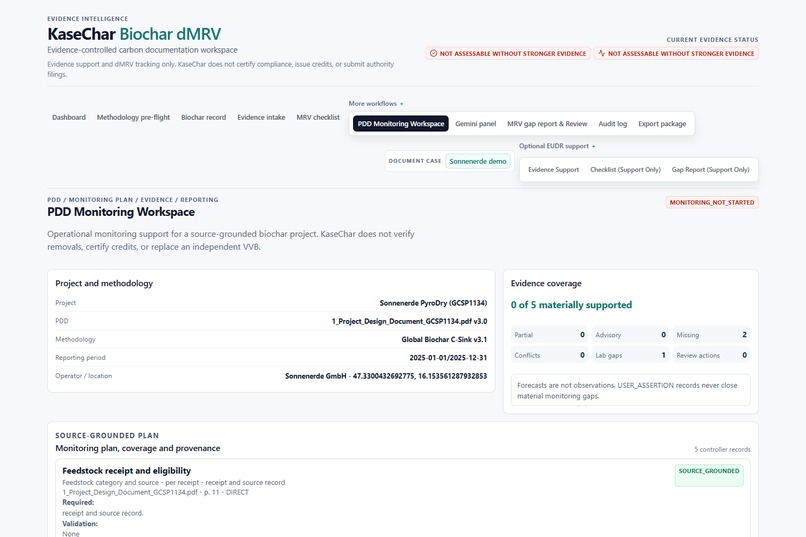
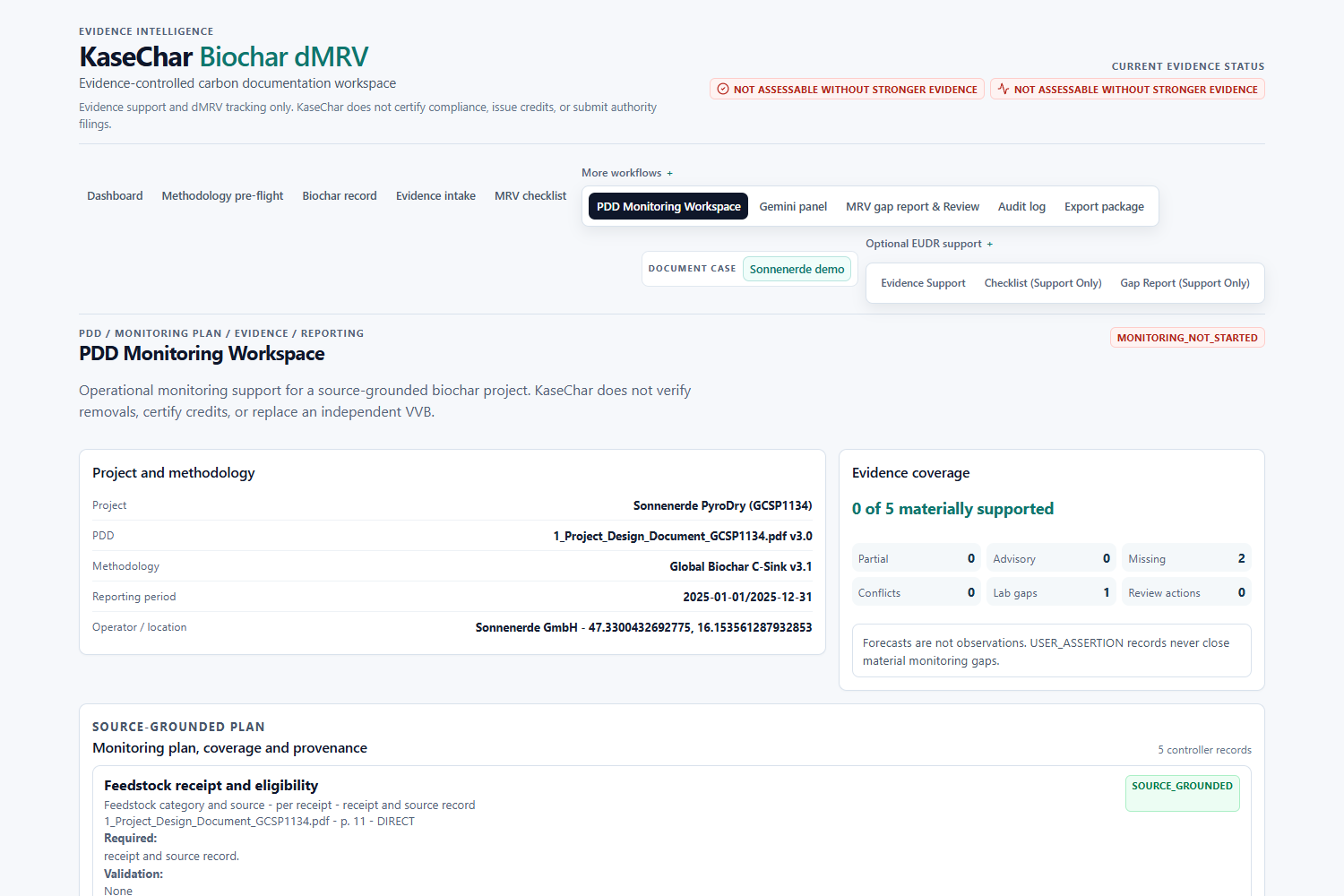
1. PDD Monitoring Workspace
-
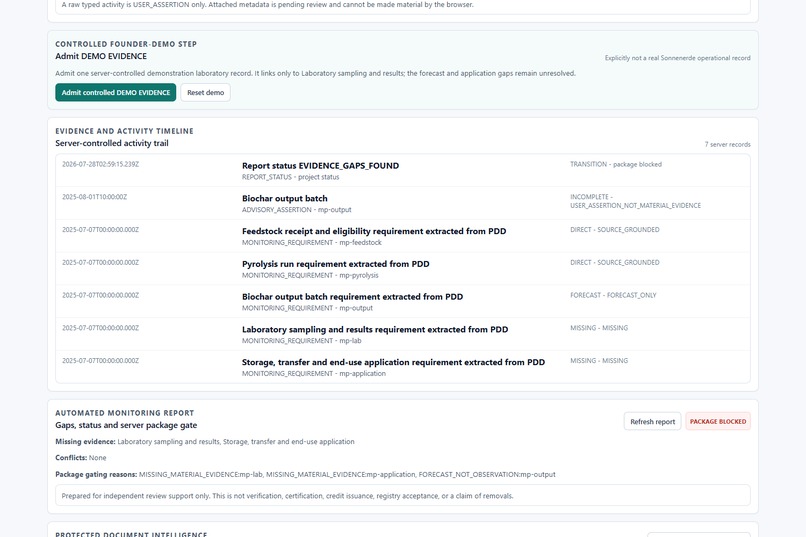
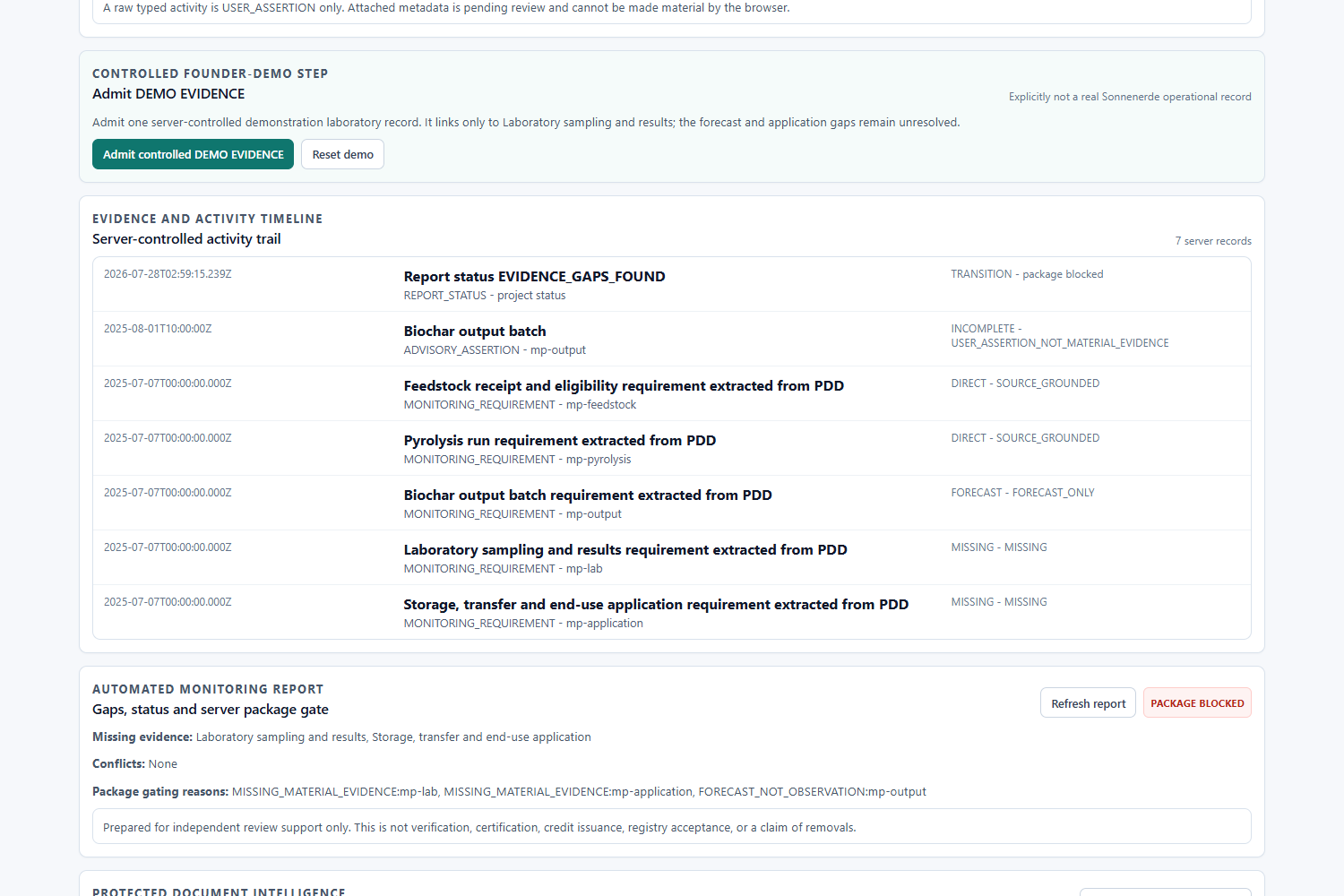
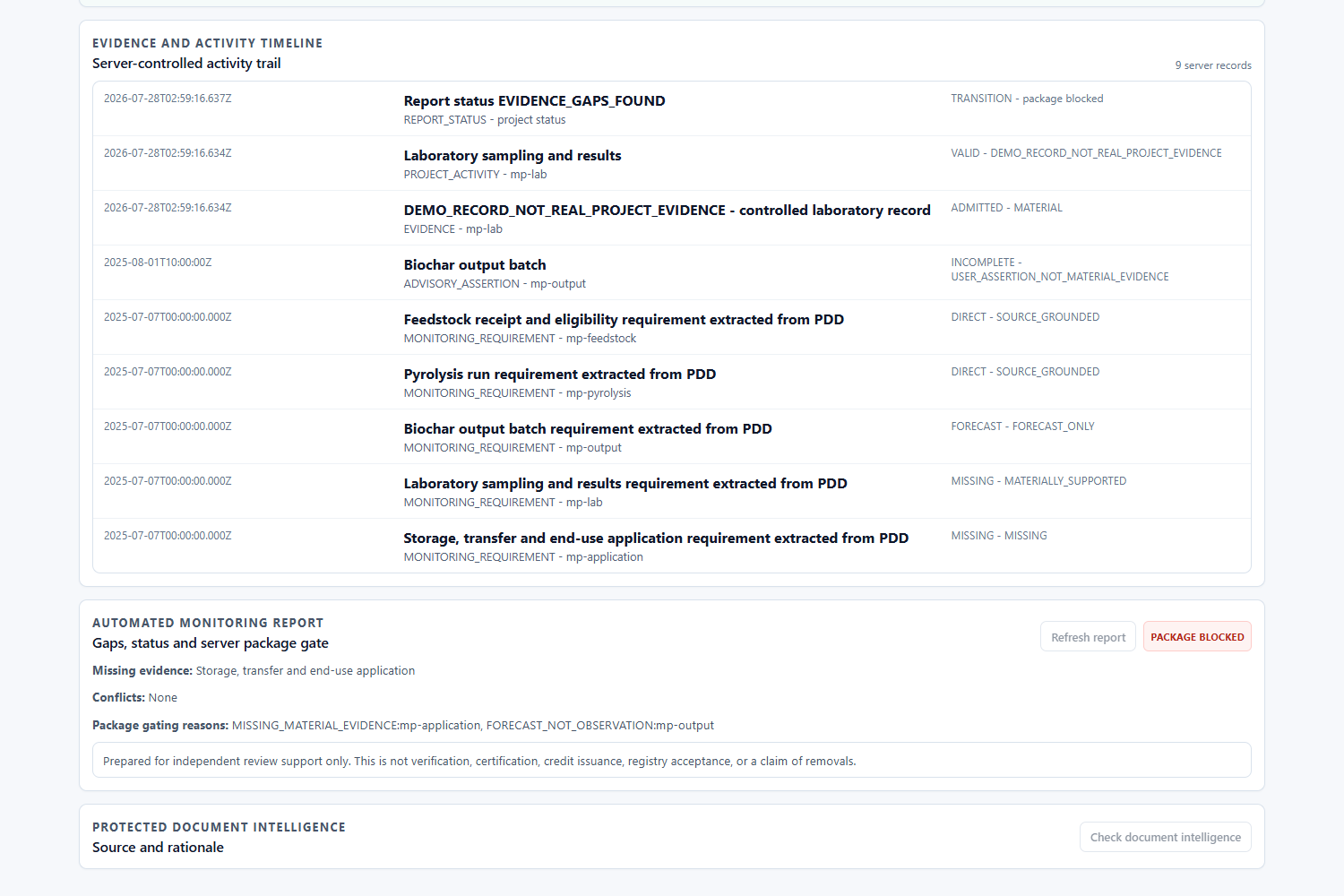
2. Evidence Gap Detection
-
3. Gemini AI Evidence Intelligence
-
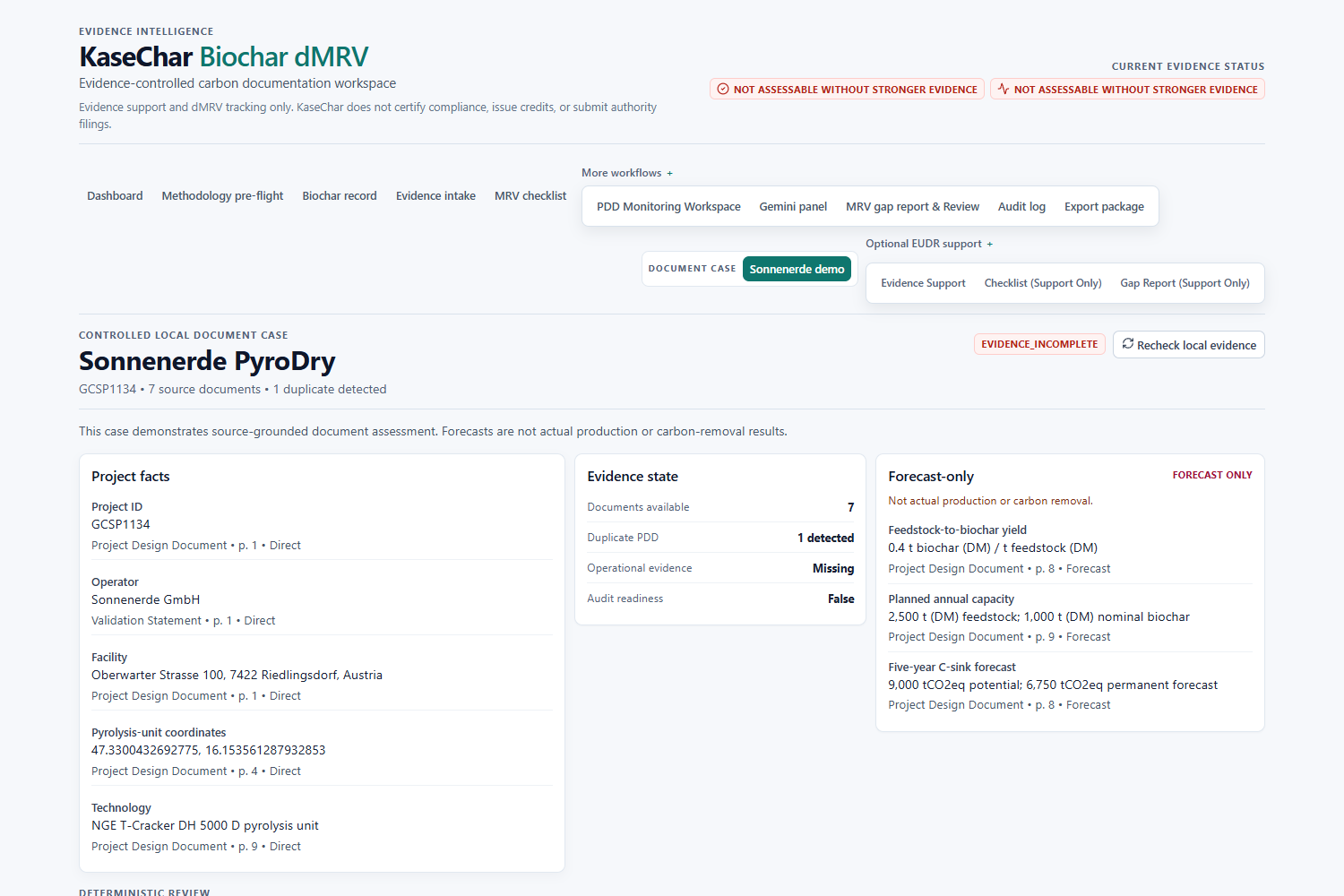
4. Source-Grounded Evidence
-
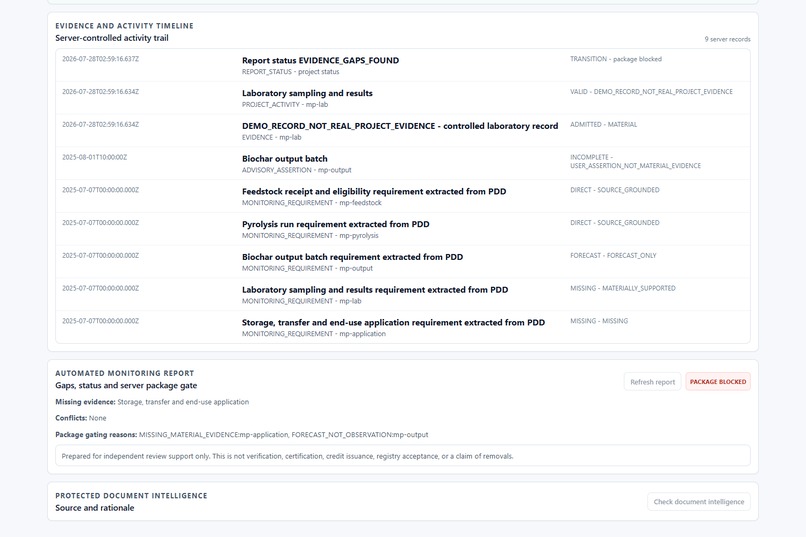
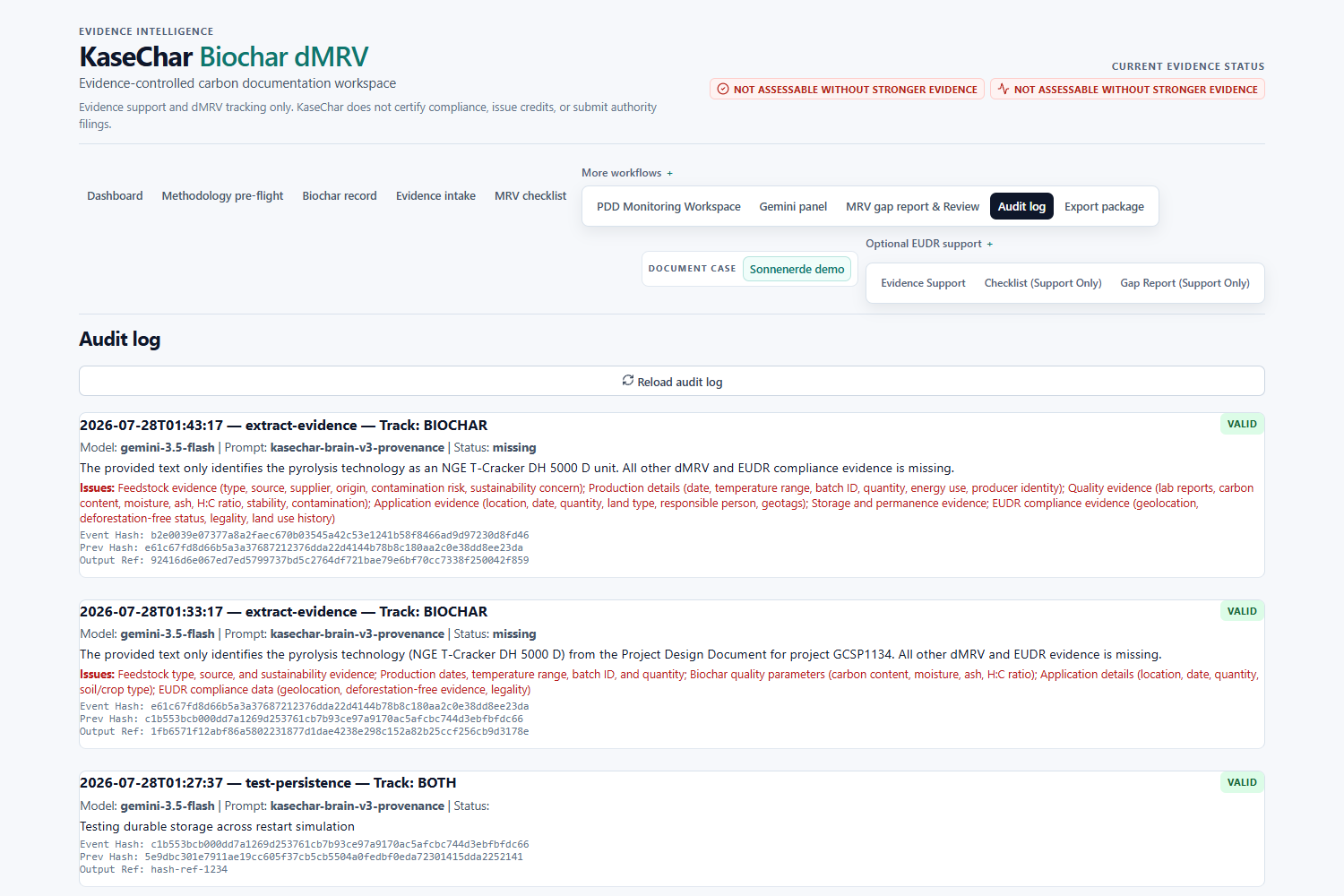
5. Traceable Audit Trail
Inspiration
Every year, millions of tonnes of agricultural residues are openly burned, creating air pollution and greenhouse-gas emissions while wasting biomass that could instead improve soils and support durable carbon removal through biochar.
KaseChar began with a simple question: How can we help farmers and biochar projects turn agricultural waste into trustworthy climate action?
The idea grew from research involving 150 Participatory Guarantee System farmers in Thailand, which explored the adoption of a mobile platform for agricultural waste management. The research showed that adoption depends not only on technology, but also on labour, transport costs, trust, digital skills, and whether the solution fits farmers' everyday work.
Those insights inspired us to build KaseChar: a practical, AI-powered digital MRV platform that helps biochar projects monitor activities, organise evidence, identify gaps, and prepare for independent review.
What it does
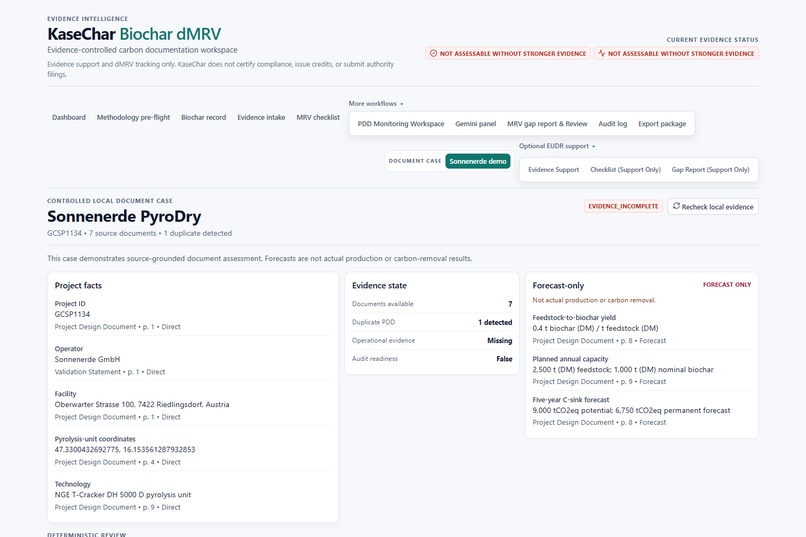
KaseChar is an AI-powered digital Monitoring, Reporting, and Verification platform for biochar carbon projects.
Starting from a Project Design Document, KaseChar helps project developers translate monitoring requirements into practical digital workflows.
The core workflow is:
PDD → Monitoring Plan → Activity Register → Evidence Coverage → Automated Monitoring Report → Verification Support Package
Using Gemini, KaseChar can:
- interpret PDDs and methodology requirements
- extract structured monitoring information from documents
- classify operational records and supporting evidence
- map evidence to project activities
- identify missing or conflicting information
- prepare structured monitoring summaries
KaseChar keeps every AI-assisted result linked to its original source document, including source references, pages, confidence, timestamps, and validation information.
Most importantly, Gemini assists interpretation but does not decide project status, verification outcomes, or carbon-credit eligibility.
Deterministic server-side validation ensures that unsupported claims remain unsupported, conflicting records are flagged, and projects with insufficient evidence are routed for human review.
KaseChar also includes optional EUDR Evidence Support to help organise biomass sourcing evidence, geolocation information, legality documents, land-use records, and deforestation-risk information. It supports evidence preparation only and does not determine legal compliance.
KaseChar does not replace independent verification. It helps projects become ready for it.
How we built it
We built KaseChar using a secure architecture that separates the user experience, validation controls, and AI reasoning.
The platform follows a strict Body–Controller–Brain architecture:
- Body provides the user interface, workflows, evidence records, audit views, and reporting features.
- Controller validates requests, applies deterministic rules, manages audit events, and securely routes AI requests.
- Brain uses Gemini through protected server-side workflows to interpret documents, extract monitoring requirements, classify evidence, and assist report preparation.
The prototype uses the Gemini Developer API through the official @google/genai SDK.
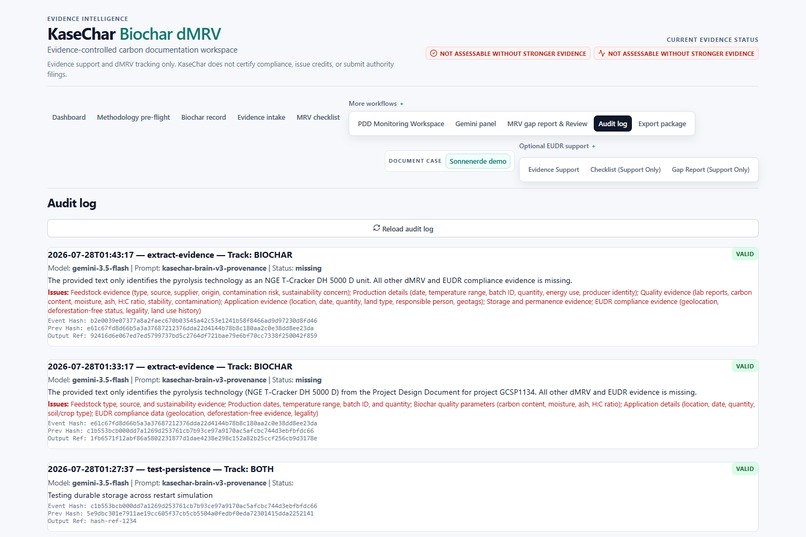
Every extracted record preserves:
- source evidence references
- document pages or locations
- timestamps
- model and prompt provenance
- confidence and uncertainty
- validation outcomes
- integrity metadata
This creates a transparent and auditable evidence trail suitable for independent review.
Challenges we ran into
The first challenge was translating research insights into a practical workflow. The study of 150 farmers showed that adoption is not only a technology question. It is also about cost, labour, access, trust, and timing.
The second challenge was preventing unsupported certainty. Carbon-project records may appear complete while still containing missing measurements, weak documents, conflicting values, or unsupported claims. KaseChar was designed so that missing evidence remains missing.
The third challenge was using Gemini without allowing AI to become an uncontrolled decision-maker. We addressed this by separating interpretation from validation. Gemini helps organise and interpret evidence, while deterministic rules and human review control the final status.
Accomplishments that we're proud of
- Built a working AI-powered Biochar dMRV platform
- Implemented a PDD-driven monitoring workflow
- Developed Gemini-powered document interpretation and structured evidence extraction
- Created deterministic completeness, conflict, and human-review gates
- Implemented source-linked provenance and audit-ready reporting
- Built evidence-gap detection and monitoring-status workflows
- Added server-controlled verification support package generation
- Preserved a clear separation between forecast values and actual monitoring data
- Ensured that user assertions cannot satisfy material evidence requirements
- Developed responsive desktop and mobile workflows
- Added automated testing for complete, incomplete, conflicting, and review-required scenarios
- Included optional EUDR Evidence Support as a separate secondary workflow
- Built the concept on research involving 150 farmers in Thailand
- Produced two peer-reviewed publications from the research
- Received recognition through the ADB-JSP Thesis of the Year Award
What we learned
The central lesson is that trustworthy AI must be designed around real user behaviour and real evidence conditions.
A promising prototype does not automatically become a practical service, and a confident model output does not automatically become a trustworthy conclusion.
Farmers and project operators need practical workflows connecting residues, production, technical support, monitoring, and benefits. Reviewers need traceability, controlled validation, and clear evidence gaps.
We also learned that digital MRV is not only about collecting data. It requires a structured connection between project documents, operational activities, evidence, reporting, and human review.
KaseChar is therefore not simply an AI application. It is an evidence system that uses Gemini within controlled and auditable boundaries.
What's next for KaseChar
Our goal is to develop KaseChar into trusted digital infrastructure for biochar carbon projects.
Our next priorities are:
- farmer and project onboarding
- field and geospatial evidence capture
- laboratory and quality-data workflows
- production and application monitoring
- evidence and activity timelines
- reviewer and verifier workflows
- audit-package export
- stronger evidence provenance and integrity controls
- optional EUDR evidence support
- future services connecting farmers, producers, laboratories, project developers, buyers, and independent reviewers
KaseChar started with farmers and academic research. It is now evolving into practical evidence infrastructure for transparent, trustworthy, and scalable biochar carbon projects.
Built With
- ai
- api
- audit
- biochar
- climate
- developer
- digital
- eudr
- gemini
- gen
- javascript
- json
- mrv
- node.js
- puppeteer
- react
- sdk
- sha-256
- studio
- sustainability
- tech
- typescript
- vite
Log in or sign up for Devpost to join the conversation.