Inspiration
At Princeton, I watched sharp people lose hours to their phones. They'd open their notes for five minutes, scroll for twenty, then say they were "cooked." The real cost wasn't lost study time. It was the guilt, the lost sleep, the broken focus. This is a wellbeing problem disguised as a productivity one.
It's not niche. Nearly 9 in 10 of Gen Z feel addicted to their phones, and the average person unlocks theirs around 144 times a day. Attention is the foundation of a healthy life, and we're losing it at scale.
Existing blockers don't fix this. They're paywalled, buggy, rarely cross-platform, and dumb. A blanket wall gets disabled the second it's inconvenient. I wanted something that doesn't just say no, but knows when yes is right. That's Kael.
What it does
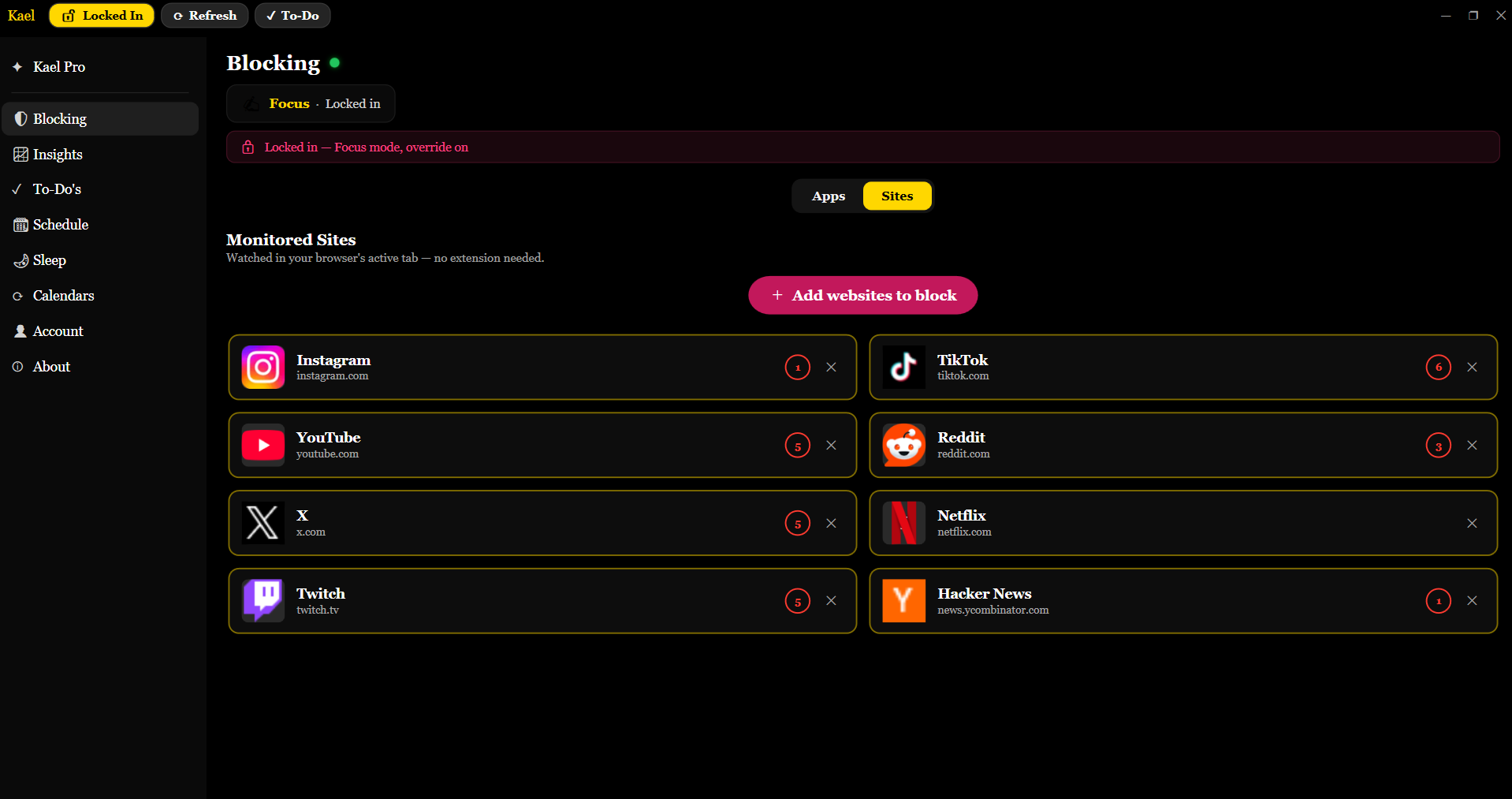
Kael is a digital-wellbeing app that puts a thinking layer between you and your impulses. Instead of blocking apps outright, it asks why.
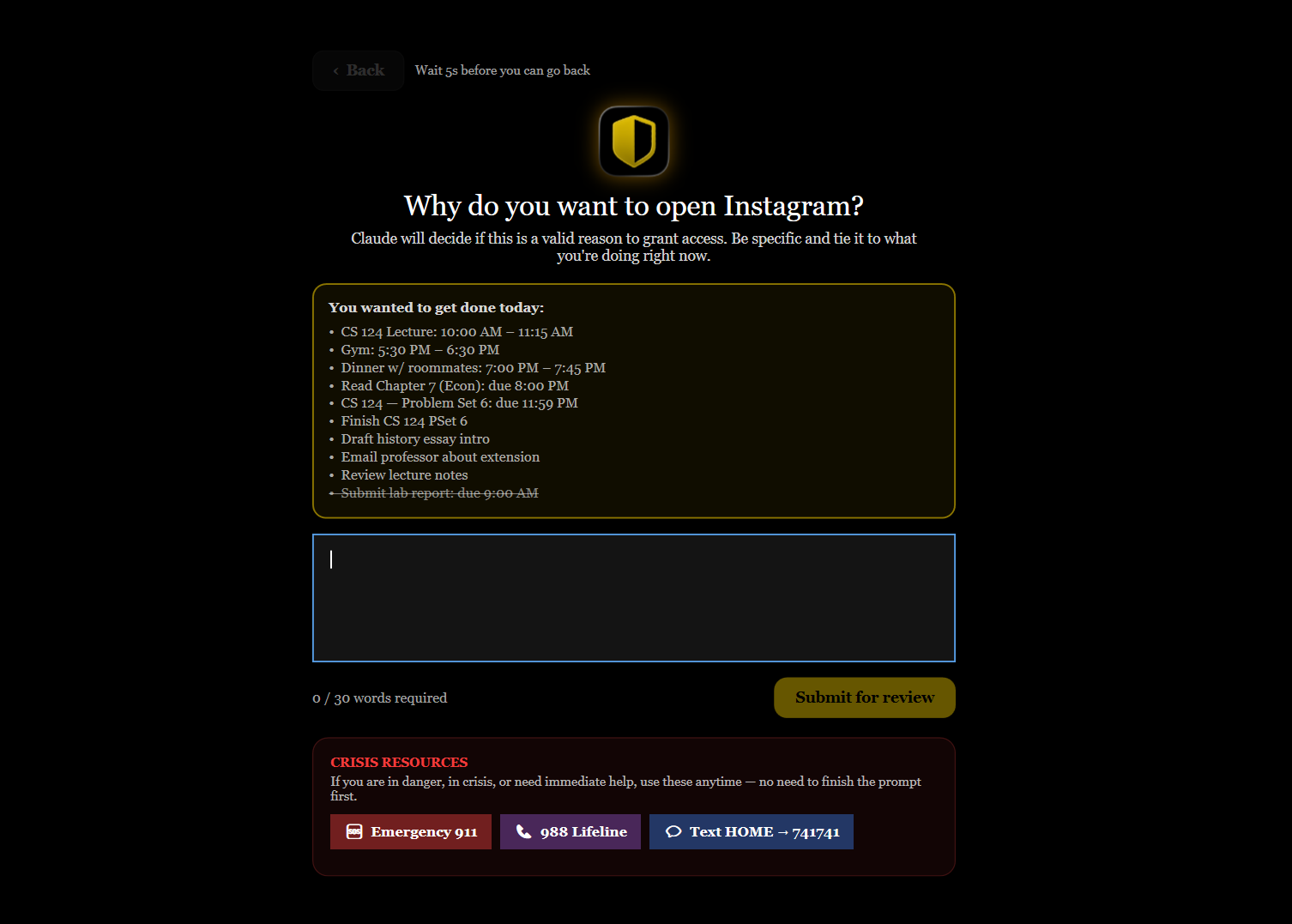
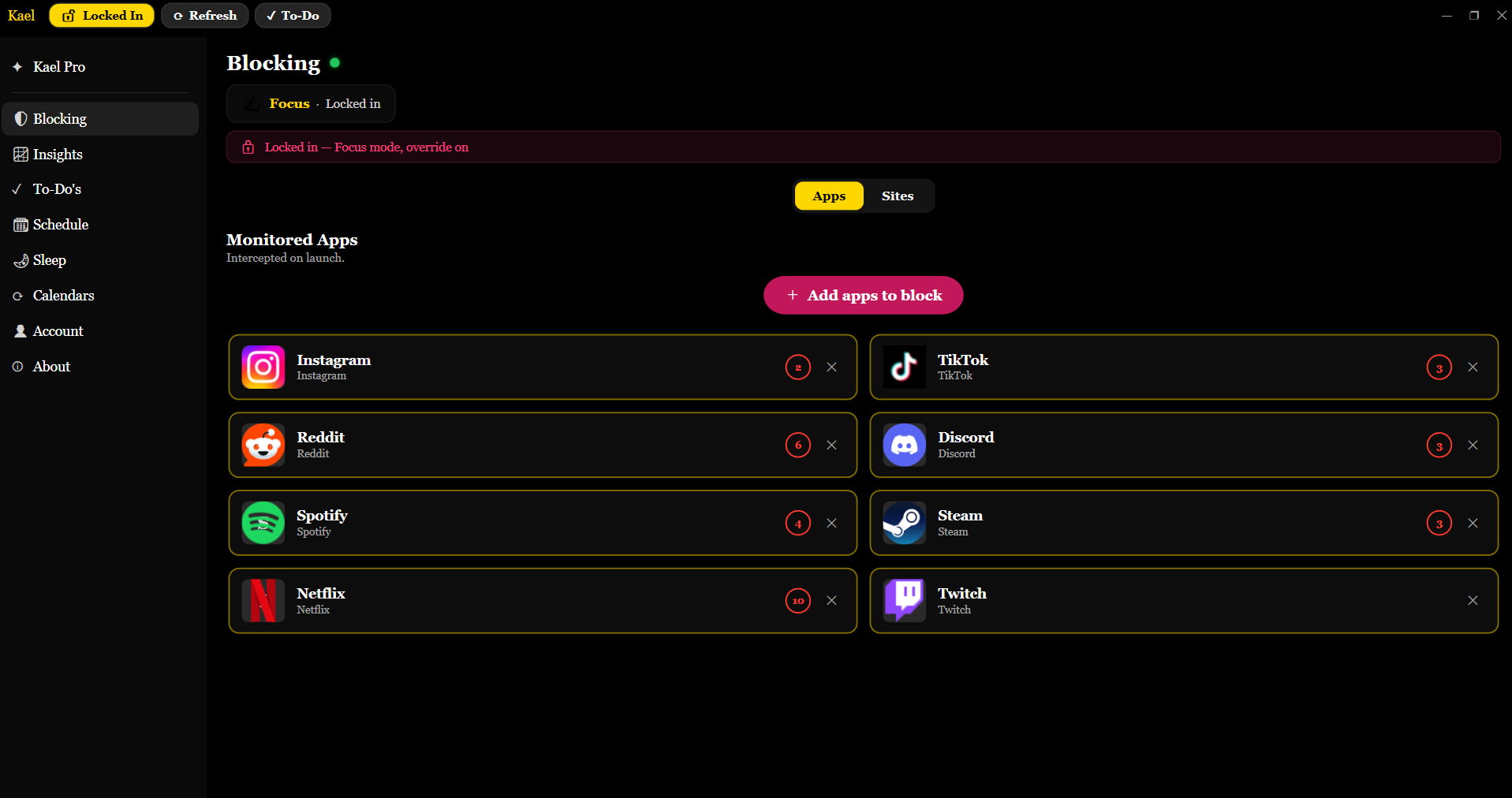
The core loop. Reach for Instagram or TikTok and Kael intercepts before it opens. You type a short reason. Claude weighs it against your real day: calendar, deadlines, time, and goals. "I'm bored" gets denied instantly. "Messaging a classmate about the problem set" might earn a time-boxed pass. Approvals are time-limited. Denials end in a 20-word reflection.
The pieces that make that judgment smart:
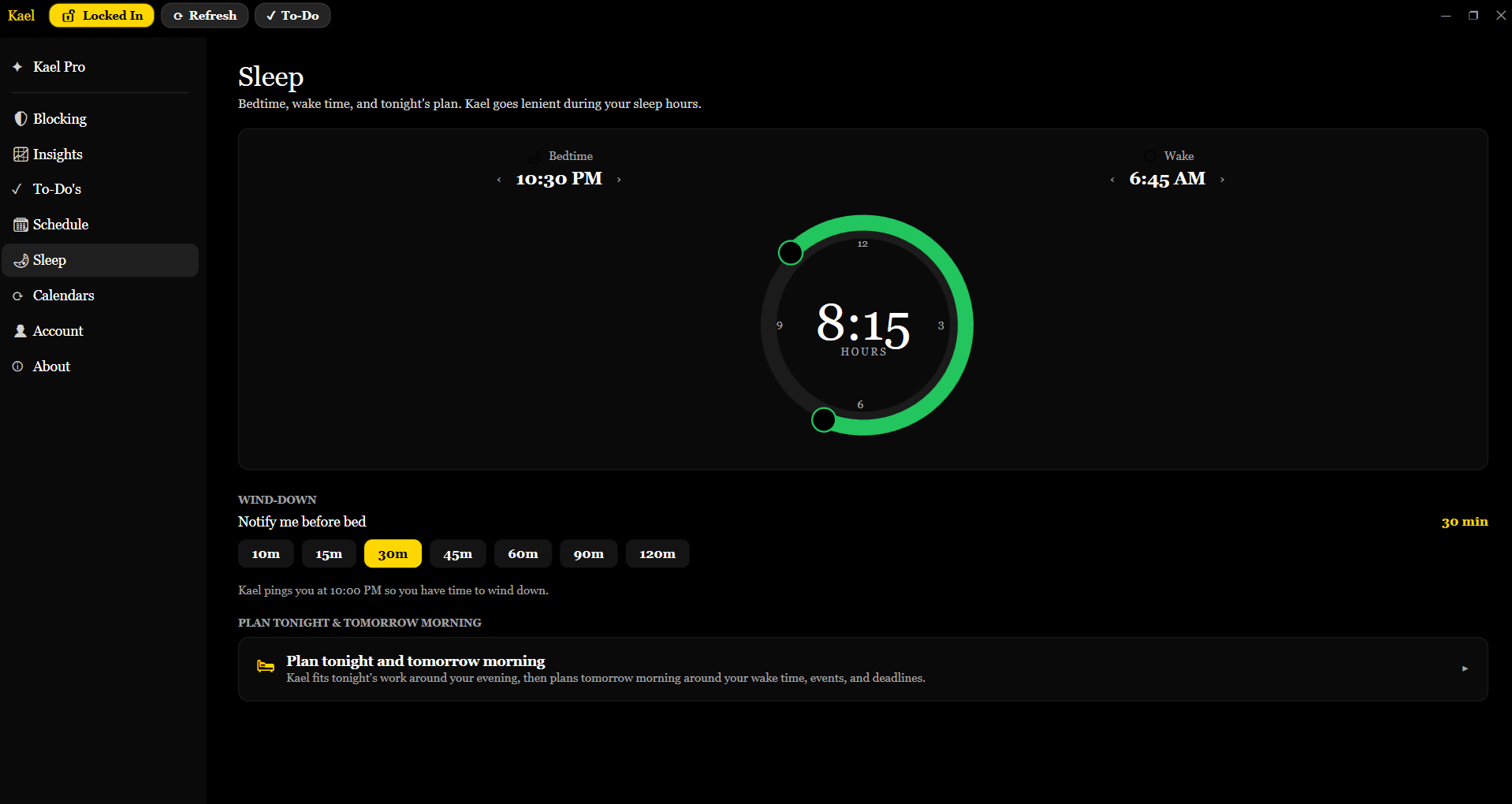
- Adaptive modes. Night, Ease, Balanced, and Focus auto-switch to your day, from lenient evenings to strict deadline lockdowns. Night mode even does the sleep math.
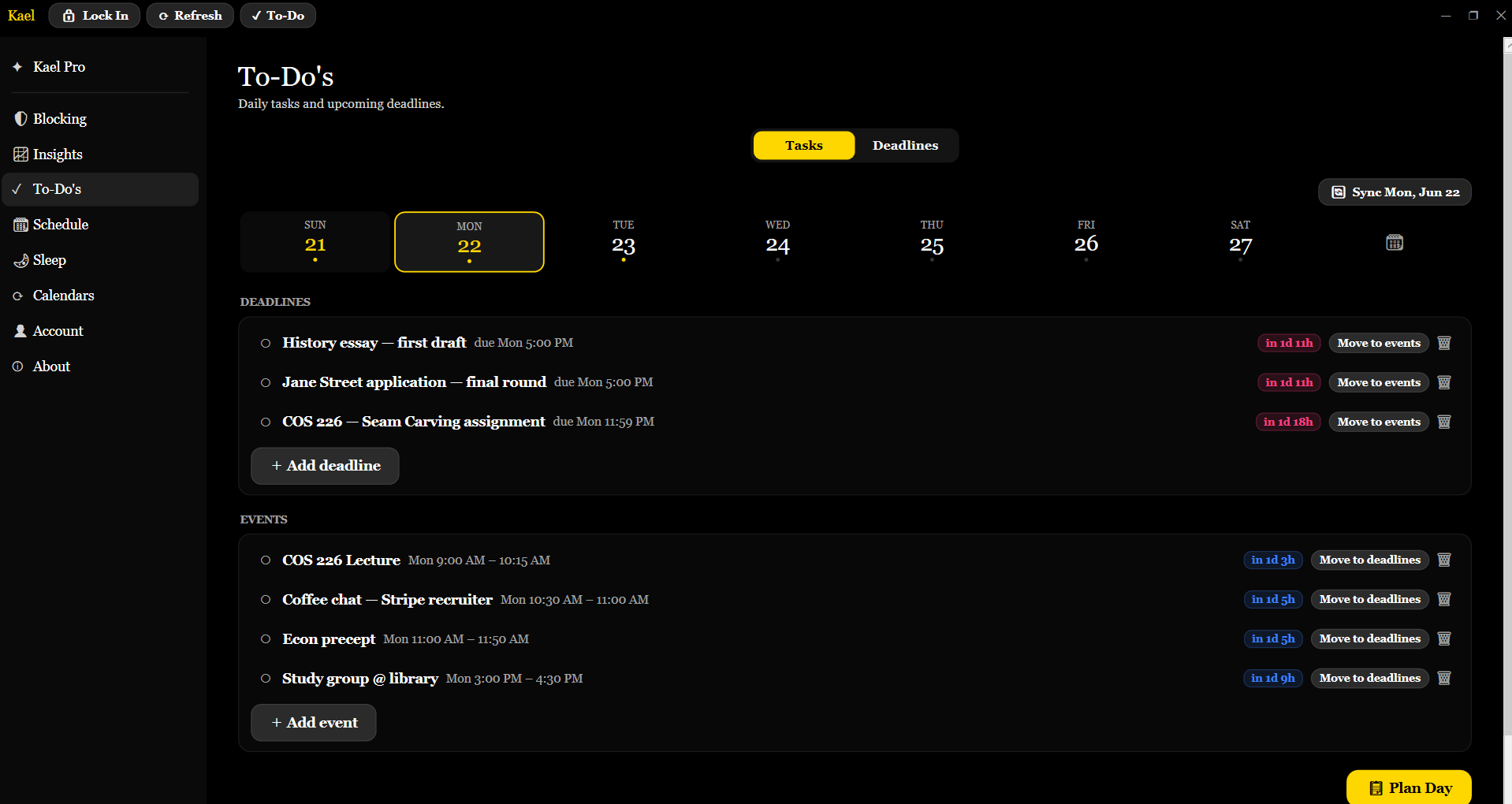
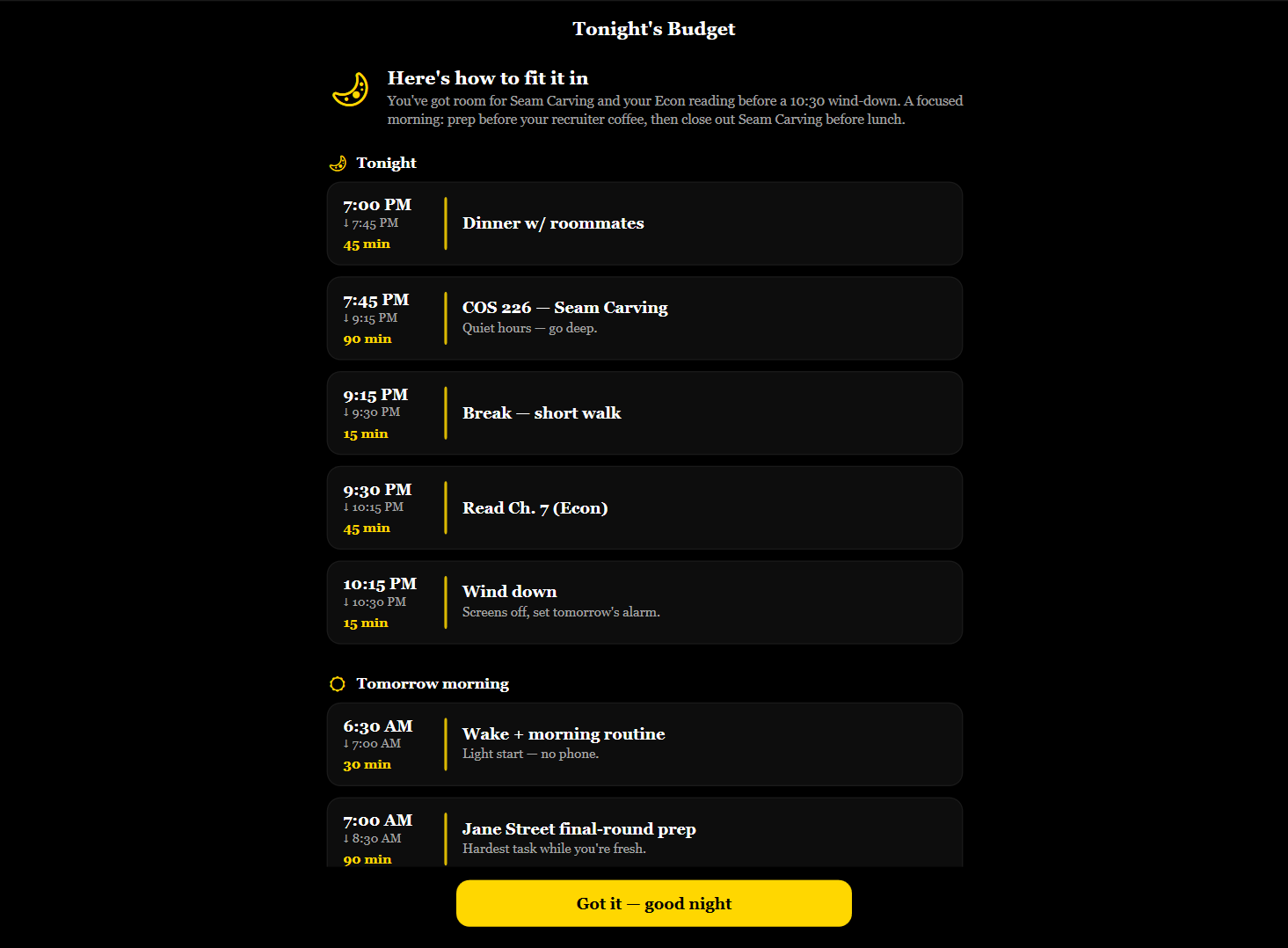
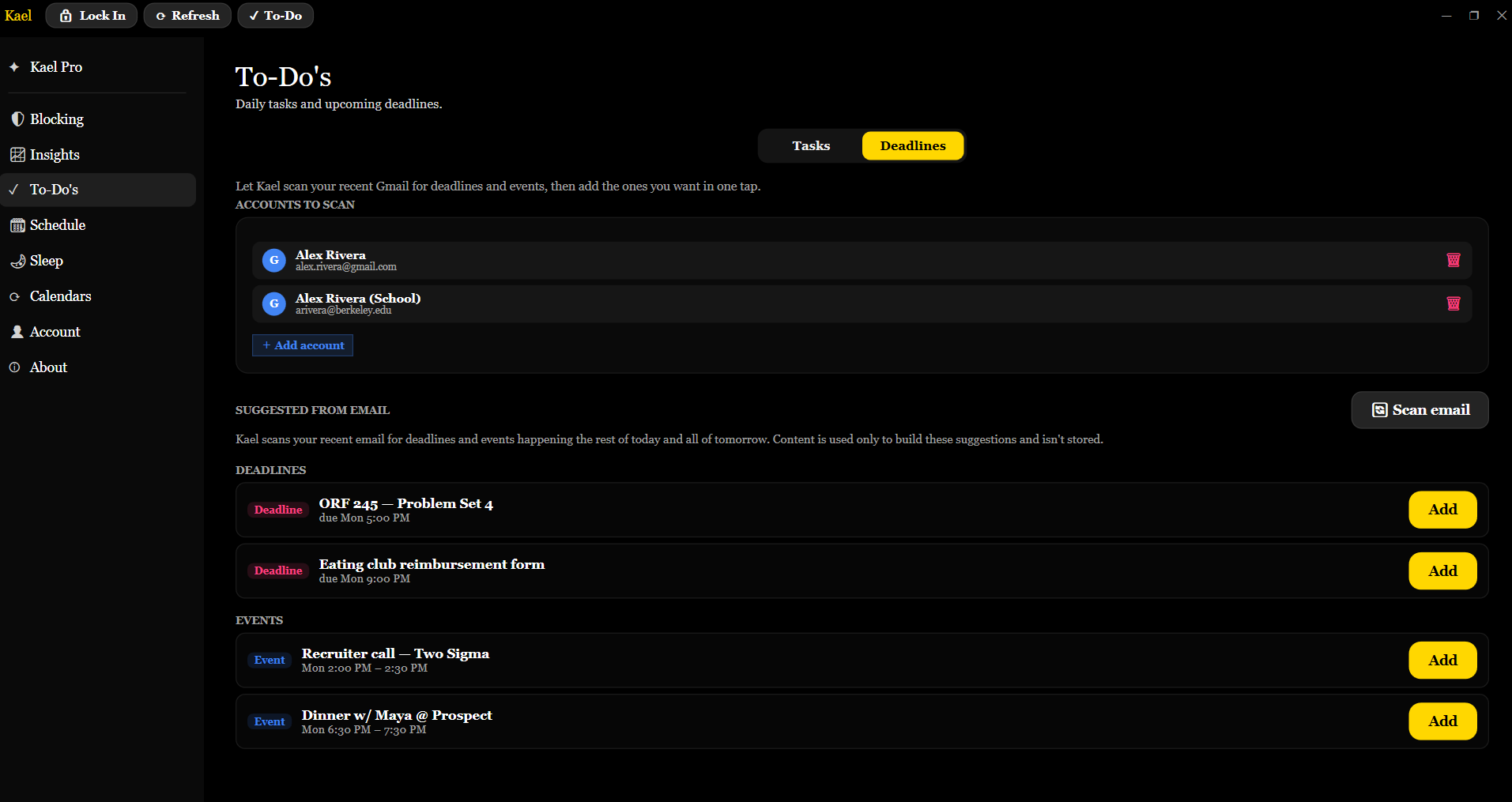
- AI planning. Claude builds your morning briefing and plans tomorrow around your calendar, Canvas assignments, and Gmail-detected deadlines.
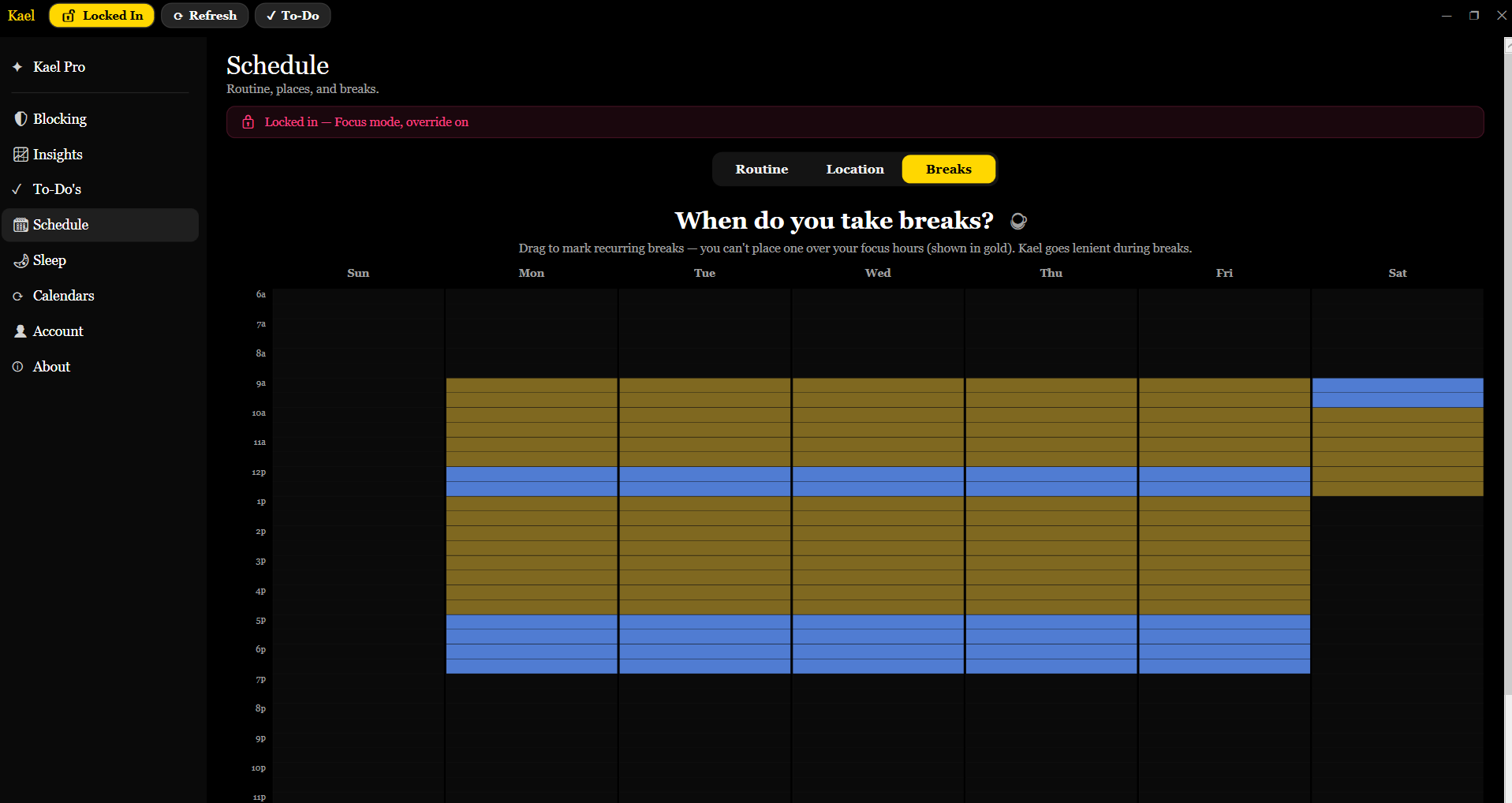
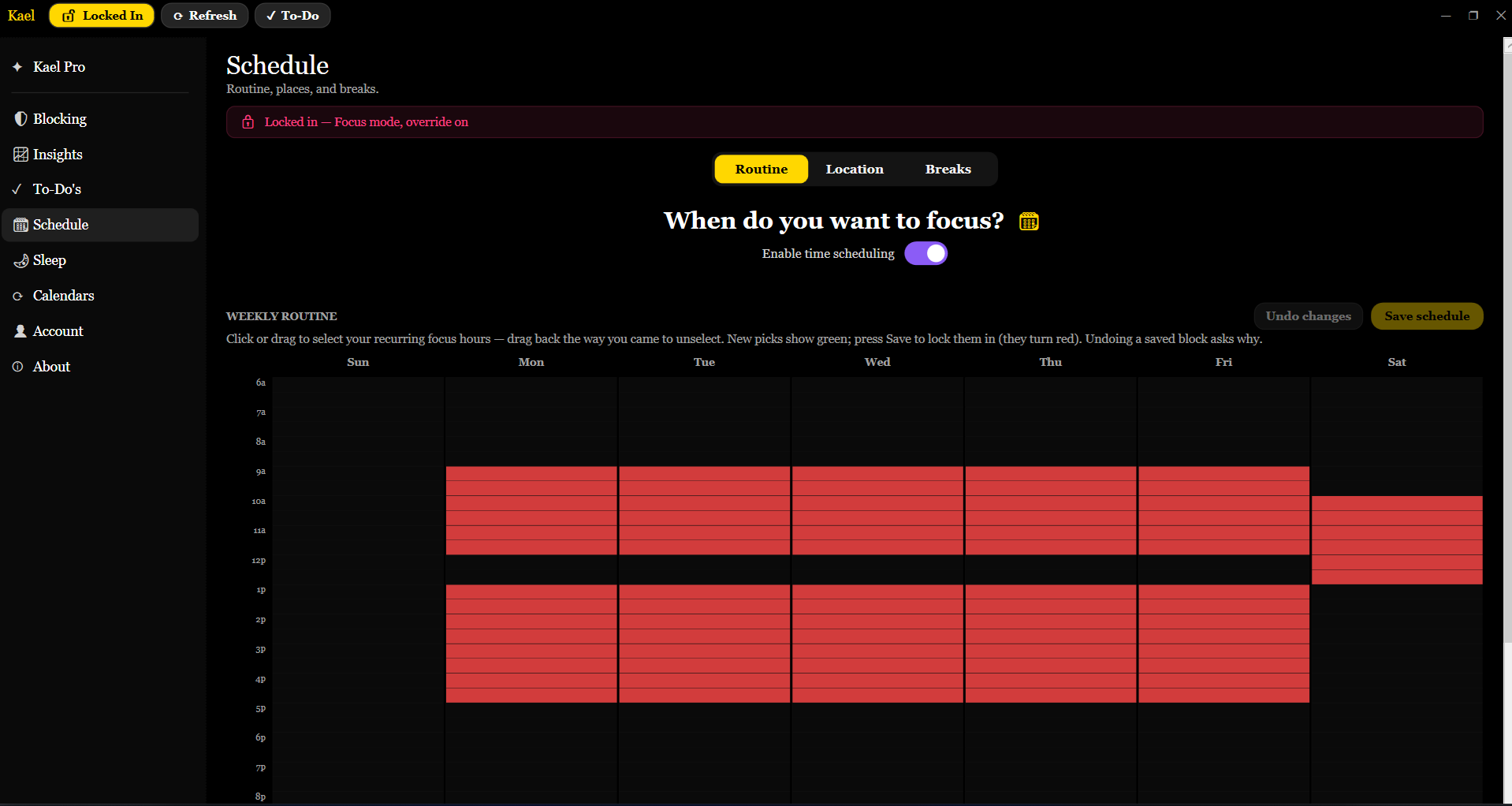
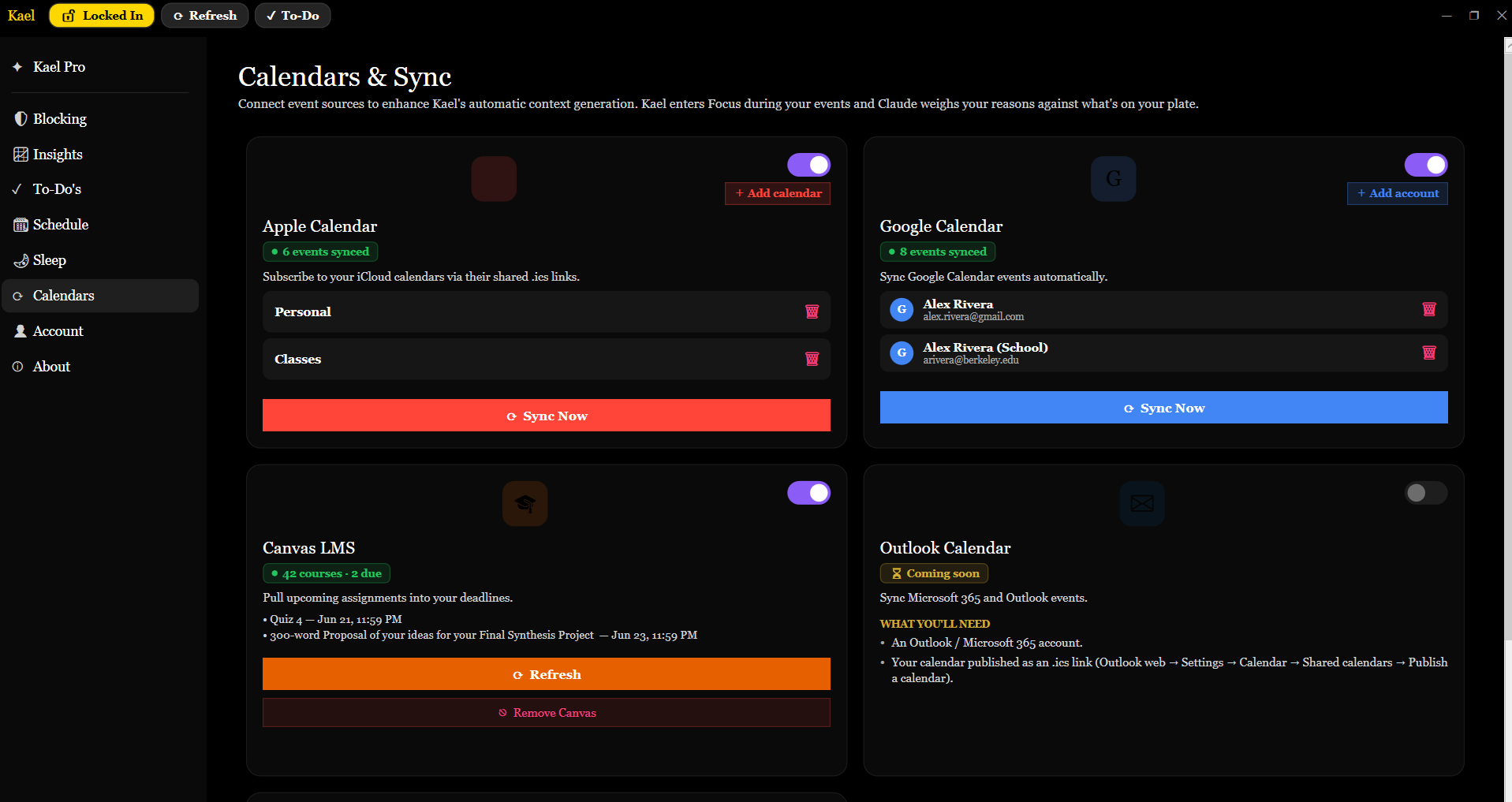
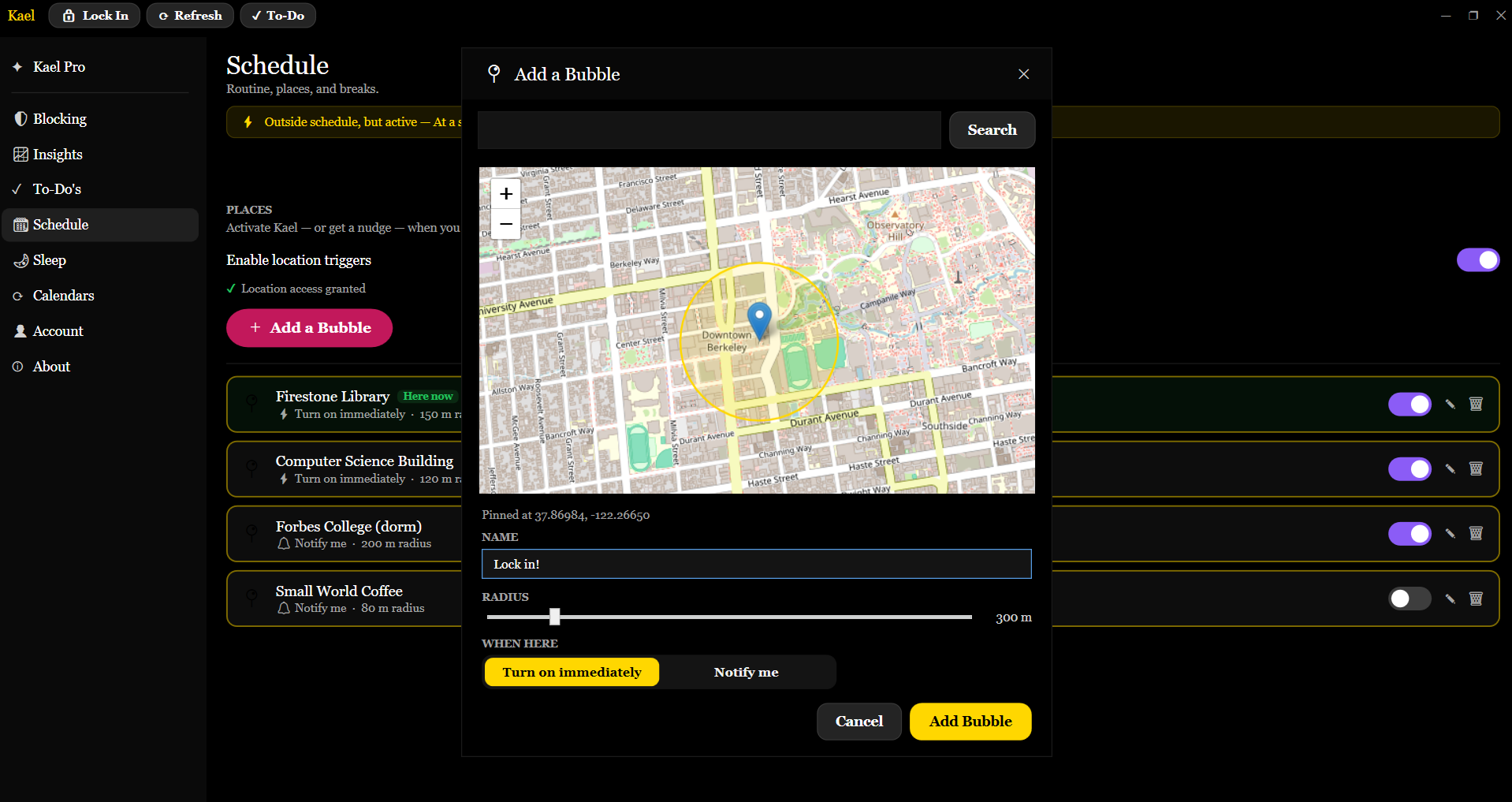
- Context-aware focus. Location bubbles, class-schedule windows, and Apple and Google calendar sync turn focus on exactly when and where it matters.
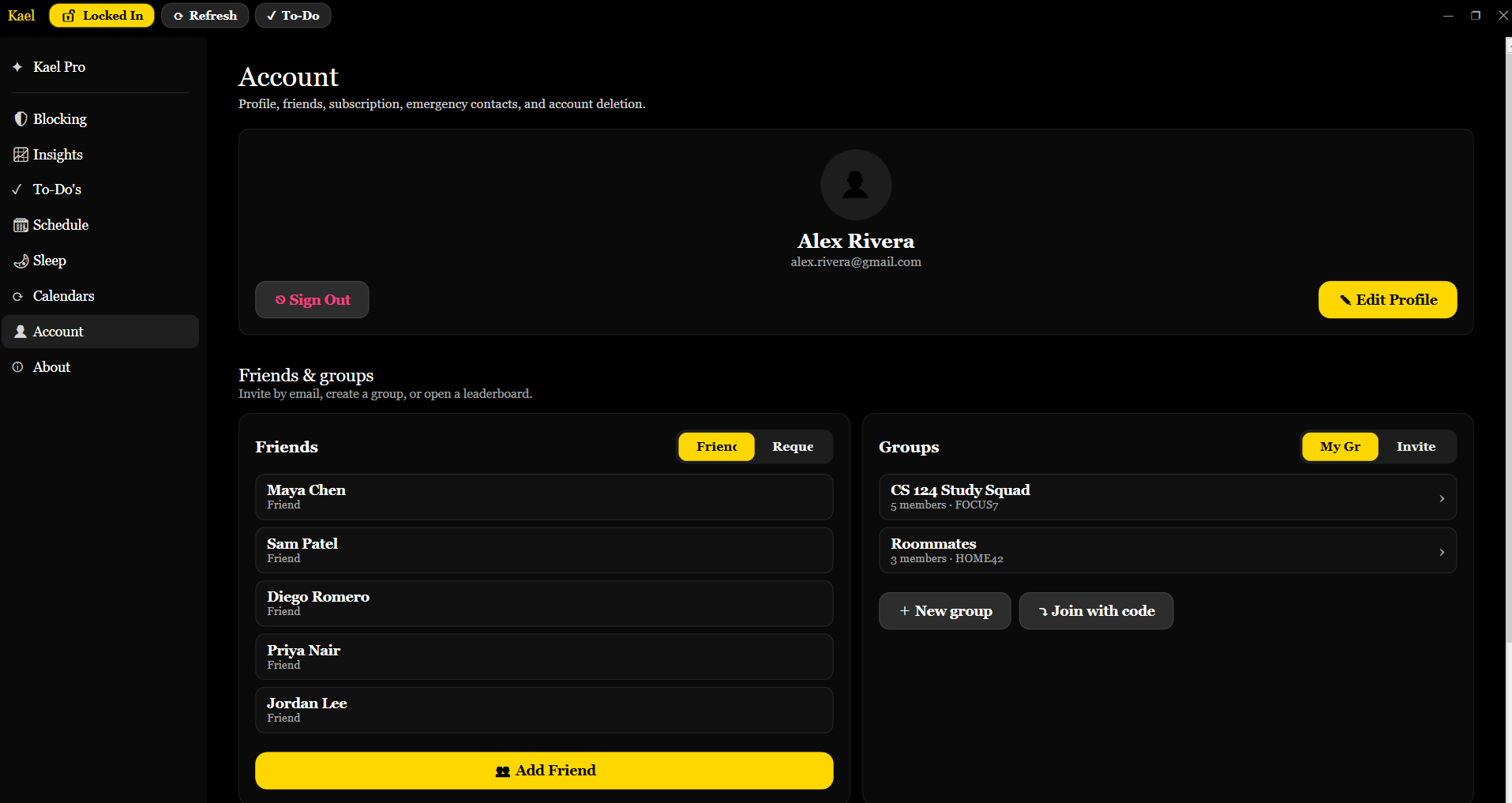
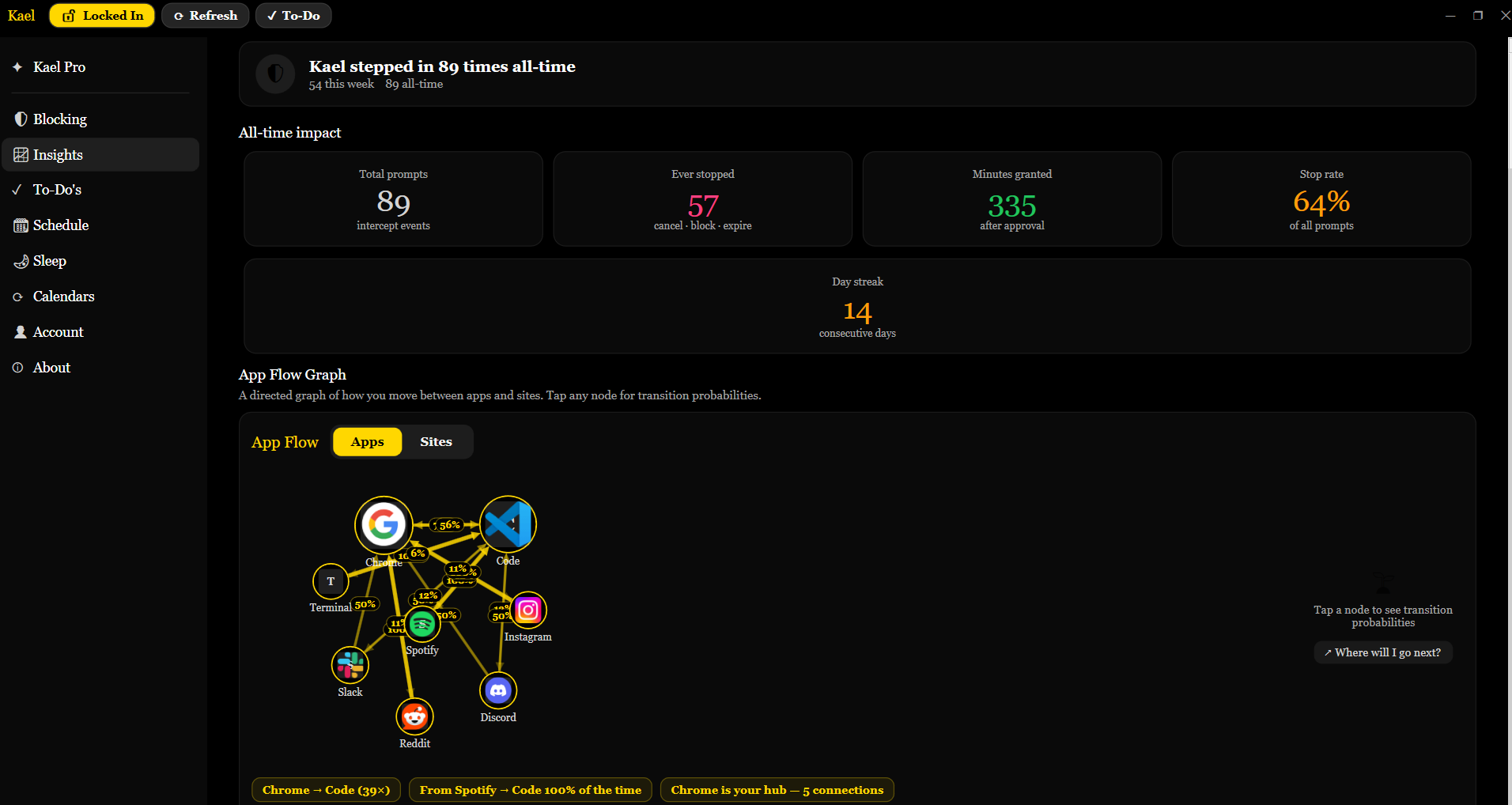
- Accountability. Friends, shared streaks, and leaderboards, plus insights into the hours you're most vulnerable.
Kael runs on iPhone and Mac (and now Windows), needs no extra hardware, and keeps your data on-device. The same engine scales to schools and companies with per-student reasoning, a class-engagement dashboard, and SSO.
How I built it
I grounded it in research first. For a Princeton research seminar, Technogenesis, I wrote a paper cross-analyzing existing focus tools to find which features actually changed behavior and which didn't.
https://docs.google.com/document/d/1WN1-zPZrjwbtupZ1kjPCbKtVWiWStdVMNGqFOwSWqmA/edit?usp=sharing).
The takeaway was clear. Blanket blocking fails because people disable it. Friction, reflection, and context-aware judgment work. That's why Kael asks why, time-boxes grants, and ends denials with a reflection.
For this hackathon, I built Kael for Windows, the desktop most students actually study on. I was only familiar with Apple's frameworks and Swift, so this meant writing C# and WPF for the first time, a language and framework entirely new to me, outside the Python, Java, and C++ I already knew. Windows has none of the built-in APIs Apple gives you for intercepting apps or rendering native UI. I built the interception logic and the interface by hand.
An AI-agent stack made that possible in a weekend:
- Claude and Cursor for reasoning, debugging, and getting productive fast in an unfamiliar language
- Devin for parallel feature work
- Pika for marketing assets and video
The product runs on Claude too. The same judgment that helped build it decides whether to let you into TikTok.
Challenges I ran into
The stack itself was the hardest part. It was my first time writing C# and WPF, with none of the built-in intercept and UI APIs Apple gives you. I rebuilt everything by hand while learning the language live.
The rest was bugs and testing. Moving fast with AI agents generates a lot of code that needs real debugging. The core logic is also hard to unit-test, since it depends on real-time context like your schedule, the current mode, and an AI's judgment, so I leaned on manual, adversarial testing. The subtler challenge was keeping Kael a supportive guardrail, not a guilt machine. The research is clear that shame-and-block doesn't work.
Accomplishments that I'm proud of
What I shipped this weekend:
- Built Kael for Windows from scratch in a single day, in C#/WPF, a stack I'd never used, with no built-in OS support for app interception or native UI.
- Got the full flow working end-to-end, from intercept to reason to AI decision to time-boxed grant or reflection, stress-tested by playing the most adversarial user I could.
- Grounded the whole design in my Princeton (Technogenesis) research, not guesswork.
Why Kael stands out:
- It's the only focus app that actually reasons. Against Opal, One Sec, Brick, and Unrot, Kael is the one judging your reason at every unlock, with adaptive modes, AI-planned briefings, calendar sync, and reflection prompts. The others just block, and you bypass them.
- It coaches instead of blocking. Kael adds a moment of judgment before you open an app, so you don't just disable it in frustration.
- It's fair by default. No paywalled basics, two months of Pro free, one price covering iPhone and Mac.
- It replaces GoGuardian for schools at a fraction of the price, with per-student reasoning instead of blunt allowlists, FERPA-aligned, and teachers out of the IT seat.
What I learned
- Distraction isn't beaten by a bigger wall. It's beaten by a better question. Friction and reflection change habits. Punishment gets switched off. Design for sustainability, not willpower.
- I can pick up an unfamiliar stack fast. I went from Python, Java, and C++ to a shipping C#/WPF app in a day. The language is rarely the real bottleneck.
- AI agents multiply one person's output, but only with you in the loop. The code they wrote fastest needed the closest review.
What's next for Kael
Kael is scaling from individual wellbeing to whole communities. Kael for schools and businesses brings shared focus policies, admin controls, and insight into engagement and wellbeing across a campus or team. See the institutions page: https://www.trykael.com/schools https://www.trykael.com/business
The personal app makes people feel the difference. The institutional product makes healthier attention the default instead of a private struggle. The goal is simple. Give people back their hours, focus, and presence.
Try Kael at trykael.com
Built With
- c#
- claude
- devin
- dpi
- google-calendar
- google-gmail
- google-oauth
- javascript
- openstreetmap
- pika
- powershell
- sql
- supabase
- typescript
- win32
- wpf
- xaml
- xunit

Log in or sign up for Devpost to join the conversation.