Inspiration
Modern kids spend hours glued to their screens, while traditional rules of etiquette, personal boundaries, and basic respect (especially regarding relationships between boys and girls) feel like boring, outdated lectures to them. On the flip side, parents are overwhelmed with work and daily routines, leaving little time for systematic soft skills education.
We realized that standard EdTech is failing: digital knowledge stays inside the screen and rarely transfers to the real world. We were inspired to build a bridge that transforms everyday parenting into a gamified quest, connecting parents and children without any added stress.
What it does
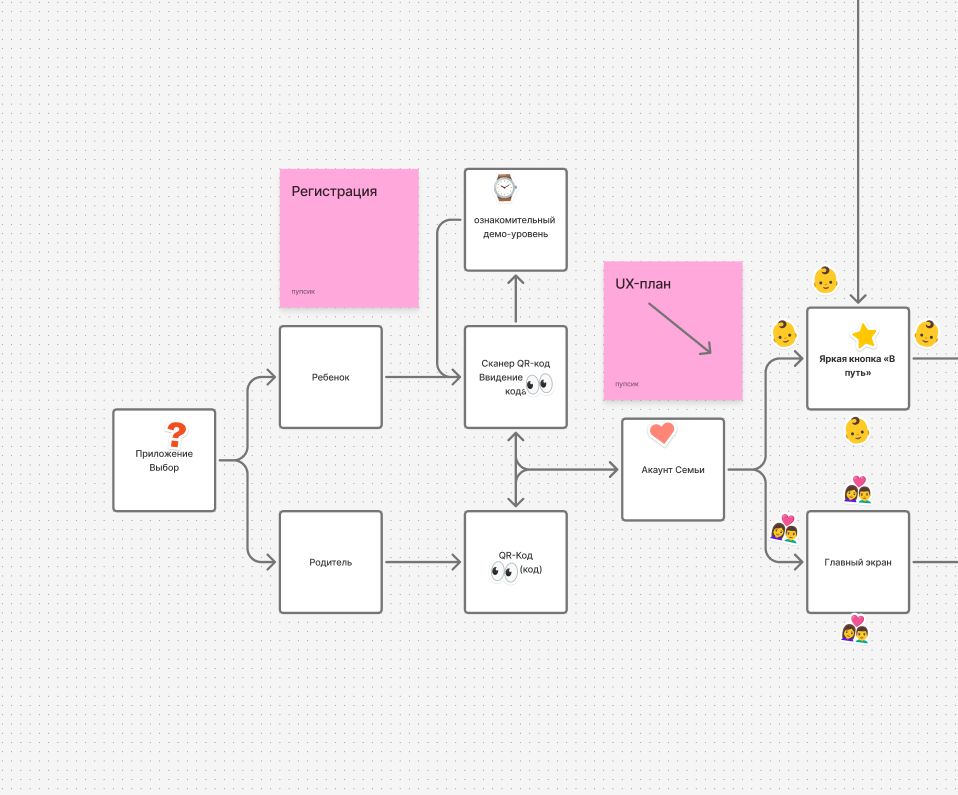
This is a single digital ecosystem with split roles (for the child and the parent) that translates the rules of elegant behavior into an engaging game format.
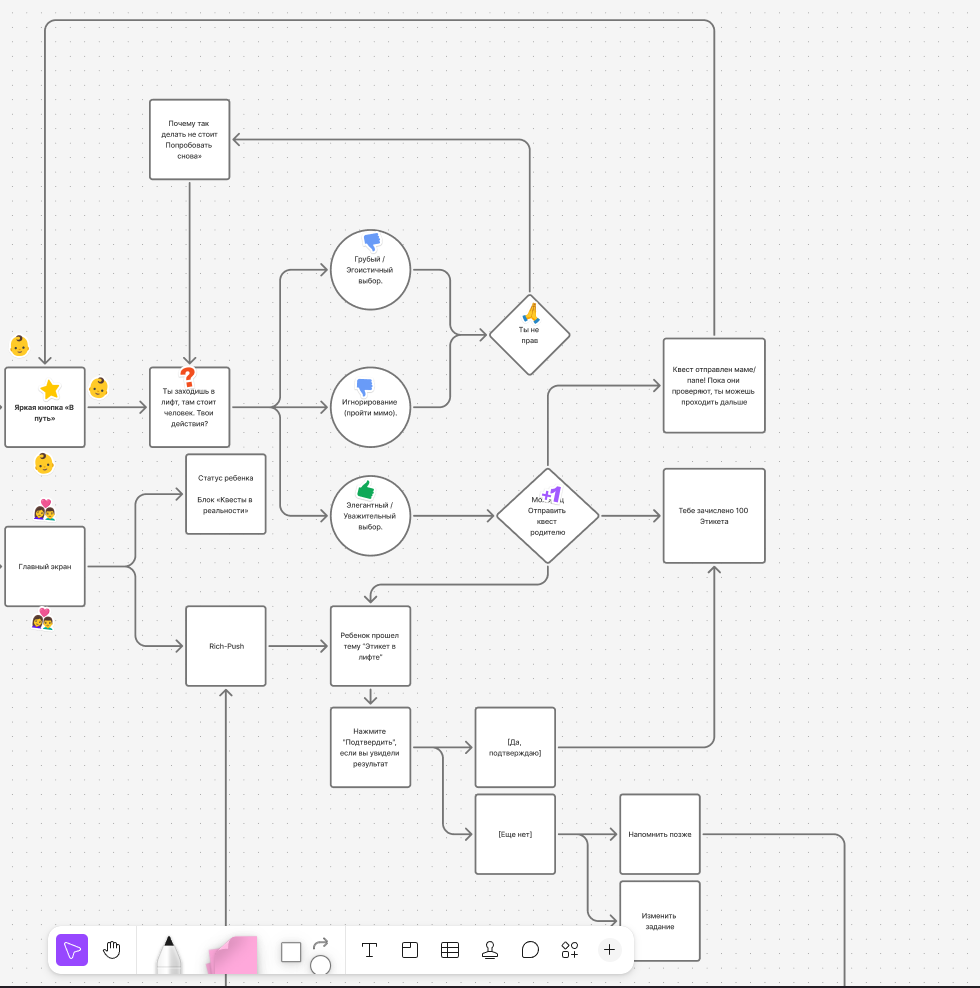
For the Child: It is an interactive visual novel where they control an avatar, navigate real-world social scenarios (e.g., elevator etiquette, table manners, respecting someone's "no"), and make crucial choices. Right decisions drive the plot forward, but real-life rewards remain locked until verified by a parent.
For the Parent: It is a 30-second control tool. No complex dashboards required—parents receive interactive Rich-Push notifications asking them to confirm if the child applied the skill in real life (e.g., cleared their plate after dinner or showed politeness).
How i built it
We engineered the entire ecosystem as a single, highly optimized native application utilizing a split-architecture approach to completely eliminate user friction and maximize retention.
Frontend & Split-UI Architecture: The client-side application was built entirely using SwiftUI and architected under the MVVM-C (Model-View-ViewModel-Coordinator) pattern. We bypassed the need for two separate apps by implementing a dynamic conditional router at the application root level. Upon launch, the app evaluates the authenticated session token and instantly re-renders either into an immersive, state-driven visual novel engine for the child, or a clean, metric-focused dashboard for the parent.
The Zero-Friction Pairing System: To link parent and child accounts instantly without manual input, we built a cryptographic pairing service. The parent’s device generates a time-sensitive, SHA-256 encrypted token packed into a QR code. On the child's side, we integrated a fast-capture camera module using the native AVFoundation framework that scans, decodes, and binds the unique Family ID on the database level in under 400 milliseconds.
Branching Narrative Engine: The child’s gameplay loop functions as a node-based state machine. We programmed a custom narrative engine that parses JSON-based dialogue trees dynamically. This allows the system to handle complex branching social scenarios—and seamlessly execute immediate rollback loops when a child makes an incorrect choice—without bloating the application binary.
Interactive Rich-Push & APNs Integration: To achieve the 2-second parental feedback loop, we developed a custom Notification Content Extension utilizing the native UserNotifications framework. When a child completes an in-game level, the backend dispatches an asynchronous remote payload via APNs (Apple Push Notification service). This injects custom SwiftUI action buttons ([Confirm] and [Not Yet]) directly into the iOS lock screen overlay, executing background HTTP POST requests via URLSession to update the database state instantly without requiring the parent to open the main application process.
Backend & Data Sync: The architecture relies on a scalable RESTful API built with Django, utilizing a strict database schema to manage family accounts, gamified progression logs, and verification webhooks efficiently.
Challenges i ran into
Fighting Friction: Our initial concept involved two separate apps, which absolutely killed user conversion. We completely re-architected the logic, merging everything into one seamless application.
The "Dead Time" Problem: What happens if a child finishes a quest while the parent is stuck at work and can't reply? To prevent the game loop from freezing, we engineered a "Pending State" featuring mini-games and avatar customization, along with alternative in-app tests if the parent is away for too long.
Eliminating UX Dead Ends: We reworked our error mechanics. The logic for a "wrong choice" was rerouted into a constructive correction loop, ensuring kids don't get frustrated and quit after their first failure.
Accomplishments that we're proud of
Designed a parent-child interaction system that demands only 2 seconds of a parent's attention per day, yet actively drives tangible, real-world behavioral changes in the child.
Stripped the "archaic" vibe entirely from the concept of etiquette, successfully packaging respect and elegance into game mechanics that appeal directly to Generation Alpha (skins, loot, character progression).
What we learned
We realized that in products built for kids, the parent is the paying customer but simultaneously the tightest bottleneck in UX. If a product demands extra effort or forces them to lecture their kids, the entire system collapses. Designing an interface for two completely polar target audiences at the exact same time is a masterclass in product design.
What's next for k
Designing two distinct visual UI styles (skins): a cartoonish look for kids aged 7–10, and a sleeker, comic-book aesthetic for teens aged 11–14.
Refining the backend architecture to completely prevent notification spam for parents (enforcing a strict limit of 1 major real-world quest per day).
Moving from UX wireframes in Figma to a high-fidelity interactive UI prototype, followed by launching MVP testing with our first parental focus groups.
this text was written by AI but everyyhing else was was done by me
Built With
- avfoundation
- design
- django
- django-rest-framework-database:-postgresql-protocols-&-services:-apns-(apple-push-notification-service)
- frontend-&-mobile-os:-swift
- http/https
- rest-api
- swiftui
- usernotifications-framework-backend:-python
- wireframing:

Log in or sign up for Devpost to join the conversation.