-
-
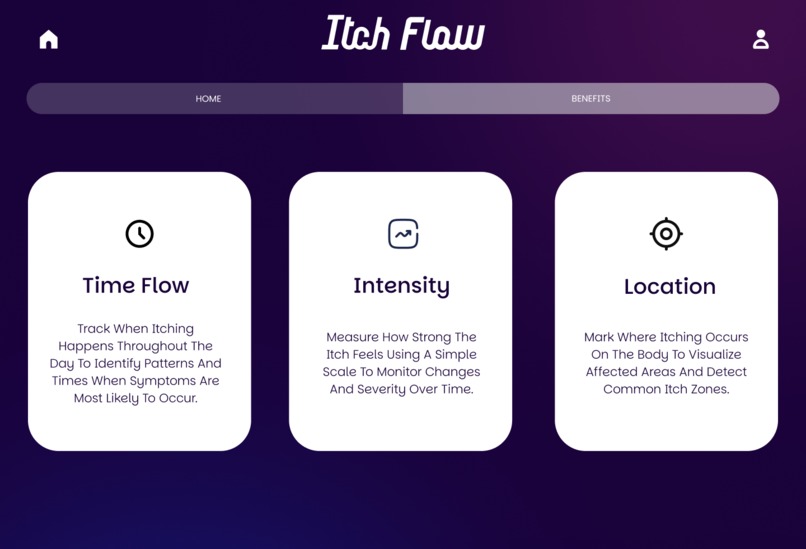
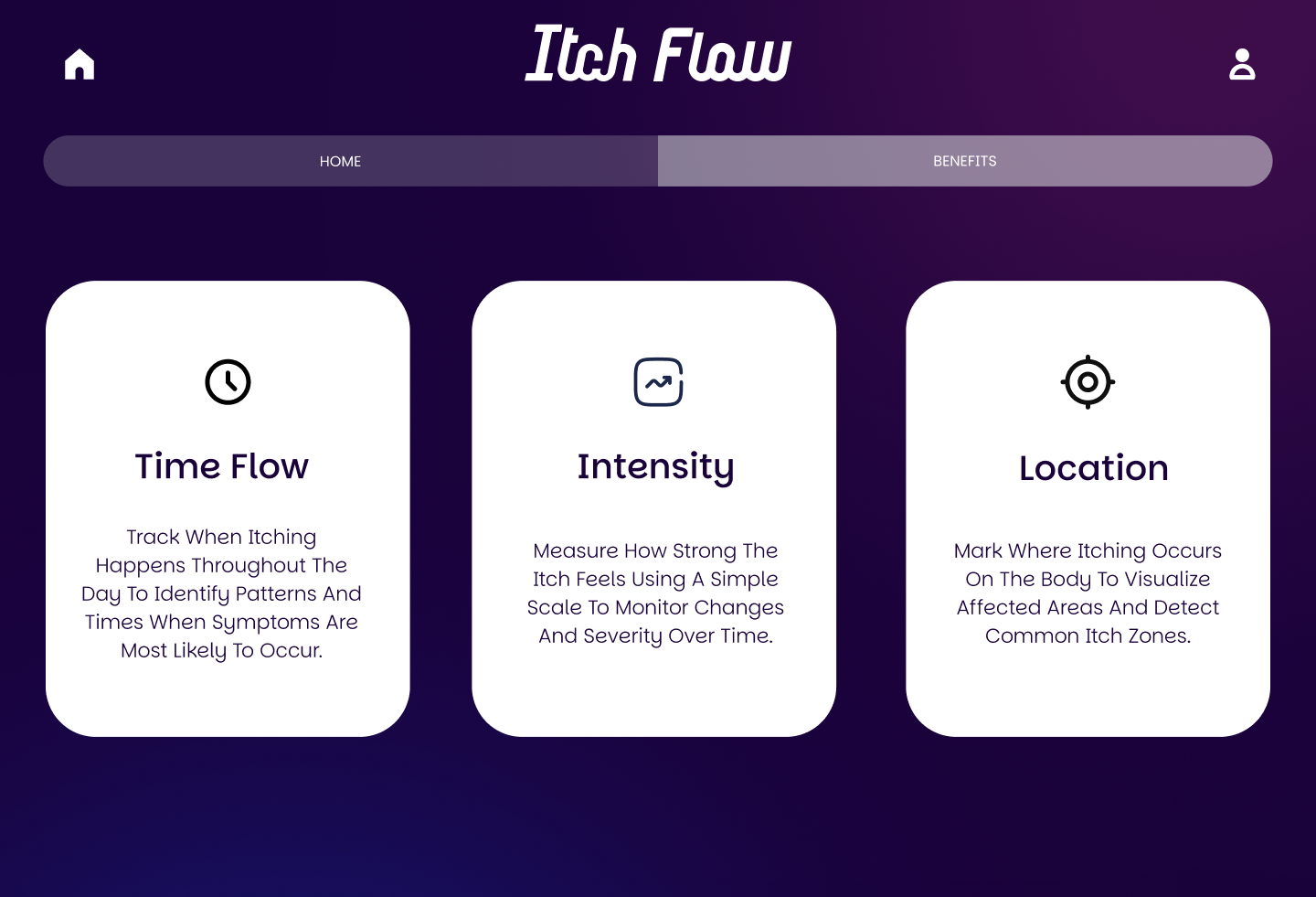
Website Homepage - Benefit
-

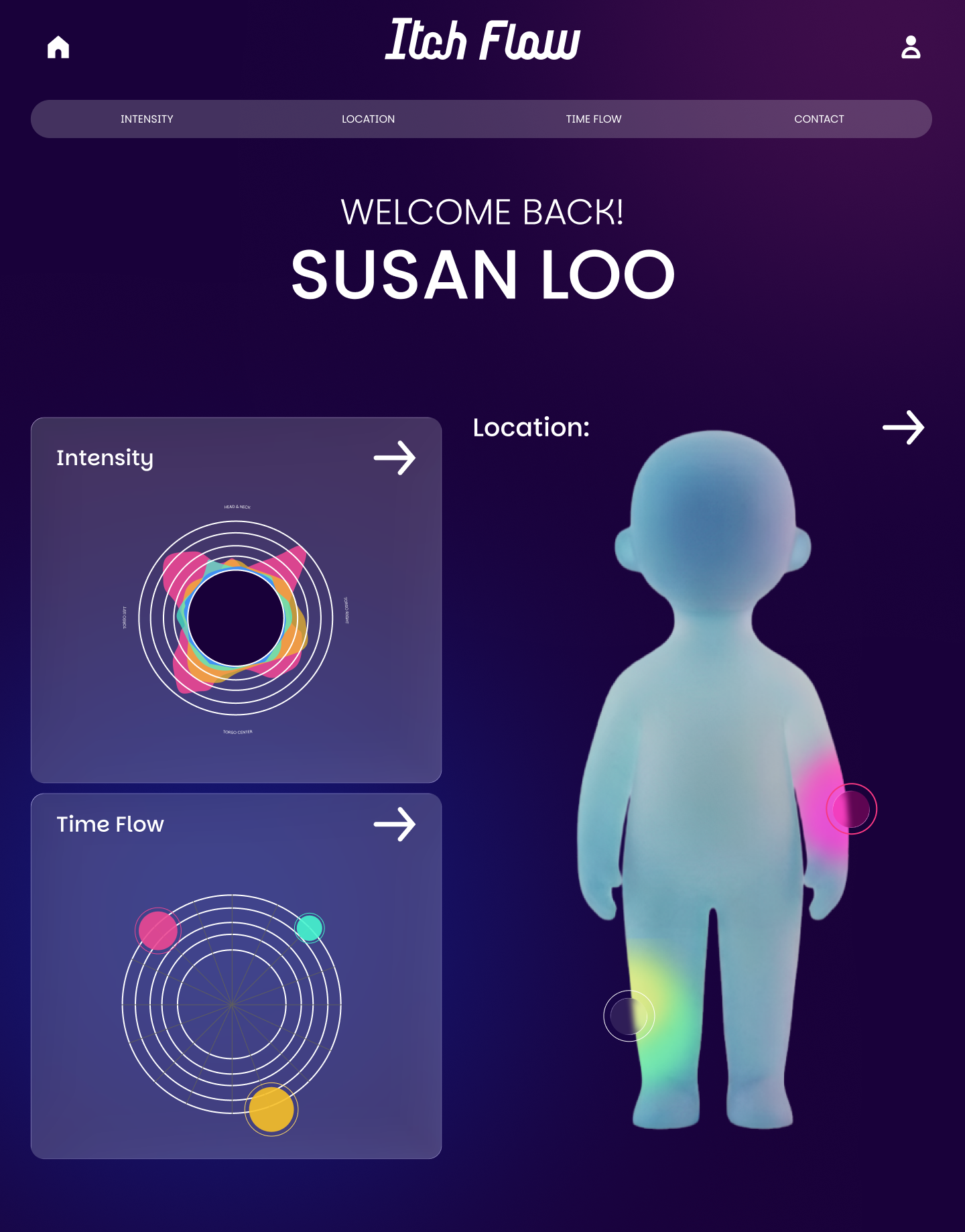
Website Homepage
-
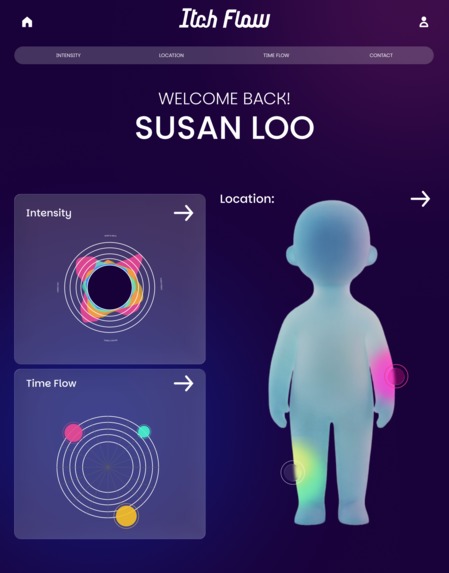
Website - Start Tracking
-
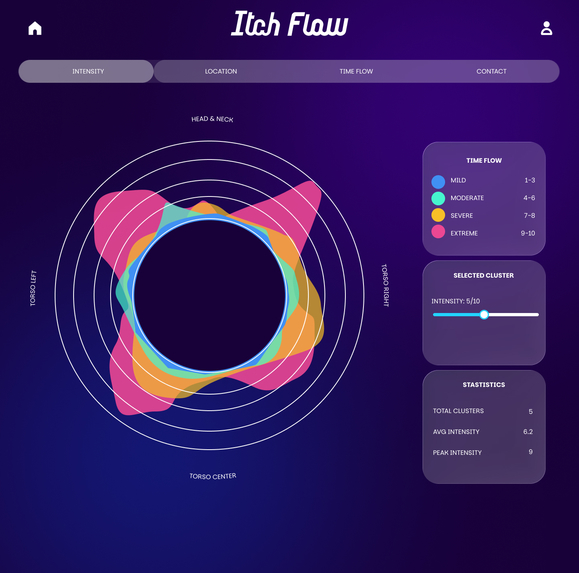
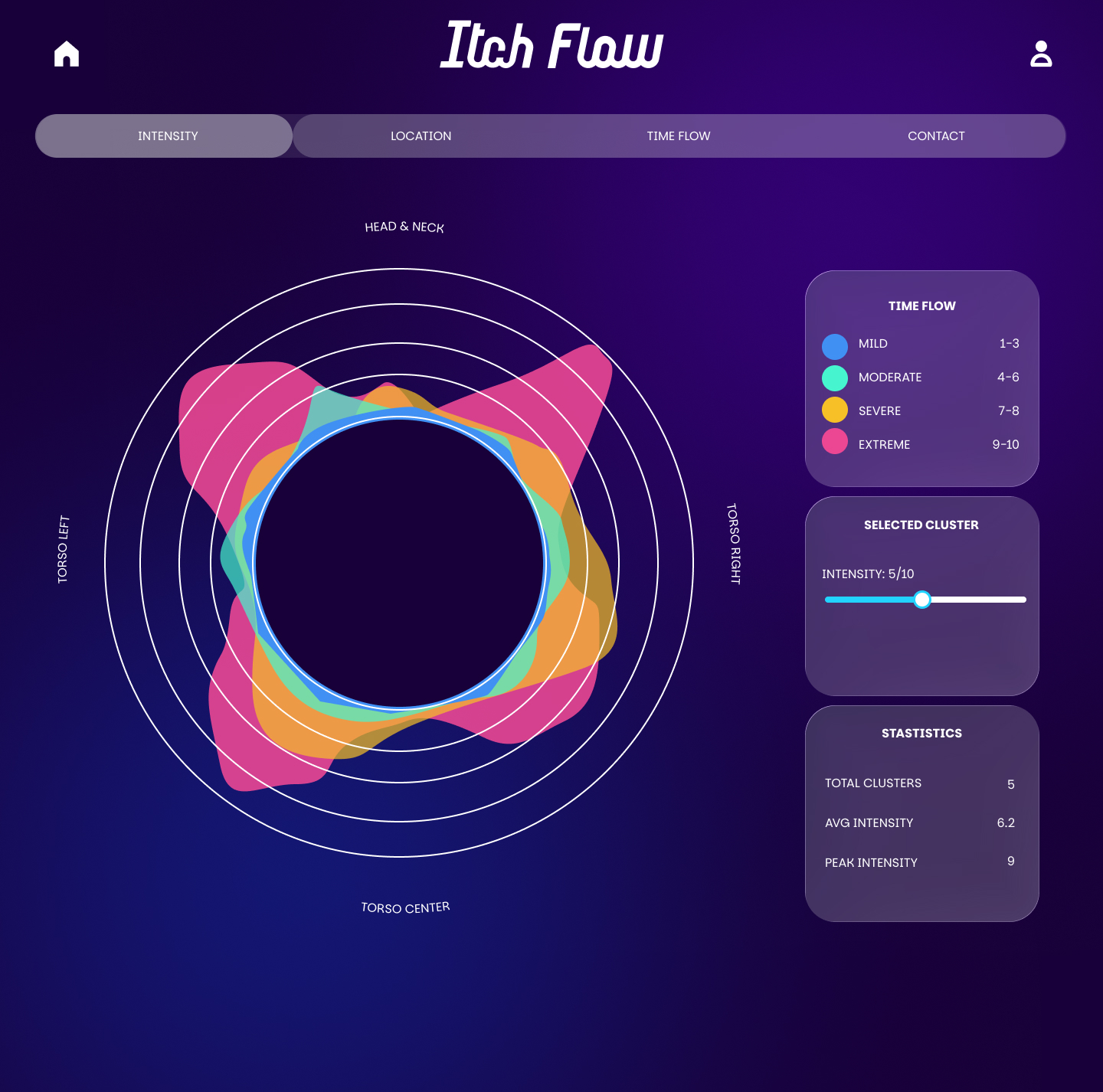
Website - Intensity
-
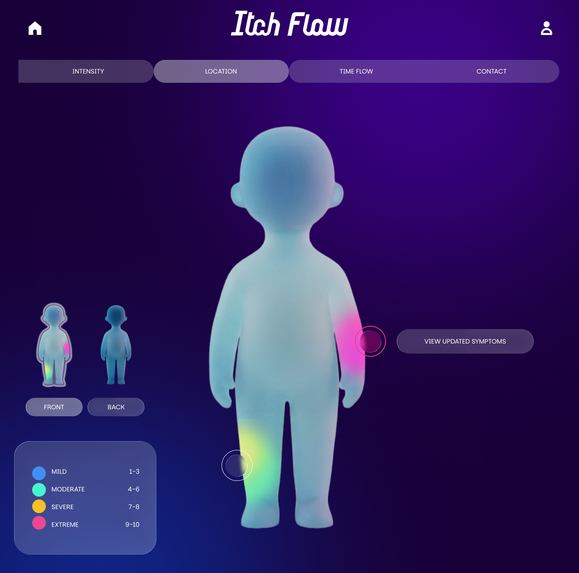
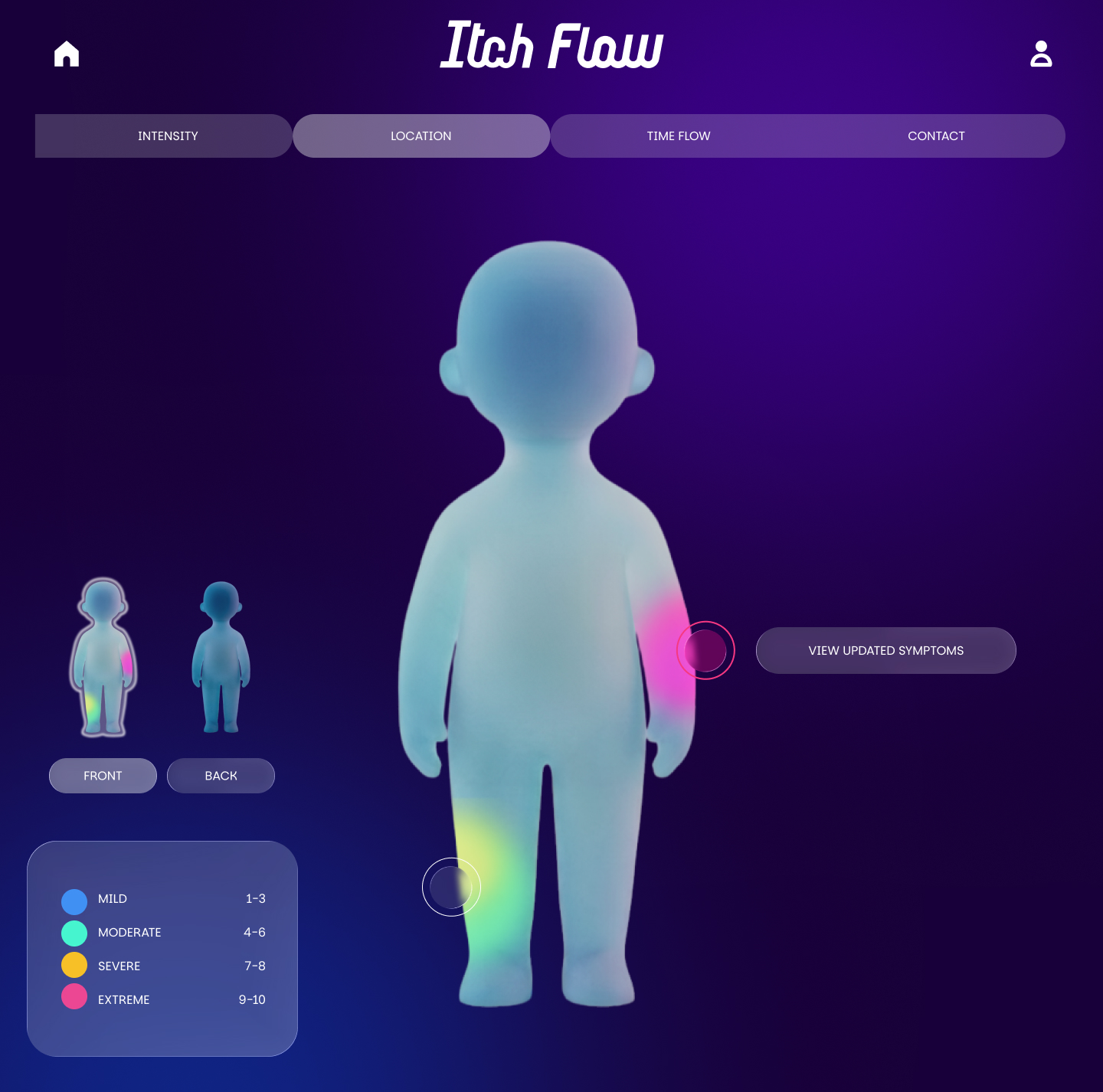
Website - Location
-
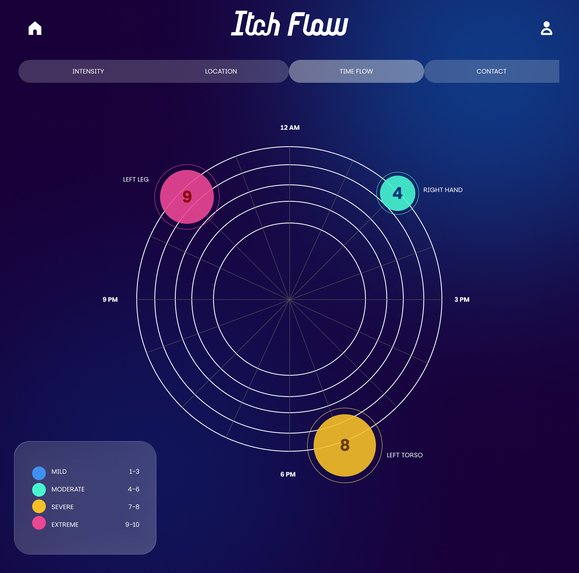
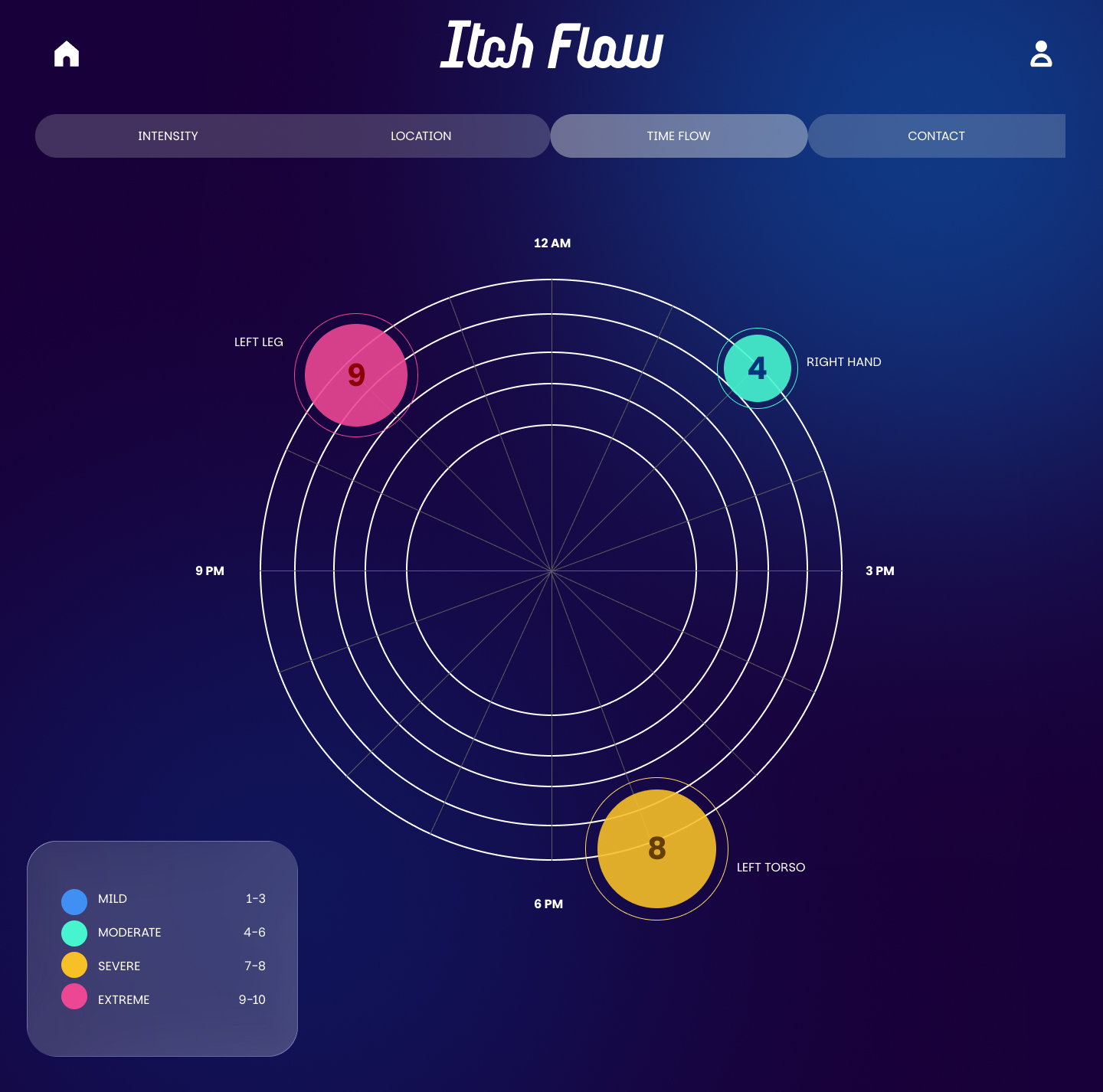
Website - Time Flow
-

Website - Contact


Have you or someone you know ever experienced an itch that just won’t go away? The kind that keeps you up at night, distracts you during the day, and slowly becomes part of your everyday routine? For many people living with chronic skin conditions, itchiness isn’t just a small annoyance, it can affect sleep, focus, mood, and overall comfort. Yet, even though so many people deal with this, there are very few tools that help them actually understand what their body is going through.
Our team decided to create a Chronic Itch System because many of us have personally experienced or know someone who struggles with these kinds of symptoms. That connection made the project feel more personal and important to us. We wanted to design something that could help people feel more aware of their symptoms instead of just dealing with them without any clear understanding
This system allows users to track different aspects of their itch. They can log the intensity of the itch, mark the locations on the body where it happens, and observe the time flow of when symptoms appear throughout the day.
By doing this, users can start noticing patterns and better understand their triggers, while also having access to information and resources that help them learn more about their condition.
Inspiration
Our inspiration came from people close to us. One of our friends and another friend’s sibling both experience chronic itch, and hearing about their daily struggles made us realize how difficult it is to explain something that people can’t actually see. Chronic itch can interrupt sleep, focus, and everyday comfort, yet there are very few tools that help people truly understand or track what they’re feeling. Because some of our team members could relate to these experiences, the project felt personal from the beginning. We wanted to create something that wasn’t just theoretical, but something that could genuinely help people become more aware of their symptoms and feel less alone in dealing with them.
What it does
The Chronic Itch System helps users track different aspects of their itch in a simple and visual way. Users can log the intensity of their itch, mark the locations on the body where it happens, and observe the time flow of when symptoms appear throughout the day. Over time, this information helps users notice patterns, understand possible triggers, and gain a clearer picture of how their symptoms behave.
How we built it
We designed and prototyped the entire system using Figma. Since this is a Figma competition, we intentionally limited ourselves to working only within the Figma ecosystem. We used Figma Design to create the interface and then brought the frames into Figma Make to explore interaction and functionality.
The interface focuses on clear and interactive elements that allow users to easily log their symptoms, track itch intensity, and visualize patterns over time. By keeping the design simple and organized, users can quickly record their experiences and better understand how their itch changes throughout the day.
Challenges we ran into
One of the biggest challenges was figuring out how to track something that is completely invisible. At first, we struggled to think outside the box because itch is a feeling, not something you can physically measure. It took a lot of research and discussion before we started asking ourselves a simple question: “What would I actually need if I were this person?”
Accomplishments that we're proud of
We’re proud that we approached the project through empathy. Instead of designing something purely technical, we focused on creating a system inspired by real experiences and real people.
What we learned
This project taught us how important empathy is in design. Thinking from the perspective of someone experiencing chronic itch helped us make better decisions about what features would actually be useful.
What's next for Itch Flow
Next, we want to continue improving the system by expanding its features and exploring ways to make tracking even more intuitive, while also looking at how the data could help users communicate their symptoms more clearly. - what about now


Log in or sign up for Devpost to join the conversation.