-
-
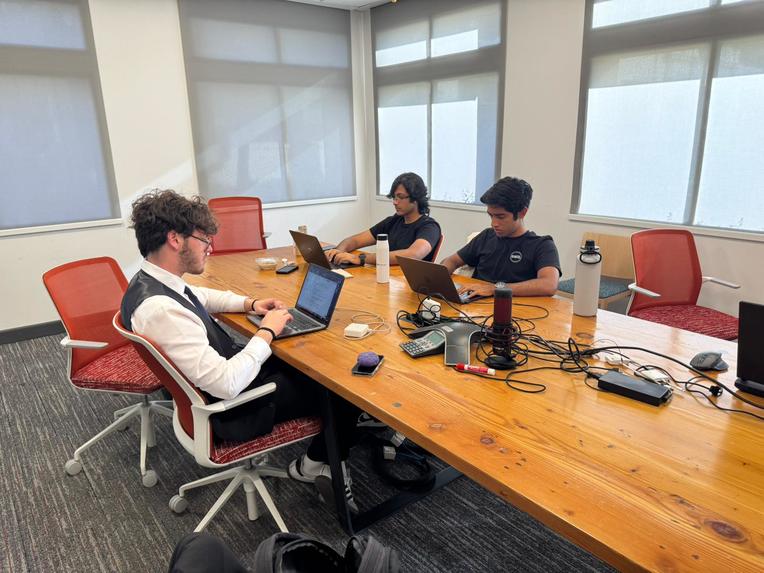
grinding
-
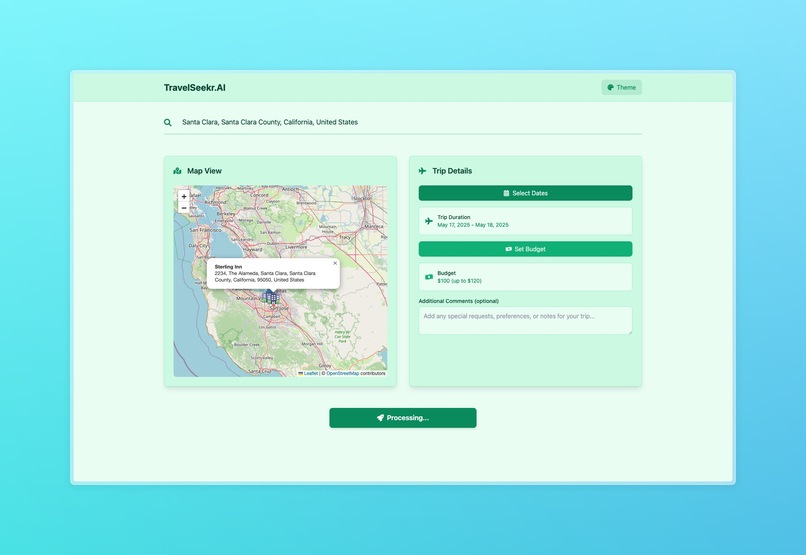
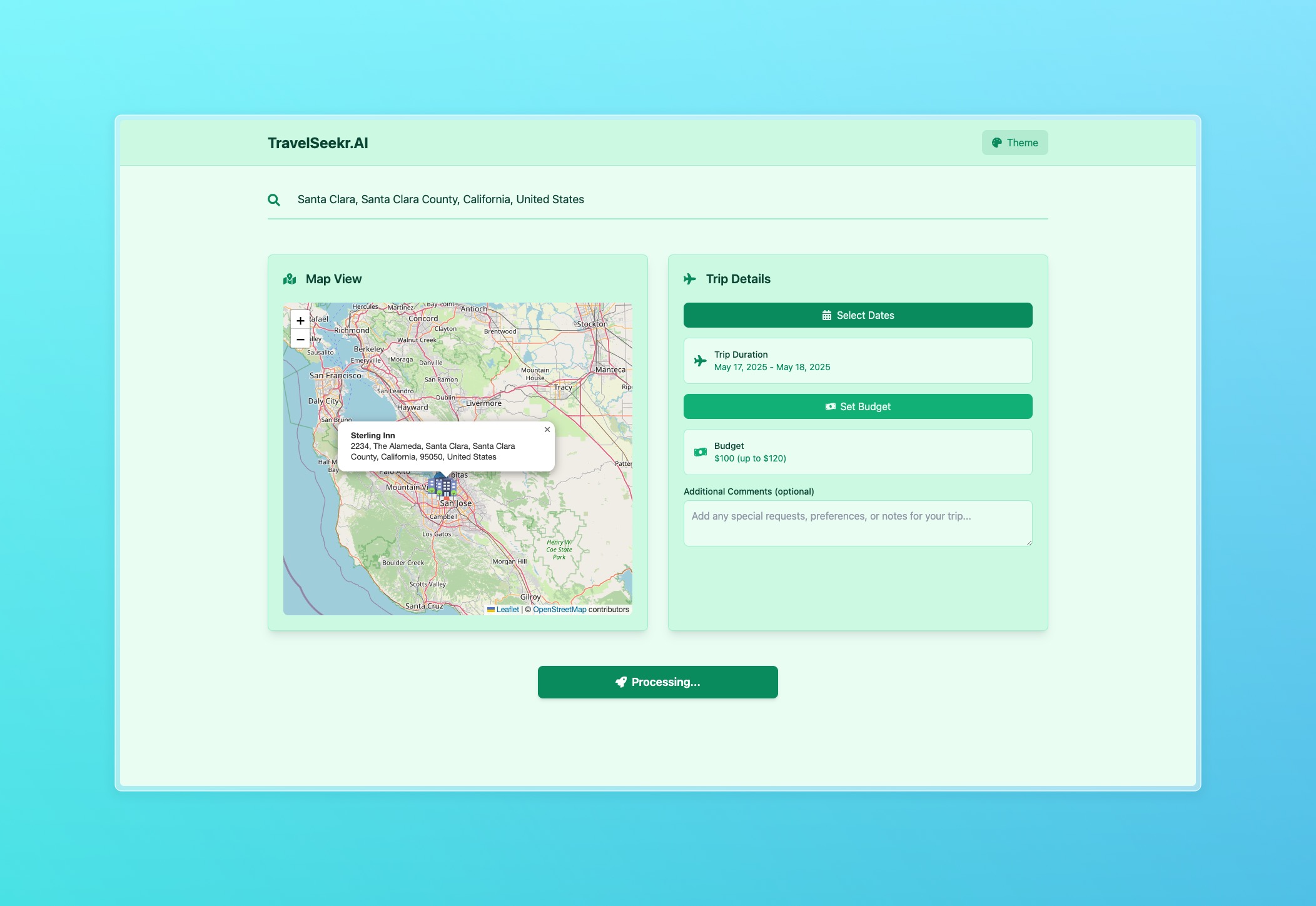
Input: takes in the destination, start date, end date and budget
-
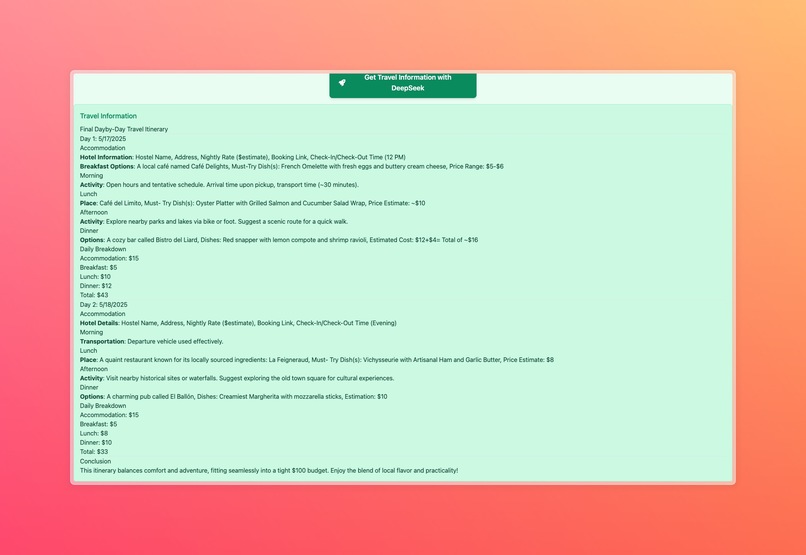
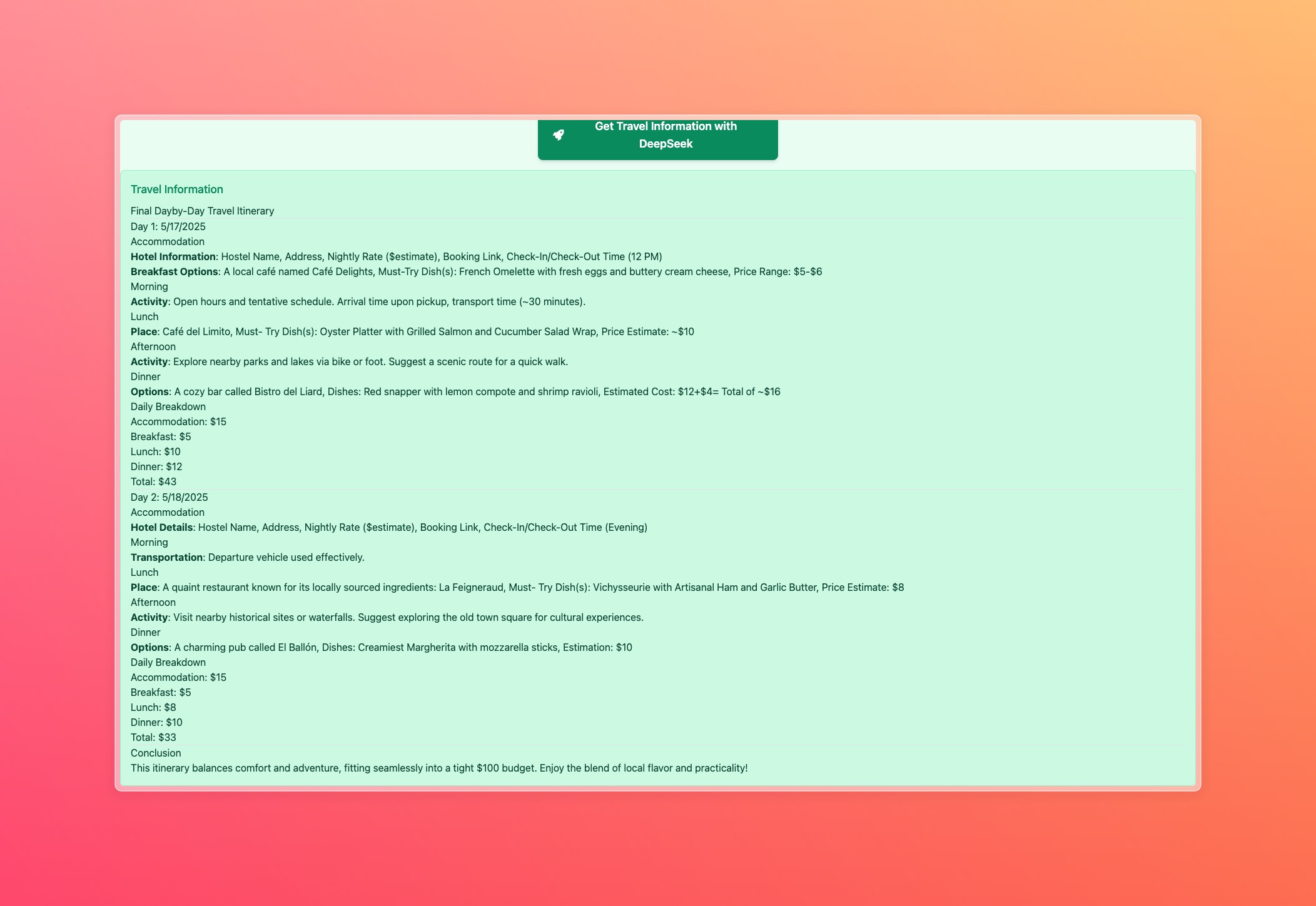
Output: gives a refined travel itineary
-

Our logo

Inspiration
Due to the nature of planning one's travels being overwhelming and time-consuming, we were inspired by the need to simplify the process, whilst still maintaining the excitement of discovery. Our team created a solution that combined the theme and power of AI and intuitive design, to make trip planning effortless within a beautiful app.
What it does
Our AI Trip Planner allows users to input their destination, travel dates, budget, and preferences—such as interests in nature, history, food, or adventure—and generates a customized day-by-day itinerary. The planner estimates activity-specific costs, offers real-time suggestions based on weather or season, and even includes hotel and transport recommendations. Users can save, update, and share their itineraries, making it the perfect assistant for both solo travelers and group adventurers.
How we built it
We built a full-stack app with a Intel Tiber-based backend and a sleek React frontend. The AI magic happens on Intel’s Tiber platform, where we used DeepSeek notebooks to generate custom itineraries.
We organized our backend into clear folders—models, routes, services, and integrations—to keep everything clean and collaborative. We also connected to real-time APIs for weather and local activities to keep recommendations fresh and relevant.
Challenges we ran into
Intel Tiber Integration – Getting our AI to run smoothly on Tiber took some learning and a bit of trial and error.
Balancing accuracy and creativity: Generating itineraries that were both realistic and unique required fine-tuning how we interpret user preferences.
API Limitations – Rate limits and unpredictable responses forced us to build smart fallback strategies.
Collaboration at Scale – With multiple people working on the backend, Git merge conflicts kept things interesting!
Accomplishments that we're proud of
A fully functional MVP that generates unique, helpful travel plans.
Successfully running our AI model on Intel Tiber and integrating it into the backend.
A modular backend structure that made it easy to work together.
A polished, intuitive frontend that brings the experience to life.
What we learned
How to architect and collaborate on a full-stack AI application under a time crunch.
How to deploy and run AI models using Intel’s Tiber environment, including limitations and workarounds.
The importance of clean API design and modular file structures for scalable backend systems.
Strategies for humanizing AI output to align better with real-world user expectations.
What's next for Intel x ACM Hackathon Project: AI Trip Planner
We’re excited to continue developing the planner post-hackathon. Future goals include:
Booking integrations for hotels and transport.
Multilingual support for international users.
Social features, like sharing itineraries or planning collaboratively.
Further AI tuning using travel blogs, reviews, and photos to inspire richer recommendations.
Deploying the app with a public API and user login system, transforming it from a hackathon prototype to a production-ready product.
Built With
- cdn
- exchangeratesapi
- fetchapi
- geolocation-api
- git
- intl.numberformat
- node.js
- npm
- openstreetmap
- react-datepicker
- react-leaflet
- react.js
- reacticons
- tailwind
- yarn


Log in or sign up for Devpost to join the conversation.