-
-
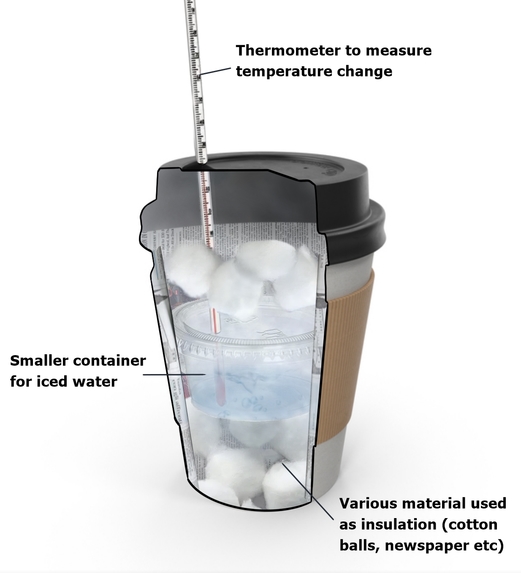
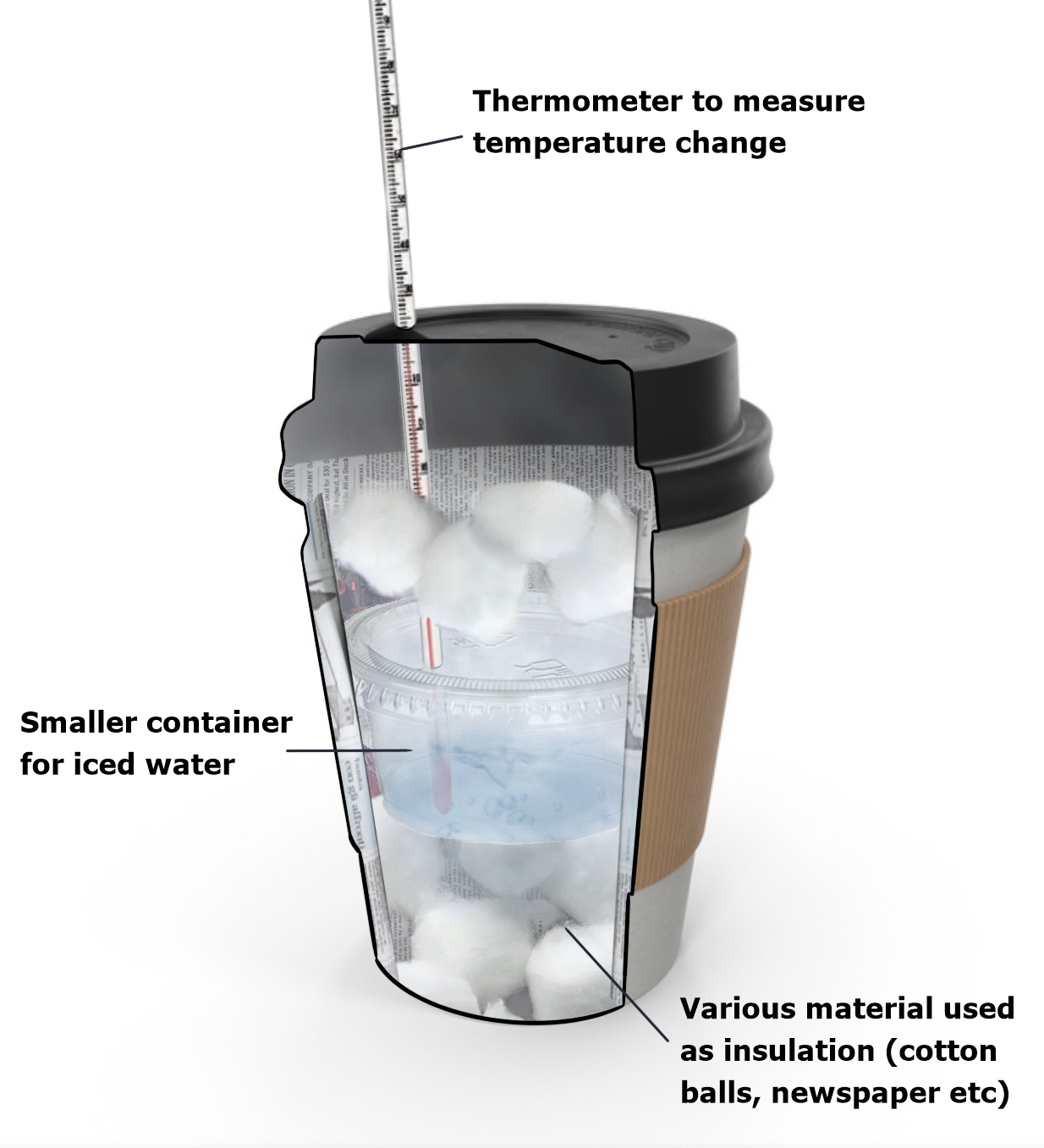
Illustration of our insulating teaching kit.
-
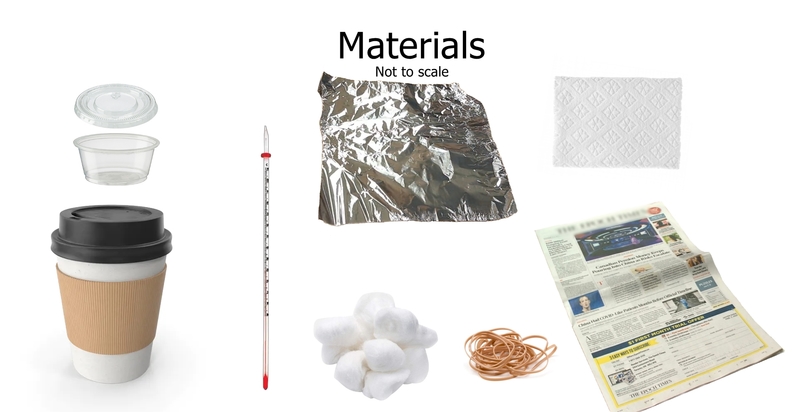
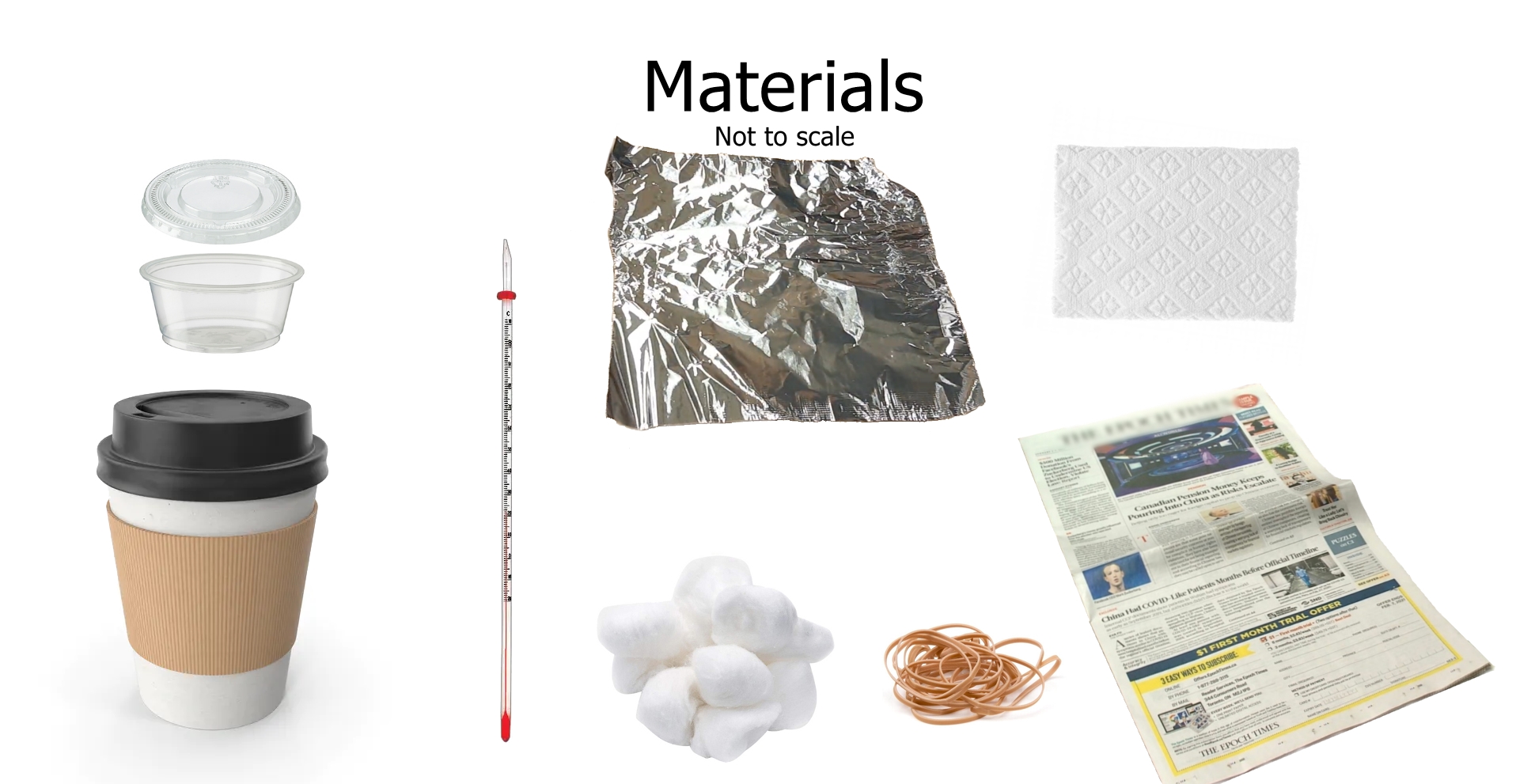
A list of materials included in our kit.
Inspiration
A major problem in our world today is the tremendous amount of energy used in everyday life. Remarkably, indoor climate control accounts for the majority of residential energy use in many countries including Canada and Jamaica. While Canada's cold climate calls for heating, Jamaica's contrastingly hot climate requires the use of air-conditioning. One way to reduce this energy consumption is by improving the efficiency of the equipment used for climate control. However, a less obvious but just as important aspect to the problem is insulation.
In a perfect world, a heater would generate just the amount of hot air needed to sufficiently raise the ambient air temperature of the room to a level that would keep you nice and warm during the cold winter months. Once that target has been reached, the climate control system would shut off and the room temperature would remain stable. In reality however, heat transfer prevents the inside air temperature from remaining static. Thermal energy from the warm air inside the house passes through the walls and out to the cold outside environment. Over time, the inside air cools and the heater switches on again. It's like trying to fill up a bucket of water with a small leak. No matter how much water you fill the bucket with, you will always need to refill or keep a steady stream filling the bucket. The same concept applies to the cold air an AC system provides during hot summer days. Only this time, the hot outside air transfers it's thermal energy into the room and consequently raises it's temperature.
It is evident that a climate control system would have to work very hard to maintain a target temperature when heat is always entering or leaving though system boundaries. How can we prevent heat from moving through the walls?
Function
Although completely eliminating heat transfer between indoor and outdoor spaces is impossible, there are ways to minimize how much of it occurs. One of the main ways to reduce heat transfer is by using a good insulating material to construct the walls. Depending on the material, the rate of heat that passes through the walls changes. Think of it as a patch kit for the leaking bucket analogy mentioned earlier. A good insulator would be like a patch kit that seals most of the leak. A bad insulator would be a patch that doesn't work very well and still allows a lot of water to leak out of the bucket. A perfect insulator would be a patch that completely fixes the leaking bucket. Although this would be nice, perfect insulators do not exist in our world.
If we can use insulating materials to reduce the rate at which heat leaks through the walls of a home, we can reduce the amount of energy that climate control systems consume around the world.
Our kit will allow students to learn about how different materials have varying insulating properties though hands-on experiments. Students will be tasked with keeping the temperature of a small container of ice-water as low as possible within a given timeframe. With the various materials provided in the kit, students will mix and match insulators and discover that some materials are able to keep the temperature lower than others.
Materials
A key advantage to our kit is its simplicity and adaptability. All materials provided in this kit are commonly sourced almost anywhere in the world. Depending on material availability or educational intent, the various insulating materials can be switched out to any material that will fit in the outer cup that holds the entire apparatus.
The current kit contents include:
- Paper cup with lid
- Small plastic container with lid
- Cotton balls
- Aluminum foil
- Felt
- Paper
- Rubber bands
- Thermometer
Built With
- engineering
- insulation
- thermodynamics


Log in or sign up for Devpost to join the conversation.