-
-
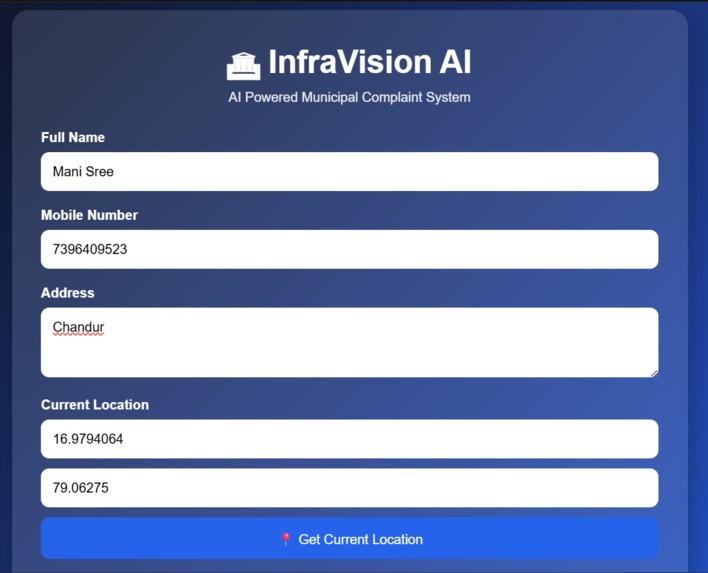
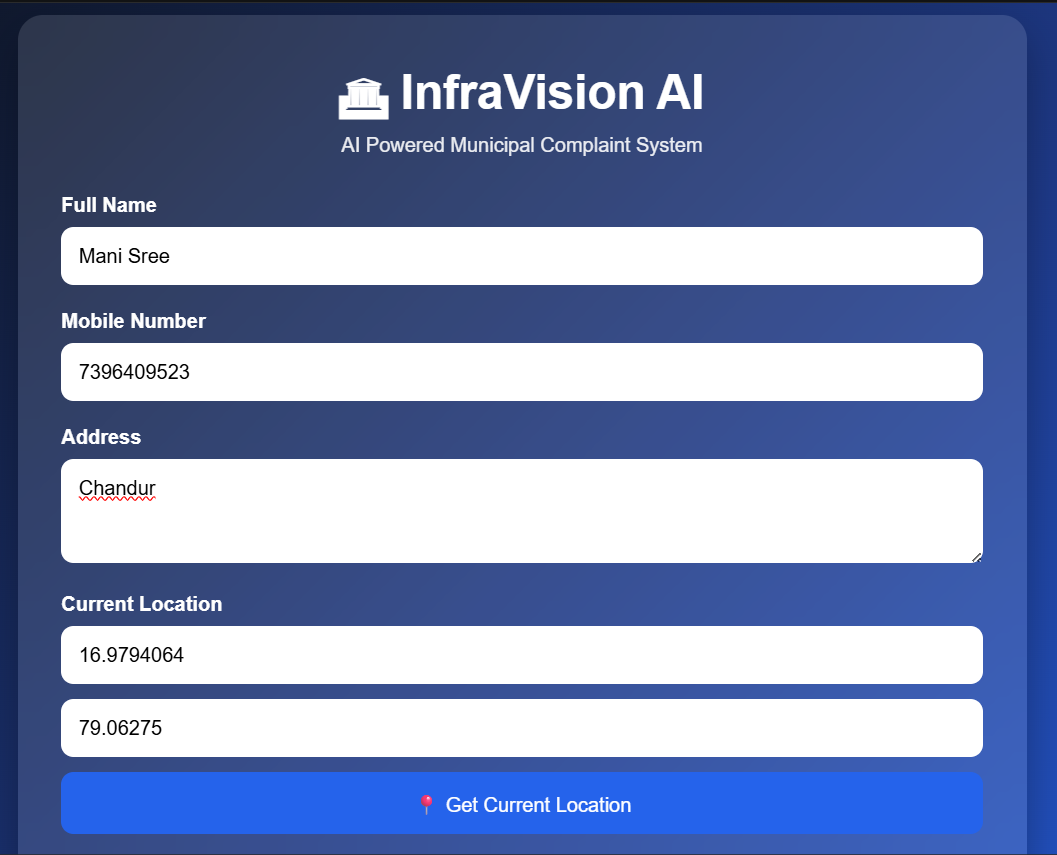
It is the homepage where user enter the deatils
-
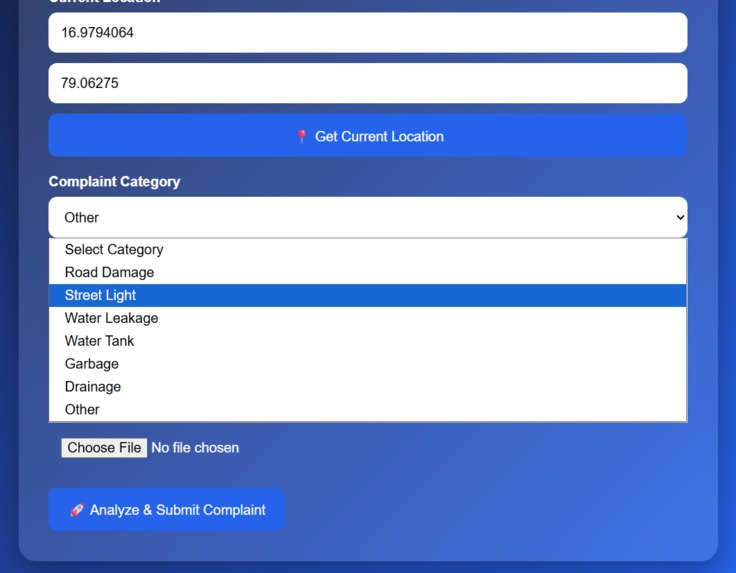
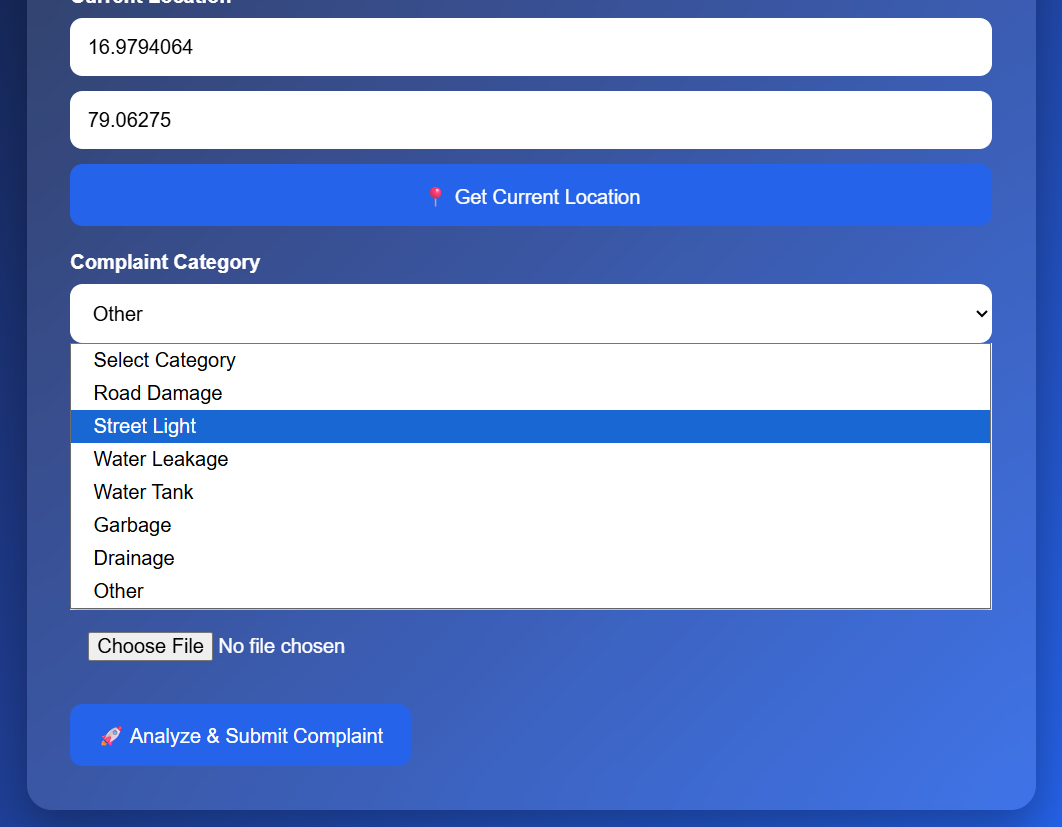
same homepage here user should select the complaint category
-
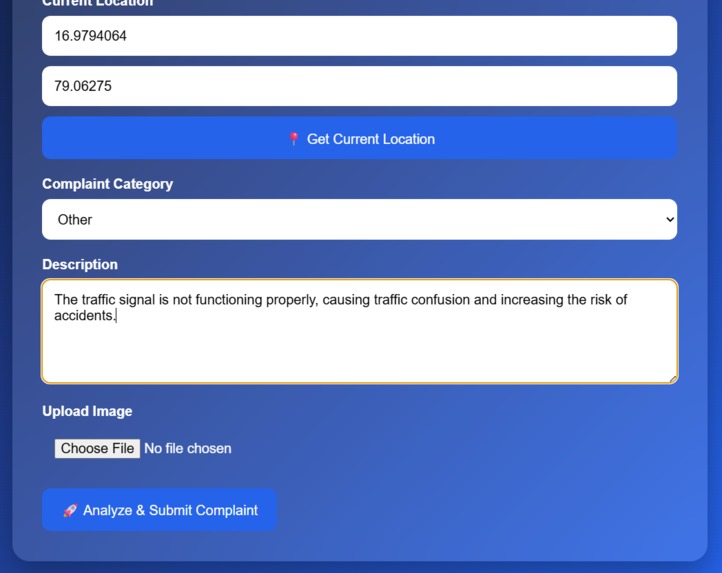
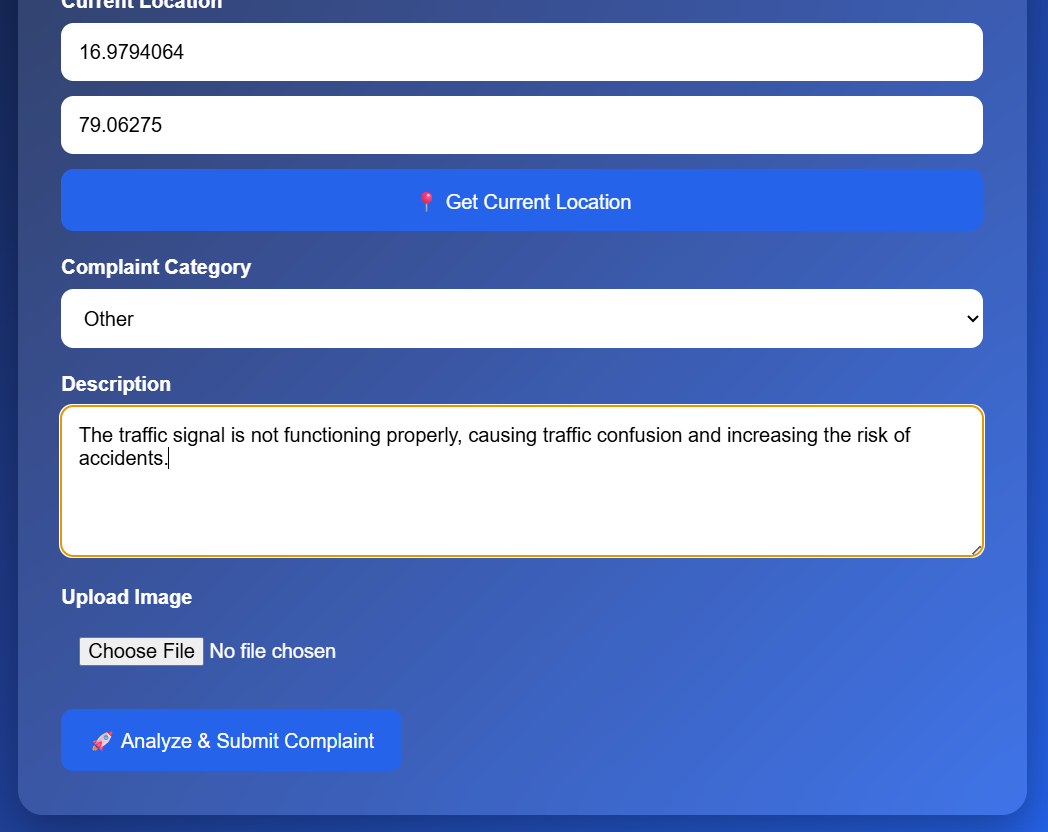
in this section the user should describe the problem
-
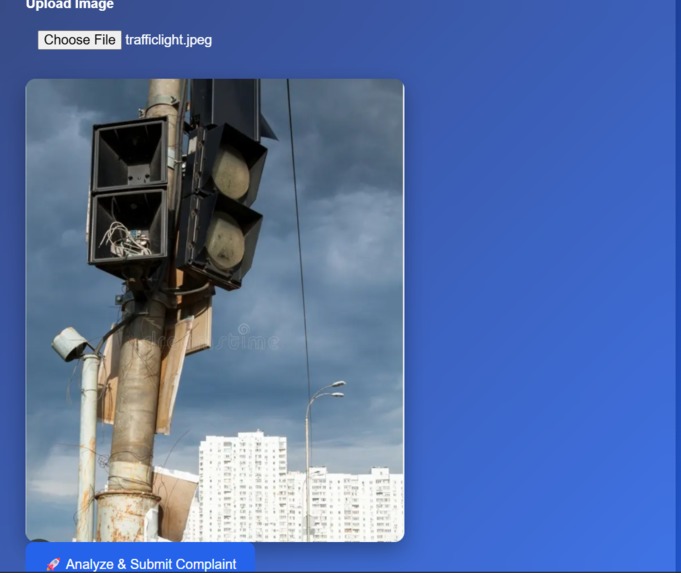
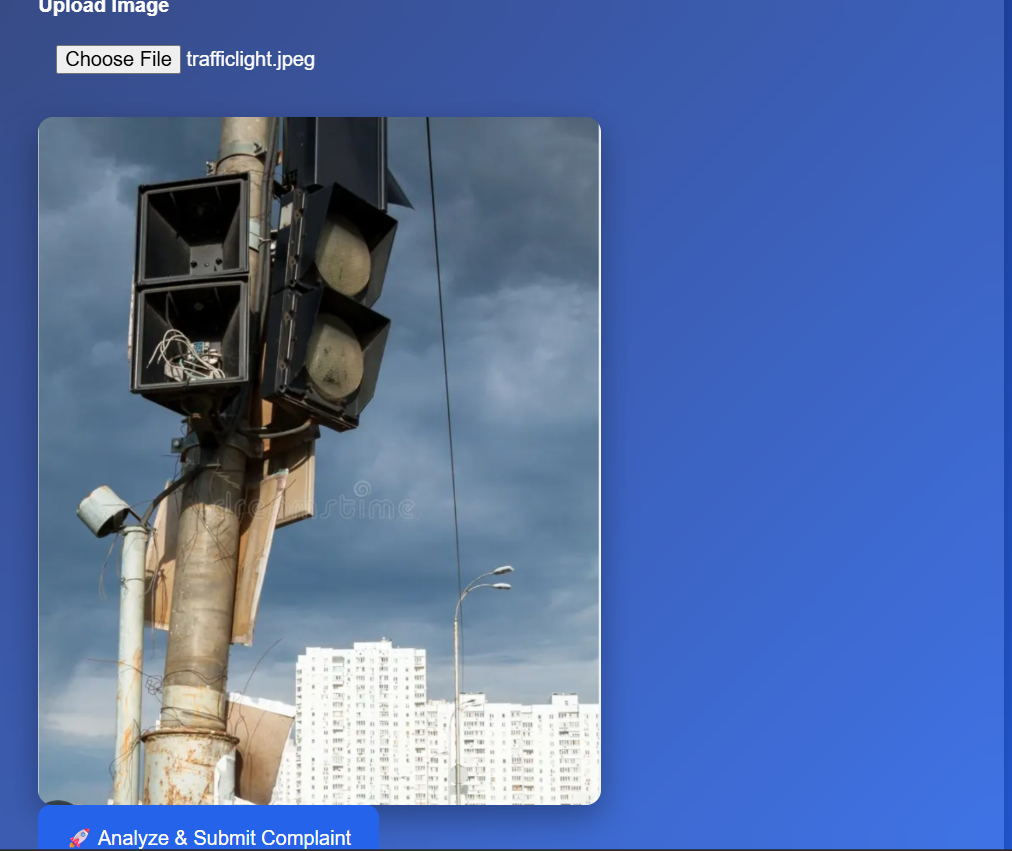
after problem description user should send the picture of that site/damaged infrastructure
-
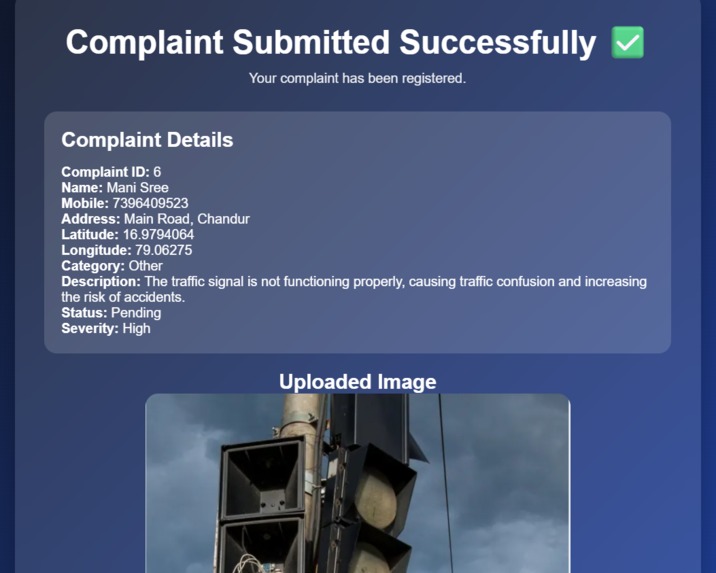
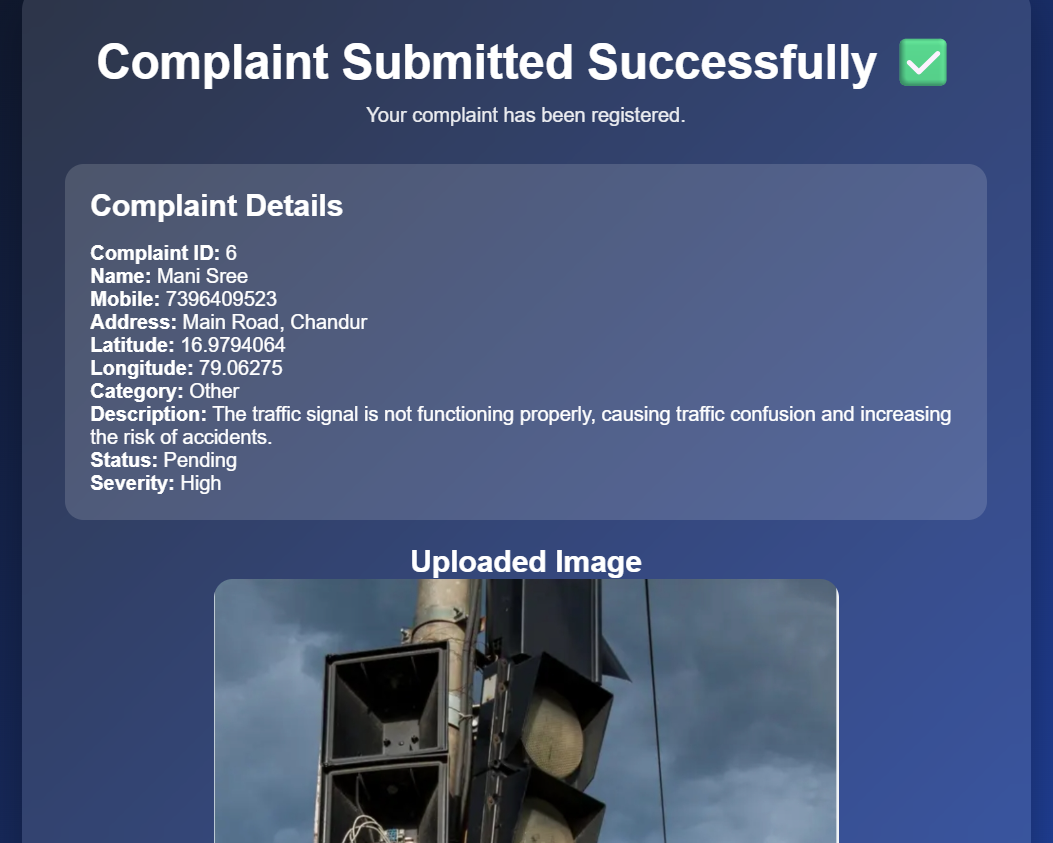
This is the page where AI-powered infrastructure complaint reporting and severity analysis using InfraVision_AI
-
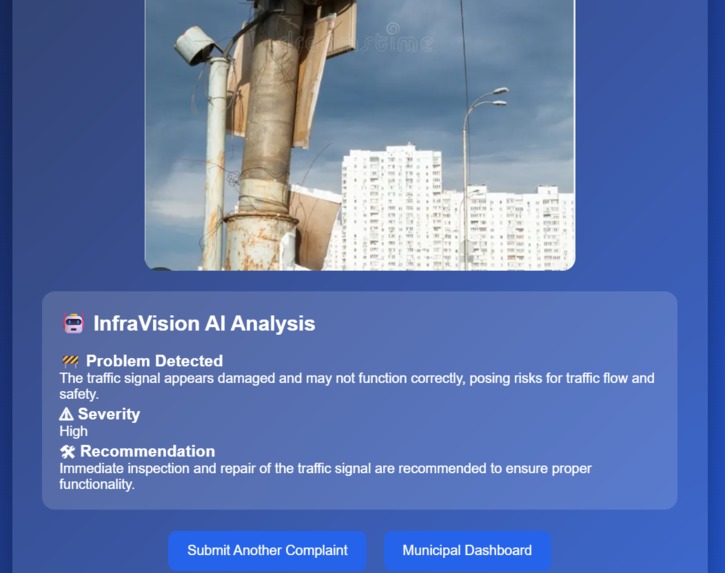
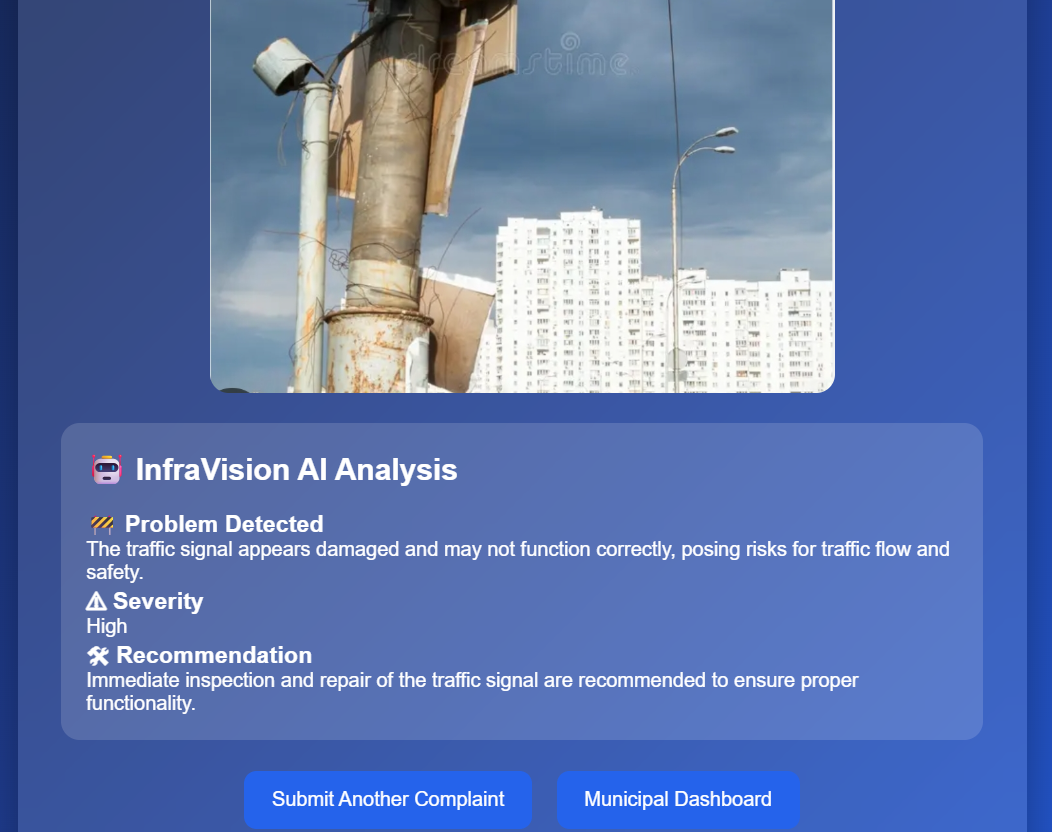
Here AI analysis result is shown
-
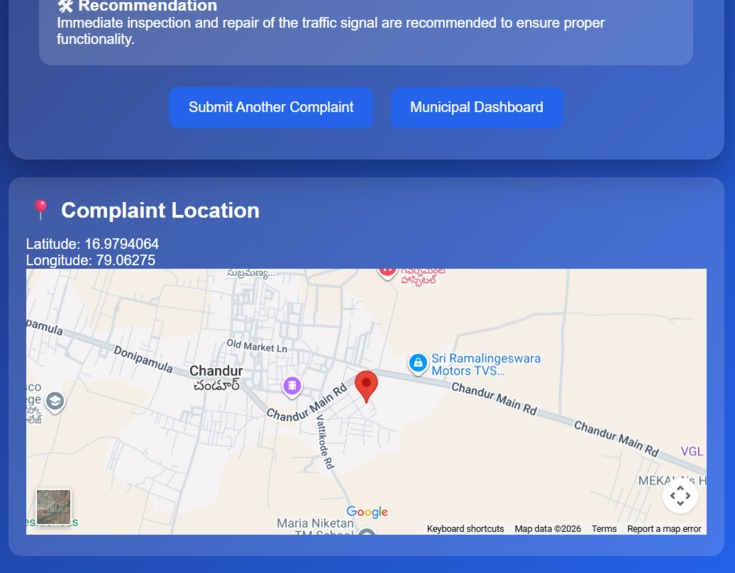
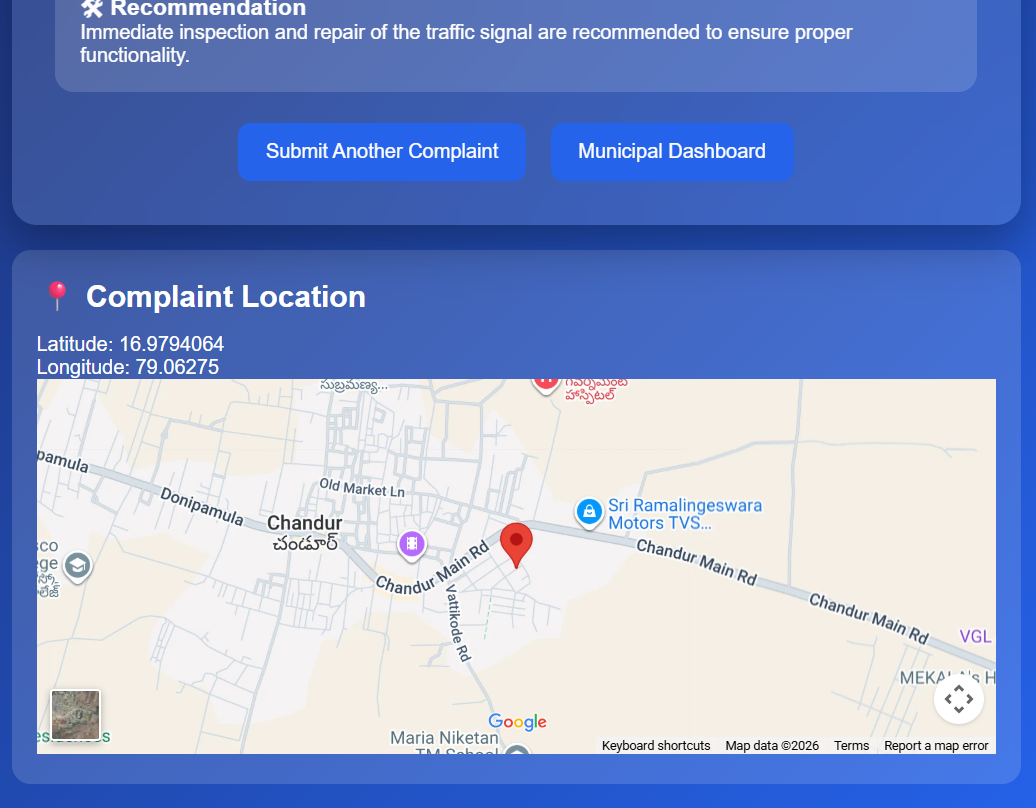
Here the exact damage location is displayed on the map and shared with municipal authorities for quick identification and action.
-
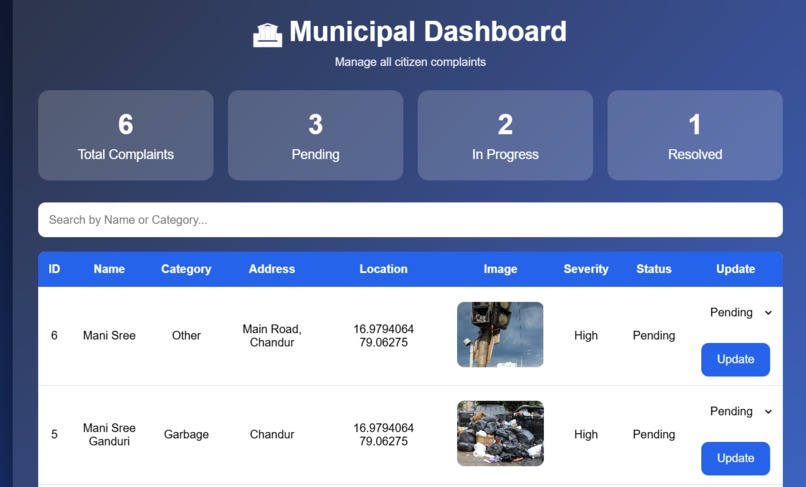
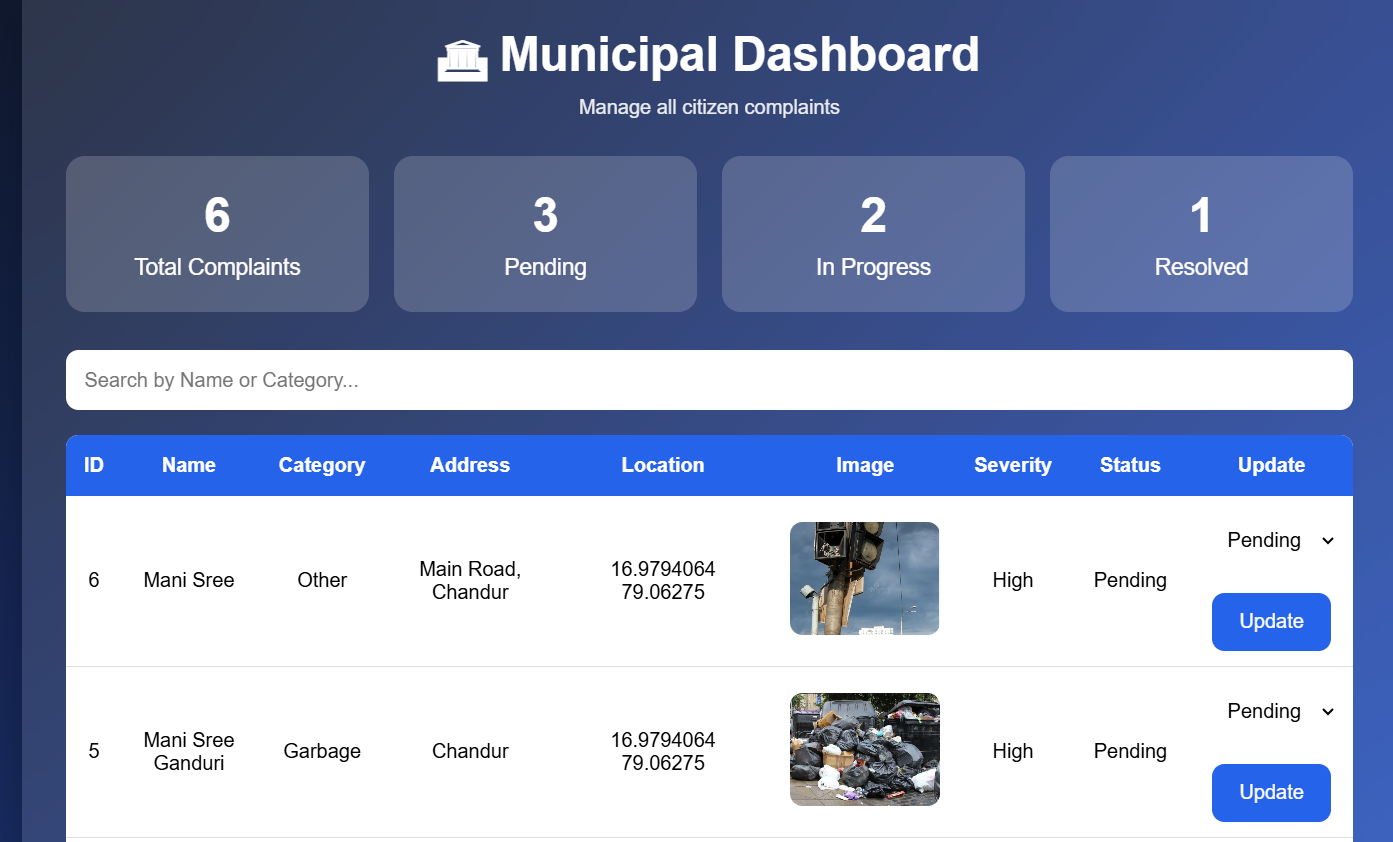
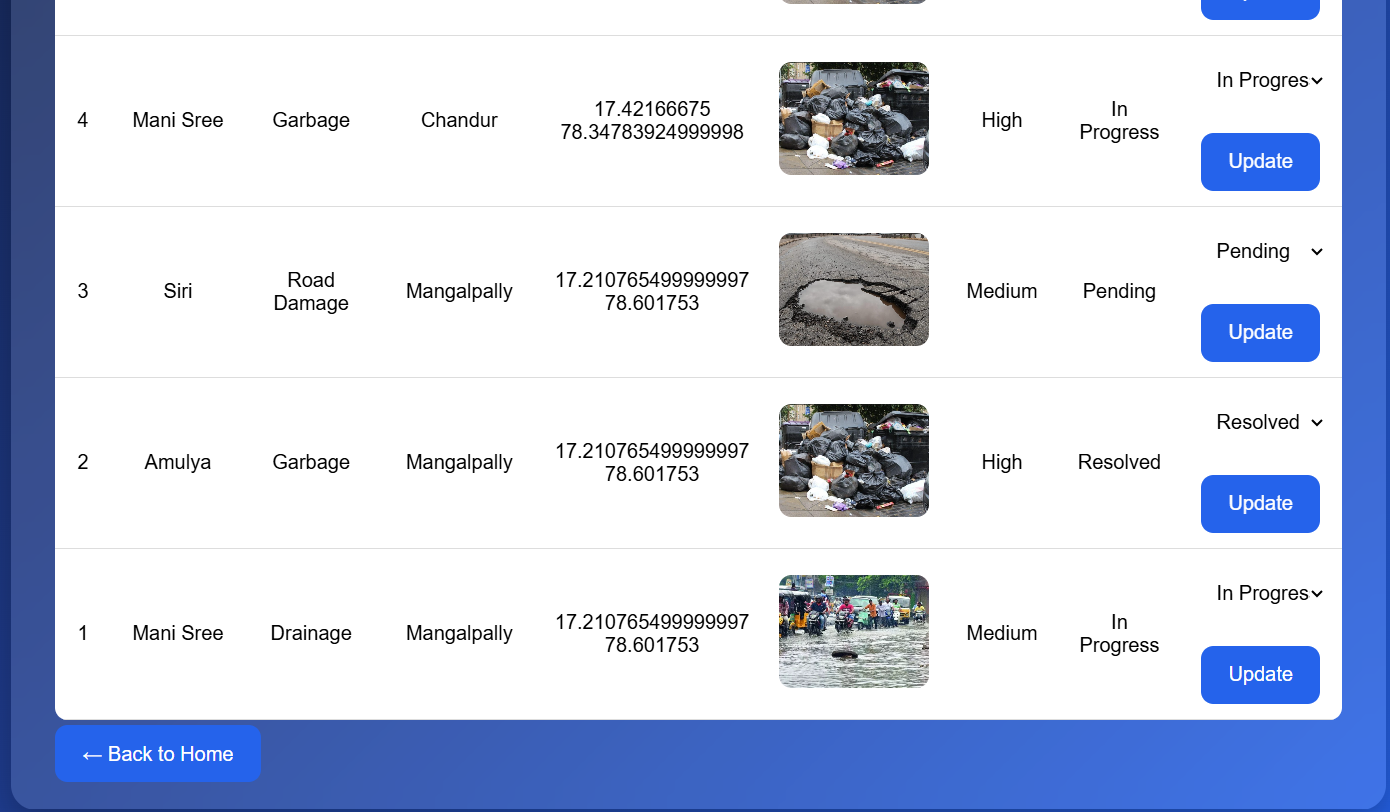
This is the another page where it shows Municipal Dashboard showing reported infrastructure complaints.
-
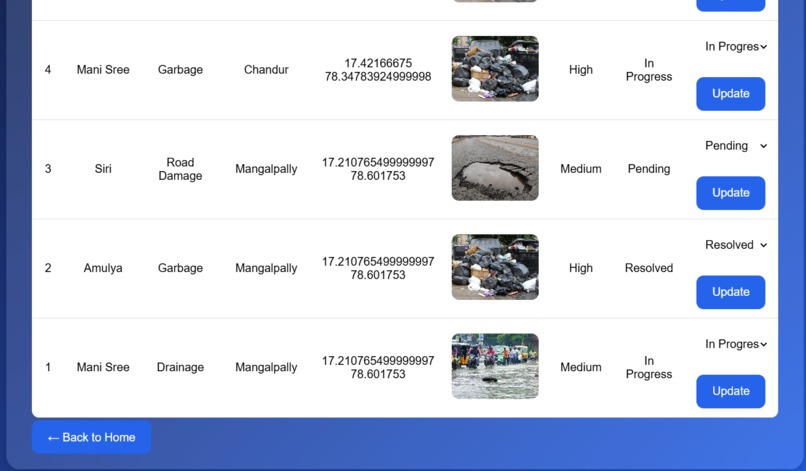
Here current status, severity, and locations are shared helping authorities monitor issues and prioritize quick action.
Inspiration
I inspired by the everyday infrastructure problems people face in cities, such as damaged roads, broken streetlights, overflowing garbage, and other public infrastructure issues. Reporting these problems through traditional methods can be slow and difficult to track. I wanted to create a solution that uses AI to make infrastructure reporting faster, smarter, and more organised. This idea led us to build InfraVision_AI, a platform that helps citizens report problems and helps authorities identify, prioritise, and manage them efficiently.
What it does
InfraVision AI is an AI-powered infrastructure reporting platform. Citizens can submit a photo of an infrastructure problem along with its location, address, category, and description. The AI analyzes the uploaded image to identify the issue and estimate its severity. The complaint is stored in a database and displayed on a municipal dashboard, where authorities can monitor total complaints and their status, including Pending, In Progress, and Resolved. This makes infrastructure complaint management more organized, transparent, and efficient.
How we built it
I built InfraVision_AI as a web application using Python and Flask for the backend and HTML, CSS, and JavaScript for the frontend. We used SQLite to store infrastructure complaints and user-submitted information. AI APIs were integrated to analyze uploaded infrastructure images and provide intelligent classification and severity information. I also integrated location and map functionality to capture and display the reported issue's location. The main technologies we used are:
- Python
- Flask
- HTML, CSS, JavaScript
- SQLite
- AI/LLM API
- Maps/Geolocation
- GitHub
Challenges we ran into
During development, I faced several technical challenges. Integrating the AI API with Flask application was one of the main challenges. I also faced issues with image uploads, database management, GPS coordinates, map integration, and deployment. I had to debug different errors while connecting the frontend, backend, AI services, and database. Managing API keys and environment variables securely was another challenge. Although I faced several problems during development, I solved them step by step and continuously improved our project.
Accomplishments that we're proud of
I feel proud that I transformed my idea into a working AI-powered infrastructure reporting platform. I successfully built a complete complaint-reporting workflow, integrated AI-based image analysis, added location information, created a centralized database, and developed a municipal dashboard for monitoring complaints. I am especially proud that my project focuses on a real-world problem and uses AI to create a practical solution with potential social impact.
What we learned
Through this project, I learned how to turn a real-world problem into a practical software solution. I learned about integrating AI APIs with Flask, handling image uploads, working with databases, implementing geolocation, building dashboards, debugging application errors, and deploying web applications. I also learned continuous testing, problem-solving, and improving the project based on the challenges I encountered during development.
What's next for InfraVision_AI
My next goal is to make InfraVision AI a more advanced smart-city infrastructure management platform. I am plan to add more accurate AI-based damage detection, automatic complaint prioritization, mobile application support, notifications for citizens and authorities, advanced analytics, multilingual support, and predictive maintenance. Our long-term vision is to help cities detect infrastructure problems earlier, prioritize critical issues, and resolve them more efficiently.


Log in or sign up for Devpost to join the conversation.