-
-
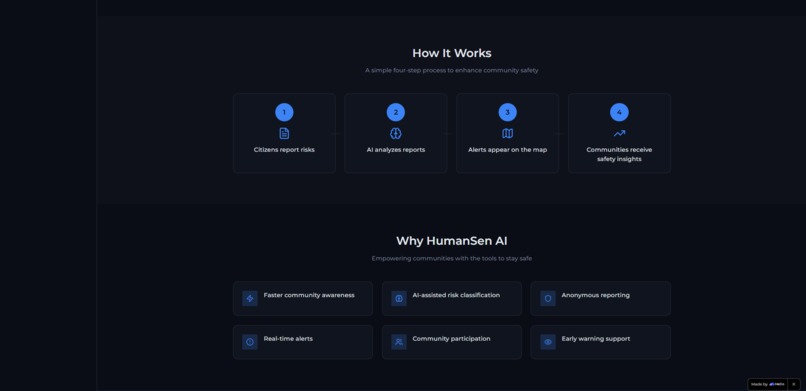
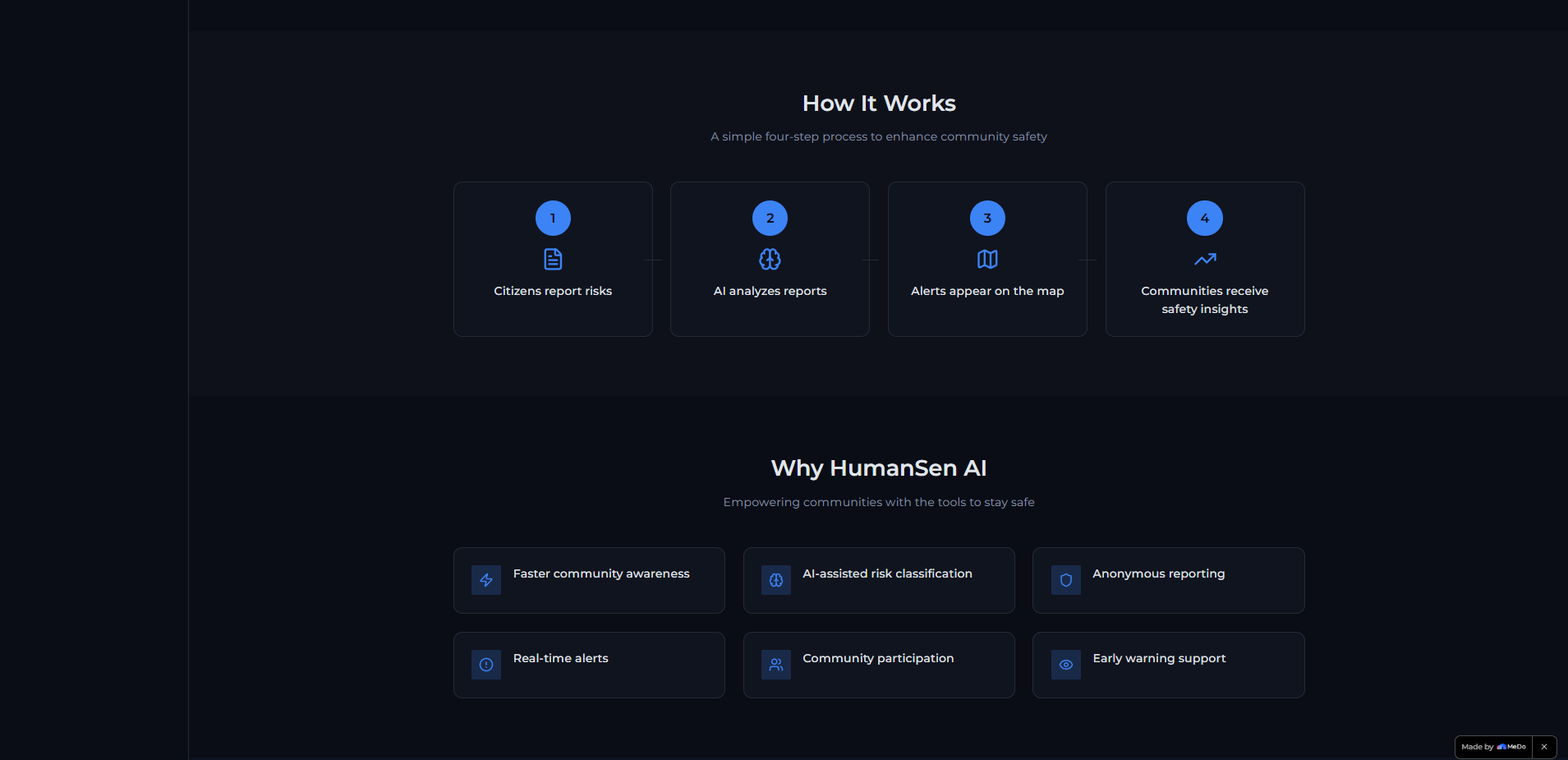
HumanSen transforms communities into real-time human sensors through AI-powered safety reporting and alerts.
-
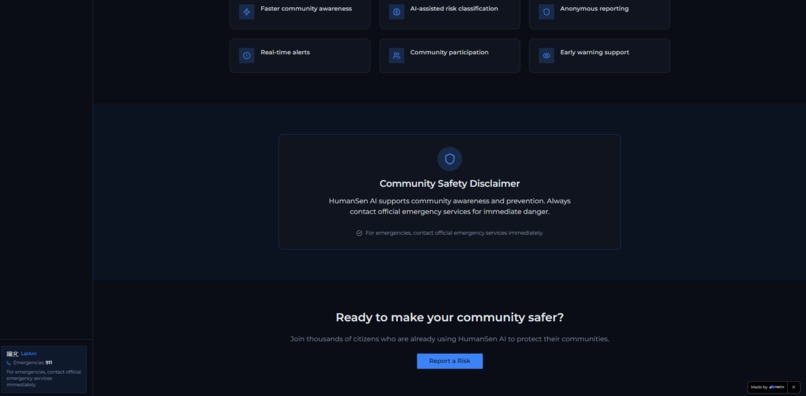
HumanSen uses AI, live alerts, and community reports to improve real-time neighborhood safety awareness.
-
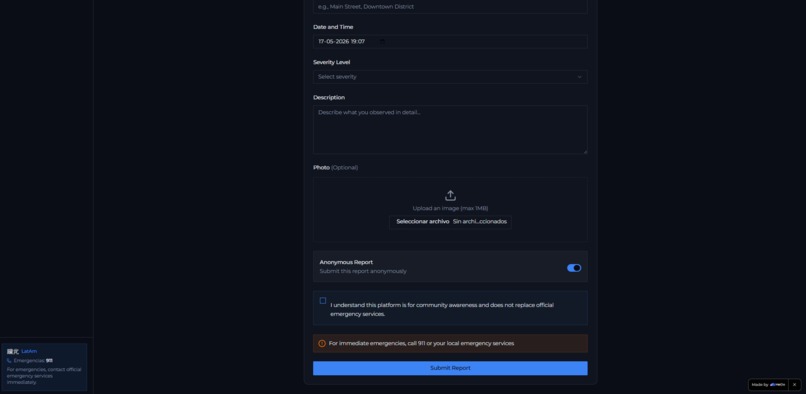
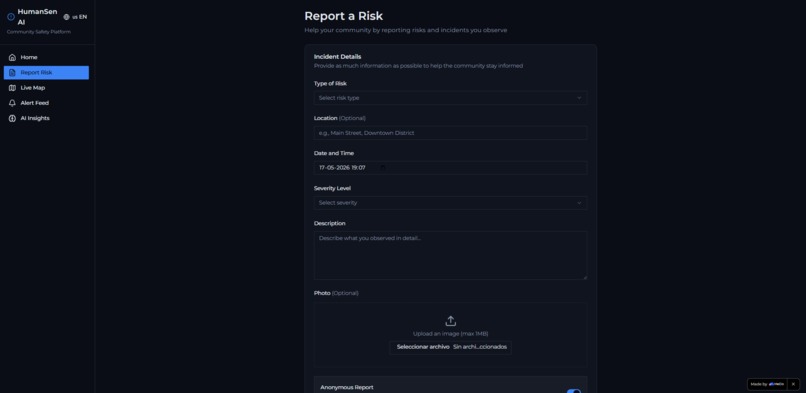
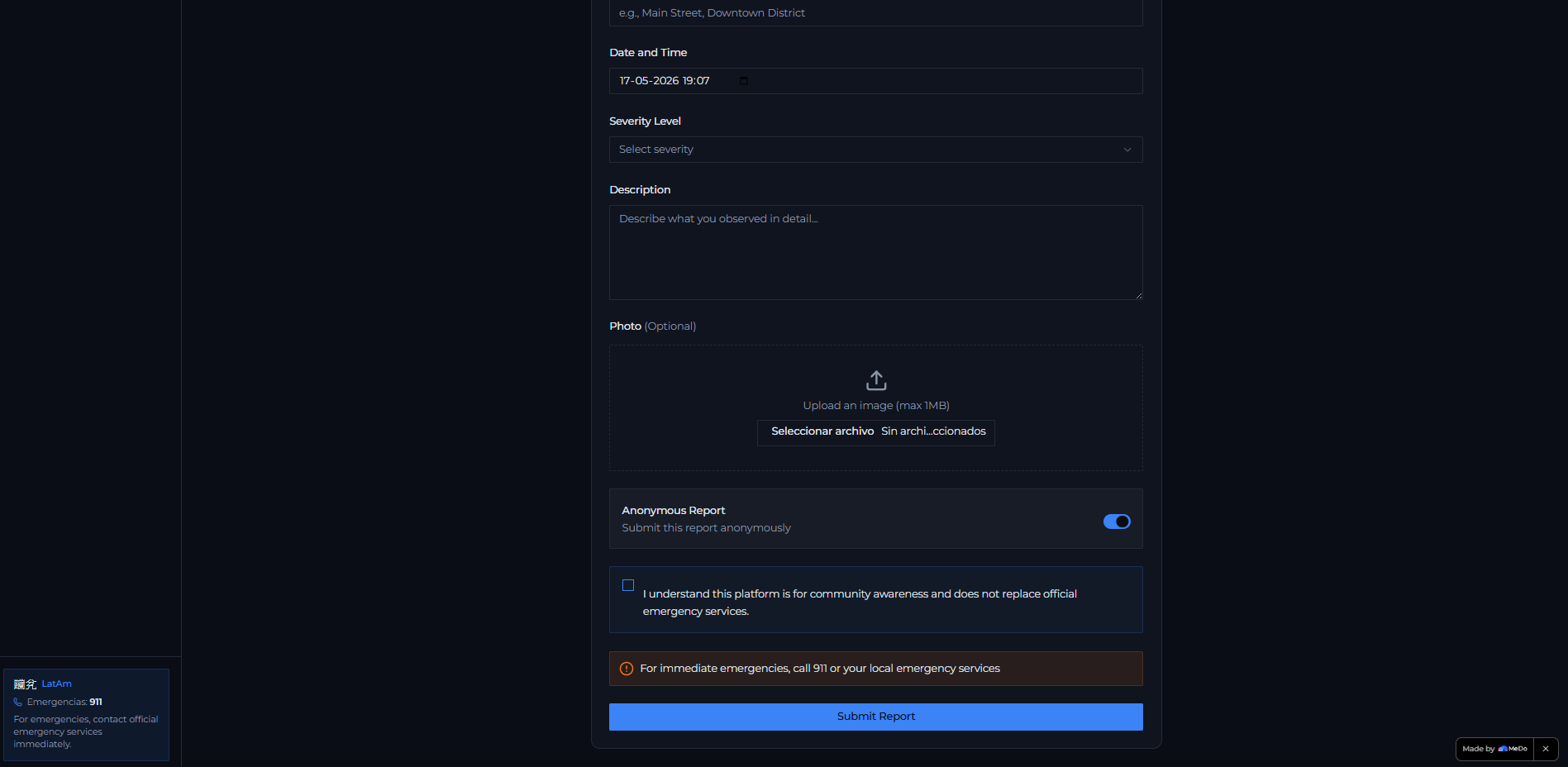
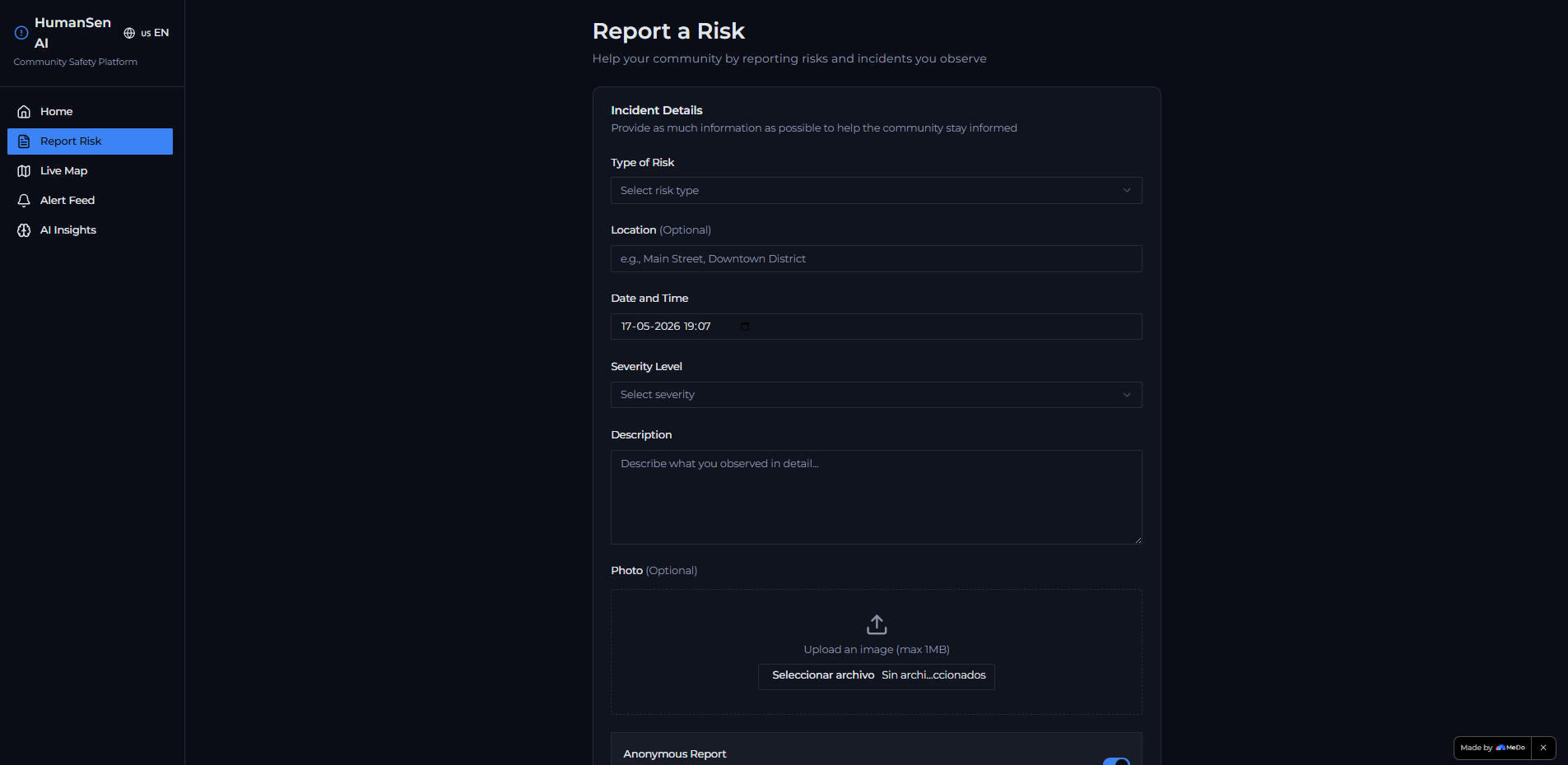
Users can submit anonymous risk reports with location, severity, photos, and incident details in real time.
-
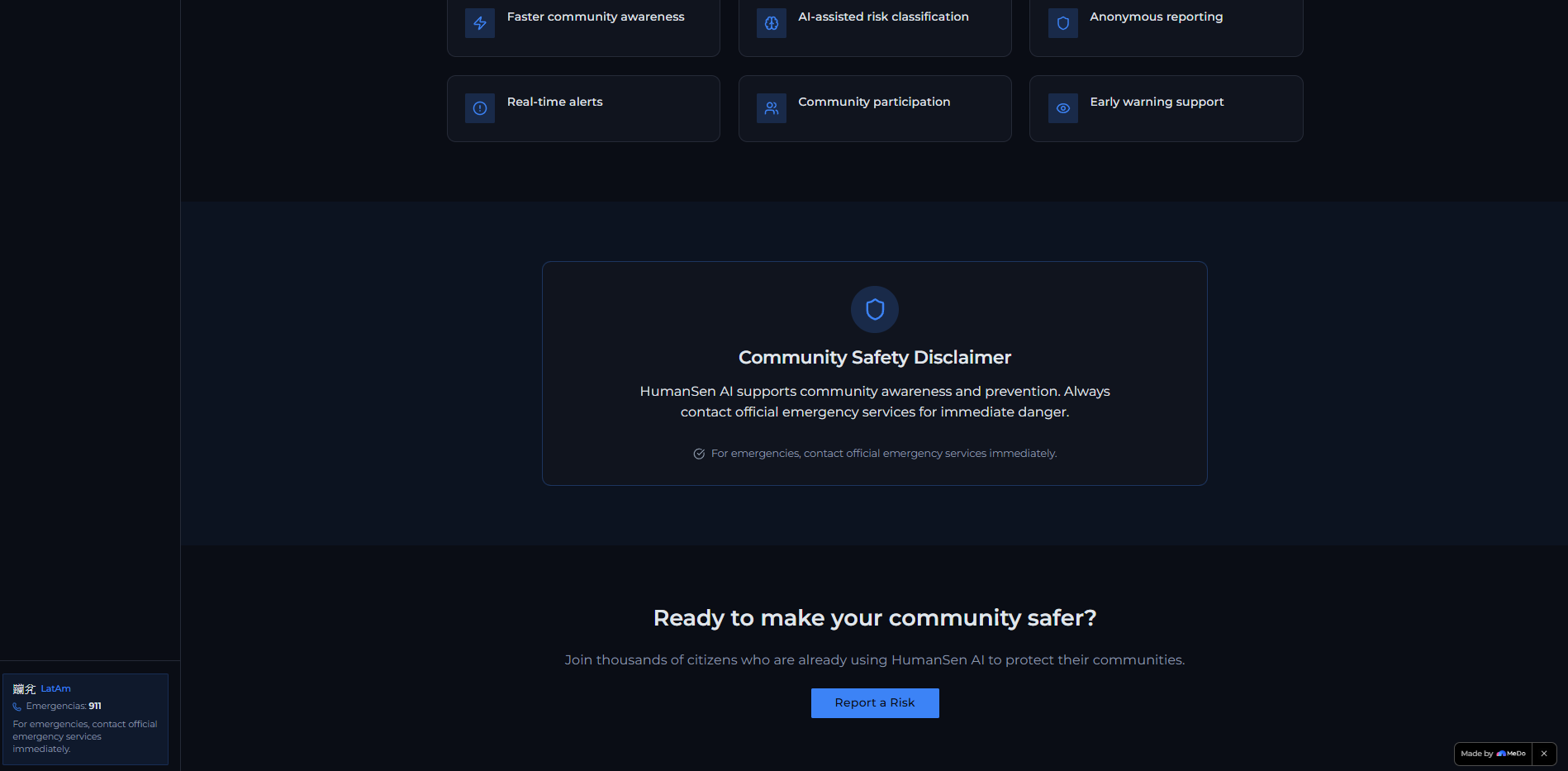
HumanSen promotes prevention and awareness, but users should always contact official emergency services in dangerous situations.
-
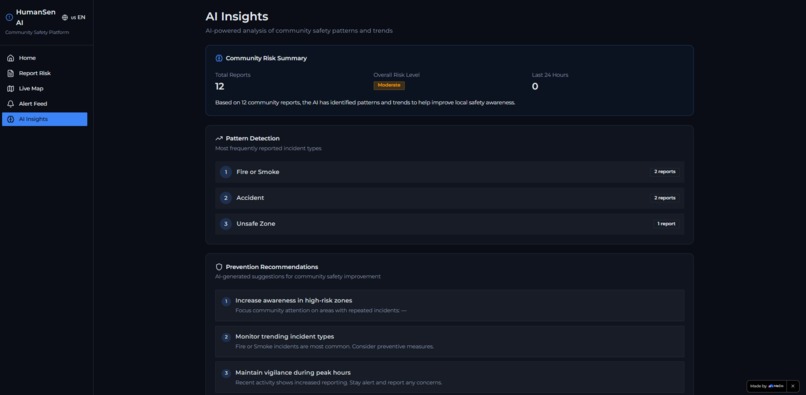
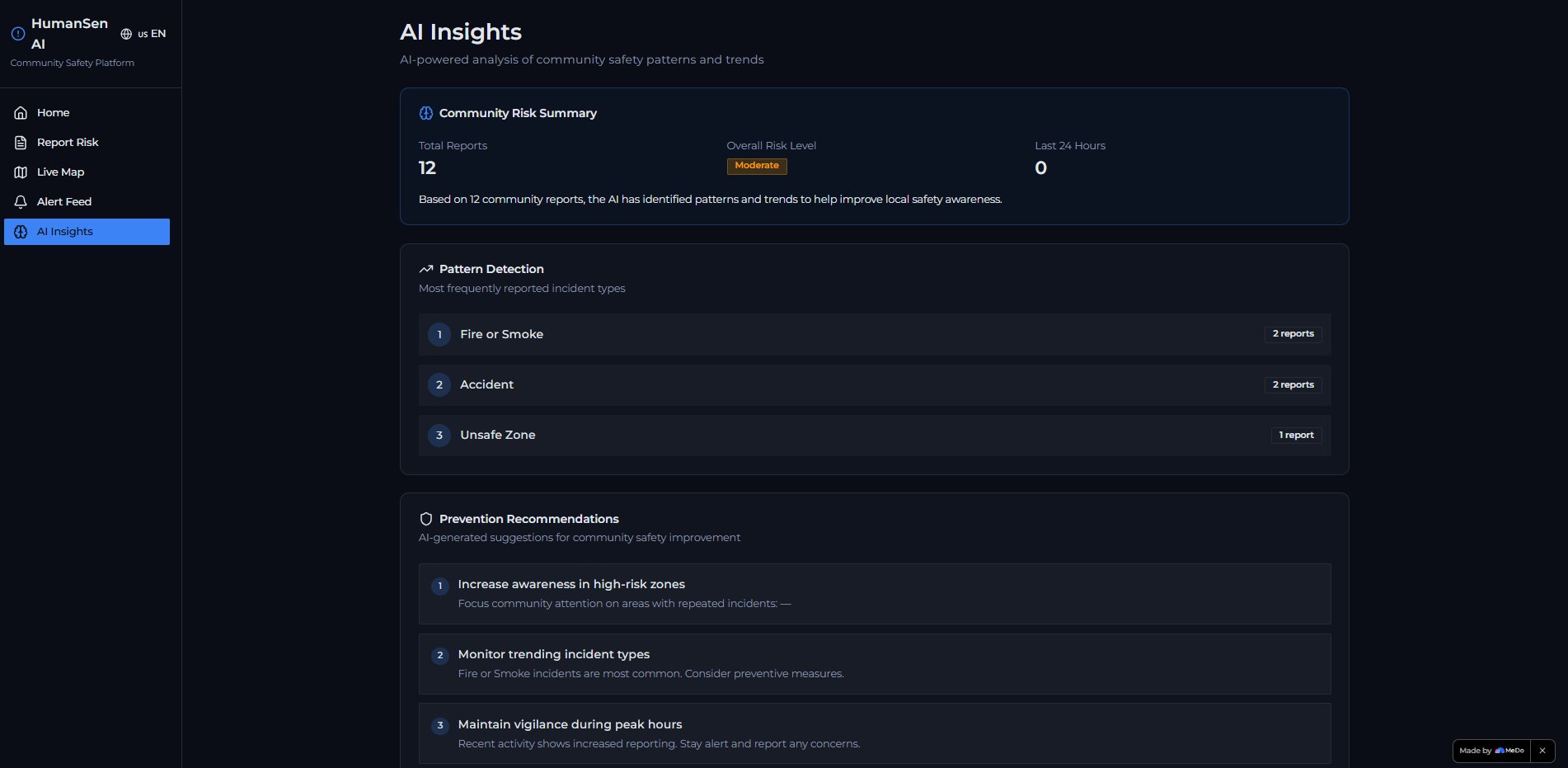
AI Insights analyzes community reports to detect patterns, trends, and prevention opportunities in real time.
-
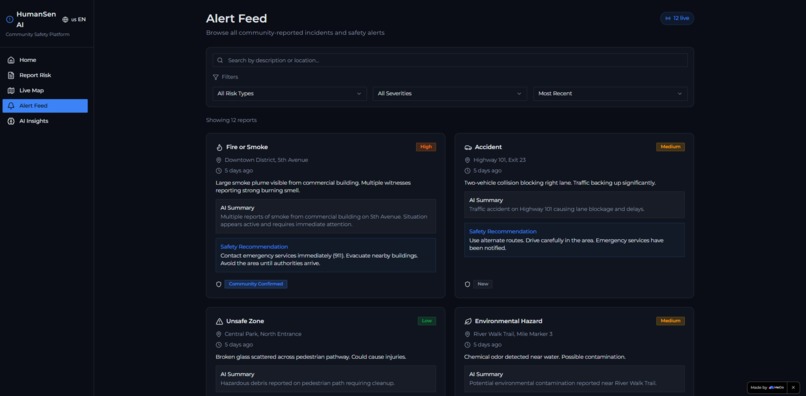
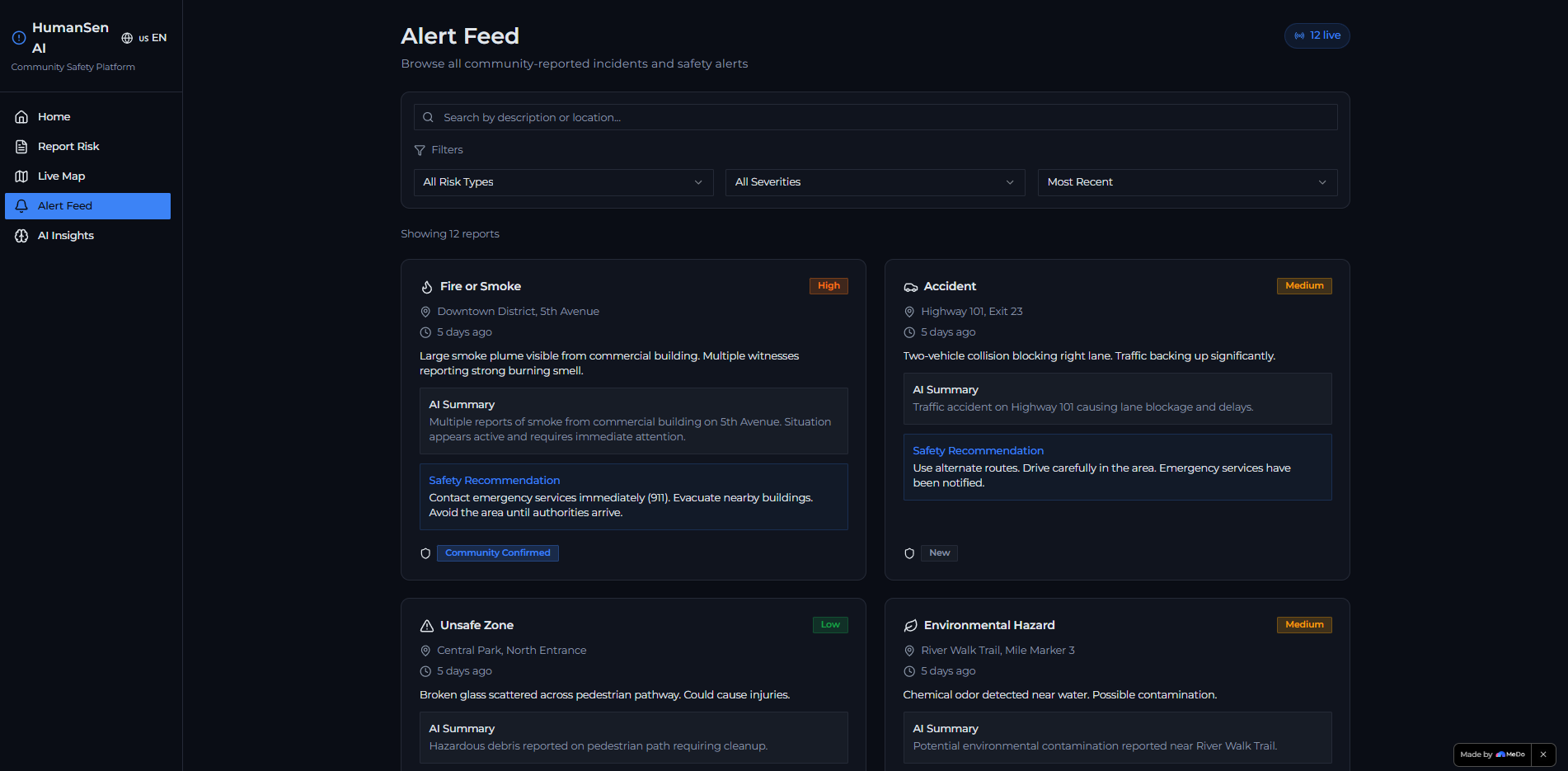
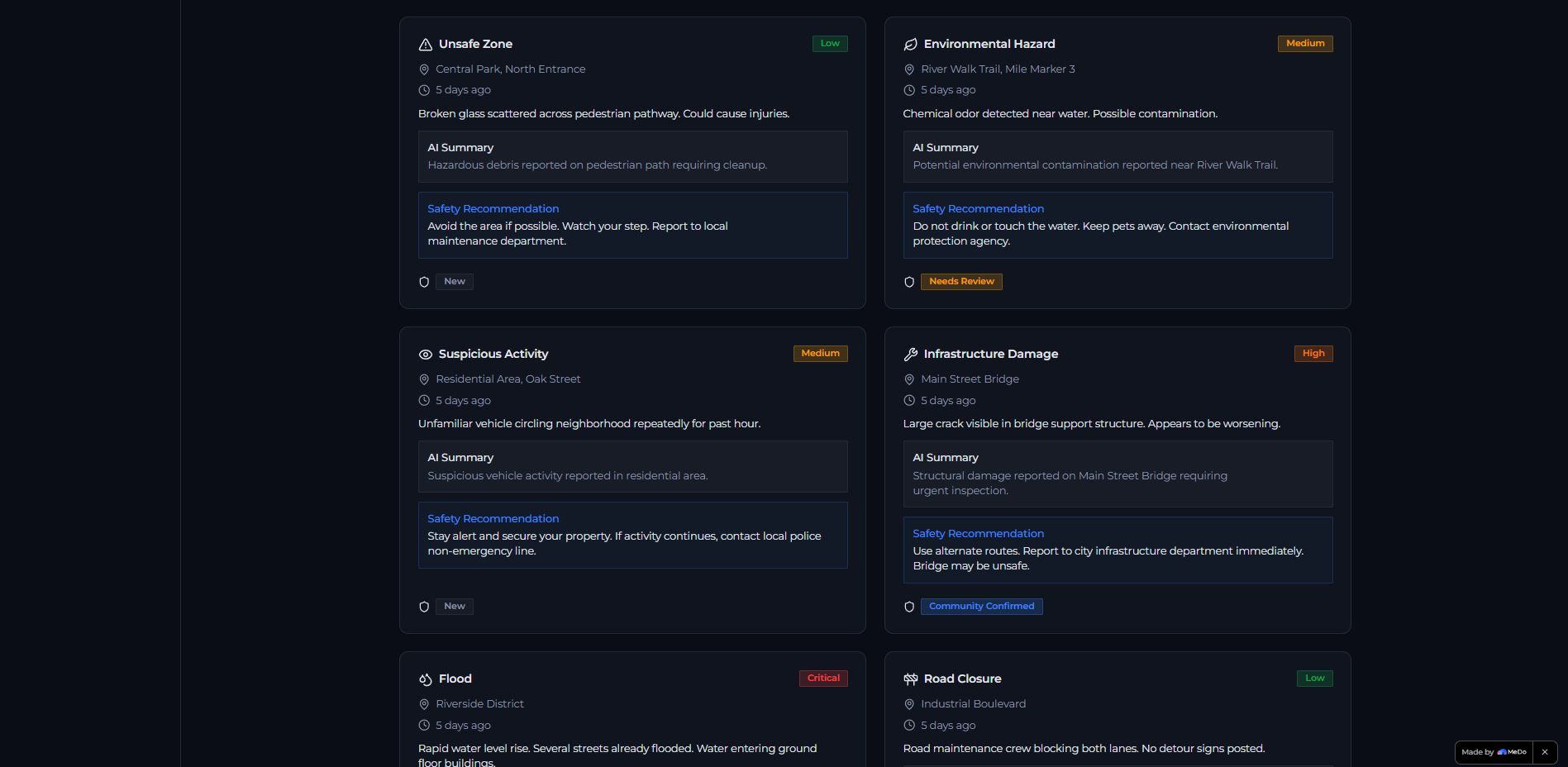
The alert feed displays community incidents, AI summaries, and safety recommendations for faster local awareness.
-
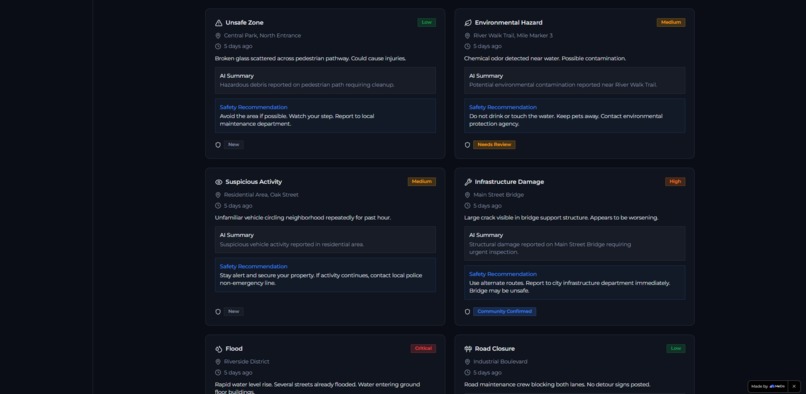
AI-generated alerts provide recommendations and summaries to help communities respond faster to local risks.
-
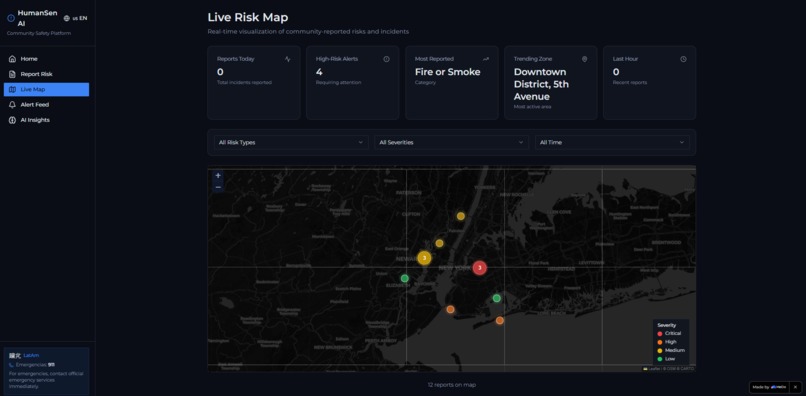
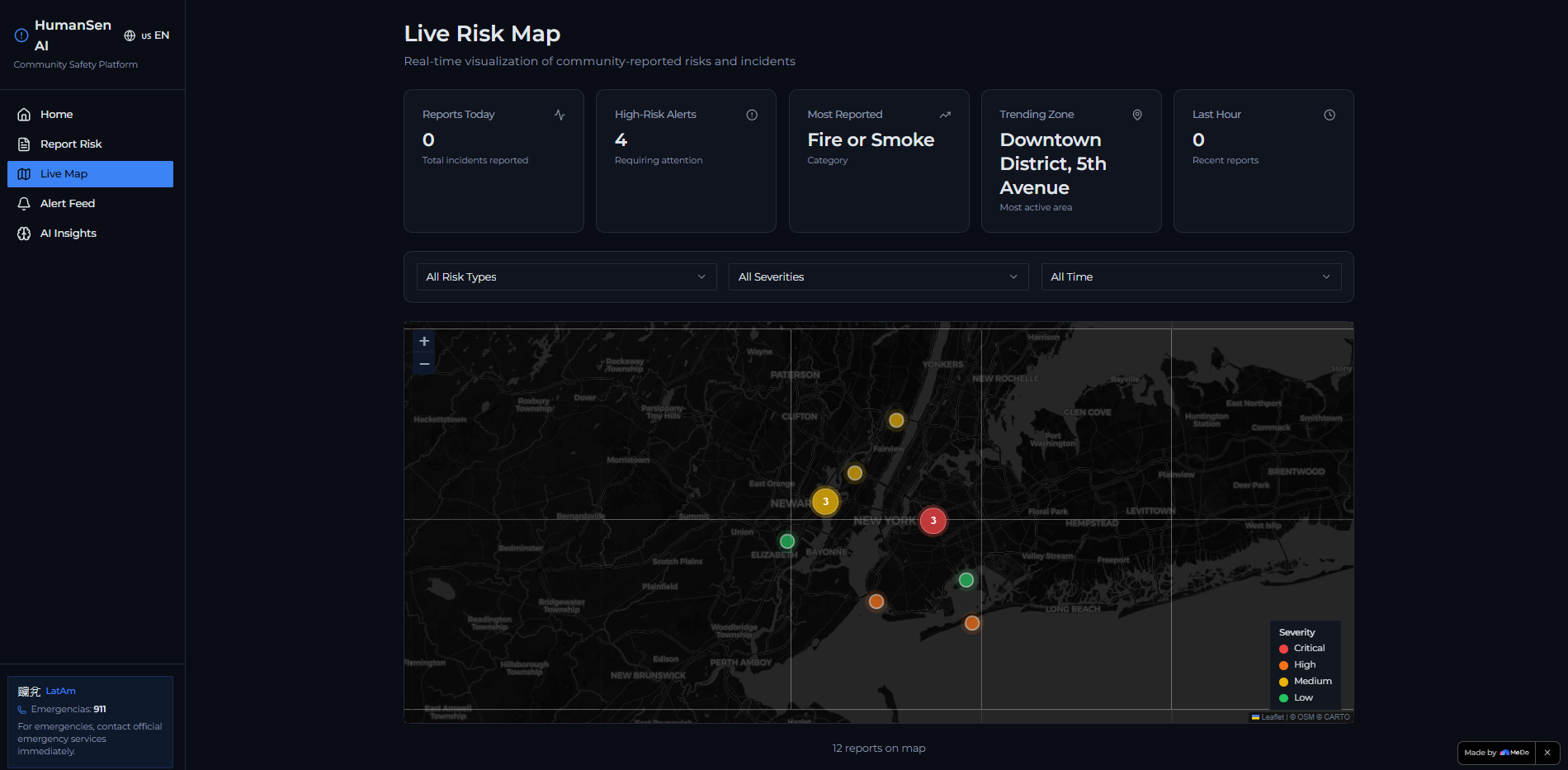
The live map visualizes community-reported risks, helping citizens identify high-risk zones in real time.
Inspiration
Communities often detect risks before official systems do, but there is no simple way to transform those observations into real-time community awareness. Fires, accidents, unsafe areas, and other incidents are usually shared through scattered messages or social media posts, making early response difficult.
HumanSen was inspired by the idea that every citizen can become a real-time community sensor. By combining community reports into a single platform, HumanSen helps neighborhoods improve awareness, prevention, and local safety collaboration.
The goal was to create a simple and accessible tool that empowers communities to report risks quickly and visualize local danger patterns in real time.
What it does
HumanSen is a community safety platform that allows people to report risks and incidents happening around them.
Users can report:
- Fires or smoke
- Accidents
- Unsafe zones
- Road closures
- Environmental hazards
- Suspicious situations
- Public disturbances
The platform displays these reports through:
- A live risk map
- A real-time alert feed
- Severity indicators
- Community safety insights
HumanSen helps communities improve situational awareness and supports faster local response through collaborative reporting.
How we built it
HumanSen was built using MeDo and natural language-driven application development.
The platform was created through:
- Multi-turn prompting
- AI-assisted UI generation
- Dynamic forms
- Simulated real-time reporting systems
- Interactive map interfaces
- Community alert dashboards
The application includes:
- A report submission system
- A live risk visualization page
- An alert feed
- Community insights dashboards
- Severity classification systems
The interface was designed using a modern civic-tech style with dark map-inspired visuals and responsive layouts.
Challenges we ran into
One of the biggest challenges was designing a system that promotes community awareness without encouraging unsafe behavior or privacy violations.
Another challenge was creating a reporting structure that is simple for users while still providing meaningful and organized information.
Integrating map-based visualization and building a realistic live alert experience within a no-code environment was also a significant challenge.
We also focused heavily on creating a clean user experience that remains intuitive even with multiple features and dashboards.
Accomplishments that we're proud of
We are proud of creating a platform that feels like a real civic safety solution with strong social impact potential.
HumanSen successfully:
- Transforms citizens into real-time community sensors
- Creates a live risk awareness environment
- Combines reports into a unified visualization system
- Provides a modern and professional civic-tech experience
- Demonstrates how collaborative reporting can improve community awareness
We are also proud of building the project rapidly using natural language application development.
What we learned
This project showed us how powerful community-driven information systems can be when combined with modern application design.
We learned:
- The importance of designing ethical reporting systems
- How to structure community safety platforms responsibly
- The value of intuitive interfaces in high-stress reporting scenarios
- How natural language app development can accelerate prototyping dramatically
We also learned how critical privacy and responsible communication are in community-based applications.
What's next for HumanSen
Future improvements for HumanSen include:
- Real geolocation integration
- Push notifications and live alerts
- AI-assisted pattern detection
- Municipality and emergency coordination tools
- Community verification systems
- Mobile app support
- Real-time heatmaps
- Multilingual support
- Accessibility improvements
The long-term vision is to evolve HumanSen into a scalable community awareness platform that helps neighborhoods detect risks earlier and respond more effectively.
Built With
- civic-tech-ui
- english
- interactive-maps
- leaflet.js
- medo
- openstreetmap
- responsive-web-design
- spanish


Log in or sign up for Devpost to join the conversation.