-
-
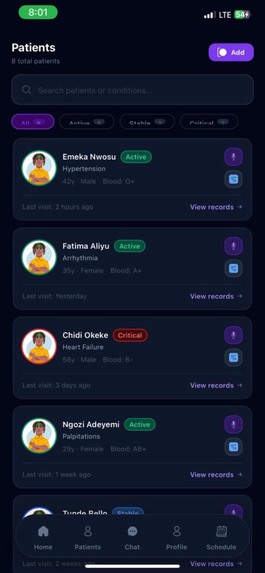
chat screen
-
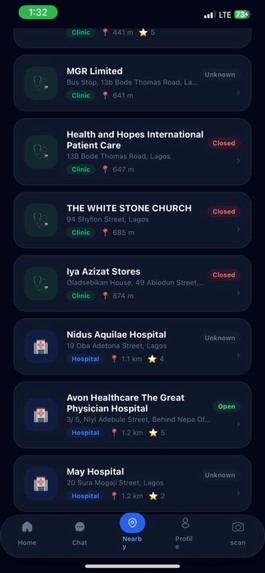
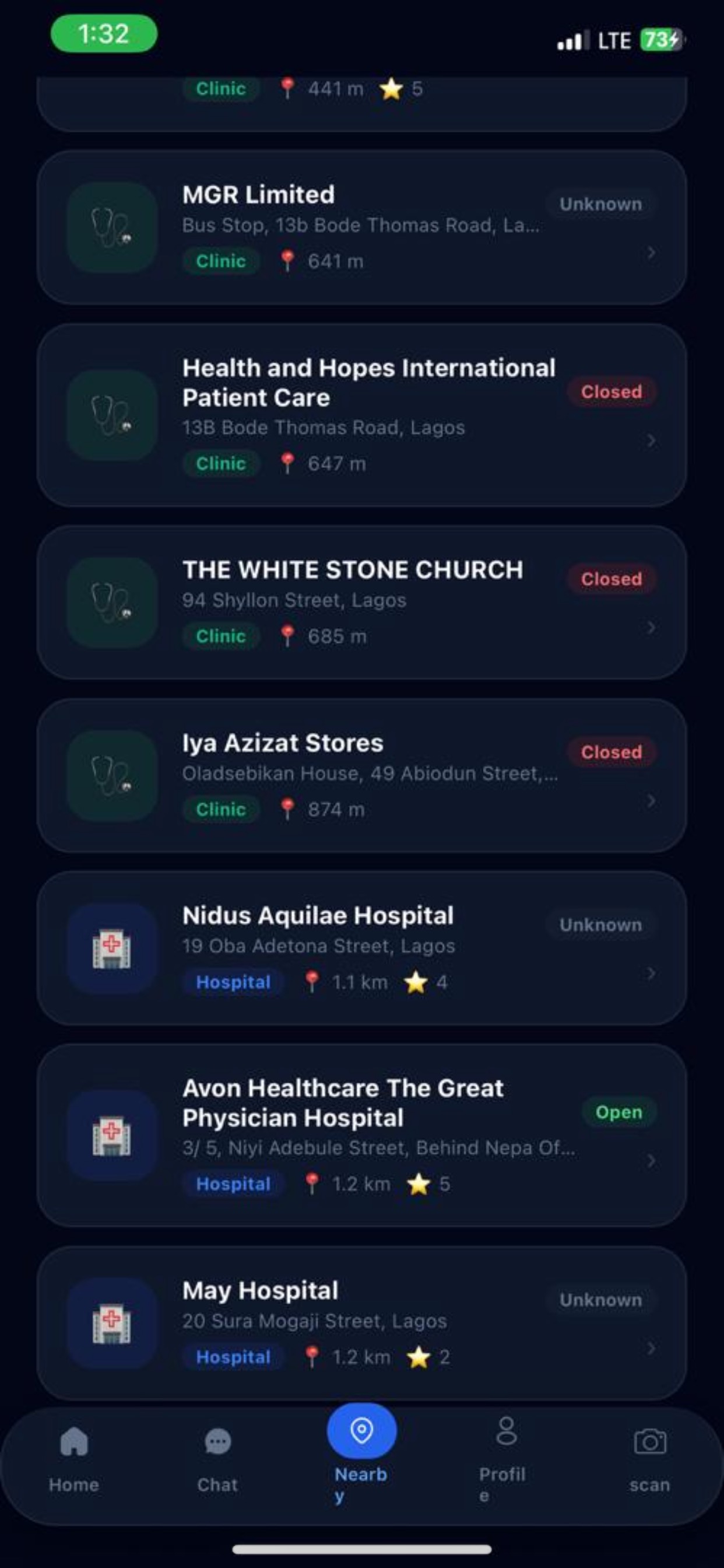
doctors list
-
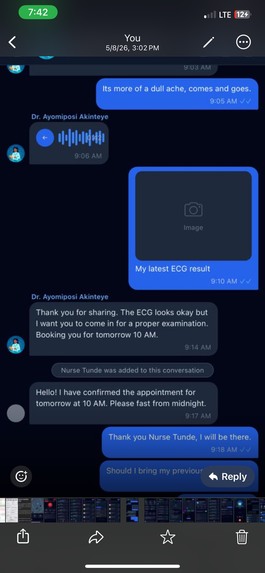
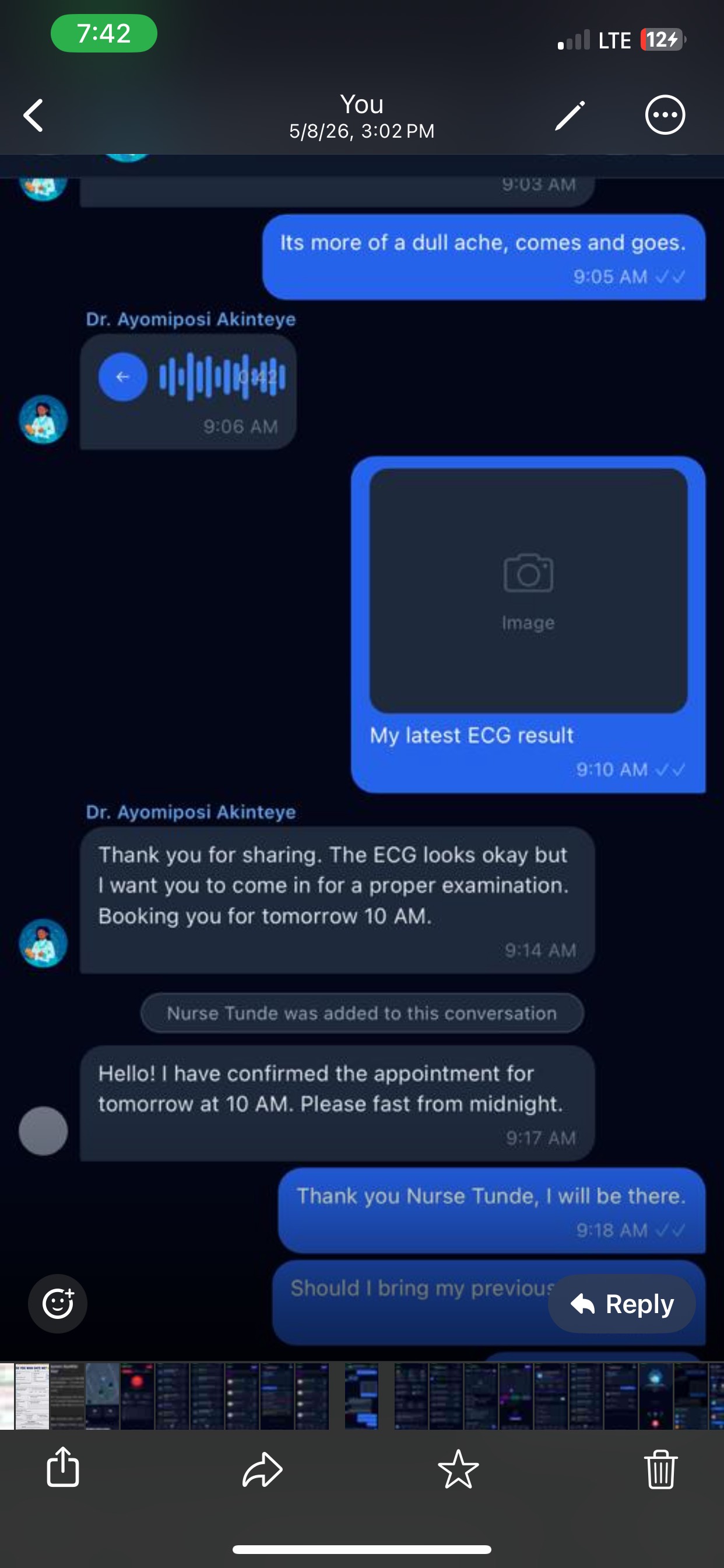
message screen
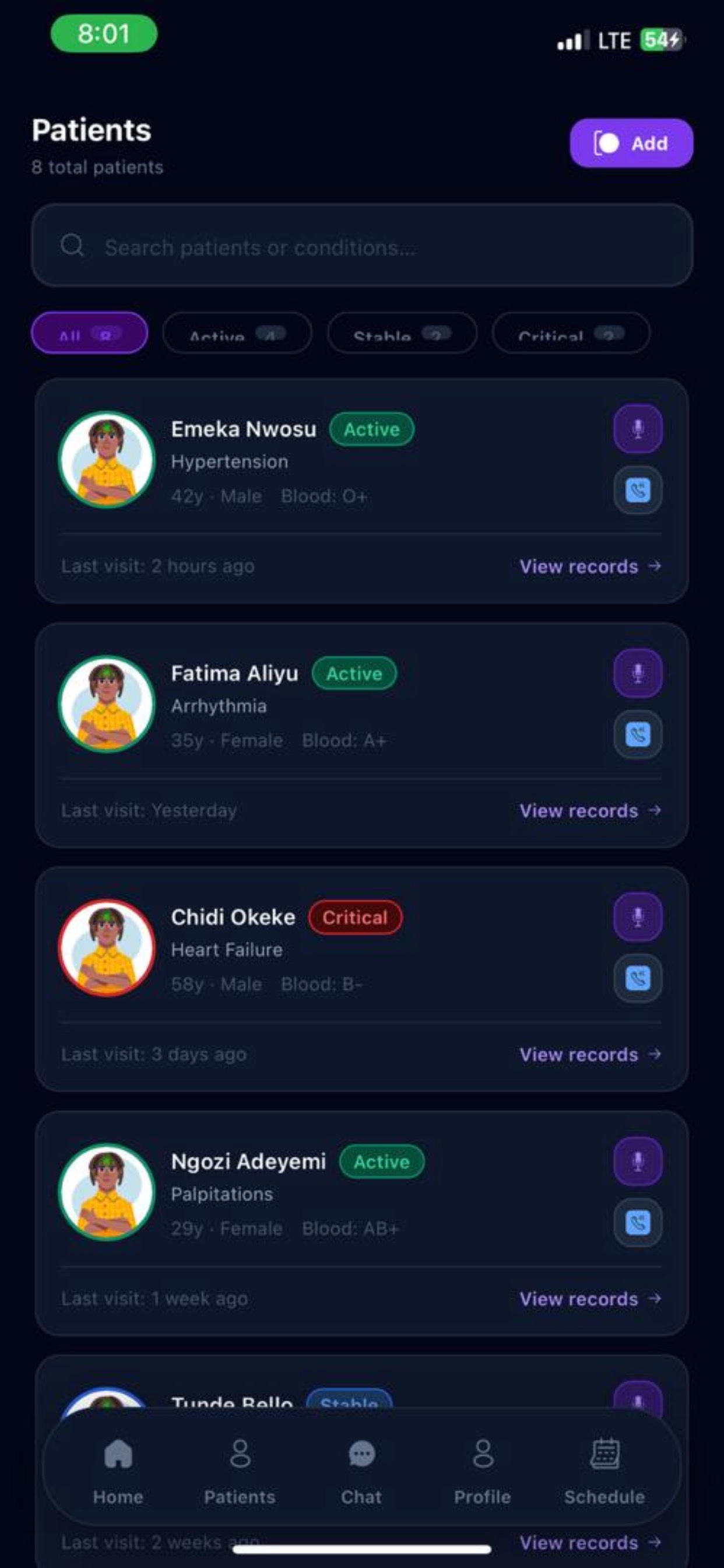
ILERA – AI-Powered Smart Health Assistant
Inspiration
Access to reliable healthcare remains a major challenge for millions of people, particularly in underserved communities where medical professionals are scarce, healthcare facilities are overcrowded, or consultation costs are prohibitive. Many people turn to internet searches or social media for medical advice, often encountering inaccurate or misleading information.
We built ILERA to bridge this gap. Our vision is to create an intelligent healthcare companion that helps users better understand their symptoms, provides evidence-based health education, identifies potential warning signs, and guides them toward appropriate medical care—all while making it clear that AI should support healthcare professionals, not replace them.
Our mission is simple: make trustworthy healthcare guidance more accessible, affordable, and available whenever people need it.
What it does
ILERA is an AI-powered mobile health assistant that enables users to:
- 💬 Chat naturally about health concerns using text or voice.
- 🩺 Perform an AI-assisted symptom assessment.
- 📷 Analyze skin conditions using image recognition.
- 🚨 Detect potential medical red flags and recommend urgent care when necessary.
- 🏥 Locate nearby hospitals and pharmacies.
- 👨⚕️ Connect users with healthcare professionals for further consultation.
- 📈 Track previous health conversations and assessments.
- 🌍 Improve accessibility through multilingual support.
Rather than diagnosing diseases, ILERA provides educational insights, risk-aware guidance, and appropriate recommendations based on user input.
How we built it
ILERA was built as a modern cross-platform mobile application using:
Mobile
- React Native
- Expo
- TypeScript
- NativeWind
Backend
- Supabase
- PostgreSQL
- Authentication
- Edge Functions
Artificial Intelligence
- Large Language Models for conversational healthcare assistance
- LangChain for workflow orchestration
- Vision AI for skin image analysis
- Retrieval-Augmented Generation (RAG) to ground AI responses with trusted medical information
- Structured safety guardrails to reduce hallucinations and encourage professional consultation
Additional Technologies
- Zustand for state management
- Google Maps integration for nearby healthcare facilities
- Secure authentication and encrypted communication
The architecture was intentionally designed to be modular, allowing us to integrate additional AI models, telemedicine providers, wearable devices, and electronic health records in future releases.
Challenges we ran into
Healthcare is one of the most sensitive applications of artificial intelligence.
Our biggest challenge was designing an AI assistant that remains genuinely helpful without giving unsafe medical advice.
Some of the problems we addressed included:
- Reducing AI hallucinations by grounding responses in reliable medical knowledge.
- Designing prompts that encourage users to seek professional care whenever symptoms indicate elevated risk.
- Building an intuitive experience that communicates complex health information in clear, understandable language.
- Balancing speed, usability, and responsible AI practices.
- Ensuring user privacy and secure handling of health-related information.
Creating responsible healthcare AI required prioritizing safety and transparency over simply generating confident answers.
Accomplishments that we're proud of
We're proud that ILERA goes beyond being a simple chatbot.
Some highlights include:
- AI-powered symptom assessment with safety-focused responses.
- Vision-based skin analysis.
- Voice-enabled healthcare conversations.
- Intelligent emergency risk detection.
- Hospital and pharmacy discovery.
- Secure backend infrastructure.
- Scalable architecture ready for future healthcare integrations.
Most importantly, we're proud that every design decision was made with patient safety and accessibility in mind.
What we learned
Building ILERA taught us that responsible AI requires much more than connecting an LLM to a chat interface.
We learned the importance of:
- Responsible prompt engineering.
- AI safety and risk mitigation.
- Healthcare UX design.
- Privacy-first system architecture.
- Building trustworthy AI experiences through transparency instead of overconfidence.
This project also strengthened our experience in mobile engineering, AI integration, backend development, and scalable application architecture.
What's next for ILERA
This is only the beginning.
Our roadmap includes:
- Integration with wearable health devices.
- Telemedicine appointments.
- Medication reminders.
- Personalized preventive healthcare insights.
- Expanded multilingual support for African languages.
- Offline-first functionality for low-connectivity environments.
- Electronic health record integration.
- AI-powered long-term health monitoring.
We envision ILERA becoming a trusted digital health companion that empowers people with reliable health information while working alongside healthcare professionals—not replacing them.
Built With
- ai
- artificial
- chatbot
- computer
- express.js
- functions
- github
- gps
- javascript
- langchain
- llm
- maps
- nativewind
- openai
- react-native
- rest
- retrieval-augmented
- typescript


Log in or sign up for Devpost to join the conversation.