Inspiration
All five of us have done physical therapy at some point, and one of us is recovering from a knee injury right now. The story was the same for everyone. The PT gives you a sheet of exercises to do at home, you do them for a few days, and then you stop. Nobody checks, you can't tell if you're bending far enough, and it's hard to stay consistent when the only feedback comes at your next appointment.
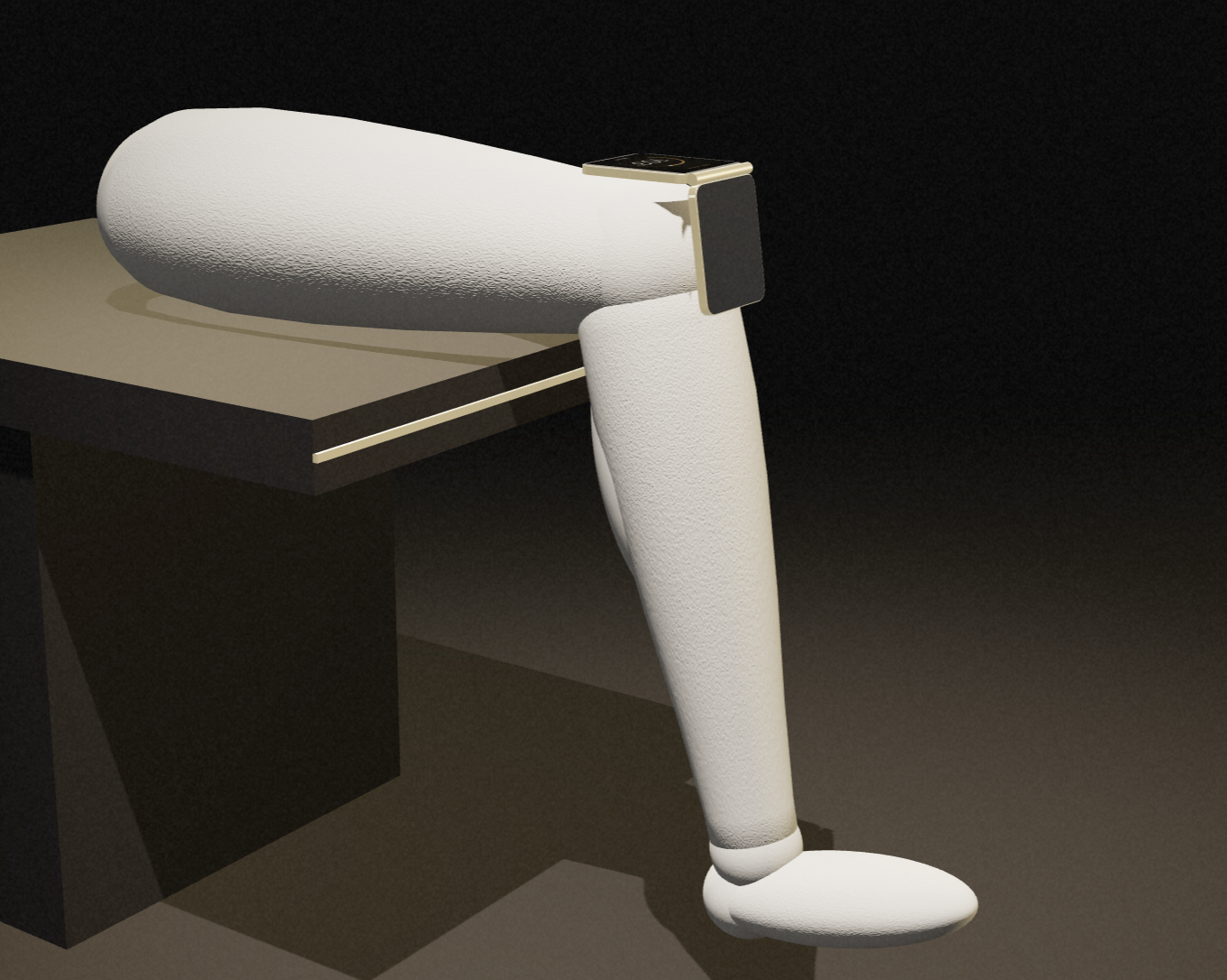
When we saw that iPhone Duo reports its own hinge angle, we realized the phone could sit across a joint and measure it. One half rests on the thigh, the other on the shin, and the fold sits at the knee. When you bend your knee, the phone bends with it.
What it does
iBend turns the Duo into a wearable joint angle sensor for home physical therapy. You rest it across your knee (or elbow), pick an exercise from your plan, and the app tracks every rep:
- Rep counting. A rep counts when you reach the target bend and come back. If you stop short, it tells you.
- Holds. For exercises where you hold a position, a timer only runs while you stay in the target range.
- Feedback you don't have to look at. Haptics get stronger as you get closer to the target, so you know you're there without looking down at your leg.
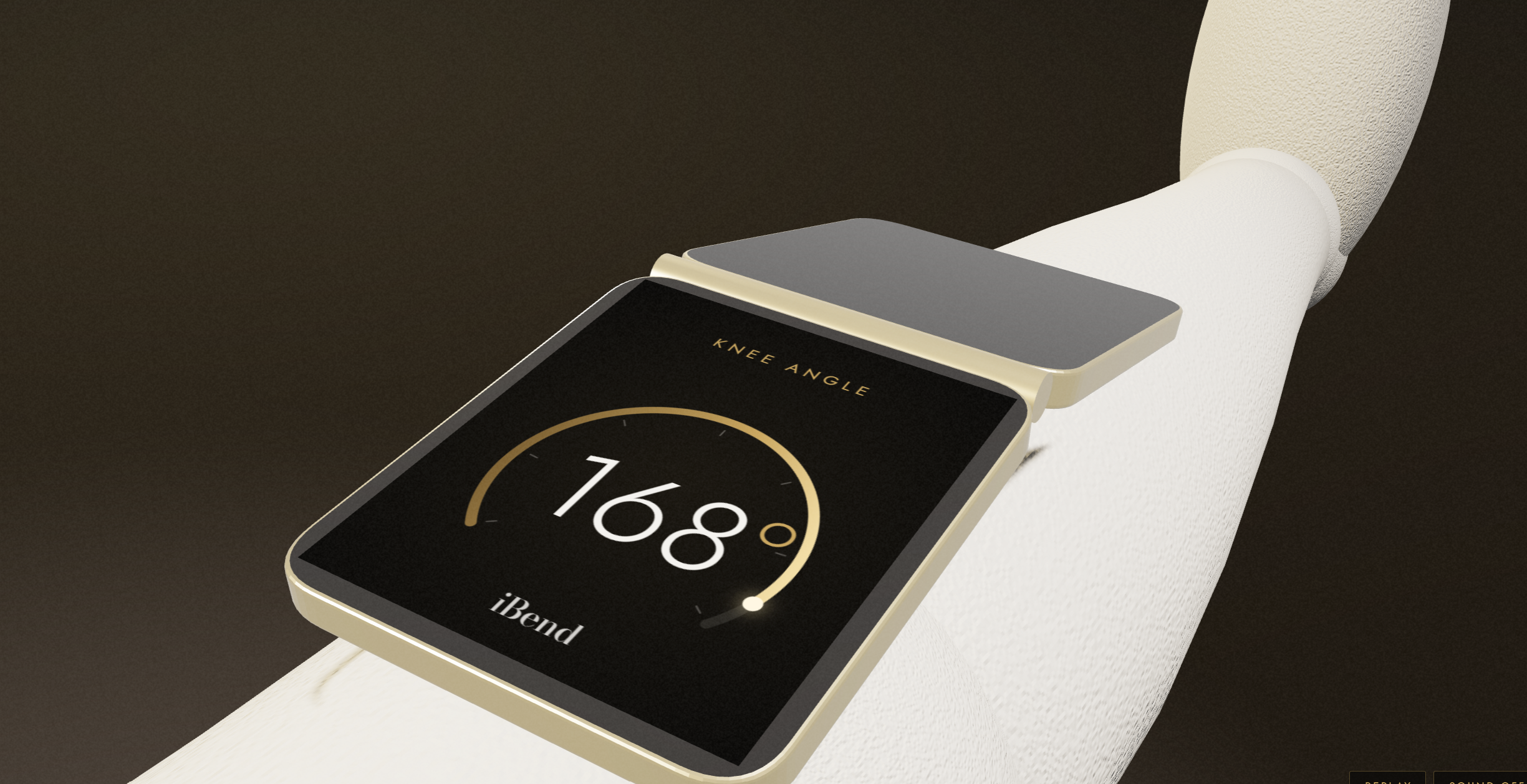
- Cover screen readout. When the phone is on your knee, the outer display shows the live knee angle and your rep count in large type.
- Progress over time. Each session records your maximum bend, so you and your PT can see your range of motion improve week to week.
Knee angle comes straight from the hinge:
$$\theta_{\text{knee}} = 180^\circ - \text{flexion}$$
A fully open phone is a straight leg, and every degree the phone folds is a degree your knee bends.
Why it needs iPhone Duo
You could strap a regular phone to your leg, but a single rigid phone can't measure the angle between two body segments. You'd need a second sensor or some kind of camera setup plus calibration. The Duo measures that angle itself, with a hinge that sits right where the joint is. It's the first phone where the shape of the device is the measurement.
How we built it
We built the app in Bitrig using its iPhone Duo simulator. The simulator lets you fold the phone and streams continuous hinge angle updates, so our first milestone was an app that just displayed the angle live. Once that worked, we built the rest on top of it: a shared sensor layer for the angle, a data layer for sessions, and the exercise logic above both.
The simulator only shows the phone, so we built a separate 3D scene in Three.js with a seated leg and the Duo resting across the knee. That let us show what the app looks like on a real body.
Challenges
The simulator was buggy at times, and we could only read the angle from one side of the device, so we calculated the other side as 360 minus the reading. Showing a body in the demo was the harder problem, since the simulator can't render anything except the phone. That's why we built the 3D leg scene.
We also don't know yet how precise the angle will be on real hardware. The simulator gives us fine-grained values, but we're building on a beta.
Business model
We sell to the professionals, not the patients. Physical therapists and clinics buy an iBend license, and each license covers a set number of patients the professional can assign exercises to and track. Patients use their own Duo at home, and we earn through a revenue share on each license. A clinic that sees more patients moves up to a license with more seats.
This matches how PT already works. The therapist prescribes the plan, and now they also get measured data on whether the patient actually did it.
What we learned
Most of us hadn't built for a foldable before. The new layout APIs were easy to work with, and it was interesting to design for a phone whose screen you can't look at while you're using it.
What's next
We want to try it on a real device when the Duo ships on October 23, test it with an actual physical therapist, and add a weekly report patients can send to their PT before appointments.
Built With
- avfoundation
- bitrig
- core-haptics
- core-motion
- foundation-models
- ios
- iphone-duo
- javascript
- revenuecat
- swift
- swift-charts
- swiftdata
- swiftui
- three.js
- vite
- xcodegen

Log in or sign up for Devpost to join the conversation.