-
-
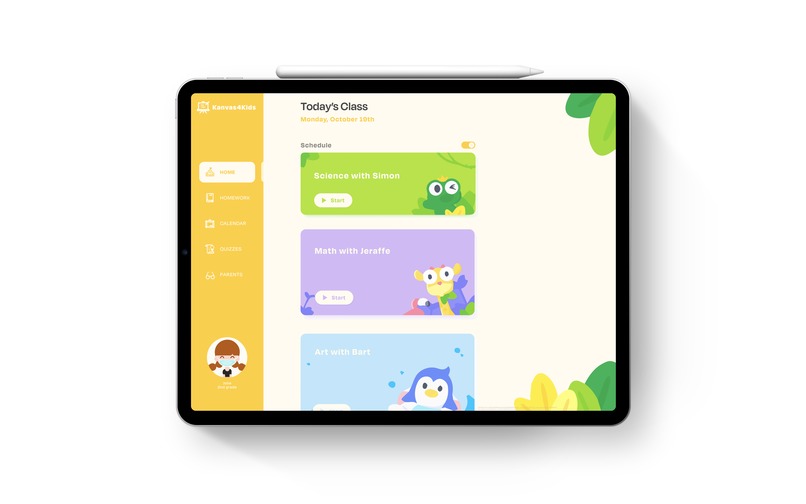
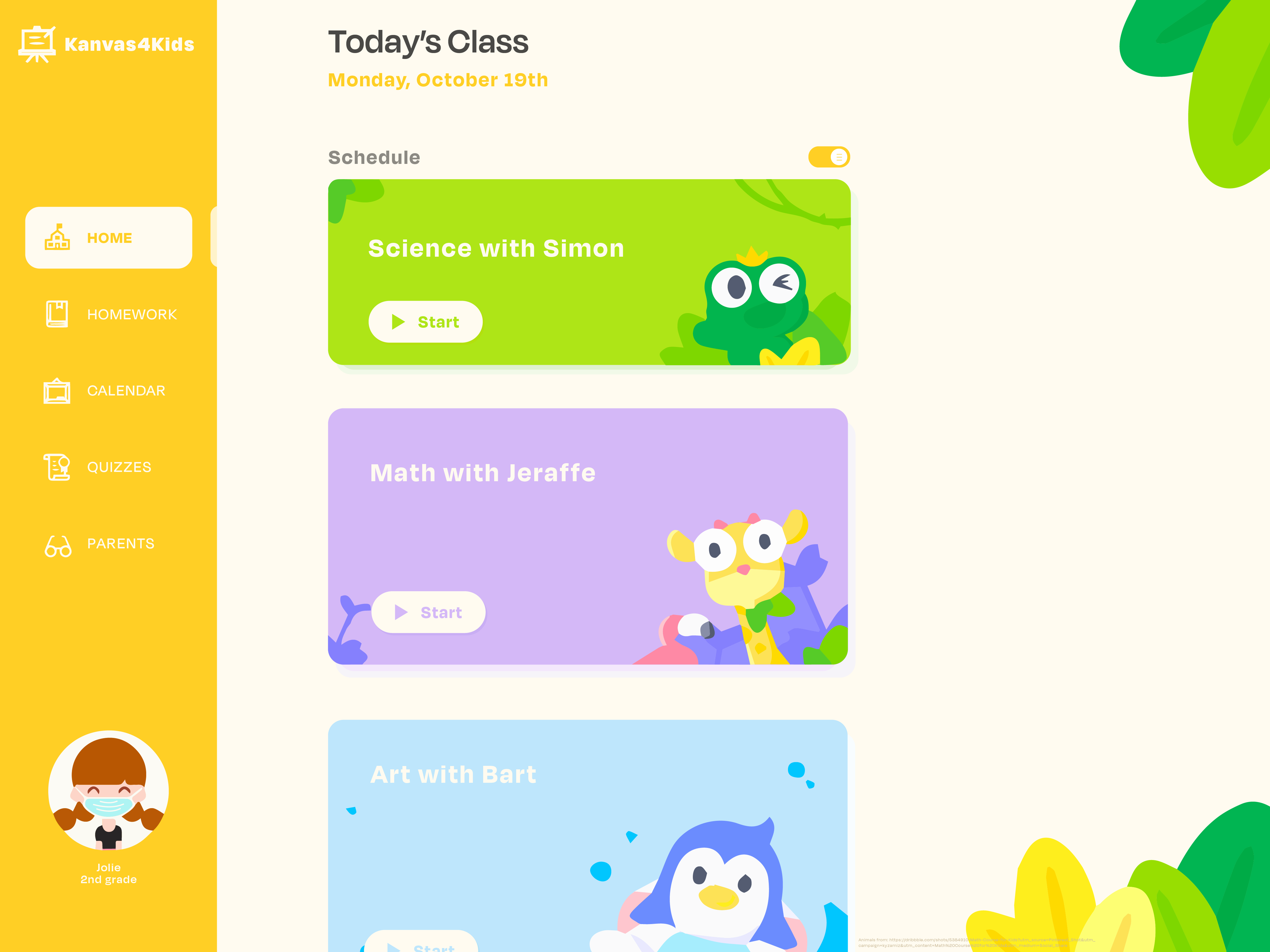
Mock up of the Kanvas4Kids UI.
-
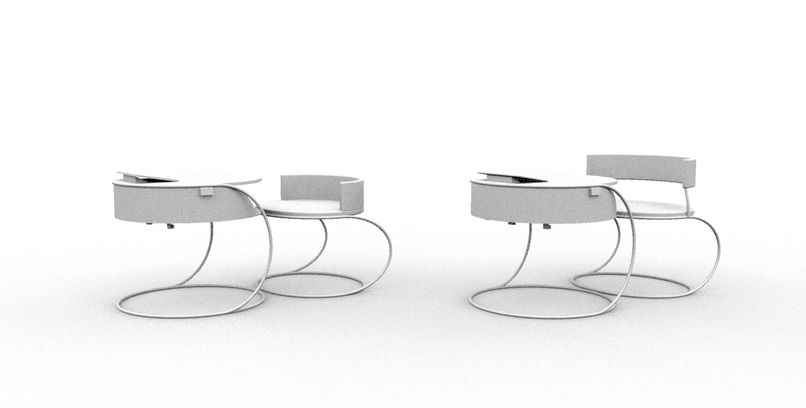
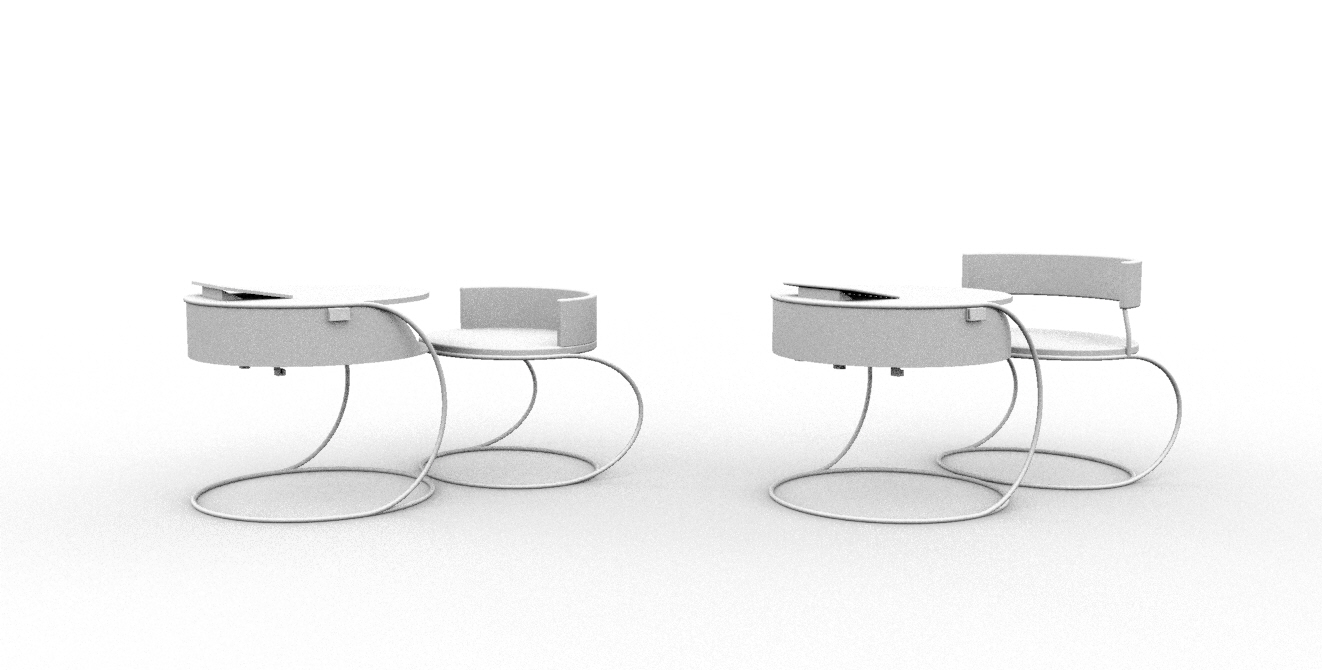
A CAD render of the COVID-19 aware desks.
-
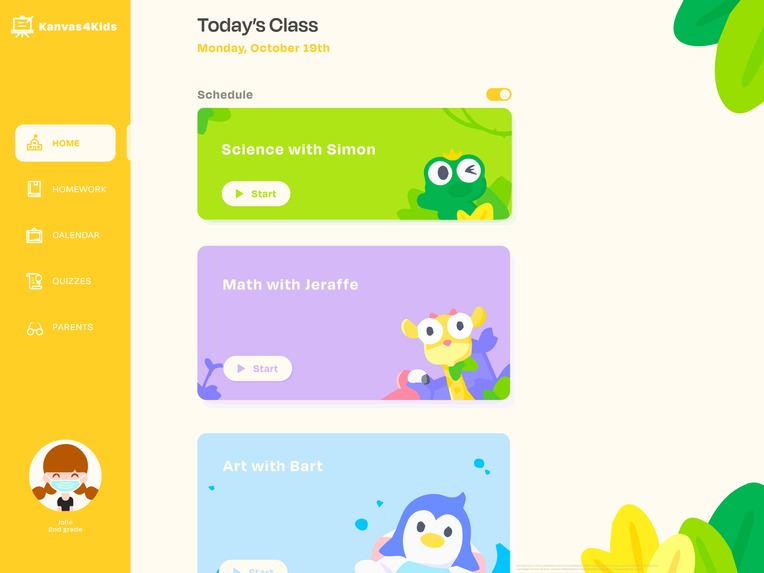
A closer look at the Kanvas4Kids UI.
Inspiration
Disadvantaged children who have no internet access, computers, tablets, food, and/or a parent to supervise their virtual learning at home are falling behind the children the with these privileges. Parents who need to work all day in order to provide for their families are forced to make an impossible choice between earning a living and ensuring the safety of their children. Elementary school teachers and students lack a truly COVID-19 aware classroom and learning structure that is just as effective as pre-COVID times.
What it does
The hybrid educational model reopens elementary schools for disadvantaged children or children with working parents. Any child who can stay home will stay home in order to protect the community. Classrooms are redesigned with COVID-19 in mind, and a new Learning Management System (LMS) created specifically for elementary schoolers integrates both virtual and in person learning. This model makes sure that no child is left behind, and that parents can take advantage of the benefits schools offer (child care, free lunches, etc).
New age of classroom furniture
We redesigned modern day classroom furniture to be kid friendly and include privacy screens to protect the child and teachers. The rounded design of the chair and desk protects kids from sharp corners, and the lightweight materials allow kids and teachers to easily move the furniture. There is space for the child's belongings, so everything can be contained within one area to minimize contact with as many surface areas as possible.
Kanvas4Kids: A new LMS for elementary schools
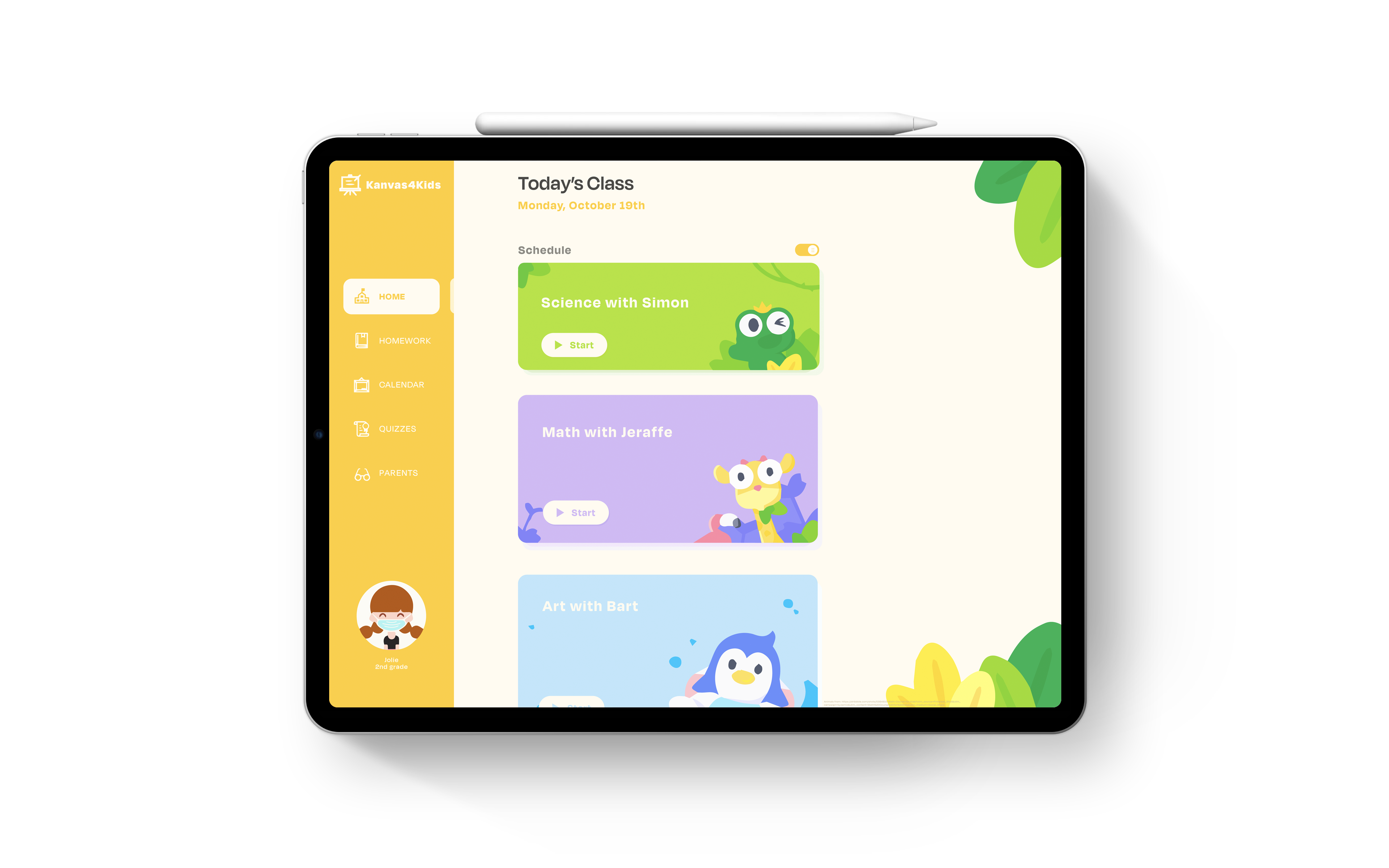
Introducing Kanvas4Kids, the LMS that integrates and streamlines both virtual and in person learning. Modern day LMS's are more geared towards older students, and contain many elements that while useful for secondary or even tertiary schoolers, is too complex and unnecessary for elementary aged children. Kanvas4Kids is a lightweight web and tablet application that allows teachers to compile lessons and homework in one place. The easy and simple to use interface eases the learning curve for both students and teachers alike, and encourages children to complete their lessons and homework.
Teachers plan out their lessons by the week, month, or even semester. When students open the app on their personal or school issued tablet/computer, they are greeted with that day's lessons and a schedule of when/how to complete them. Teachers can livestream and record lessons while they teach students at school for the virtual learners at home to follow along. Homework and lessons are accessible without internet so that students can bring their devices to their Wifi free home and still be able to continue learning.
How we built it
We modeled the furniture design in Rhino 3D, and created a UI example in Adobe Illustrator.
Challenges we ran into
The time constraint was a big challenge for us, but we're happy we managed to get some visuals submitted! This is definitely a project we want to continue working on.
What we learned
We researched a lot about how countries around the world are handling school closures with COVID-19. Some countries like South Korea have a very streamlined system, but that is not the case for many other countries like the US. There's significant pressure on parents, teachers, and students alike to stay on top of school while trying to get through this difficult time, so we wanted to ease that burden in whatever way we could.
What's next for Hybrid Education Model for Elementary Schools
We will continue developing the classroom structure to beyond the desks, and create guides for how the entire school can operate. In addition, we will finish developing the UX/UI for Kanvas4Kids, and implement the LMS as a web application.
Built With
- adobe-illustrator
- keyshot
- rhino

Log in or sign up for Devpost to join the conversation.