-
-
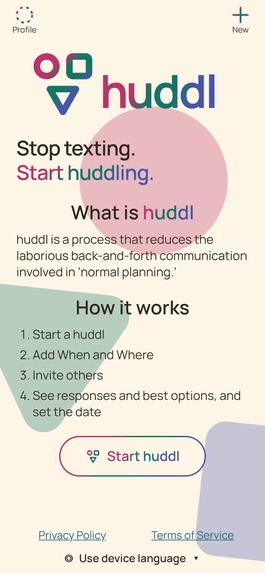
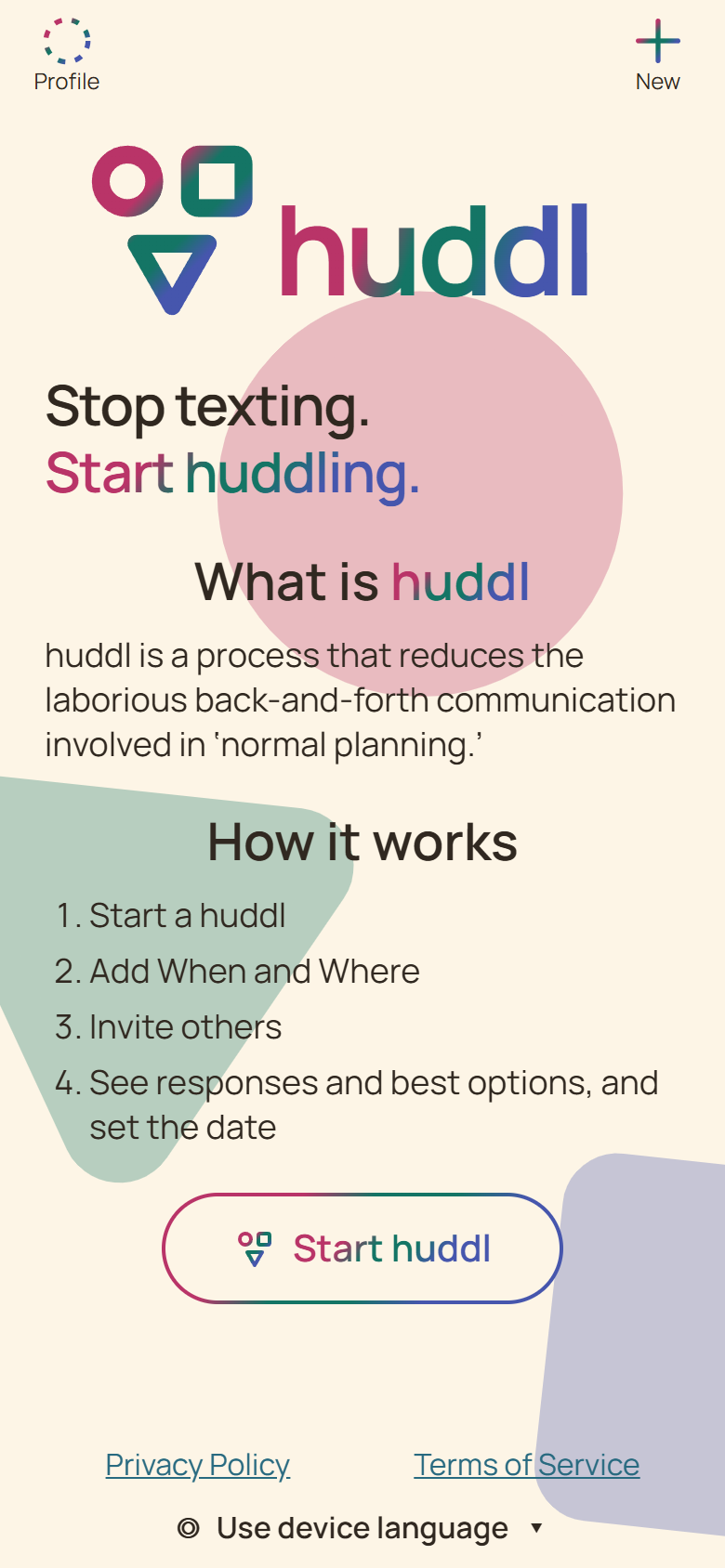
Huddl First Time User Landing Page
-
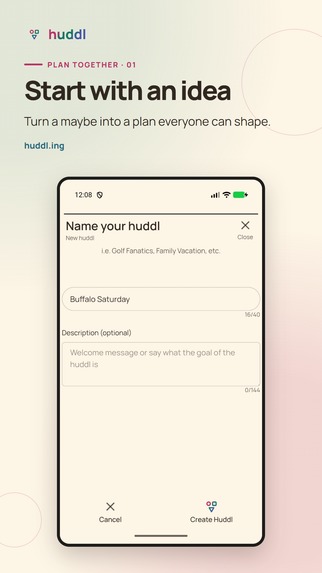
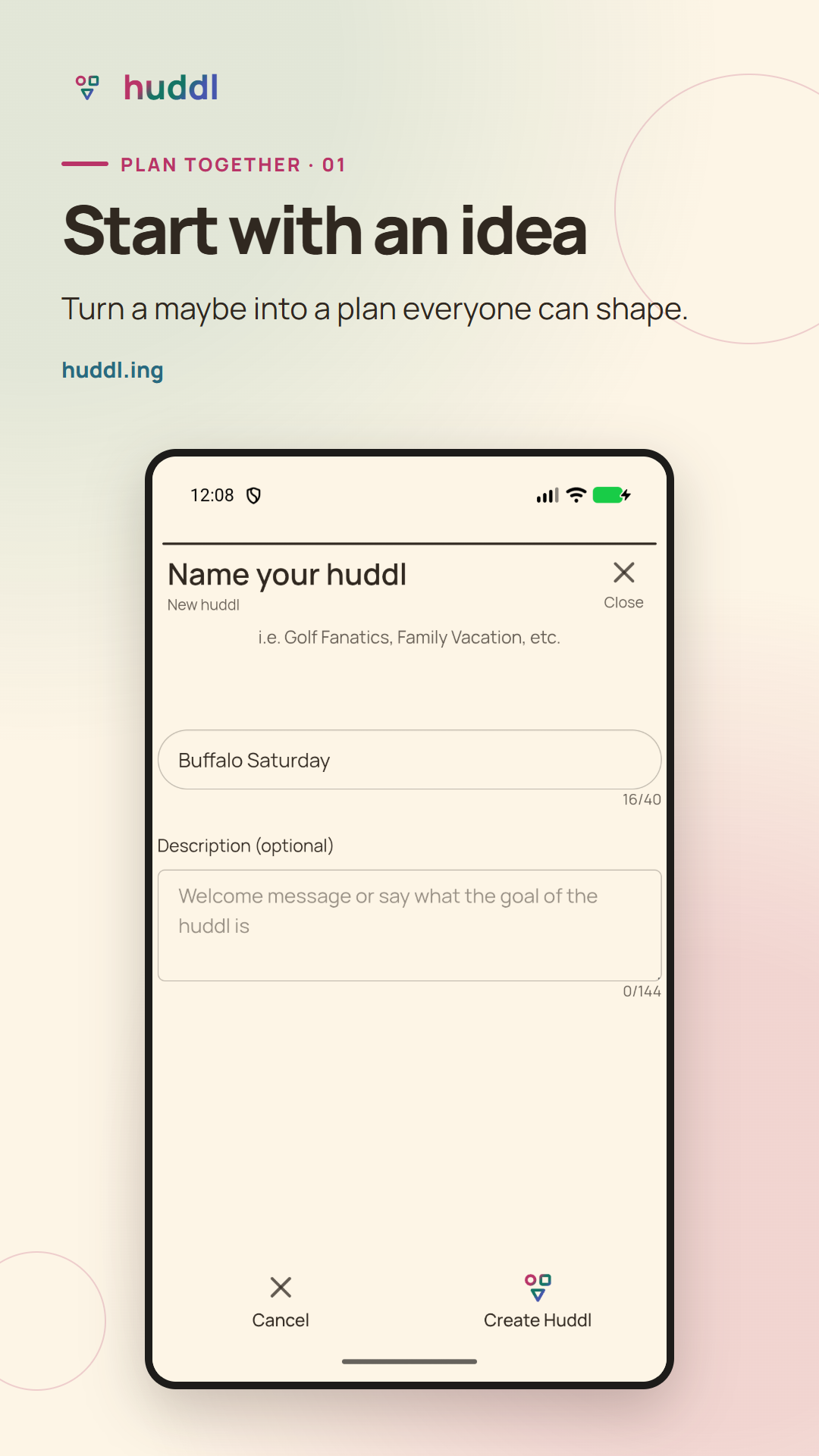
1 - Start With An Idea
-
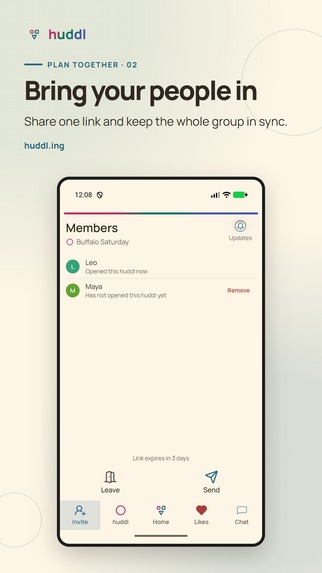
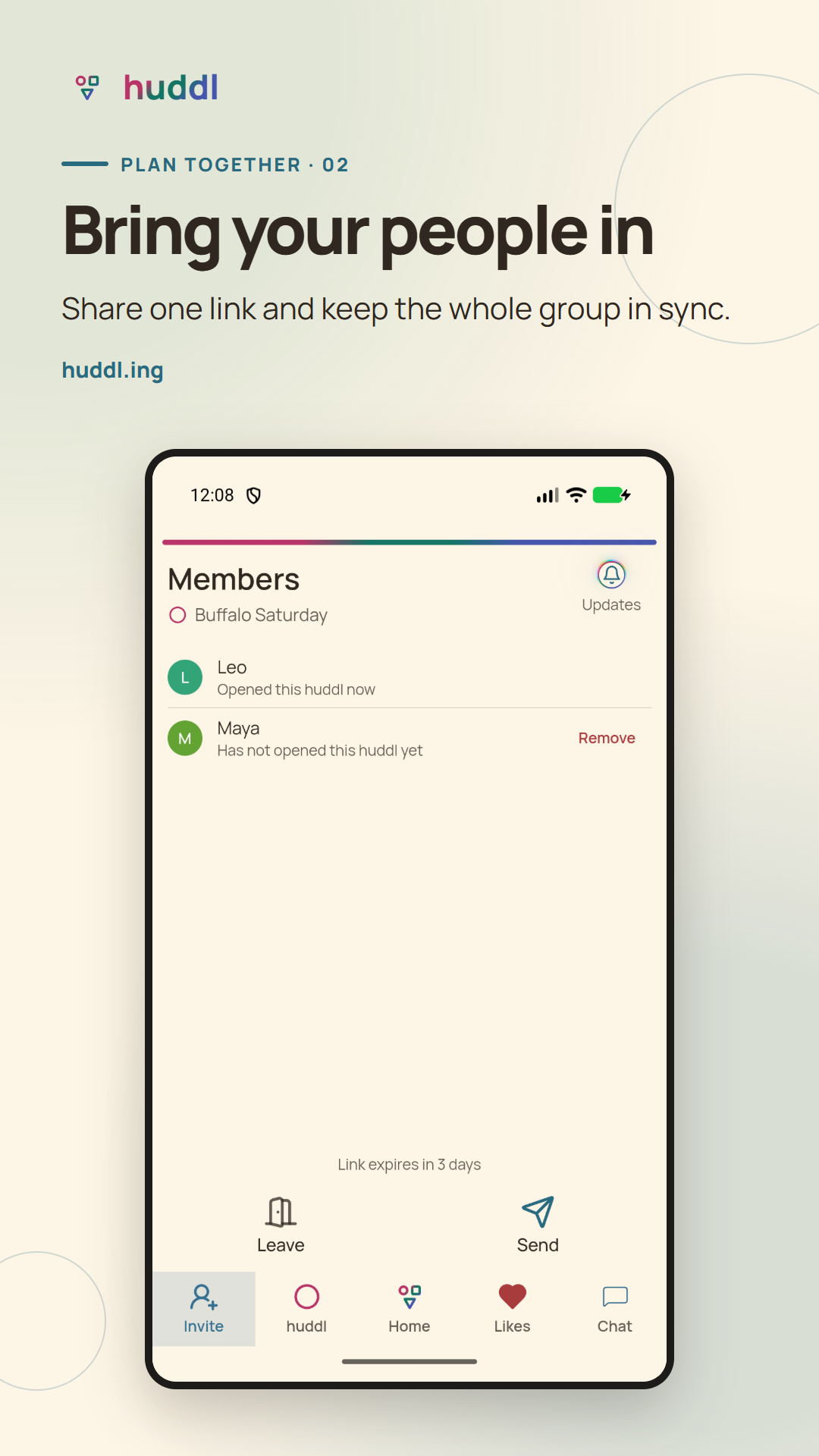
2 - Invite
-
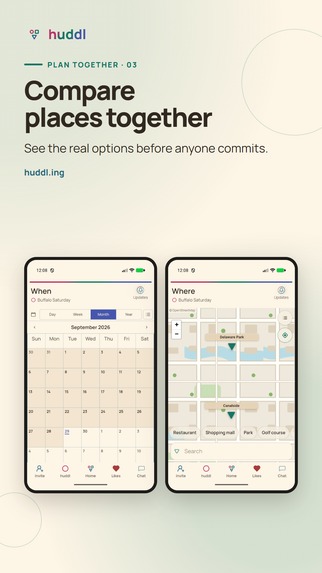
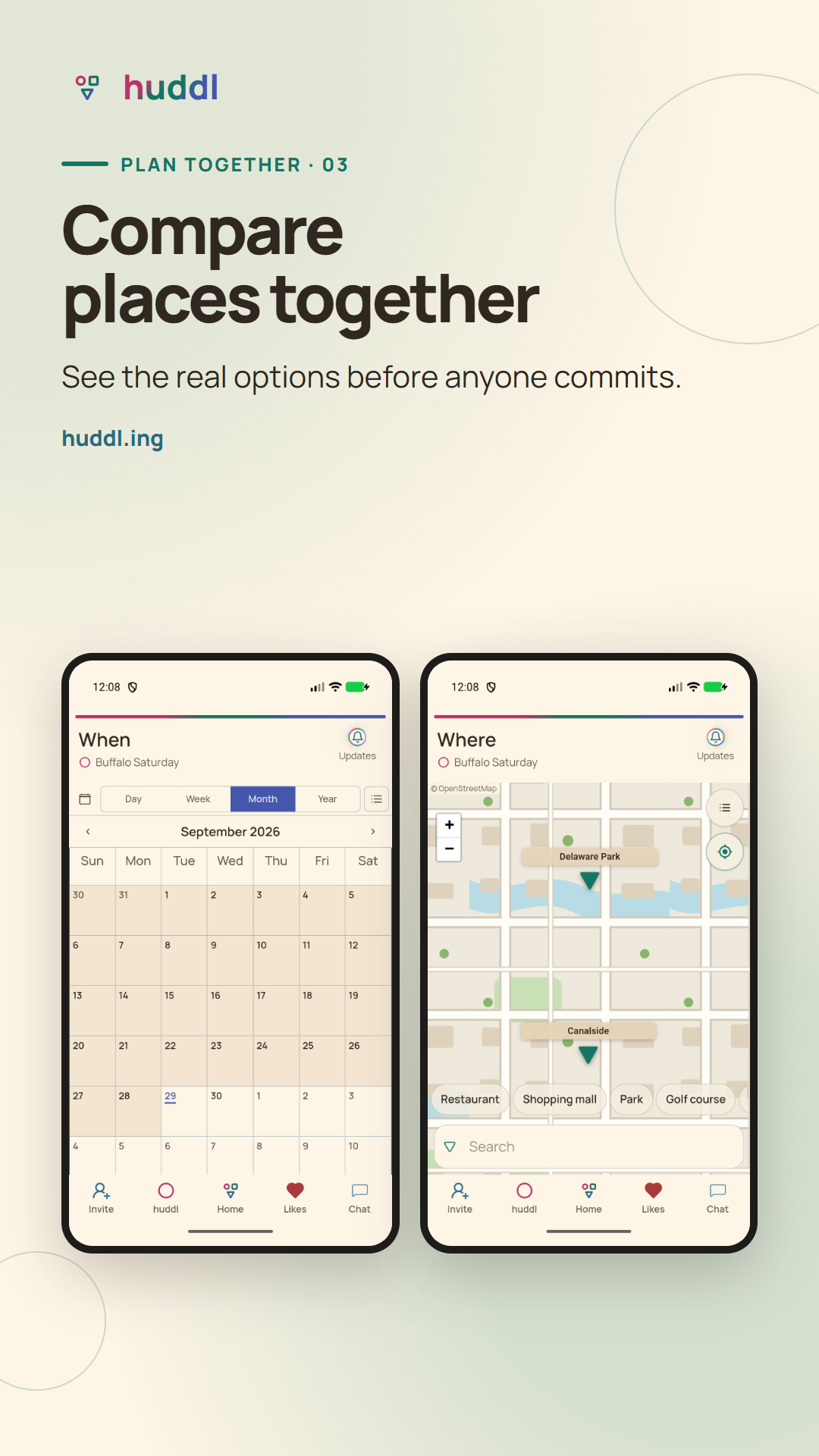
3 - Choose a Where
-
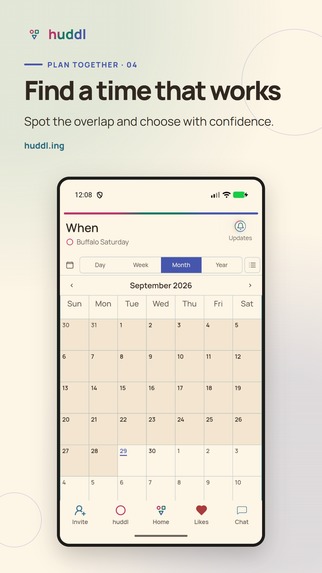
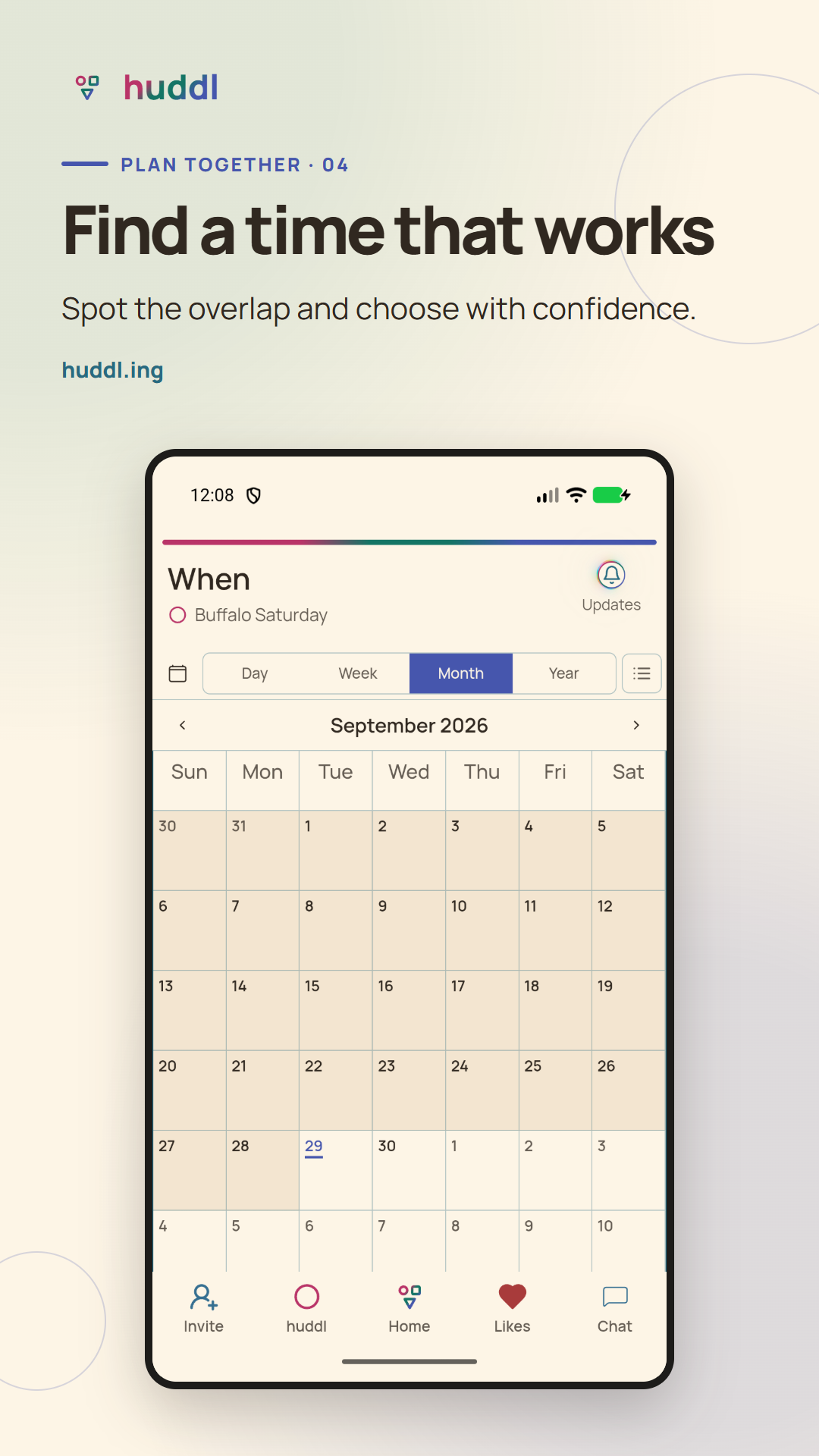
4 - Choose a When
-
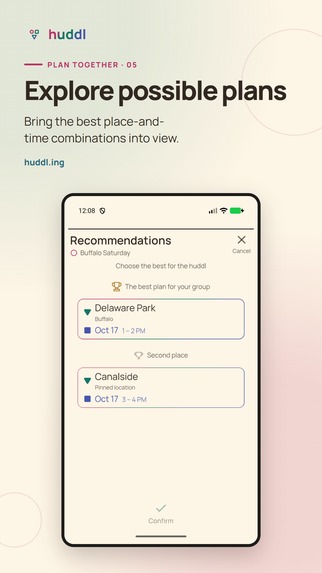
5 - Plan
-
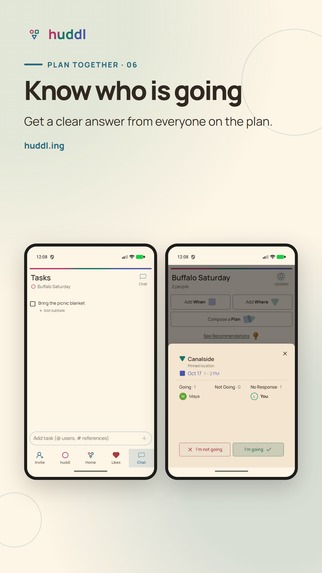
6 - RSVP
-
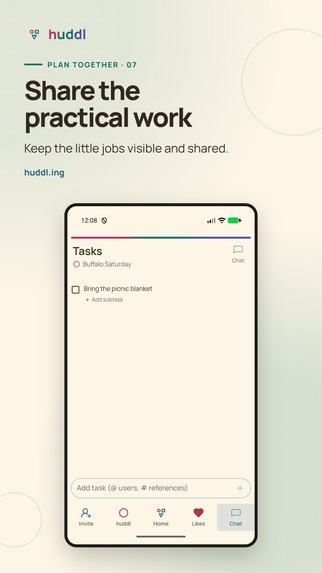
7 - Tasks
-
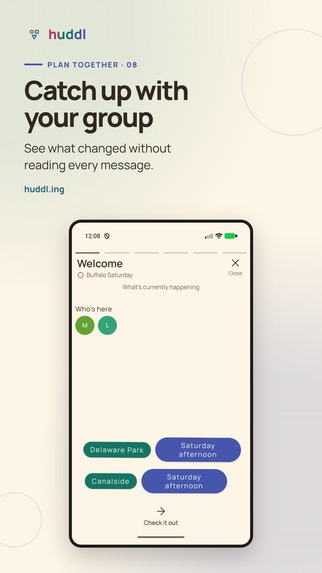
8 - Updates Are Stories
-
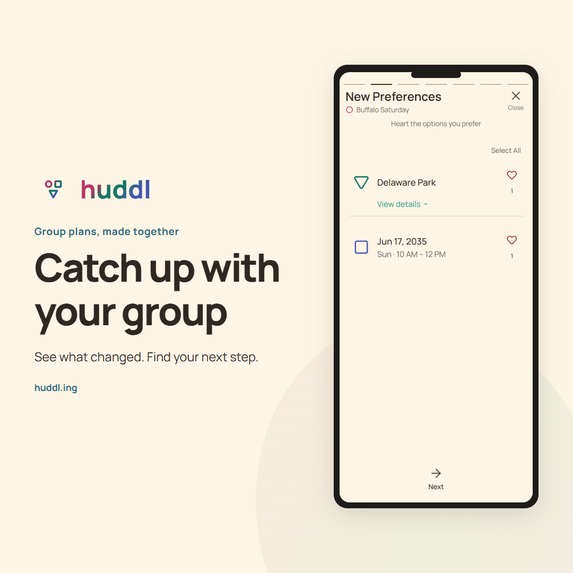
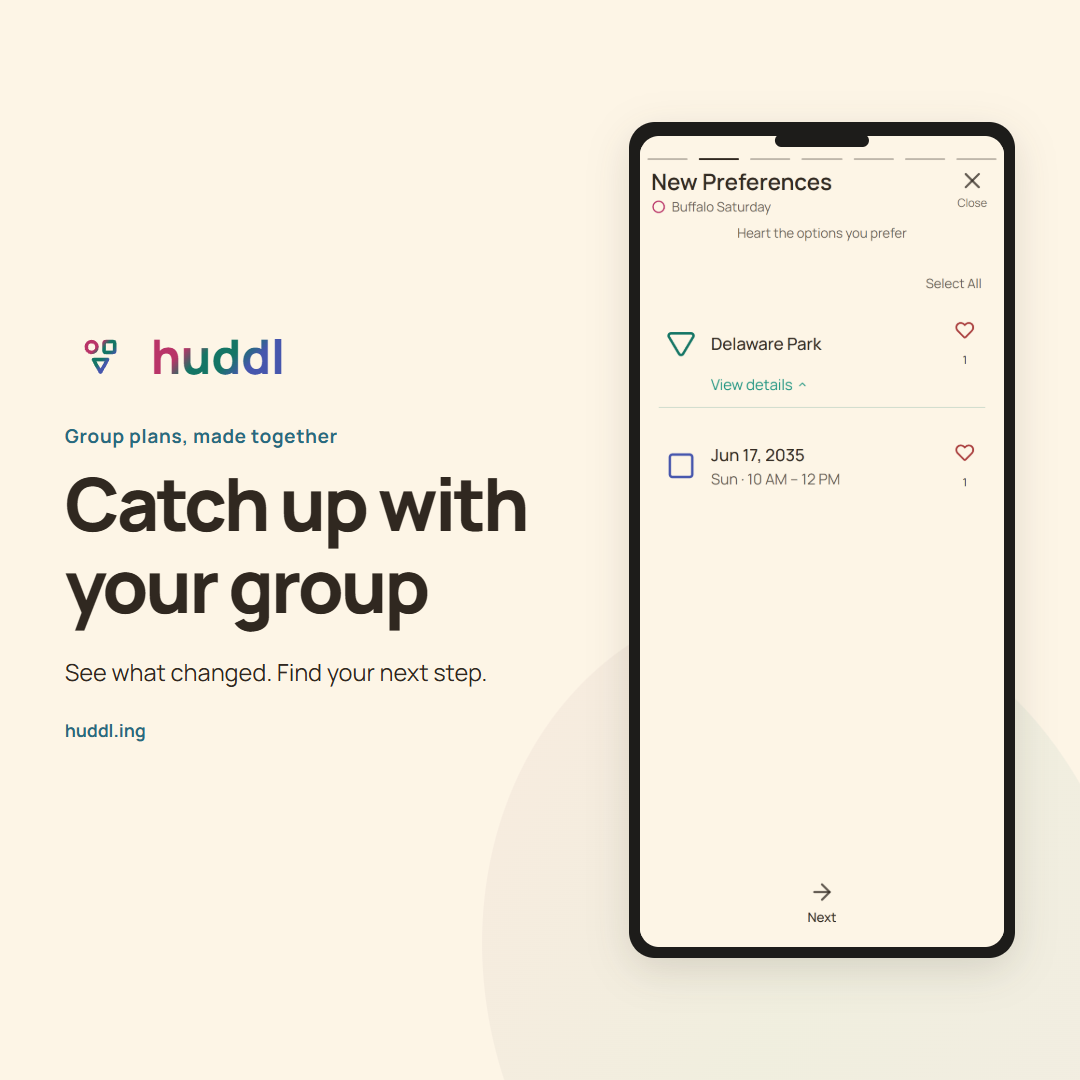
Catch up with curated stories for making sure huddl is easy for everyone
-
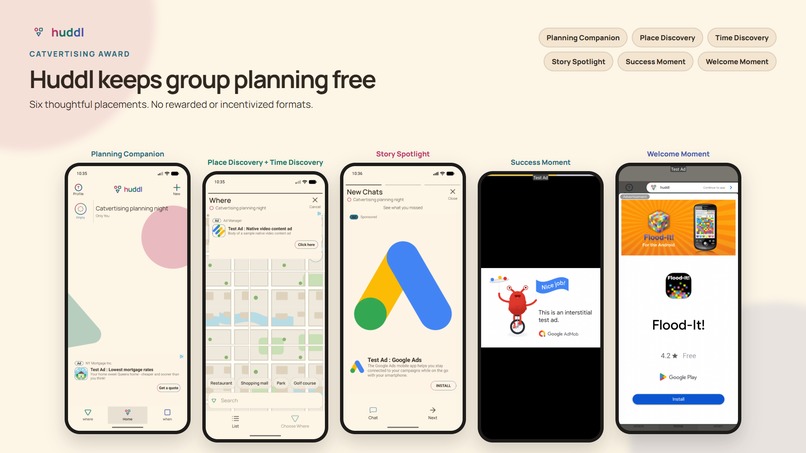
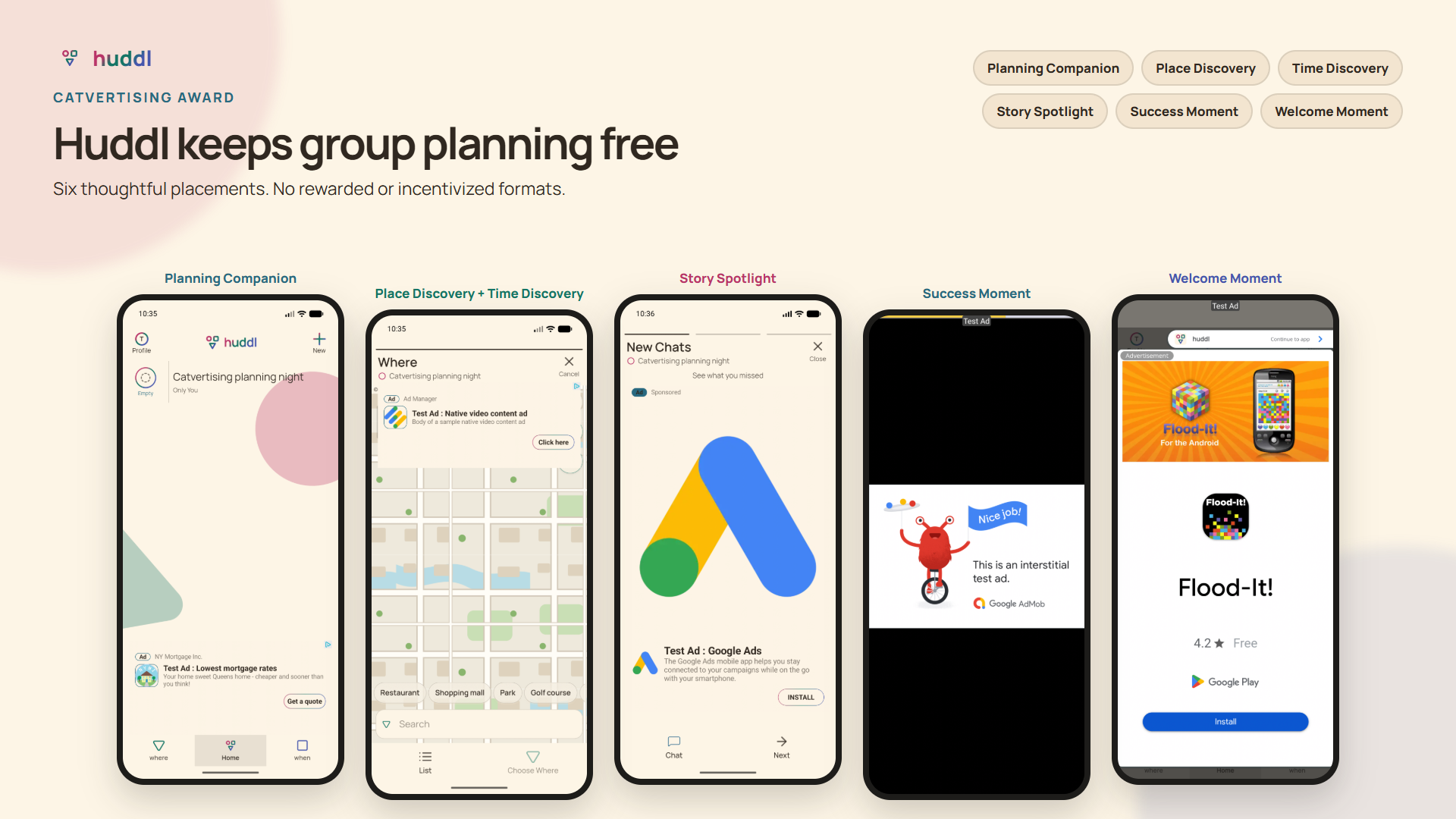
huddl - group planning for free
-
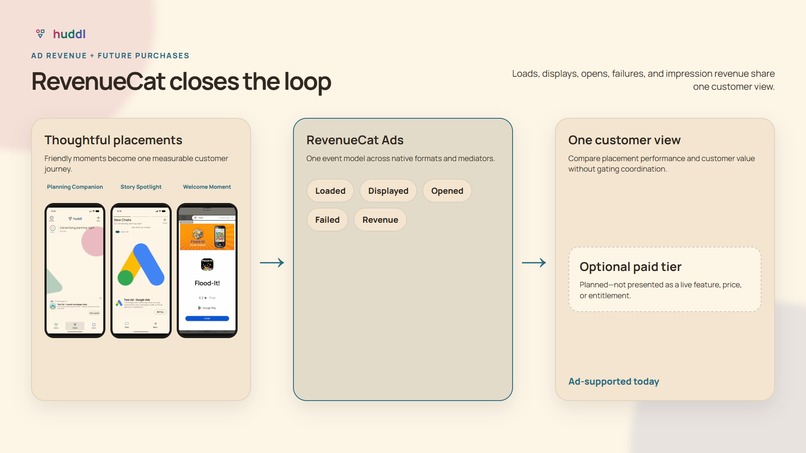
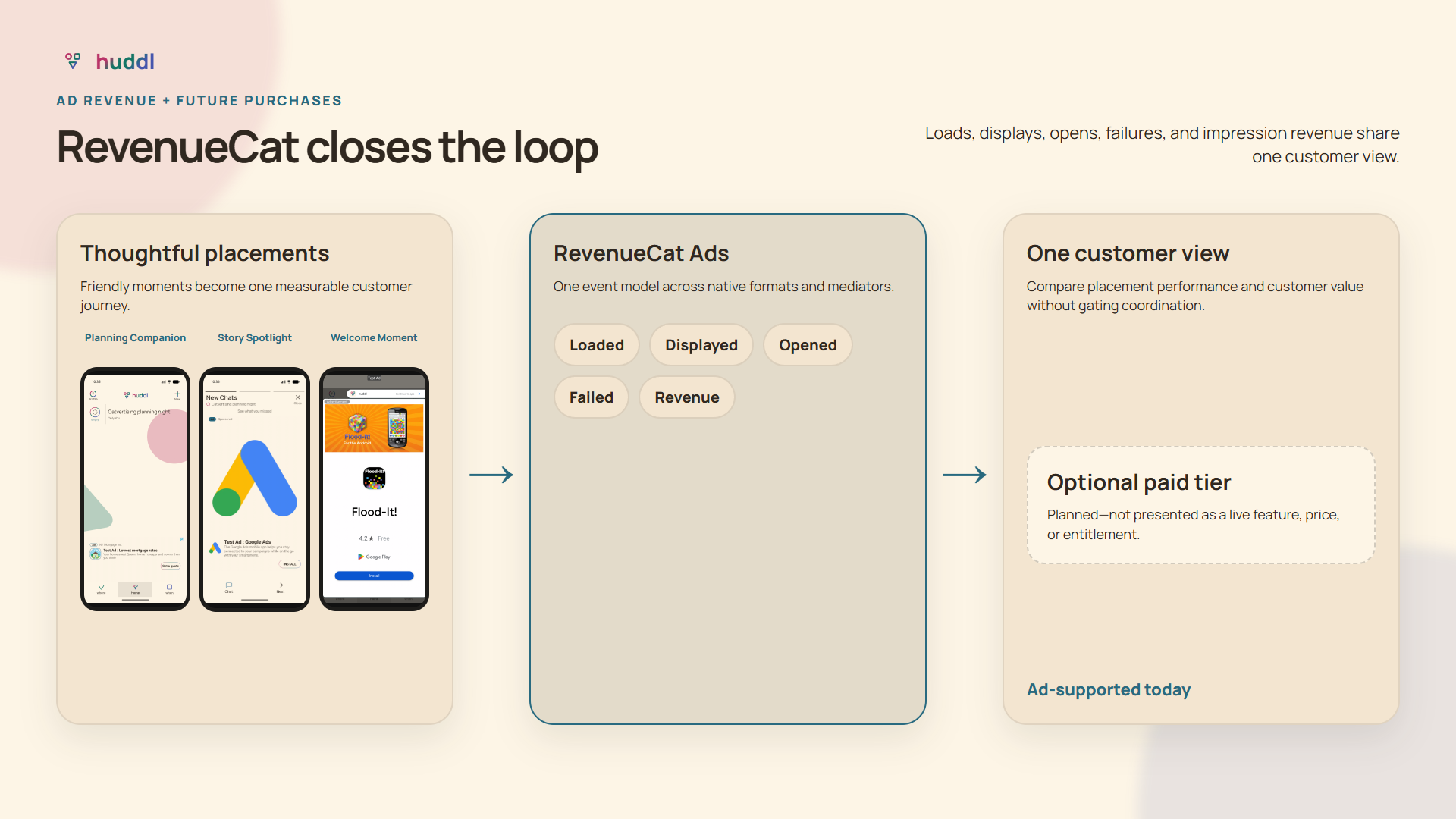
huddl - monetization
-
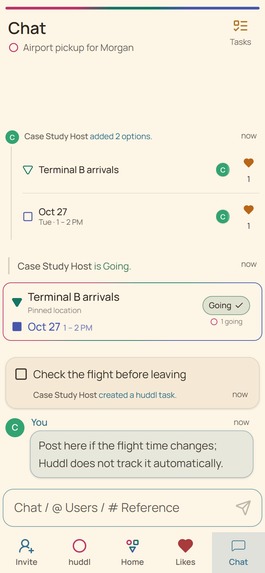
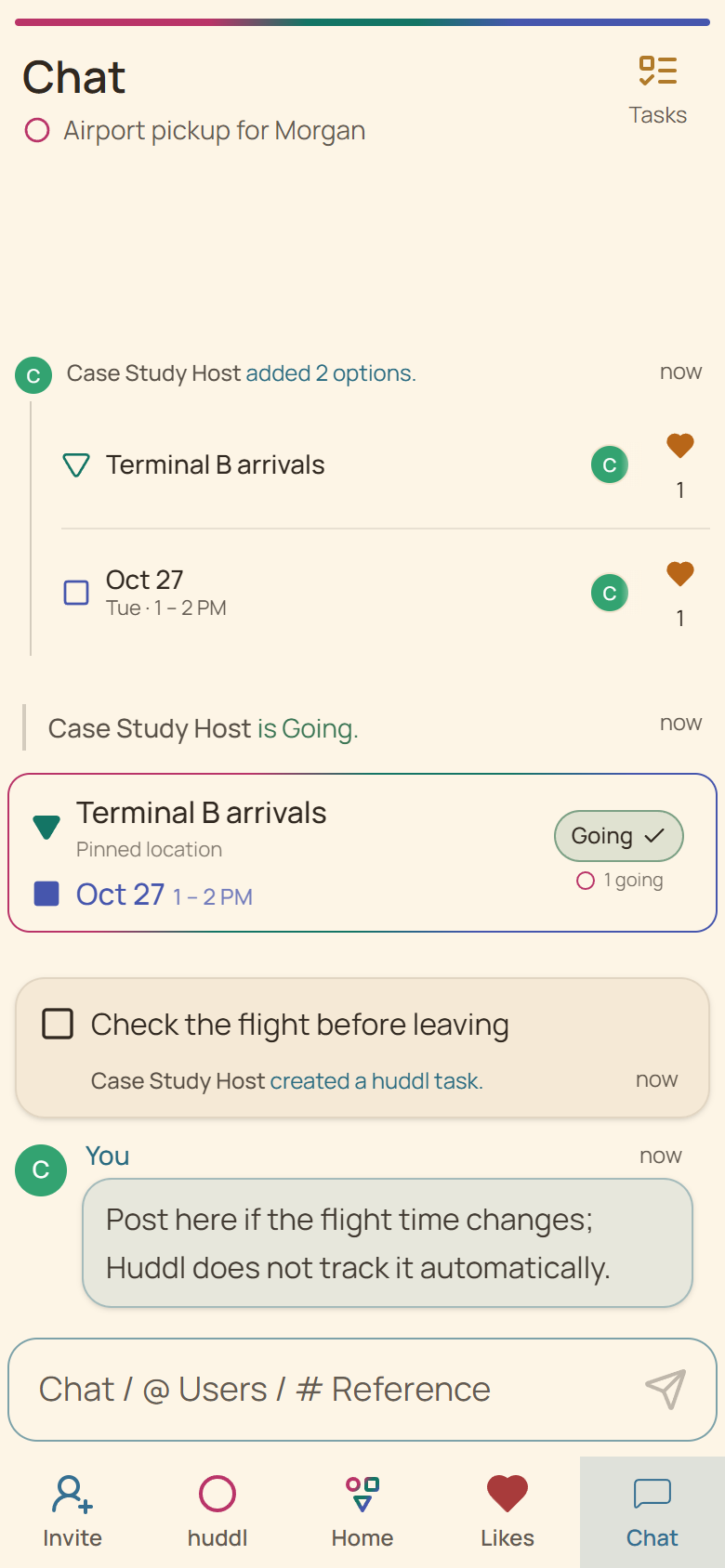
Huddl Chat
-
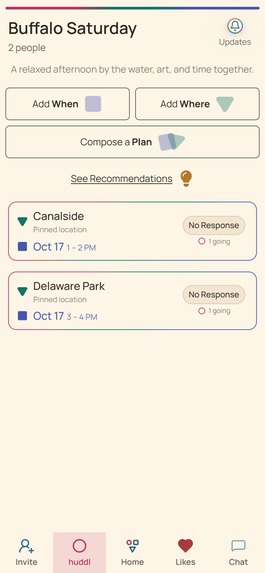
Huddl Plans
-
1024x1024 App Icon
Inspiration
Huddl started with a problem we had all experienced: trying to make one plan inside a group chat.
A simple question like “When should we get together?” could turn into a 22-message thread. Someone suggested Saturday, another person missed the message, two people discussed restaurants in a separate conversation, and nobody knew whether the plan was final. We saw the same pattern with dinners, golf groups, family gatherings, sports teams, hobby clubs, and neighborhood meetings.
Most scheduling products assume that one person owns the calendar and everyone else chooses from that person’s availability. Social plans rarely work that way. Friends and community groups are usually making the decision together, often without access to one another’s calendars.
We built Huddl to give that conversation a shared home.
What It Does
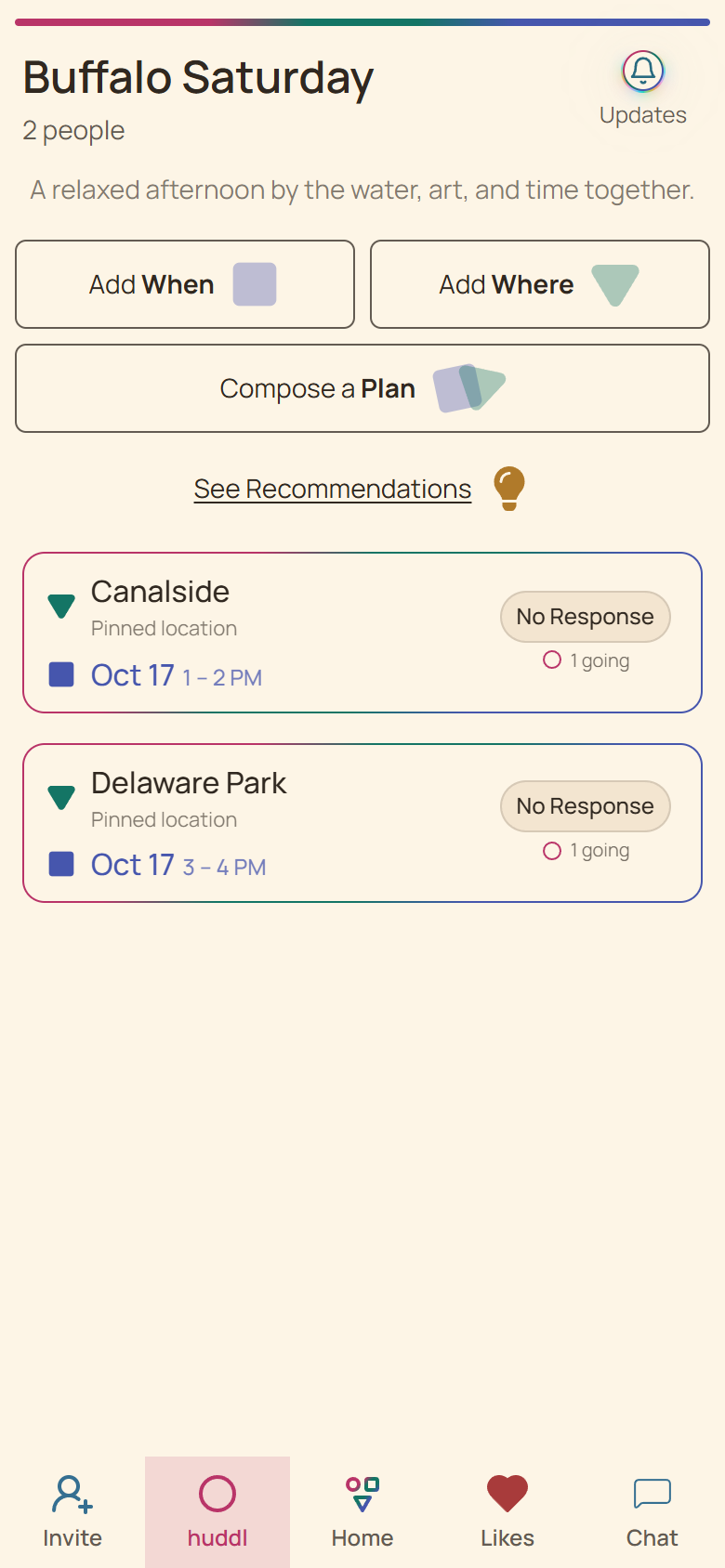
Huddl turns scattered messages into a simple process: Name it, Shape it, Go together.
First, you Name it. A gathering can begin with nothing more than a recognizable name and an optional description. You do not need to know the place or time before inviting people.
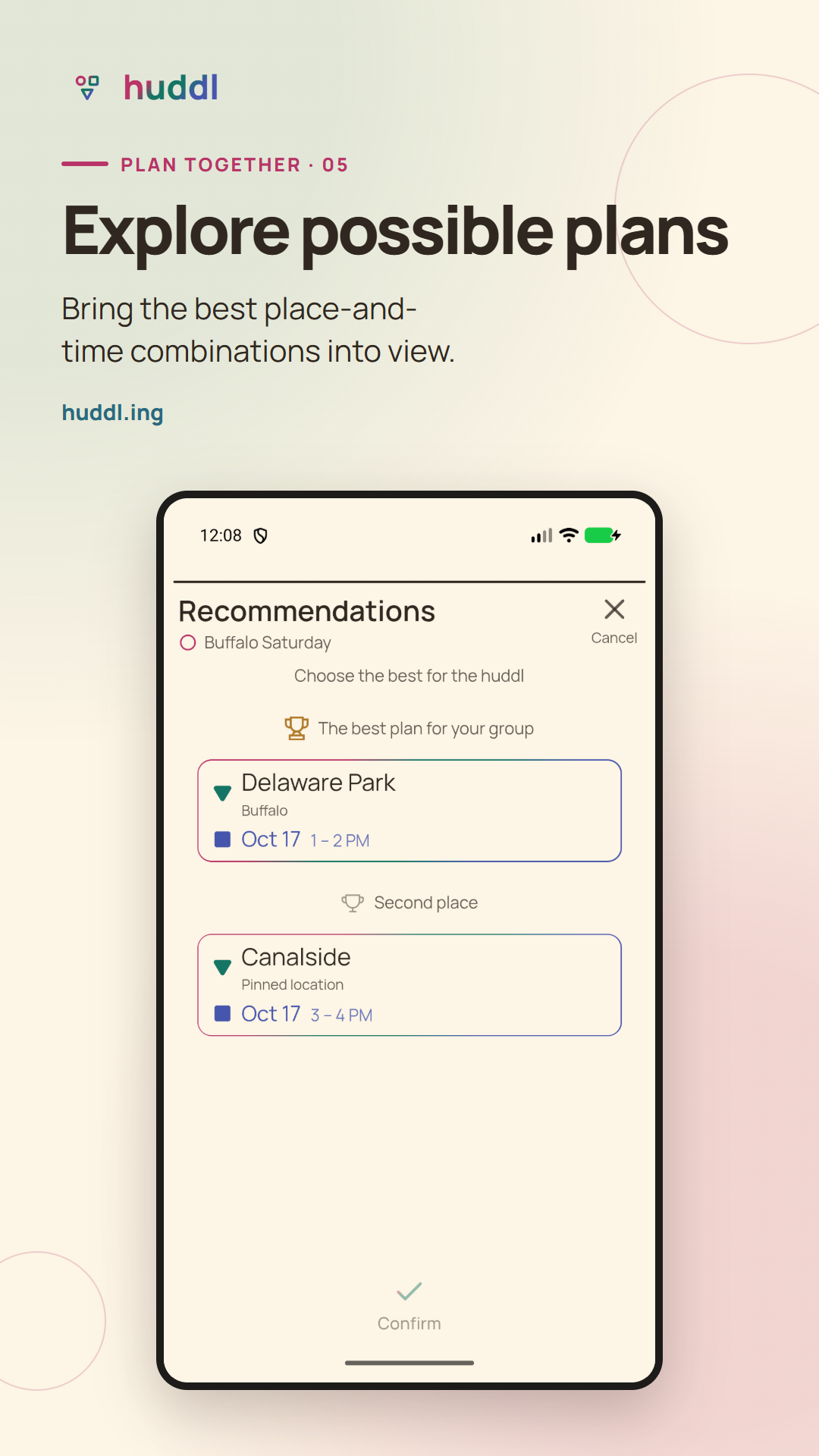
Next, you Shape it. Members can suggest places and times, show which options they prefer, compare availability, and review recommended combinations. Everyone can contribute, so the organizer does not have to collect and interpret every response manually.
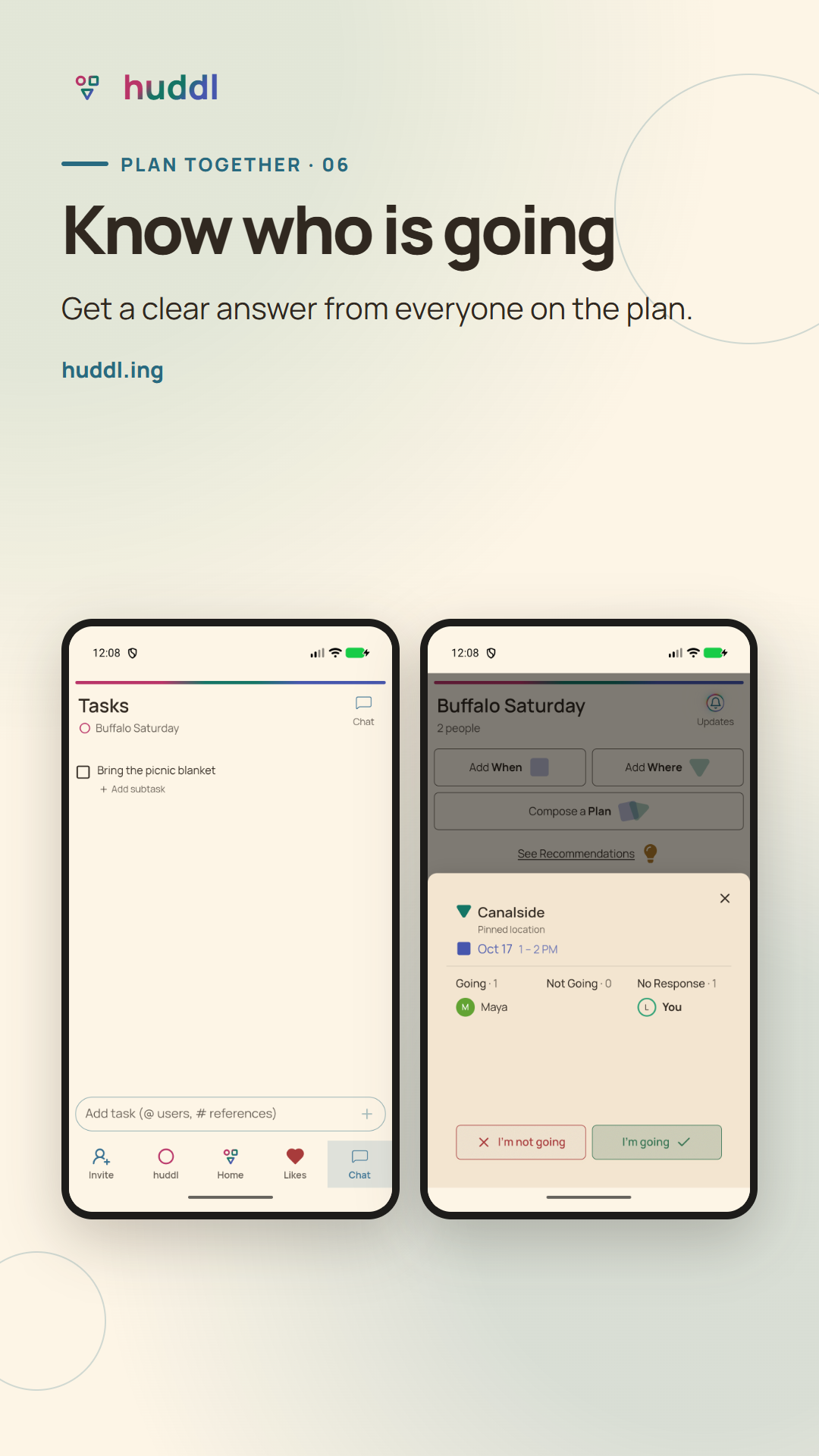
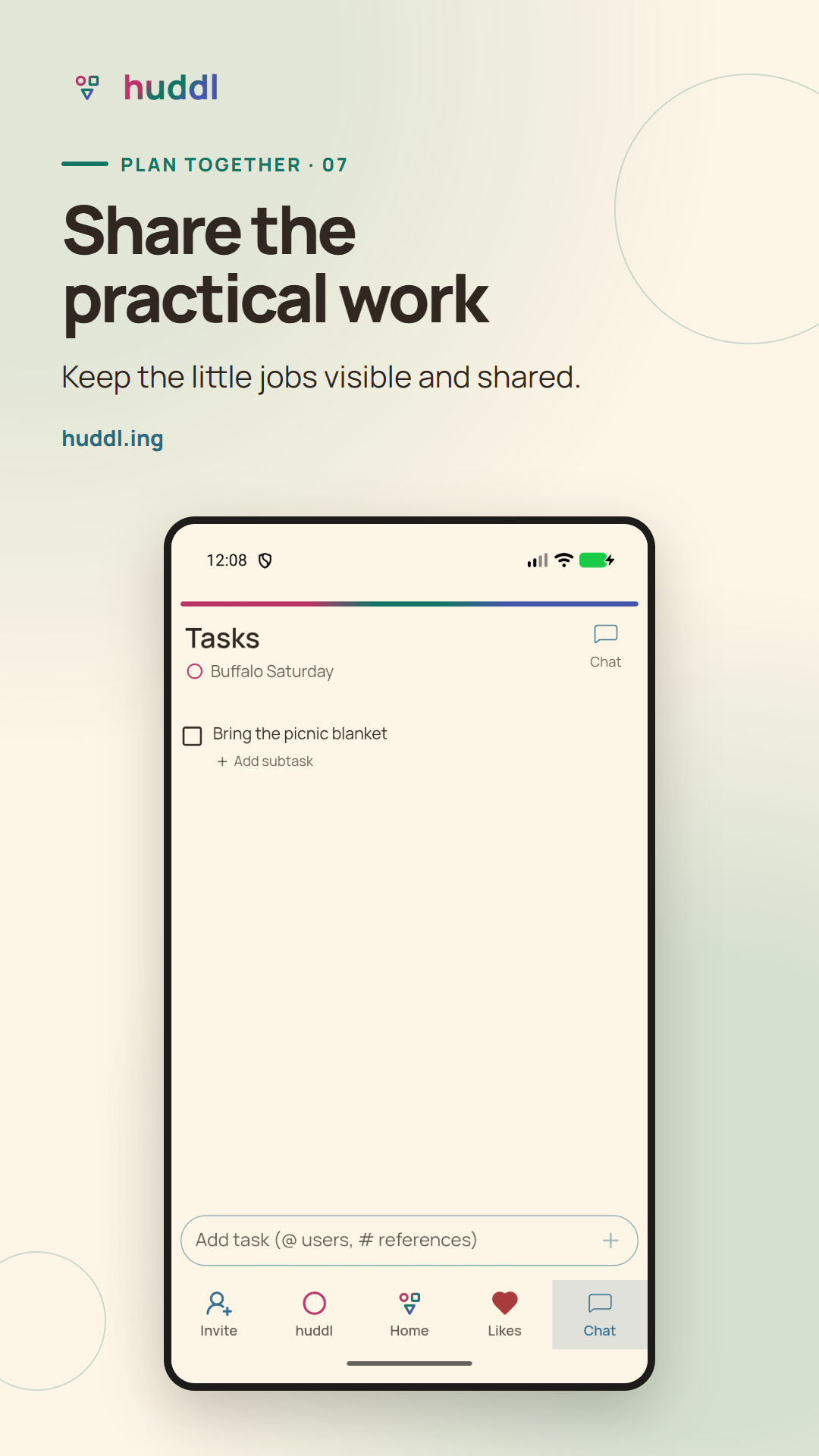
Finally, you Go together. A place and time become a concrete plan, and each member can respond Going, Not Going, or leave the plan unanswered. Chat, tasks, attendance, directions, and other practical details stay connected to the gathering.
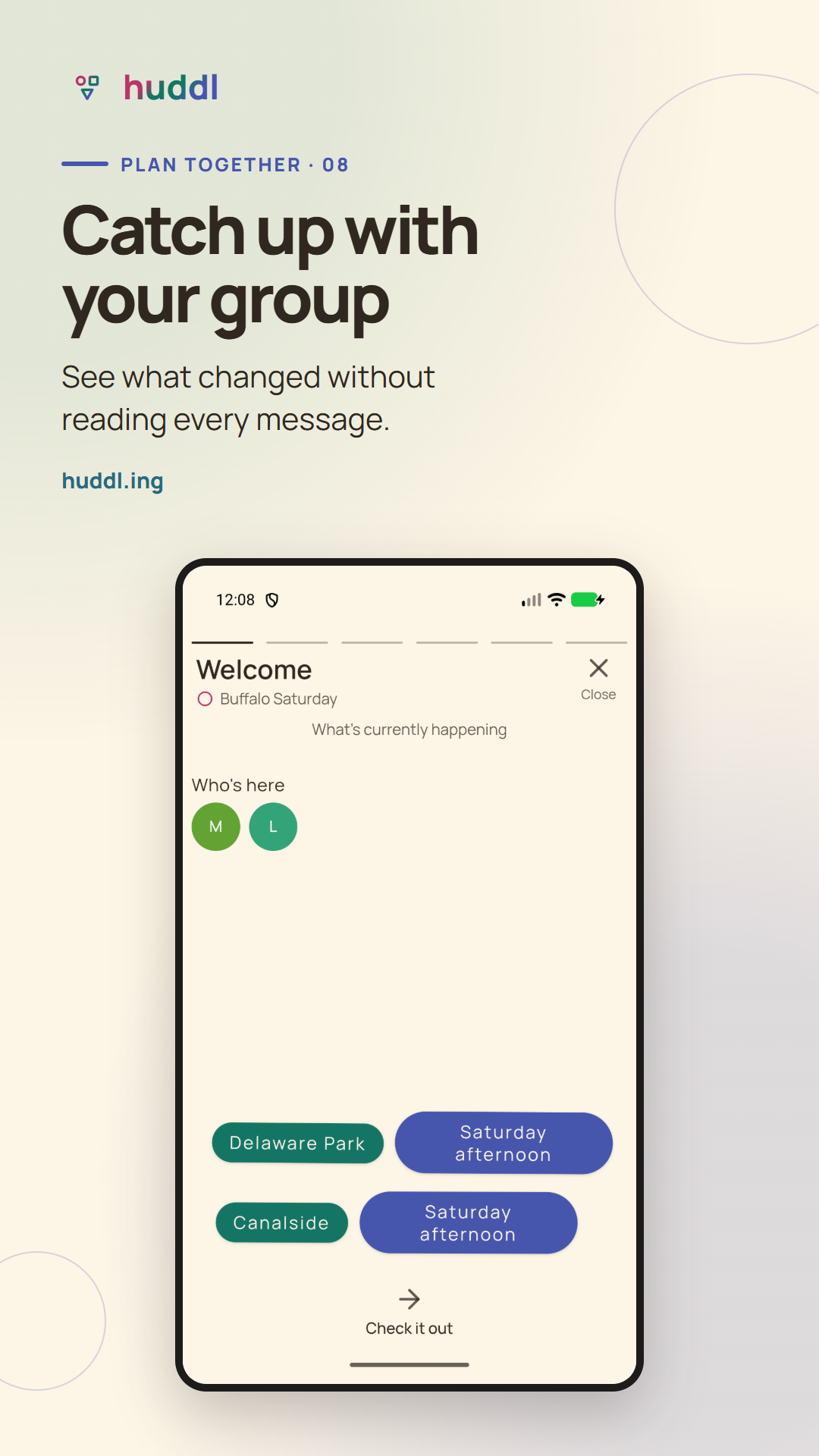
Huddl also uses visual Update Stories to help people catch up. Instead of opening a dense activity feed, members move through focused cards covering new participants, suggestions, reactions, plans, RSVP changes, chats, and tasks. Rich notifications can open the relevant Story or workspace, so a person arrives with context rather than being dropped onto a generic home screen.
Participants can open an invitation in a browser without installing the native app or connecting a social account. Huddl is free to use, and no one needs to share access to a private calendar.
The app currently supports seven languages:
- English
- Spanish
- French
- Japanese
- Korean
- Brazilian Portuguese
- Simplified Chinese
How We Built It
We began by studying how different groups make plans in real life. A golf foursome, a family trip, and a neighborhood board meeting may look different, but they share the same basic cycle: suggest, react, revise, confirm, and coordinate.
That research shaped the product design. We went through roughly 15 Figma iterations while working out how to make the flow feel natural. We repeatedly changed the order of steps, shortened prompts, removed required fields, and tested whether first-time users could understand what to do without instructions.
Huddl is built with React, TypeScript, and Next.js. The web experience also works as a progressive web app, while Capacitor packages the product for native mobile platforms. MongoDB stores Huddls, memberships, suggestions, plans, reactions, messages, and tasks. Real-time updates and notification infrastructure keep participants in sync when activity happens elsewhere.
Places are presented through search, lists, and maps. Time suggestions use calendar-based views that respect the viewer’s locale and time zone. A recommendation system combines saved place and time options into possible plans for the group to review.
We created a shared visual system around three shapes: a circle for Who, an inverted triangle for Where, and a square for When. Those shapes appear throughout the logo, navigation, map pins, option lists, loading states, Stories, and notifications. The interface uses Manrope across the app and website, with a warm neutral palette and separate colors for people, places, and times.
Huddl is free and supported by carefully placed advertising. AdMob delivers mobile inventory, while RevenueCat records supported ad events and impression revenue. We designed the ad system with cooldowns, eligibility checks, no-fill recovery, and strict rules about where ads should never appear.
We also built automated tests around the parts most likely to fail in a collaborative product: invitations, anonymous sessions, multi-user updates, optimistic saves, retries, deep links, mobile navigation, notifications, advertising eligibility, and responsive layouts.
Challenges We Ran Into
The hardest design challenge was making something complex feel simple. Group planning is not one form followed by one answer. Suggestions change, preferences evolve, people join late, and a plan that worked yesterday may stop working today.
We eventually separated possibilities from commitments. Suggesting Tuesday is not the same as RSVPing to a Tuesday plan. Liking a restaurant is not the same as agreeing to meet there. Making those distinctions clear took far more iteration than we expected.
We also had to serve two very different experiences. An organizer may want to create a gathering, invite people, compare several options, and coordinate tasks. An invited participant may only want to open a link, understand the plan, and respond. Huddl needed to support both without making either person learn a complicated planning system.
Real-time collaboration introduced another set of challenges. The interface should feel immediate, but it also needs to recover safely when a network request fails or another member changes the same Huddl. We built optimistic interactions, ordered save queues, retry states, and clear recovery messages so that moving quickly does not mean silently losing someone’s work.
Mobile development brought its own surprises. Keyboard behavior, native back navigation, deep links, safe areas, notification permissions, and ad overlays all behave differently from an ordinary browser. Our iOS release also took longer than planned because Apple Developer account approval was delayed and App Review has taken more than a week. We submitted the requested changes, and the final revision is still pending review. Android and the web are publicly available.
Advertising was another balancing act. We wanted a model that could support a free product, but group coordination cannot feel like an excuse to show an ad. We created specific placement roles, kept the first Huddl ad-free, avoided rewarded formats, and made sure a failed or unavailable ad could never stop someone from continuing.
Localization also required more than translating strings. Dates, time zones, layouts, button lengths, notification text, and fallback behavior all needed to work consistently across seven languages.
Accomplishments That We’re Proud Of
We are proud that Huddl is now a complete, working product on the web and Google Play rather than only a prototype.
The core journey works from beginning to end. A person can create a Huddl, invite others, collect place and time suggestions, compare preferences, create a plan, receive RSVPs, discuss details, assign tasks, and catch up on changes.
We are especially proud of the Update Story experience. Activity feeds are efficient for software, but not always for people. Turning group activity into a short, readable sequence makes returning to a plan feel much less overwhelming.
We are also proud that the visual identity is part of the interaction design. The circle, triangle, and square are not decorative branding added after the product was built. They help people recognize members, places, times, and completed plans throughout the experience.
Finally, we built Huddl to remain usable across different levels of commitment. Someone can participate through the web without installing another app, while regular users can use the native experience, notifications, and calendar subscription.
What We Learned
Our biggest lesson was that planning is a conversation, not a transaction. A good coordination product cannot assume that everyone responds once and that the first result is final. It needs to support uncertainty, revision, and late participation without making the group start over.
We also learned how difficult simplicity really is. The features that took the most thought were often the ones that now appear obvious. Deciding when to ask for a place, what “Going” should mean, where Back should lead, and how to explain an unanswered plan required more work than many technically larger features.
Shipping taught us that the product is only one part of a mobile launch. Store policies, account verification, privacy disclosures, consent systems, screenshots, device testing, deep links, and review timelines can affect the release as much as application code.
Our early traction has also kept us grounded. We have a small but real user base and our first measurable advertising revenue. Those numbers are a starting point, not proof that we have solved growth. They have helped us identify acquisition and successful group invitations as the next problems to work on.
What’s Next for Huddl
Our first priority is completing the iOS release and continuing to improve the Android and web experiences based on real use.
On the growth side, we want to understand the full invitation loop: what motivates someone to start a Huddl, how many invited participants join, how quickly the group creates a plan, and what brings members back for the next gathering. We plan to test store-listing creative, repeatable social content, and clearer onboarding while measuring the results instead of relying on assumptions.
We also see opportunities to adapt Huddl for communities that plan together repeatedly, including sports groups, golf leagues, mahjong clubs, volunteer organizations, neighborhood groups, and family caregivers. The goal is not to turn Huddl into heavy organizational software. It is to preserve the simple shared experience while making it more useful for the groups that need it most.
Long term, we want Huddl to become the default place for plans that do not belong on one person’s calendar. We want people to spend less time managing the logistics of being together and more time actually being together.
Built With
- admob
- betterauth
- capacitator
- daisyui
- gam
- geoapify
- kotlin
- nextjs
- openstreetmap
- playwright
- react
- revenuecat
- swift
- tailwind
- vercel
- websockets


Log in or sign up for Devpost to join the conversation.