-
-
Product
-
System Architecture
Inspiration: Our team knows first-hand about struggles with stress and anxiety. We haven't always taken advantage of nature-oriented and outdoor amenities in our communities. We want to help others overcome the friction that prevents people from accessing local nature in the short blocks of time that fit into their busy lives.
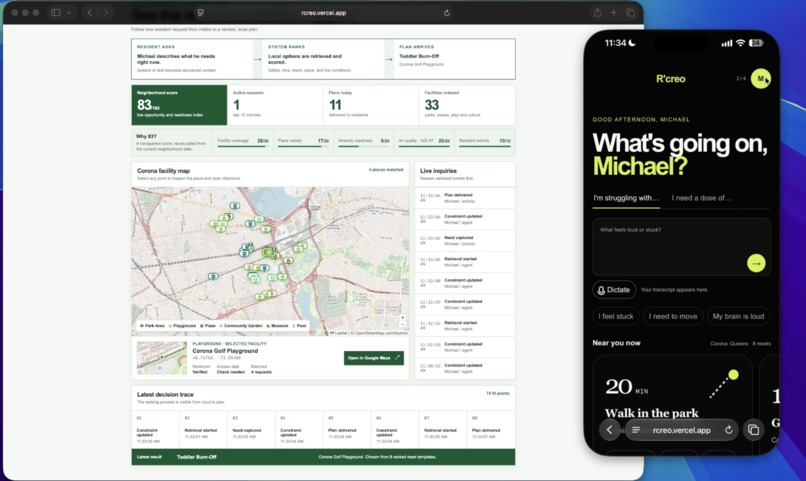
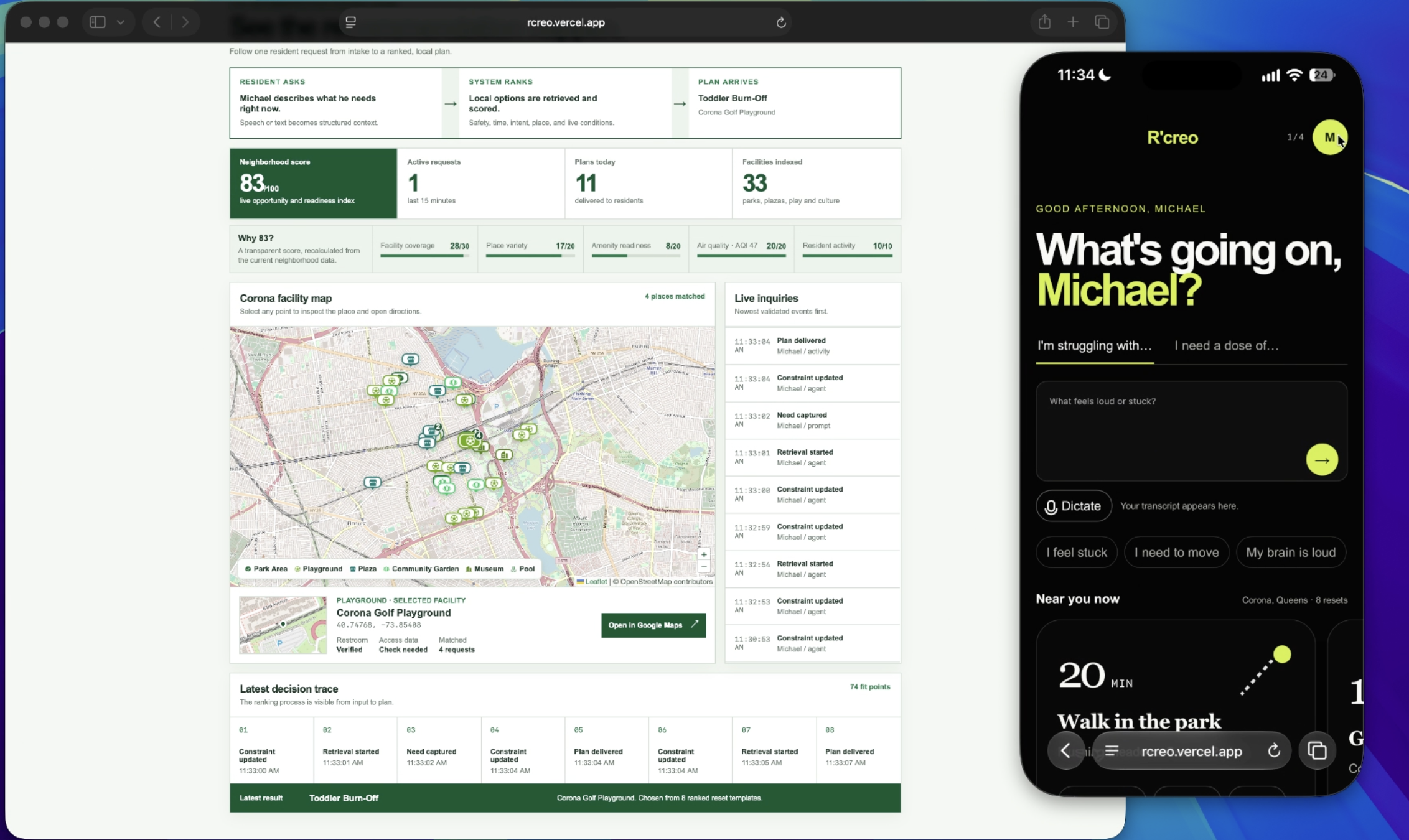
What it does: R'creo recommends specific outdoor or nature-oriented indoor activities for users who have a specific block of free time. We incorporate factors including the user's health status, accessibility needs, and real-time heat and air quality conditions in their neighborhood. We're interested in applying this our app to a broad geography. However, to make the demo computationally efficient, we focus on the Corona, Queens neighborhood.
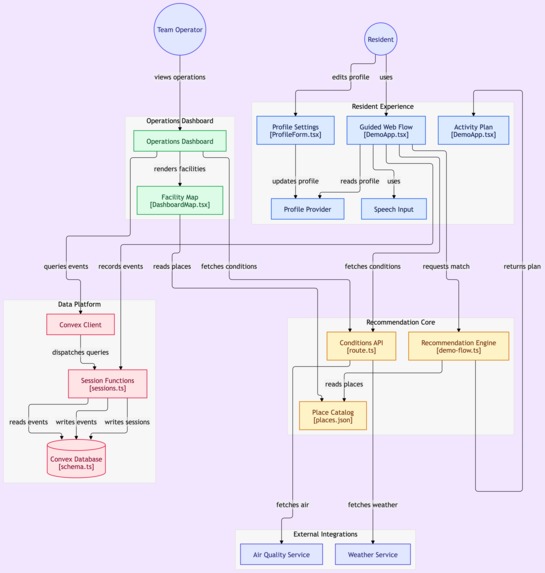
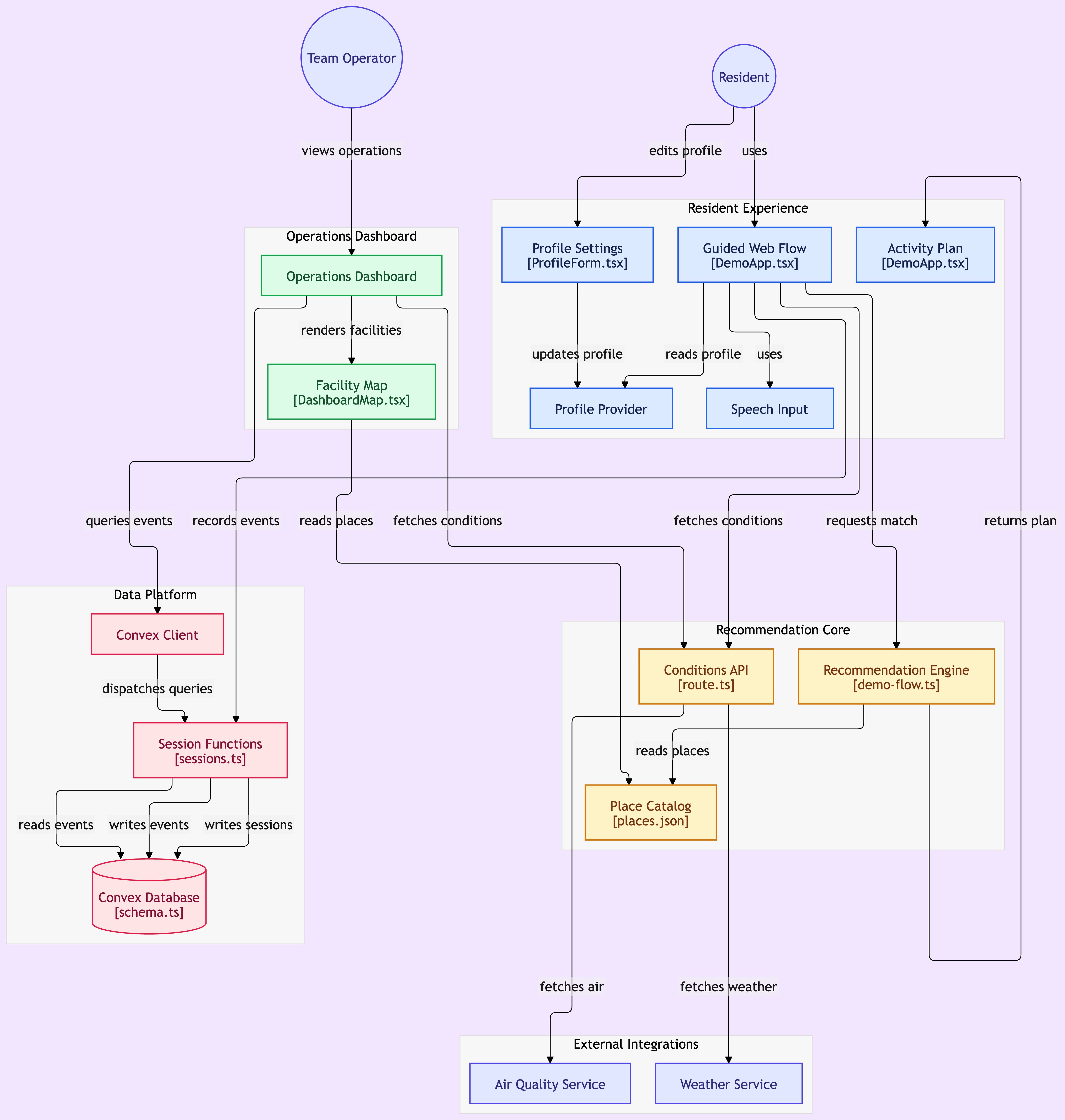
How we built it: We combined user inputs and live environmental feeds with open geospatial data through a deterministic filtering and ranking engine governed by safety guardrails.
Challenges we ran into: Balance of our desire to personalize the experience for users with the need for simplicity. We considered implementing a self-corrective model, but found that the scale of our knowledge base for this demo was not detailed enough. Therefore, we took a deterministic approach.
Accomplishments that we're proud of: We developed a new solution to help people access nature in a way that fits their lives and connects them to their communities. We have a diverse team, which allowed us to conduct due diligence in all areas. Our solution has the potential to help an expansive population with minimal operations cost.
What we learned: Computationally-intense approaches are not always necessary to make a meaningful contribution to climate and health.
What's next for Hopestrike: Expand geographically. Build an easy way for policy makers and advocates to use user feedback data to inform future decisions about improving outdoor amenities
Built With
- airnow
- convex
- next.js
- nyc-open-data
- openstreetmap
- vercel

Log in or sign up for Devpost to join the conversation.