-
-
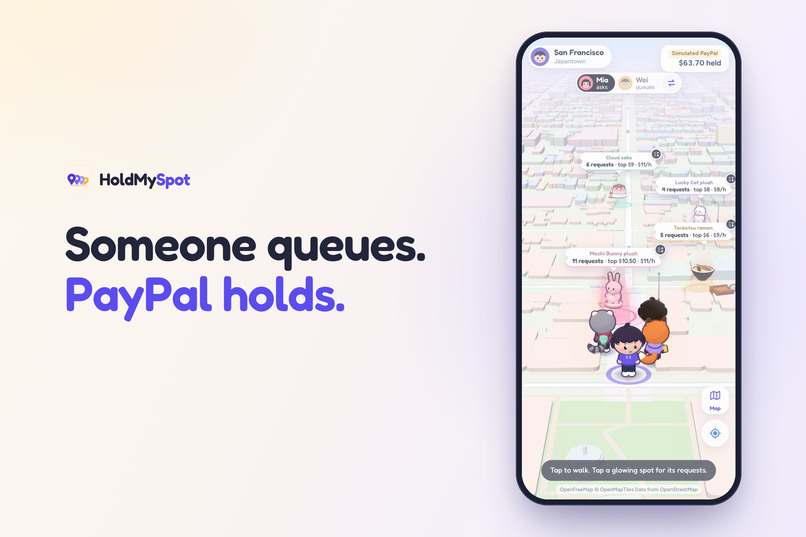
Someone queues. PayPal holds. Pay someone nearby to stand in a long line for you; PayPal holds the most it could cost.
-
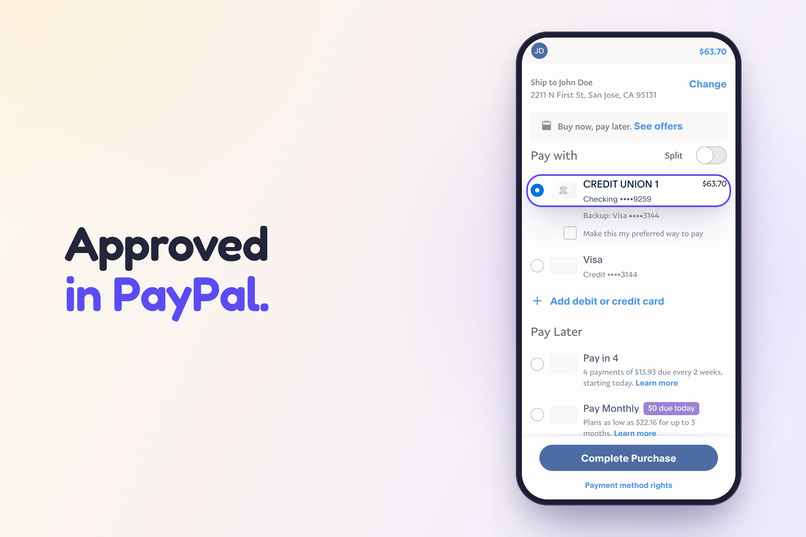
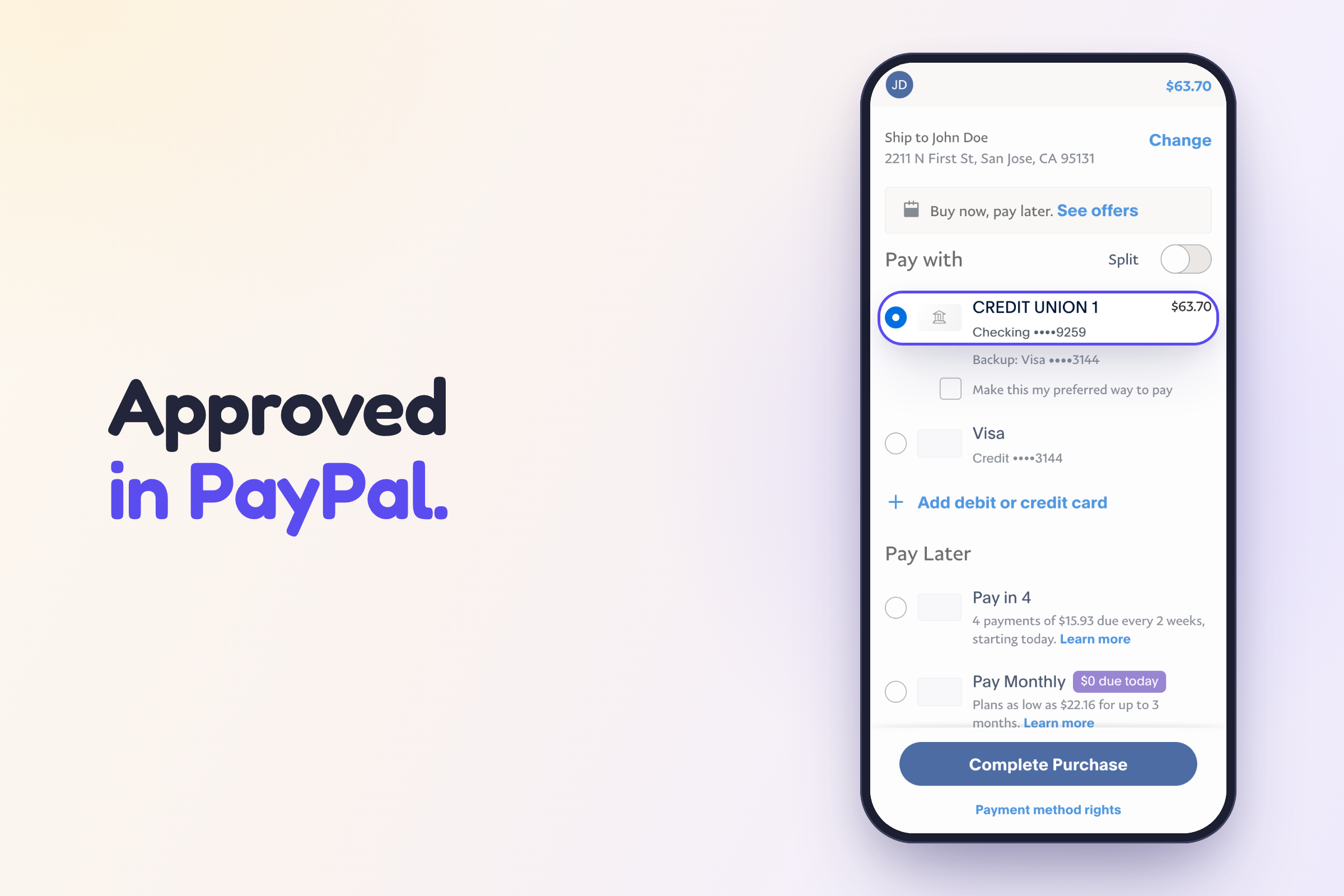
Approved in PayPal. Mia approves her $63.70 hold in PayPal's own sandbox window; nothing is charged yet (sandbox, 2026-11-07).
-
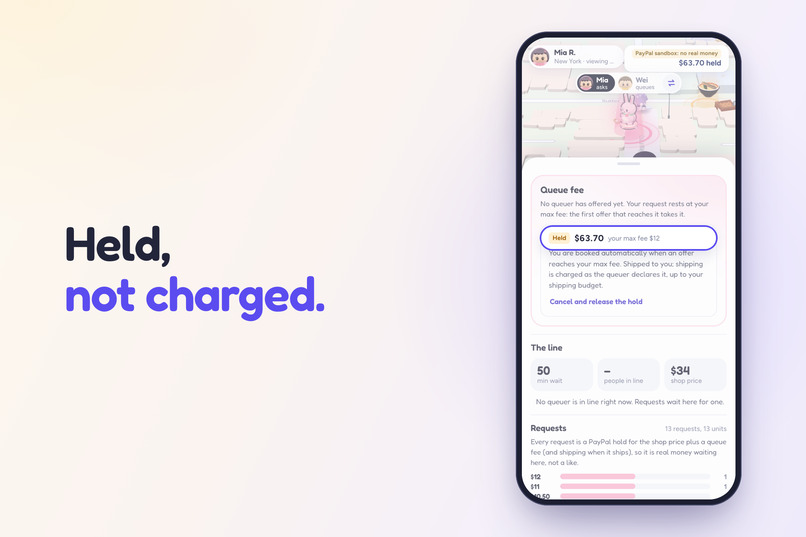
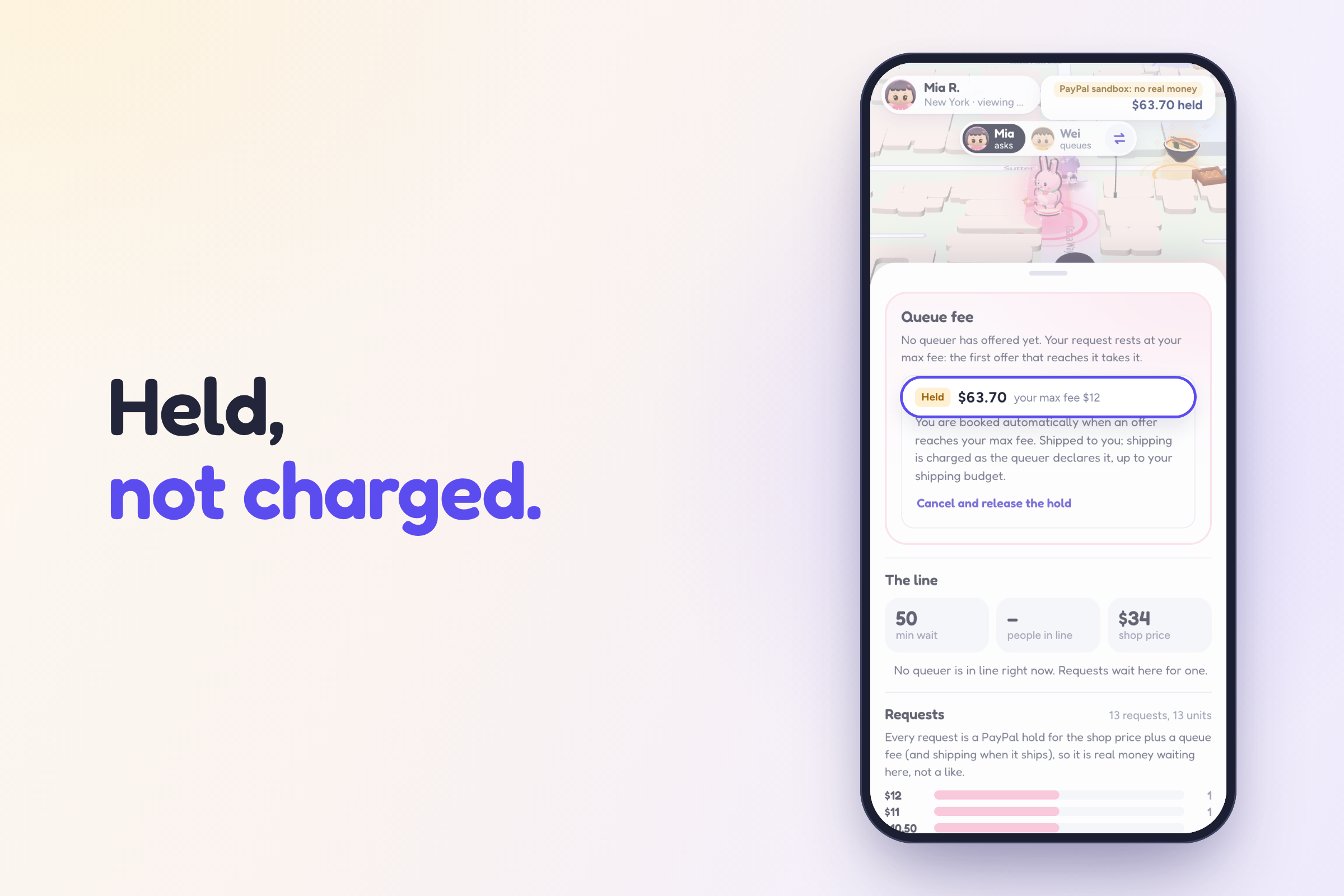
Held, not charged. PayPal holds $63.70 while Mia's request waits at her $12 max fee (PayPal sandbox, 2026-11-09).
-
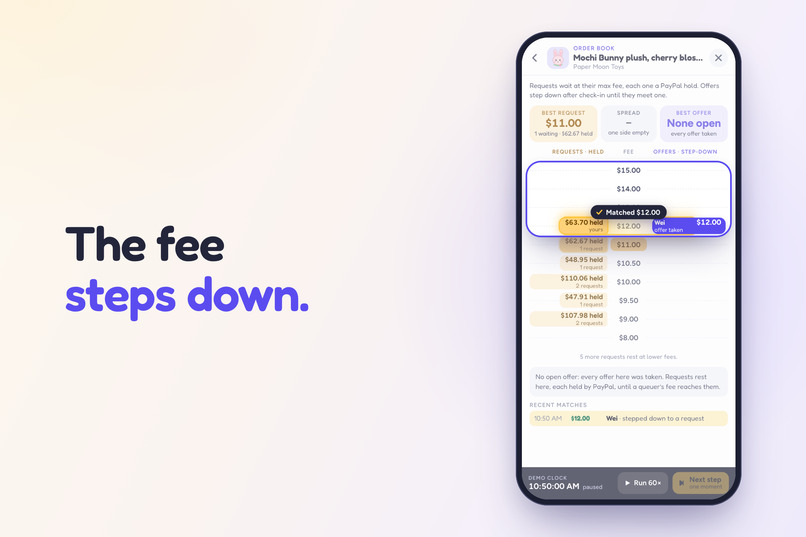
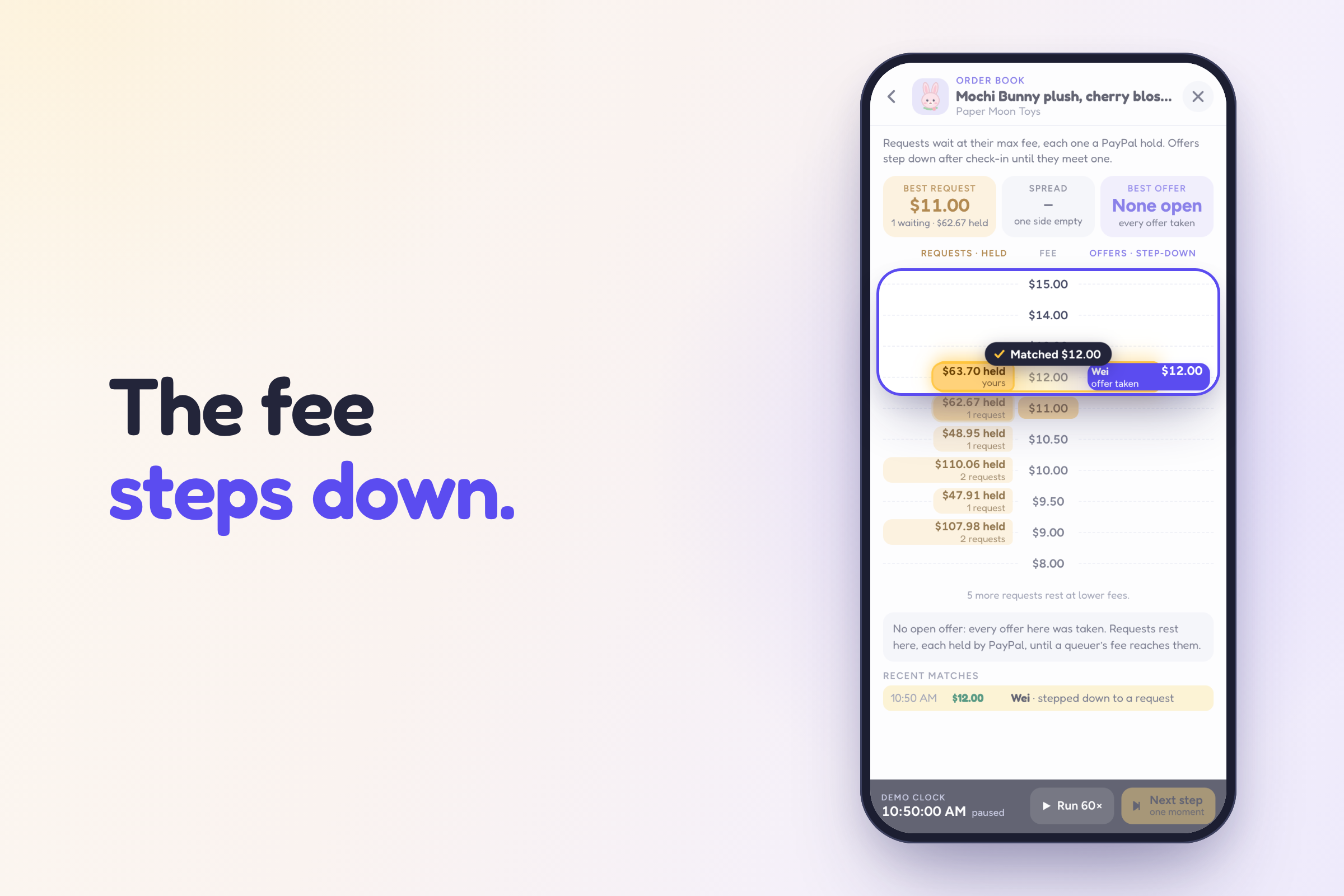
The fee steps down. Wei's offer opened at $15 and stepped down after his check-in until it met Mia's $12 request (sandbox, 2026-11-09).
-
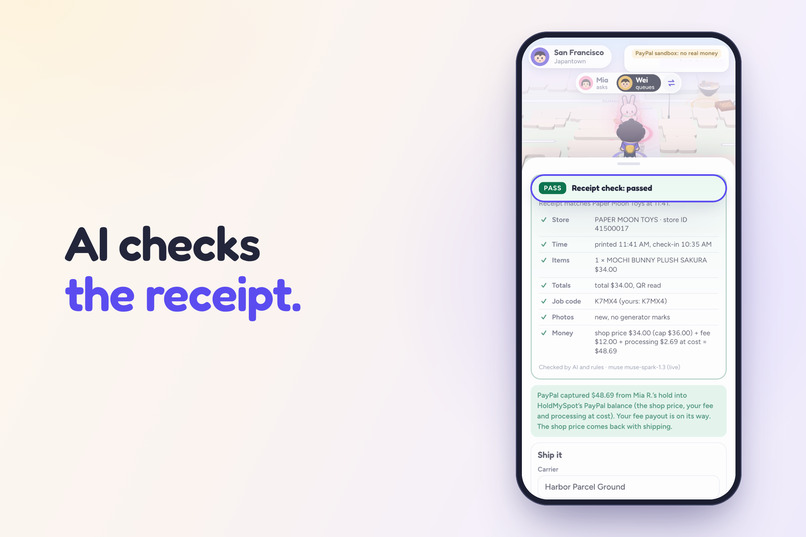
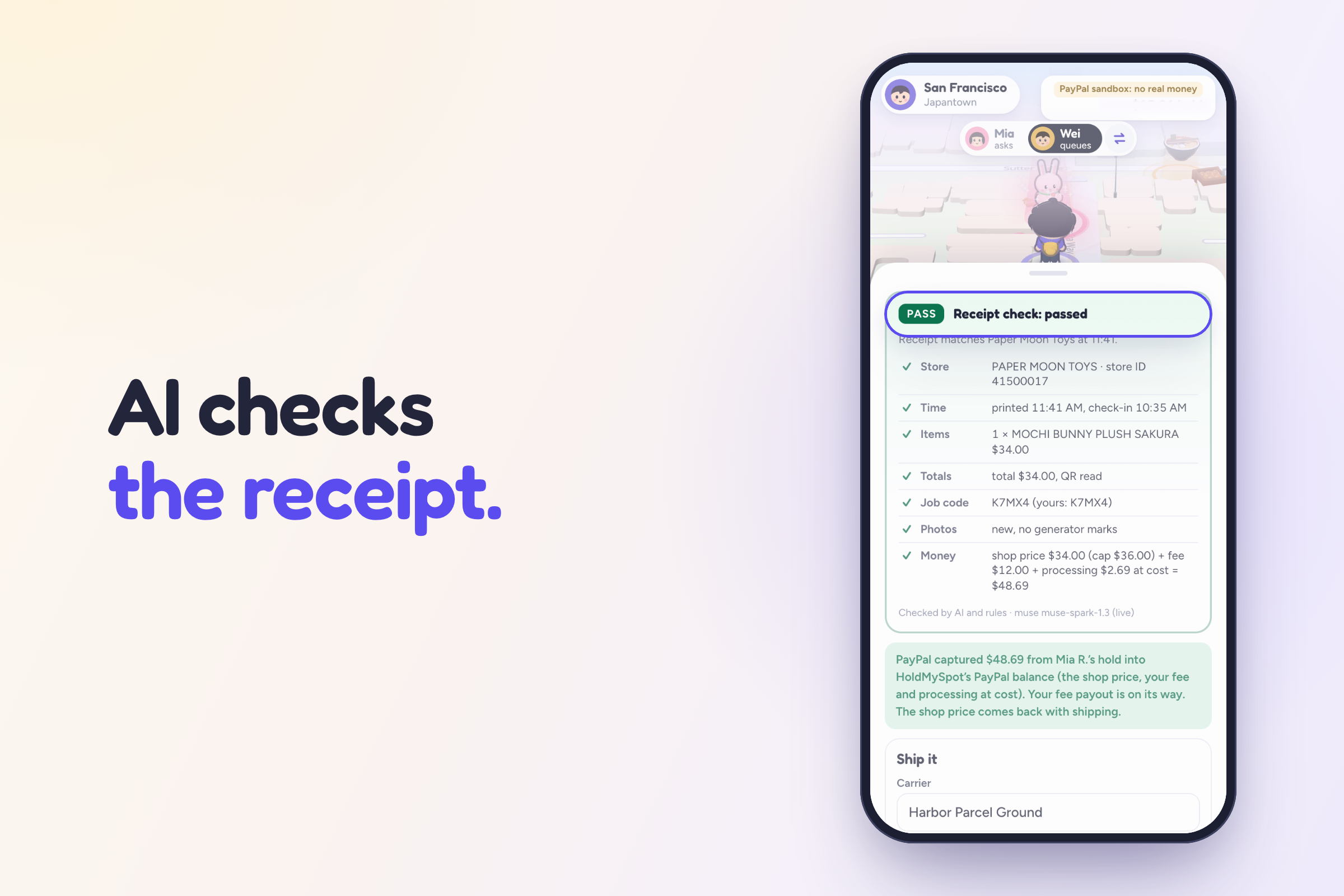
AI checks the receipt. Muse Spark read Wei's receipt live, the rules passed it, then PayPal captured $48.69 (sandbox, 2026-11-07).
-
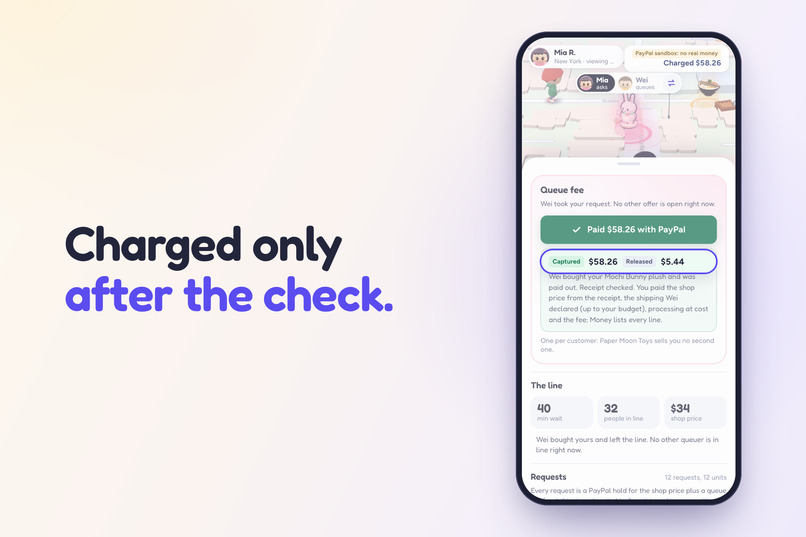
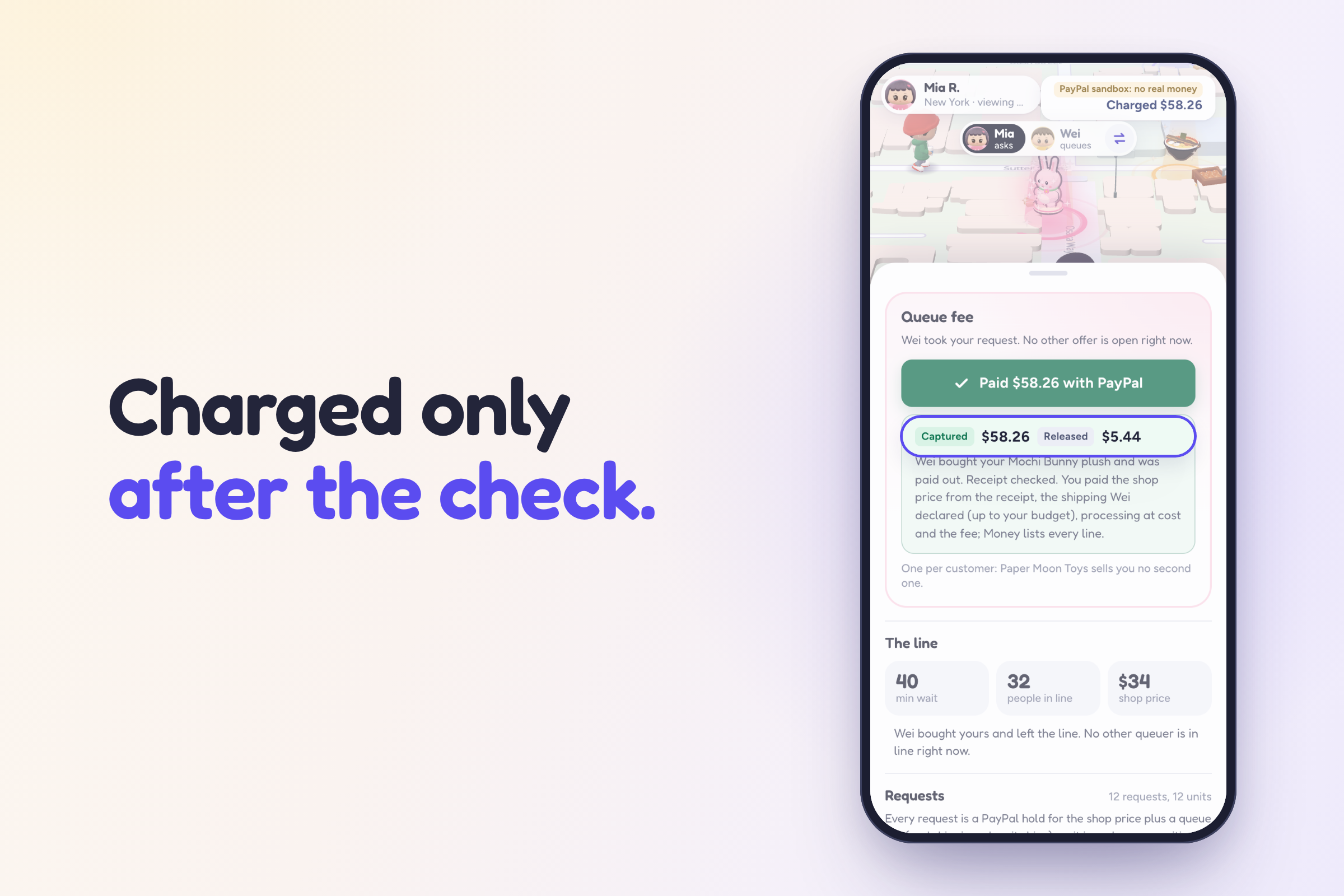
Charged only after the check. Held $63.70, charged $58.26, released $5.44 (PayPal sandbox, web app run of 2026-11-09).
-
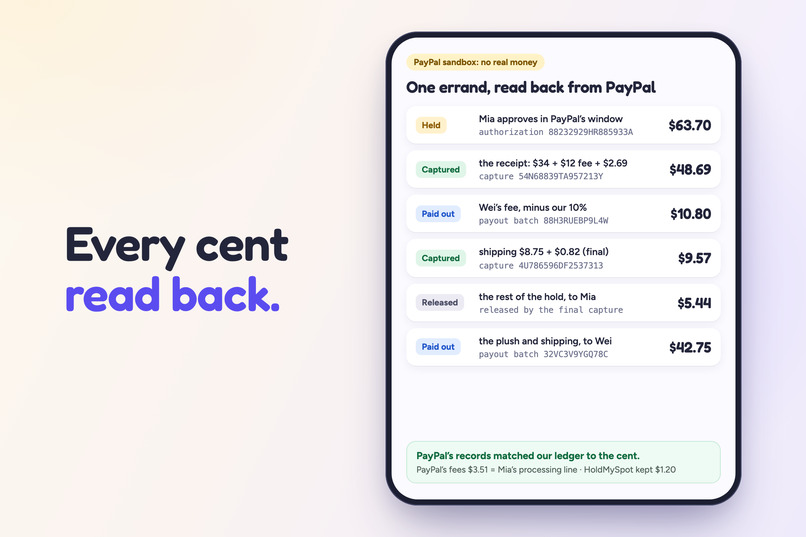
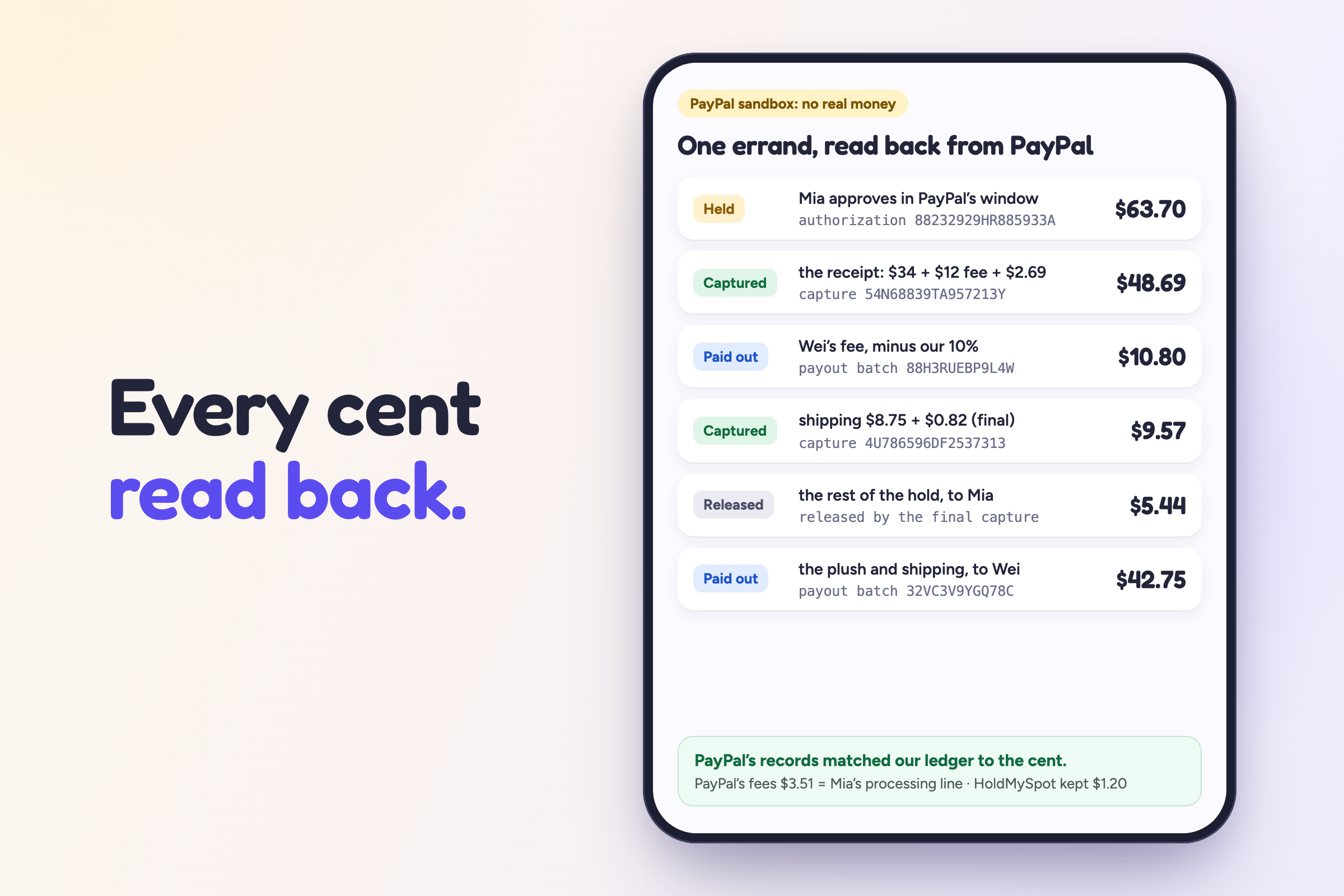
Every cent read back. The hold, two captures, the release and two payouts with their PayPal ids; PayPal matched our ledger to the cent.
-
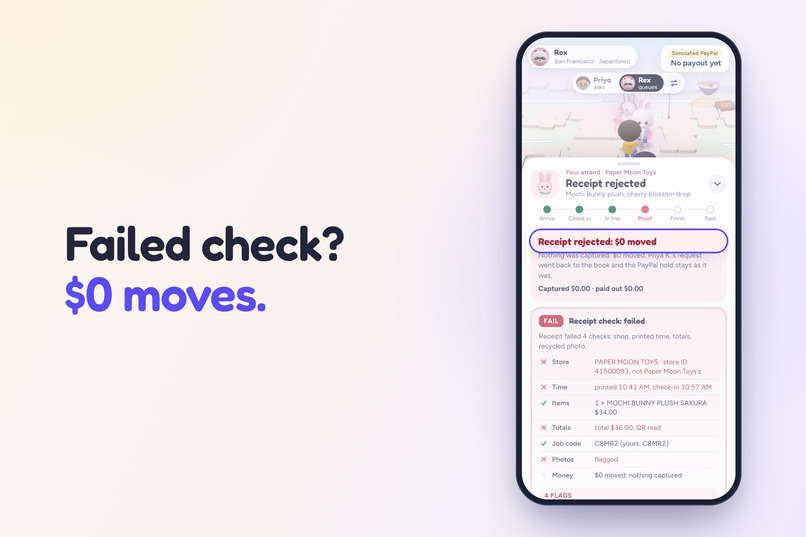
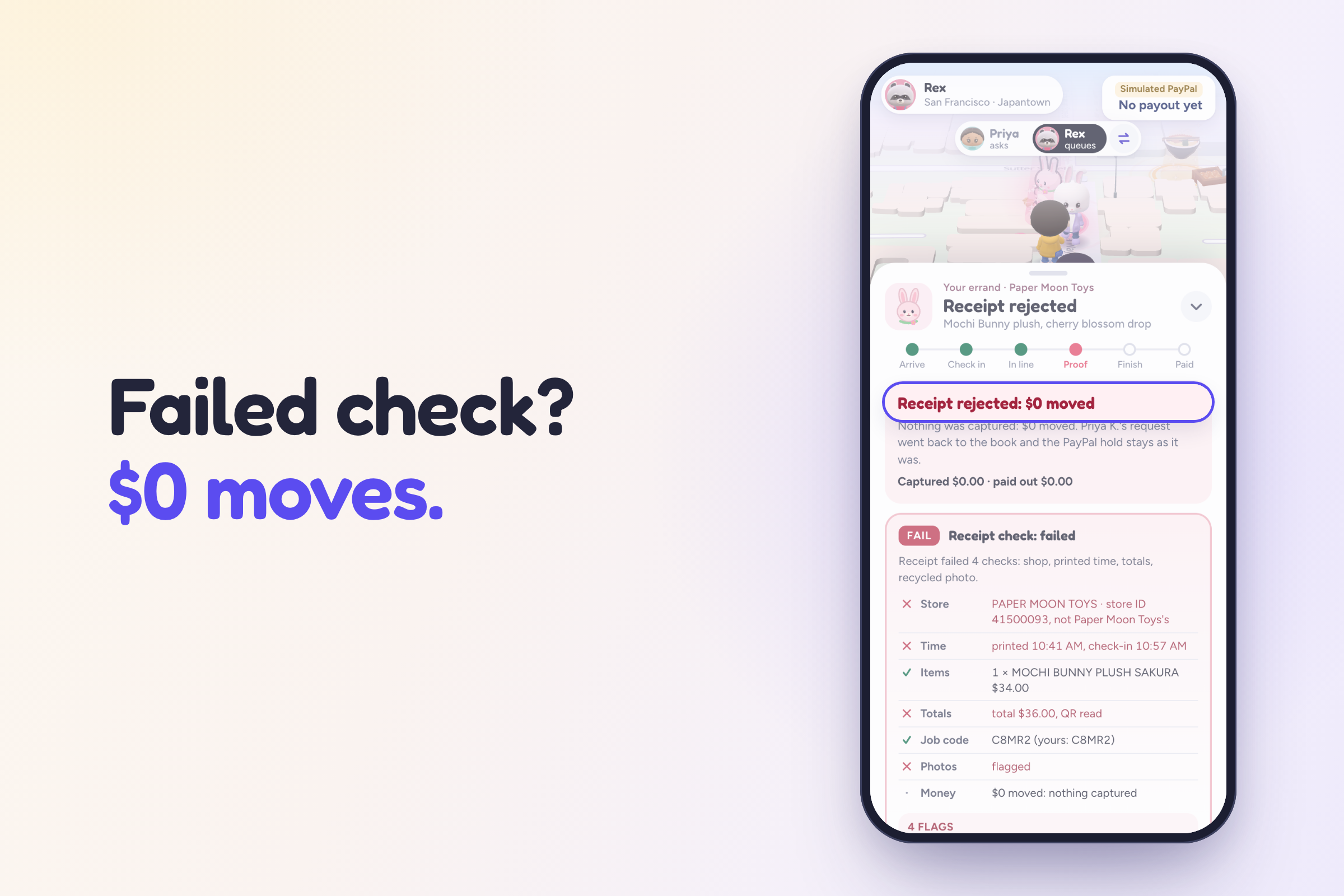
Failed check? $0 moves. Rex's receipt fails four checks, so nothing is captured and Priya's request goes back on the map.
-
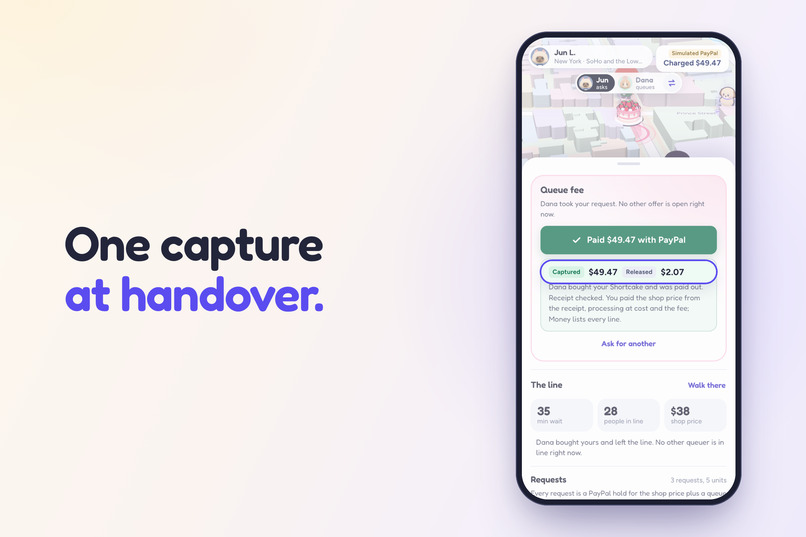
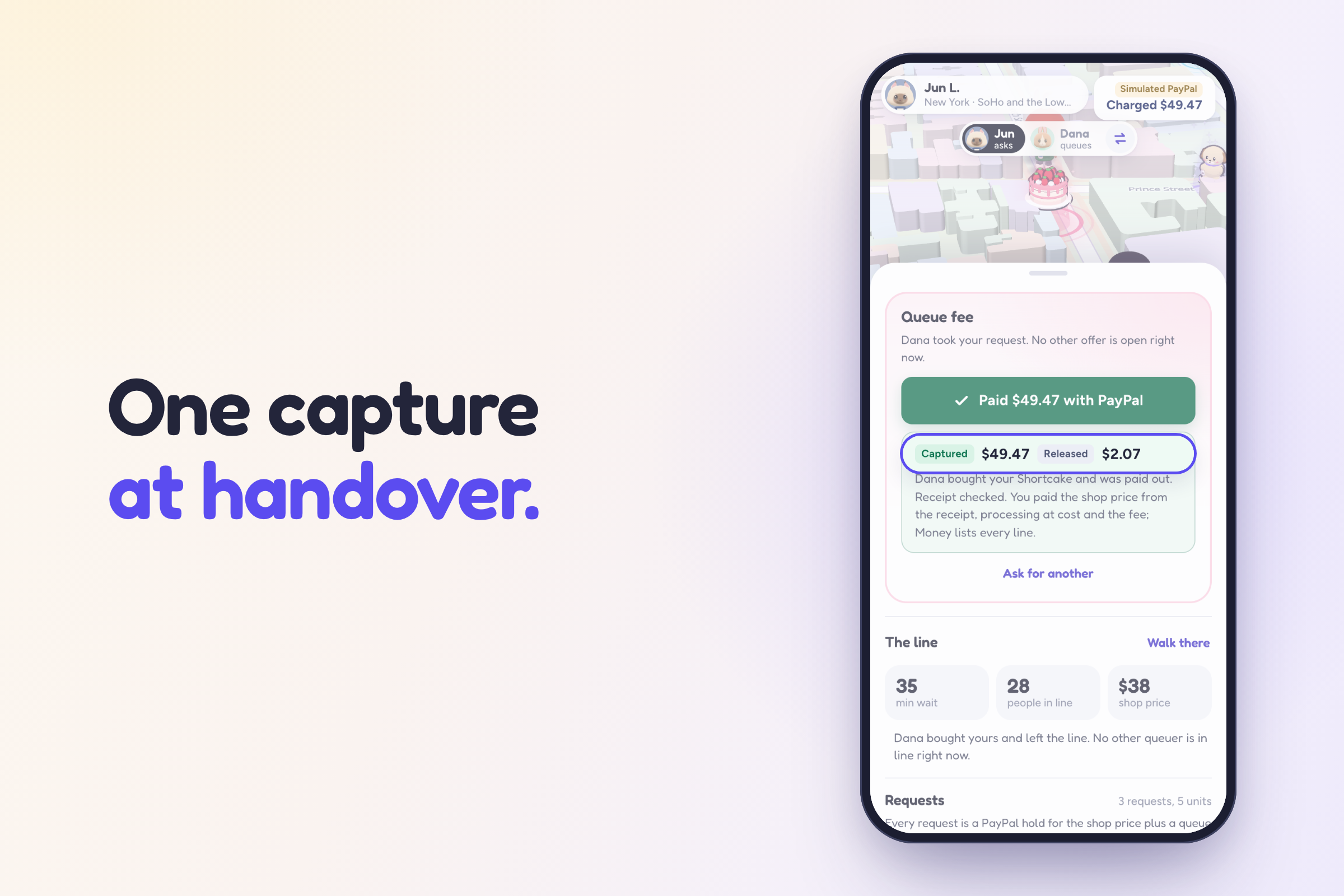
One capture at handover. Jun's shortcake in New York: PayPal holds $51.54 and captures $49.47 once Jun gives his handover code.
-
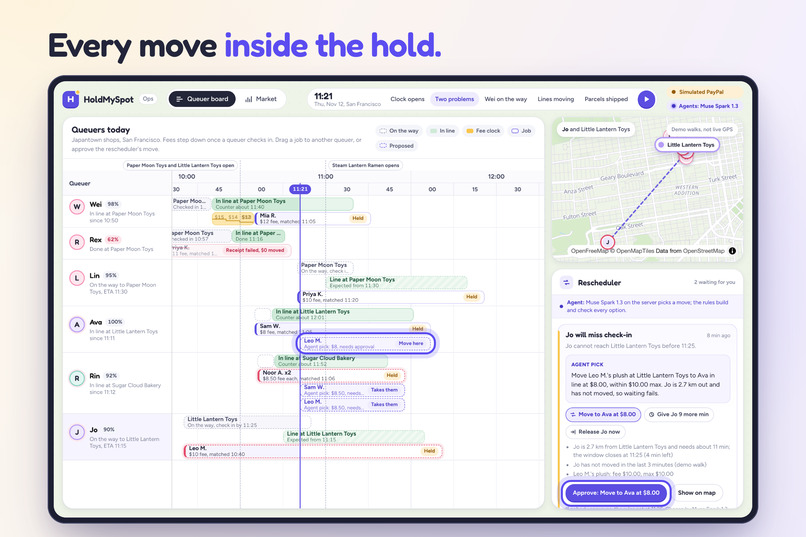
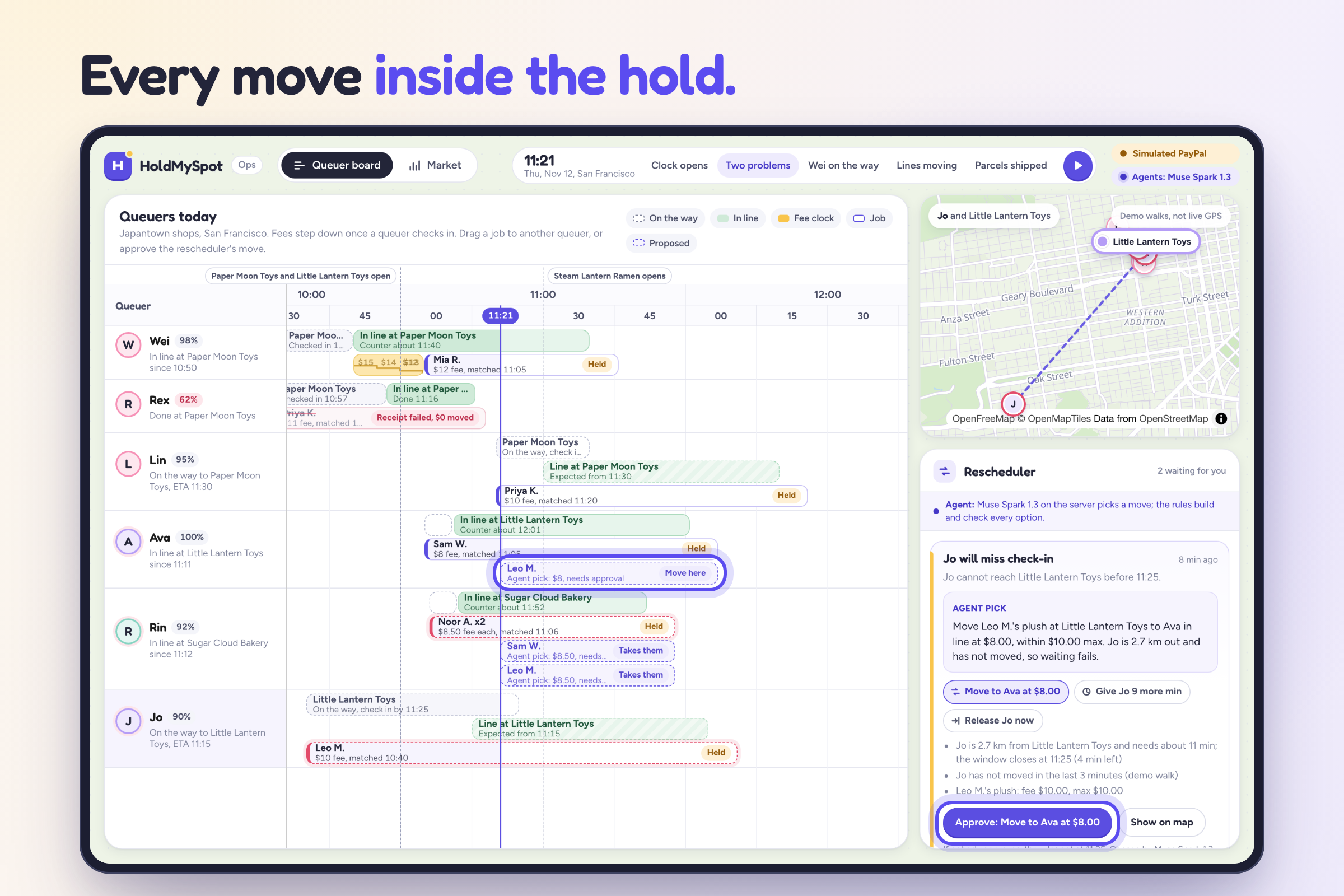
Every move inside the hold. On the Bryntum board, the rescheduler proposes moving Leo's job to Ava at $8, under his $10 max fee.
-
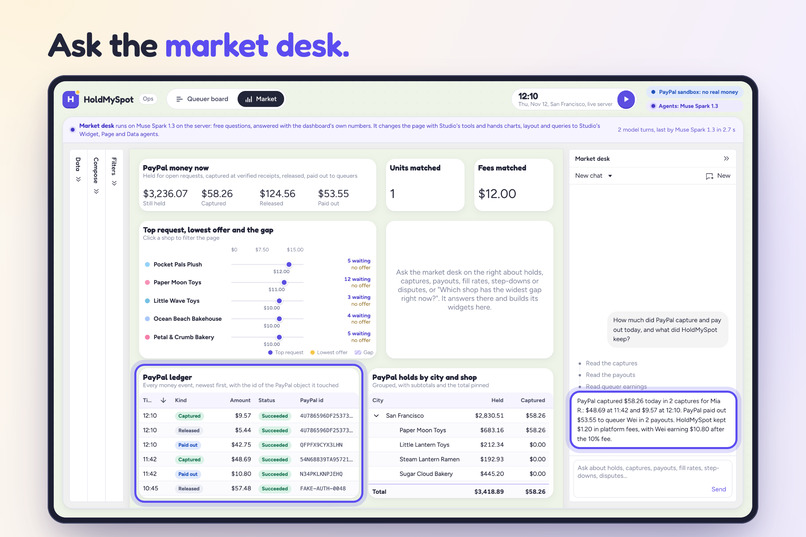
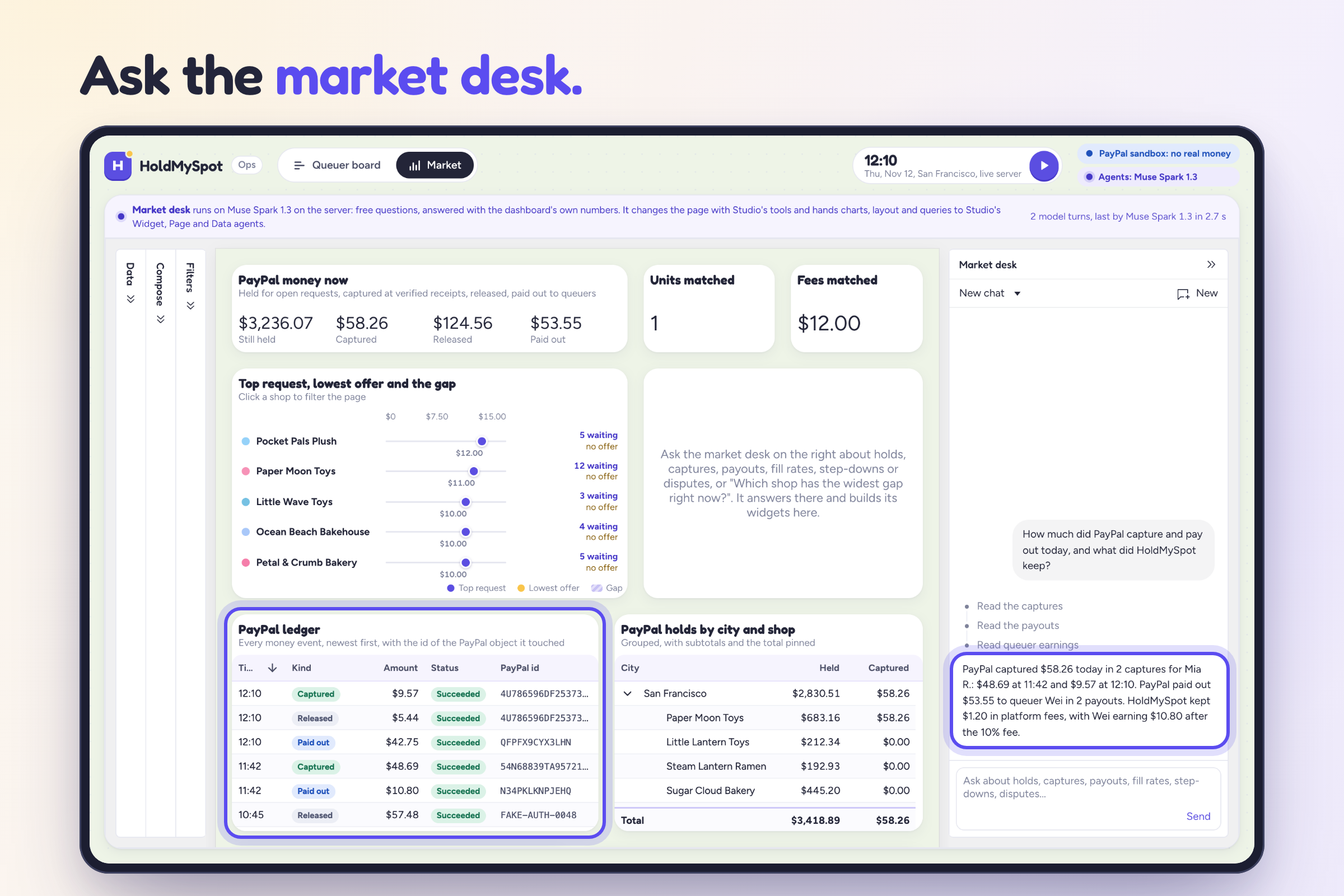
Ask the market desk. AG Studio after the sandbox run: the PayPal ledger with sandbox ids and Muse Spark's answer.
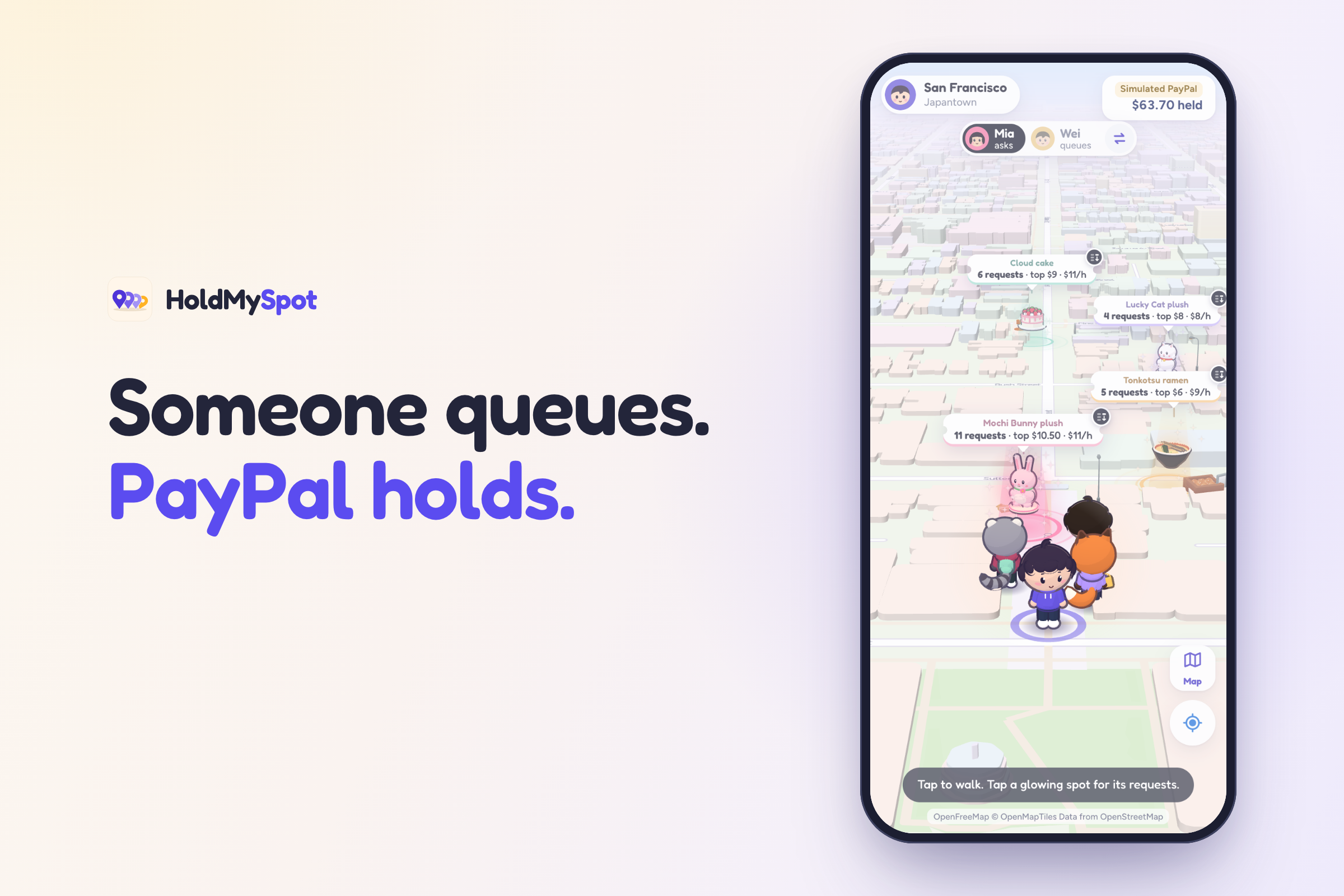
Can't stand in a long line? Pay someone nearby to stand in it for you. PayPal holds the most it could cost. No charge until AI reads the receipt and the rules pass it, or a person approves it.
Some things are sold in person, in long lines: a bakery's limited cake, a one-per-customer plush drop, a famous bowl of ramen. Paying a stranger to queue fails on trust both ways: the requester fears paying for nothing, and the queuer fears spending his own money at the counter and never being paid back. HoldMySpot puts that trust in PayPal, AI and code.
The proof: on PayPal's sandbox, Mia's errand held $63.70, charged $58.26 and released $5.44, and PayPal's own records matched our ledger to the cent. It ran there twice on 2026-11-07 and three more times on 2026-11-09 on the stamped-photo build, through the web app, npm run errand and the hosted judge site, each read back from PayPal.
What sets it apart. HoldMySpot puts a price on the queuer's time and never on the item: an order book whose fee steps down after a passed check-in at the shop, and the item paid back at the price on a receipt that AI read and the rules checked (prior-art.md). Each purchase is for one named requester, within the shop's per-person limit, with no markup; HoldMySpot keeps 10% of the queue fee.
Inspiration
Paid line-sitting is already a business: a New York line-sitting company charges $25 to $37.50 an hour (Fortune, 2025), and TaskRabbit lists "Wait in Line" as a service. Between strangers it needs two more things: a hold on the requester's money before the queuer pays at the counter, and a check of what was bought. A PayPal authorization gives the first; an AI read of the receipt, checked by rules, gives the second.
What it does
- Request. Mia, in New York, wants a plush sold in person. In PayPal's own window she approves a $63.70 hold; nothing is charged.
- Match. Wei checks in at the shop: his phone reports a position inside the 80 m geofence, and AI reads the visit's one-time code, which the phone stamps on his line photo with the time and the shop, so nobody writes or holds a code. His fee then steps down from $15 until it meets Mia's $12.
- Proof. Muse Spark reads Wei's receipt and the rules check it: seven hard checks, and four soft ones that send it to a person. Receipts that fail the checks move $0.
- Capture. PayPal captures $58.26 in two captures, the receipt and then the shipping (declared by the queuer, capped by the budget); the final one releases $5.44.
- Payout. PayPal Payouts sends Wei $53.55: his fee minus our 10%, plus the plush and the shipping he declared.
A local errand takes one capture. Jun's $38 shortcake in New York: PayPal holds $51.54 and captures $49.47 once, when Jun gives the queuer his handover code.
Agents inside the hold. An optional bidding agent on the requester's phone proposes fee moves, and the server refuses any fee PayPal does not hold; on 2026-11-09 it ran there with Muse Spark live. The ops console has a Bryntum Scheduler queuer board, where a rescheduler agent proposes moves for an operator to approve; an AG Studio dashboard, where the market desk agent answers money questions with the dashboard's own numbers; and Needs a person: receipt reviews, refunds and disputes, one row per case. No agent calls PayPal.
Judges open one link: Mia's and Wei's phones side by side on a private market of their own, with no sign-up. Hold, run the whole errand or try to break it in one click, or press "Use the real PayPal sandbox" and watch PayPal's own ids land.
How we built it
- PayPal through one port: Orders v2
AUTHORIZE, partial captures withfinal_capture, void, reauthorize, tracking, refunds, disputes, Payouts and the JS SDK v6 buttons. A request opens once PayPal answersCREATEDfor the hold's exact amount, and aPayPal-Request-Idfrom our ledger makes every capture, void and refund safe to retry. - AI reads, code decides: Muse Spark returns strict JSON; code checks the price it read, caps it and computes every amount, with a QR decoder, perceptual hashes and fixed rules.
- Zero keys: an emulator copies the sandbox's recorded answers and the demo photos replay Muse Spark's, so
npm run setup && npm run demoruns everything. - Render hosts the judge site: one web service, a private in-memory market per visitor, and a token for AI reviewers.
Challenges we ran into
- PayPal's fees. On our first sandbox run, PayPal's $3.40 in fees came out of the platform's pocket. Processing is now a visible line at cost on every payment, so neither the queuer's pay nor our 10% absorbs PayPal's fees; on the next run, PayPal's $3.51 equalled the line to the cent.
- Receipts that agree with themselves. A regenerated receipt QR let a reprint at the requester's cap agree with itself. The rules now compare the price with the item's listed shop price, so that reprint goes to a person and nothing is captured until they decide.
- One link for every judge. One Node process now builds an in-memory market per visitor in under a second and clears it when idle.
Accomplishments that we're proud of
- The hero errand on PayPal's sandbox: twice on 2026-11-07, through the web app with Muse Spark live and through the API alone, matching our ledger to the cent; three more times on 2026-11-09, each read back from PayPal; and a local pickup errand with one capture at the handover code (11 of 11 read-back checks). Every id is in the README or one link from it.
- Sandbox checks passed: partial and final captures, void, a Venmo-funded hold captured, payouts, a refund, a dispute settled through
adjudicate, tracking, pickup orders, and two untouched holds renewed on day 4. npm run attacktries 22 ways to cheat it with no keys: 18 are refused with $0.00 moved, two go to a person with $0.00 until they decide, the genuine receipt moves exactly its amount, and shipping is paid as declared, capped by the budget.- 771 tests, 0 failed, with no keys, including 19 property tests over 31,680 generated cases.
- Muse Spark on the 21 demo photos (one live recording each, 2026-11-08): 21/21 verdicts, 10/10 bad proofs caught, 0/7 genuine proofs failed.
What we learned
An authorization is the right tool between strangers: it holds the money and charges nothing until the receipt is checked. Models read and explain; code checks what they read and decides the money; a person takes the hard calls.
Potential impact
Who it is for. People who cannot be at an in-person sale, because they live in another city or are at work, and want one item from it; and people near the shop with an hour to spare, paid by PayPal Payouts with no merchant onboarding.
What it costs. Mia pays $58.26 for a $34 plush shipped across the country: $12 for Wei's time (we keep $1.20 of it), $8.75 of shipping and $3.51 of PayPal's processing.
For PayPal, it is a reusable pattern for any one-item errand whose final price is unknown upfront: hold the most it could cost, capture what a check passes, release the rest and pay the worker, all on Orders v2 AUTHORIZE, partial captures and Payouts.
What's next
- PayPal's multiparty onboarding, so queuers are paid as PayPal sellers in the same payment.
- Webhooks on a public URL beside the status sync.
- Live approvals, with Venmo payouts for US queuers.
- Sign-in for requesters and queuers.
Built With
- ag-charts
- ag-grid
- ag-studio
- bryntum
- fastify
- maplibre-gl
- meta-muse-spark
- node.js
- openfreemap
- openstreetmap
- paypal
- paypal-js-sdk
- paypal-orders-api
- paypal-payments-api
- paypal-payouts
- playwright
- react
- render
- sqlite
- three.js
- typescript
- venmo
- vite
- zod
- zustand
