Inspiration
As a team of native Oregonians, we share a passion for the outdoors and are all avid hikers. We’ve used a variety of apps ourselves—some are great for finding trails, while others are excellent for sharing general fitness progress with friends. However, we identified a clear gap in the market: no single platform truly captured the holistic experience of hiking. We wanted to build a dedicated community, a digital "basecamp" where hikers could not only find a trail but also share their specific journey, post photos from the summit, and connect with other enthusiasts who share that specific passion.
What it does
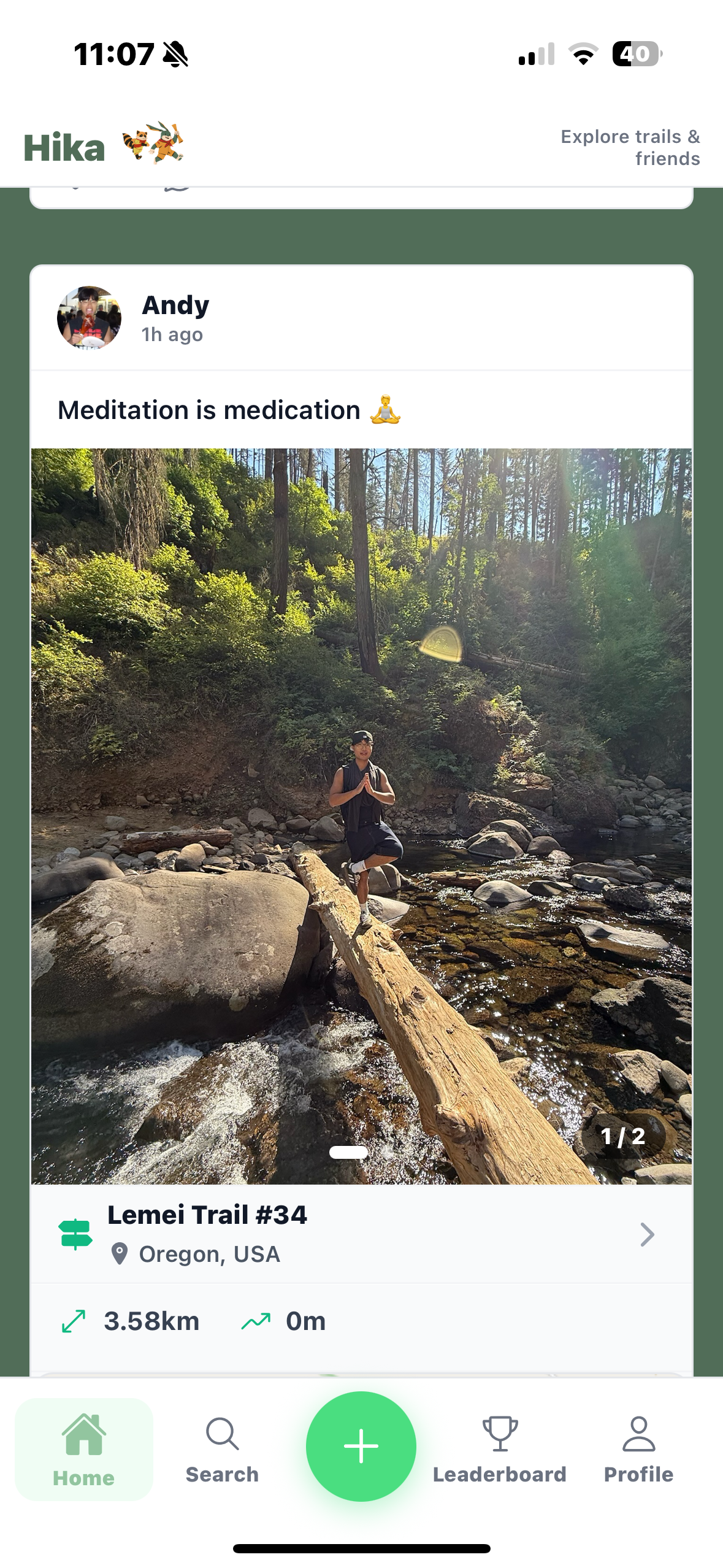
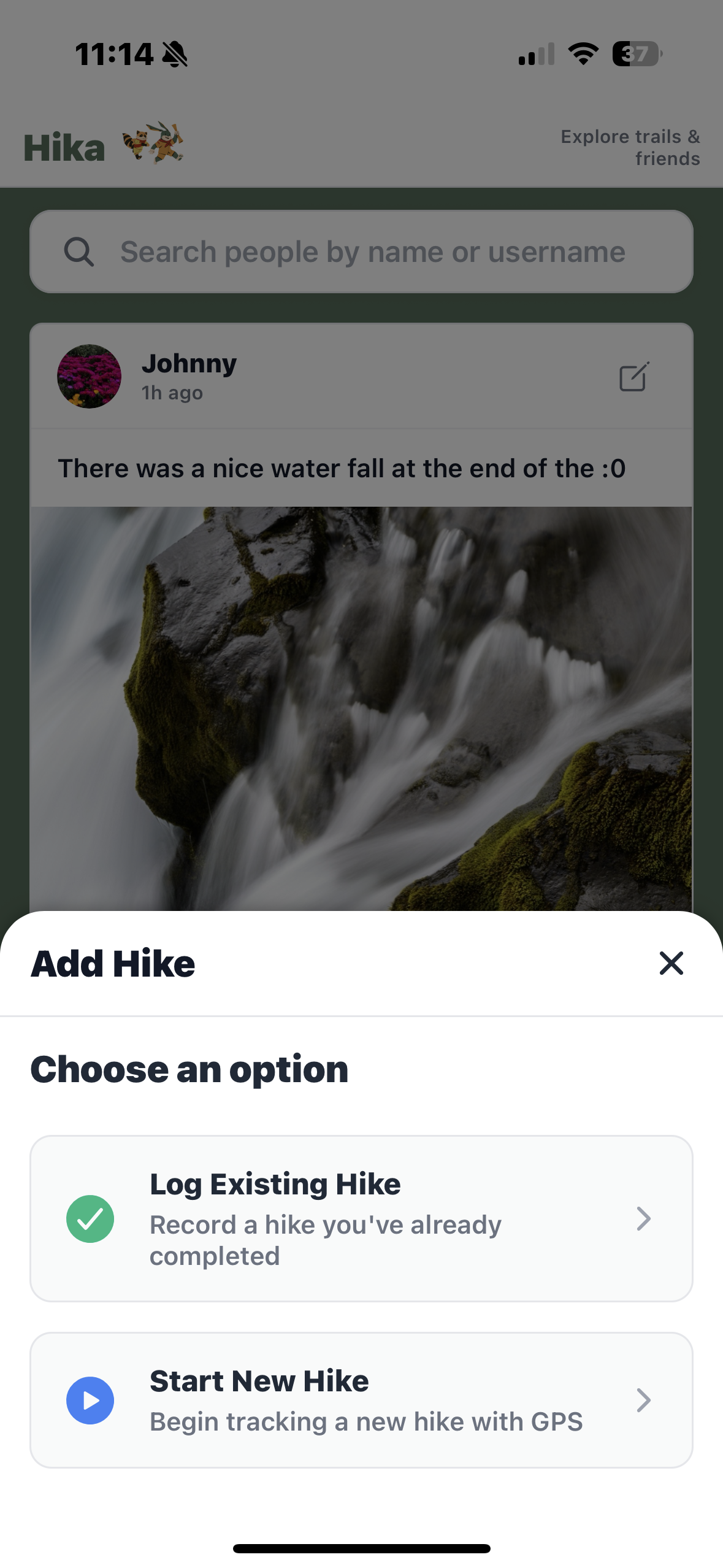
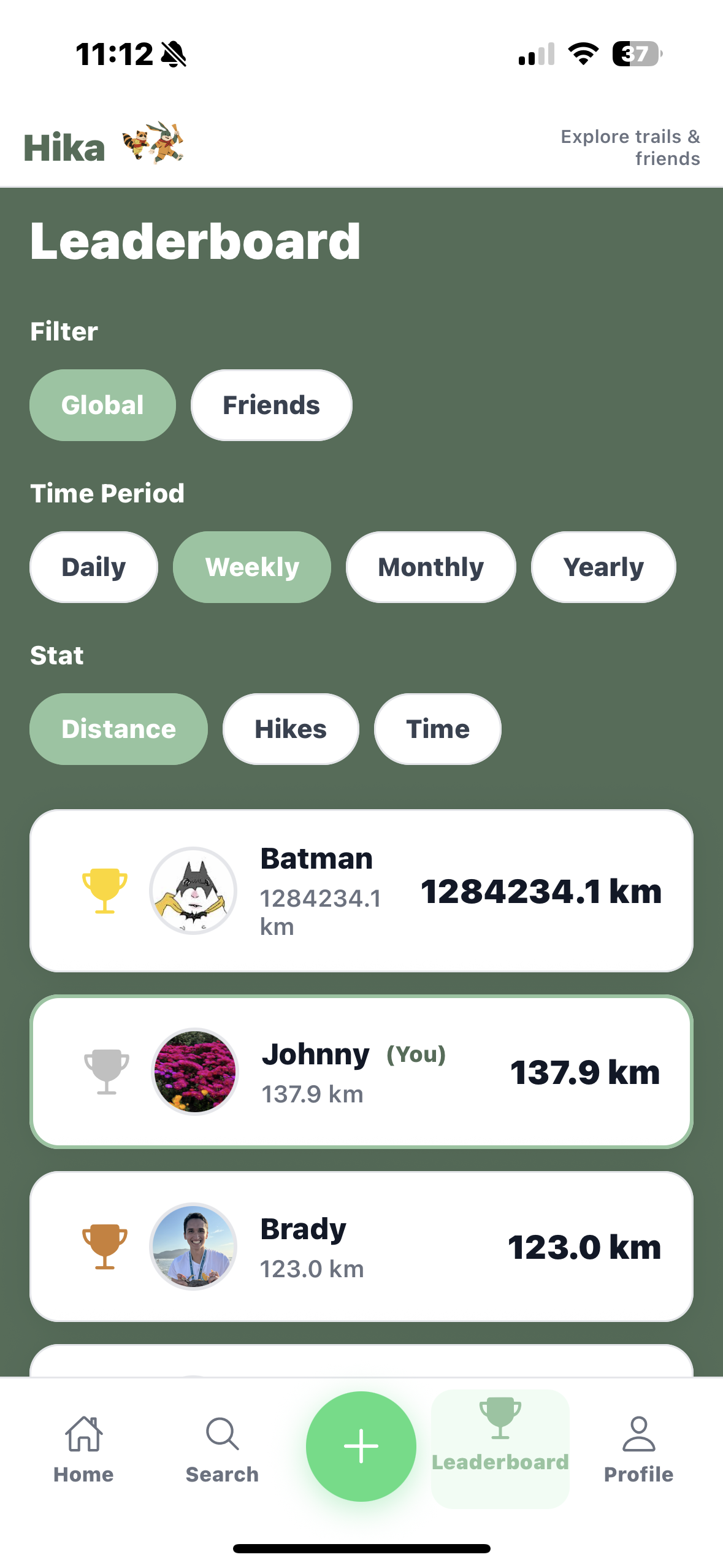
Hika is a mobile-first social application designed specifically for the hiking community. At its core, it provides robust GPS-based hike tracking, allowing users to map their routes in real-time, monitor their mileage, and log their total elevation gain.
But the app goes beyond simple utility. The central feature is the social feed, which empowers users to:
Post photos and updates from their hikes.
Share their completed routes and stats.
Comment on and encourage their friends' achievements.
It’s a one-stop shop for logging your personal hiking history while simultaneously engaging with a community of fellow hikers.
How we built it
To bring Hika to life in a short time, we chose a modern, cross-platform tech stack.
React Native was our primary framework, allowing us to write a single JavaScript codebase that runs natively on both iOS and Android.
Expo Go was essential for accelerating our development, letting us quickly build and test on our physical devices without managing native build tools.
For styling, we implemented NativeWind, which allowed us to leverage the utility-first speed of Tailwind CSS within a React Native environment.
On the backend, we relied entirely on Firebase for our data needs, including Firebase Authentication for user sign-up and Firestore as our real-time database for storing user profiles, hike data, and social posts.
To power our core mapping features, we integrated the Leaflet API with OpenStreetMap data, providing a flexible and open-source solution for displaying trails and tracking user locations.
Challenges we ran into
This project was a significant undertaking, primarily because it was a journey of firsts for our entire team. This was our very first hackathon, and we compounded that challenge by intentionally choosing a tech stack that none of us had ever used before.
We were complete beginners in mobile development, React Native, and Firebase. The learning curve was incredibly steep; we spent the first several hours just getting our development environments configured. We had to learn on the fly, debugging complex state management issues and adapting our web-based mindsets to the constraints of mobile UI. To top it all off, after a weekend of intense coding, we even ran into technical glitches with the DevPost submission platform right at the deadline. It was a true test of our resilience and team problem-solving.
Accomplishments that we're proud of
Despite the steep learning curve, our proudest accomplishment is what we delivered: a fully functional, cross-platform application. Starting from zero knowledge of mobile development, we successfully built and debugged an app that runs smoothly on both iOS, Android, and (thanks to React Native's versatility) the web.
Seeing a test user log in, complete a hike, track it using our map, save it to their profile, and have it appear in the social feed was an incredibly rewarding moment. We didn't just build a partial demo; we built a working, end-to-end product that realized our initial vision.
What we learned
The hackathon was an intense and invaluable learning experience. Technically, we gained a foundational understanding of the entire mobile development lifecycle, from component creation in React Native to schema design and real-time data management in Firebase.
But the biggest takeaway was learning how to learn rapidly and effectively as a team. We developed an efficient workflow, dividing tasks based on our new-found strengths, pair-programming through difficult bugs, and communicating constantly under pressure. We learned how to make quick, pragmatic decisions to scope the project and ensure we met the deadline—a crucial skill outside of any specific technology.
What's next for Hika
This hackathon project is just the beginning for Hika. We are excited to continue its development and move from a proof-of-concept to a polished, deployable product. Our immediate roadmap includes adding key features we didn't have time for, such as:
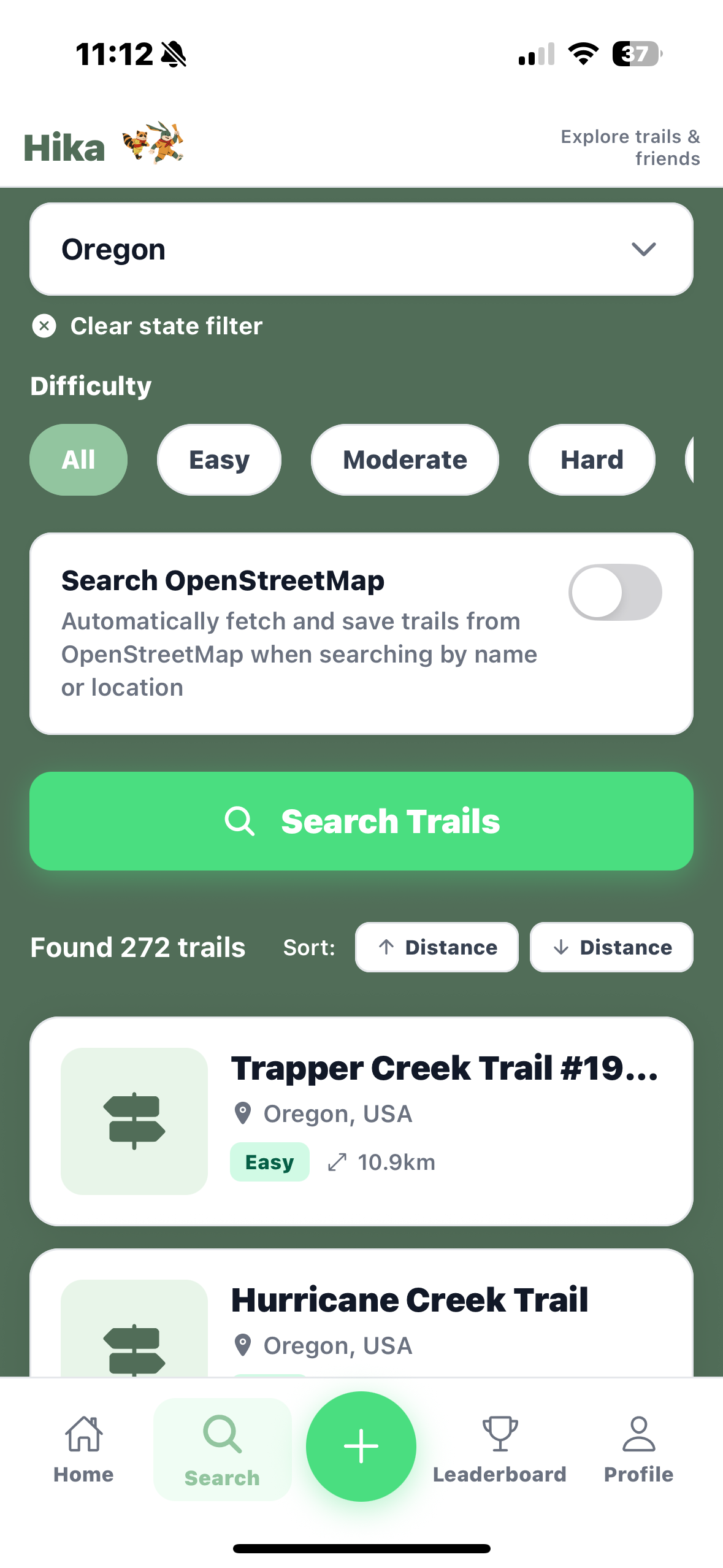
A comprehensive trail discovery and search engine.
Offline map support for when users are off-grid.
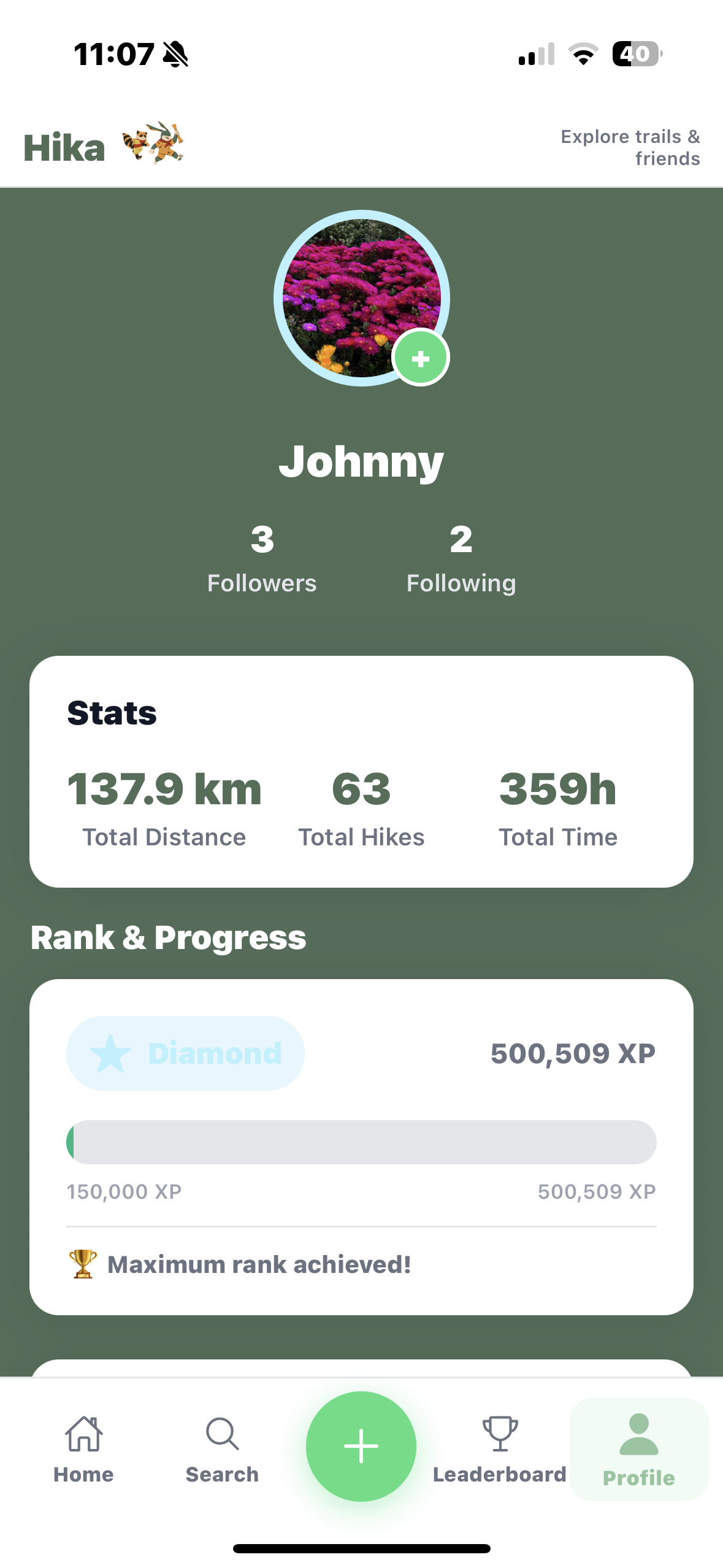
Enhanced user profiles with badges, personal stats, and goals.
We plan to continue iterating on the app, refining the UI, and working toward a full deployment on the Apple App Store and Google Play Store.
Built With
- firebase
- firebase-authentication
- leaflet.js
- nativewind
- overpass-openstreetmap
- typescript


Log in or sign up for Devpost to join the conversation.