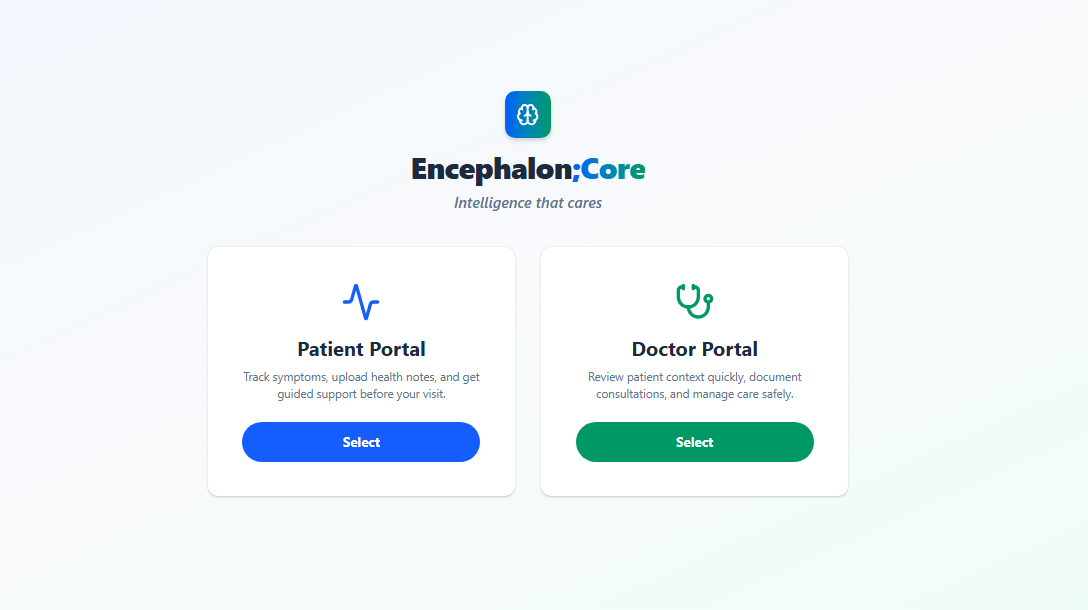
Encephalon;Core
The Intelligent Healthcare Ecosystem
"From the patient's home to the doctor's office — without interruption."
The Problem
Modern healthcare is full of breaking points. A patient suffers at home but can't articulate their symptoms clearly. A doctor gets 10 minutes per patient while documentation devours hours. Systems don't talk to each other, coding errors drain funding, and language barriers can cost lives.
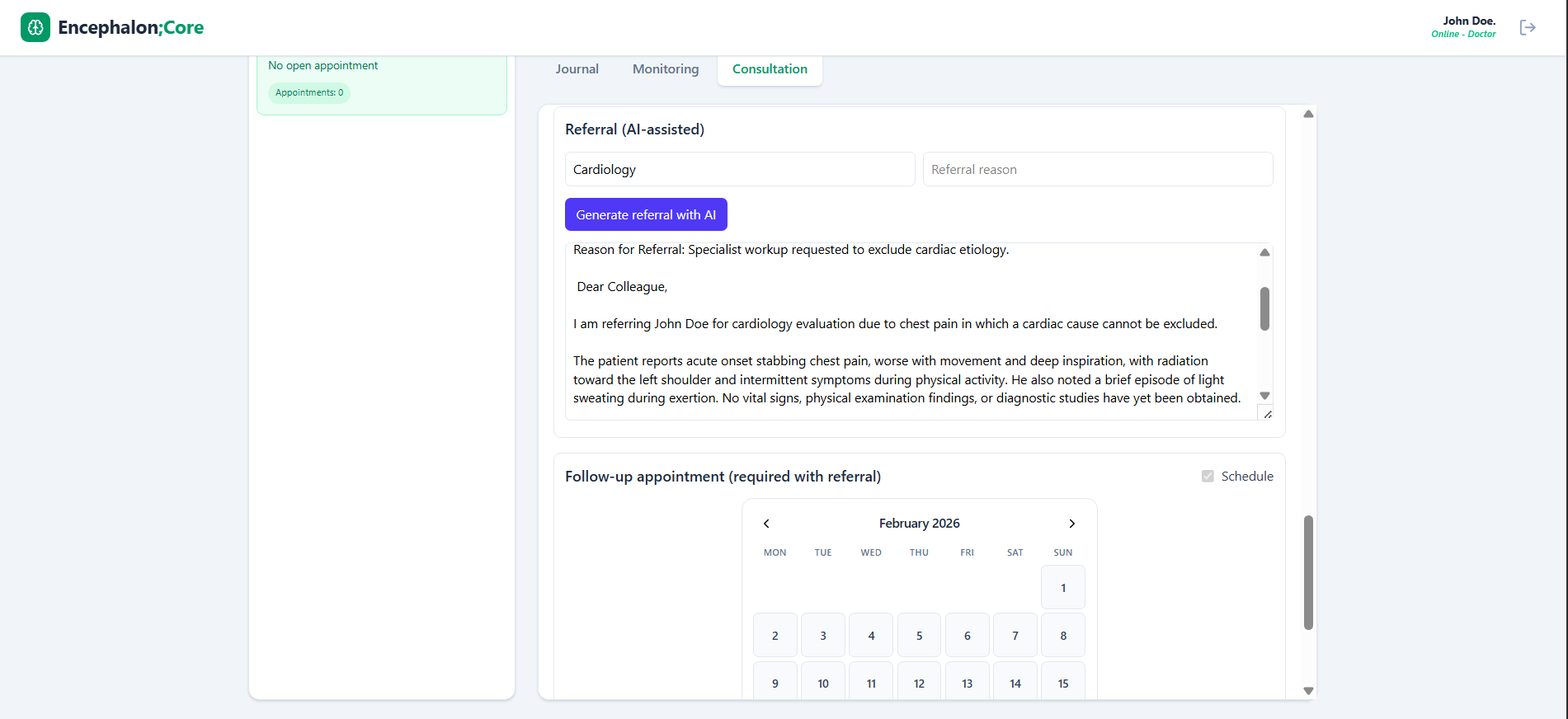
Encephalon;Core is the answer: a cohesive, AI-driven ecosystem that's present at every step — from a patient's first symptom to the final signed clinical note — reducing administrative burden, increasing safety, and preserving the human connection that medicine depends on.
The Core Idea
The project started with a simple observation: a doctor and a patient describe the same experience in completely different languages. The patient is subjective, emotional, fragmented. The doctor is structured, coded, documented.
What if a single system could handle both perspectives at once — and build a bridge between them?
That became Encephalon;Core: a Care Continuum with two endpoints (home and hospital) connected by a single, unbroken thread of data.
The Four Pillars
1 — AI Health Diary (Patient Side)
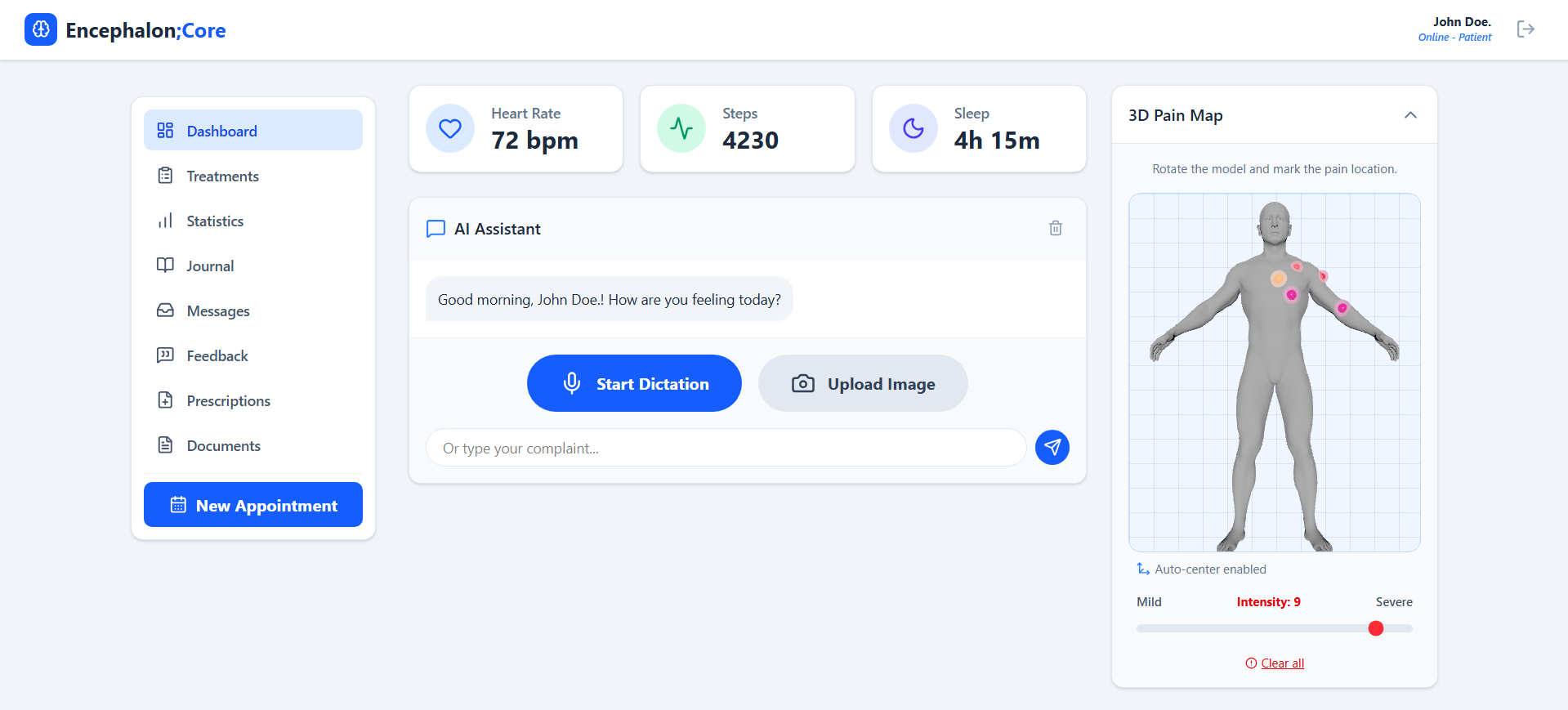
The health diary isn't a simple symptom tracker. It's a digital guardian angel that listens, connects the dots, and warns when it matters.
Multimodal input — because pain isn't always expressed in words:
- Patients describe their symptoms by voice, even when exhausted or in pain. Azure Speech-to-Text's Medical model recognizes Hungarian medical terminology: "I have a stabbing pain in my chest" becomes not just text, but a structured data point.
- They can upload a photo of a rash, a healing wound, or even a meal. Computer Vision analysis identifies relevant medical context.
- For those who prefer quick entry, text input is always available.
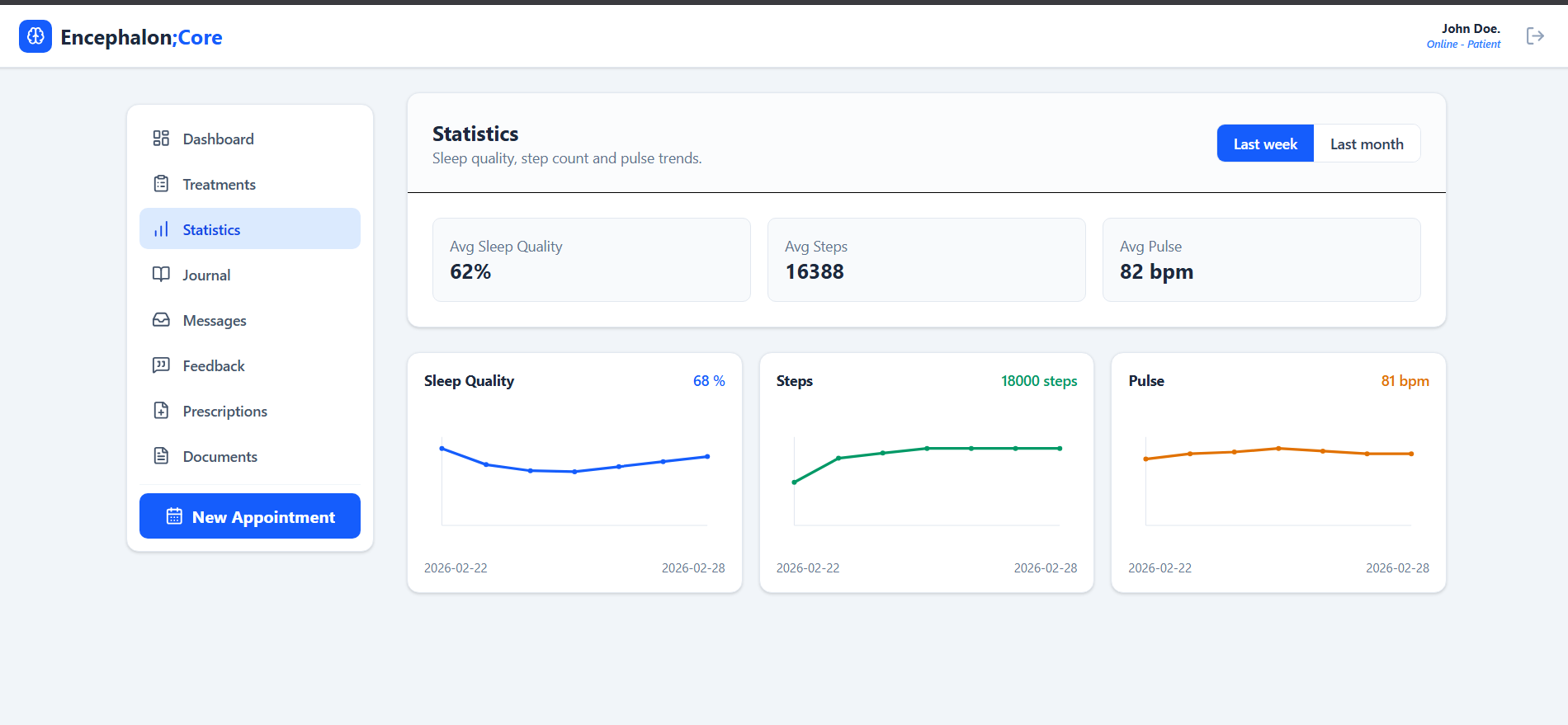
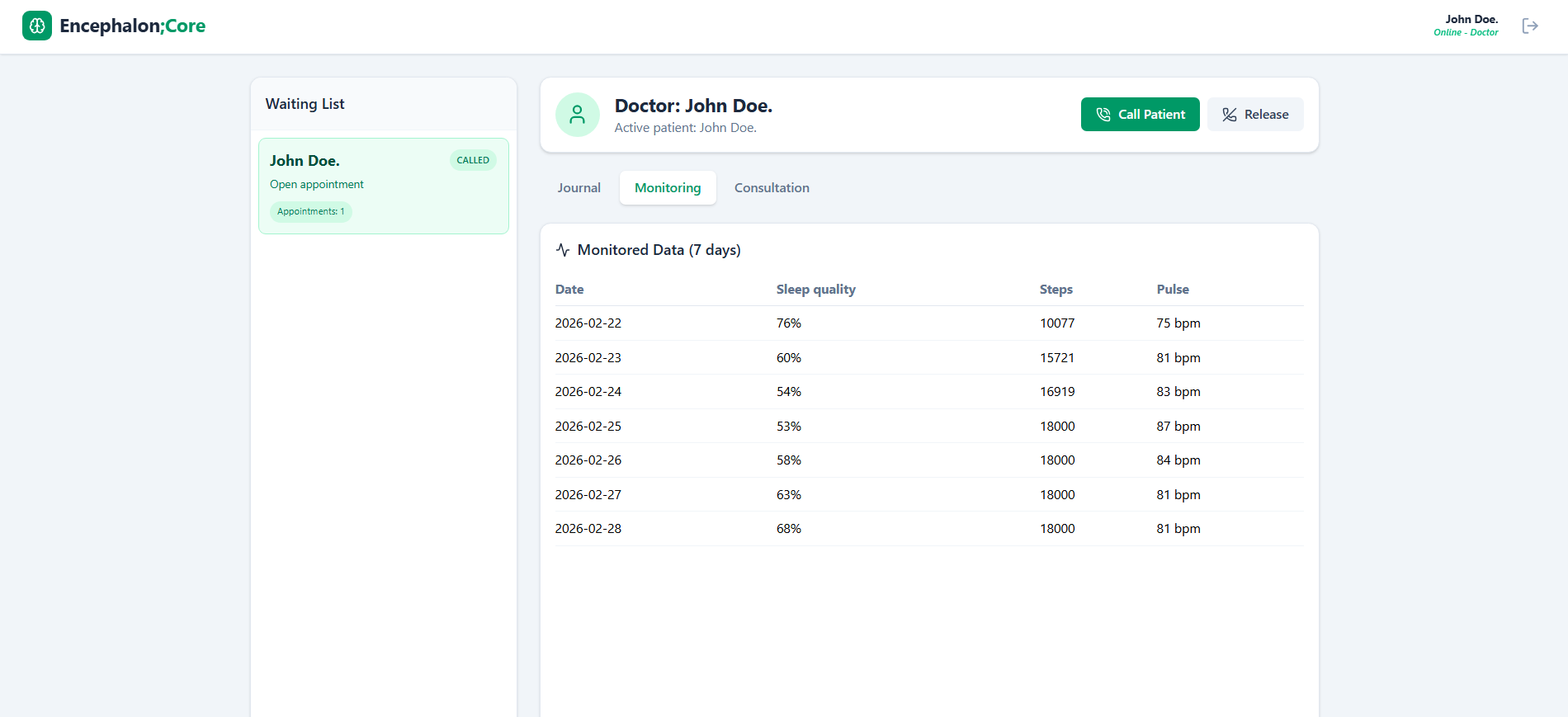
Sensor data integration — the smartwatch provides objective grounding for subjective complaints. The AI searches for correlations: it notices if recorded anxiety consistently follows fewer than 5 hours of sleep and asks: "We noticed your heart rate spiked. Did anything unusual happen?"
Temporal Heatmap — Body Map — on an interactive body model, the patient can point to exactly where the pain is. A timeline slider lets them scroll back through the last 30 days: pale yellow for mild discomfort, deep red for sharp pain. The AI detects when pain migrates — say, from the lower back toward the leg — a clinically critical pattern that's easy to miss in a standard consultation.
Borderless care — if the patient's native language isn't Hungarian, they keep the diary in their own language. Azure AI Translator surfaces a medically adapted Hungarian summary on the doctor's side, preserving the distinction between sharp pain and dull ache across languages.
"Caring" suggestions — the AI doesn't diagnose, but it guides. Sentiment Analysis detects mood deterioration and responds:
- "Based on your logged symptoms and elevated temperature, we suggest contacting your GP."
- "Your activity today was much lower than usual. Try a short walk if you feel up to it."
- If inputs reach a critical threshold (e.g., chest pain + shortness of breath), the system surfaces an emergency call button immediately.
2 — Clinical Note Assistant (Doctor Side)
The doctor should be listening to the patient — the AI handles the paperwork.
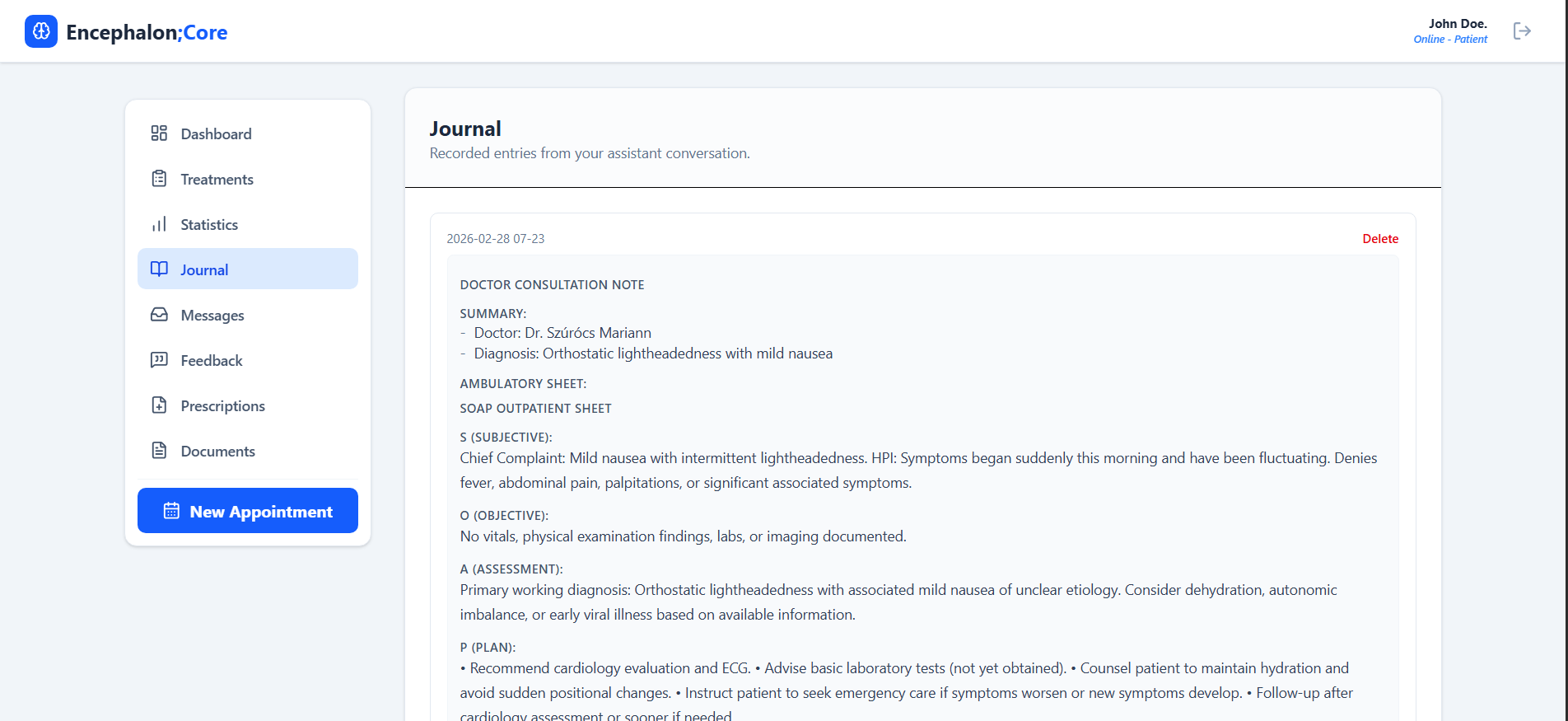
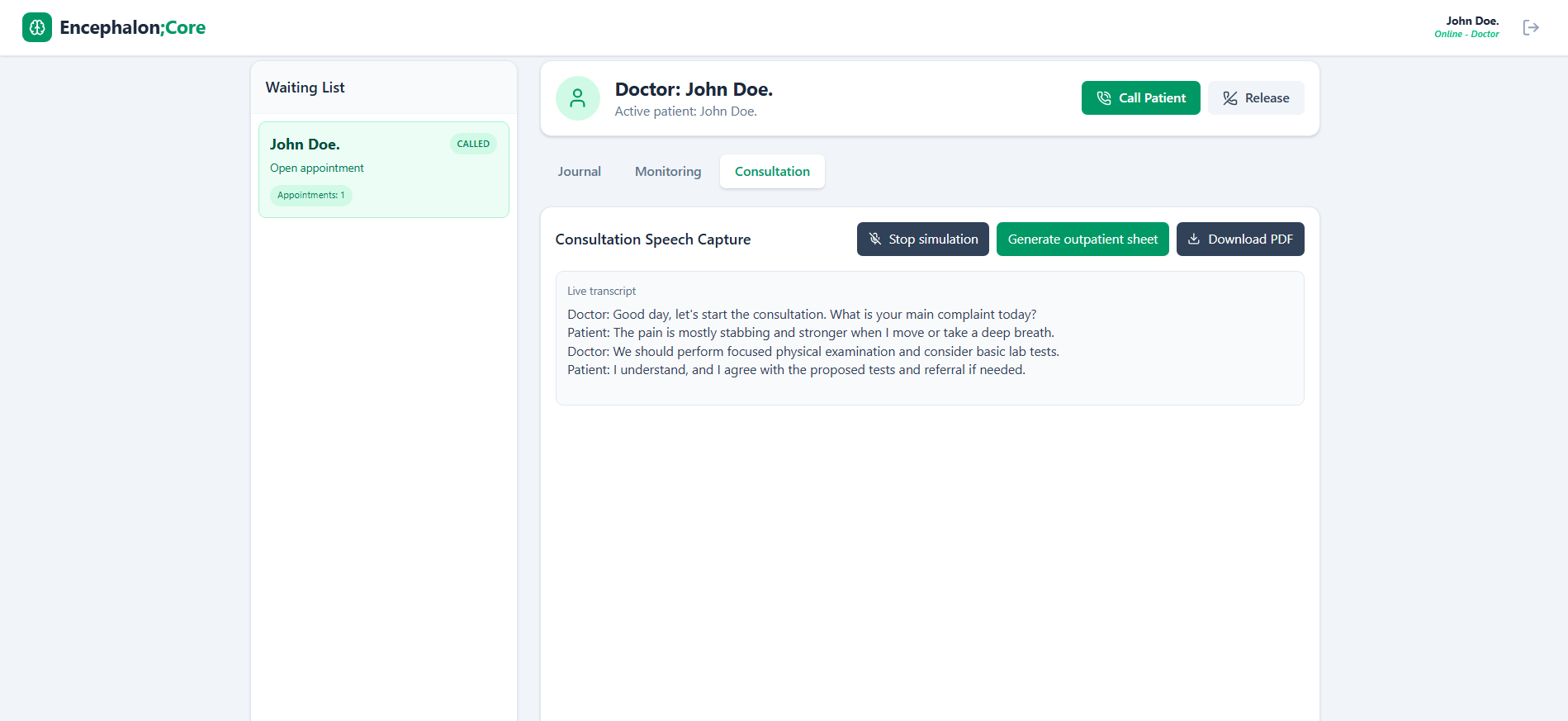
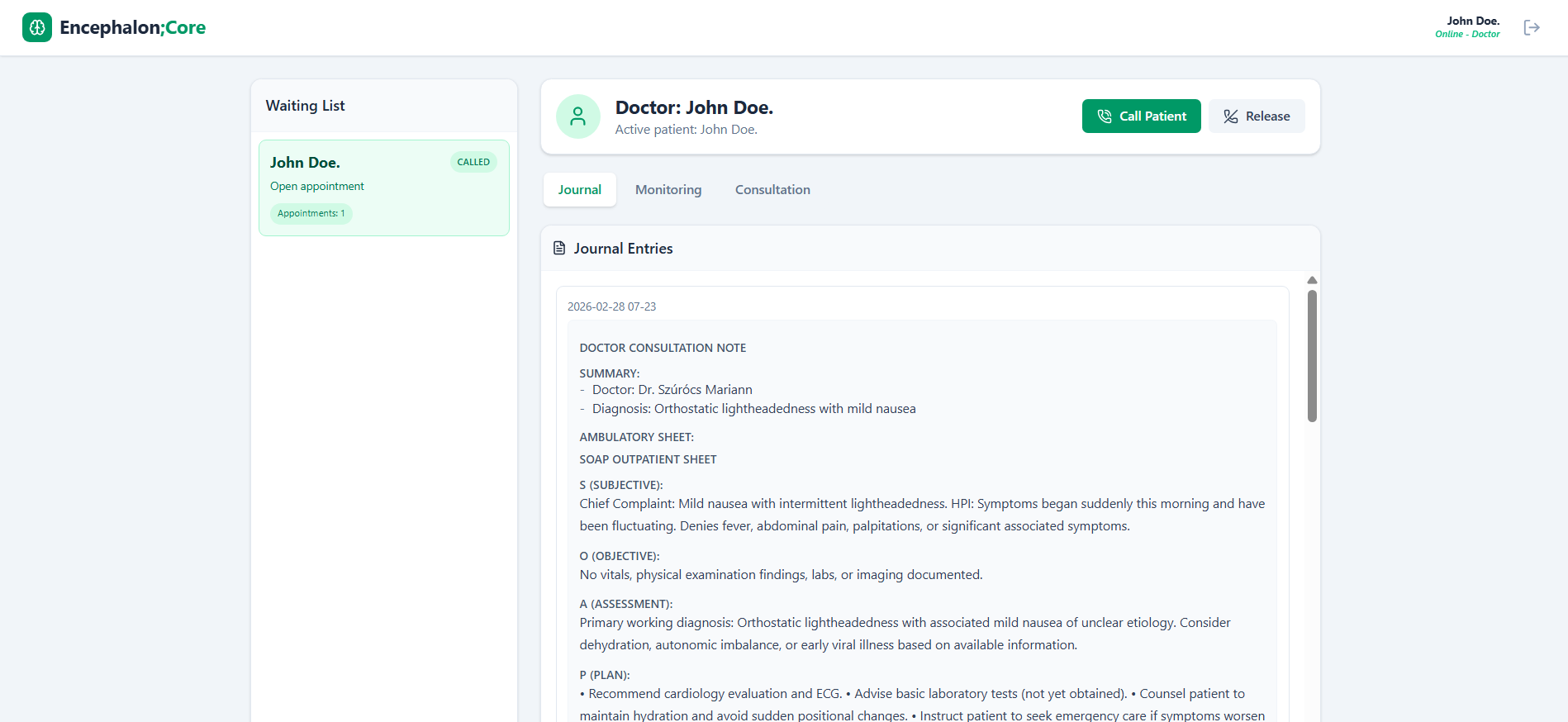
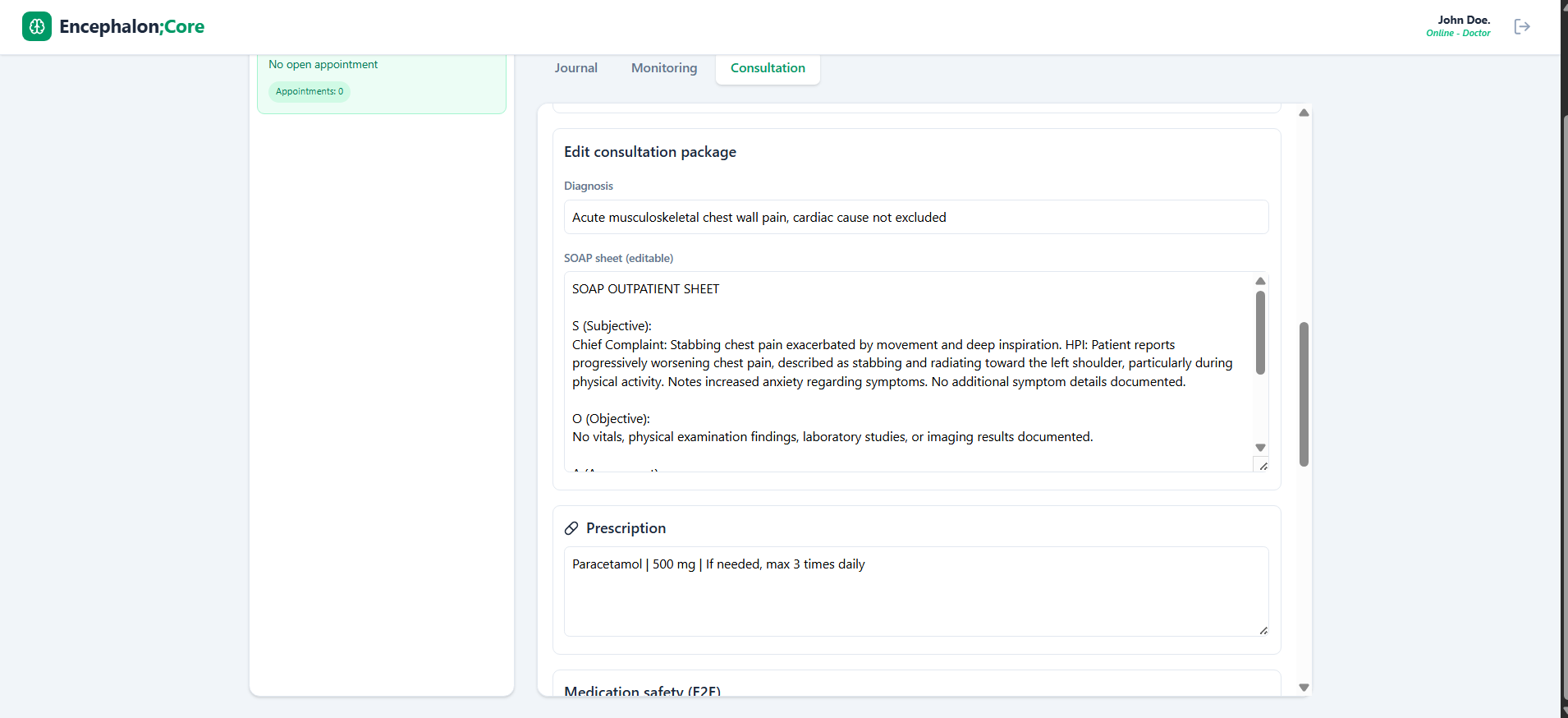
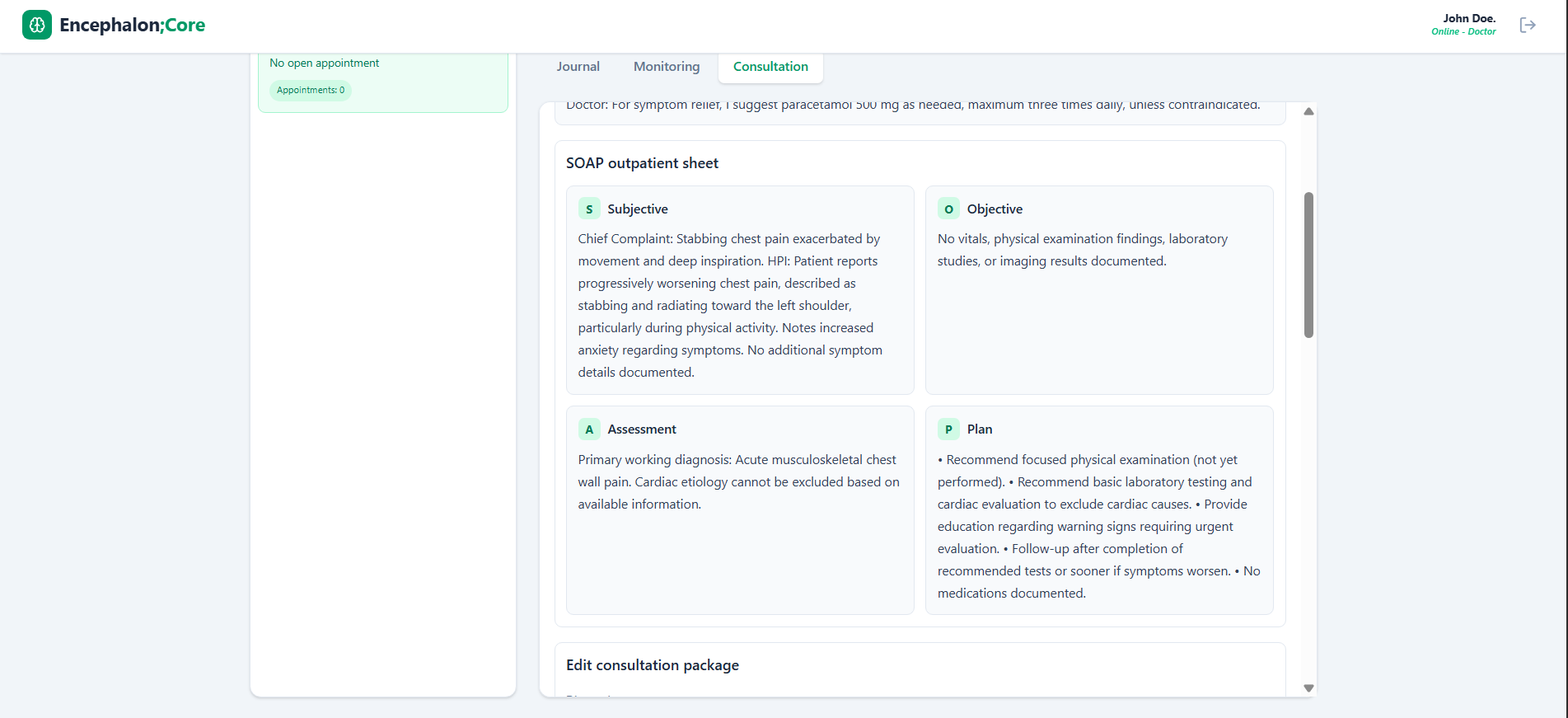
Structured SOAP Generation — Azure OpenAI transforms the audio from a consultation into an internationally standardized clinical note:
| Section | Content |
|---|---|
| Subjective | Patient-reported complaints, symptoms, and medical history |
| Objective | Physical examination findings, measurements, lab results |
| Assessment | Diagnosis or differential diagnosis |
| Plan | Treatment plan, medication, follow-up schedule |
Interactive source-linking — every key element in the SOAP note is clickable. A click plays back the exact moment in the recorded audio where that information was spoken. If the AI misheard a dosage, the doctor corrects it in one move — verified against the source.
Clinical tone analysis — the system understands not just what is said, but how. A patient's anxiety is detectable from speech pace and intonation. The doctor receives a quiet signal: "The patient seems uncertain about the treatment plan" — enabling a more targeted explanation before the visit ends.
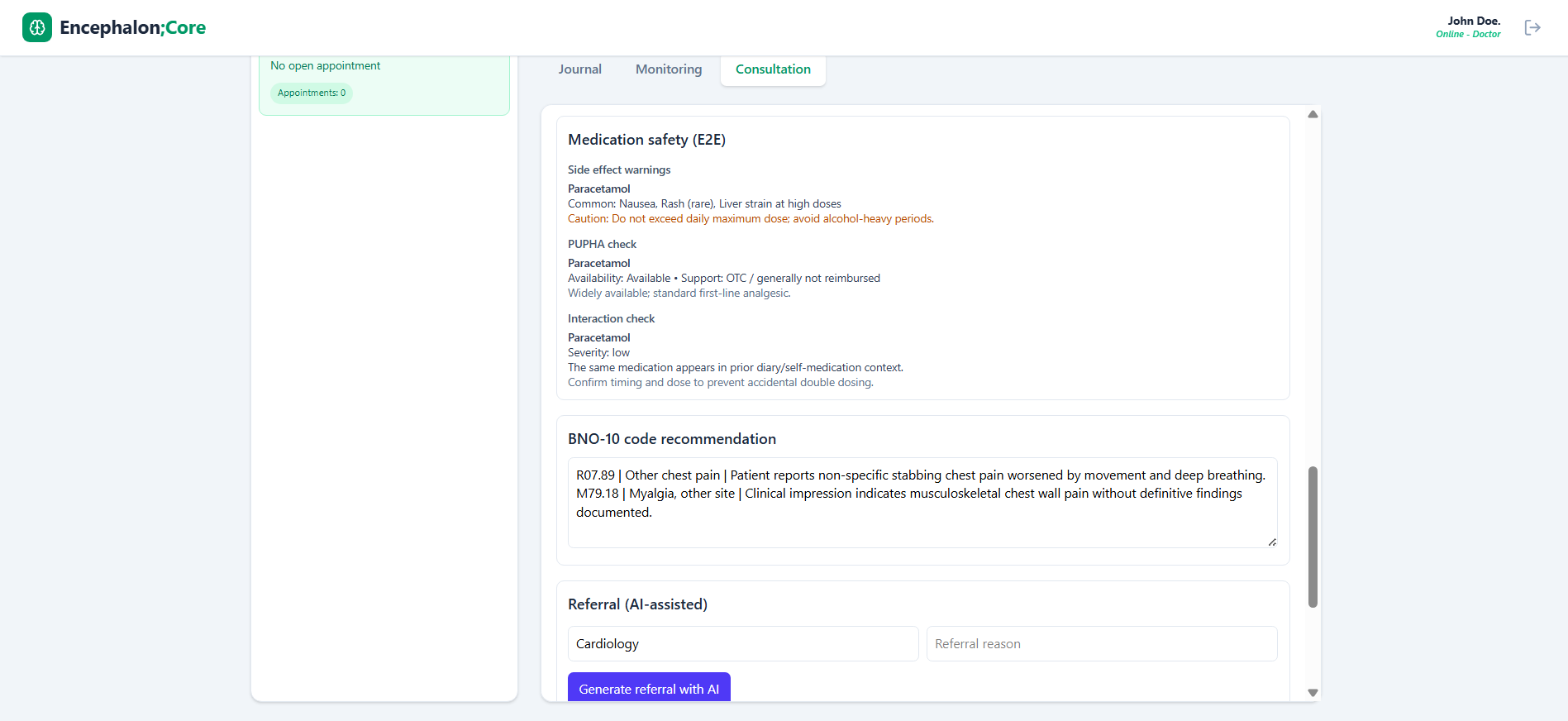
Automatic BNO-10 coding — Azure Text Analytics for Health identifies diseases and medical concepts in the text, then instantly suggests the relevant ICD-10 codes. Zero coding errors, zero reimbursement losses.
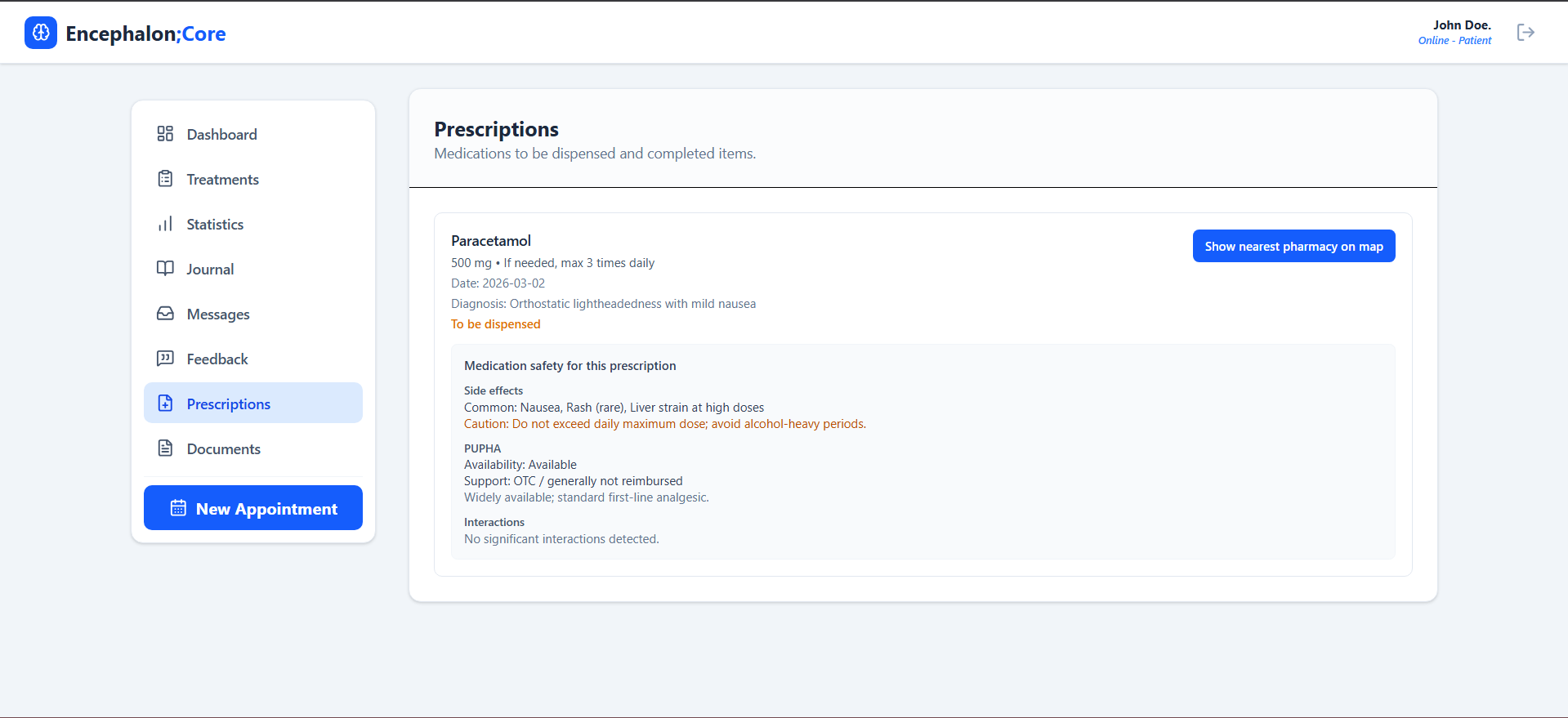
Drug interaction checking and PUPHA integration — the proposed therapy is cross-referenced in real time against Hungary's Public Drug Registry (PUPHA): availability, subsidy status, known interactions. The system flags conflicts with supplements or other medications logged in the patient's diary, and uses location data to list the nearest open pharmacy where the prescription can be filled immediately.
3 — Hungarian-Specific Integration
This is the soul of the project. Not a generic chatbot — a system that understands the technological fabric of the Hungarian healthcare system.
EESZT-compliant Outpatient Record — the SOAP format automatically maps to Hungarian regulatory requirements:
Subjective  →  Anamnesis
Objective   →  Status
Assessment  →  Diagnosis (enriched with BNO codes)
Plan        →  Recommendation / Therapy
The generated PDF contains all mandatory formal elements and can be uploaded directly to Hungary's National Electronic Health Service Space (EESZT).
HL7 FHIR Mapping — the system also speaks the international hospital language. Standard FHIR resources in JSON format:
Condition— for recording diagnosesObservation— for symptoms and sensor readingsMedicationStatement— for the patient's medication list
Data storage and transfer run through Azure Health Data Services, ensuring interoperability with any Hospital Information System.
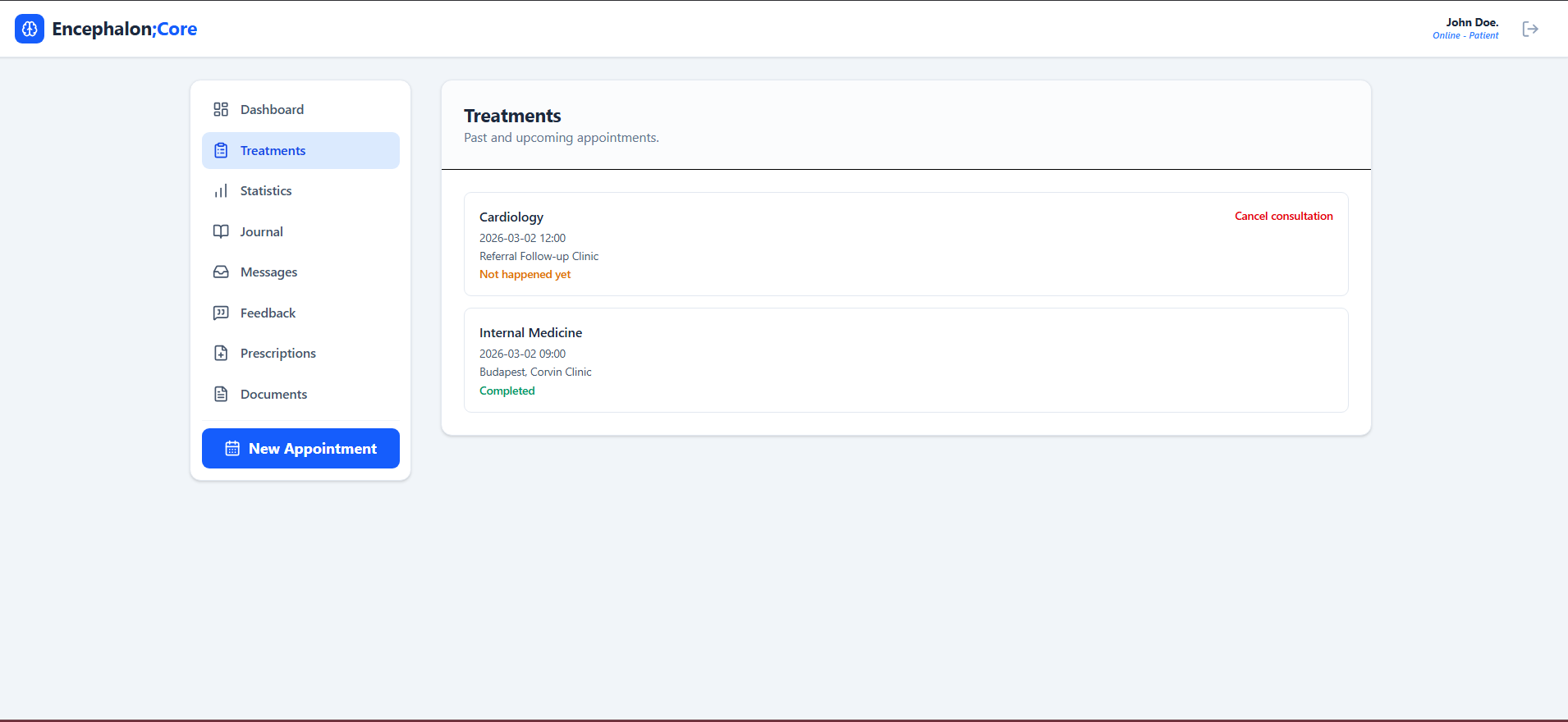
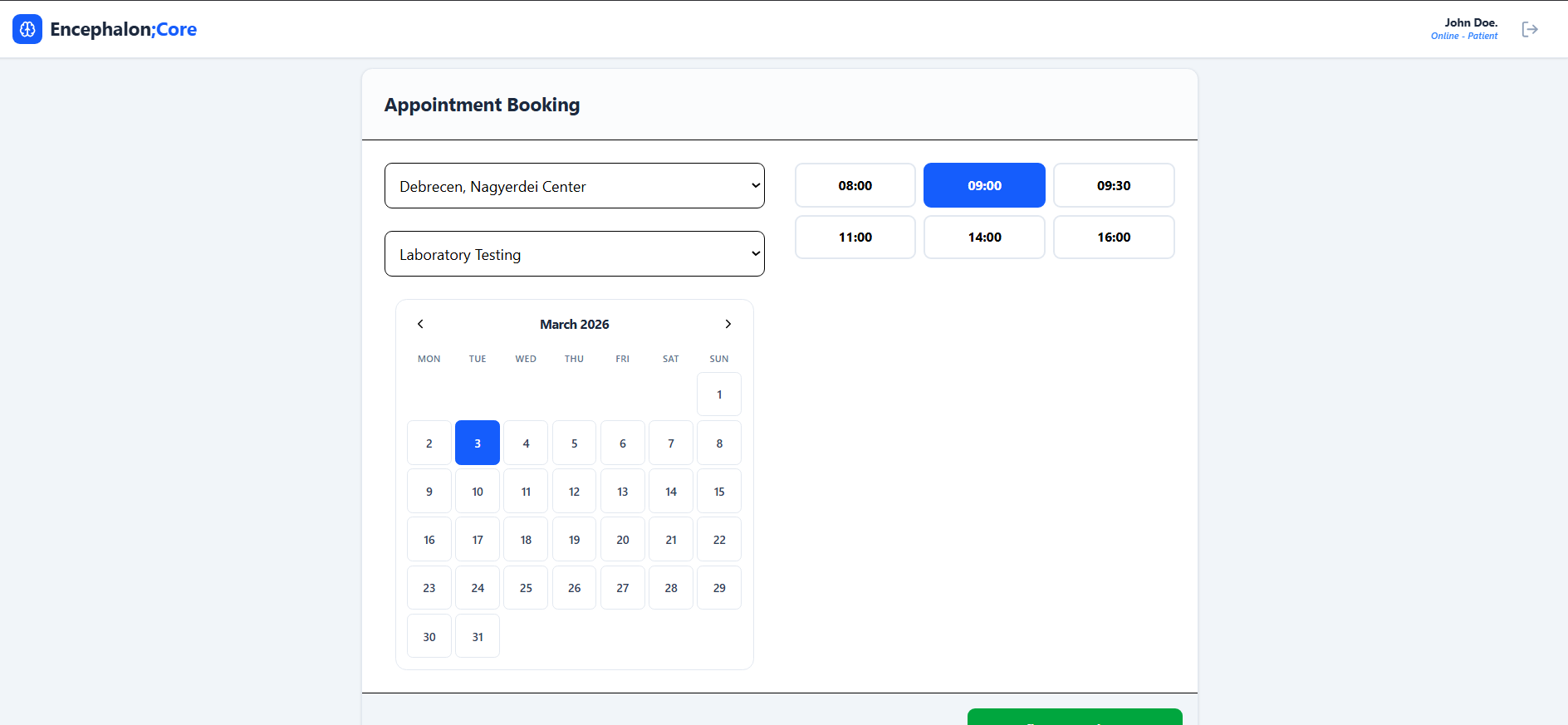
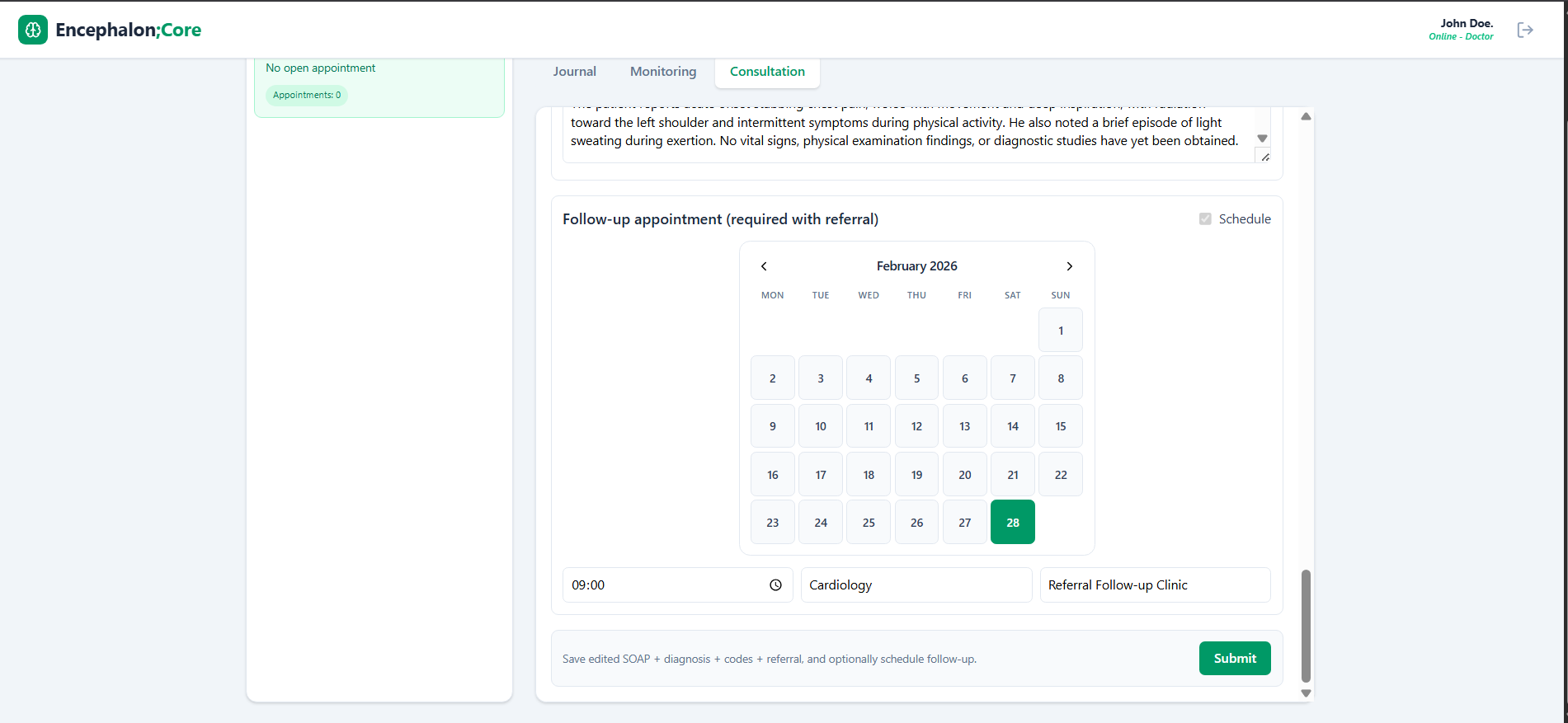
Symptom-based Triage and Department Routing — based on the aggregated AI Health Diary, the system identifies which specialty a patient's complaints belong to. If someone logs chest tightness and shortness of breath, the system automatically surfaces the nearest cardiology clinic or on-call service — reducing wait times caused by patients showing up at the wrong department.
4 — Safety, Ethics, and Physician Protection
This is where the project steps beyond the category of technological toy.
PHI Anonymization — Privacy by Design — before any data leaves the hospital network, it passes through a dedicated anonymization layer. Azure Text Analytics for Health identifies and masks personal identifiers automatically:
"John Smith" → [PATIENT]
Only anonymous, professional text reaches external models. GDPR compliance is built in from the start, not bolted on afterward.
Aggression Detection — protecting physicians is critical for preventing burnout and maintaining safe working environments. The system monitors tone, volume, pace, and keyword patterns in real time. When aggression is detected, it sends a discreet alert to the doctor — or, if necessary, to hospital security.
Visual Flagging — if aggressive behavior has been recorded previously, the patient's profile carries a clear but discreet marker (e.g., a red exclamation point). The doctor and support staff enter the consultation prepared.
Patient feedback and quality assurance — care is a two-way street. After each visit, patients can submit a short structured review: clarity of communication, friendliness, waiting time. Negative feedback automatically triggers a follow-up request for details, forwarded to the quality assurance department before a conflict escalates. Hospital leadership receives anonymized, aggregated satisfaction metrics by department.
The Technology Stack
| Layer | Technology |
|---|---|
| Voice recognition | Azure Speech-to-Text (Medical model) |
| Image analysis | Azure OpenAI + Computer Vision |
| Natural language | Azure OpenAI GPT |
| Translation | Azure AI Translator |
| Medical NLP | Azure Text Analytics for Health |
| Data & interoperability | Azure Health Data Services, HL7 FHIR R4 |
| Hungarian integration | EESZT, PUPHA |
| Privacy & safety | PHI Masking, Azure Cognitive Services |
The Vision
Encephalon;Core is not a single product — it's a platform. Layers can be built on top: telemedicine consultations, predictive health alerts, population-level trend detection at the hospital level, anonymized research datasets.
But the most important thing isn't the technology. It's what the technology makes possible: the doctor can look at the patient again. Not at the screen. Not at the paperwork.
At the person.
Encephalon;Core — Healthcare Challenge 2025 — Innovation Proposal
Built With
- argon2
- azure
- azure-openai
- cosmos-db
- fastapi
- gemini
- javascript
- lucide-react
- openstreetmap
- pydantic
- pytest
- python
- react
- three
- vite

Log in or sign up for Devpost to join the conversation.