-
-
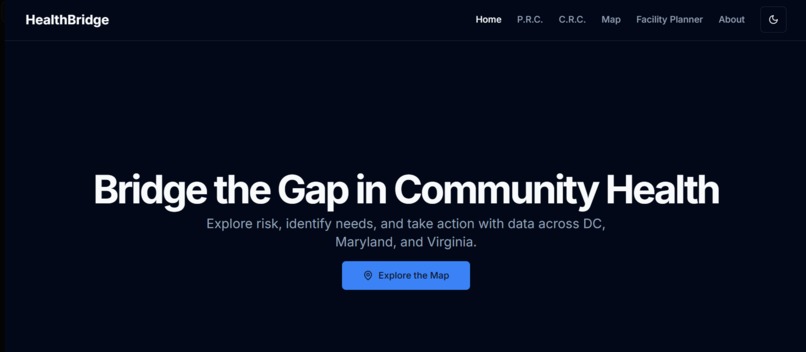
Home Page
-
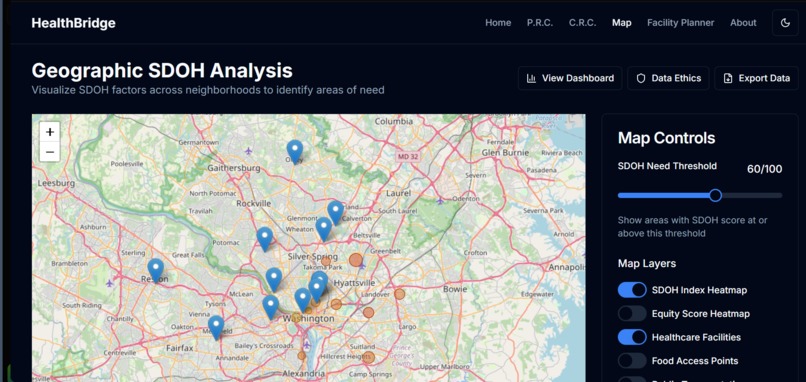
Map
-
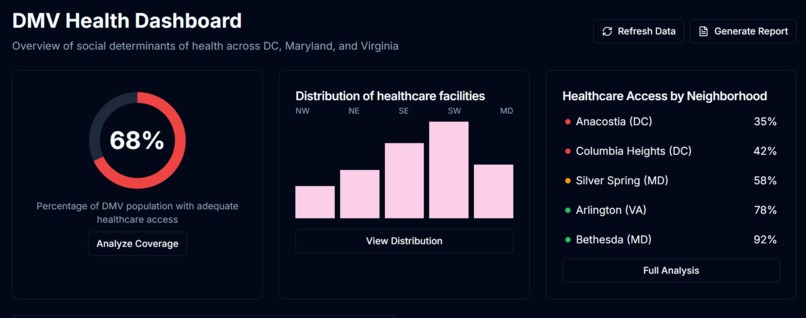
Dashboard
-
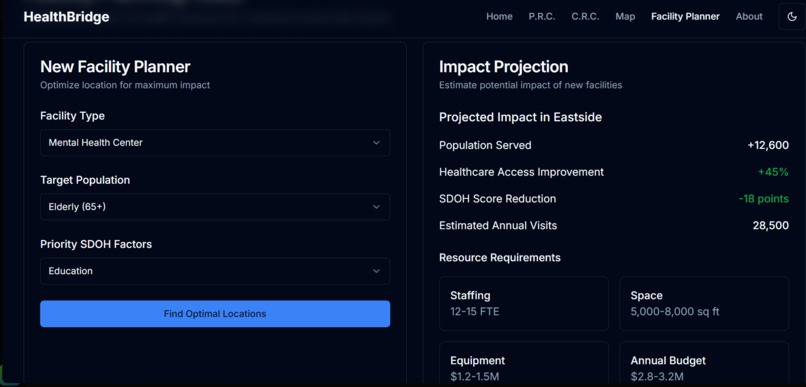
Facility Impact


Inspiration
HealthBridge was inspired by the health disparities present in underserved communities. Our team wanted to create a tool that would help public health agencies, non-profits, and policymakers identify high-need areas using real-world data. We were driven by the idea that data transparency and visualization can make a meaningful impact on health equity.
What it does
HealthBridge maps and analyzes social determinants of health (SDOH) data—like hospital access, food deserts, police presence, and income distribution—to identify geographic gaps in care and resources. Users can enter a ZIP code to view the closest health providers or explore areas with overlapping vulnerabilities.
How we built it
We gathered open datasets from state and federal sources and cleaned them using Python and pandas. For visualization, we used HTML, CSS, and Leaflet.js to build an interactive web map that displays all collected data. Instead of using a live database, we processed and embedded the data directly for quick access and demo purposes.
Challenges we ran into
Working with inconsistent data formats and incomplete information was a major hurdle. Many public datasets lacked standardization, requiring significant cleaning and restructuring. We also faced challenges in building a modern, easy-to-navigate interface that could layer multiple sources of data meaningfully.
Accomplishments that we're proud of
We’re proud of creating a working prototype that provides a clear, data-driven view of community needs. We successfully integrated several datasets and built a clean user experience. Most importantly, we built something with real potential to inform decisions that improve lives.
What we learned
We learned how to process and visualize large datasets in a meaningful way and how to use geolocation to personalize health resource recommendations. We also learned the importance of balancing technical functionality with a clean user interface.
What's next for HealthBridge
In the future, we hope to:
- Integrate real-time data sources and allow for live updates.
- Add user-submitted feedback for local health conditions or needs.
- Partner with community health organizations to pilot the tool in the field.
- Explore integrating AI to suggest optimal locations for future resource placement.


Log in or sign up for Devpost to join the conversation.