-
-
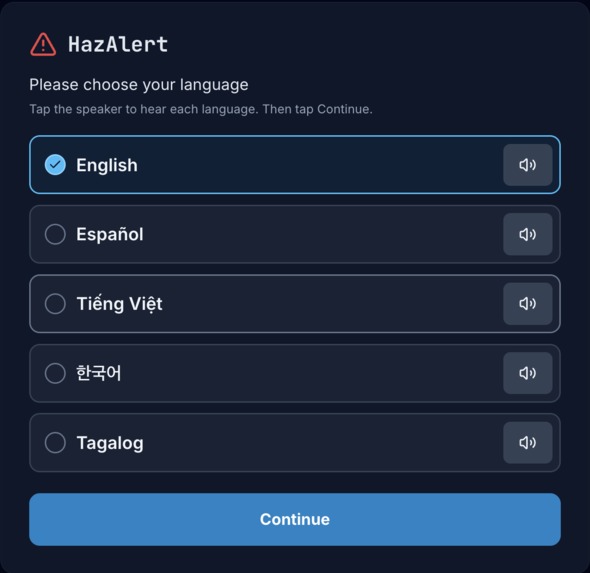
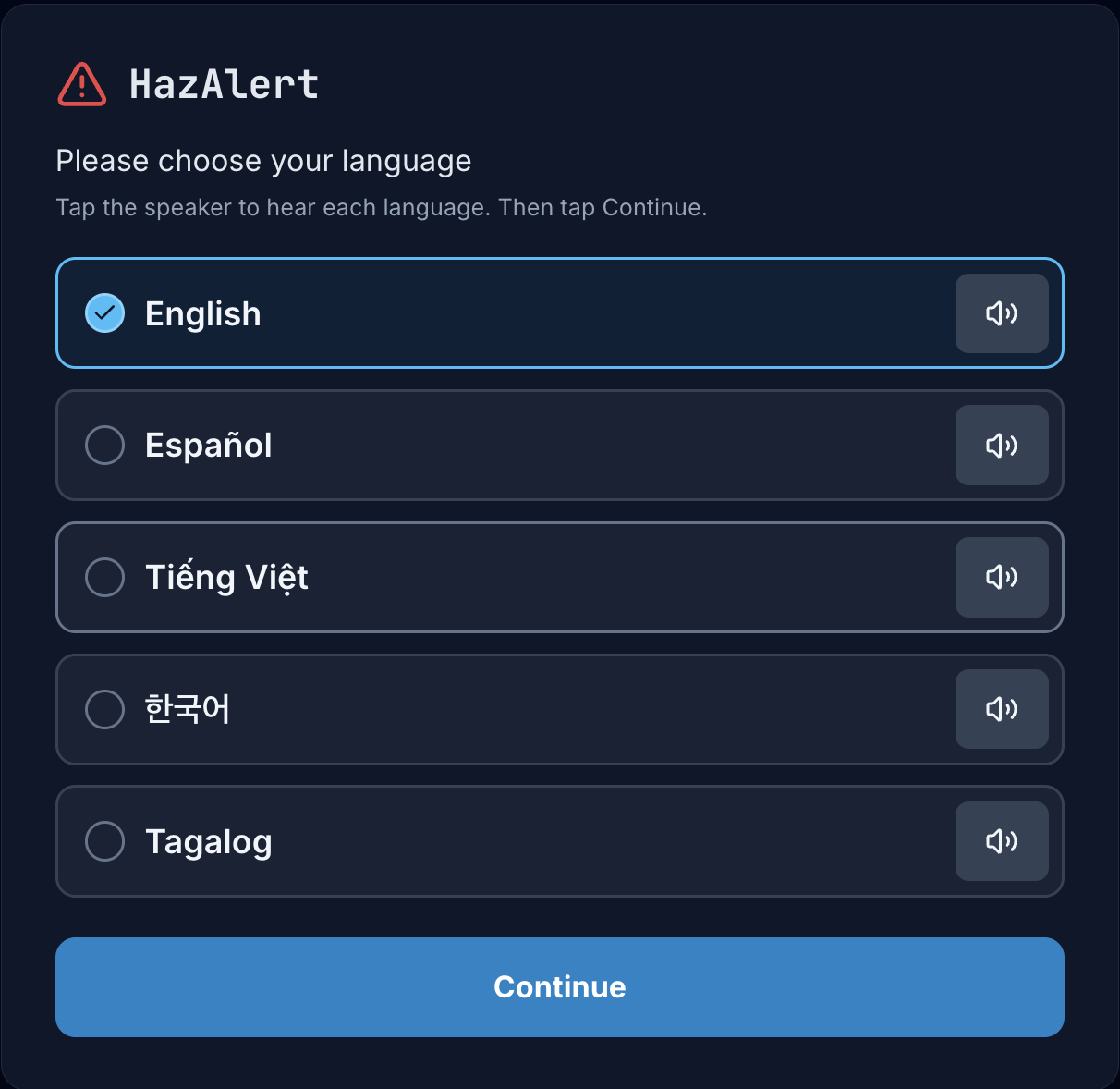
language selector
-
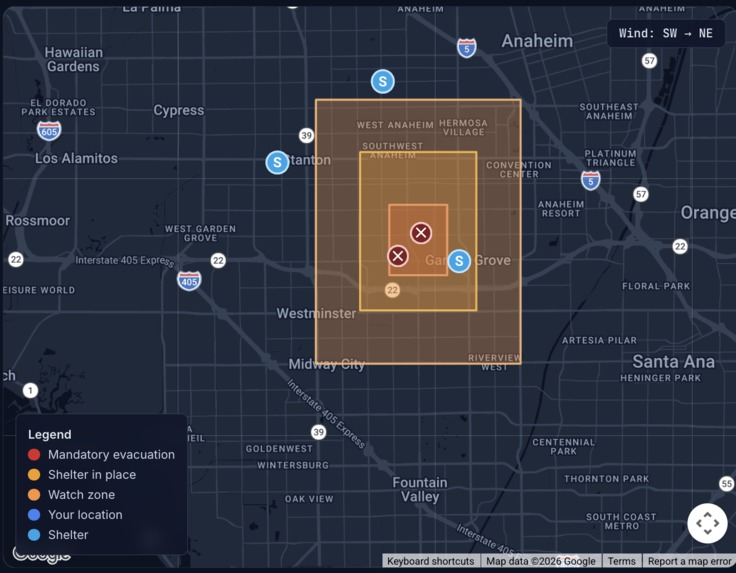
map visualization
-
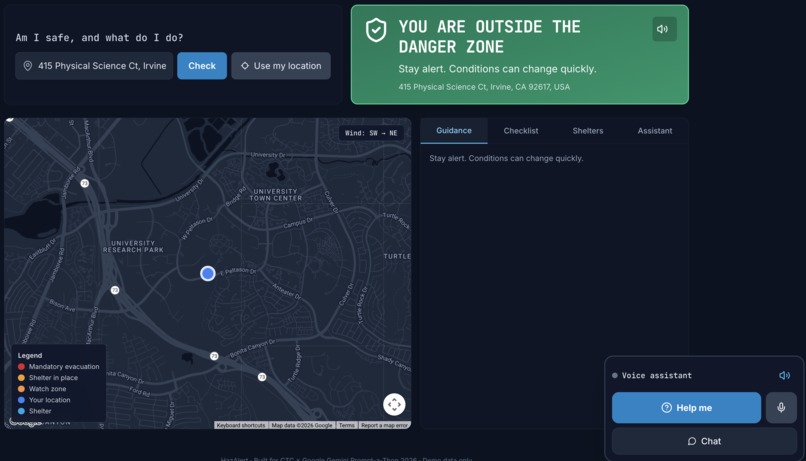
full view page
Inspiration
When we found about the Garden Grove chemical leak, we were extremely stressed. Luckily we were safe, but for the first 5-10 minutes, we were extremely scared.
We didn't know what we should have done if we were in danger. Due to panic and stress, finding the facts was an issue. Our friends who were in danger were lost and confused, and this is why we created HazAlert.
What it does
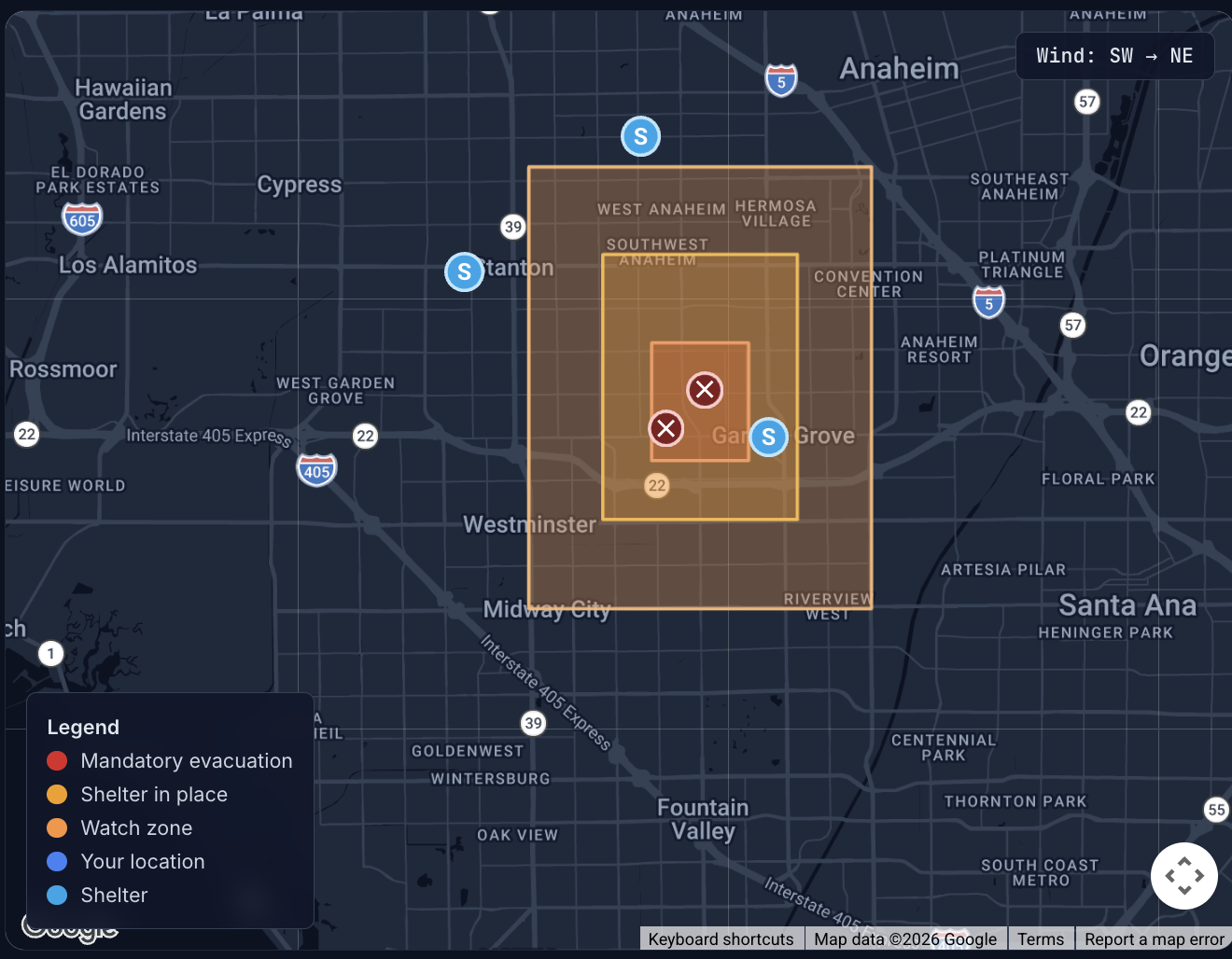
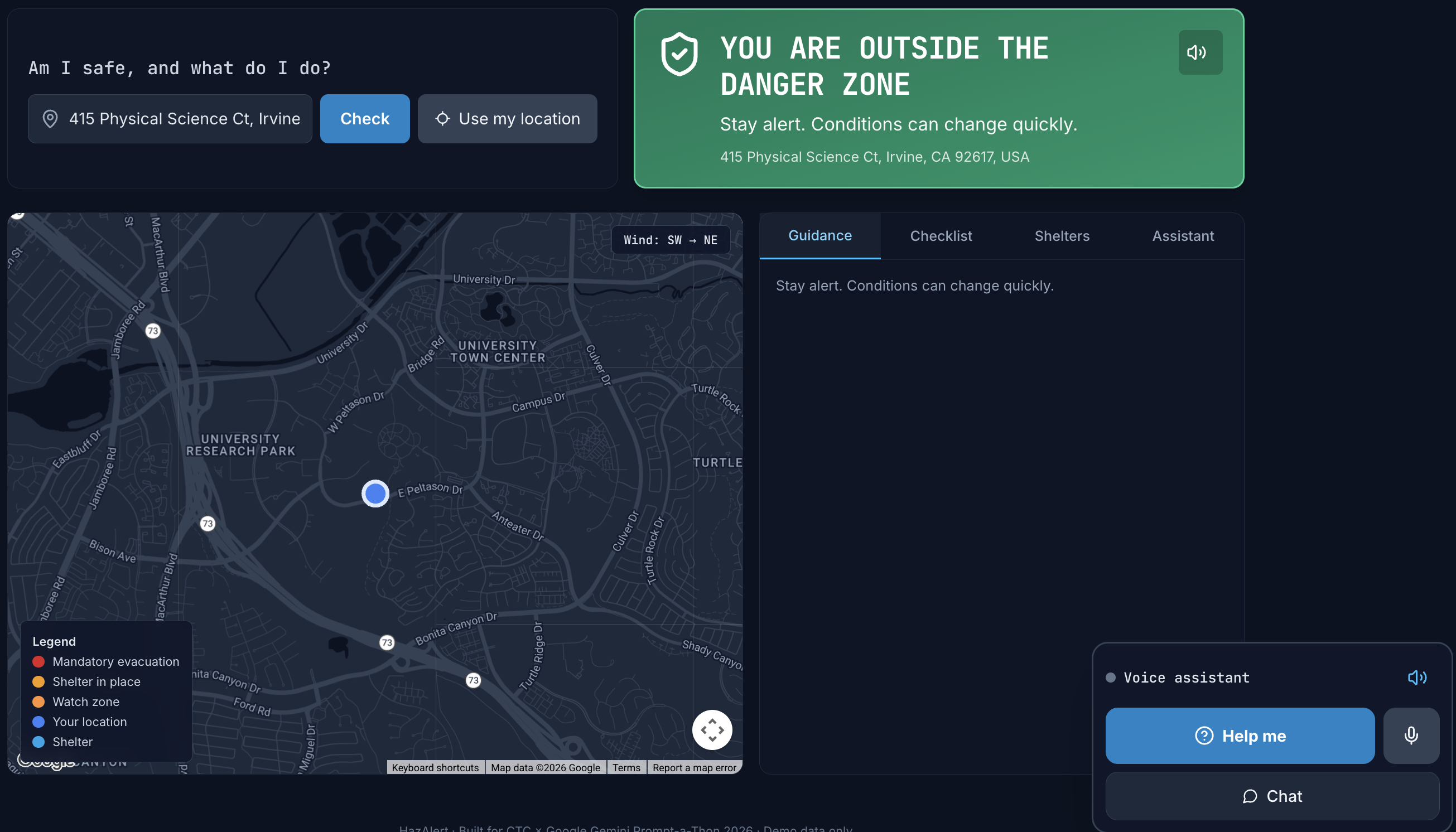
HazAlert takes your location, by address, ZIP code, or live geolocation, and instantly tells you whether you are in a mandatory evacuation zone, a shelter in place zone, a watch zone, or outside the danger area for an active hazmat incident. An interactive map shows the affected areas, nearby shelters, and the fastest safe evacuation route that avoids the chemical plume drift direction. A personalized checklist, generated by Gemini based on household details such as pets, children, medications, and time available, gives residents a step by step action plan. A persistent voice assistant reads every screen aloud, accepts voice questions through Google Cloud Speech to Text, and answers in plain language, all in five languages including English, Spanish, Vietnamese, Korean, and Tagalog. The app opens with a language picker that lets even non readers identify their language by hearing it spoken, ensuring accessibility from the very first interaction.
How we built it
On the front end we used React and Tailwind CSS.
We used Google AI Studio to get a starting point, and we iterated from there using the Antigravity IDE. We used Gemini for ideation, and we also used Gemini for coming up with how we could improve our idea.
Challenges we ran into
We had issues with getting the text to speech to work. For some reason it wasn't working on some browsers, but now it is a lot better. Furthermore, we had some issues integrating the APIs, but through some manual editing and prompt engineering, we were able to get that out of the way.
Accomplishments that we're proud of
We haven't used most of these APIs before, and it is our first time that we are primarily using vibecoding. Furthermore, we are proud that we are able to make a difference in our community.
What we learned
We learned that ideation is the main part, and we learned that social good isn't limited by how technical someone is, but on how great their ideas are. Before this, we knew that AI was good, but we never knew that it could be so helpful. We learned how great Google is, both for their AI tools, and their APIs.
What's next for HazAlert
Our main goal is to make it work for all types of hazards, not just the Garden Grove incident. We could use government websites (FEMA IPAWS for federal alerts, news outlets, etc.) to get a full list of hazards.
Built With
- css3
- express.js
- framer-motion
- gemini
- geojson
- google-ai-studio
- google-antigravity
- google-cloud-speech-to-text
- google-cloud-text-to-speech
- google-cloud-translation
- google-maps
- google-maps-directions-api
- google-maps-geocoding-api
- google-maps-geometry
- google-maps-places-api
- html5
- javascript
- lucide-react
- mediarecorder-api
- node.js
- react
- tailwindcss
- typescript
- vite

Log in or sign up for Devpost to join the conversation.