Hatua – Turning Early Warnings into Early Action
Demo Video
🎥 Watch Hatua in Action: https://youtu.be/CZbIYpG9O5g
Inspiration
Every year, communities across the IGAD region receive warnings about droughts, floods, and other climate hazards. Yet despite increasingly accurate forecasts, disasters continue to affect millions of people, livestock, and livelihoods.
The challenge isn't a lack of data—it's turning warnings into timely action.
Decision-makers often have multiple dashboards but still struggle to answer:
- Which communities are most at risk?
- What should happen first?
- Who is responsible?
- Did the intervention actually happen?
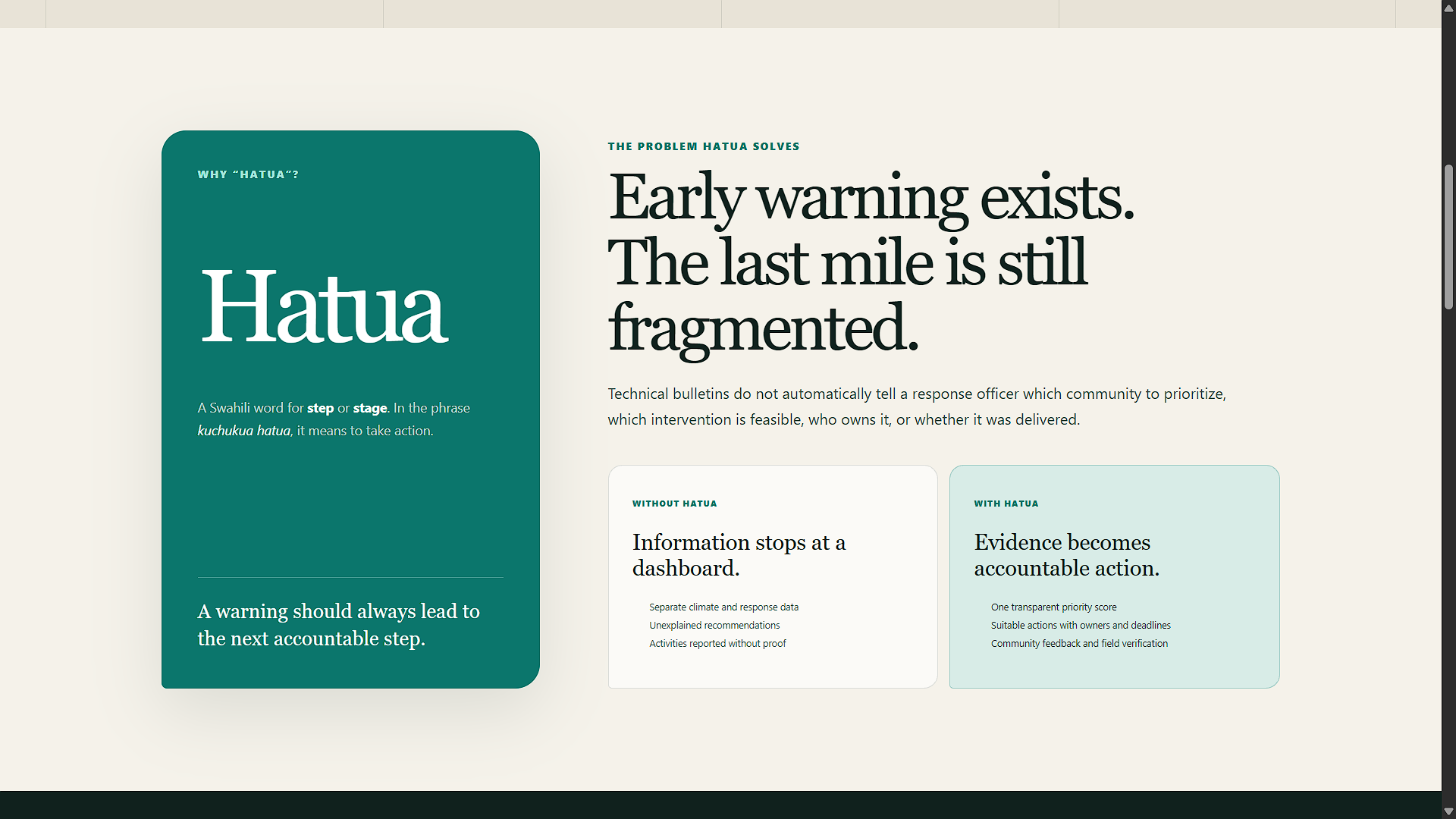
That inspired us to build Hatua, the Kiswahili word for "Action."
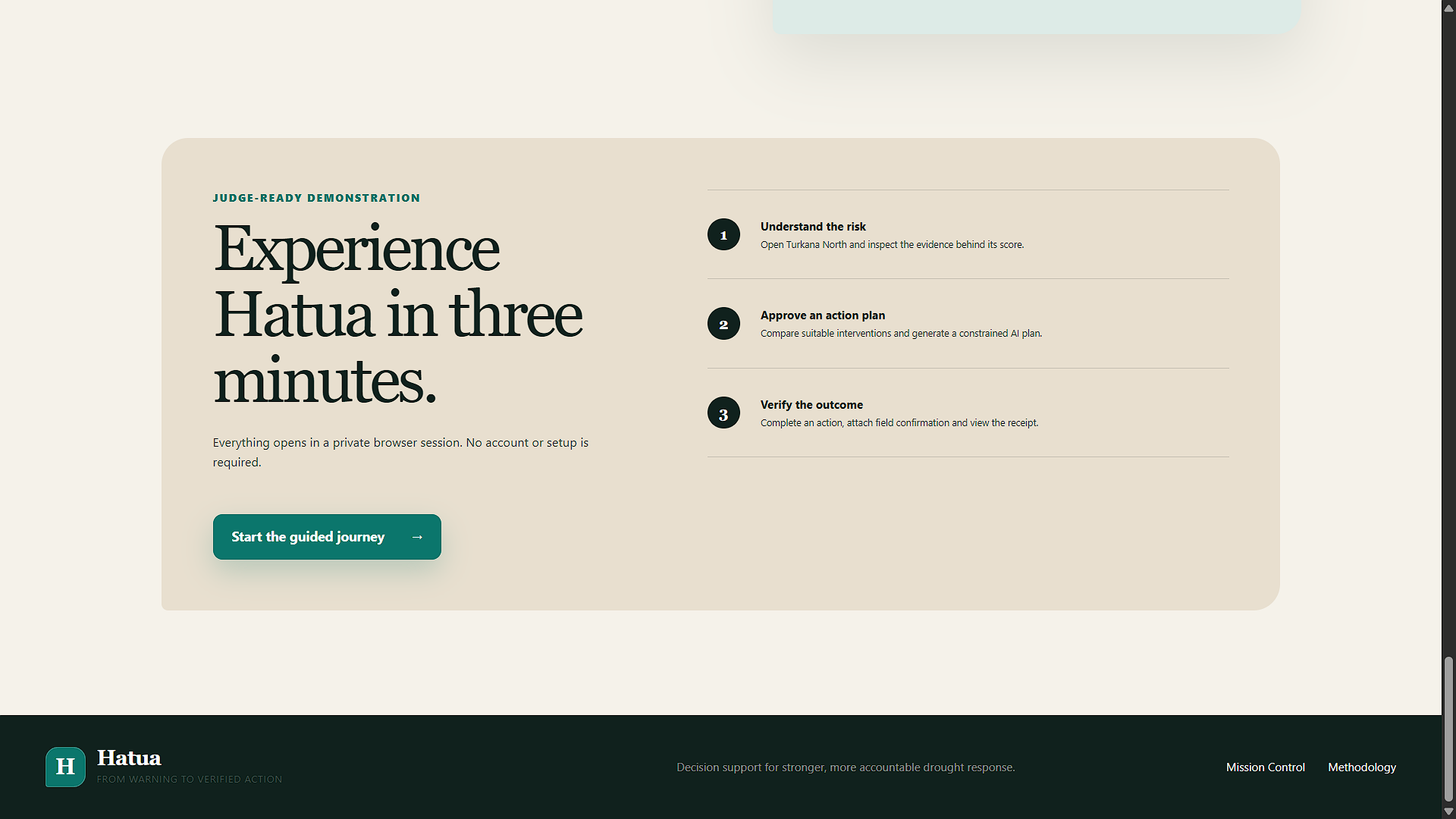
Hatua transforms early warnings into transparent, explainable, and accountable humanitarian action.
What it does
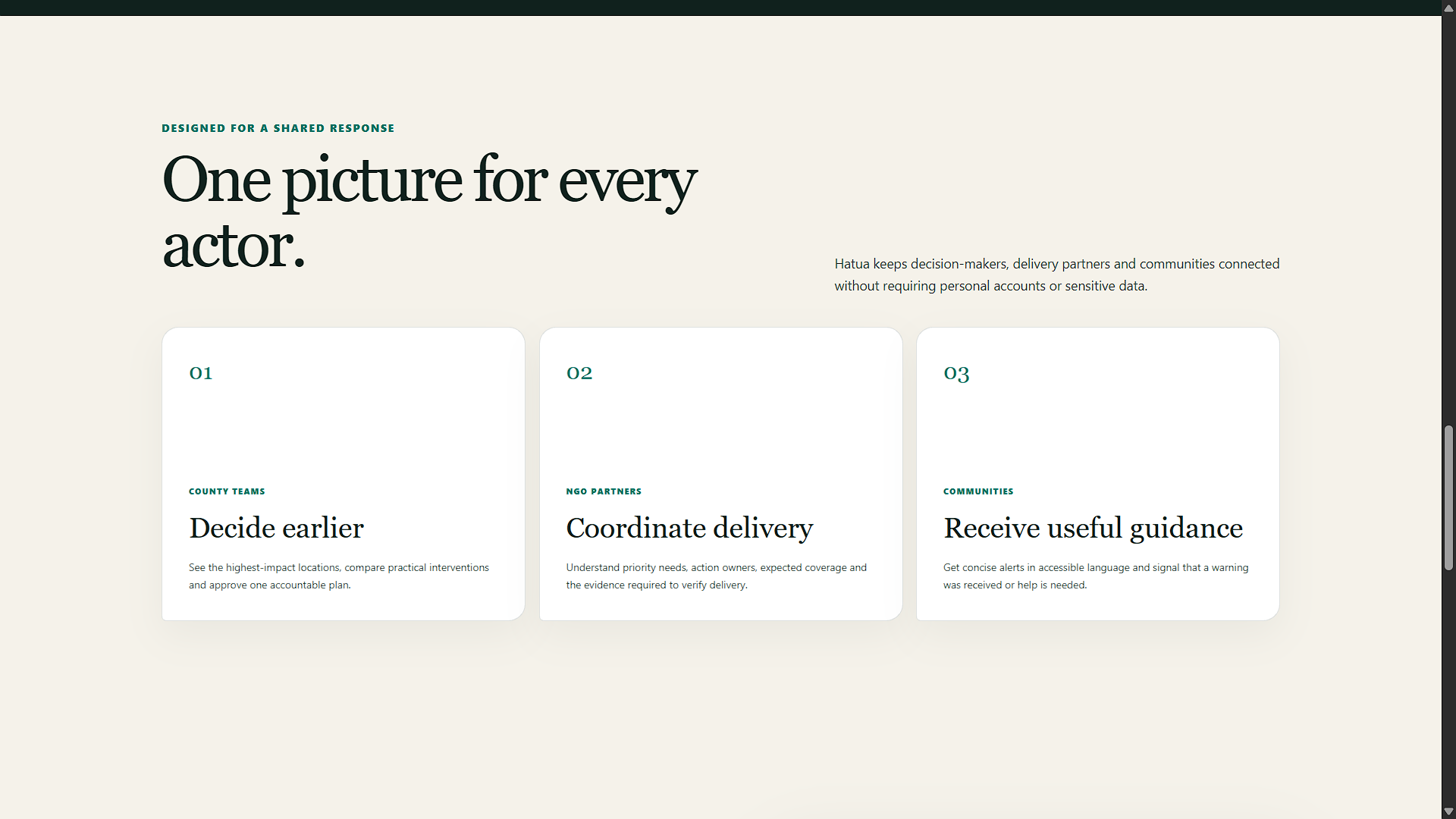
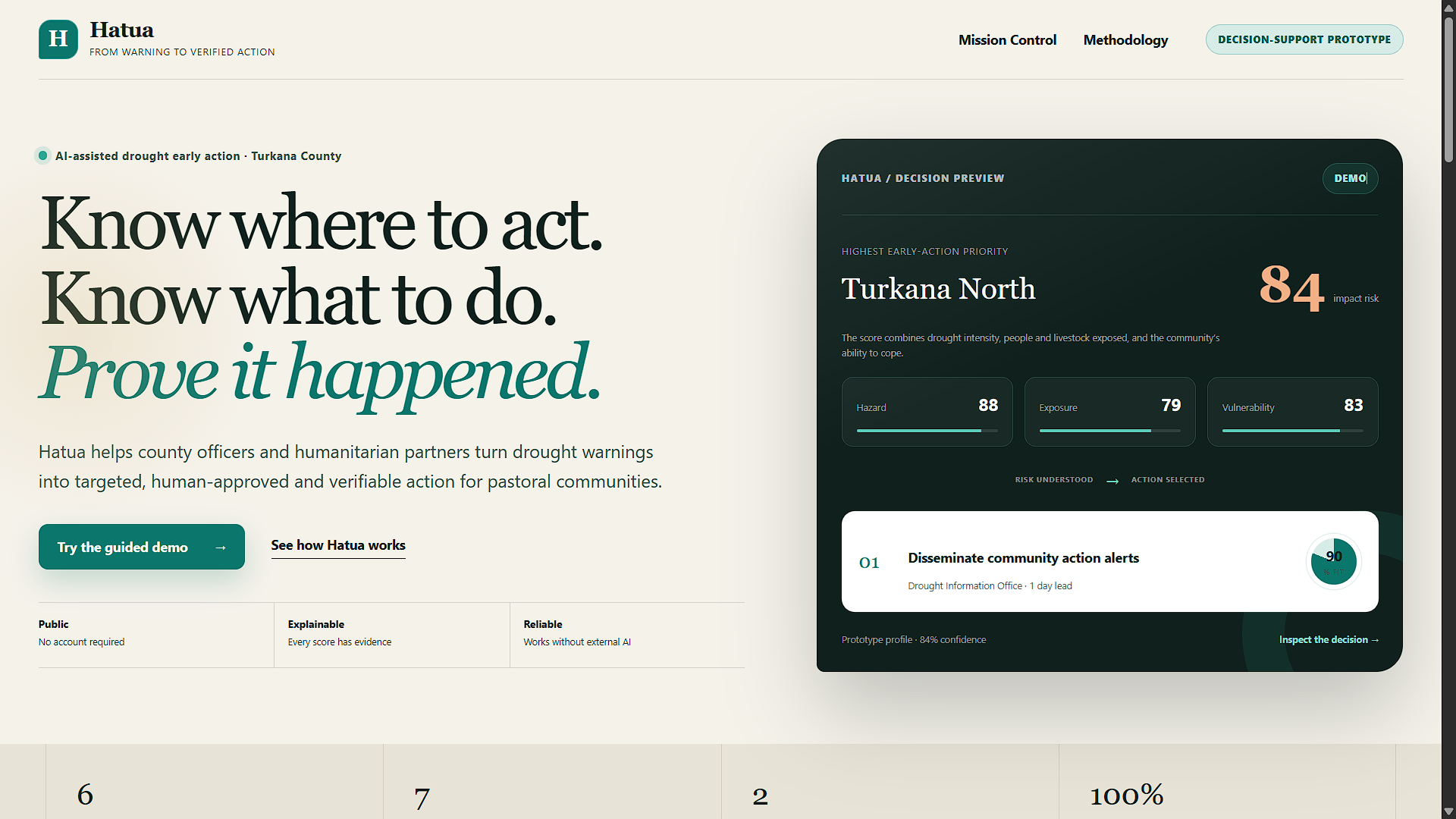
Hatua is an AI-assisted early warning and early action platform that helps governments and humanitarian organizations prioritize where to respond and what to do next.
It combines:
- 🌧️ Hazard data
- 👥 Population exposure
- 💧 Water availability
- 🐄 Livestock pressure
- ⚠️ Community vulnerability
- 🏥 Response capacity
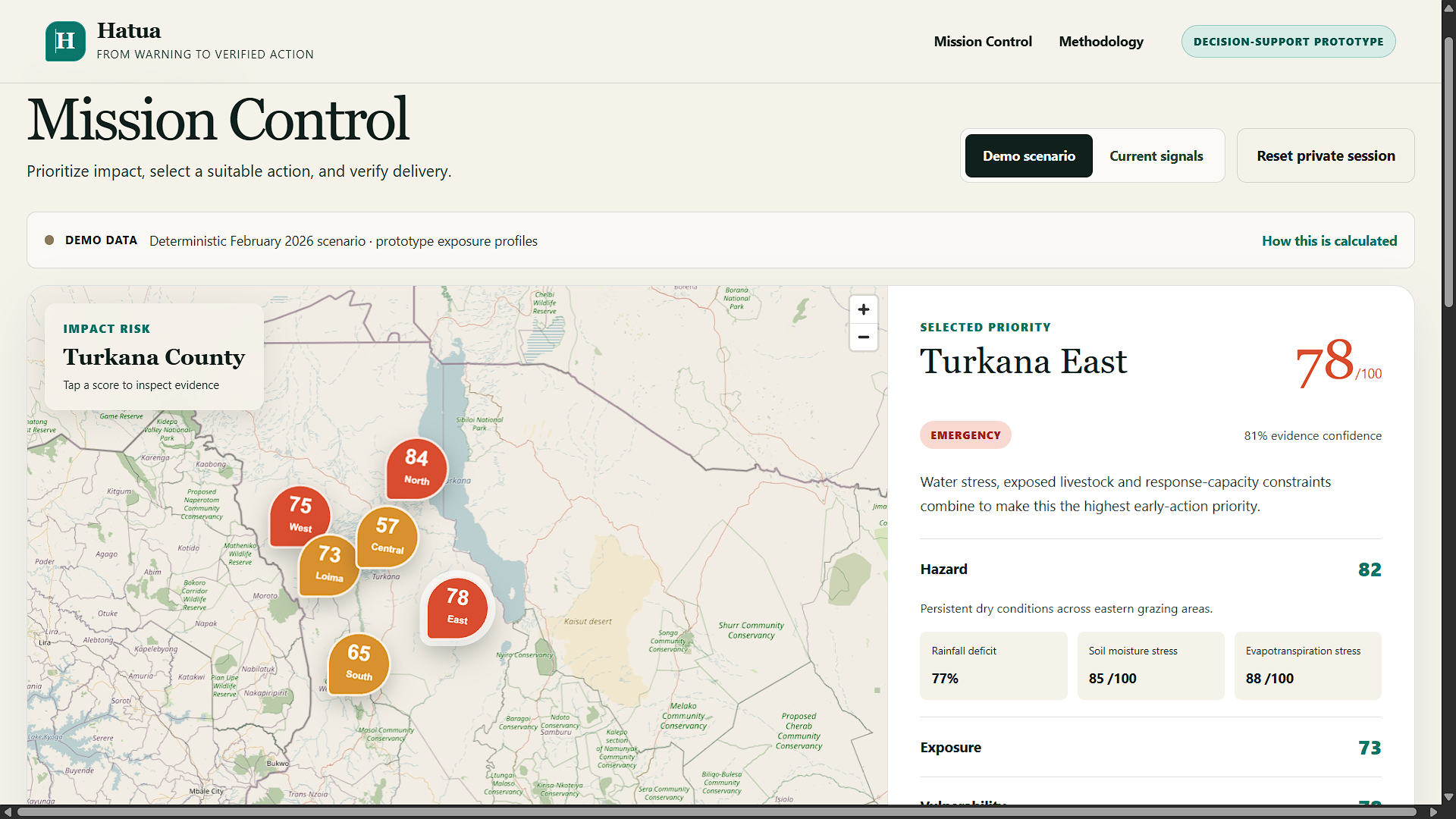
The platform generates an explainable 0–100 Impact-Risk Score for every location.
For each high-risk area, Hatua:
- Explains why the location is at risk.
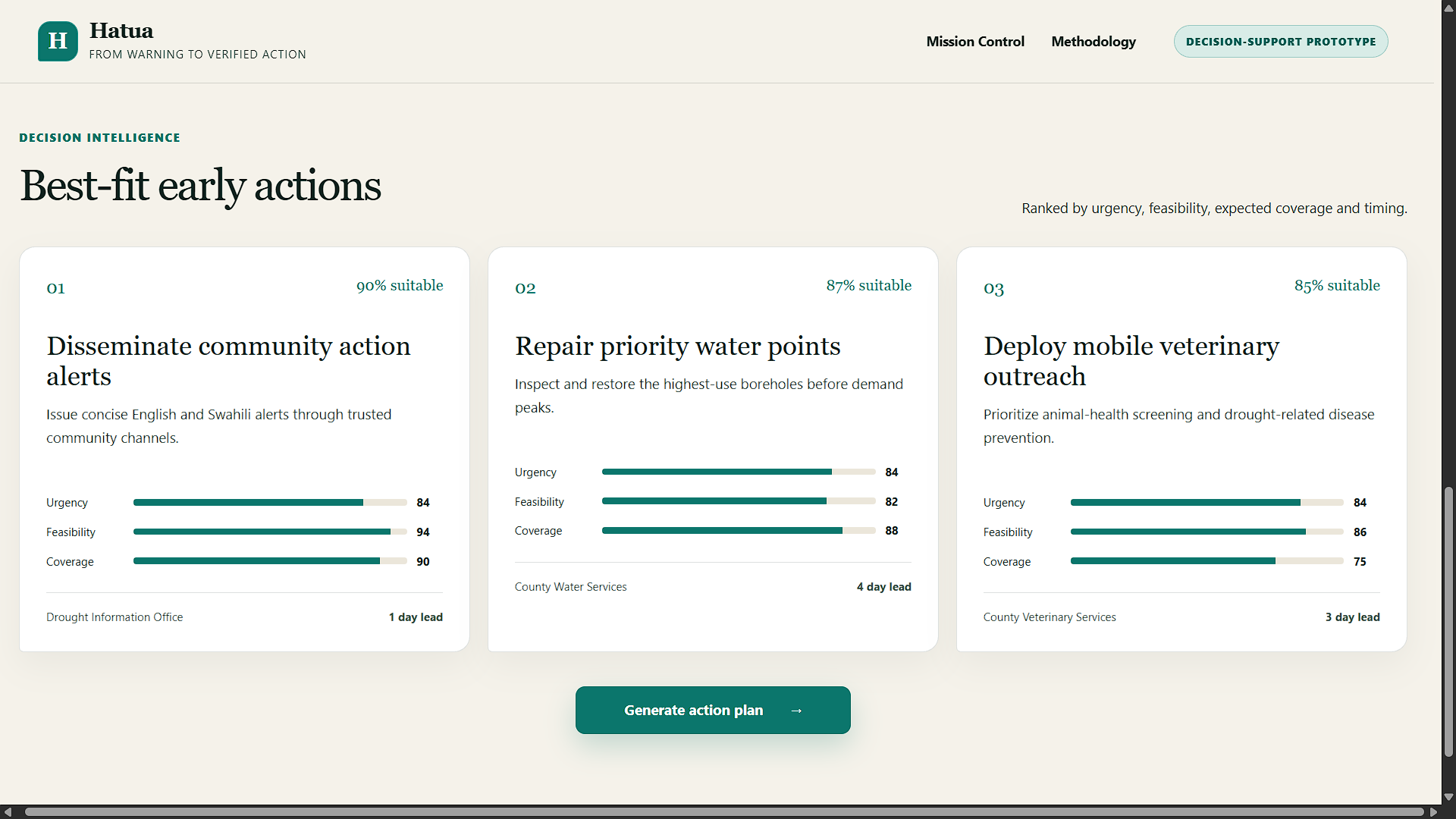
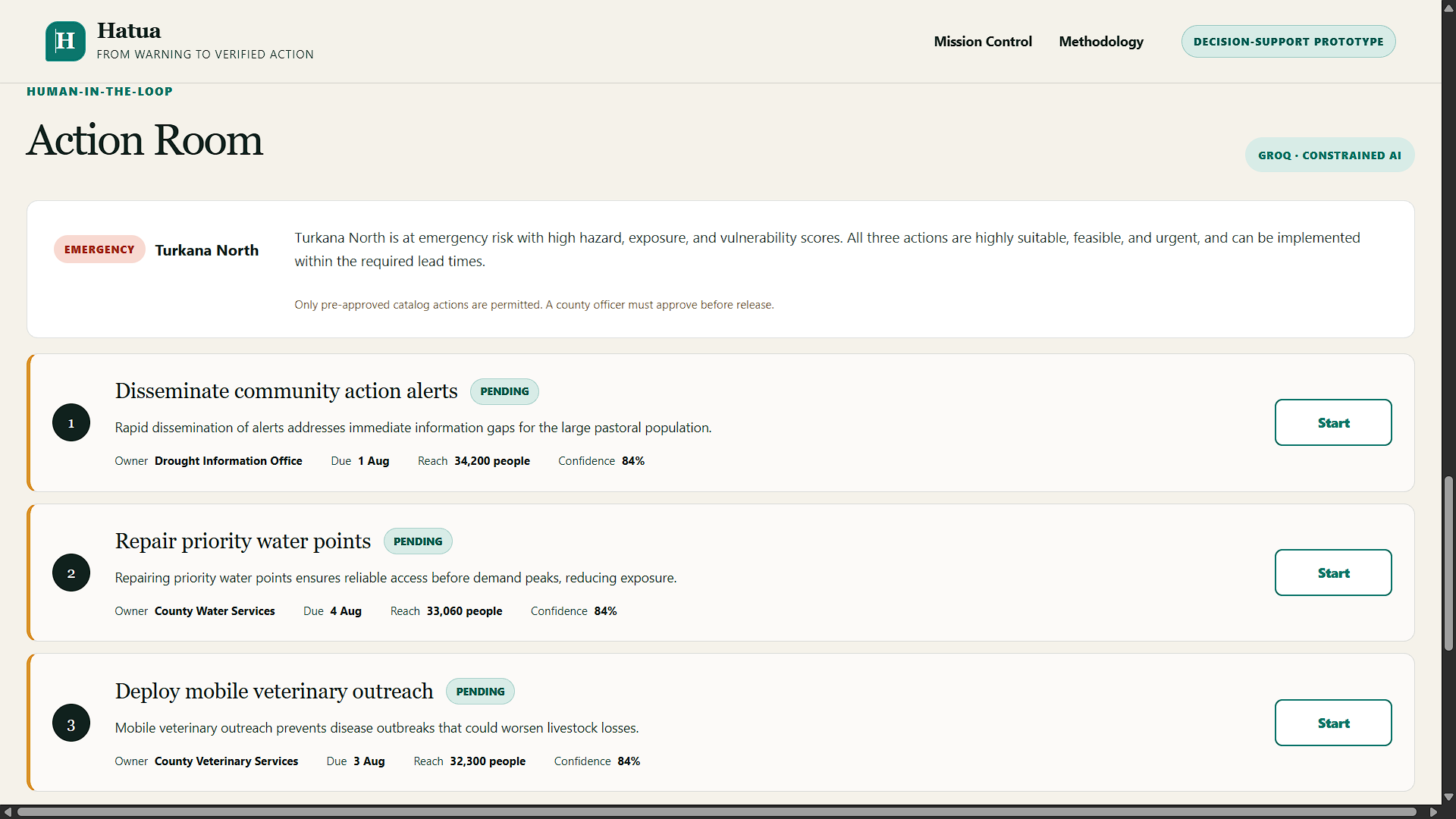
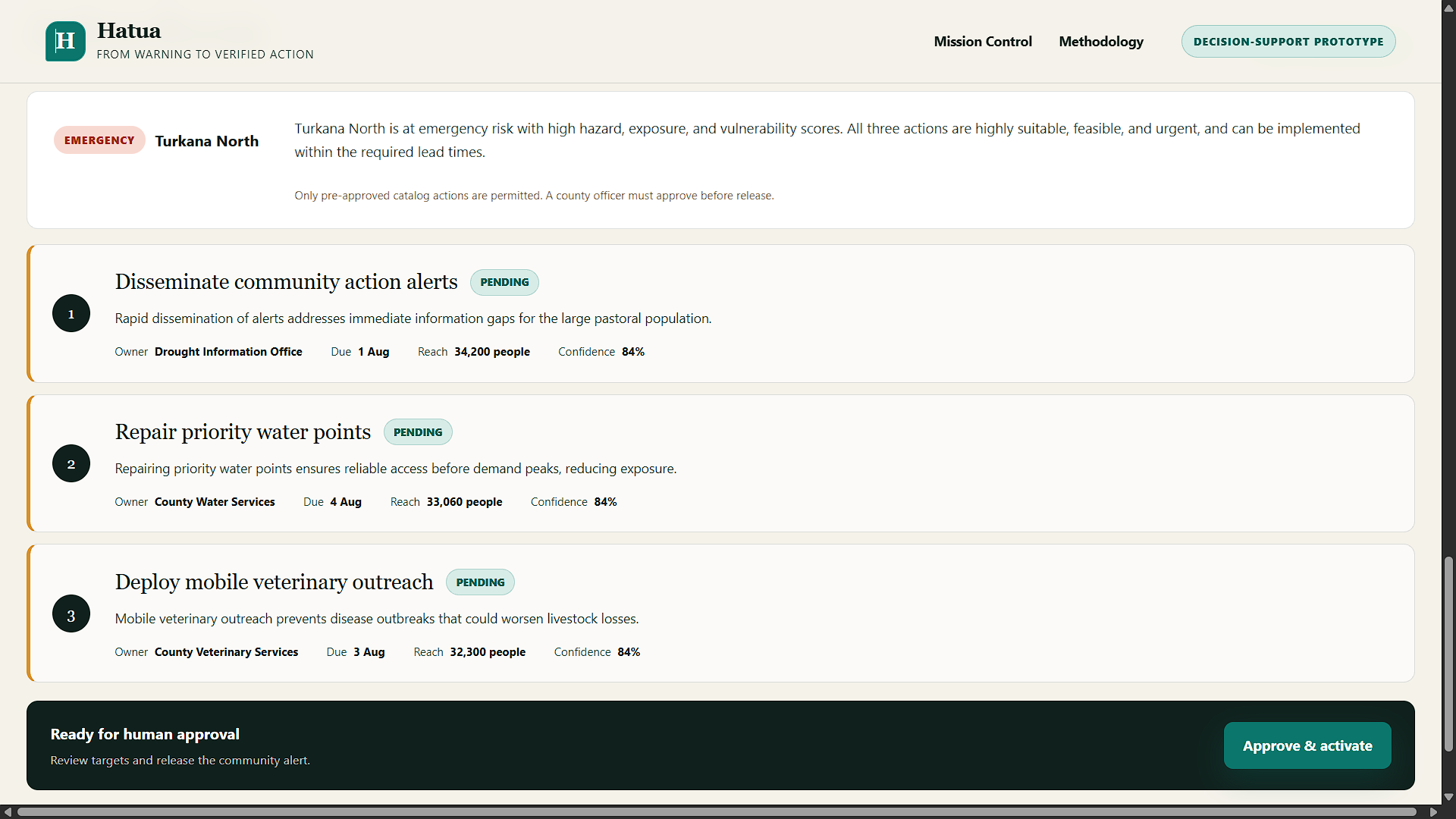
- Recommends the three most suitable approved interventions.
- Requires human approval before any action.
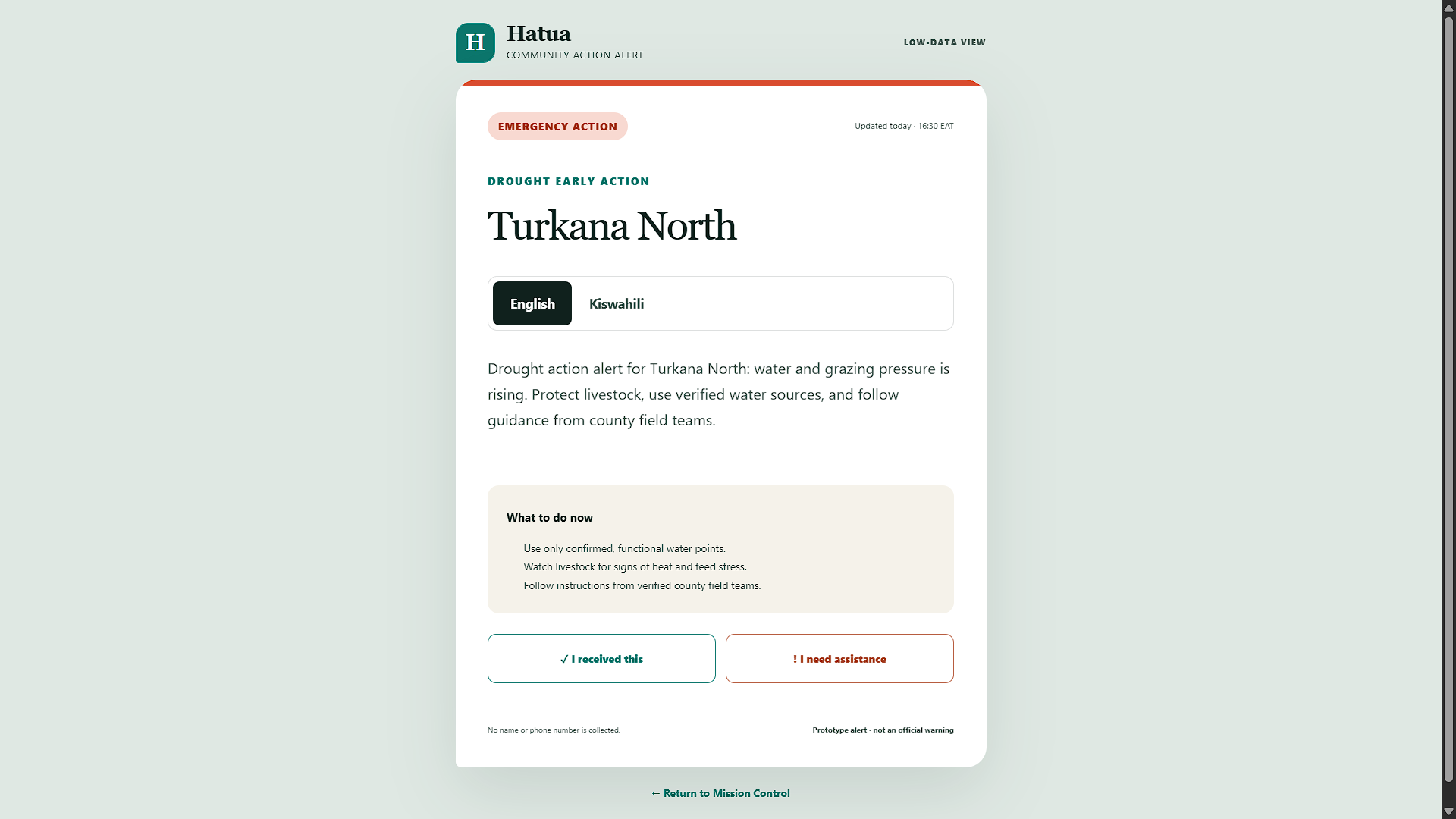
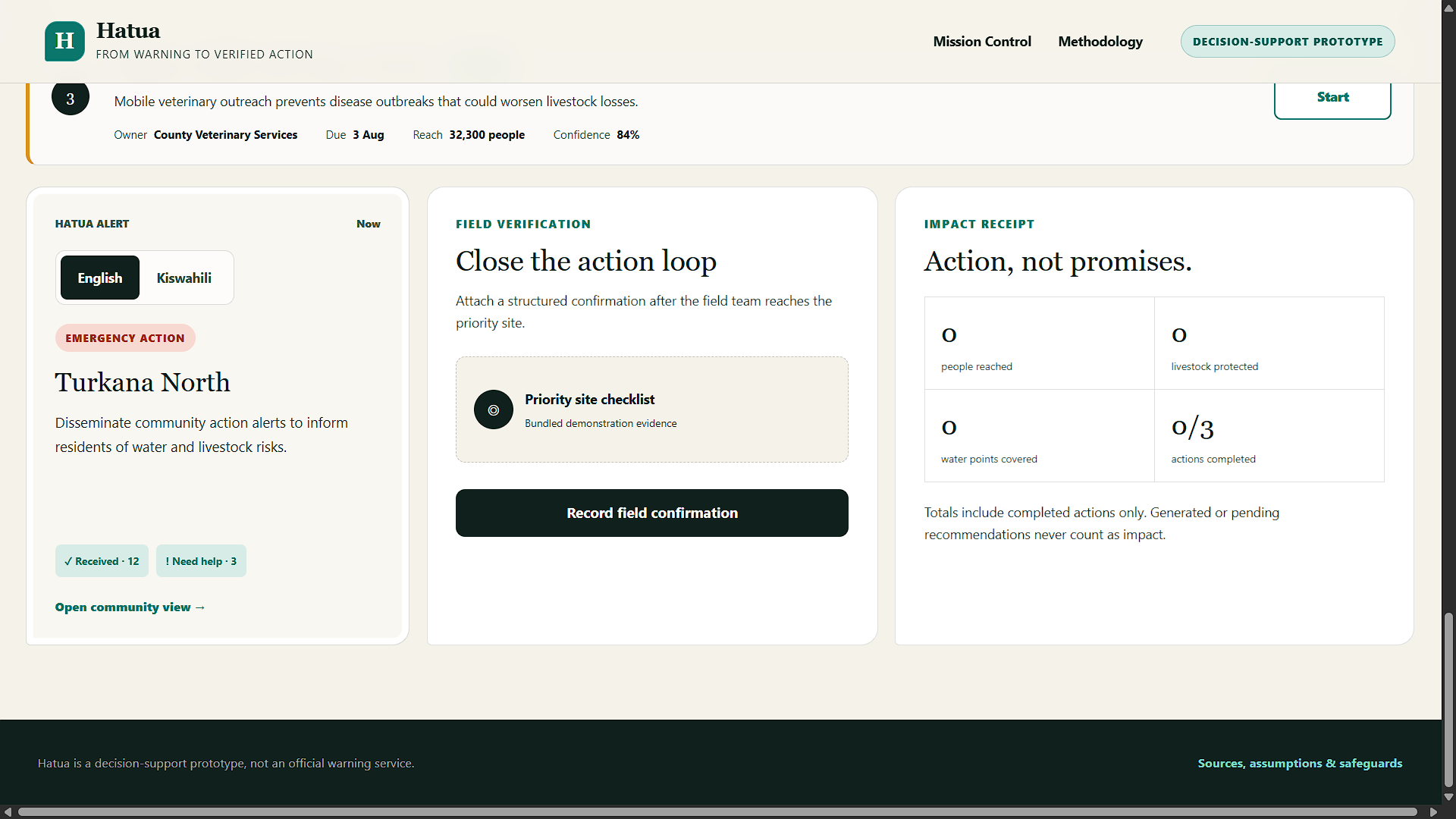
- Generates alerts in English and Kiswahili.
- Tracks every intervention from planning to completion.
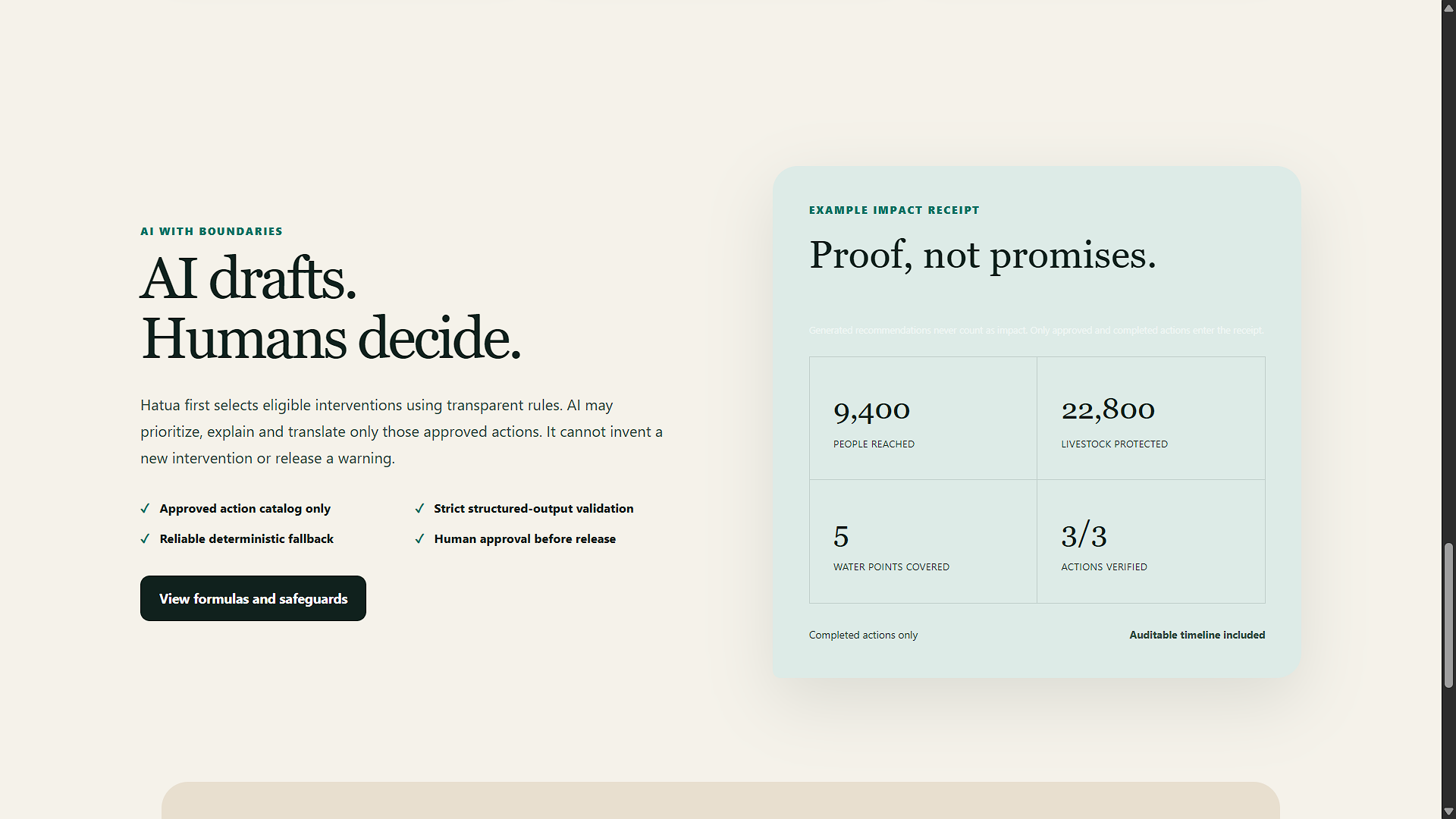
- Produces an Impact Receipt showing verified outcomes.
The result is:
⚡ Faster response
📍 Better prioritization
🤝 Accountable decision-making
🌍 Improved coordination
📈 Measurable humanitarian impact
User Journey
📌 User Flow Diagram
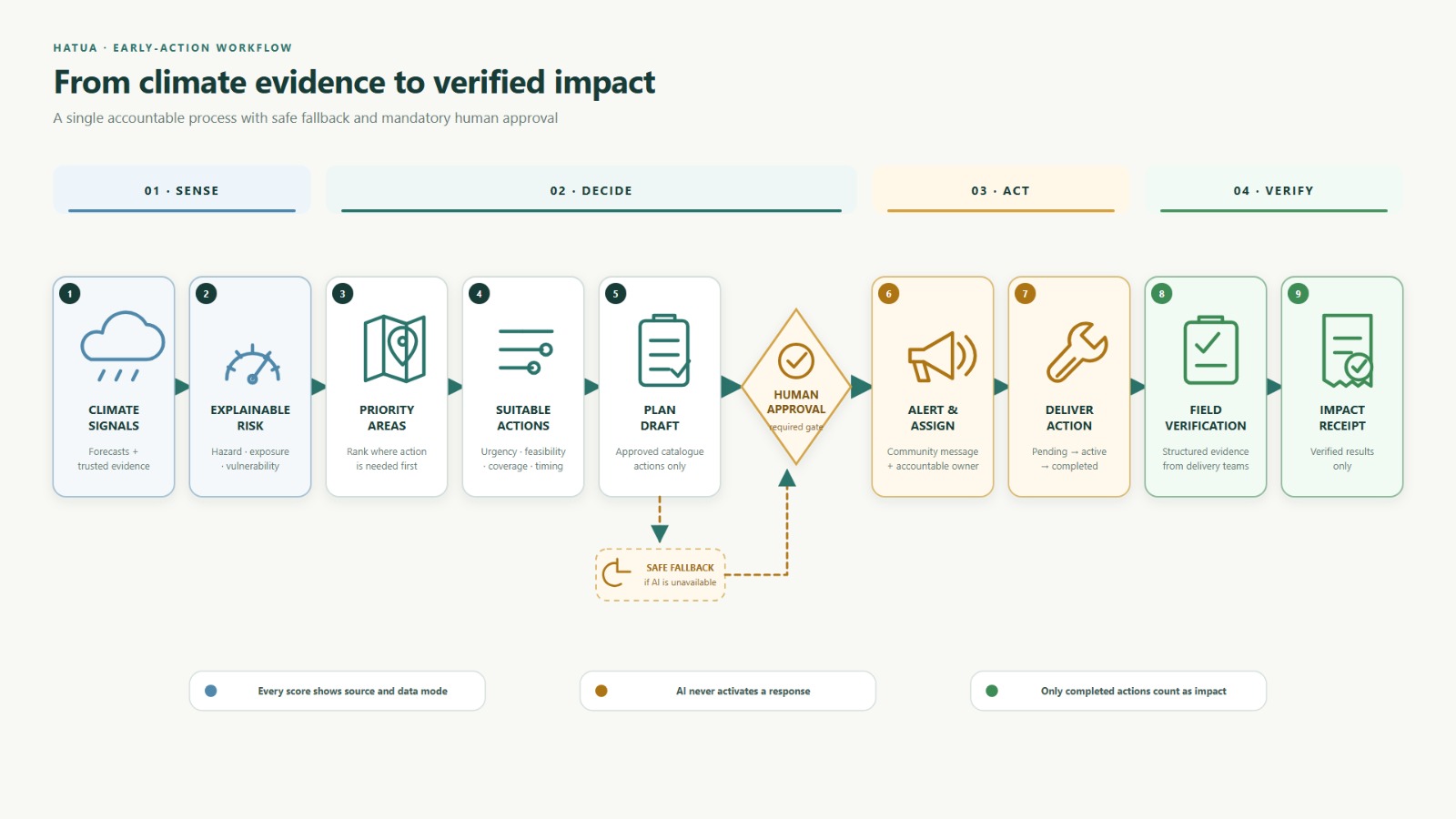
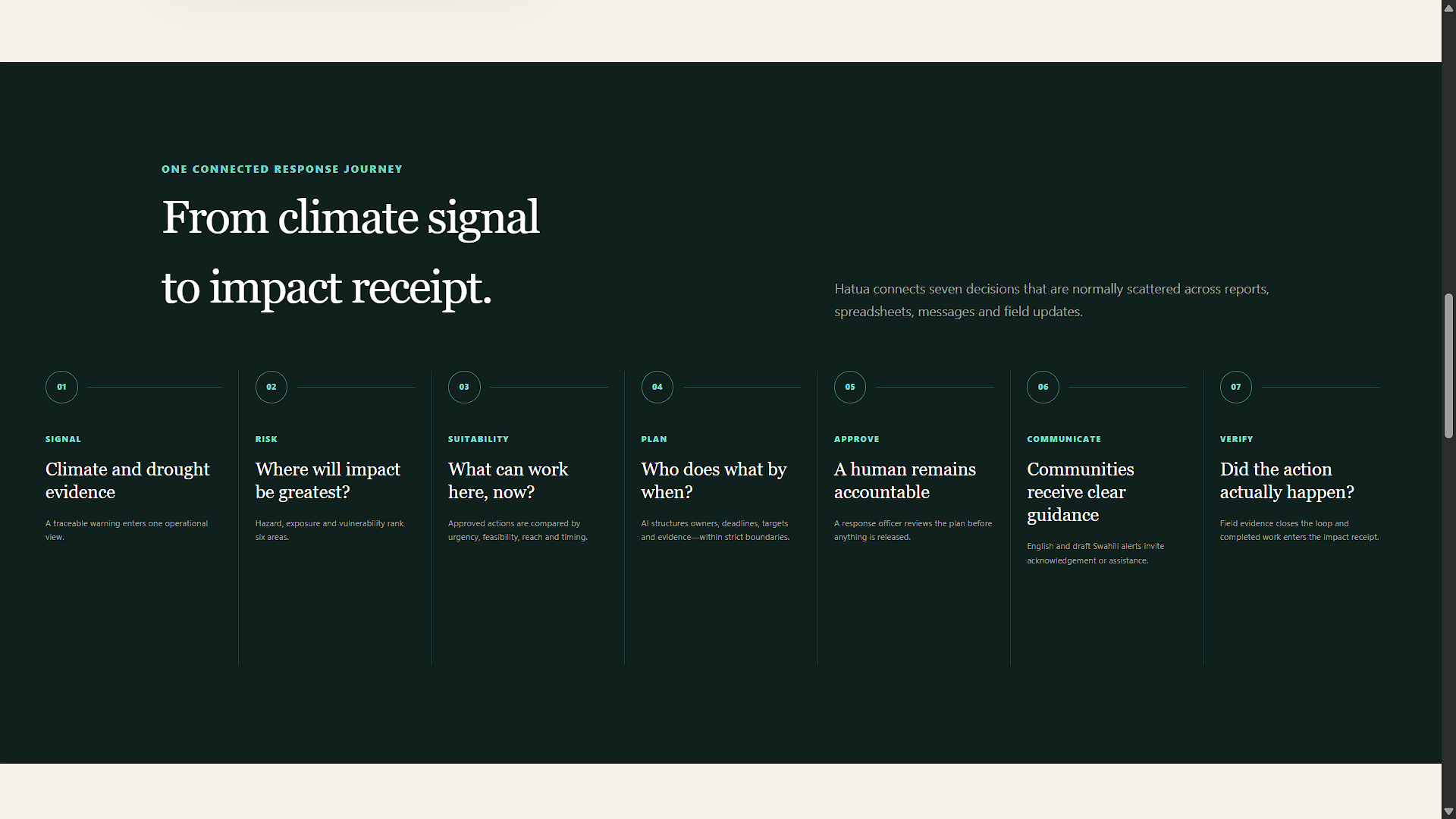
The workflow consists of:
- Collect climate and vulnerability data.
- Calculate the Impact-Risk Score.
- Prioritize high-risk communities.
- Recommend the best interventions.
- Officer reviews and approves the plan.
- Generate multilingual alerts.
- Track field execution.
- Verify completion.
- Generate an Impact Receipt.
The result is:
🚨 Earlier action
🎯 Better resource allocation
👨👩👧 Better community protection
📊 Complete transparency
✅ Verified humanitarian outcomes
How we built it
🏗️ Architecture Diagram
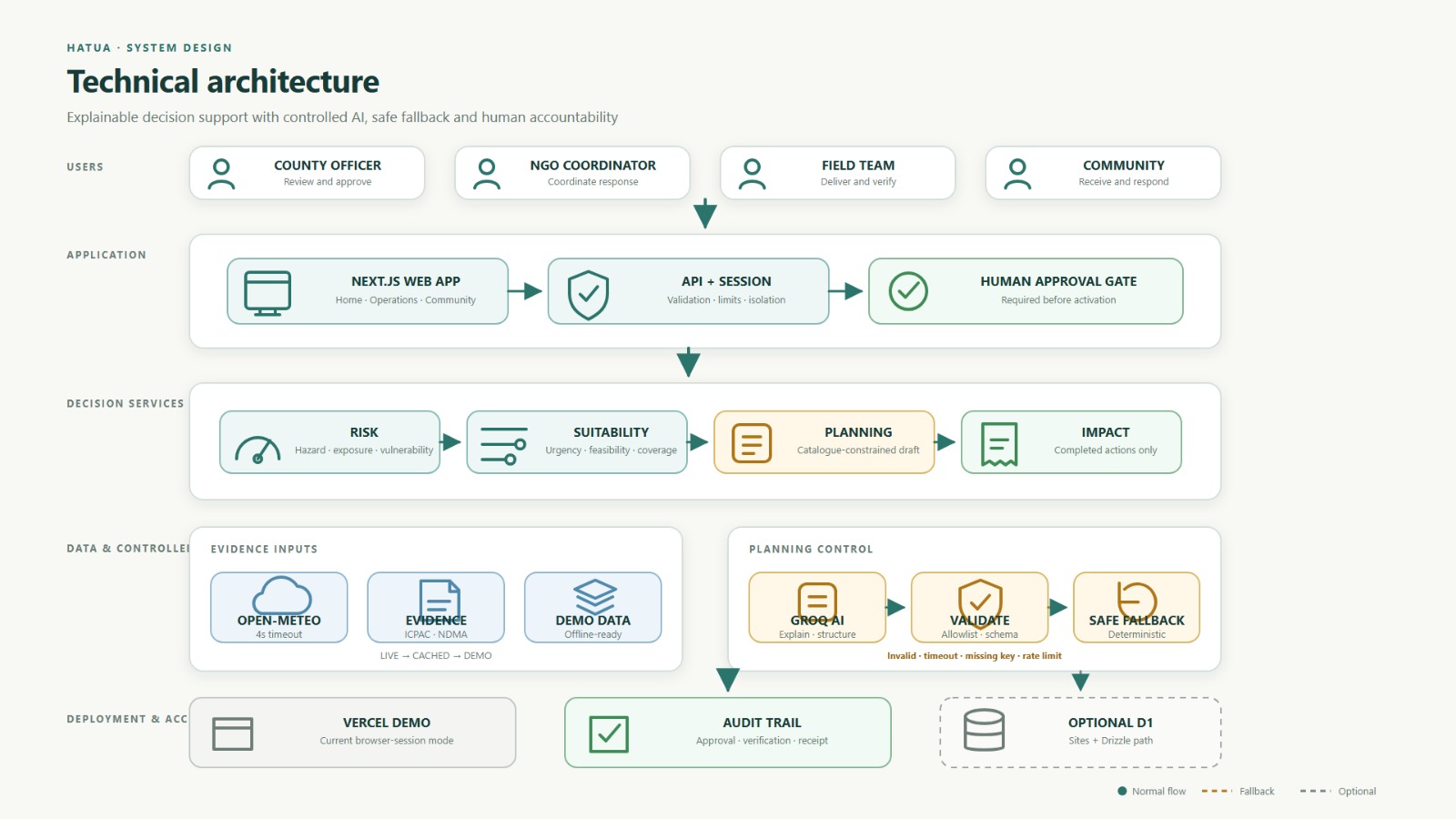
Hatua combines climate observations, hazard forecasts, vulnerability indicators, exposure data, and operational capacity into a single explainable decision-support platform.
Instead of allowing AI to invent actions, it only explains and organizes approved humanitarian interventions, ensuring every recommendation remains transparent and accountable.
Human approval is required before any response is issued.
The platform also supports multilingual communication in English and Kiswahili and remains reliable through Live, Cached, and Deterministic Fallback modes when connectivity or external APIs fail.
Every completed intervention is verified through field confirmation and converted into an Impact Receipt, allowing organizations to measure real humanitarian impact instead of simply tracking activity.
Challenges we ran into
The biggest challenge was transforming fragmented climate and vulnerability data into a single explainable risk score without creating another black-box AI system.
We also had to ensure AI remained safe by restricting it to approved interventions while keeping humans responsible for every decision.
Finally, we built reliable fallback mechanisms so the platform continues supporting emergency response even when connectivity or APIs fail.
Accomplishments that we're proud of
We're proud that Hatua closes the gap between early warning and early action.
The explainable Impact-Risk Score helps responders understand both where intervention is needed and why.
Our human-centered AI approach, multilingual alerts, verified Impact Receipts, and resilient architecture make Hatua feel like a production-ready humanitarian decision-support platform rather than a hackathon prototype.
What's next for Hatua
We plan to expand Hatua into a complete decision-support platform for governments and humanitarian organizations across the IGAD region.
Future work includes integrating satellite imagery, additional real-time climate data, more local languages, mobile field applications, and deeper integration with national emergency management systems.
Our vision is simple: ensure every early warning becomes timely, accountable, and measurable humanitarian action.
Hatua transforms "we issued a warning" into "we know where to act, what to do, who is responsible, and whether the action actually happened."
Additional Resources
📹 Demo Video
💻 GitHub Repository
https://github.com/JarviS6051/hatua-early-action
🧭 User Flow Diagram
🏗️ Architecture Diagram
Built With
- ai
- groq
- next
- node.js
- open-metro
- openstreetmap
- react-19
- typescript
- vercel
- zod

Log in or sign up for Devpost to join the conversation.