Inspiration
🌿 HappyGreen — Turning Recycling into an Adventure
🌿 HappyGreen — Turning Recycling into an Adventure
Inspiration
In Peru, less than 2% of solid waste is properly recycled. We saw kids and adults ignoring recycling not because they don't care, but because it's boring and confusing. We asked: what if recycling felt like playing DragonCity?
That question became HappyGreen.
What We Learned
- Computer vision can identify waste types in real conditions
- Gamification dramatically increases habit formation
- Connecting collectors and citizens digitally solves a real logistics problem in Latin American cities
- Building for low-tech users requires radical simplicity
How We Built It
Stack: React + TypeScript + Tailwind CSS + Supabase + Phaser.js + Gemini AI Vision API
Key modules:
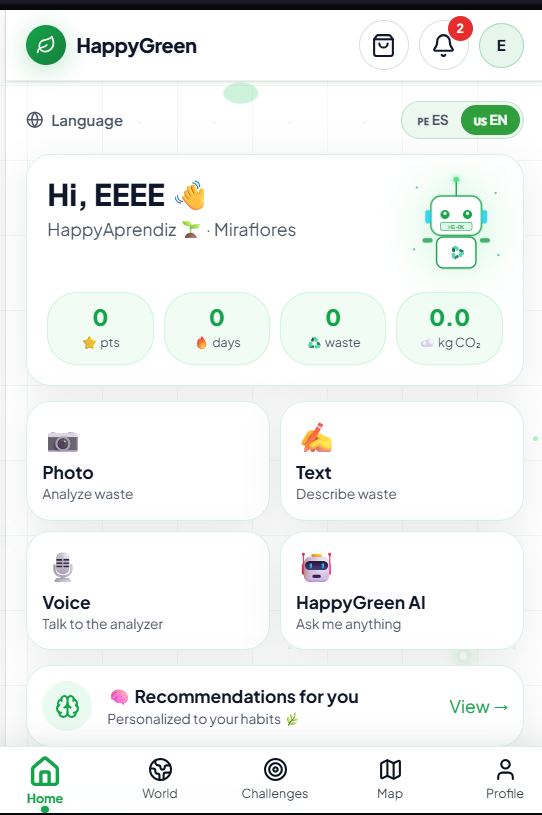
- 🤖 AI Scanner — Gemini 2.0 Flash identifies waste from photos and gives recycling instructions + videos
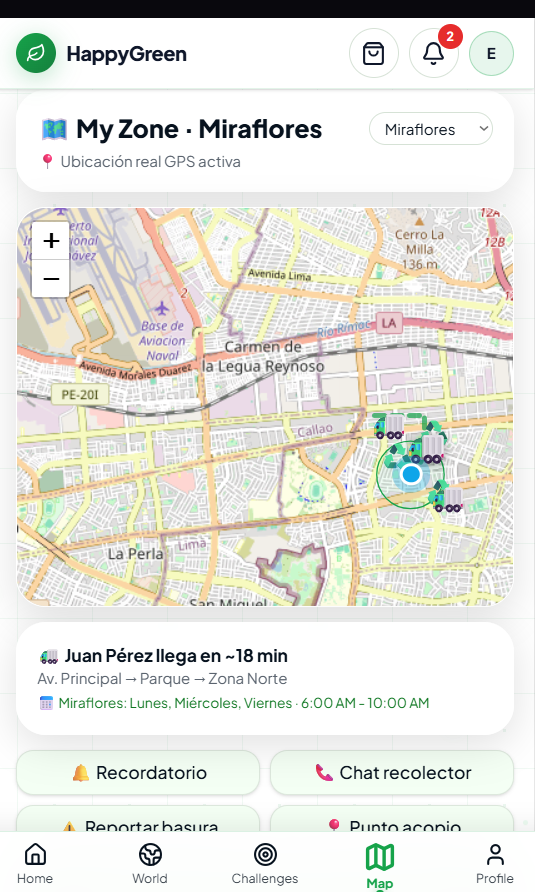
- 🗺️ GPS Map — Real Leaflet map showing collectors, collection points and routes in real time
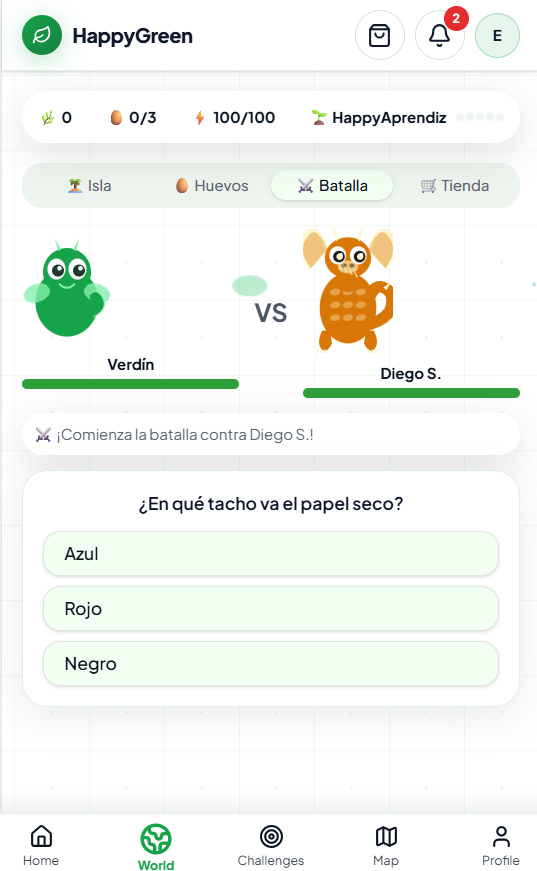
- 🐉 EcoDragons — Scan waste → get a dragon themed after that material → battle other users
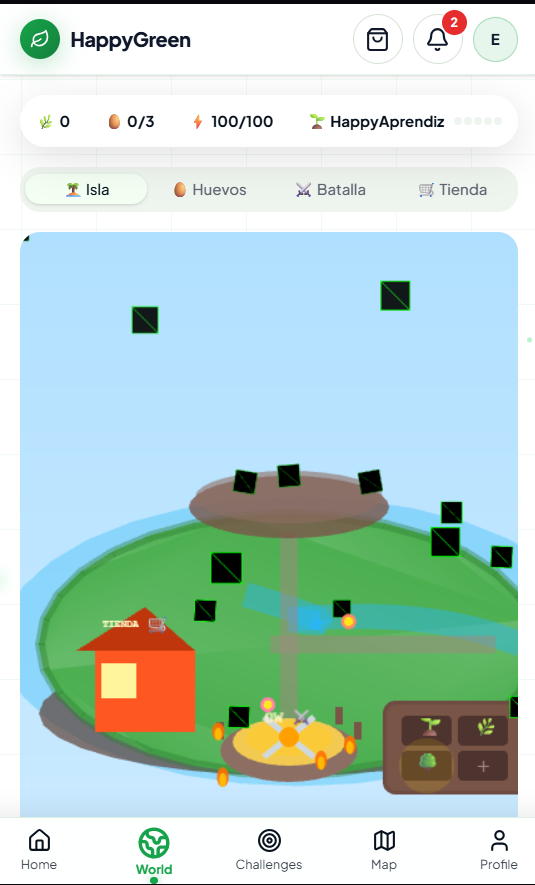
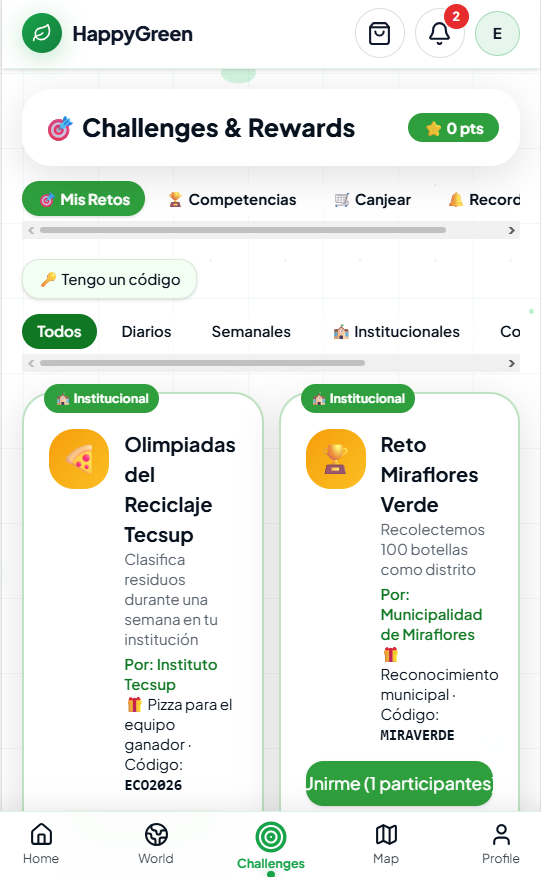
- 🌍 MyWorld — Island-building game powered by recycling points (like DragonCity but eco-themed)
- 🔄 HappySwap — Marketplace to exchange unused items
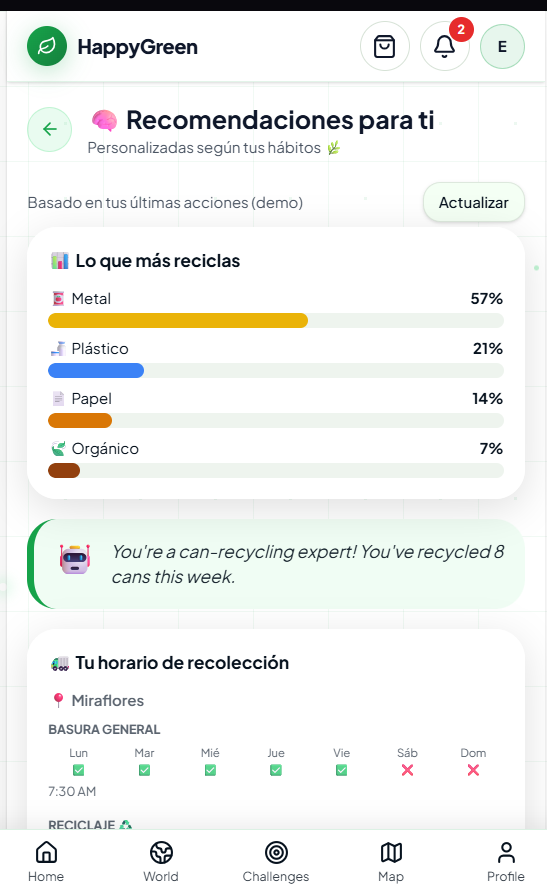
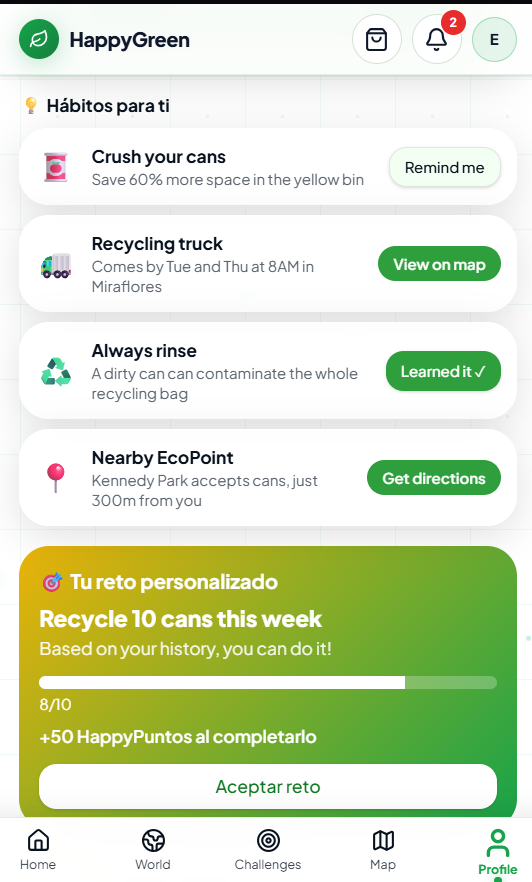
- 📊 Habit AI — Personalized recycling recommendations based on user behavior patterns
Challenges We Faced
Biggest challenge: Making the AI reliably identify waste in real-world conditions (bad lighting, mixed objects, blurry photos). We solved this with a smart fallback database that always returns a useful result.
Second challenge: Building a game that feels professional without a game studio. We used Phaser.js + Canvas-generated assets to create fluid 60fps animations.
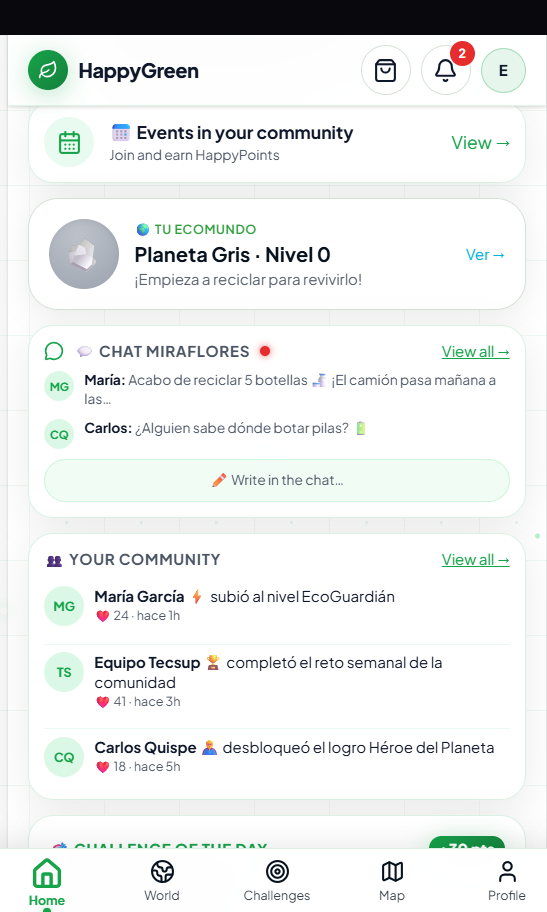
Third challenge: Connecting 5 different user types (Citizens, Collectors, Schools, Municipalities, Companies) in one cohesive experience — each with their own dashboard and permissions.
Impact
"Every scan teaches. Every point motivates. Every dragon represents real waste recycled."
HappyGreen covers all 9 challenges of QuipuSoft 2026: automatic waste identification, educational AI agent, gamification, local data integration, habit personalization, environmental impact measurement, inclusive design, robust computer vision, and community scalability.
Built for Peru. Designed for the world. 🌎
Built With
- canvas-api
- claude-code
- framer-motion
- gemini-2.0-flash-api-(vision-ai)
- leaflet.js
- lovable
- node.js
- openstreetmap
- phaser.js
- postgresql
- react
- supabase
- tailwind-css
- typescript
- vite

Log in or sign up for Devpost to join the conversation.