Inspiration
We wanted to bring the excitement of GeoGuessr into the real world and combine it with the social and outdoor aspects of games like Pokémon Go. The idea was to create something that gets people outside, exploring their neighborhoods, and competing with friends in a fun and interactive way.
Another motivation was our own campus experience. We wanted to create something fun that would help us and others remember how to get around campus, turning exploration into a game instead of a chore.
What it does
Guessr Go is a mobile game with two main modes:
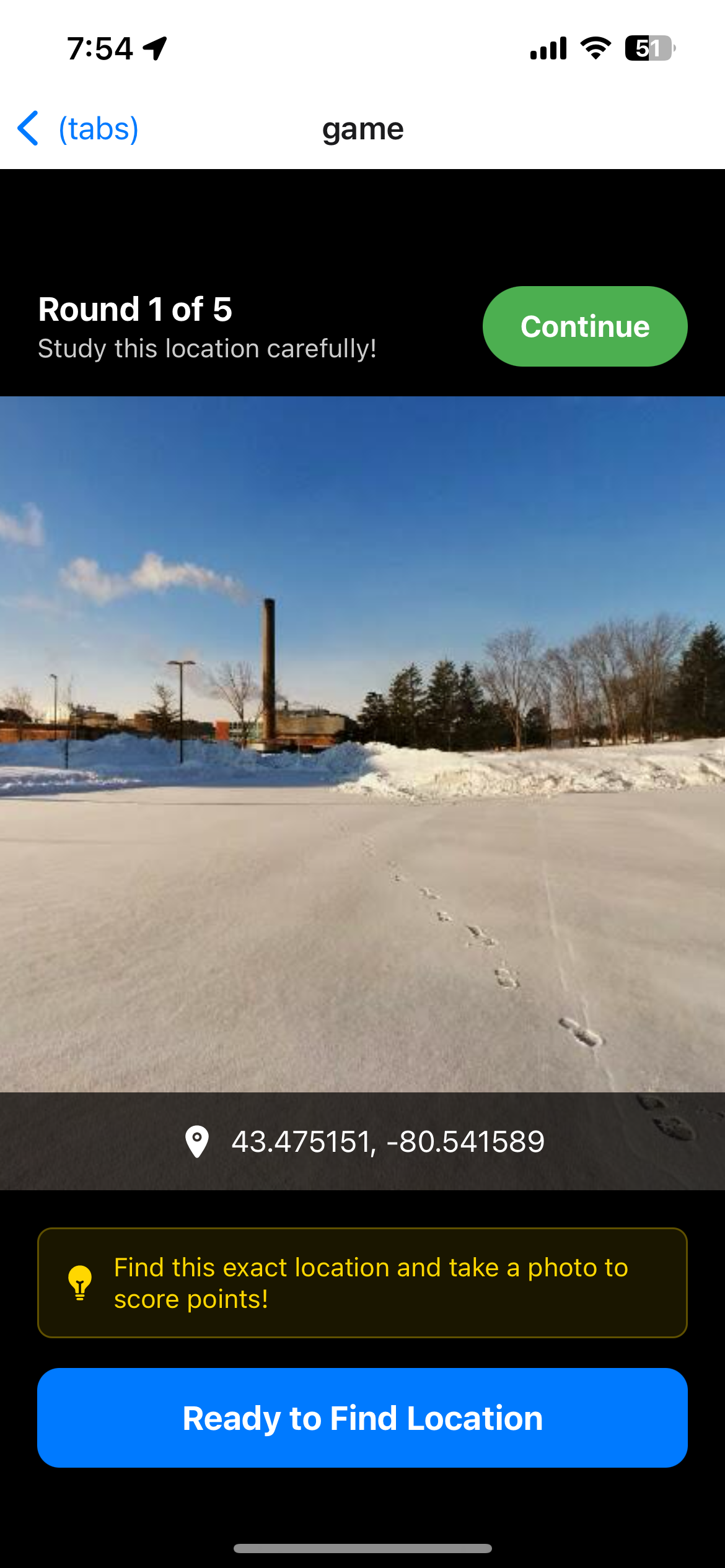
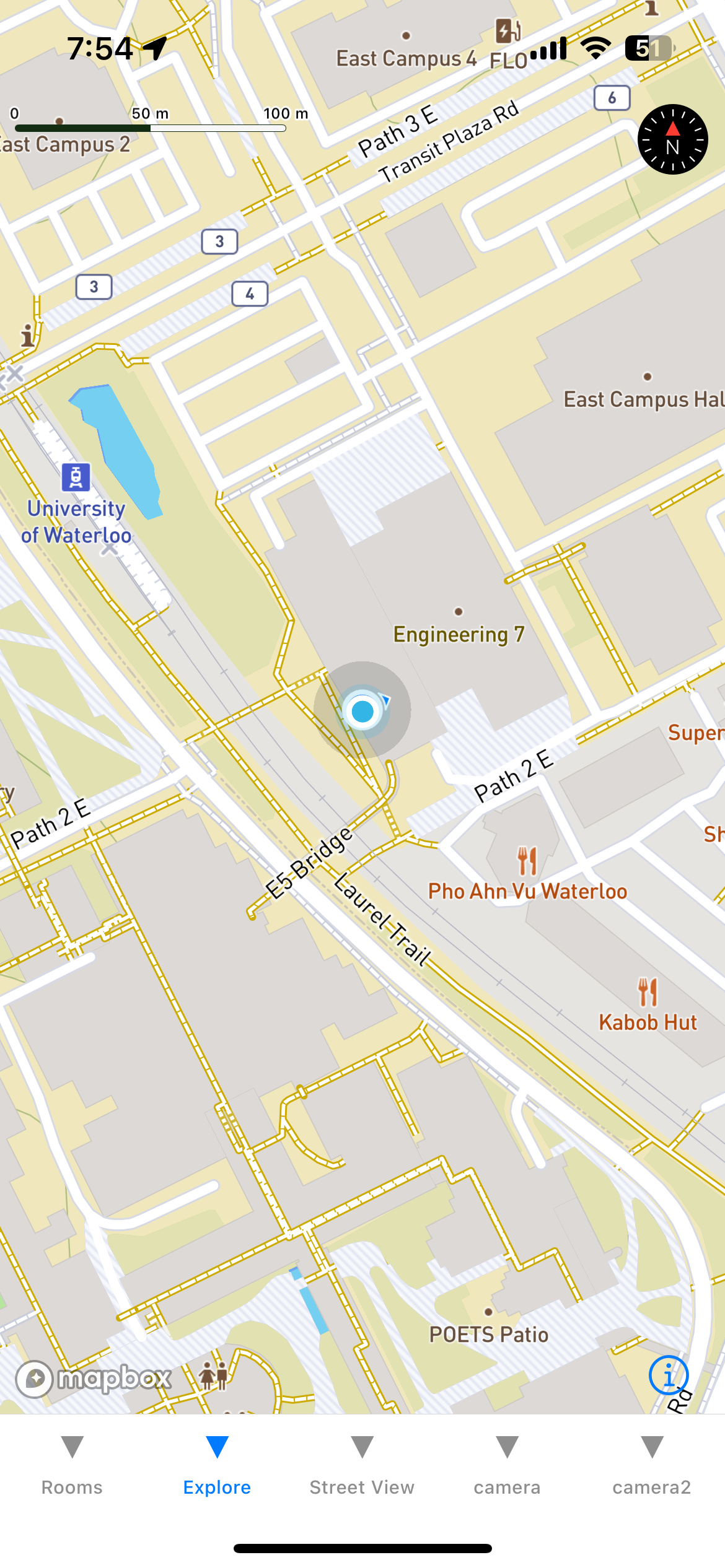
- GeoGuessr Mode: Players are given a Google Street View image from a location up to ~45km away. Their goal is to find the real location as quickly and accurately as possible, judged by image similarity and distance to the actual spot.
- Scavenger/Party Mode: A host hides virtual geocaches (simple drawings or markers) in real locations. Friends compete to be the first to physically reach and uncover them.
Both modes encourage outdoor activity, social play, and a new awareness of local geography.
How we built it
We developed the app using React Native with Expo, leveraging the Google Street View API for images. While we initially looked at existing packages for maps and location services, many either had limited functionality or required native code, which worked against the cross-platform nature we wanted. To solve this, we wrote custom helper libraries and unique solutions, building up the core mechanics ourselves.
We used Firebase to handle authentication, real-time multiplayer infrastructure, and cloud storage. For testing and distribution, we deployed early builds on TestFlight so friends and peers could try out the game during development.
Challenges we ran into
- The React Native ecosystem was smaller than expected, especially around maps and advanced location features.
- Many libraries forced us into native code, limiting Expo’s portability.
- Designing fair and efficient image similarity checks between reference photos and user submissions was tricky.
- Balancing Firebase’s real-time features with performance on different devices took iteration.
Accomplishments that we're proud of
- We built a fun, playable game that people actually enjoy in both solo and party settings.
- We solved technical hurdles by creating our own lightweight helper libraries instead of relying on bloated or restrictive third-party tools.
- The app already demonstrates value outside of pure gaming — for example, as a tool for:
- Local exploration
- Tourism and guided experiences
- Educational geography lessons
- Team-building activities
- Helping students or newcomers learn to navigate campuses and communities
- Local exploration
What we learned
- Building on React Native requires creativity when existing tools don’t meet your needs.
- Outdoor, location-based games can be designed in ways that are both social and accessible.
- Firebase provides a strong backbone for multiplayer and real-time features when used carefully.
- Combining elements from different genres (GeoGuessr + Pokémon Go) creates new and exciting player experiences.
What's next for Guessr Go
- Expanding multiplayer support in GeoGuessr mode, reusing the real-time infrastructure from our scavenger hunts.
- Adding augmented reality features, like AR glasses integrations, to make finding locations and geocaches even more immersive.
- Exploring more creative modes that use the same tech foundation to keep gameplay fresh.
- Scaling our TestFlight distribution into a wider beta to refine user feedback and game balance.


Log in or sign up for Devpost to join the conversation.