-
-
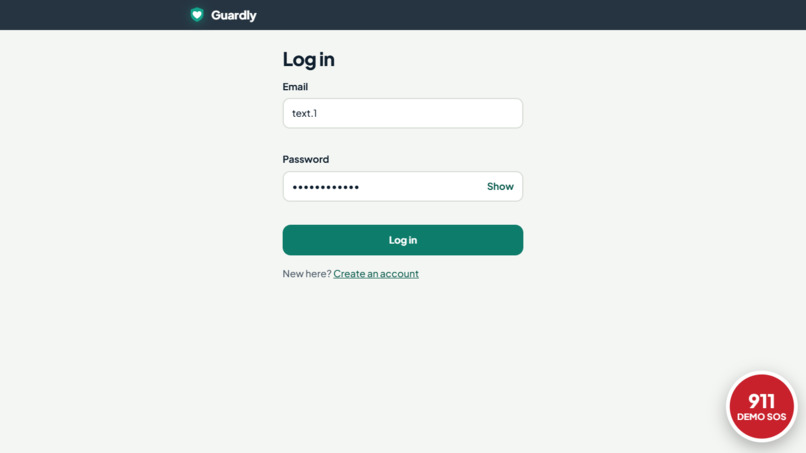
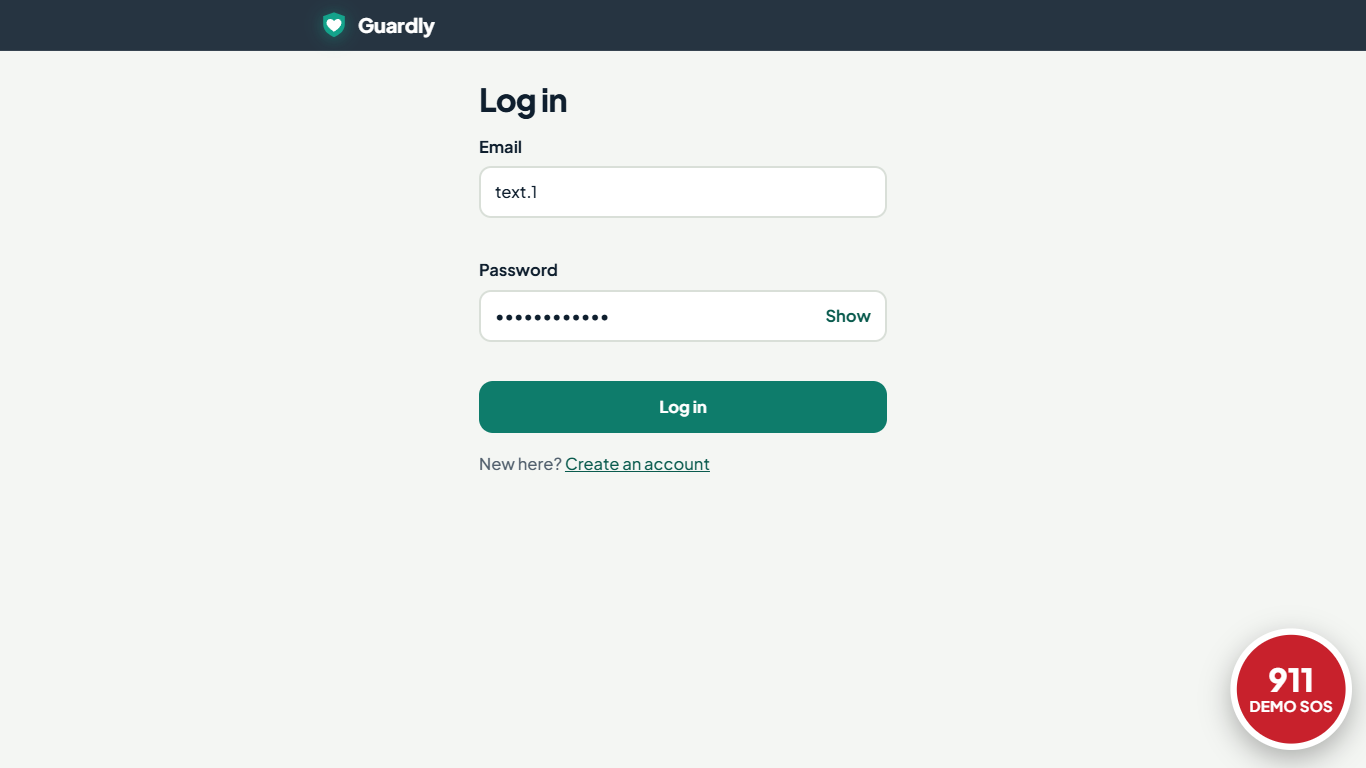
Log In Page
-
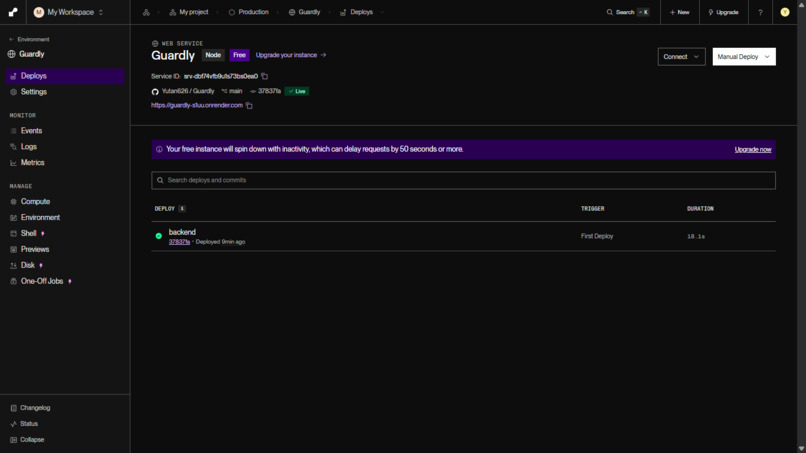
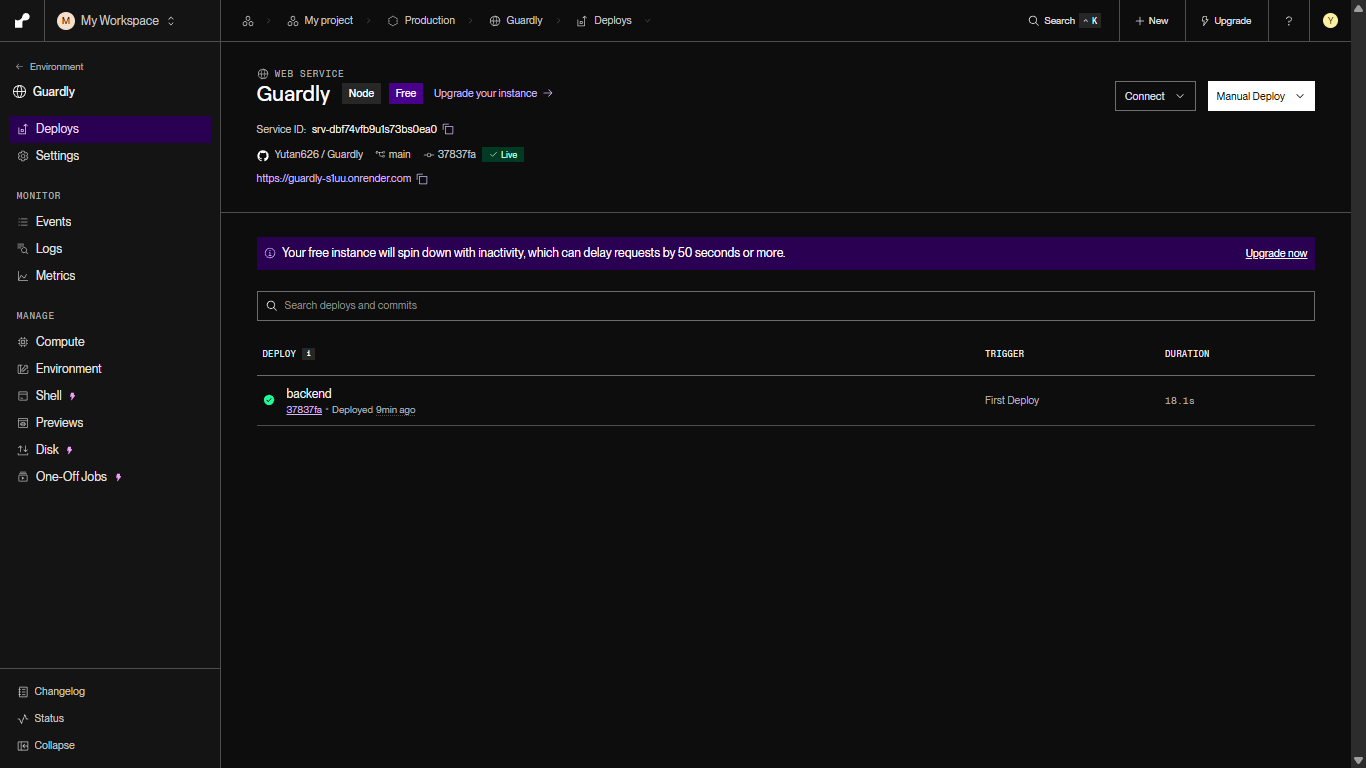
AI Hosting Page
-
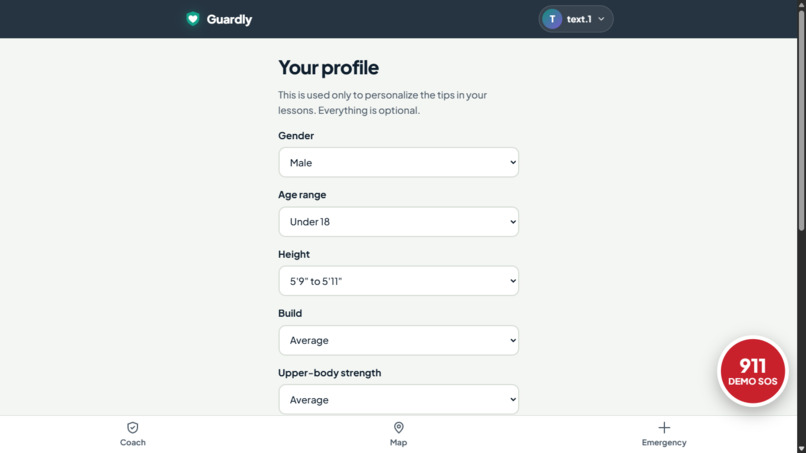
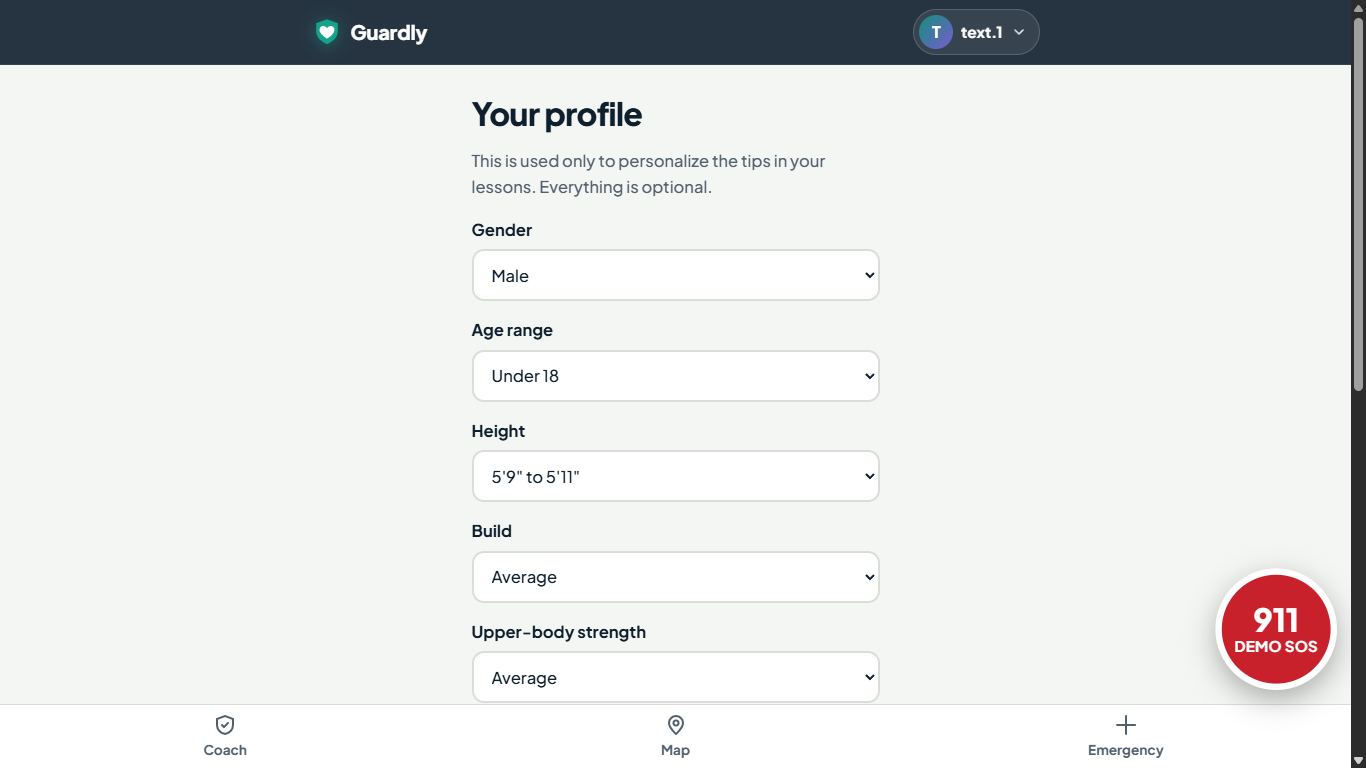
Profile Settings
-
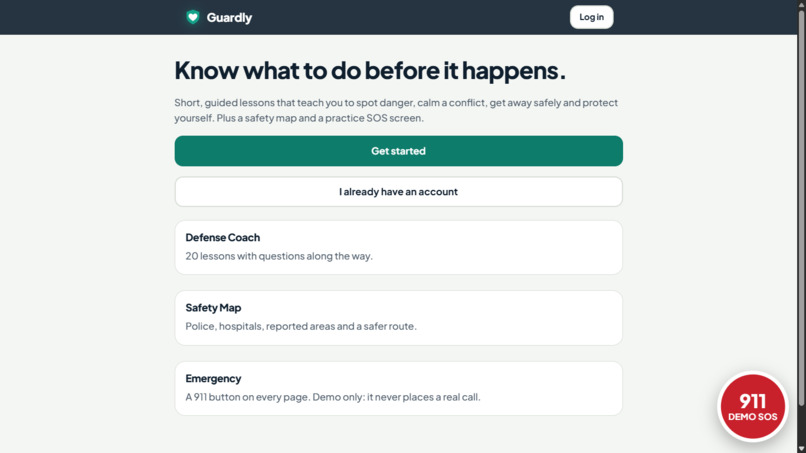
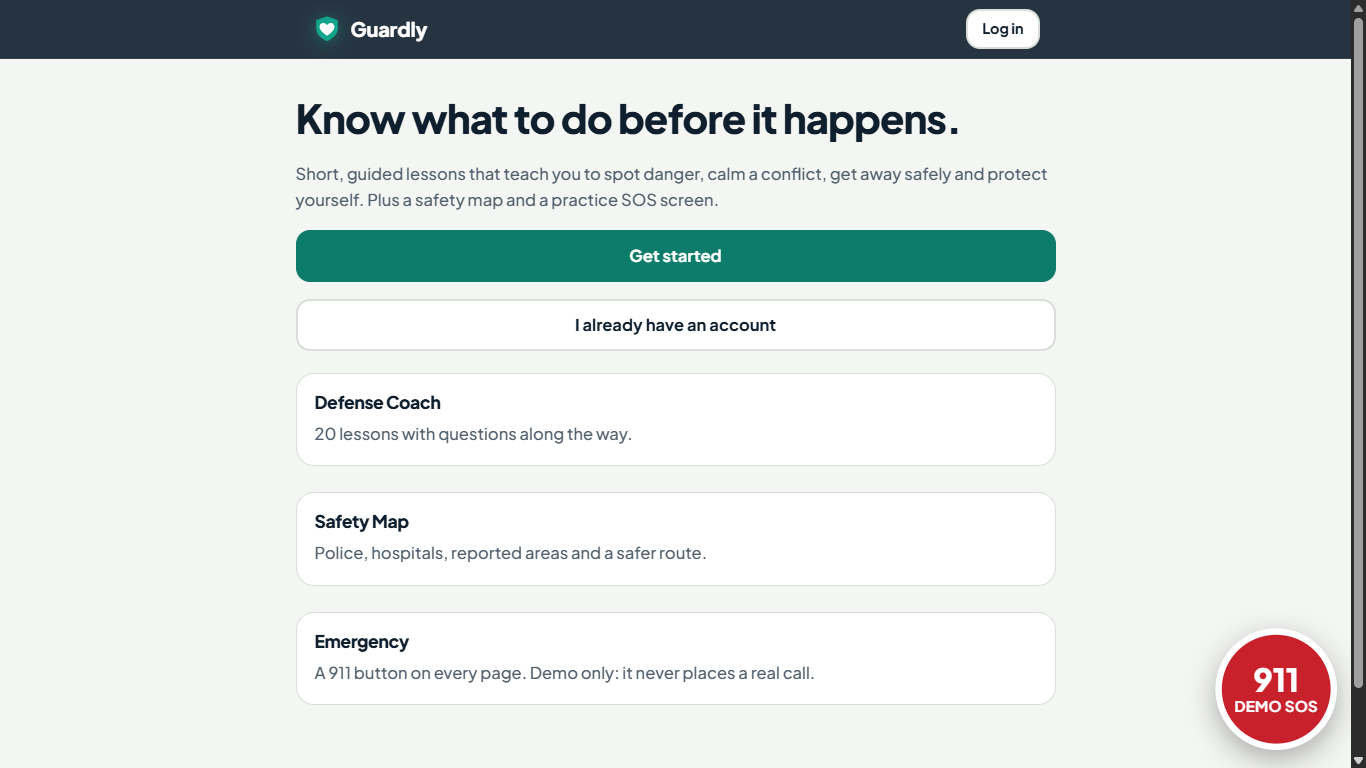
Home Page
-
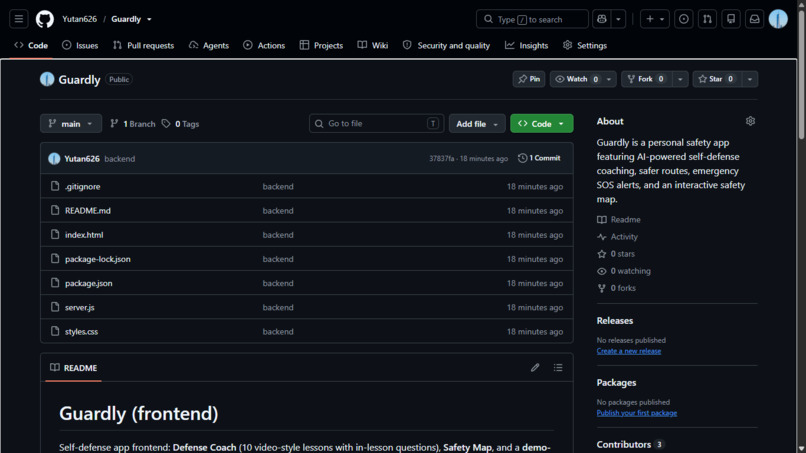
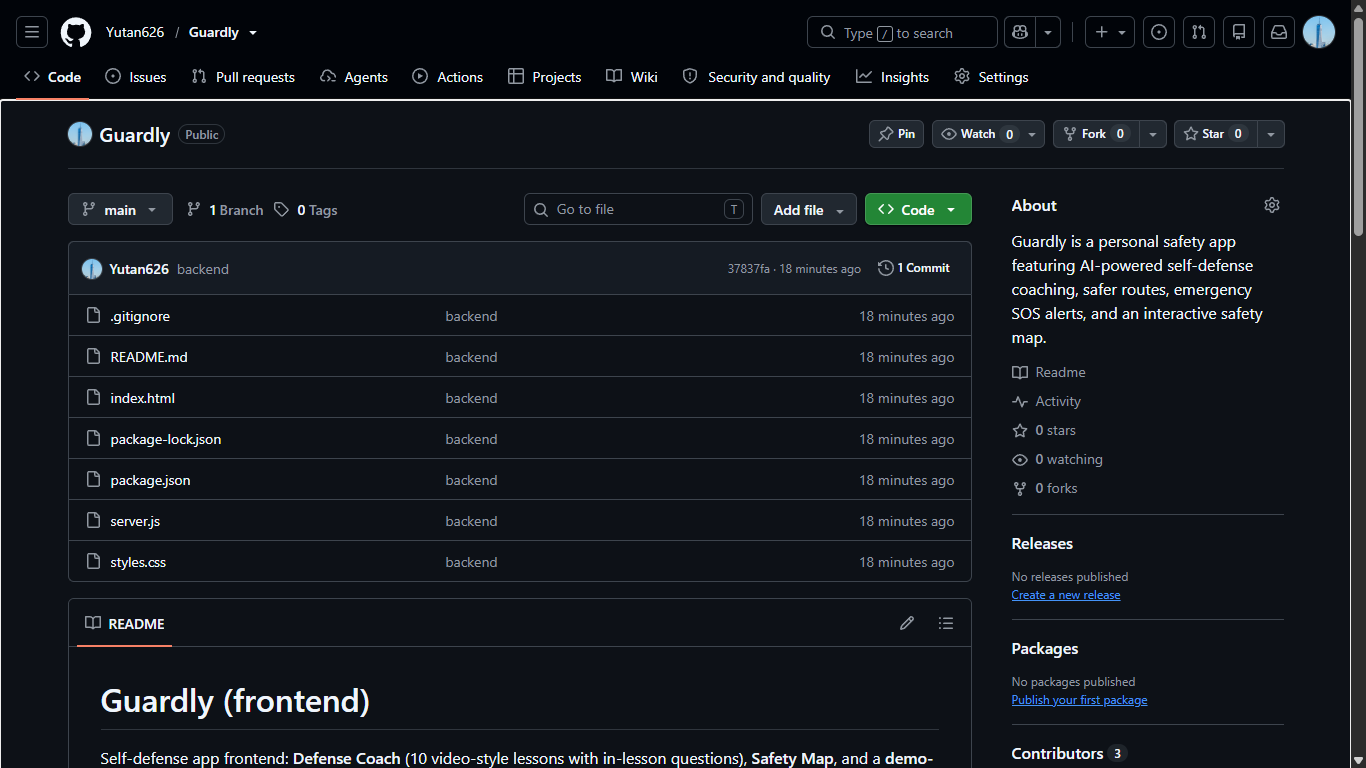
Github Page
-
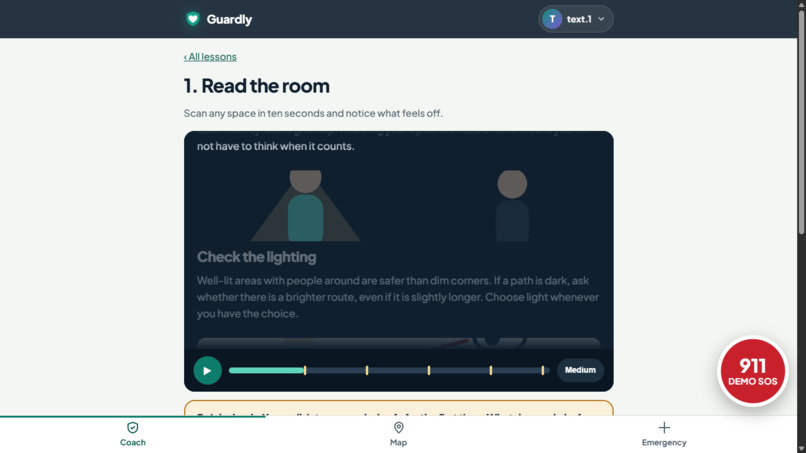
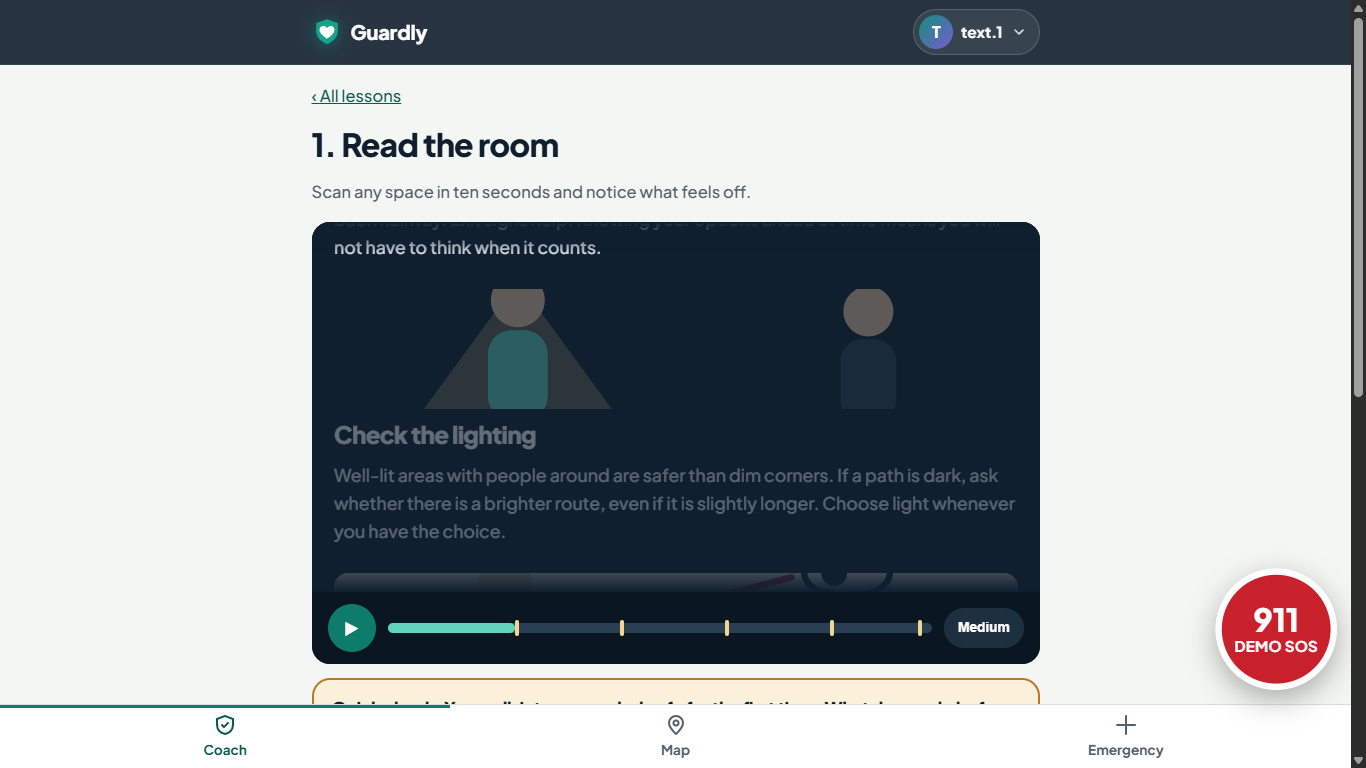
Lesson Demo
-
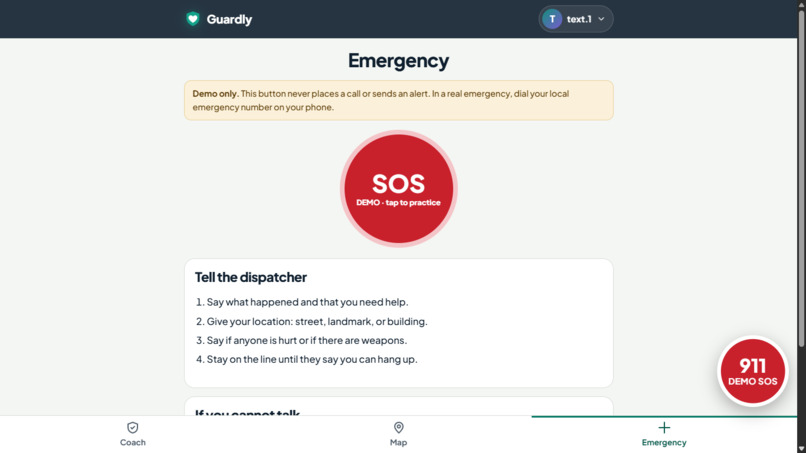
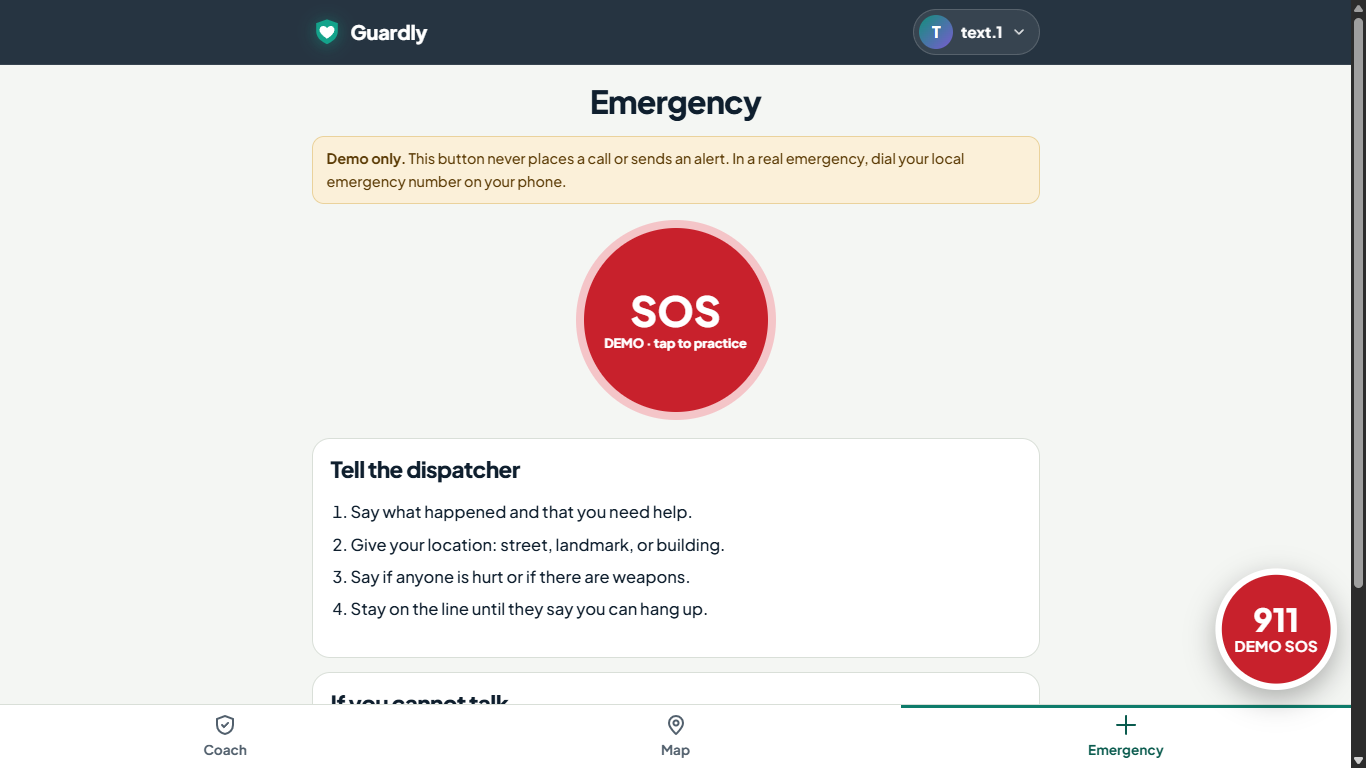
SOS Page
-
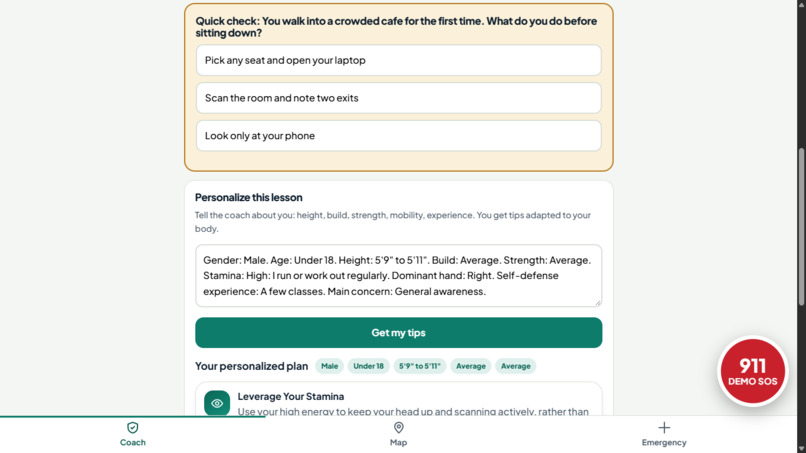
Check In
-
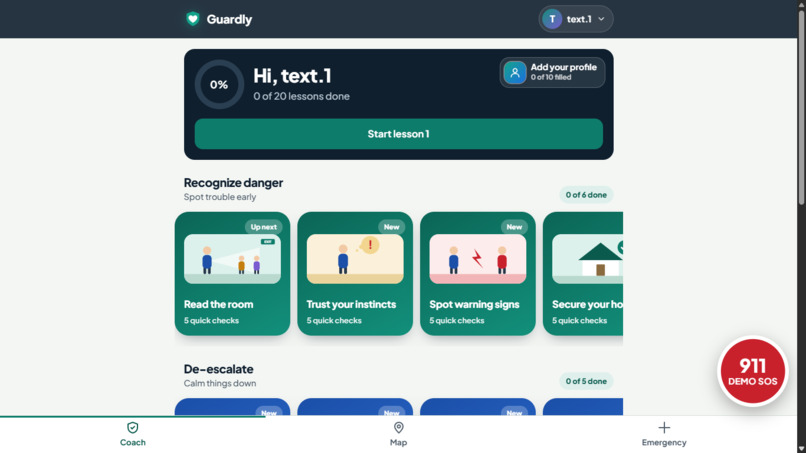
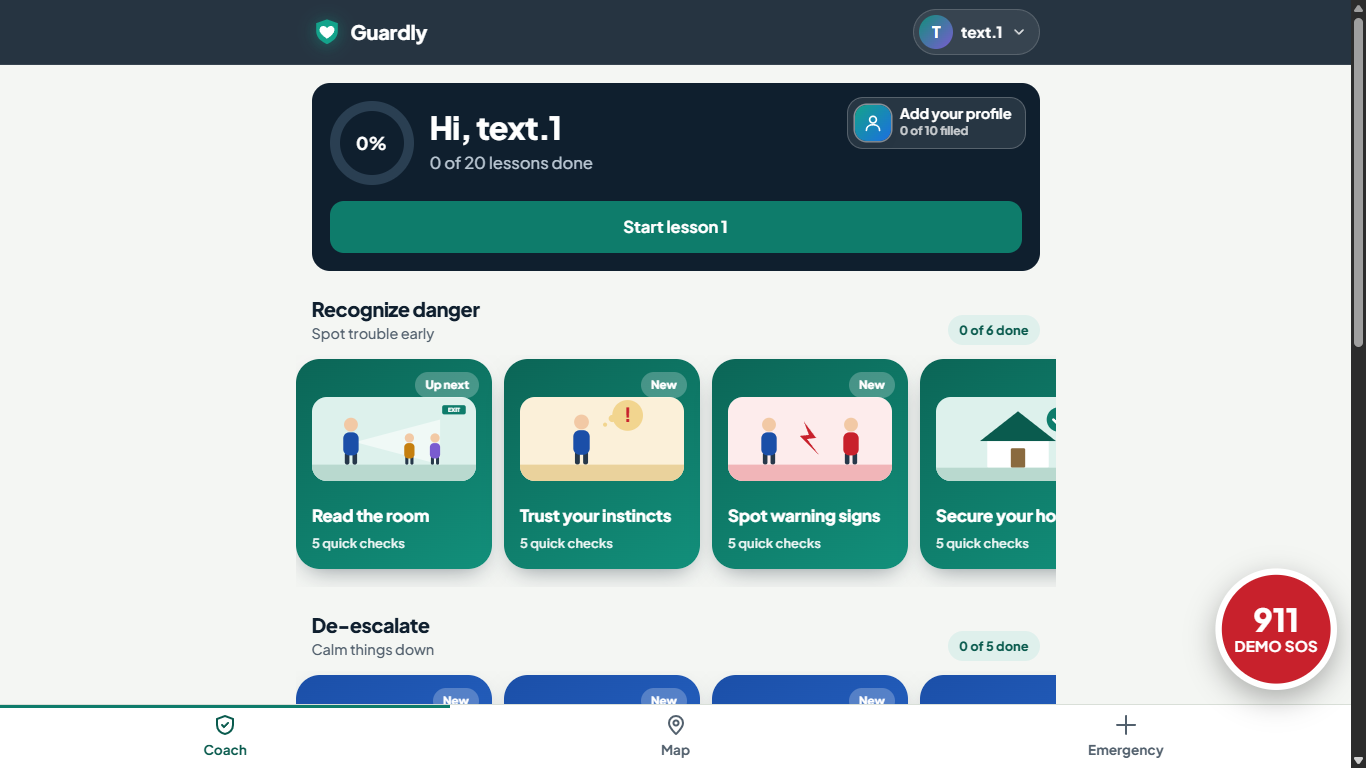
Logged In Home Page
-
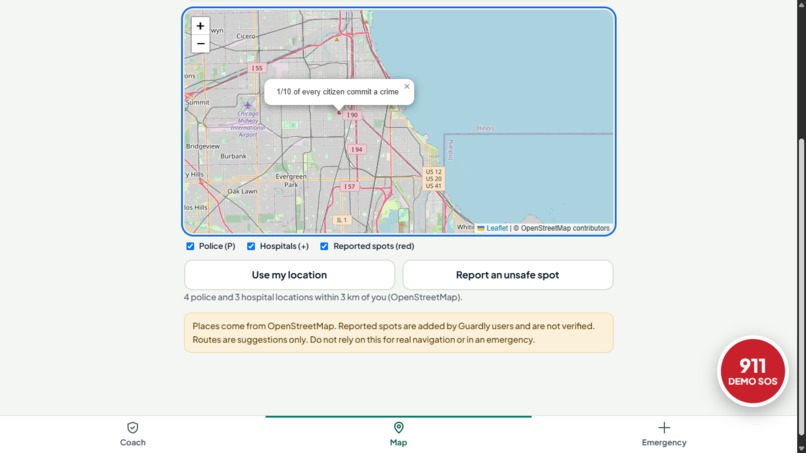
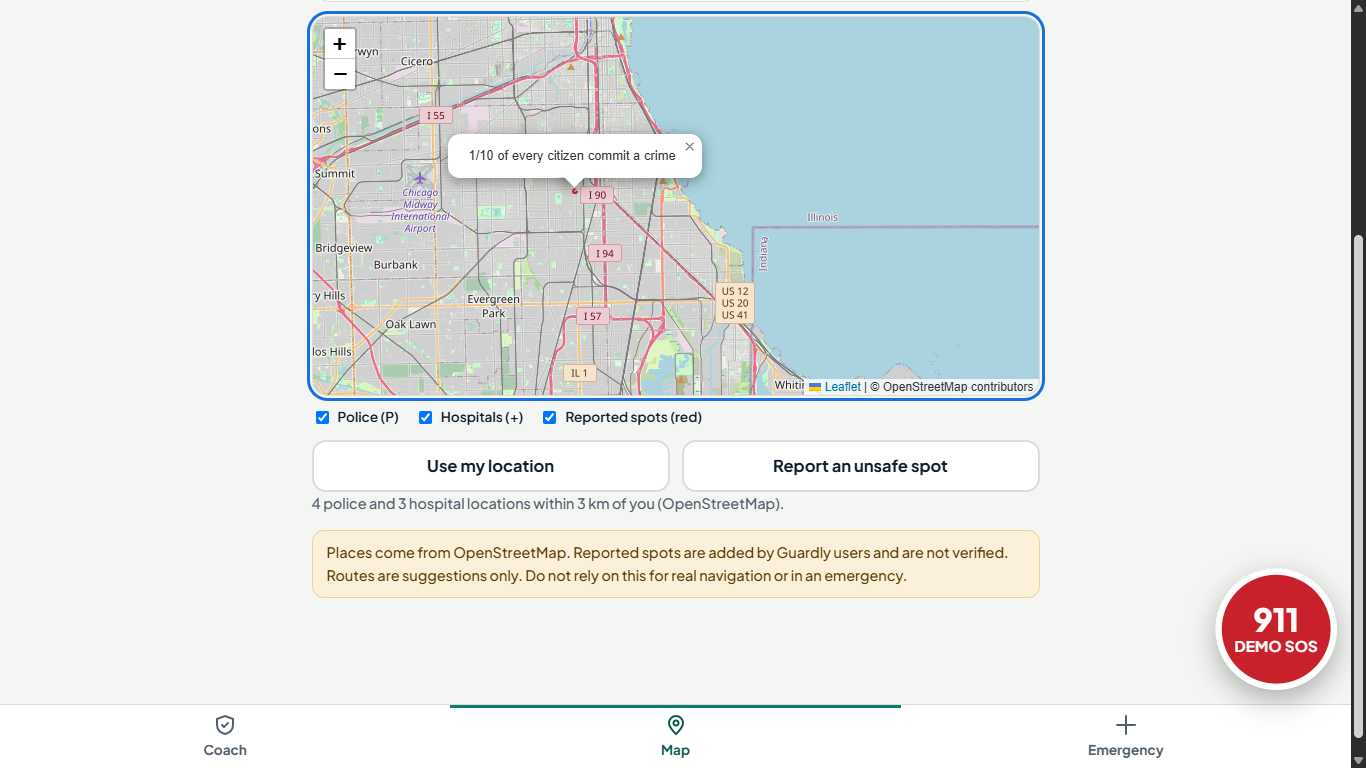
Map Icon
-
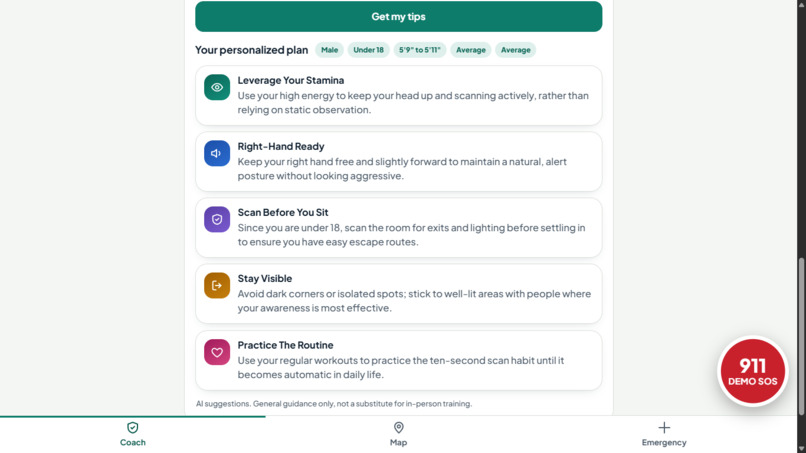
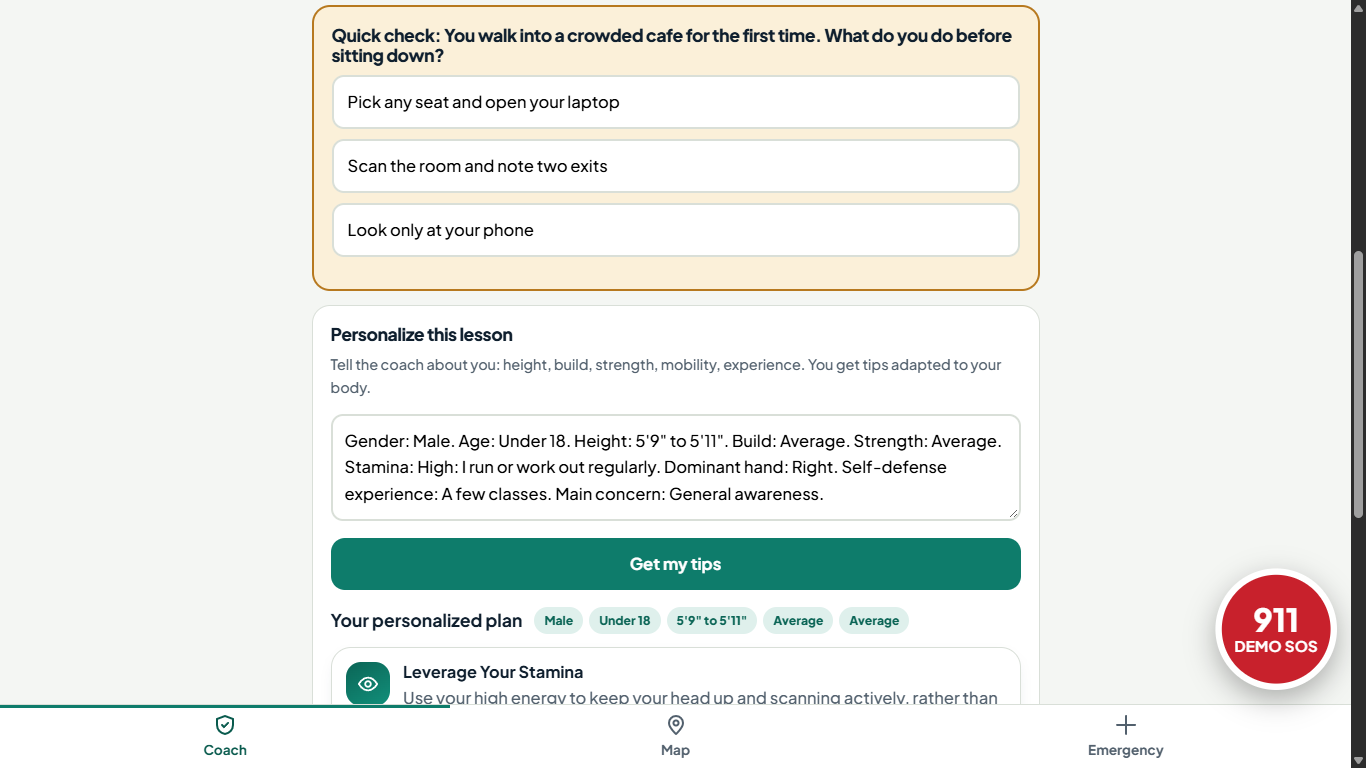
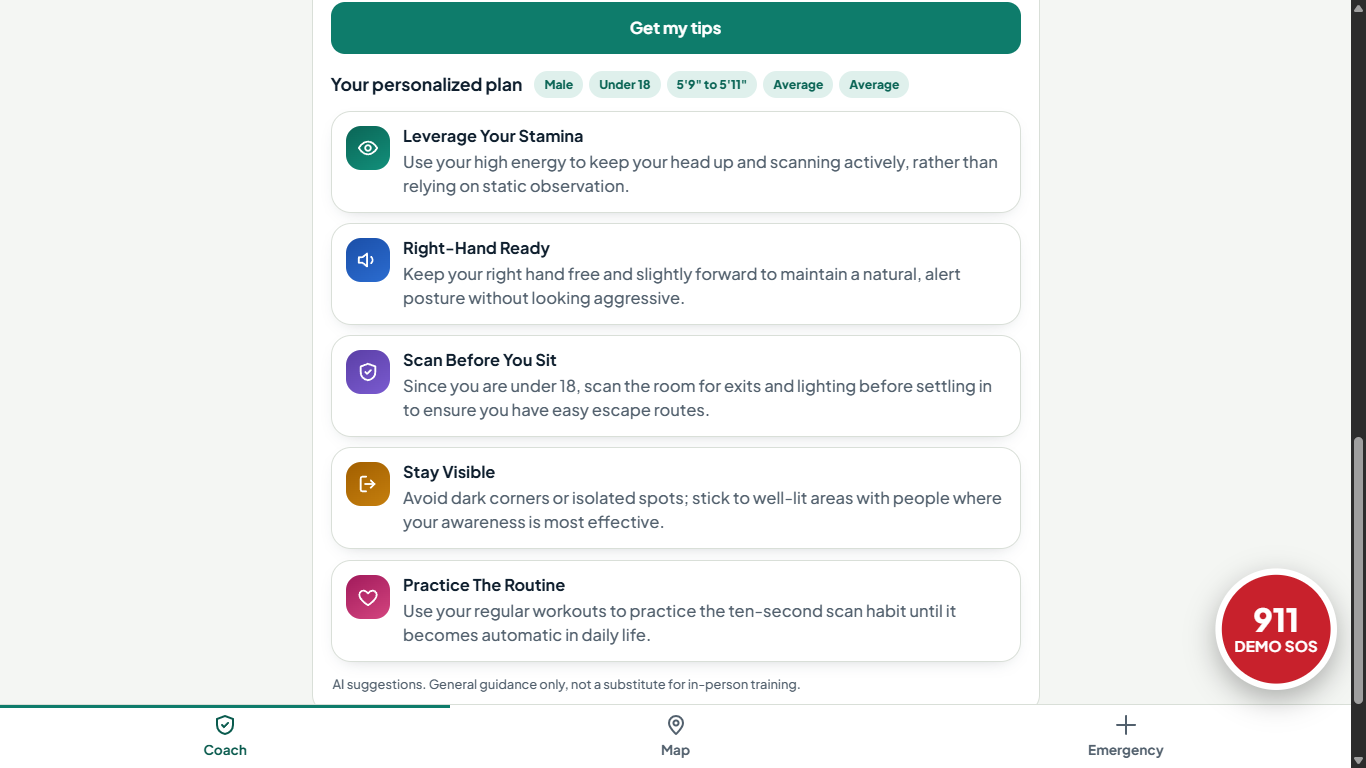
Personalized Tips
-
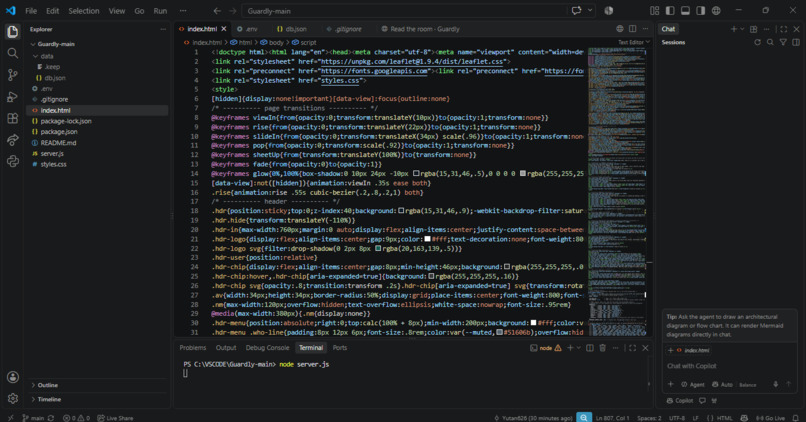
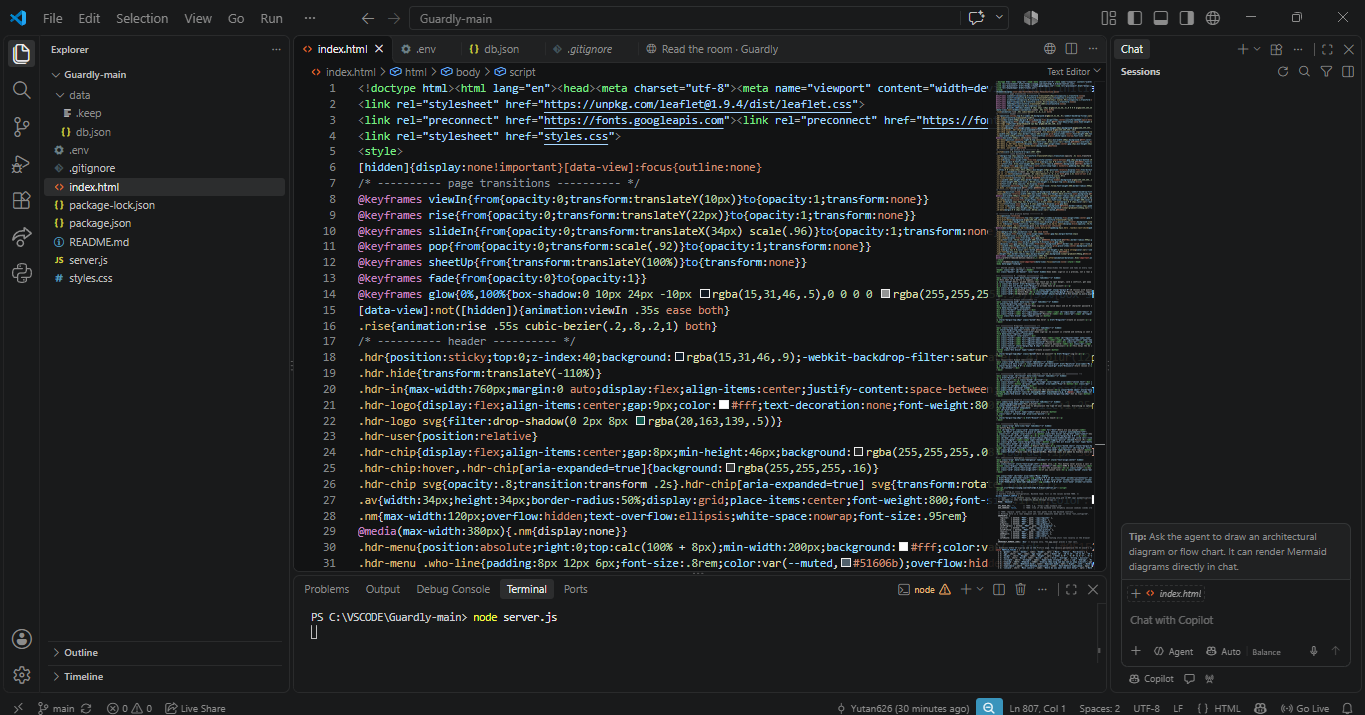
VS Code HTML
-
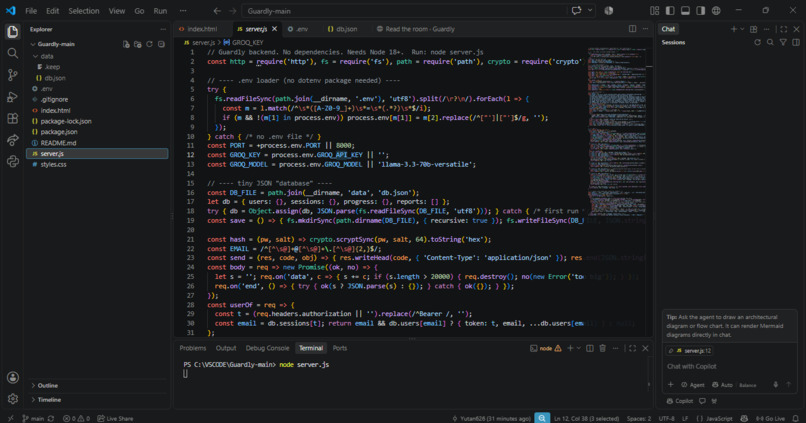
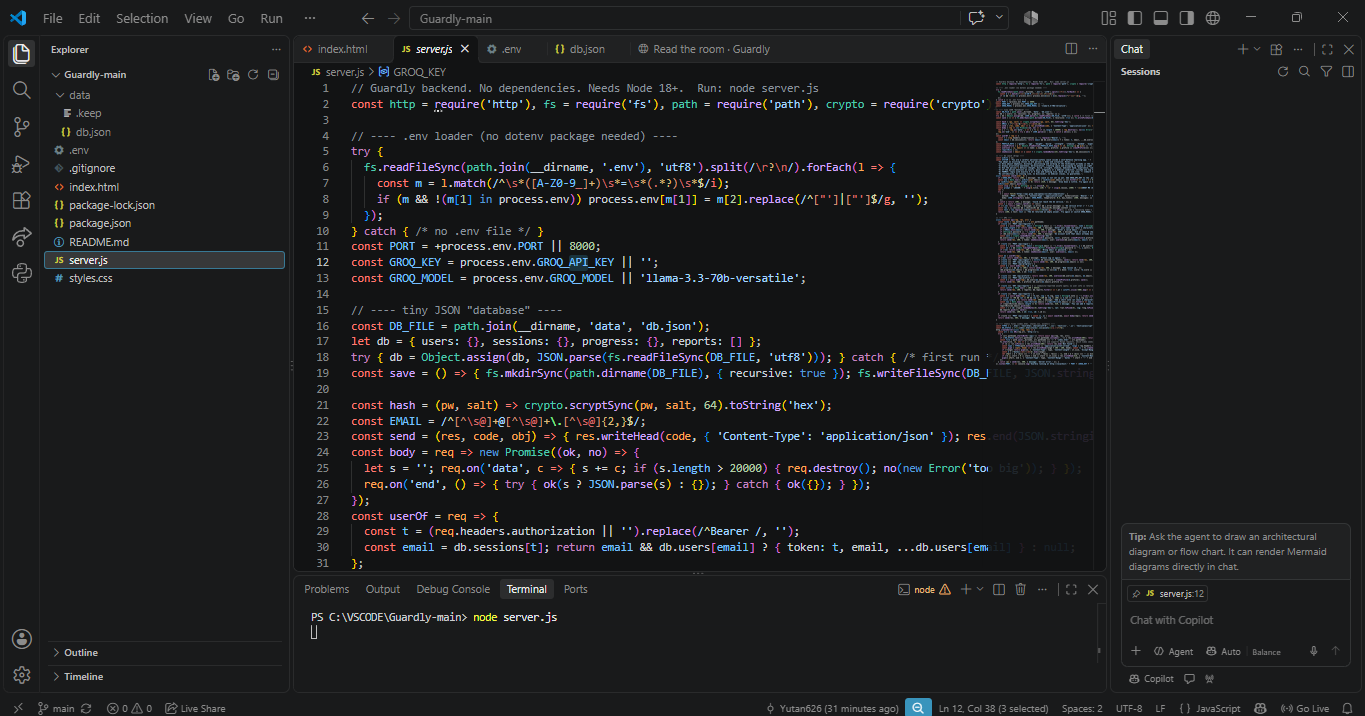
VS Code Backend
-
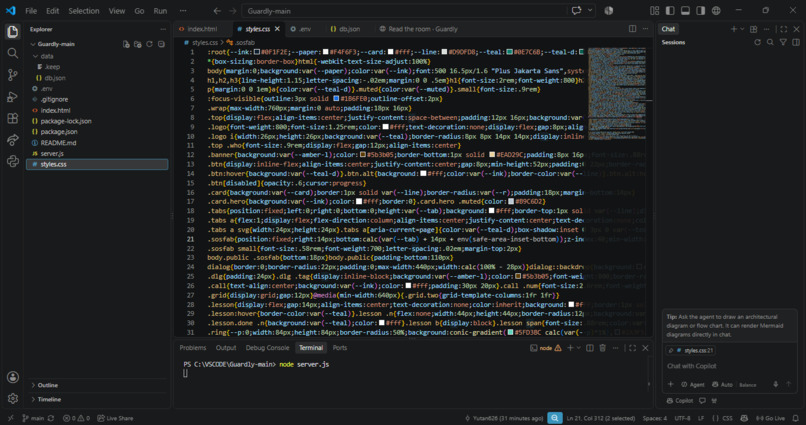
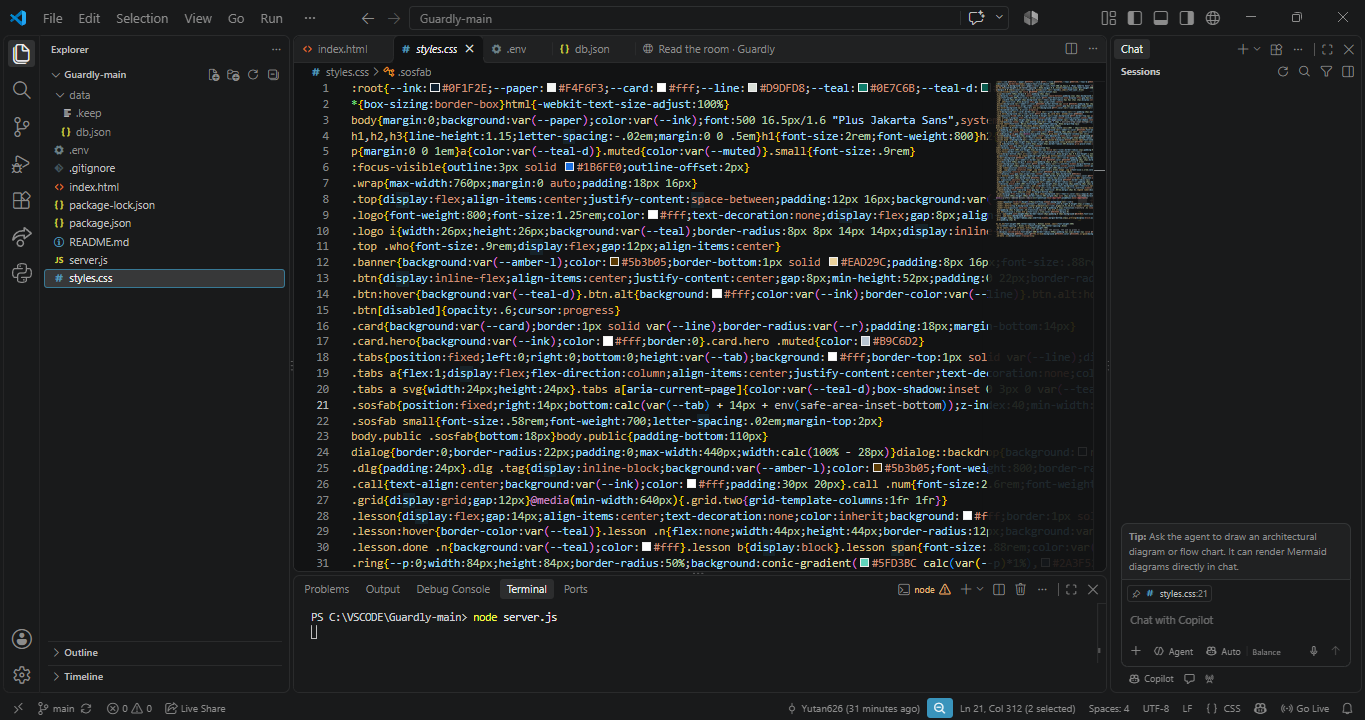
VS Code CSS
Inspiration
Almost everyone has had that moment: the quiet parking garage, the person who seems to be walking a little too close, the stop where you wait alone and can't tell why you feel uneasy. In that moment, nobody wants to remember a list of rules from a website they read once. Picture a student finishing a late shift. The bus stop is half a block away, the streetlight is out, and someone has been walking behind them since the corner. Nothing has happened. They aren't sure they should feel scared, so they pull out their phone and keep walking. Or picture someone new to a city, standing in a quiet parking garage with a car full of groceries, wondering which way the exit is. Nothing dramatic happens in these moments, and that's the point. Most of what keeps people safe is small: noticing, deciding early, and knowing what to do next. We built Guardly because those are skills, and skills can be taught. We wanted safety advice that feels like a patient friend explaining it, not a lecture. Guardly is a small coach that teaches practical skills in short lessons and then checks that you actually understood them.
What it does
- Lessons you can finish on a bus ride. There are 20 lessons in four areas: recognize danger, calm things down, get away safely, and protect yourself.
- Each lesson is text that scrolls on its own like a story, with a hand-drawn picture for every scene.
- You can pick Slow, Medium or Fast, so it fits how you read.
- Questions that make it stick. The lesson pauses for quick checks, and your score shows in color: red at 50% or below, yellow in the middle, and green at 75% and up.
- We didn't want a boring pass/fail. We wanted you to see where you're strong and where to try again. 6. Tips that fit you. Safety advice isn't one-size-fits-all. If you tell Guardly a little about yourself, like height range, strength, stamina, and experience, an AI coach turns the lesson into short tip cards that make sense for your body.
- Every question is optional, and your details are only used to personalize tips.
- A map made by the people who use it. The safety map shows nearby police stations and hospitals. If a streetlight is out or a corner is hard to see around, anyone can report it, and everyone sees a red circle there. The map also suggests a route that avoids reported spots.
- A practice SOS button. The big red button is a demo, so nobody gets a real call by accident. It lets you rehearse what to do before you ever need it.
How we built it
Guardly is a Node.js server with plain HTML, CSS and JavaScript on the front end. Every illustration is drawn in code as SVG, so the pictures load instantly and look sharp on any screen. The map uses Leaflet and OpenStreetMap. The AI tips come from Groq, and the API key stays on the server, so it never reaches your browser. Accounts, progress, and map reports are saved in a small JSON file on the server. It's hosted on Render.
Challenges we ran into
- We threw out our first idea. We planned video lessons, but filming and editing real footage was too slow for a hackathon. Switching to scrolling text and drawings turned out better than we expected: it loads fast, works on a weak connection, and you can read it quietly in public.
- Being honest about what it can't do. Map reports aren't verified, routes are only suggestions, and the SOS button is a demo. We wrote that on the page, because a safety tool that overpromises is worse than none.
Accomplishments that we're proud of
We're most proud that the lessons feel like a conversation instead of a warning label. You read a short scene, see a picture of it, answer a question, and walk away with one thing you can actually do tomorrow. We're also proud that all 20 lessons, the drawings, the quiz scoring, the AI tips and the shared safety map work together in one app, and that we kept the safety limits honest on the page.
What we learned
Good teaching is short, repeated, and checked. We learned how much a small drawing can change a paragraph of text. We learned how to work with AI models: they can fail in surprising ways, and the answers need shaping before people can use them. And we learned that building something about safety makes you slow down and ask "what if this is wrong?" a lot more than usual.
What's next for Guardly
Two lessons are fully detailed, and we want every lesson to get the same depth. After that: a real database so accounts and reports don't disappear, moderation for map reports, more languages, and an offline mode, because you may need a safety lesson most when you have no signal.
Safety shouldn't be something you only learn after a scare. We built Guardly to teach it before you need it.


Log in or sign up for Devpost to join the conversation.