Inspiration
In an emergency, every second matters. A person facing danger may not have enough time to unlock their phone, search for a contact, or explain what is happening.
We wanted to build something that could make asking for help faster and easier. This inspired us to create Guardian Shield (S.H.E.L.D.), an AI-powered emergency safety system designed to detect distress signals, capture location information, and initiate an emergency alert workflow.
Our vision is to make technology act as a protective companion when people need help the most.
What it does
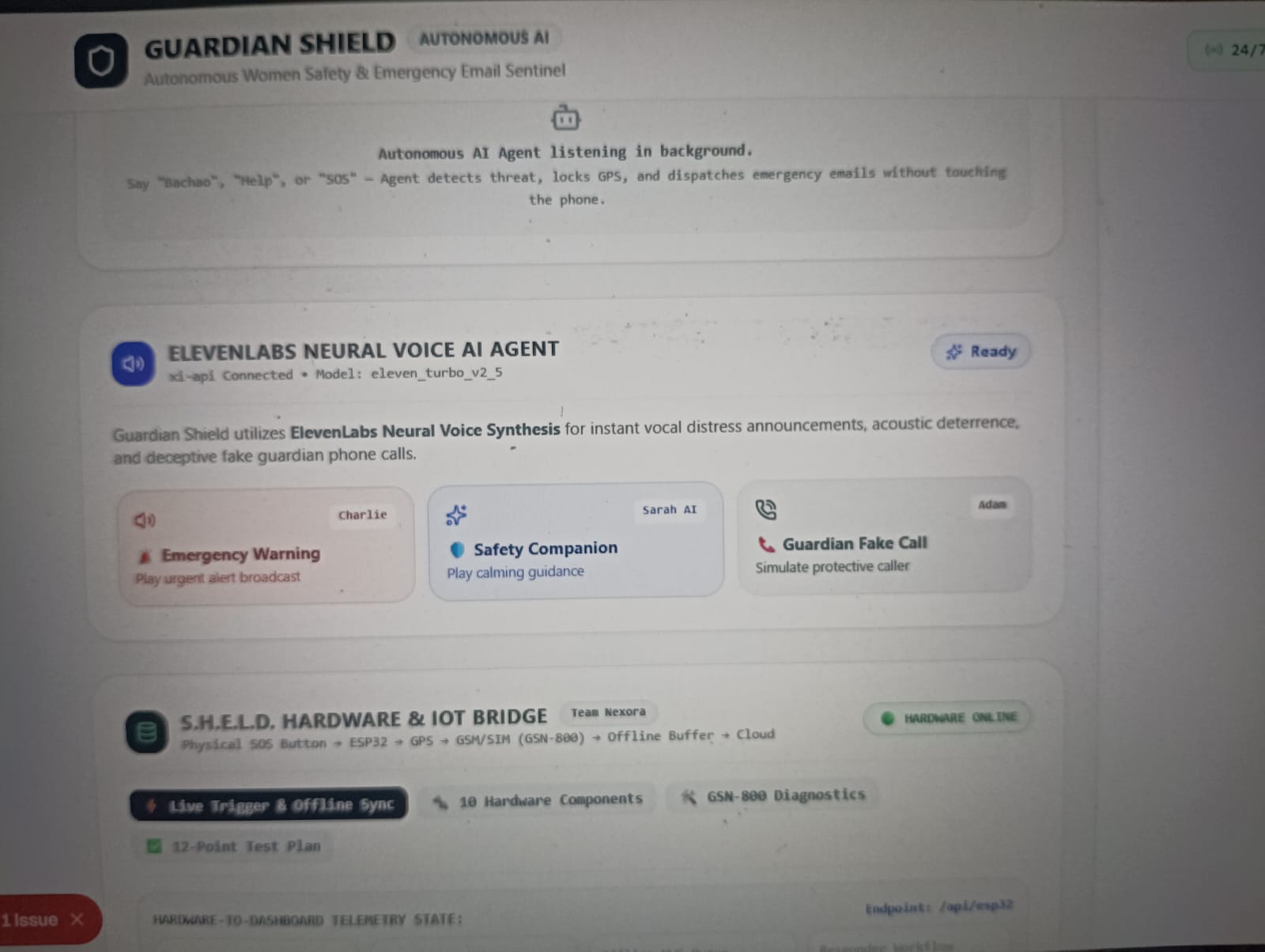
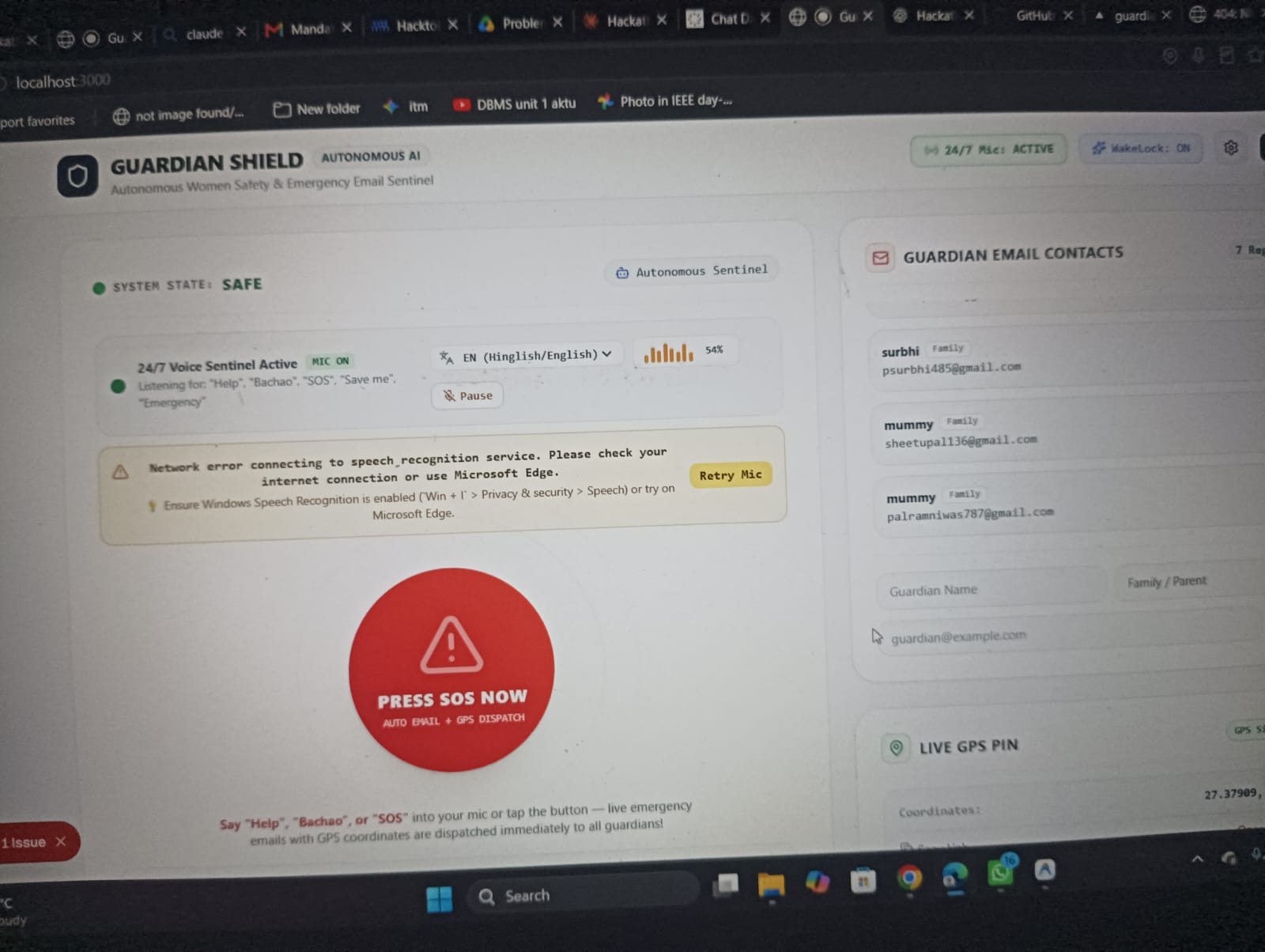
Guardian Shield combines voice recognition, AI-powered analysis, location awareness, and planned hardware integration into one emergency safety platform.
Its key features include:
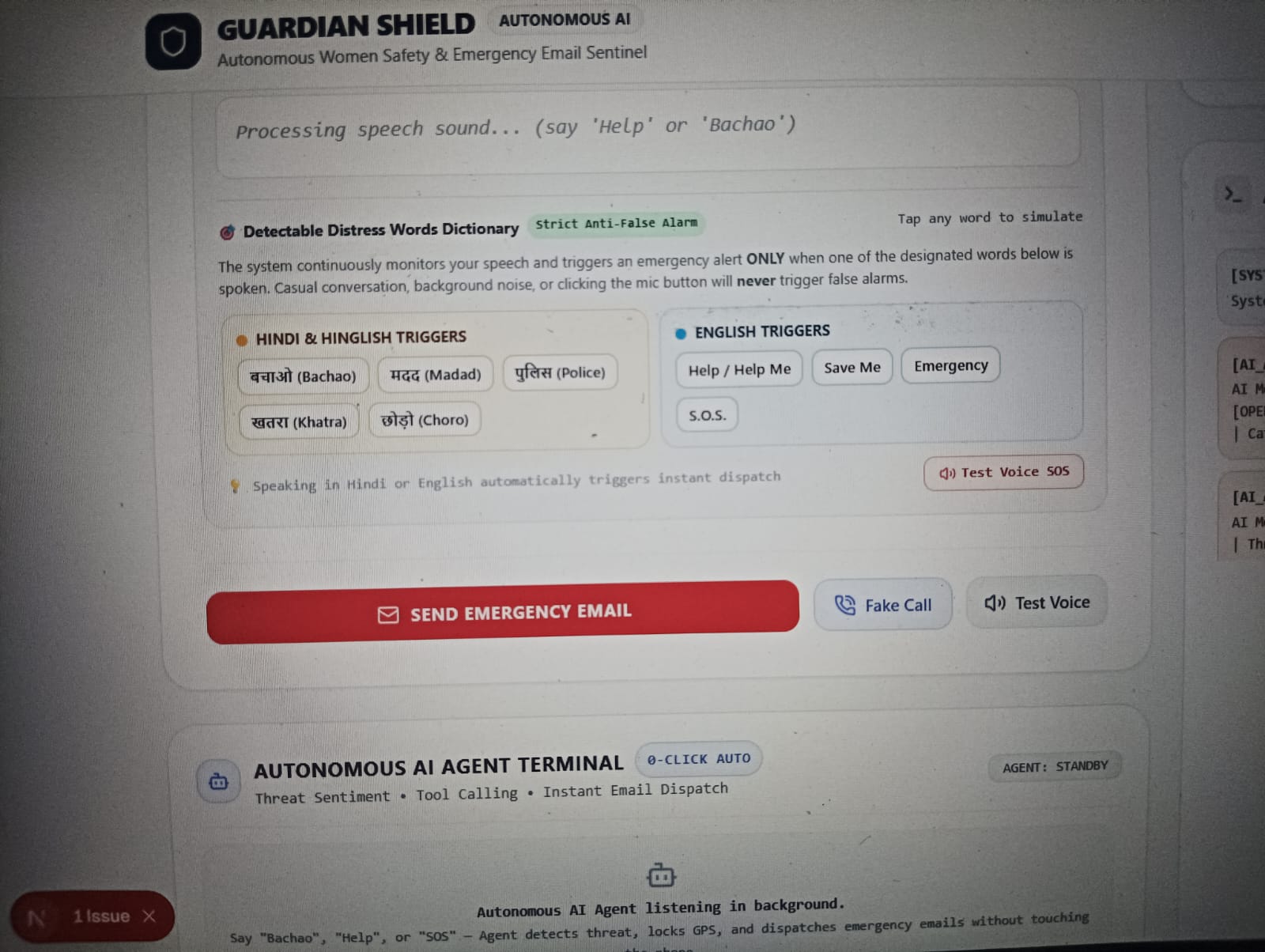
- Voice distress detection: Recognizes emergency keywords such as "Help", "Bachao", "Madad", "Police", and "SOS" in English and Hindi.
- Location tracking: Uses browser geolocation, with user permission, to obtain location information during an emergency.
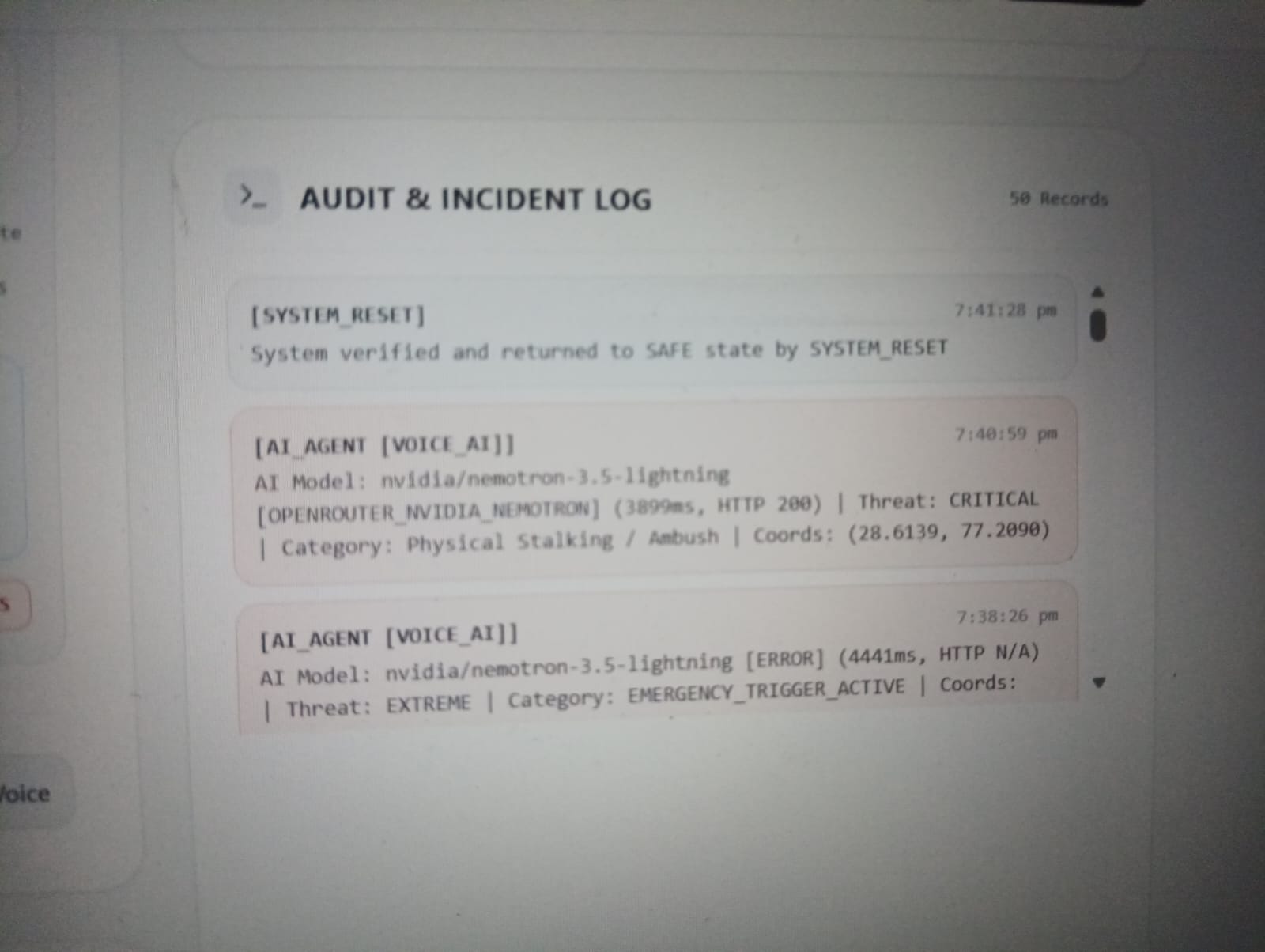
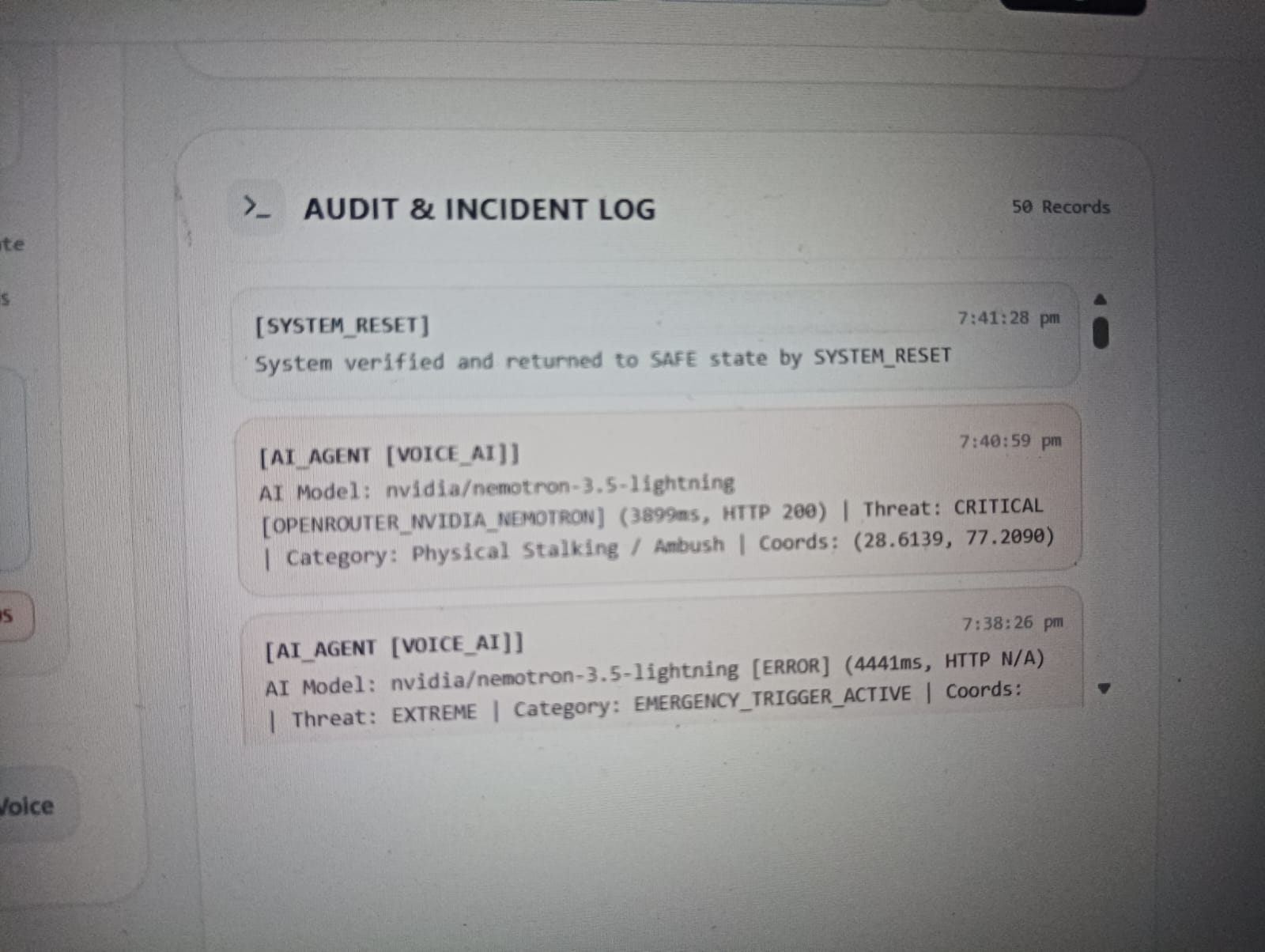
- AI threat analysis: Uses NVIDIA Nemotron through OpenRouter to analyze emergency context, assess potential threats, and generate response recommendations.
- Emergency alert workflow: Connects detected emergency events to a notification system intended to alert trusted contacts.
- ESP32 hardware support: Includes firmware designed for a physical SOS button, buzzer, LED, GPS, and GSM modules.
- AI voice interaction: Integrates ElevenLabs for voice responses.
- Offline event handling: Includes a firmware design for buffering emergency events when connectivity is unavailable.
How we built it
We built Guardian Shield using a full-stack architecture combining modern web technologies, AI, and embedded-system development.
Our technology stack includes:
- Next.js 16, React 19, and TypeScript for the application and backend APIs.
- Tailwind CSS for the interface.
- Web Speech API for browser-based voice recognition.
- Geolocation API for location access.
- NVIDIA Nemotron through an OpenRouter API integration for emergency context analysis.
- ESP32 firmware for the planned physical SOS device.
- ElevenLabs for AI voice synthesis.
- Nodemailer and notification integrations for emergency alert workflows.
- Upstash/Vercel KV and local JSON storage for application data.
The system processes distress signals, collects available emergency context, and passes relevant information to the AI analysis pipeline.
One of our most important architectural decisions was to keep emergency event handling independent of AI availability. AI should provide additional intelligence, not become a single point of failure.
Challenges we ran into
1. Multilingual voice recognition
Recognizing distress keywords in both English and Hindi while accounting for pronunciation differences and background noise was challenging.
2. Emergency reliability
AI services and external APIs can experience delays or failures. We had to consider how to keep the core emergency workflow independent of those services.
3. Hardware integration
Designing communication between the ESP32, GPS, GSM modules, and backend APIs required careful coordination between hardware and software.
4. Notification delivery
We learned that generating an alert is not the same as successfully delivering it to a real emergency contact. Production credentials and end-to-end delivery testing are essential.
5. AI integration
Connecting an AI model to an application required handling API responses, latency, errors, and generated recommendations responsibly.
Accomplishments that we're proud of
- Built a working full-stack Guardian Shield application.
- Implemented multilingual voice distress keyword detection.
- Integrated browser-based geolocation.
- Connected NVIDIA Nemotron through an OpenRouter integration for AI-assisted emergency analysis.
- Developed backend APIs for emergency events, status monitoring, and agent processing.
- Designed ESP32 firmware for a physical SOS device
Built With
- agent
- agenticai
- ai
- elevenlabs
- esp32
- genai
- gps
- iot
- ml
- model
- nemotron
- nexjs
- node.js
- nodemailer
- openrouter
- react
- tailwindcss
- typescript
- webspeechapi
