-
-
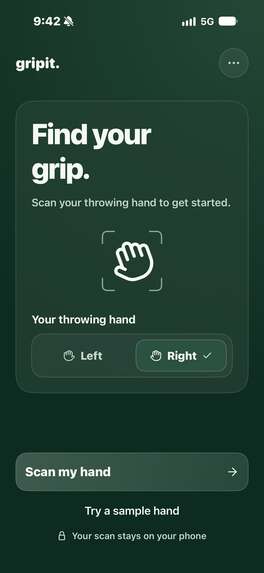
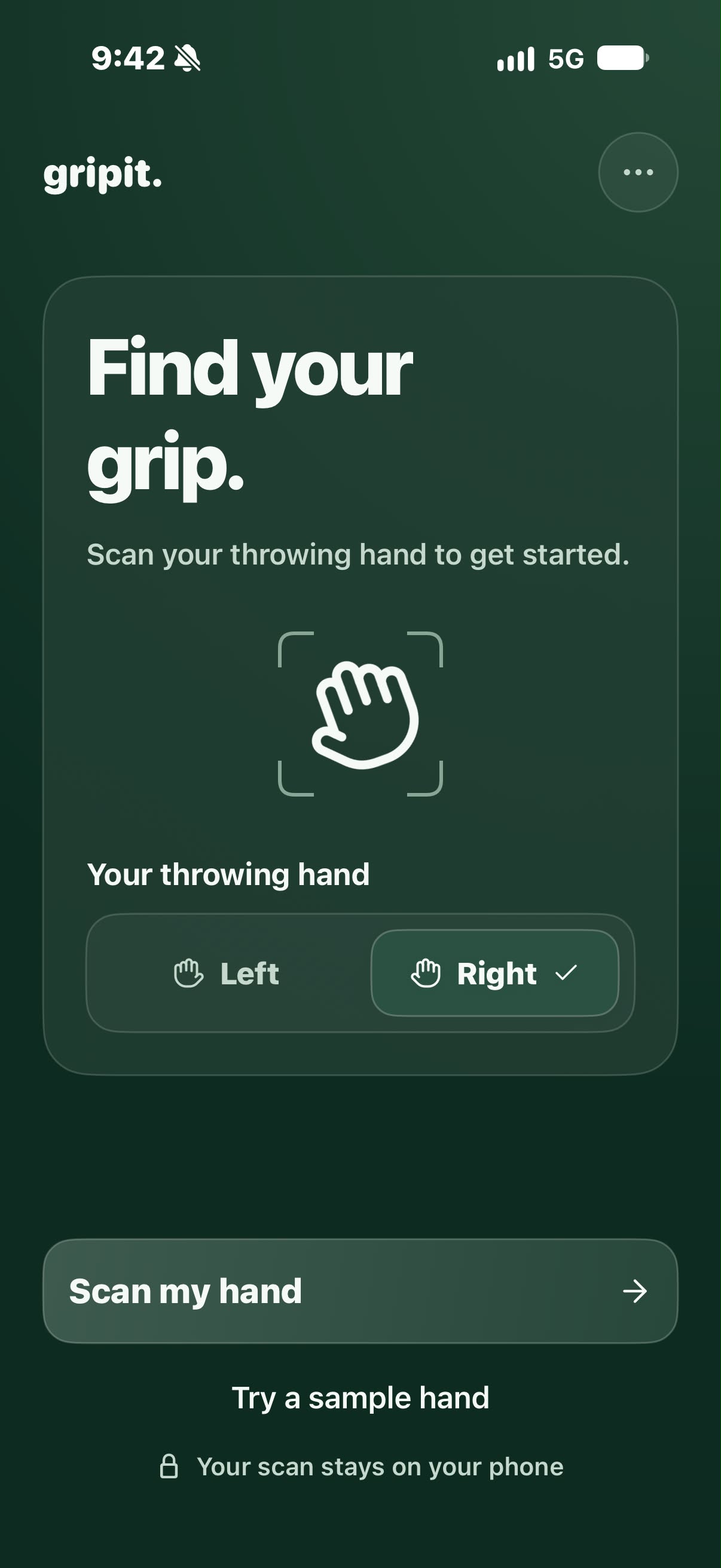
Find your grip: Choose your throwing hand and start a private, on-device scan to personalize your experience.
-
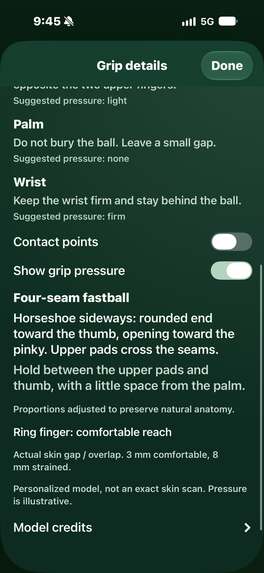
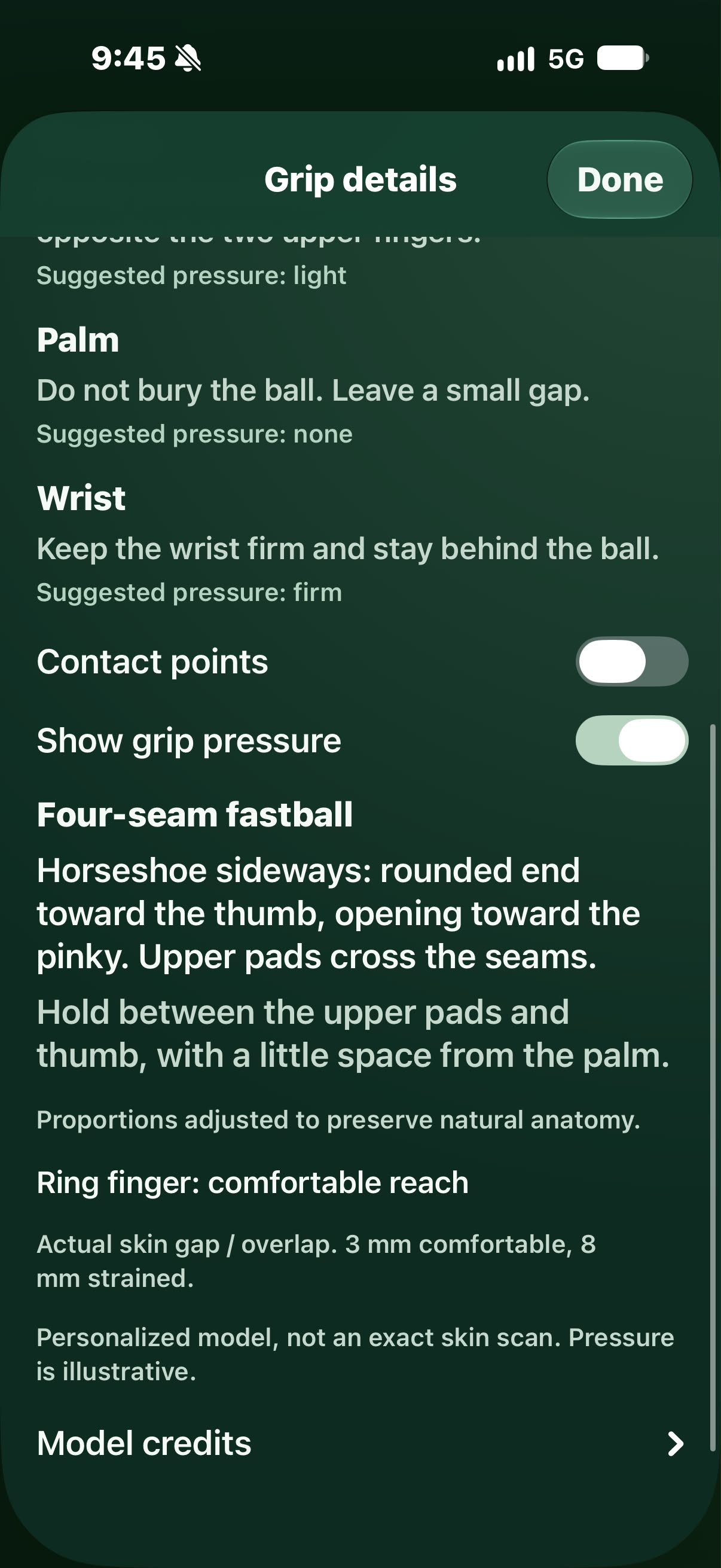
Grip details: Clear guidance on finger placement, suggested pressure, and seam alignment for each pitch.
-
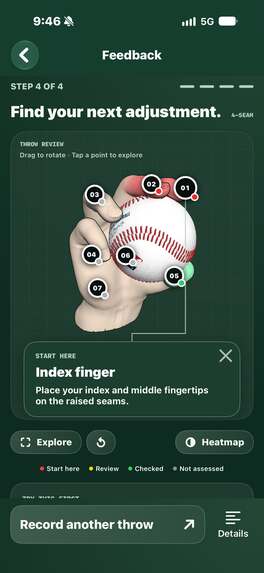
Throw feedback: Color-coded focus areas turn pitching results into specific grip adjustments to try next.
-
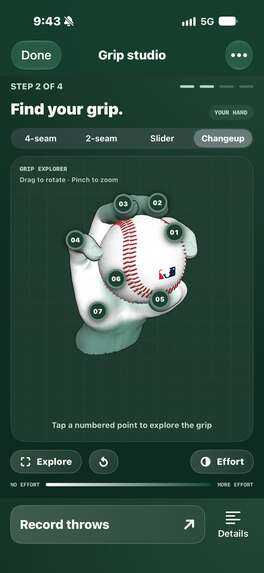
Grip studio: Rotate your personalized 3D hand, explore four pitch grips, and tap each region for placement and effort guidance.
-
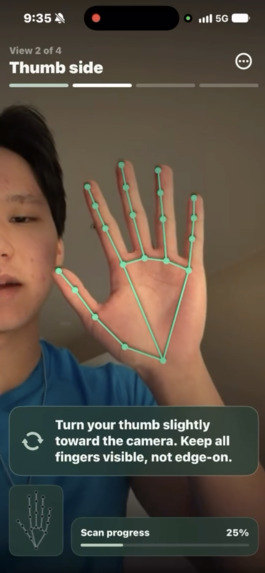
Hand scanning: Guided TrueDepth scanning tracks your hand’s joints and measures its proportions to personalize your 3D pitching grips.
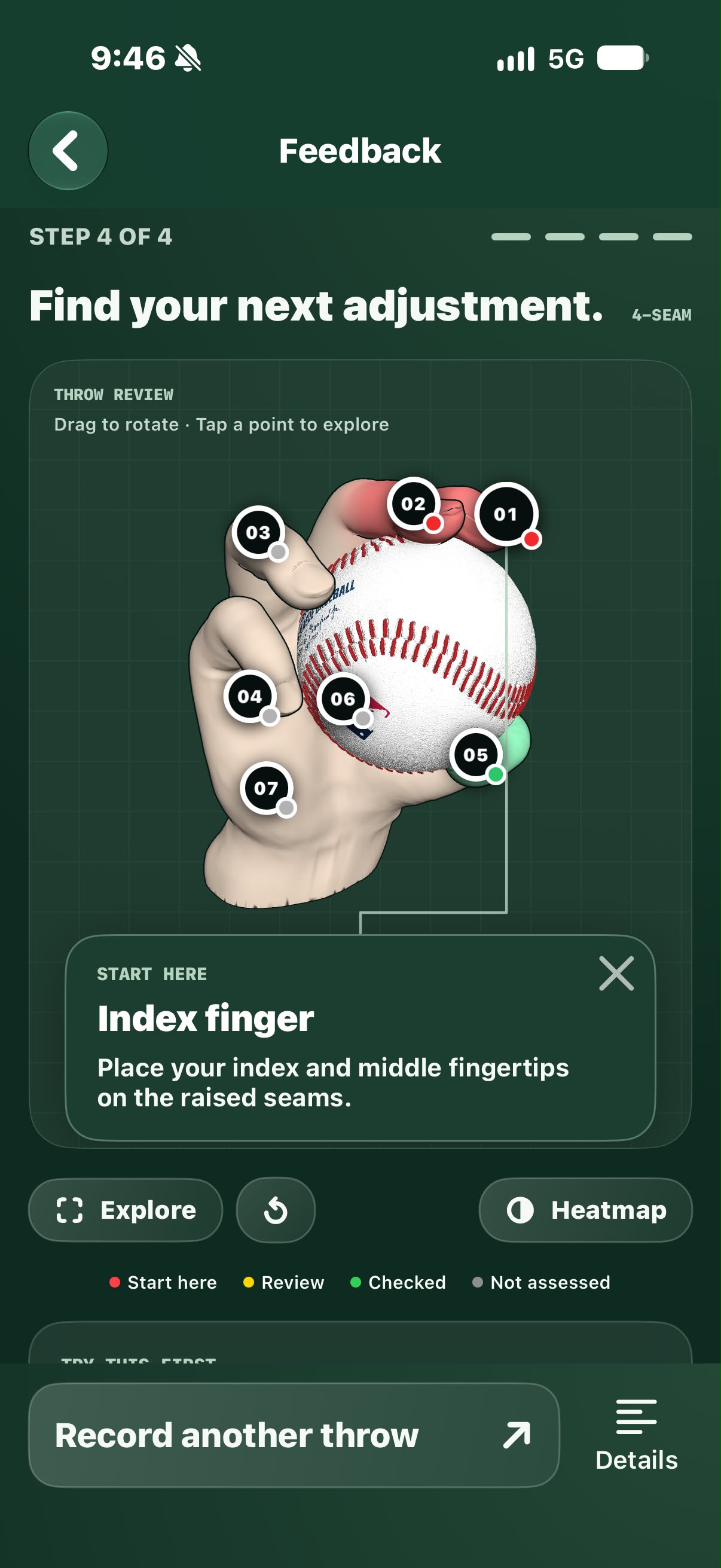
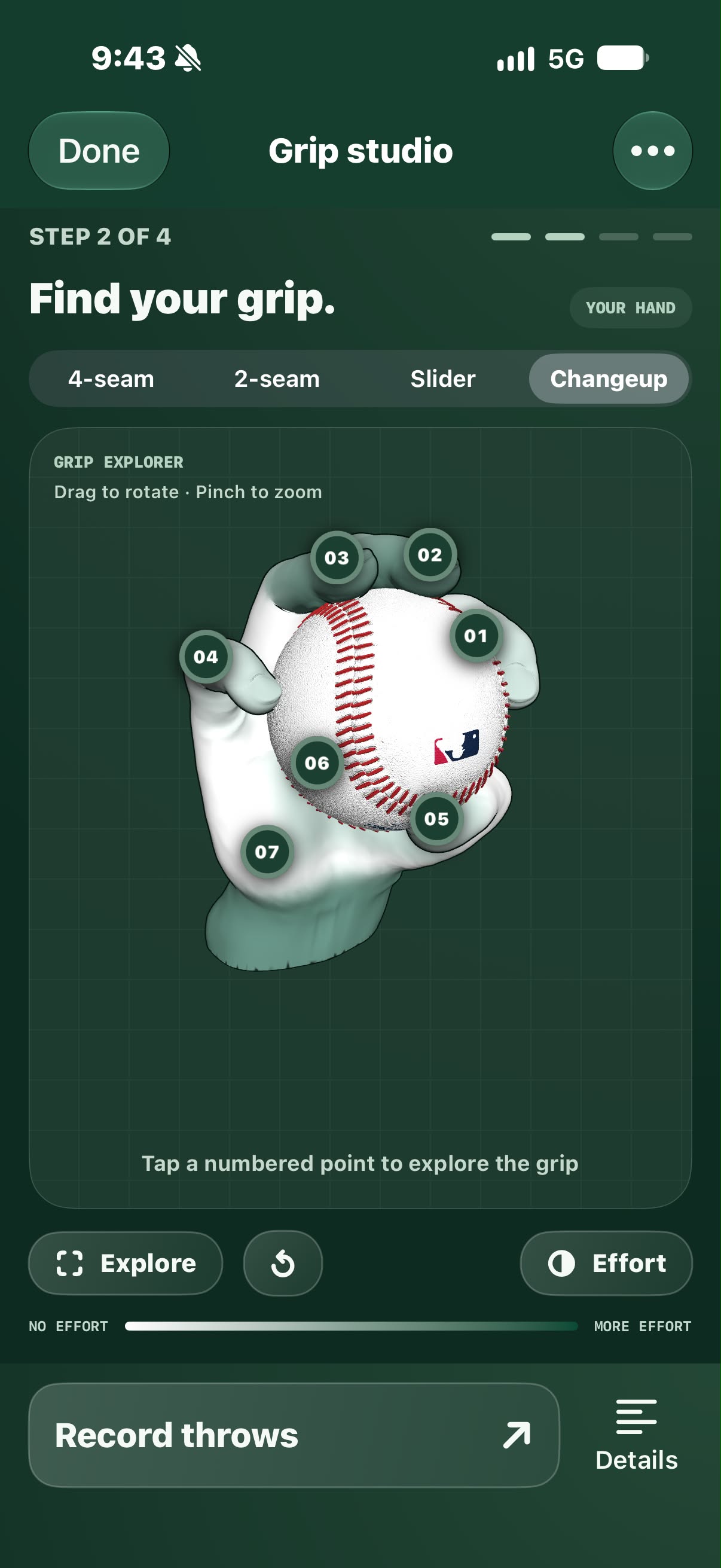
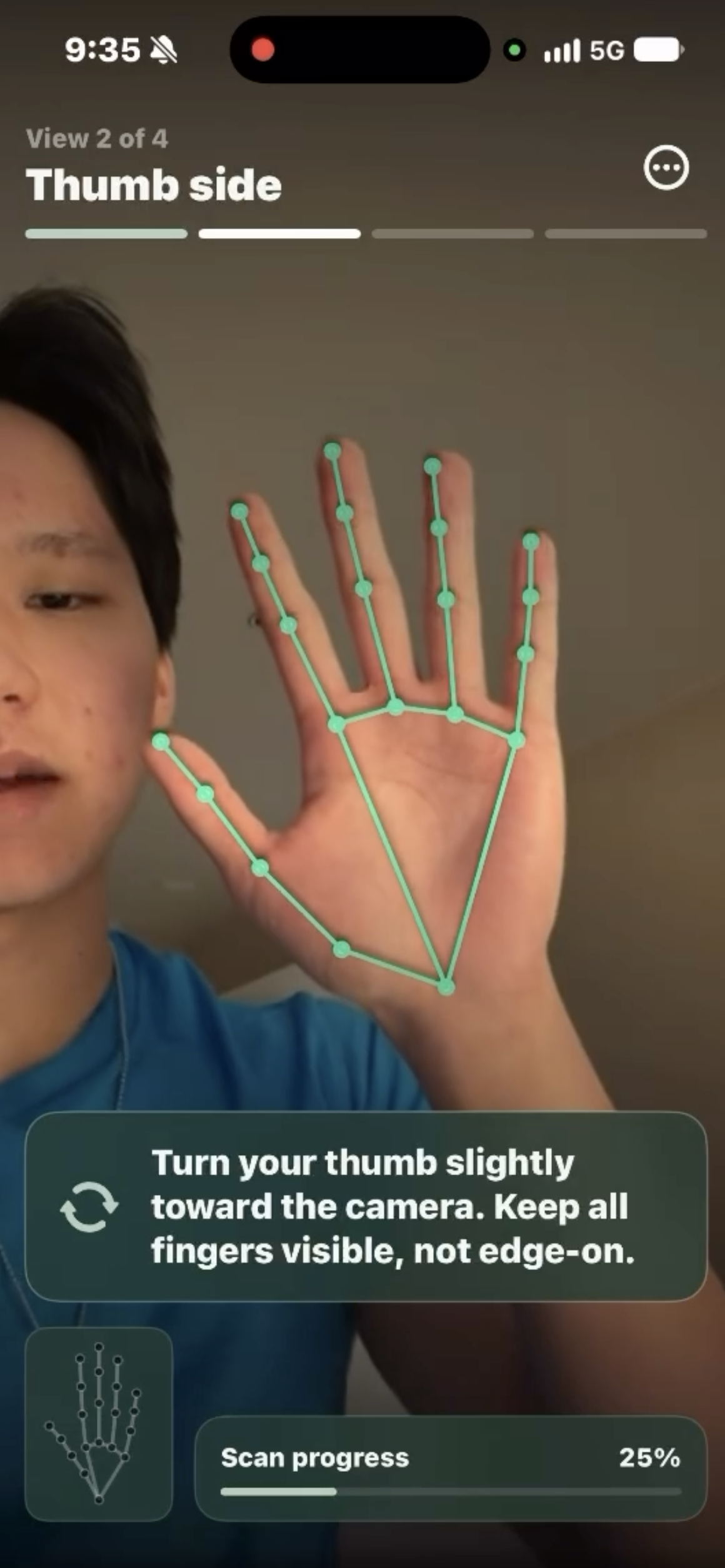
Inspiration We wanted to make personalized pitching guidance accessible through an iPhone. Standard grip diagrams show one hand, but every player’s proportions are different. GripIt helps players understand how their hand size affects their grip and connects pitching results to practical adjustments. What it does GripIt scans a player’s hand using the front TrueDepth camera and hand tracking, then uses those measurements to personalize a rigged 3D hand. Players can explore four-seam, two-seam, slider, and circle-change grips, rotating the model and tapping different regions for placement and pressure guidance. After entering Rapsodo readings, they receive color-coded feedback highlighting where to focus next. How we built it We built a native iOS app using Swift, SwiftUI, AVFoundation, MediaPipe, and SceneKit. We combined hand landmarks with synchronized depth data to estimate hand measurements, adapted a Blender hand rig to those proportions, and developed a geometric solver to position the fingers around a baseball. A rule-based feedback engine connects throwing data to guidance on the same interactive model. Challenges we ran into: Our biggest challenges were maintaining reliable hand tracking, aligning camera landmarks with depth measurements, and preserving natural proportions while resizing the hand. We also had to coordinate joint movement, skin deformation, ball contact, and seam placement. Making that fitting process fast enough for a live demo required careful performance optimization.
Accomplishments that we're proud of: We brought the complete experience onto a physical iPhone—from scanning a hand to exploring personalized grips and reviewing throwing feedback. We replaced an unnatural procedural hand with a detailed rigged model, added interactive guidance, and dramatically accelerated fitting without reducing model detail.
What we learned: Accurate measurements alone do not produce a convincing hand model. Joint constraints, skin deformation, and contact must work together, while seam placement must match the intended finger positions. We also learned to distinguish grip instructions from feedback: throwing data can suggest useful adjustments, but it cannot directly reveal finger pressure or release mechanics.
What's next for GripIt: We want to validate scanning accuracy across more hands and lighting conditions, refine grip poses and contact, and evaluate our guidance with pitchers and coaches. We also plan on identifying current working grips in the Major leagues and creating a scan than compares your hand to find the closest similar professional athlete, allowing you to see what best works.
Built With
- avfoundation
- blender
- javascriptcore
- mediapipe
- react
- scenekit
- swift
- swiftui
- three.js
- truedepth
- typescript
- vite

Log in or sign up for Devpost to join the conversation.