-
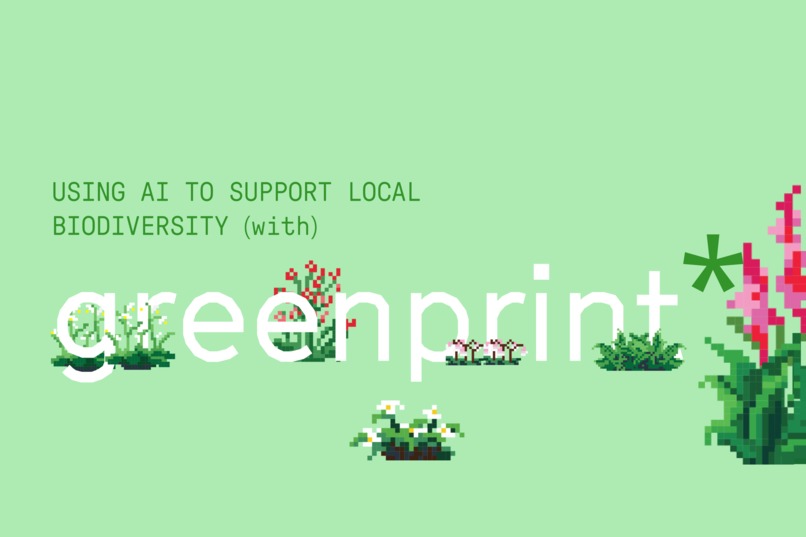
greenprint providing alternative visions of recontextualizing cities as multi-species spaces that promote biodiversity and sustainability.
-
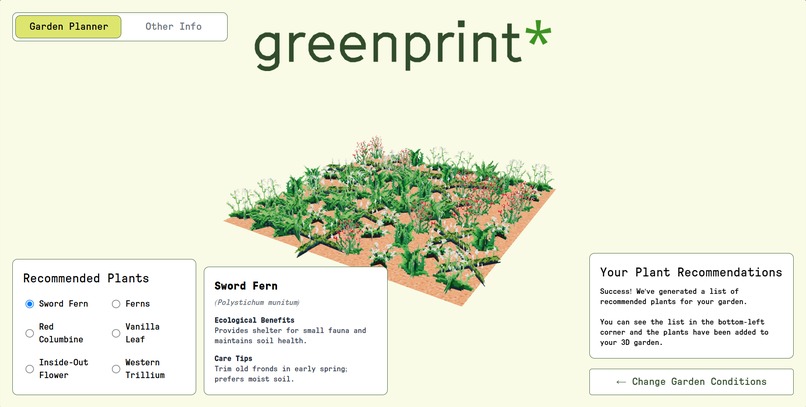
'Garden Planner' view with plant recommendations based on personalized garden conditions.
-
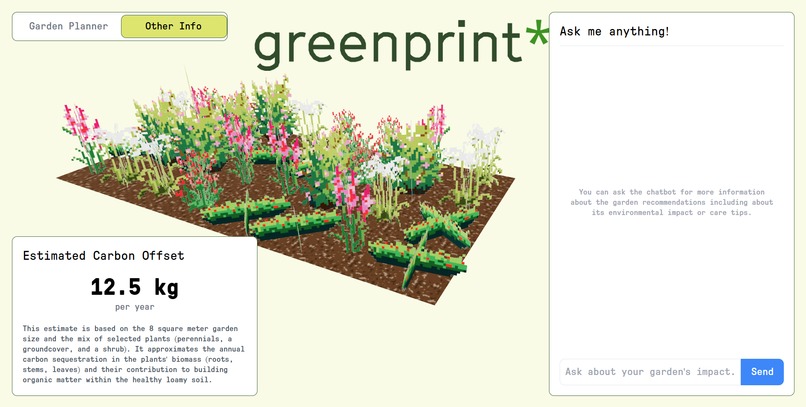
Detailed information page explaining carbon footprint offset of the generated garden.


Inspiration
Using the United Nations sustainable development goal “Life on Land” we looked at how we could use Google Gemini to create a resource for individuals and businesses to help local biodiversity and ecosystems with carbon sequestration gardens.
We wanted to create a resource that used AI not only for the benefit of people but other animals and plants we rely on for a healthy environment. This project took inspiration from artist Alexandra Daisy Ginsberg’s Pollinator Pathway, which generates gardens in Europe for local pollinating animals. We wanted to extend this project locally to Vancouver, creating a new version that not only looks at pollinators but also how gardens can sequester carbon and support biodiversity, while also going into more detail about the garden and its tangible impact on the environment.
What it does
greenprint allows people to create gardens based on size and geographical specifications such as soil type, and amount of light generating the most efficient garden space to help pollinators, biodiversity and carbon emissions.
How we built it
greenprint is built in Visual Studio Code using react, tailwindcss, threejs, and Gemini API.
Challenges we ran into
It was our first time using Gemini and had difficulty getting a response from the Gemini API and trying to get the right model details to get a proper response. It was also the first Hackathon for the majority of us and definitely some adjustment with the pace that everything needs to move to finish a project in time.
Accomplishments that we're proud of
While one group member has experience coding, we went into this hackathon expecting to end with a polished prototype in Figma. However, we were able to not only create a working version using Gemini but also execute on the main functionalities of our project.
What we learned
From our feedback from mentors, we learned more about project management in the context of a 24-hour hackathon. It is much more impactful to create something that has its core functionalities intact, and then find opportunities to envision how it could be approached or improved on a larger scale.
What's next for greenprint
While our current version is catered to home garden spaces, we imagine this project to grow, offering more flexibility to commercial spaces. Integrating ways to create paths through garden spaces can allow business to plan how offices can help mitigate the carbon emissions of their companies, while adding to the biodiversity of their community.
greenprint can also suggest gardens with fruits and vegetables giving its gardeners instructions on plant care, letting them know when to plant, reminders to water and when they are ready to be picked.
Built With
- adobe-illustrator
- aseprite
- figma
- github
- google-gemini
- react
- tailwindcss
- visual-studio


Log in or sign up for Devpost to join the conversation.